
LONG LIVE THE LIVING SCHOOL
Activation of ancient thoughts
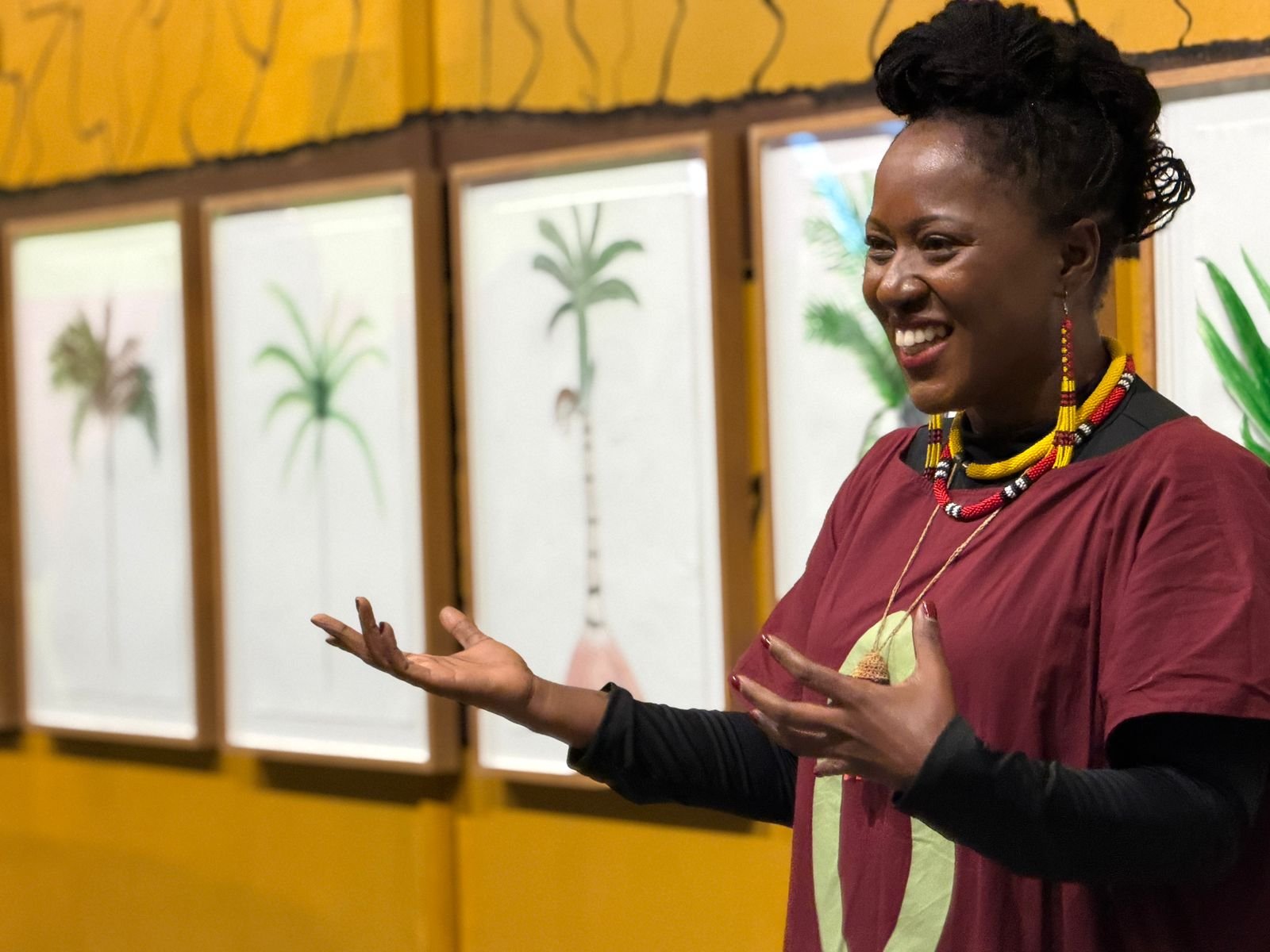
Cristine Takuá
24 September 2026
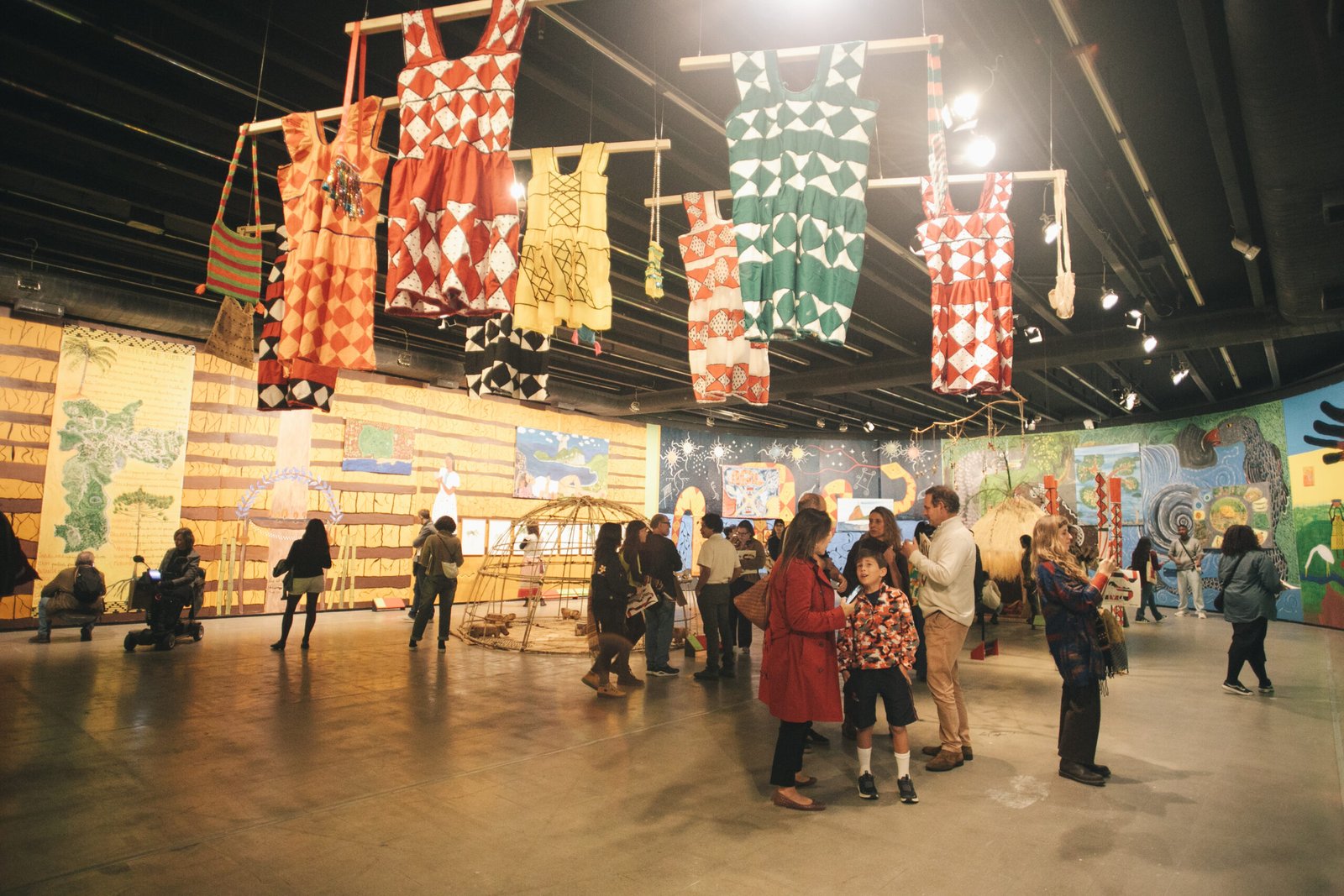
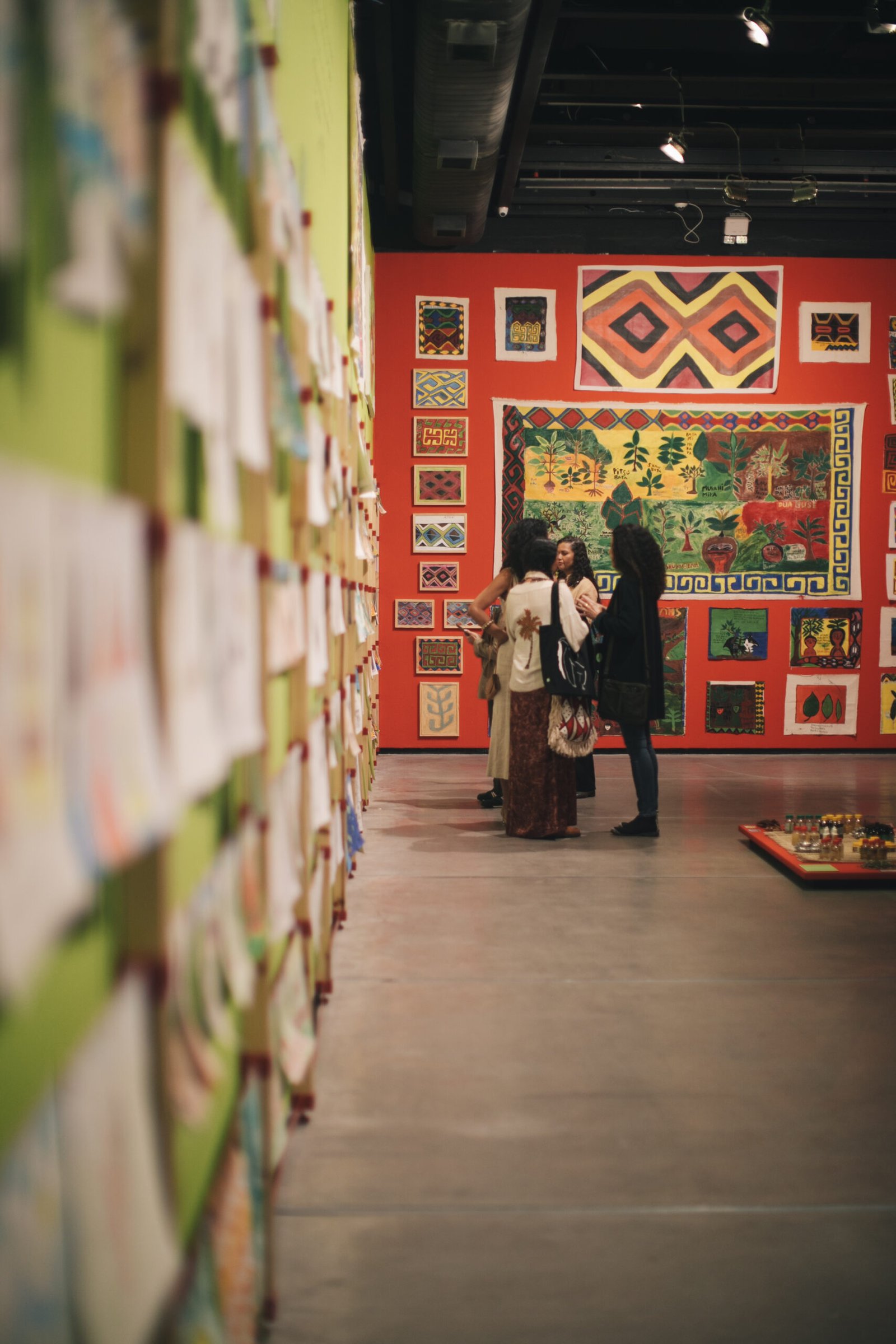
Main room of the exhibition Long Live the Living School on the opening night
Photo: Filme d’Água
Between sky and earth, mountains and rivers, the visible and the invisible, we could witness the activation of artworks and the blowing of thoughts from the peoples that make up the Living Schools collective movement: Huni Kuin, Baniwa, Tukano-Desana-Tuyuka, Maxakali and Guarani Mbya. This activation happened through the exhibition Long Live the Living Schoolat Instituto Tomie Ohtake, in São Paulo, along with the Selvagem Association
We celebrate the life, existence and resilience of each collective which, through a tangle of practices, have created, produced and transformed their ancient narratives into deeply meaningful art. They held workshops in the territories, organised visits, walks, collective prayers and spiritual ceremonies, as well as the Living School House artistic residency at the MAM in Rio de Janeiro. All of this contributed to a beautiful creative process that resulted in a magical exchange of presence and knowledge among the artists and the coordinators of each Living School.
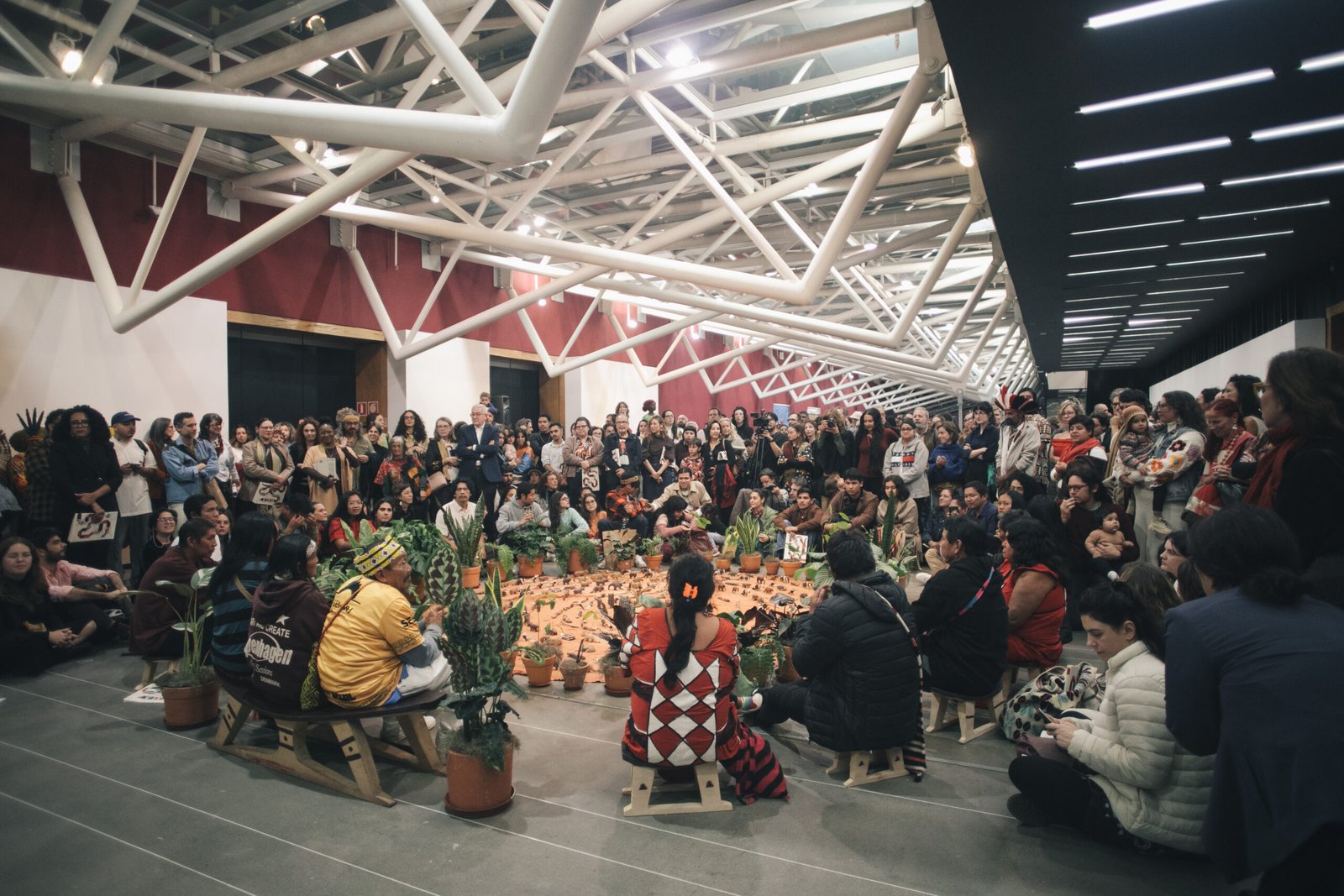
Exhibition opening circle, attended by the five Living Schools.
Photo: Filme d’Água
It’s hard to put into words everything we’ve experienced, the whole process of constructing, setting up and opening the exhibition. All the work activations carried out by the education team…
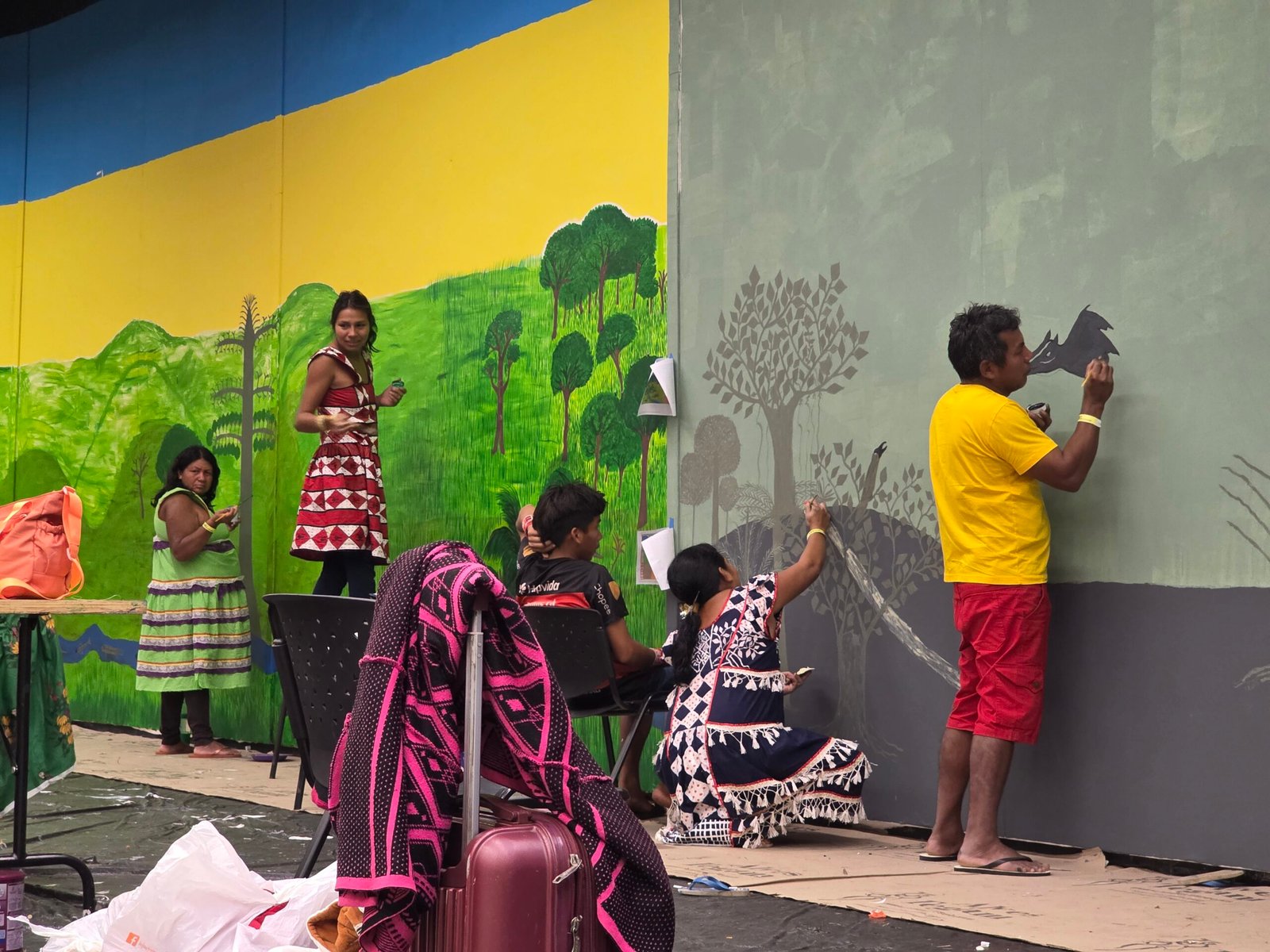
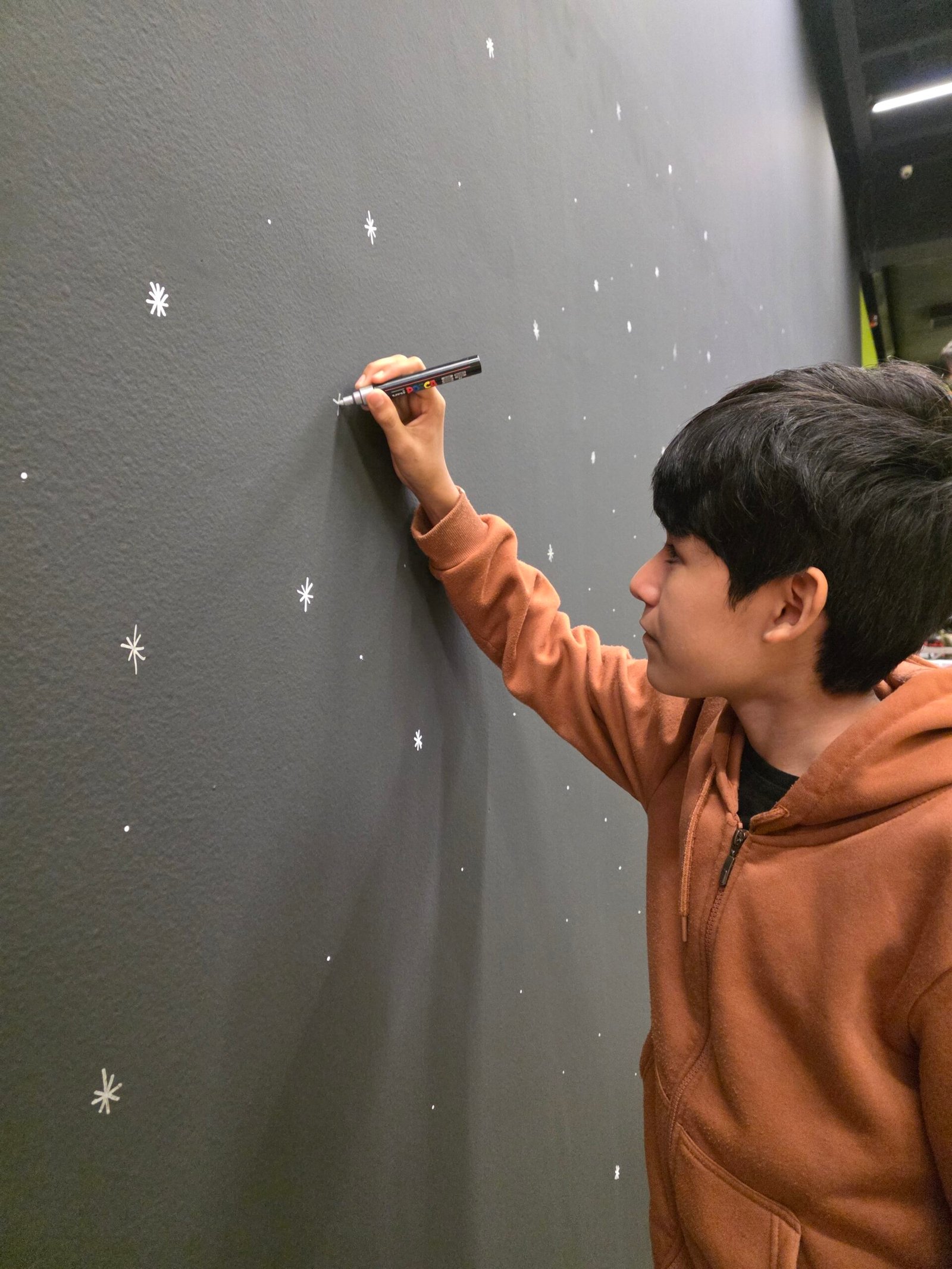
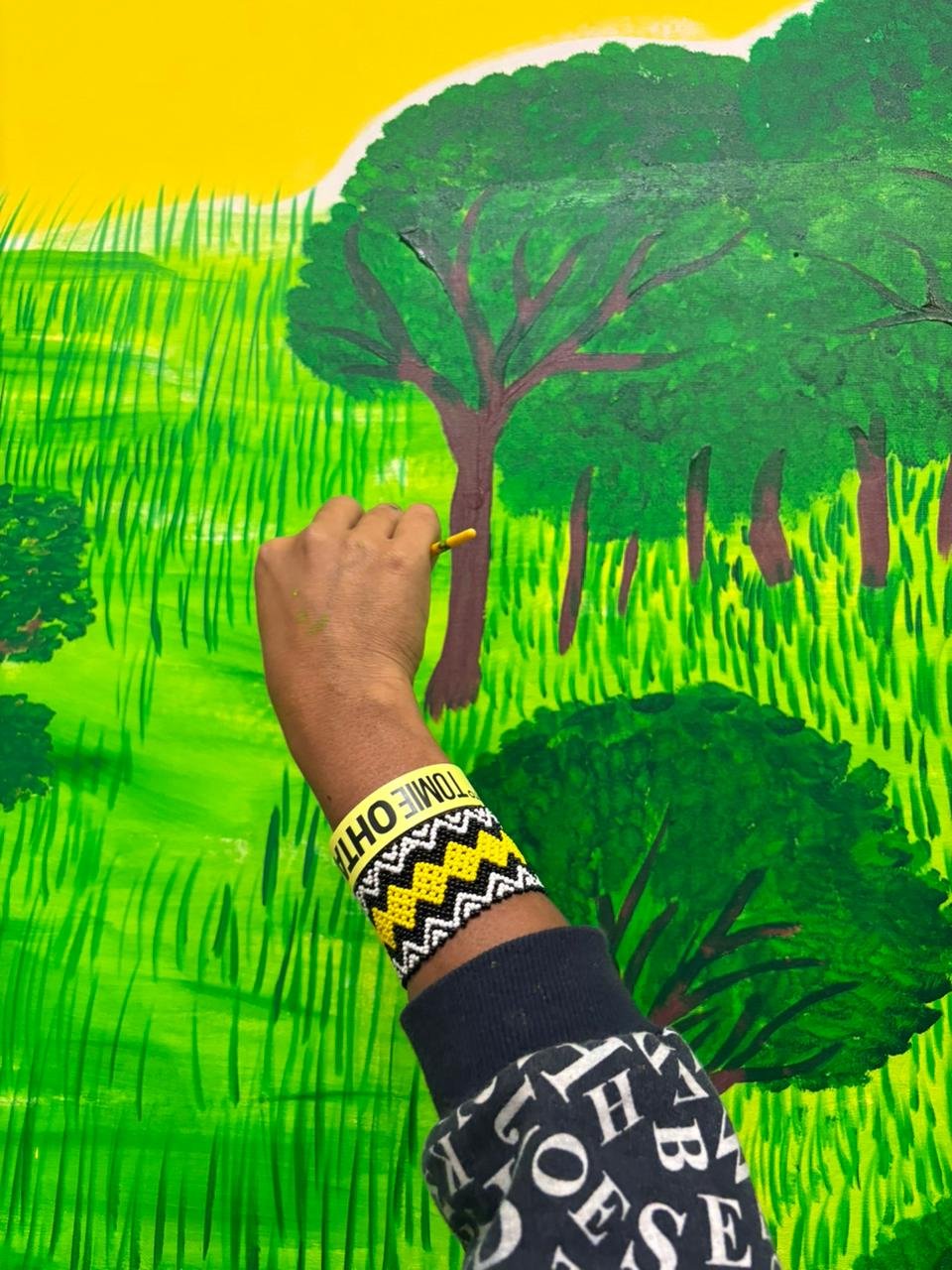
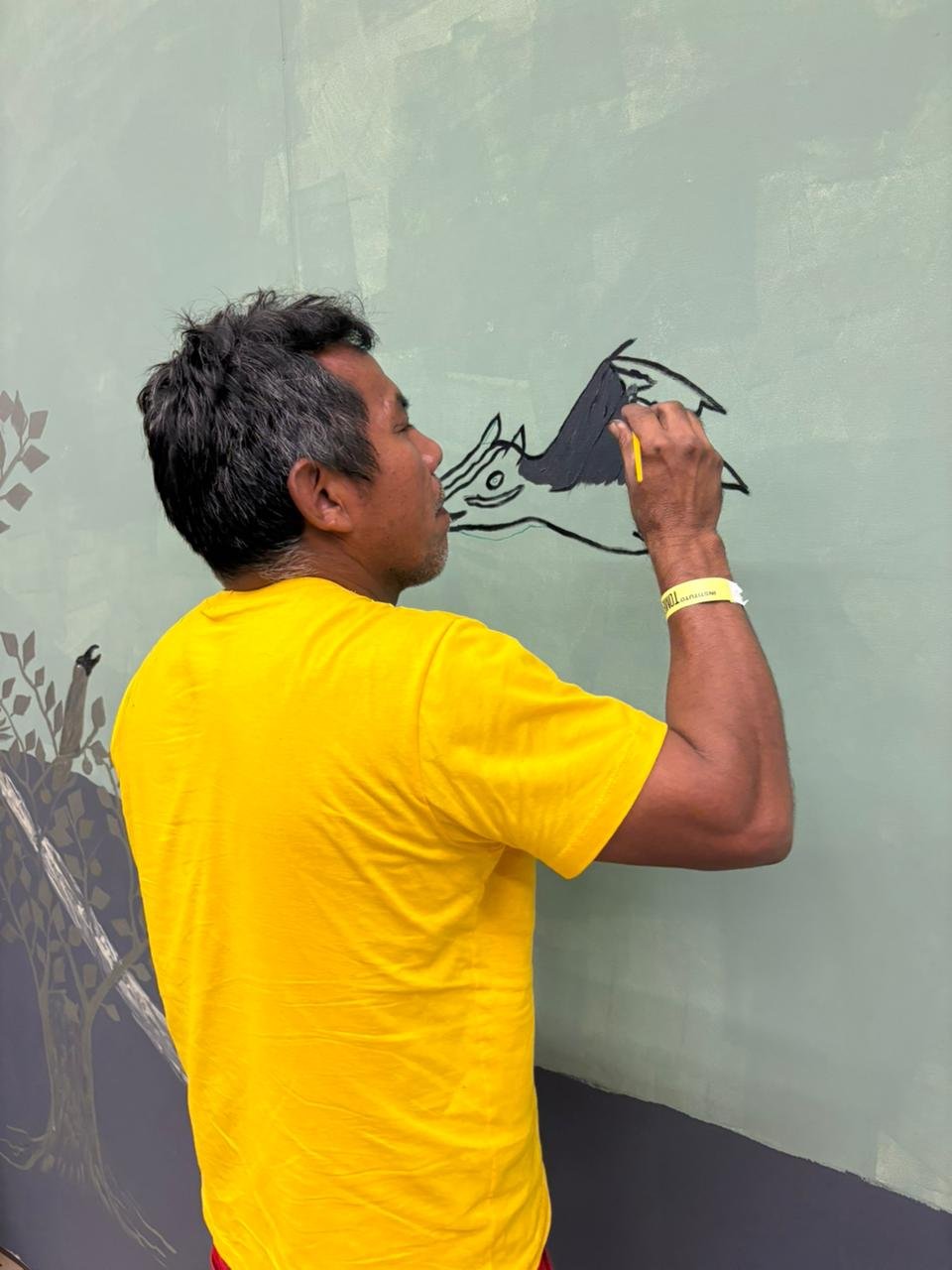
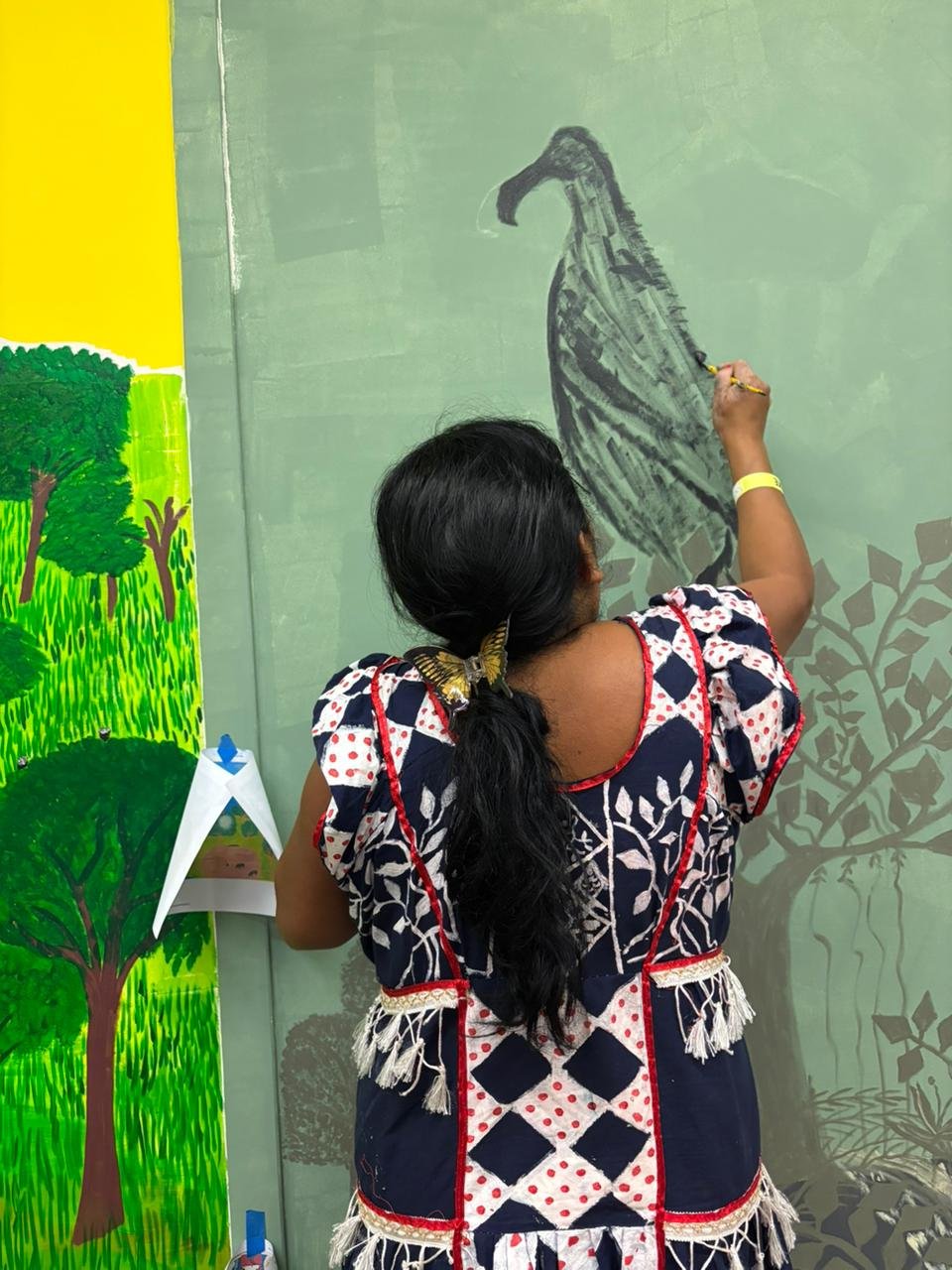
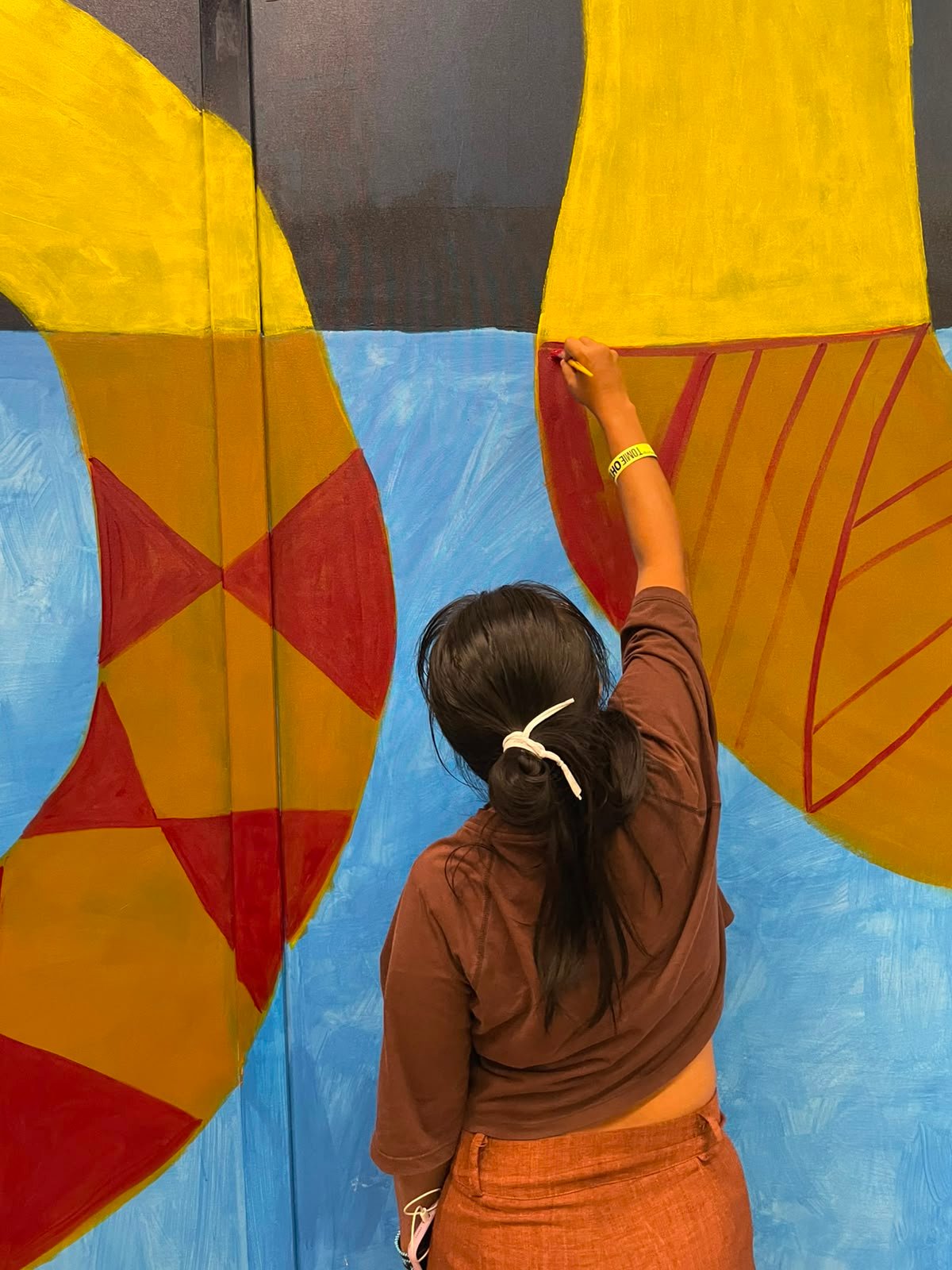
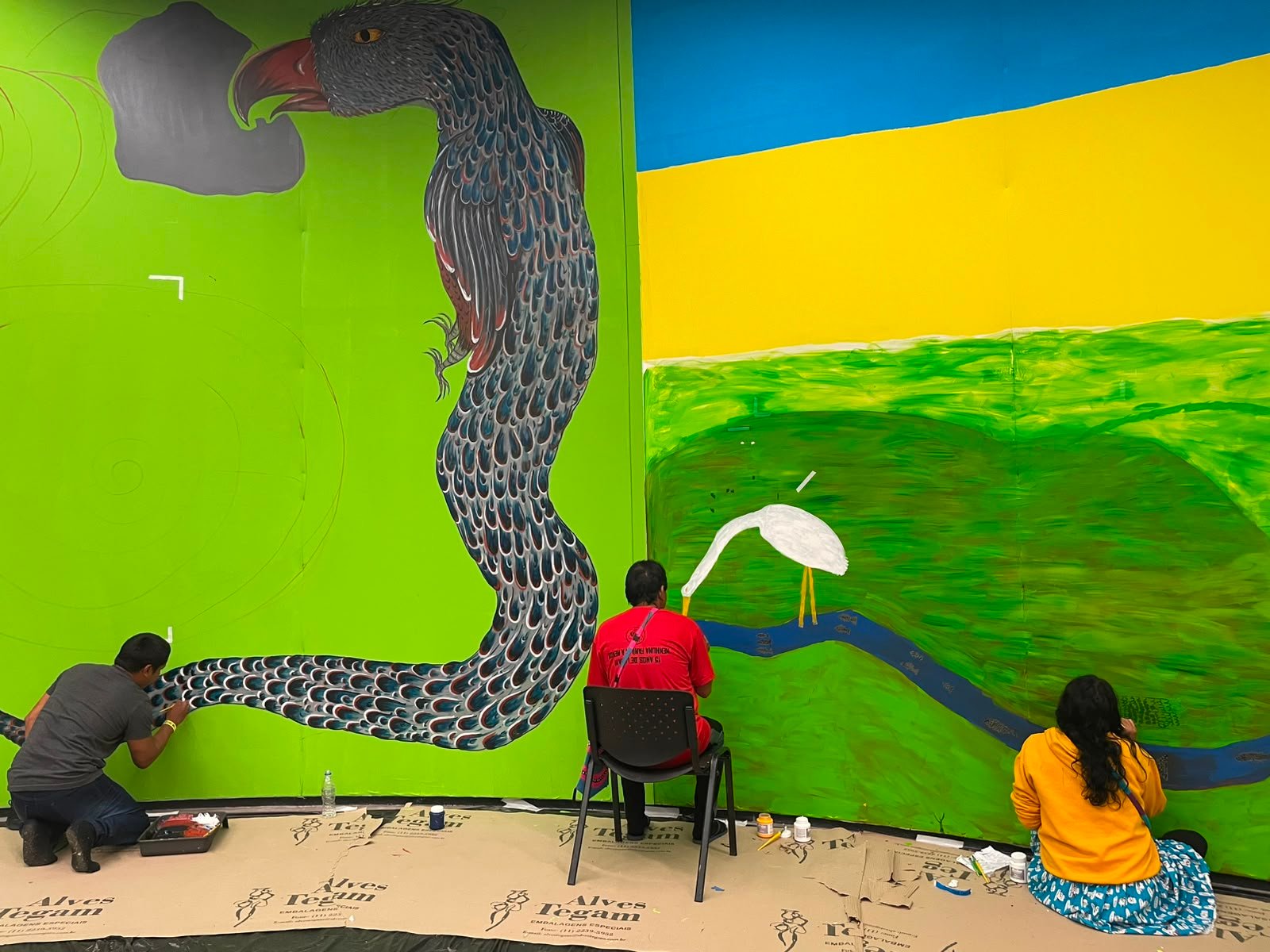
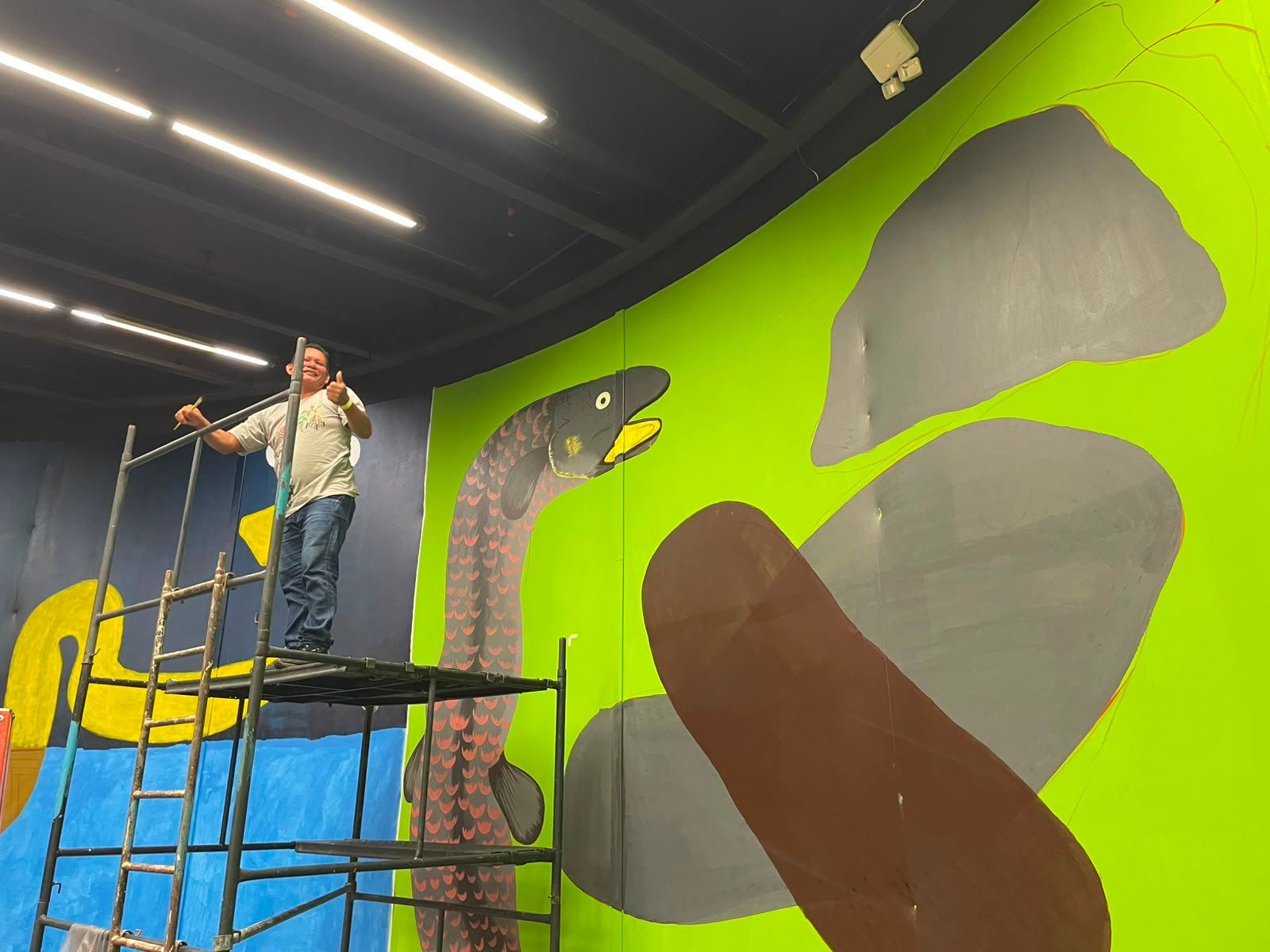
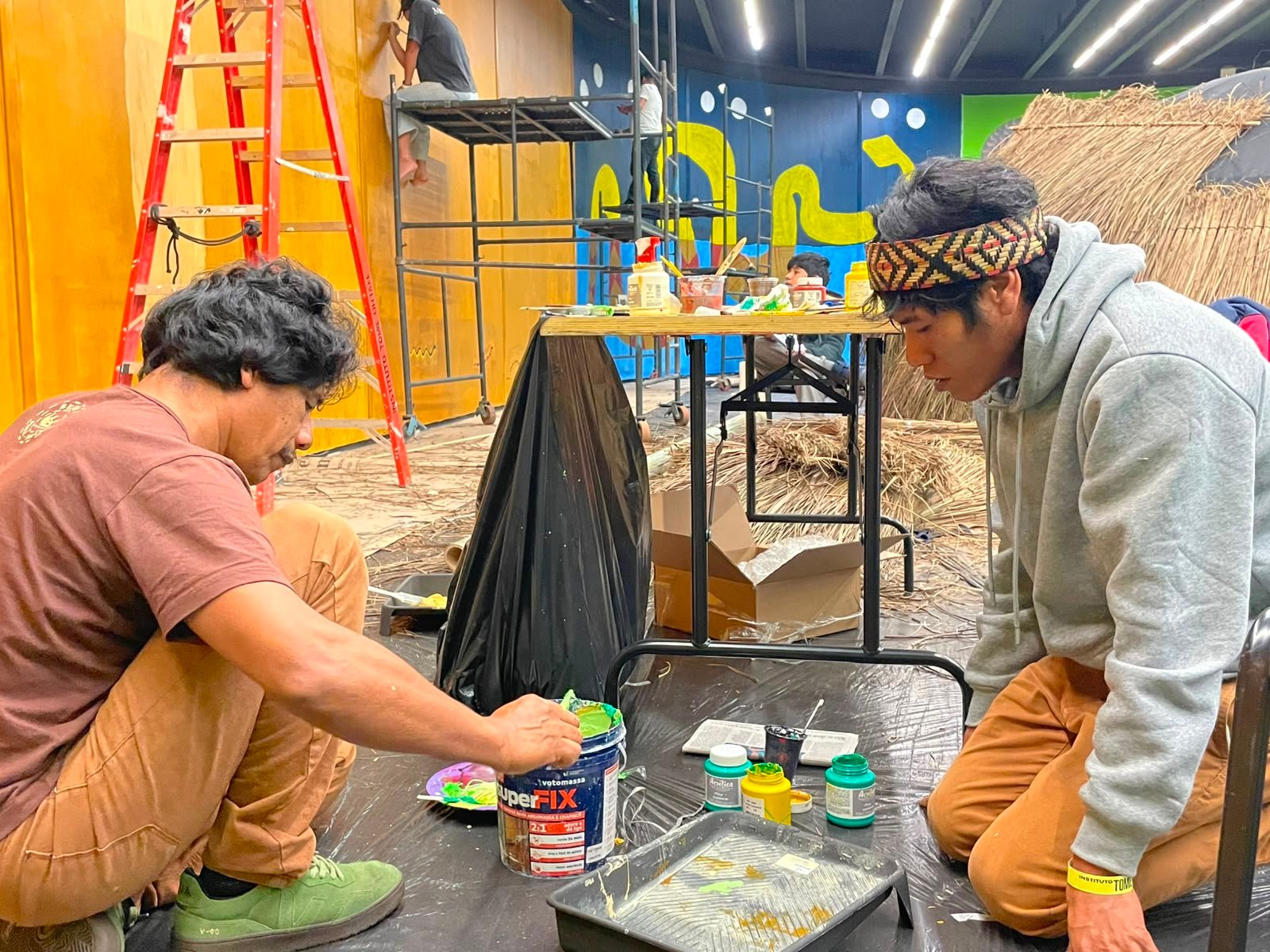
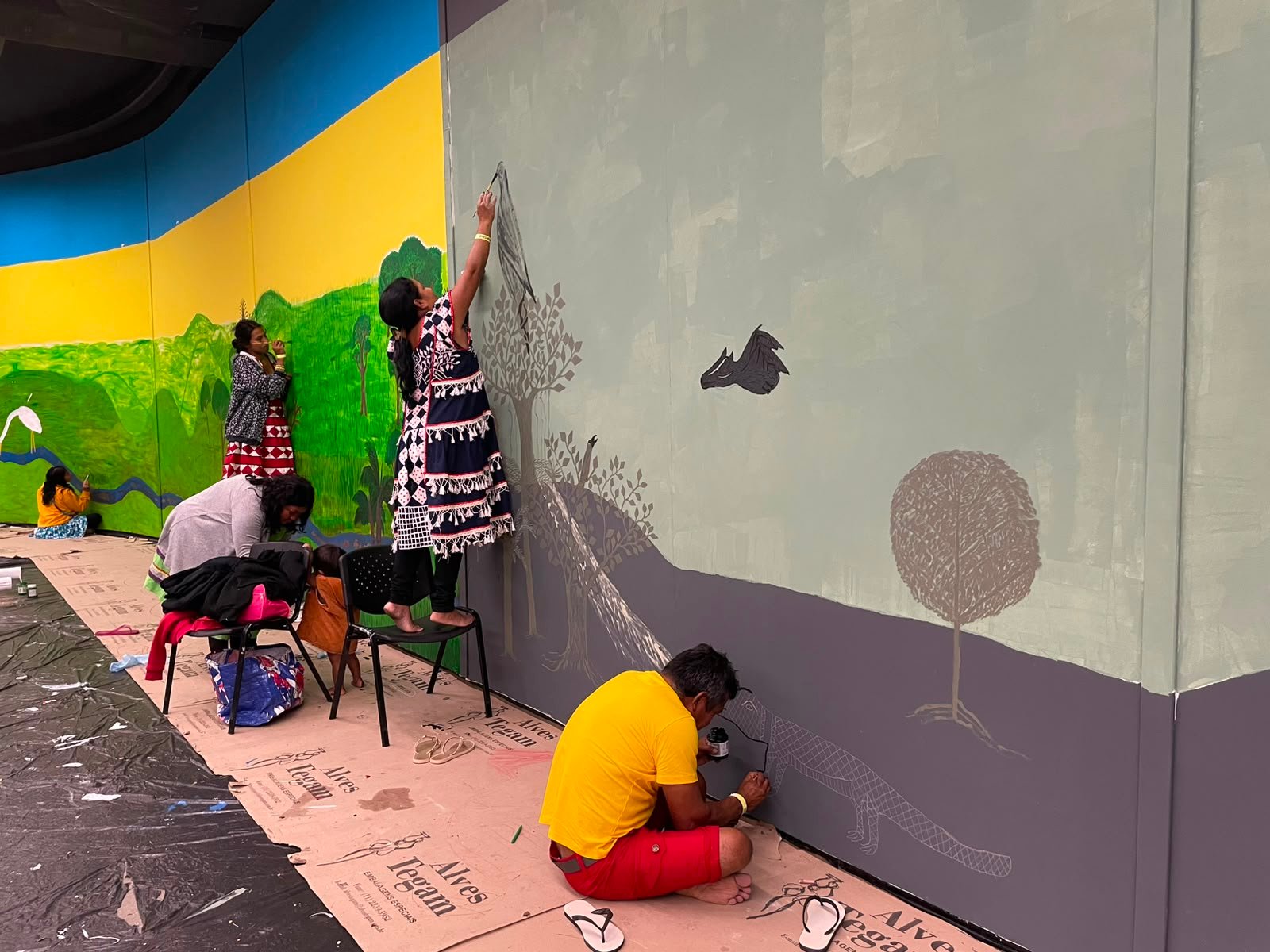
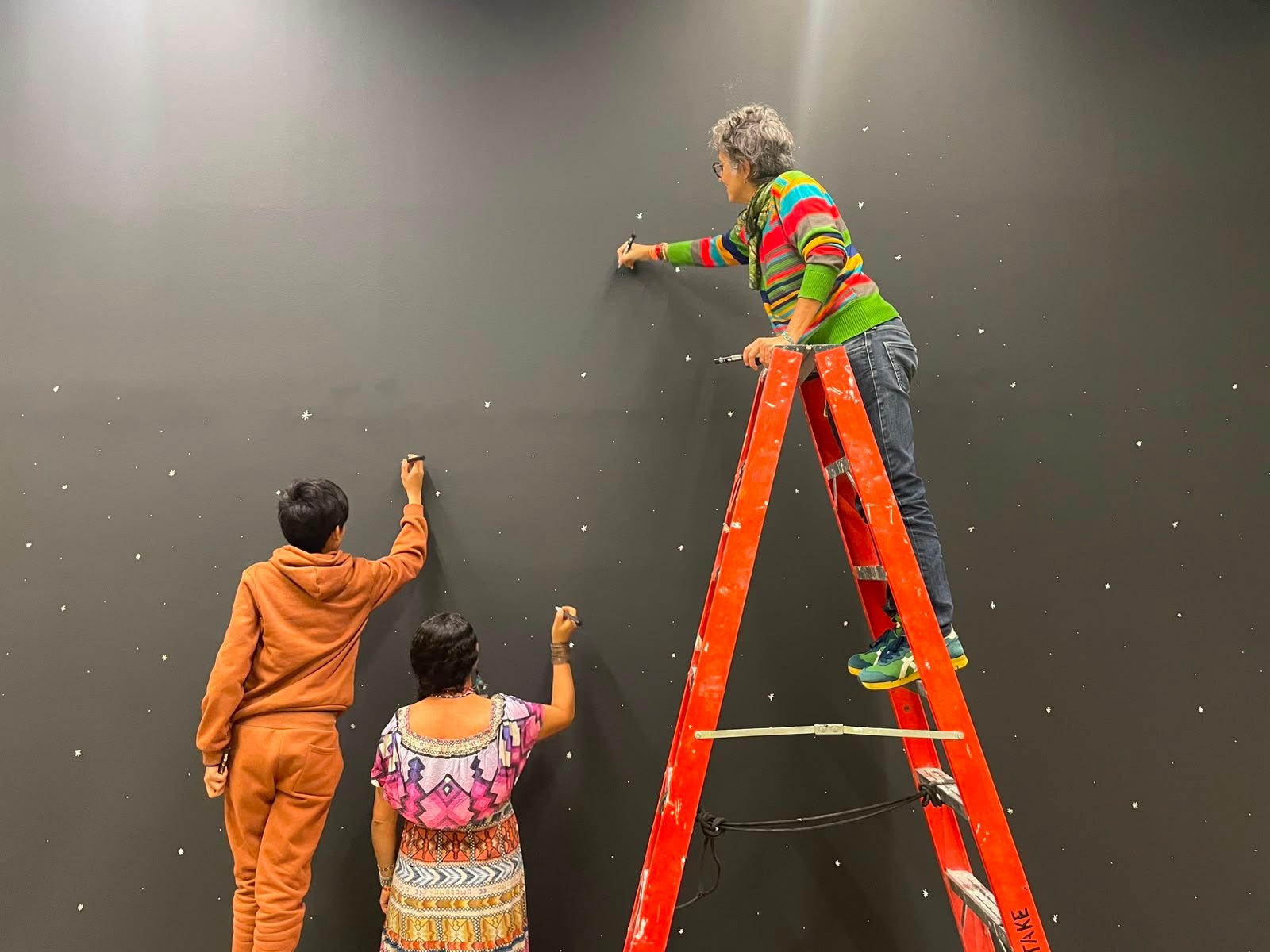
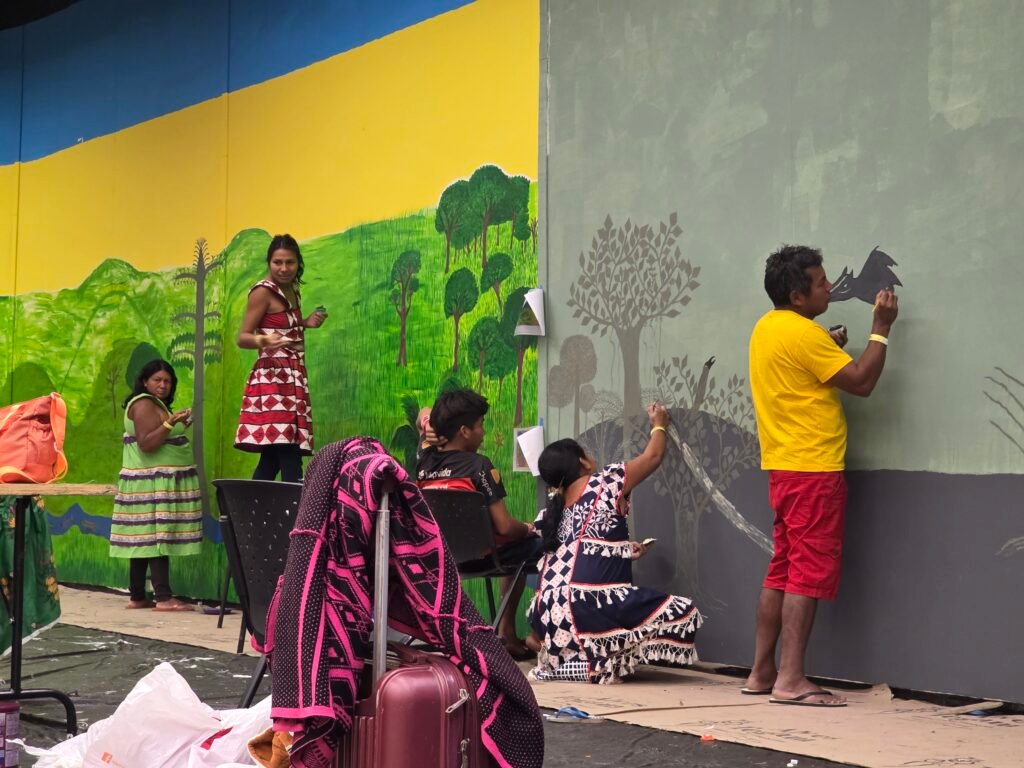
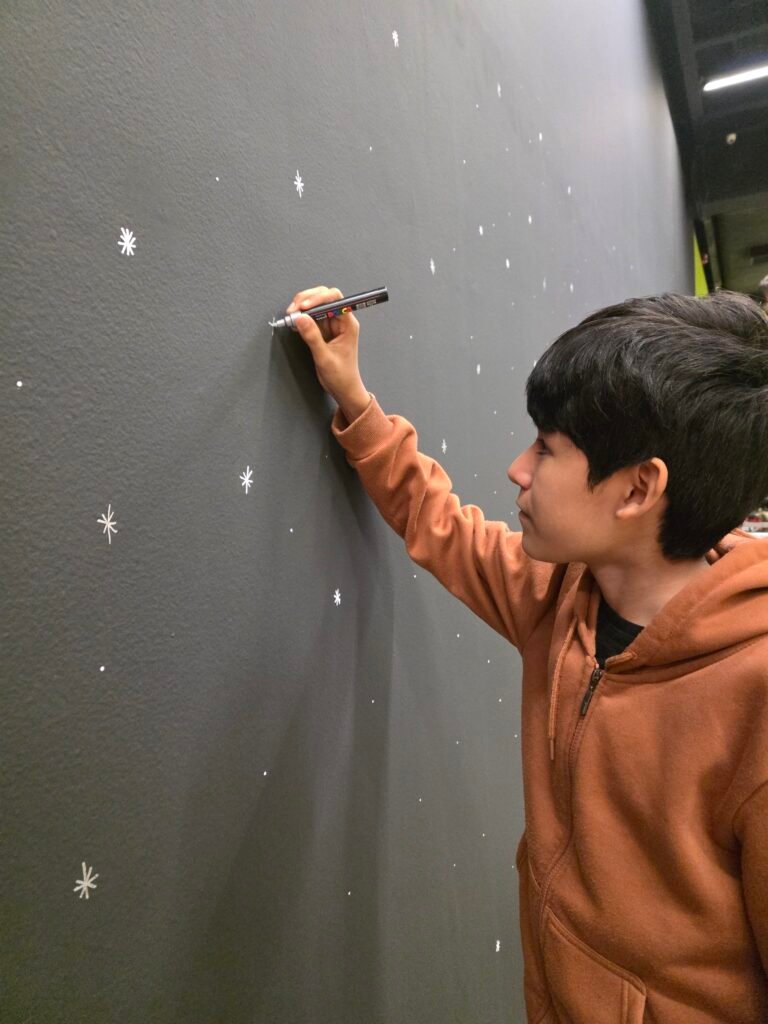
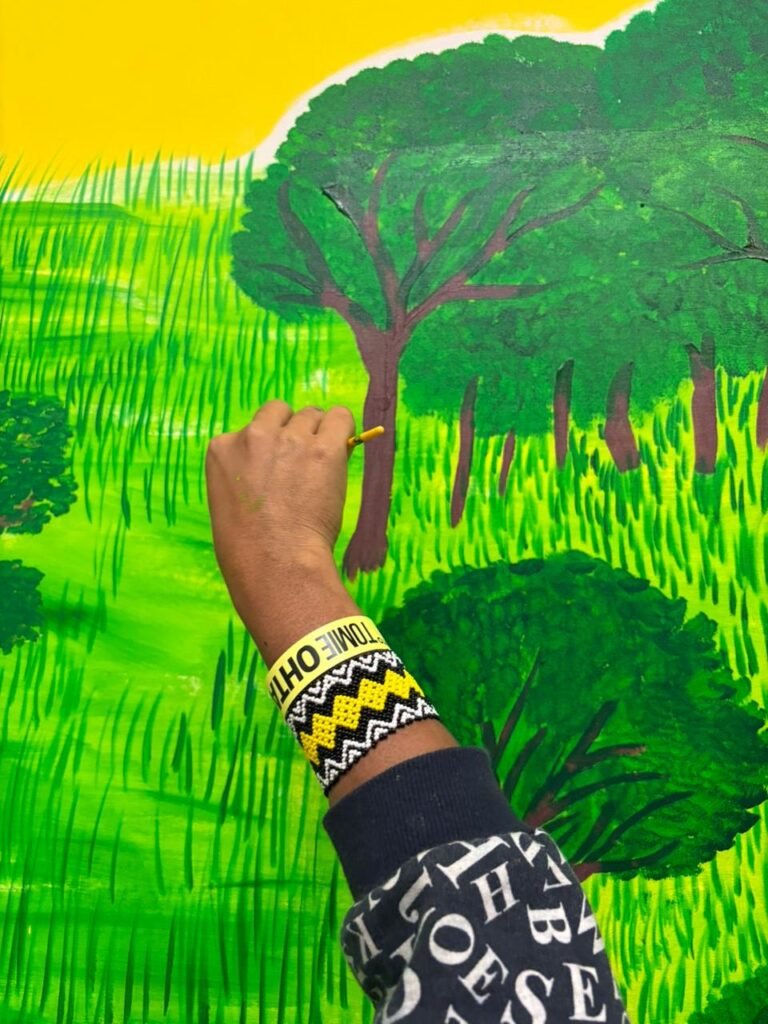
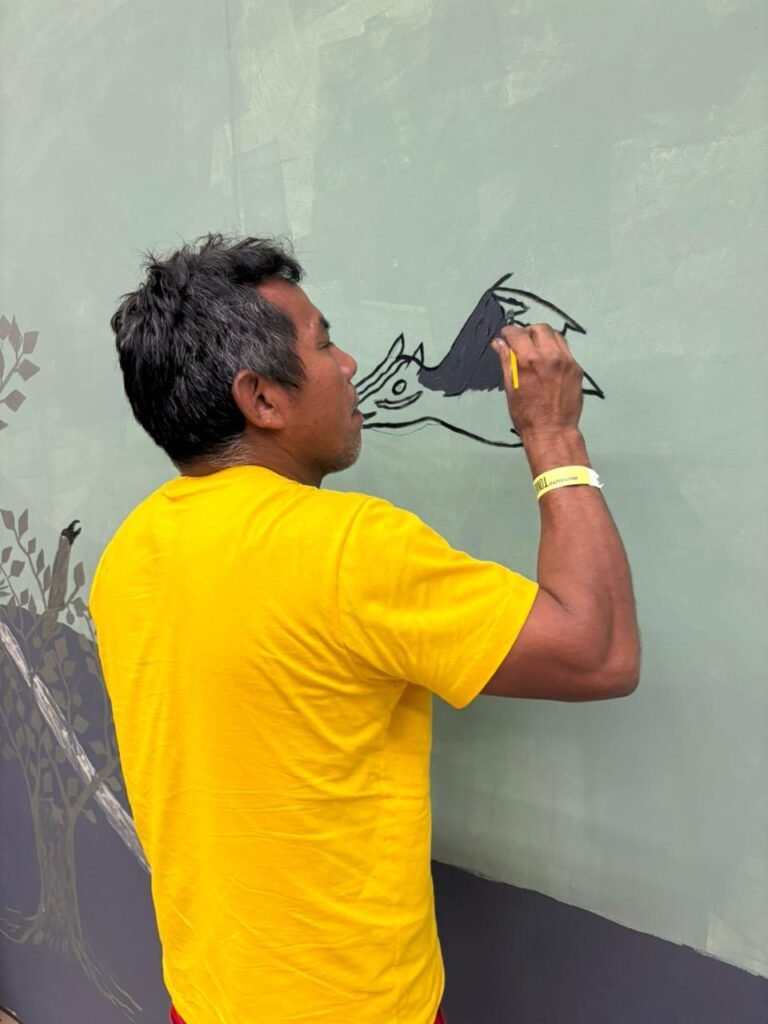
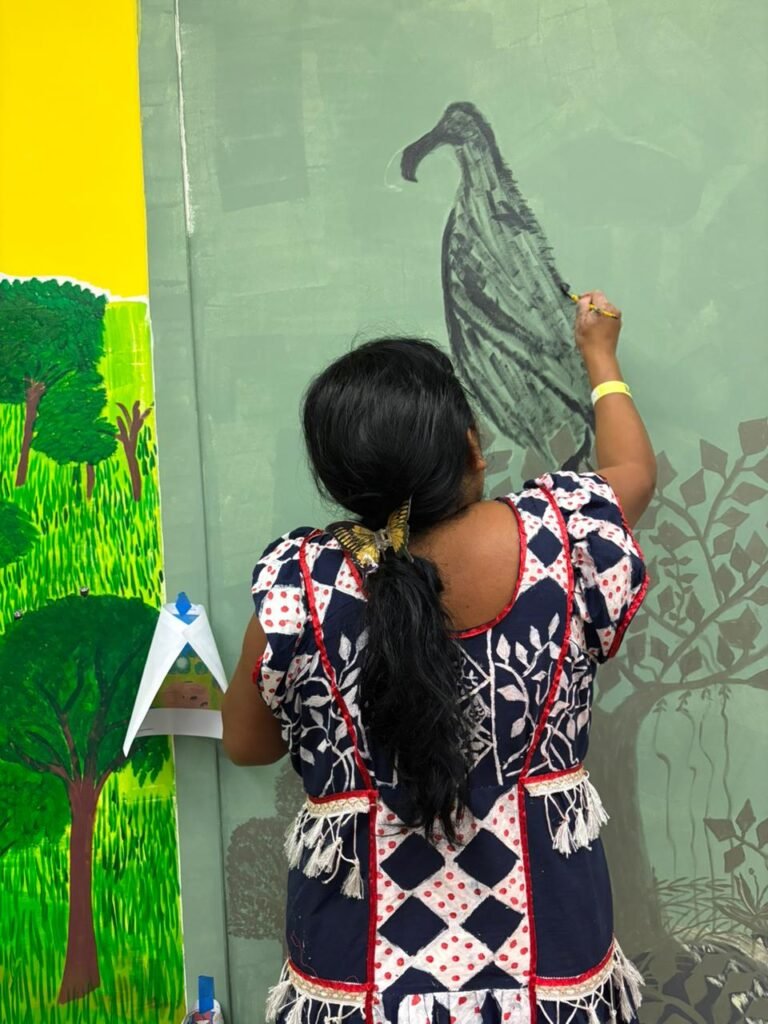
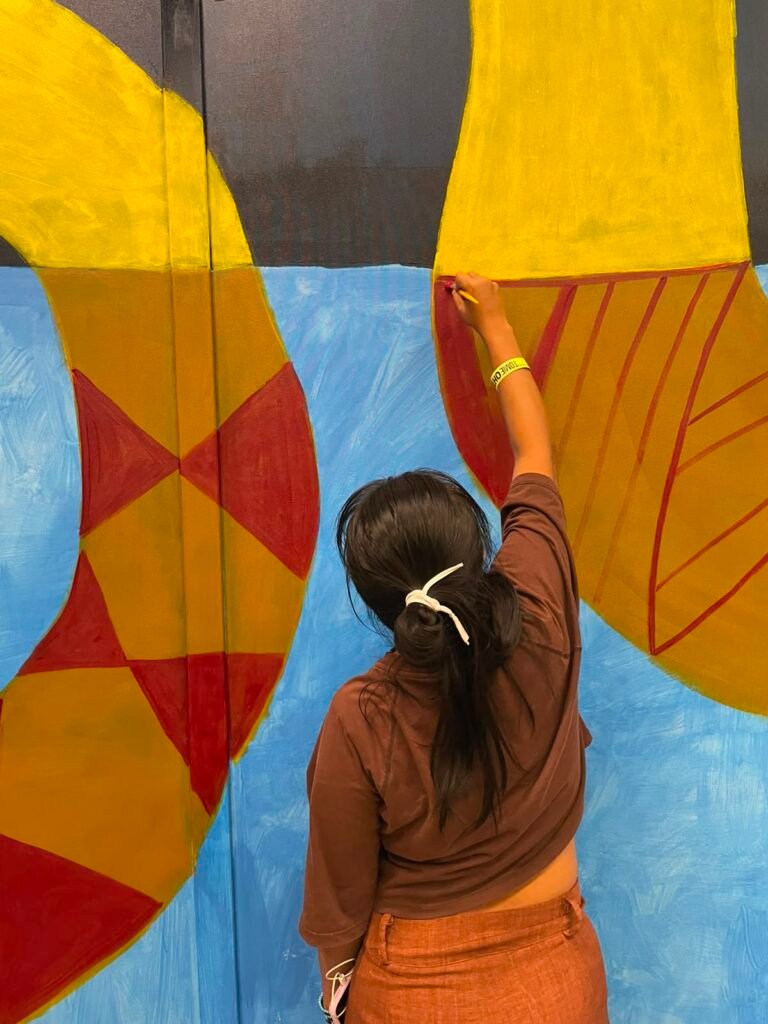
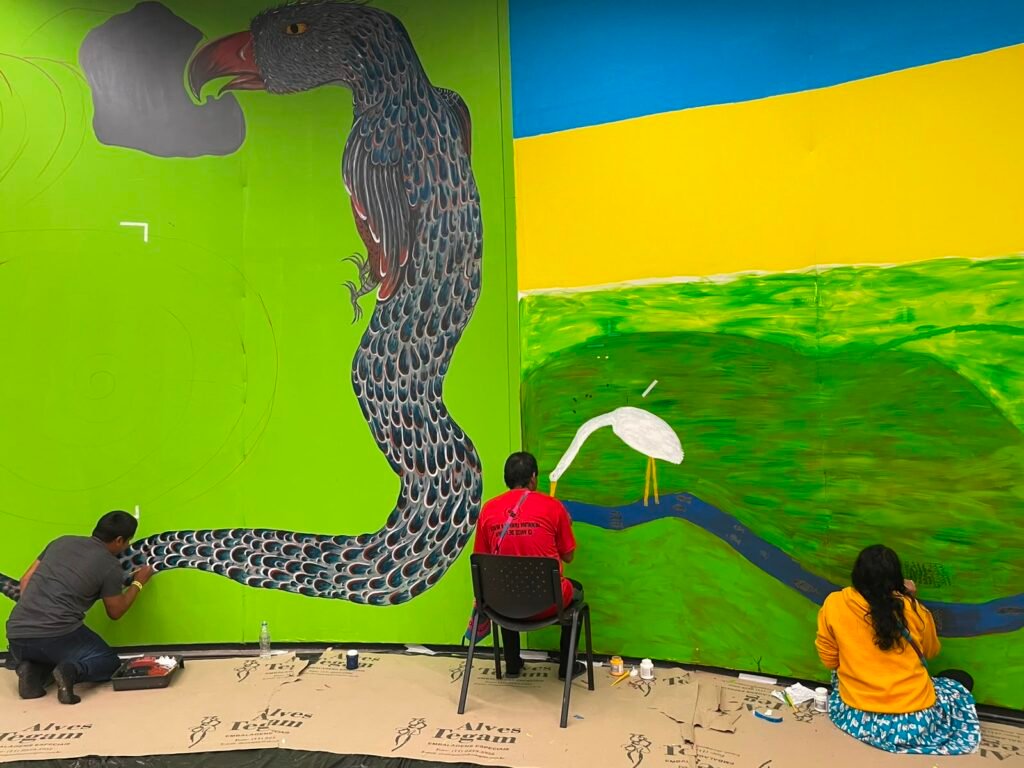
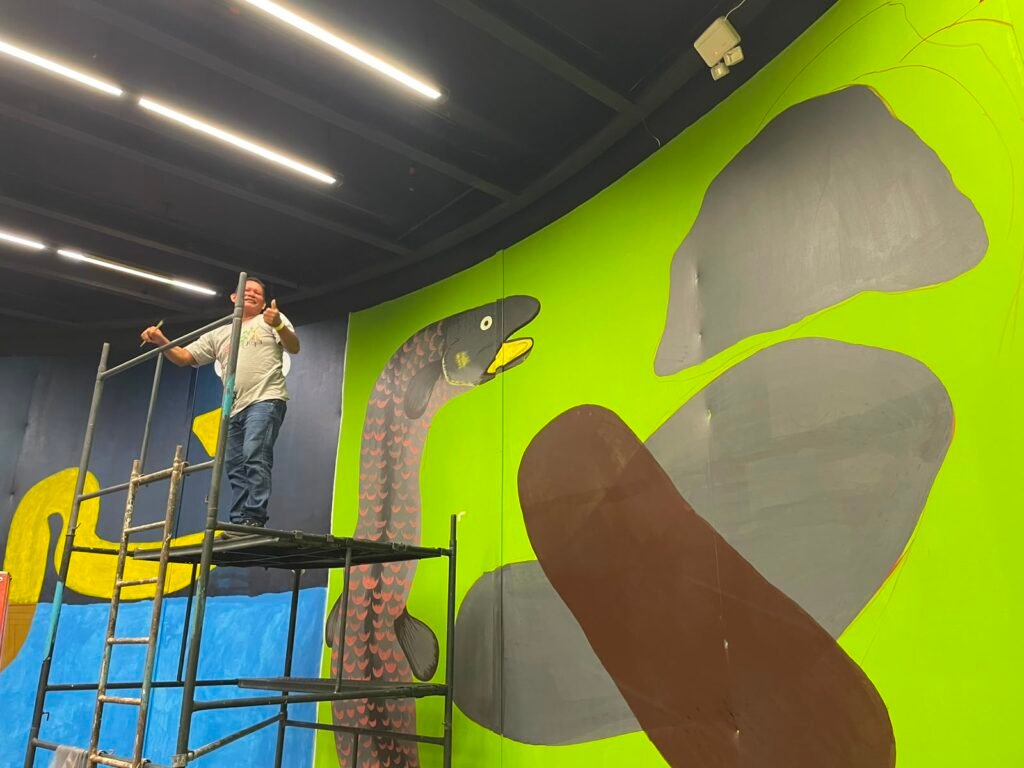
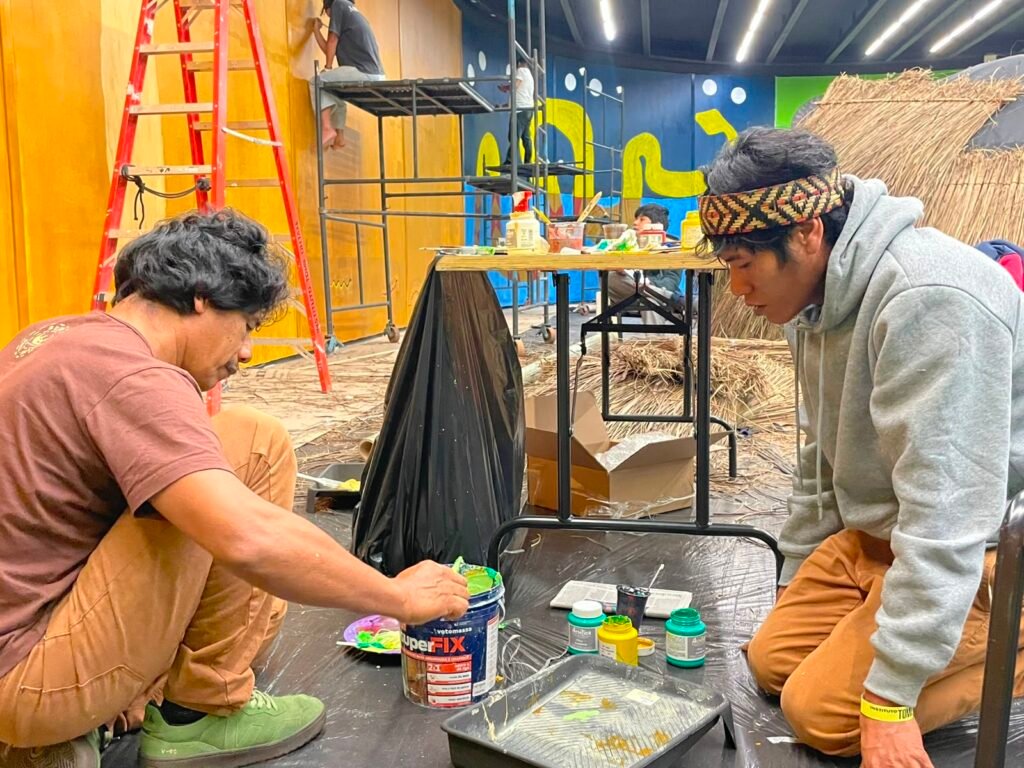
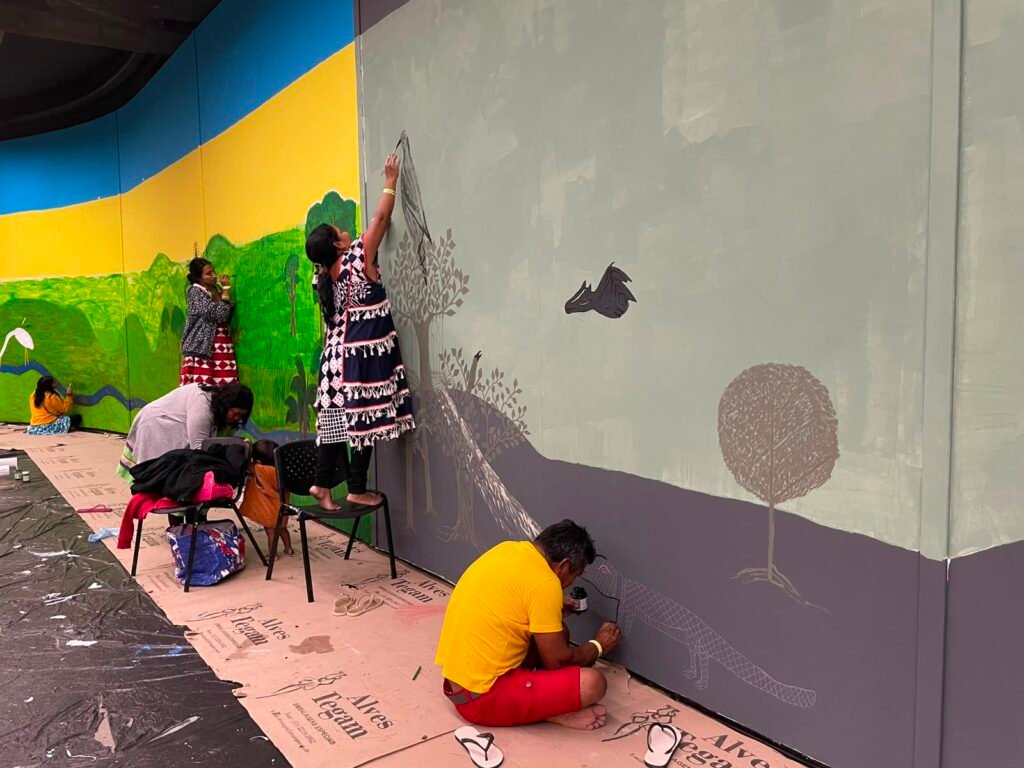
The exhibition was set up in a very strong way, because we thought collectively about how the works would be displayed, together with the whole group of artists, coordinators and children. The whole process made us realise that an entire forest lies behind those canvases. Once the canvases were in place, we began to think about the backdrop, because, in truth, this backdrop is nothing more than the territories themselves, their layers of representativeness, and the essence of each Living School. It was a profound experience to look at that backdrop, which was painted during the set-up by the artists from each Living School. The paintings on these large canvases were meaningful in terms of the cosmologies, of the worldviews of each culture that makes up them.
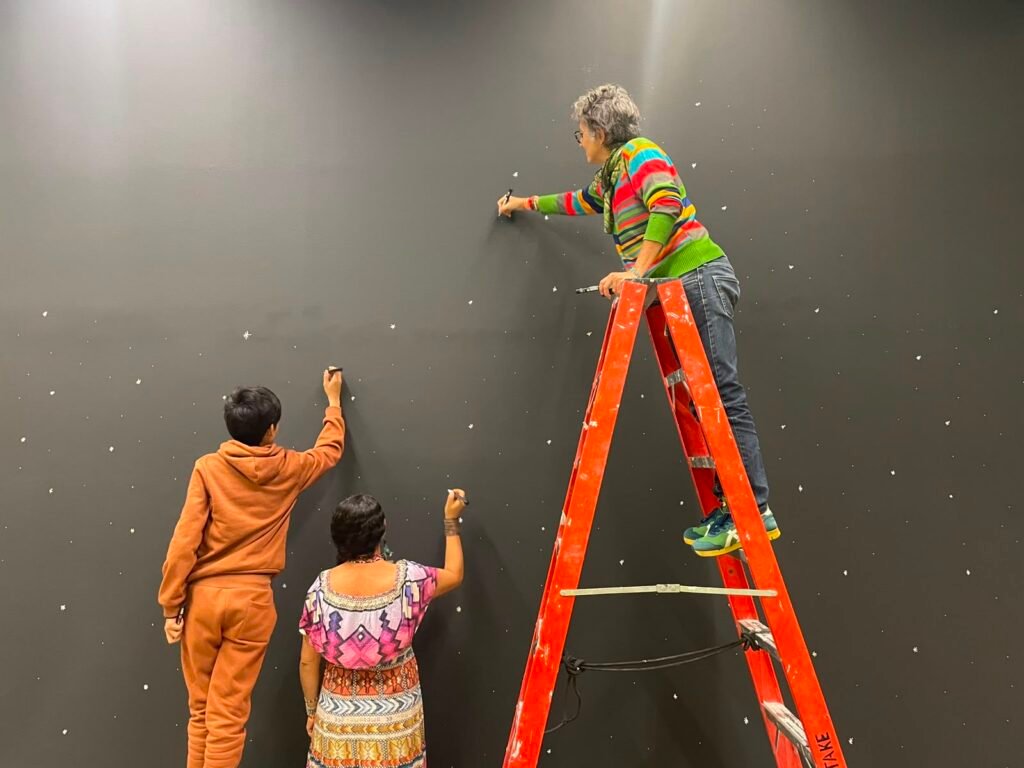
Umbigo do mundo [Navel of the world]
The creation of the artwork ‘Navel of the World’, conceived by Francy Baniwa, her family and representatives of the Assunção do Içana community, conveyed the power of the very beginning.
One day, walking through the exhibition, I saw a group of schoolchildren arrive. One boy, who looked about nine years old, stopped in front of the little house and began to bow, in a movement of reverence with his arms. He was smiling and saying words full of enchantment. I was moved and realised just how much the opportunity he was being given could transform his childhood, and how our exhibition had the mission of blowing ancestral wisdom to connect children, adults and elders.
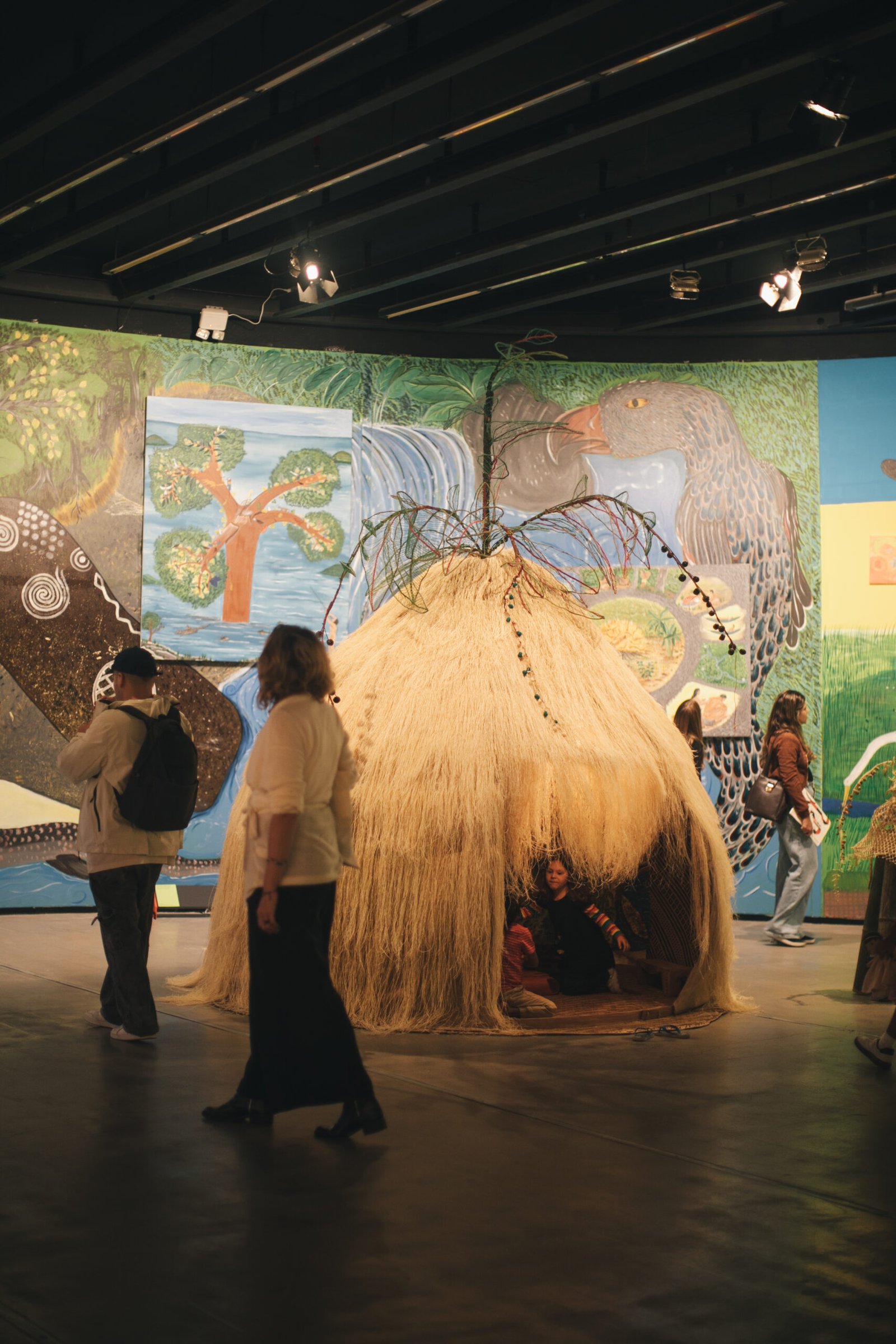
Installation ‘Navel of the World’
Photo: Filme d’água.
Flags
The flags of each Living School were also a strong presence. They left a mark through their symbols and images, showing where the thoughts and the beating hearts of each Living School come from, and how they are represented. These flags had the power to convey the highly meaningful elements that compose the pulse of the Living Schools.
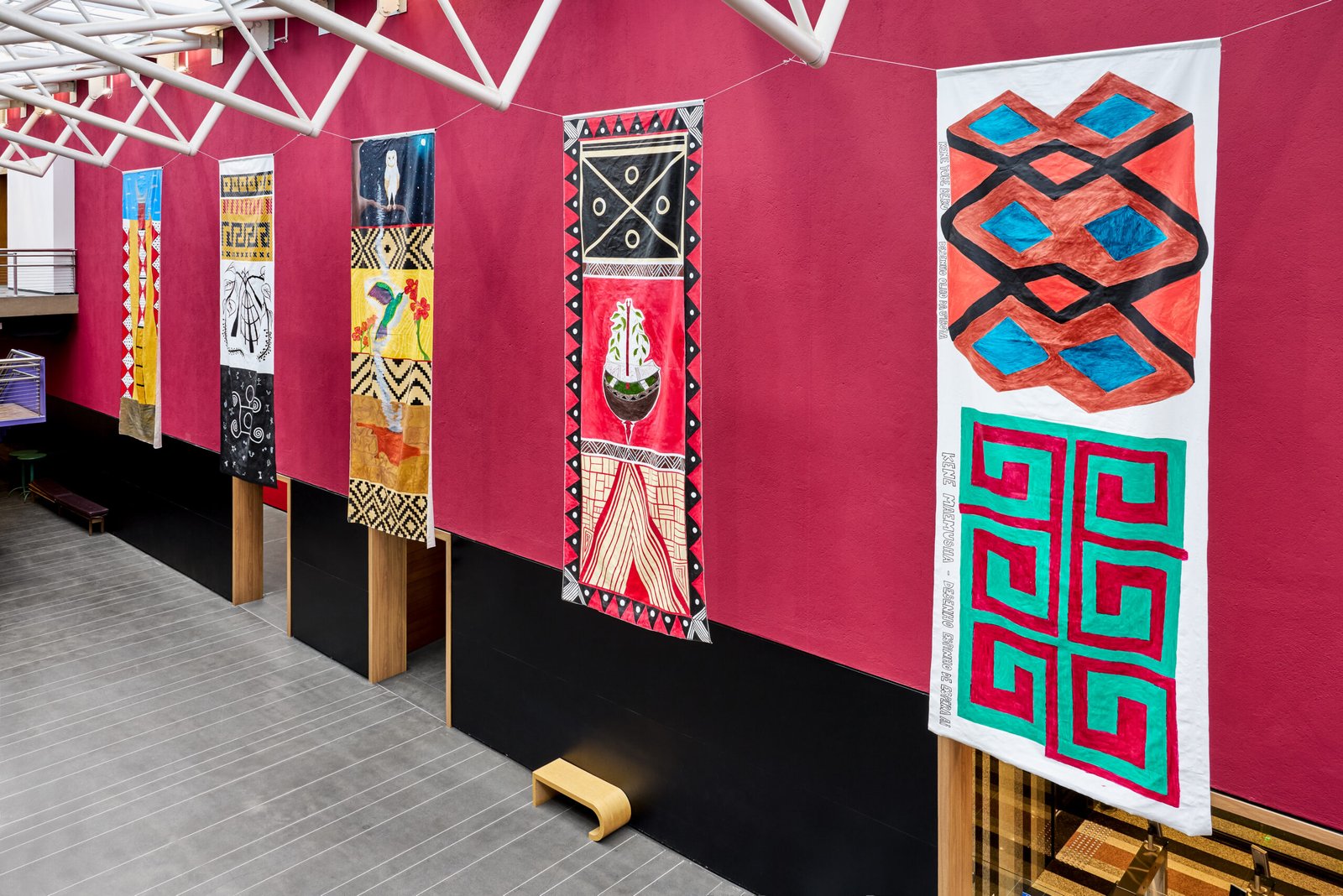
Flags painted by the Living Schools during the setting up of the exhibition.
Photo: Estúdio Em Obra
Grandparents
For the Long Live the Living School exhibition, we also invited some grandparents to share the power of ancestral memory. Through their art, Ehuana Yanomami, Luiz Lana Desana, Moisés Piyãko and Ailton Krenak were present. The Elders are the guardians of the good and beautiful messages blown as words, told in ancient narratives or transformed into artworks that enliven our journey. Evoking the Elders, listening to them and seeing their activations allows us to access other codes, to feel the ancestry that dwells within their ancient messages. When a grandpa takes up his maraca and intones, through songs, prayers for healing and protection, or when the grandmas welcome the little ones arriving into the world with their songs, they are building bridges between the worlds – between the world of humans and that of the spirits.
And in this dialogue between the grandparents and the artists, between thinkers and praying people who bring balance to life on Earth, we were able to sow and spread the messages we cultivate on this ‘Selvagem’ journey. Many children, artists, educators, families, schools, youngsters and elders visited the exhibition and connected with the pulse of the ancient memories projected there, and were able to reflect on the knowledge contained within each code of wisdom.
The time of living and active memories is here, and every Living School has sought to keep this process of strengthening alive. This strength has blossomed through a network of care and exchange organised by the Selvagem Association – both giving and receiving support – by building bridges between worlds.
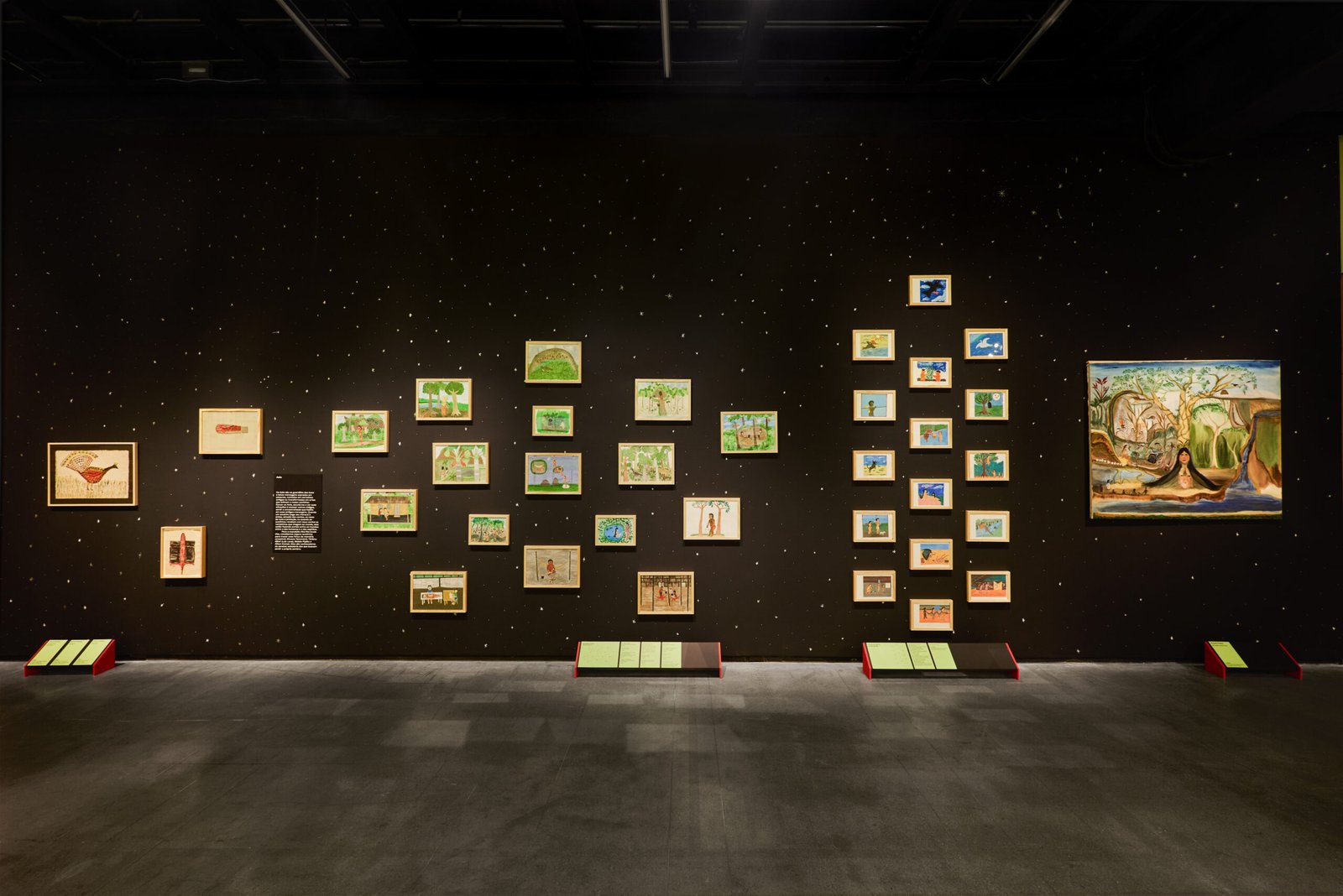
Wall in the section dedicated to grandparents.
Photo: EstudioemObra
Closing ceremony and tree-planting at Bixiga Park
After two months at Instituto Tomie Ohtake, the closing Long Live the Living School exhibition was also a touching event, including two significant activities. On the very day of the exhibition’s closing, we welcomed, in an open discussion, the educators from FORMABIAP . They are from Iquitos in Peru, and offered a profound reflection on education, ancestry, and the work they do at the intersection of art and learning processes within this teacher-training course.
On the morning of the closing day, it was truly memorable to gather all those medicinal plants (Soul Vine, Chacruna, Guinea Hen Weed, Tobacco and Ka’a, the Mate Herb), all those fruits (Jaracatia, Embiruçu, Araucária, Araçá). Those plants had been there alongside the little wood animals from the Living Garden, they had remained there for those two months, activating the exhibition space – and we took them to Bixiga Park. I organised this initiative together with Clara from Teatro Oficina, and at dawn we held a great prayer, a song, on the banks of the Bixiga River, who is gradually waking up. Bixiga is a river that had been dormant, but is now waking up, and an entire park is being built, planted and sown around the river. It was truly beautiful to have he oportunity to gather those plants and medicinal herbs and take them to that space. And today they are there, next to Bixiga Park, after having activated the exhibition. The garden was very important to me, because it was conceived to be like a classroom, showing that other forms of education can broaden our understanding of knowledge and conviviality in our own territories. That is why I invited animals and plants to participate in the exhibition around the garden. In today’s world, who comes together and have a chat with pacas, agoutis, otters, sloths and caimans? The idea was to invite the audience to sit down and reflect on how education stems from learning experiences rooted in our relationship with the land. So we brought elements of Nhe’ëry, the Atlantic Forest, and that continued to take root in São Paulo. We called out to the river, ‘Wake up, Bixiga, wake up!’, so that those waters may flow freely and peacefully through that territory. The planting that was done on the closing day was a legacy, a seed that the exhibition Viva Viva left for the city of São Paulo.
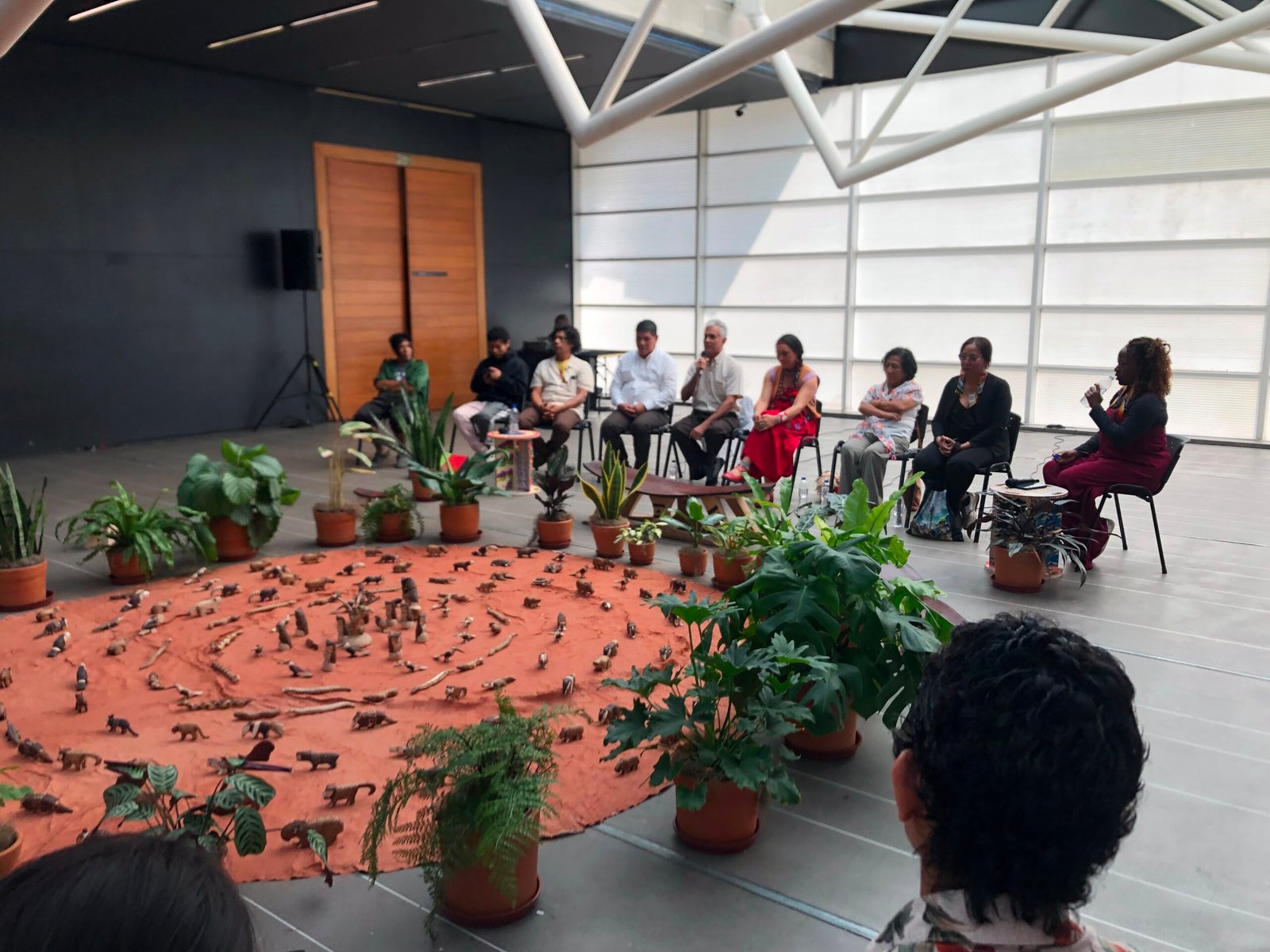
A conversation with FORMABIAP educators at the closing of the exhibition.
Photo: Selvagem Archive
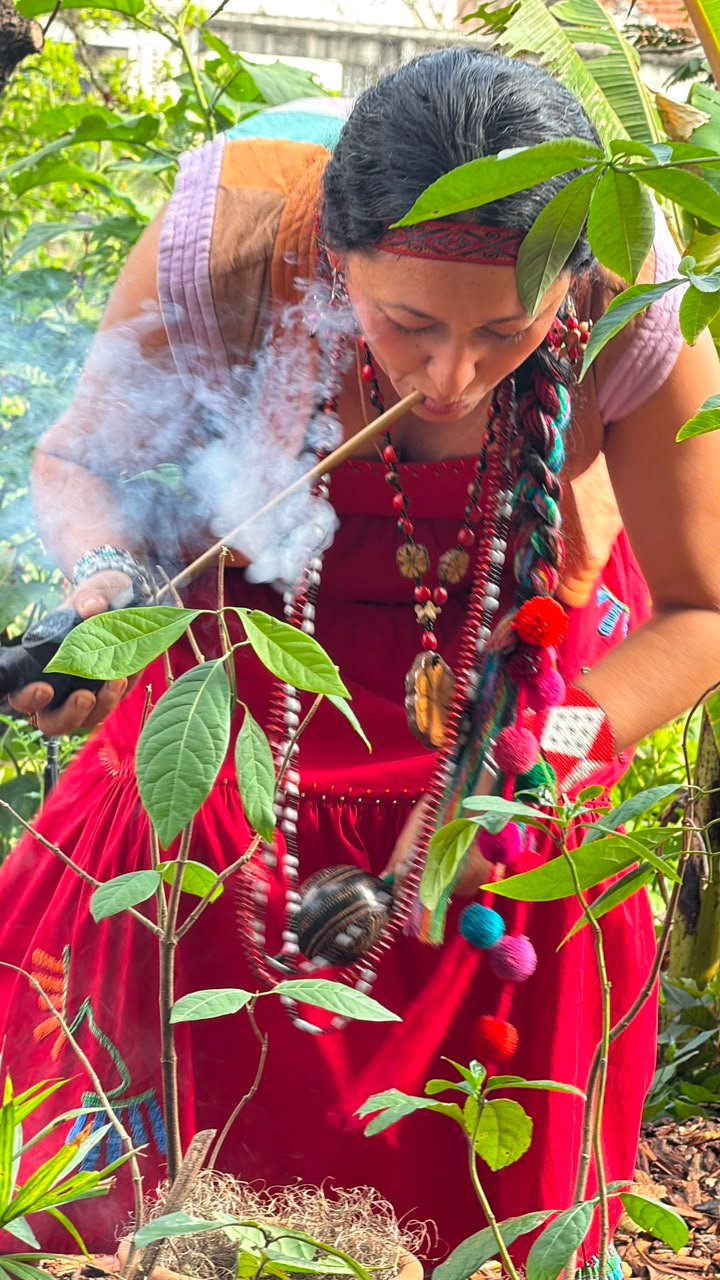
Tree planting along the Bixiga River.
Photo: Selvagem Archive
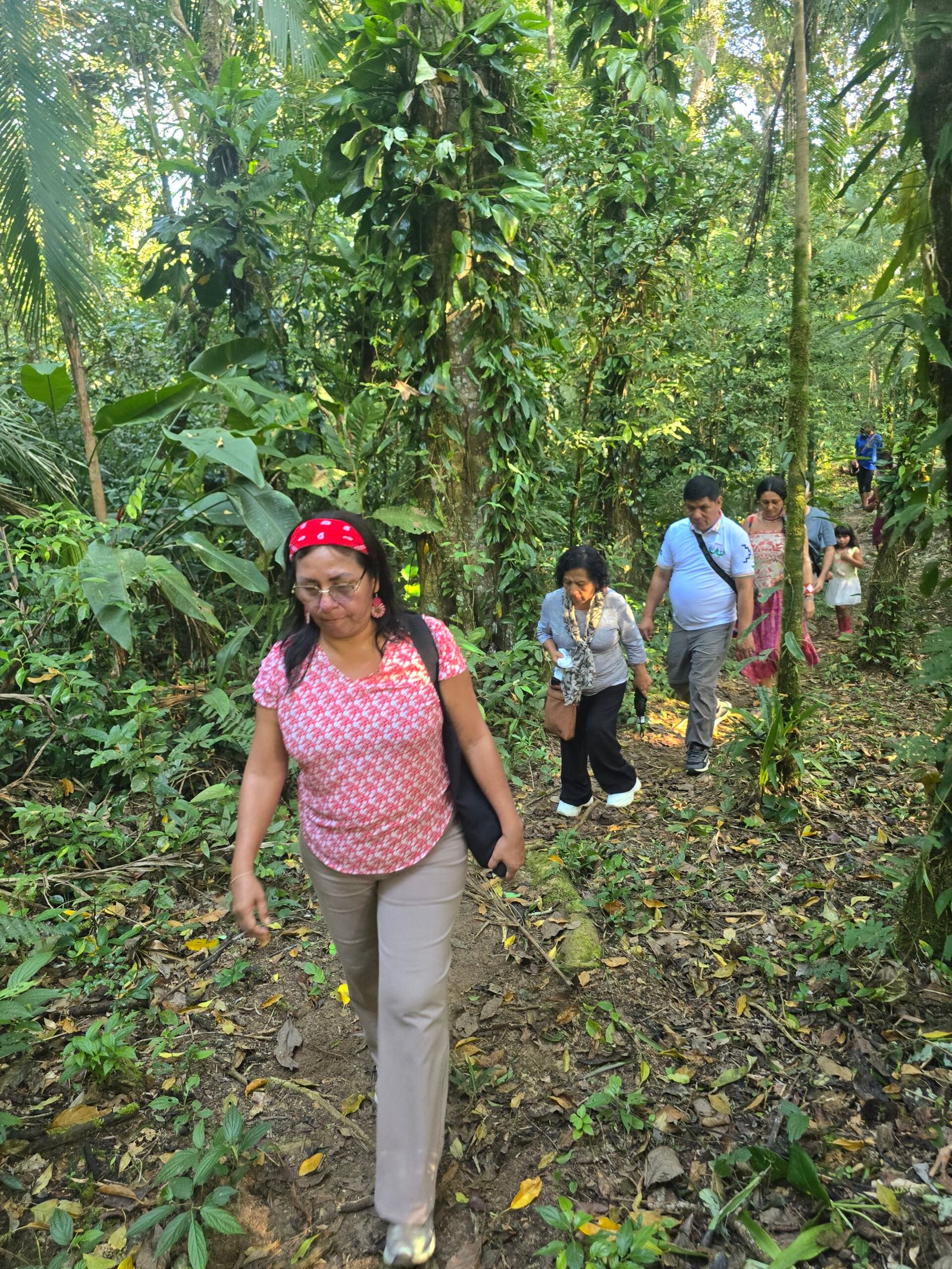
Immersion in the village of Rio Silveira
One of the most beautiful moments that unfolded from the exhibition happened right after its set-up and opening, with the visit of all the Living Schools coordinators, artists, elders and children to the Guarani Living School, in the village of Rio Silveira. Over the course of four days we were able to exchange many thoughts, listen to stories, share prayers and strengthen our spirit through the spiritual ceremony we held. We had this very sacred, very important moment of exchange in this experience that happened right after the opening, when everyone came to my community.
It’s still difficult to put this into words, to talk about it, because I can still feel the power of what it was and how it pulses within me. What happened was very important. It left a seed planted within the heart of each person who was able to share, who was able to come here, bathe in the river, eat some grilled fish, take part in the spiritual ceremony and share their prayers – so that we could also understand that the Living School walks a path of healing and consciousness. the Living School walks a path of broadening of perceptions, so that we may come to find the peace of walking alongside our reawakened memories.
During this immersion, the presence of Dua Busë – who is now quite elderly – along with Nete was very special to us, because it was the second time he had come to the village of Rio Silveira. The first time was when we were still in the process of organising the exhibition, during the Living School House residency at MAM Rio. At the end of the residency, everyone came here to the village for an immersive experience, and now, following the opening of the exhibition, they came once again.
During this second visit, Dua Busë performed the blessing of the Opy, the House of Prayer, a very significant moment of protection for us, and one that celebrated that space as a great classroom, where we connect with the spirits and receive guidance to walk in a truthful way. The concept of Una Shubu Hiwea, which Dua Busë always brings with him, is the fundamental concept that structures the entire Living Schools movement. For that reason, this gathering unfolded under the protection of the Yuxibu, of all the Ija Kuery, of all the Yamiyxop and of the Waimahsã; they were all present here with us during those days. That is what I think about how powerful this moment of the exhibition was for each and every one of us.

Artists and coordinators from the five Living Schools in the Guarani Living School territory.
Photo: Elisa Mendes.
The Living Schools encourage us to walk steadily and slowly, to learn to listen and understand the signs that the beings of nature send us. The Living Schools are alive because we continue to dream and strive to put into practice the knowledge passed down to us in the depths of the night’s darkness and through listening attentively to our grandpas and grandmas. In the Living Schools, we do not compete, but join hands and keep going, together, rowing the inspiring canoe of transformation, which motivates us and shows us the way. In the Living Schools, we also seek to weave paths towards the healing of the Earth and of our bodies, since memories that lie dormant hurt and cause pain deep inside us. In the Living Schools, we carry not only pencils and notebooks in our hands, but also hoes, pipes, paints of many colours, and songs that hold stories from times long past.
Living Schools are gateways to learning, so that teaching and learning can be a joyful and gentle experience, a colourful one, that fosters the awakening of memories and the strengthening of our communities and relationships. For this reason, the exhibition Long Live the Long Live the Living School was an invitation to pause, reflect and rethink of the ways we learn and tell the many stories that the books of ‘non-living’ schools do not tell.
LONG LIVE THE LIVING SCHOOLS!
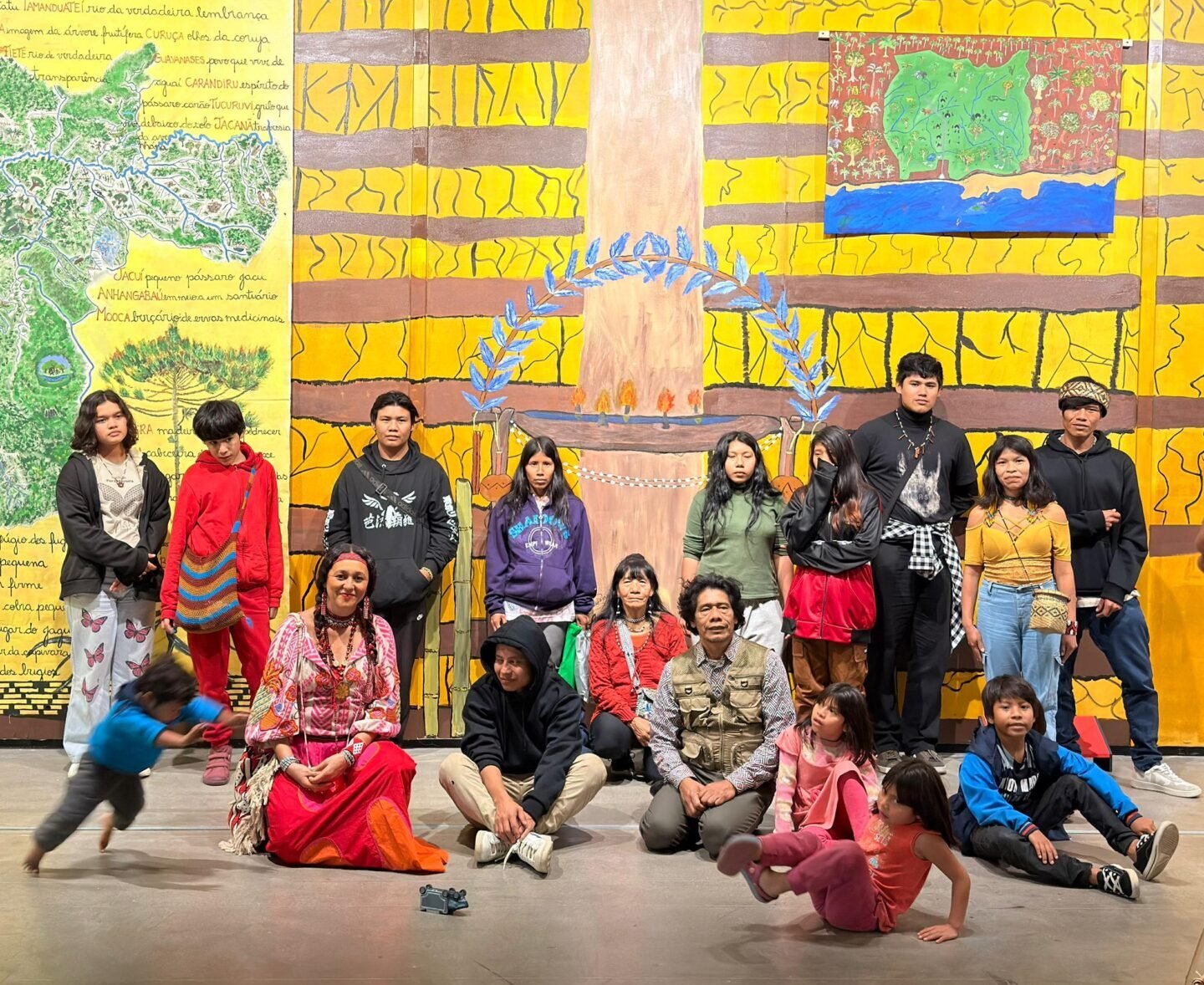
A delegation from the Guarani Living School next to their works at the exhibition
Photo: Selvagem Archive
To explore some of the layers of the Long Live the Living School, read the news: