





LIVING SCHOOL HOUSE
Indigenous artistic residency
Museum of Modern Art of Rio de Janeiro
October 2025
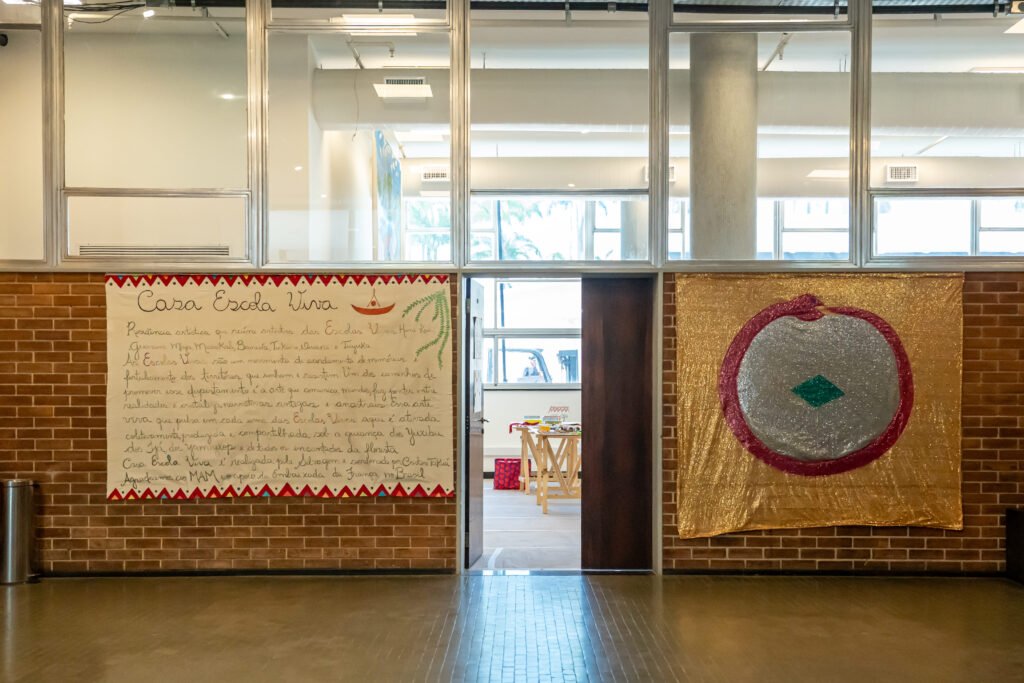
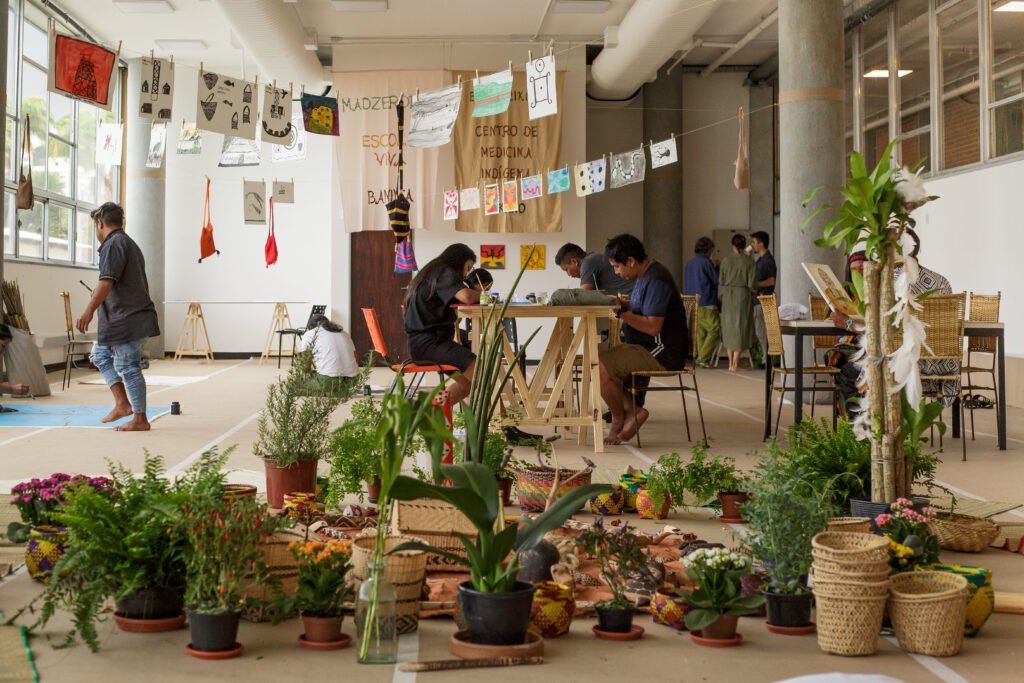
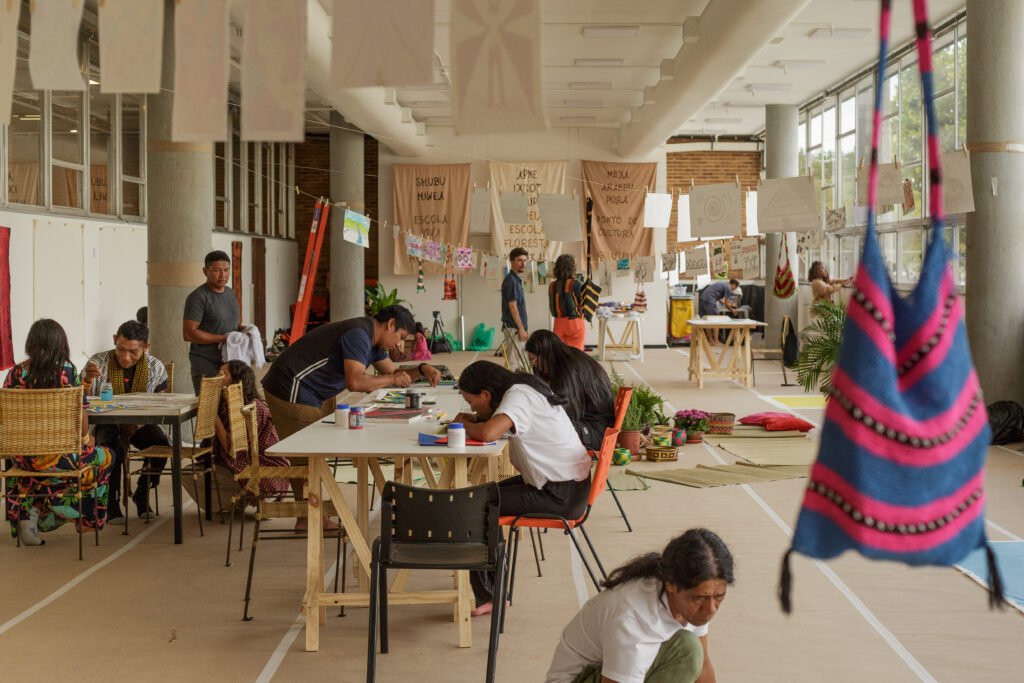
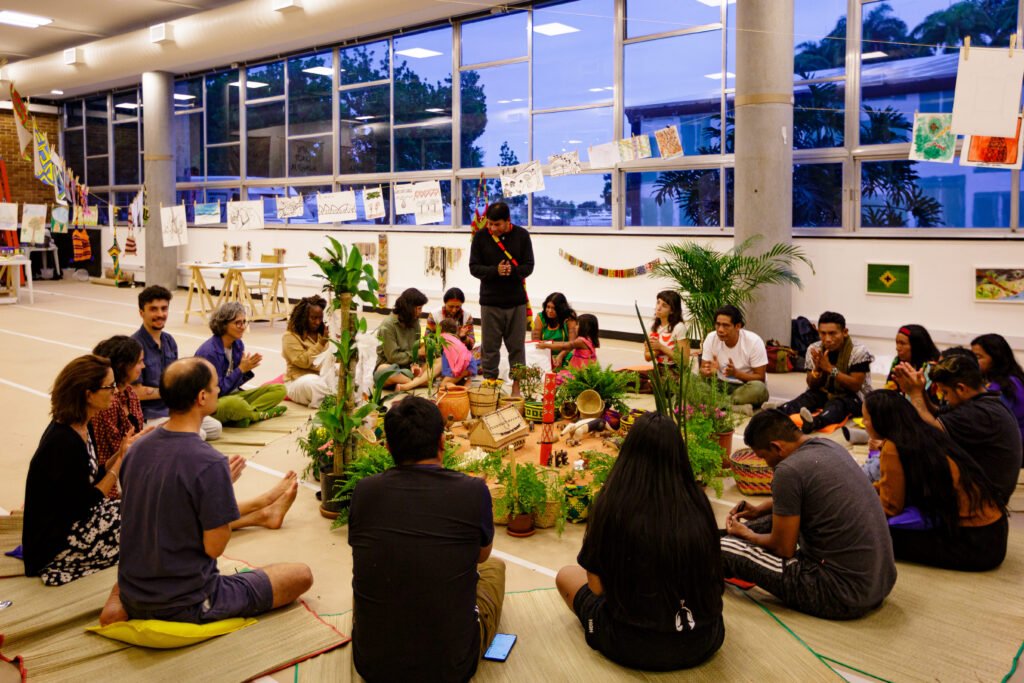
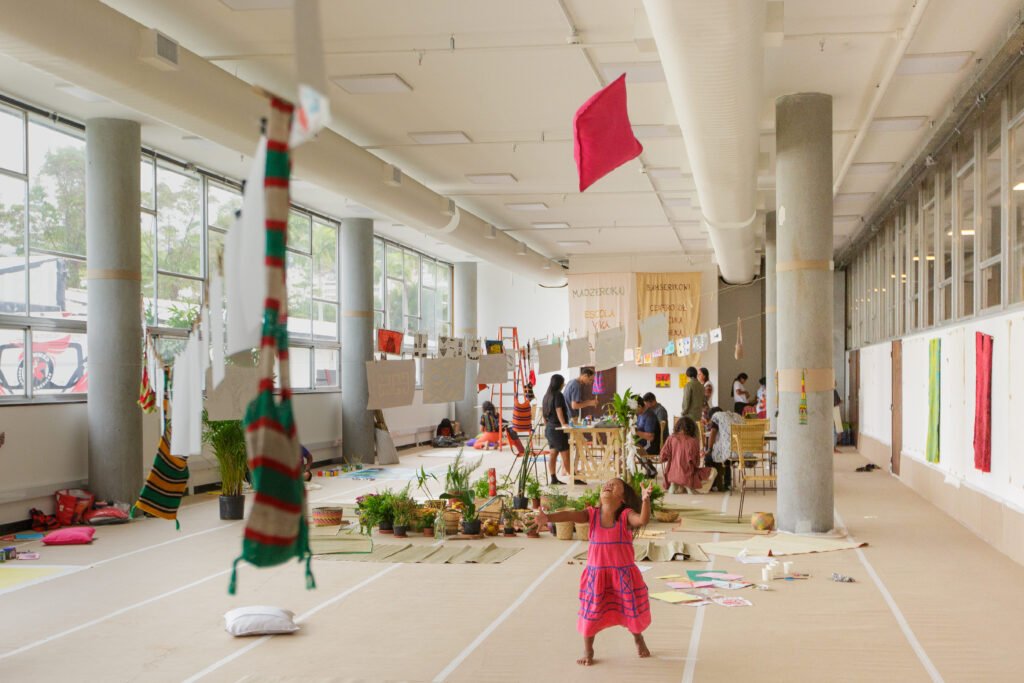
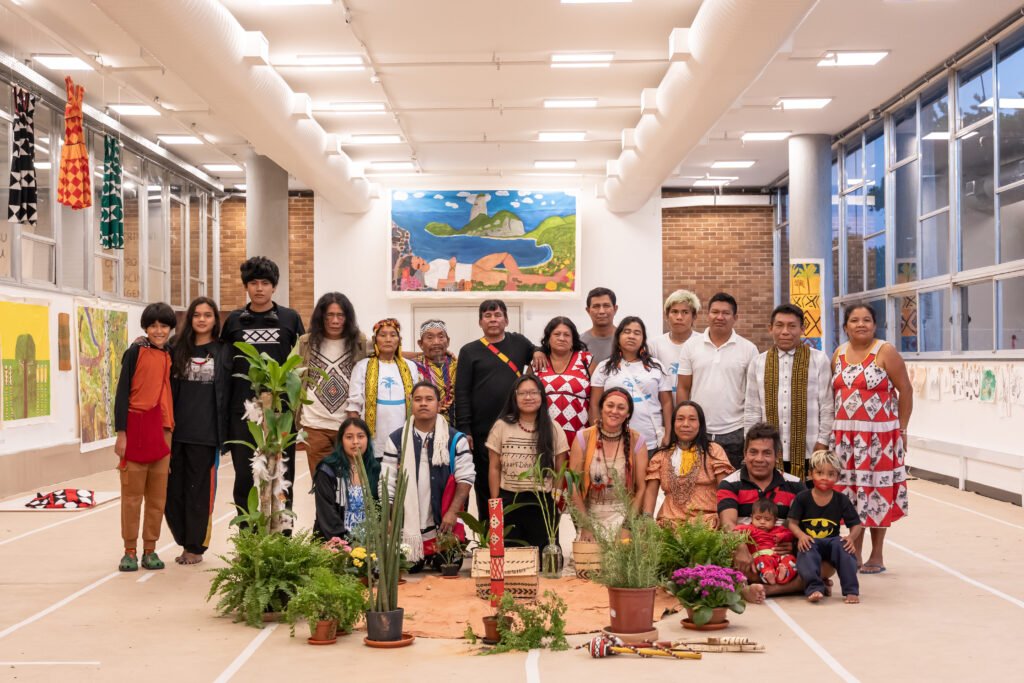
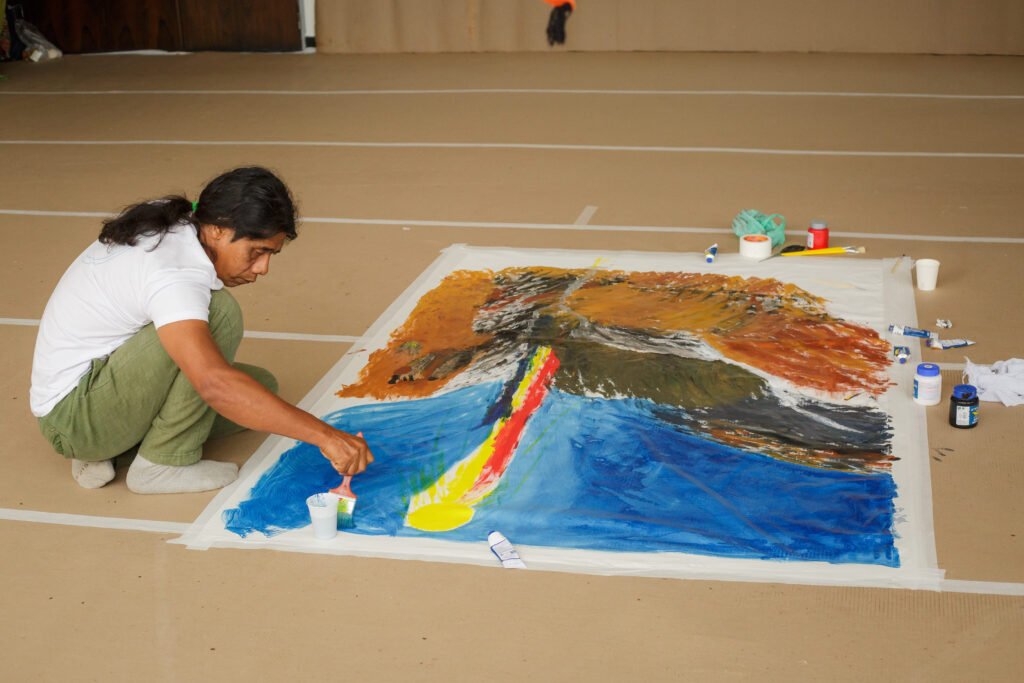
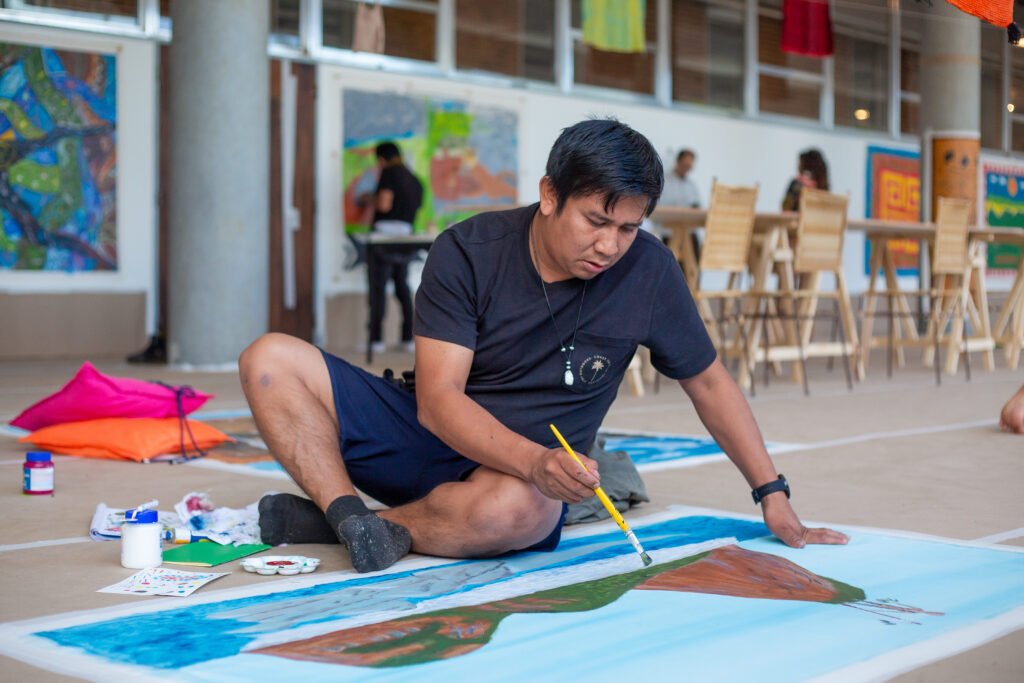
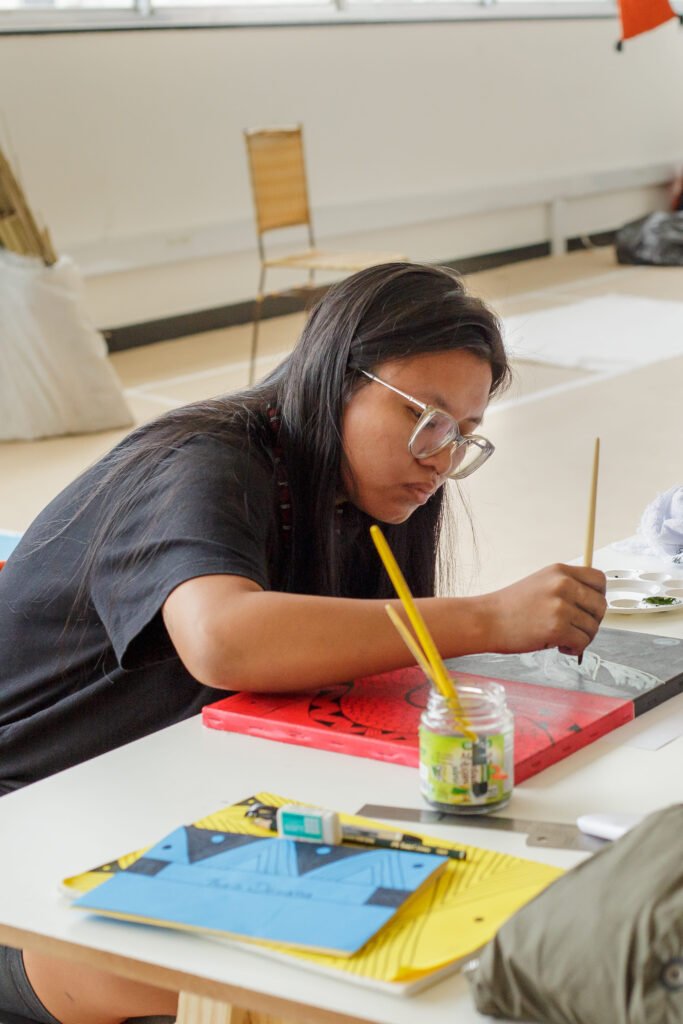
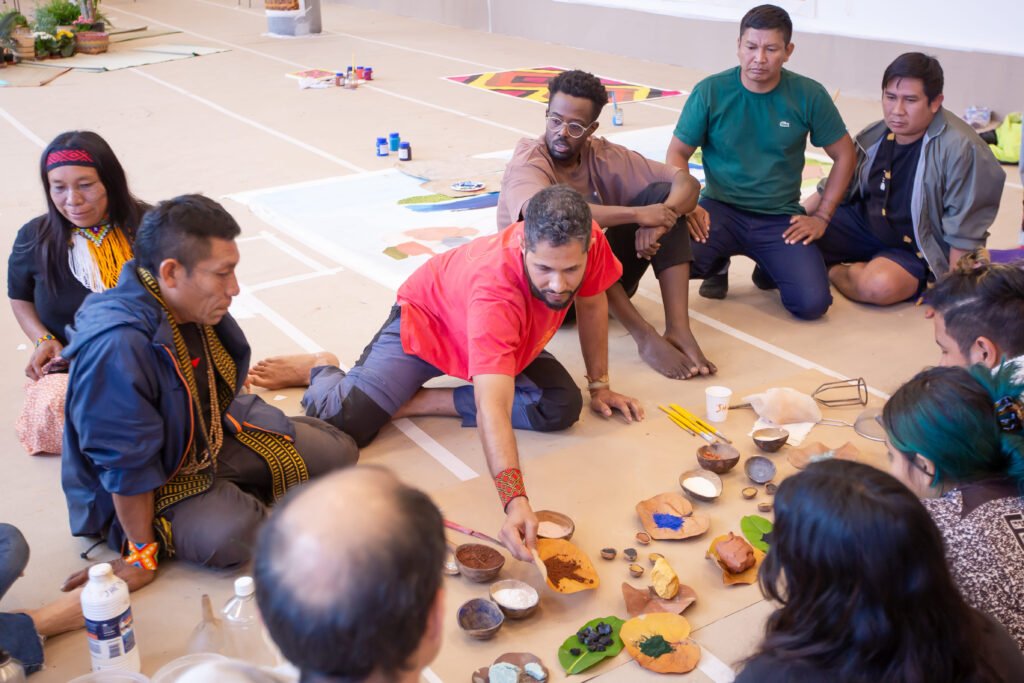
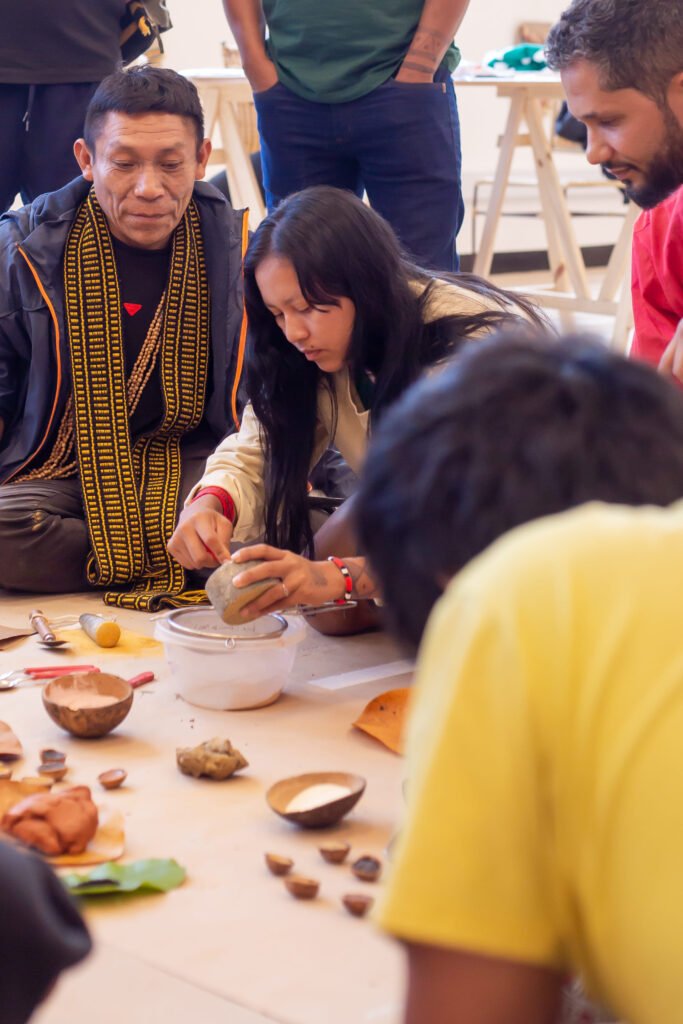
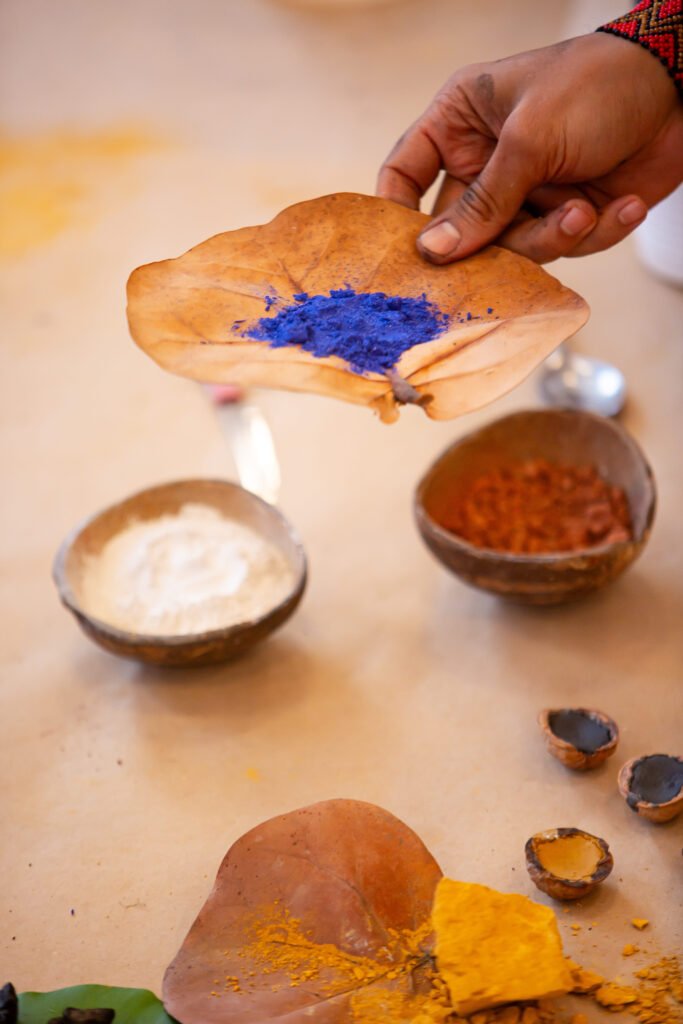
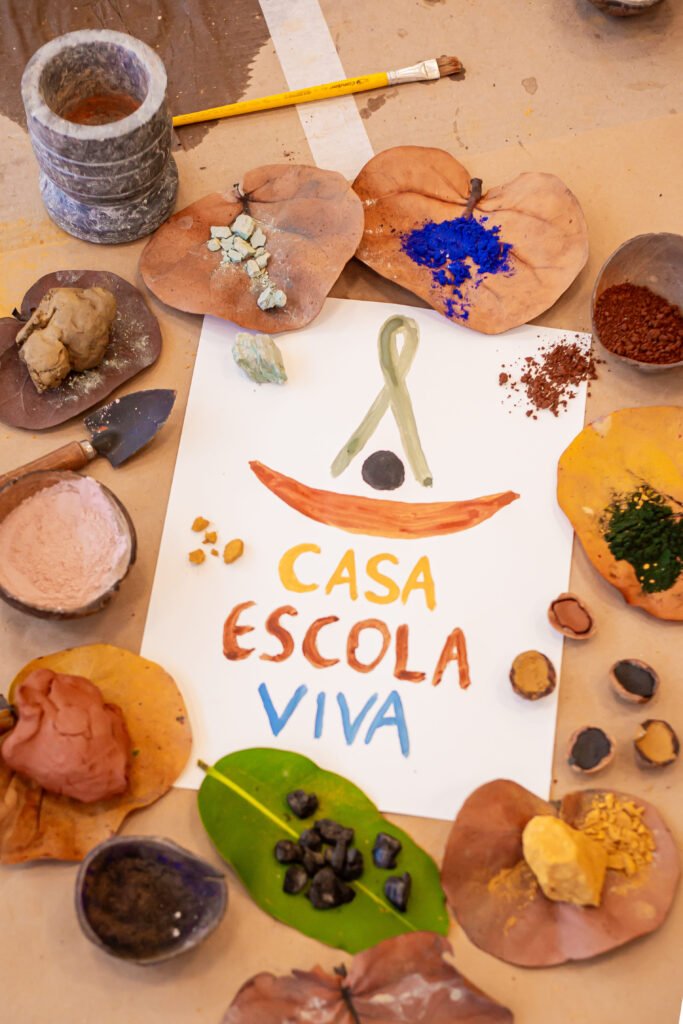
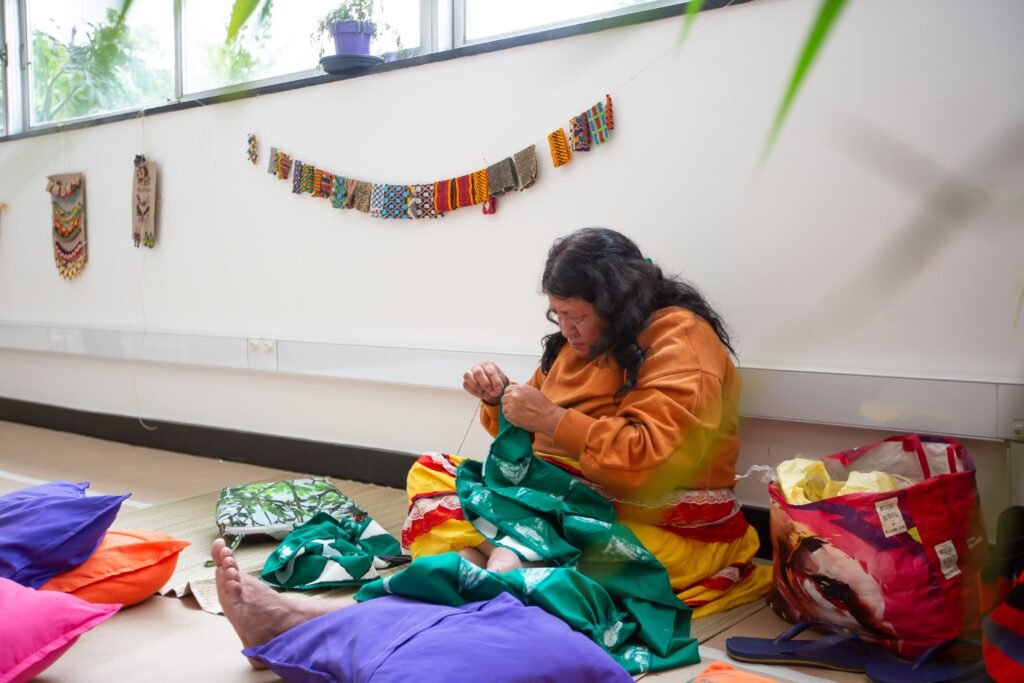
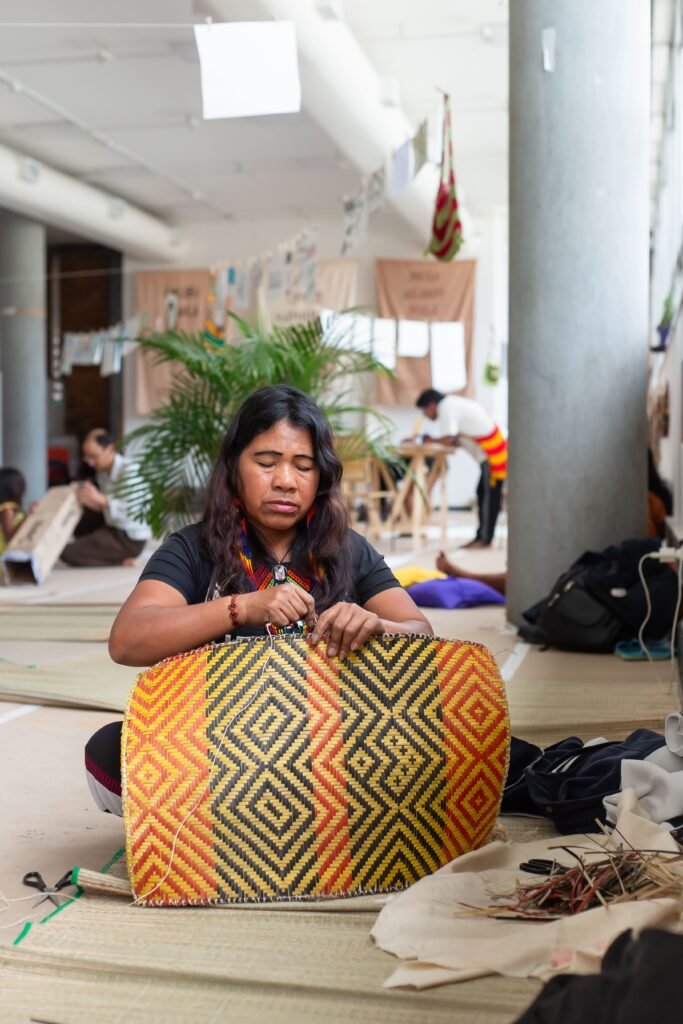
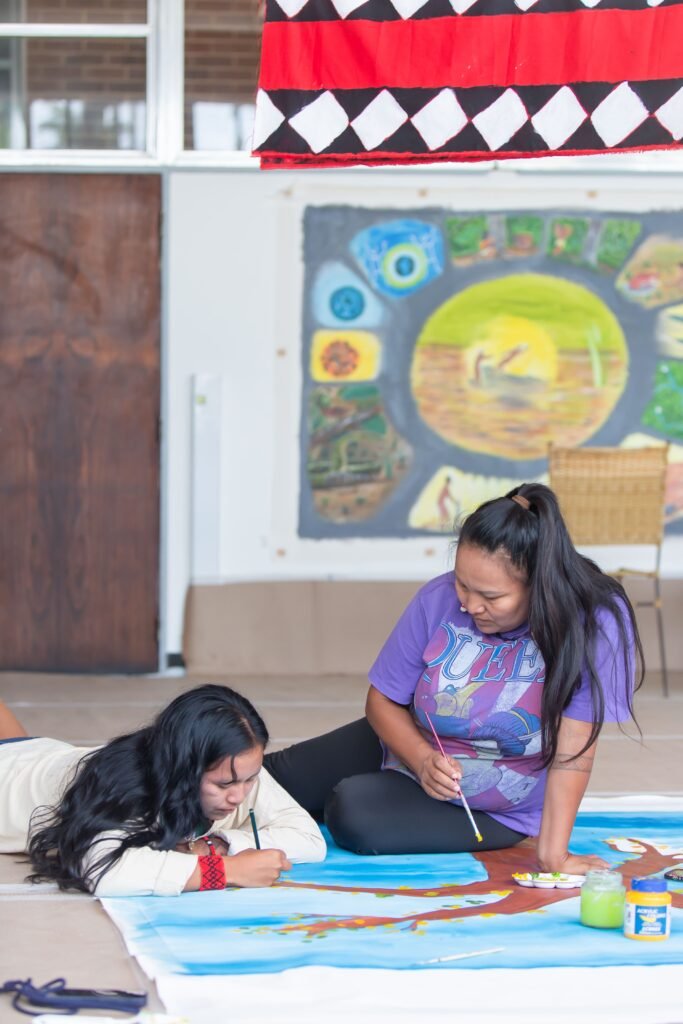
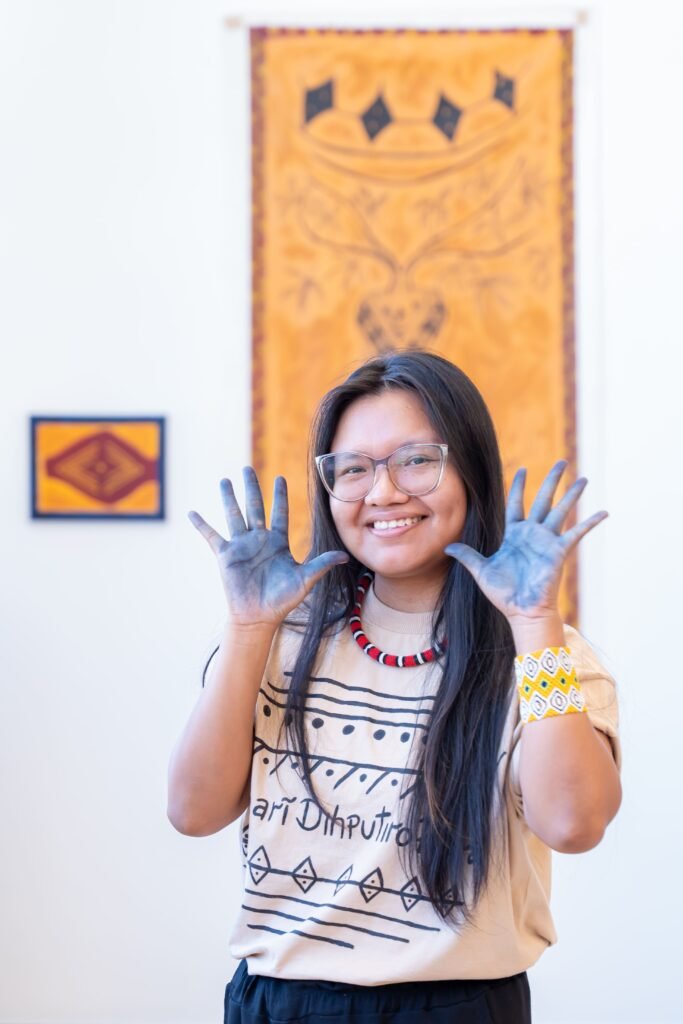
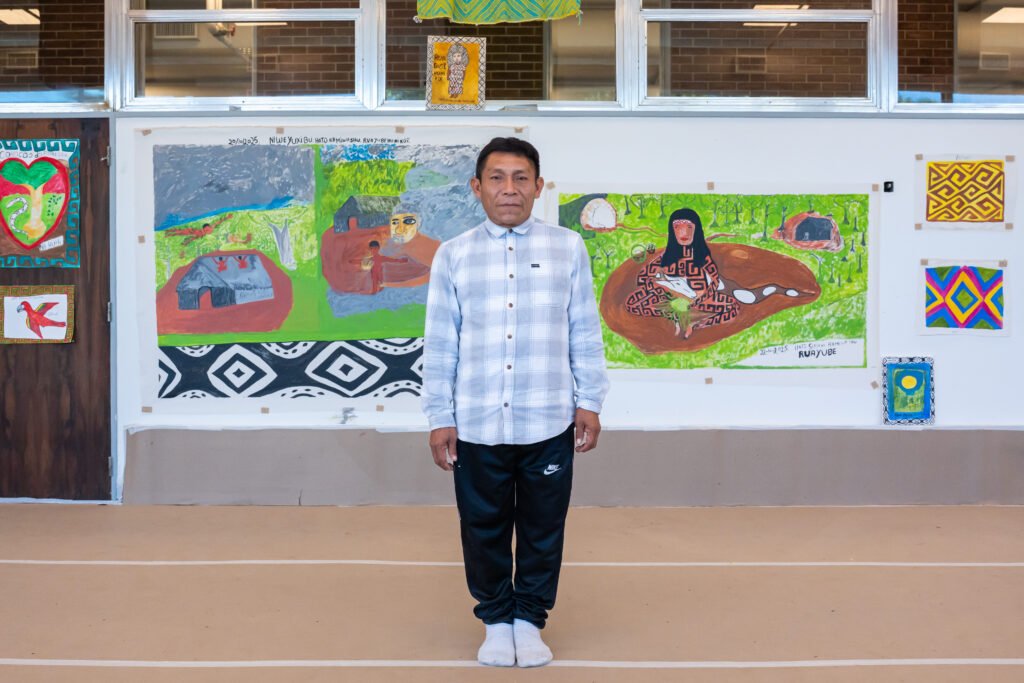
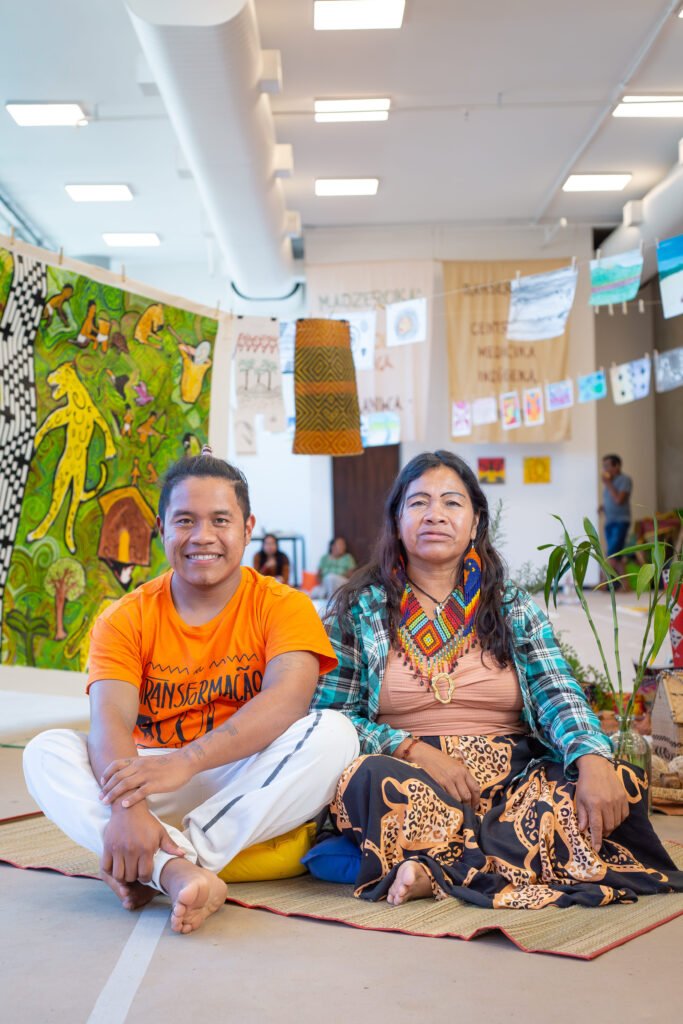
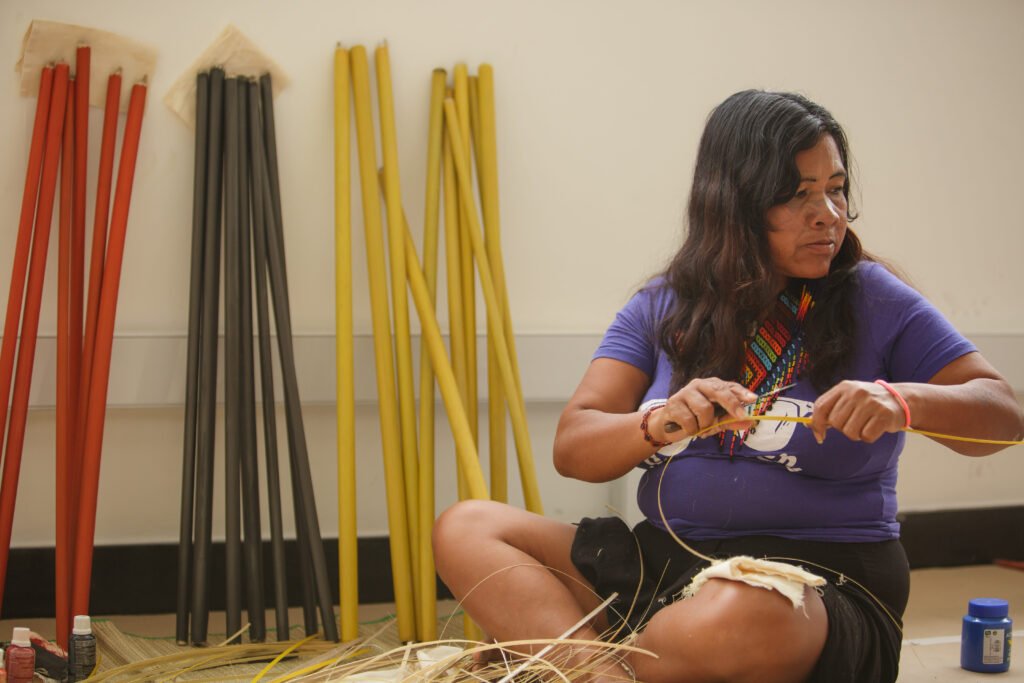
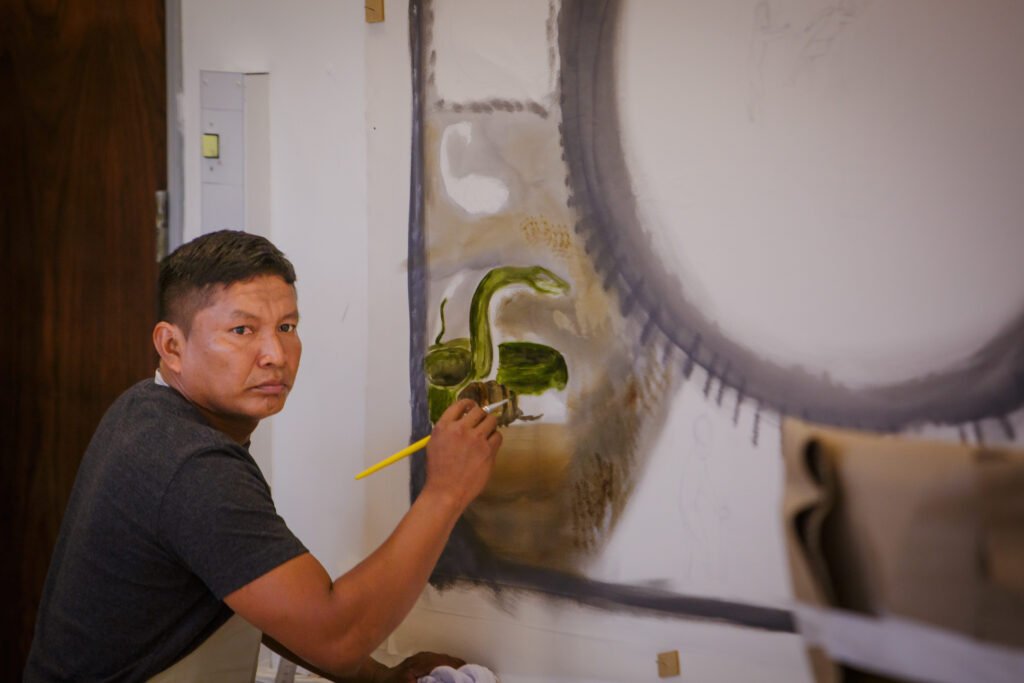
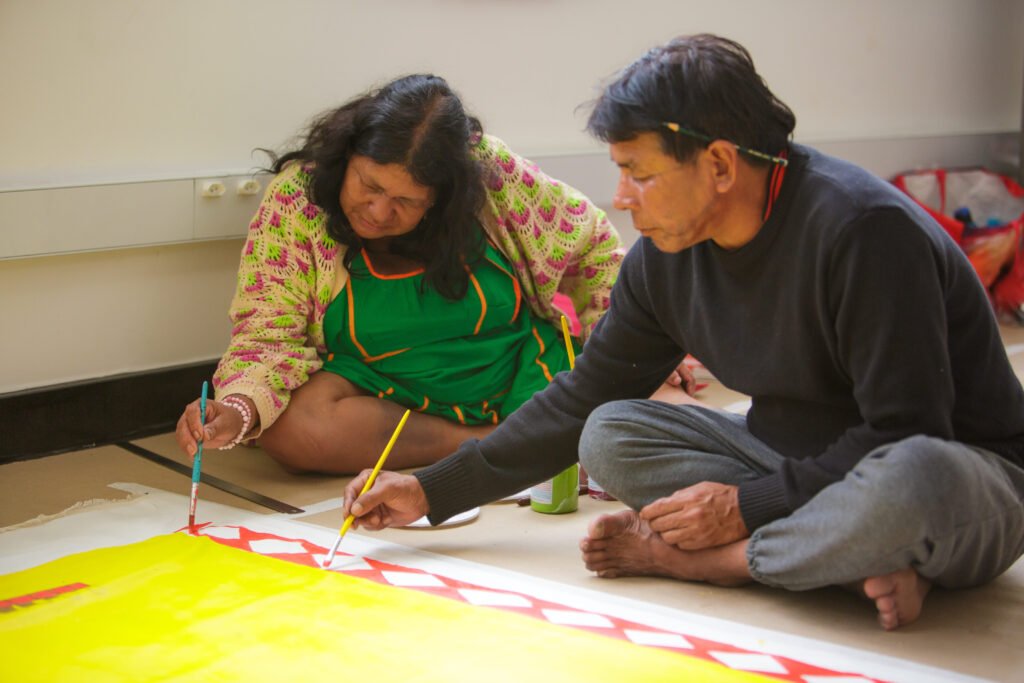
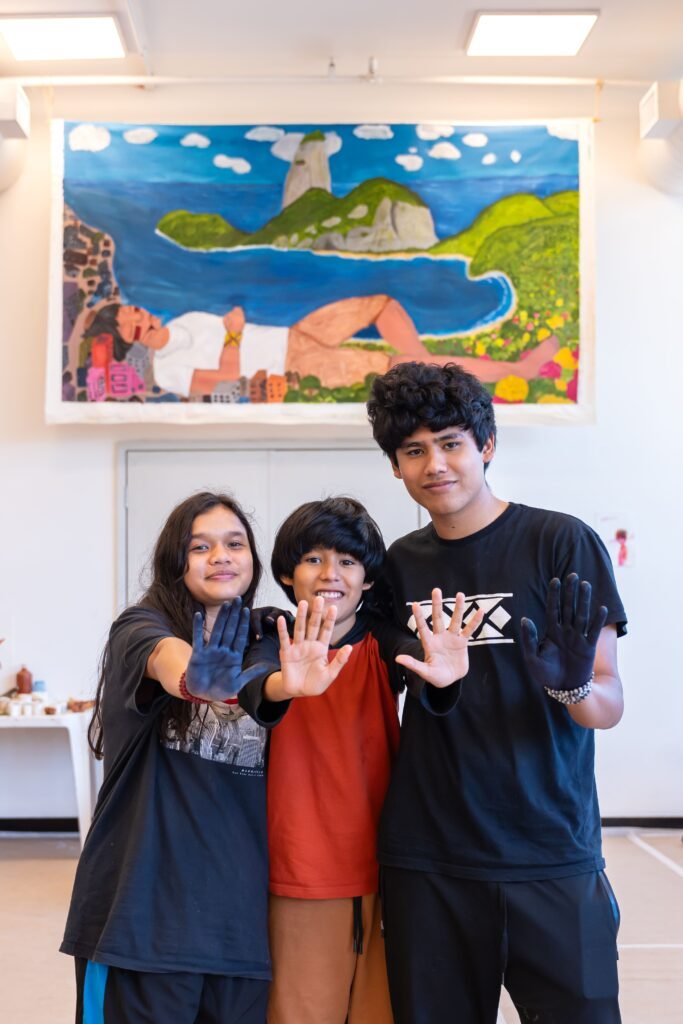
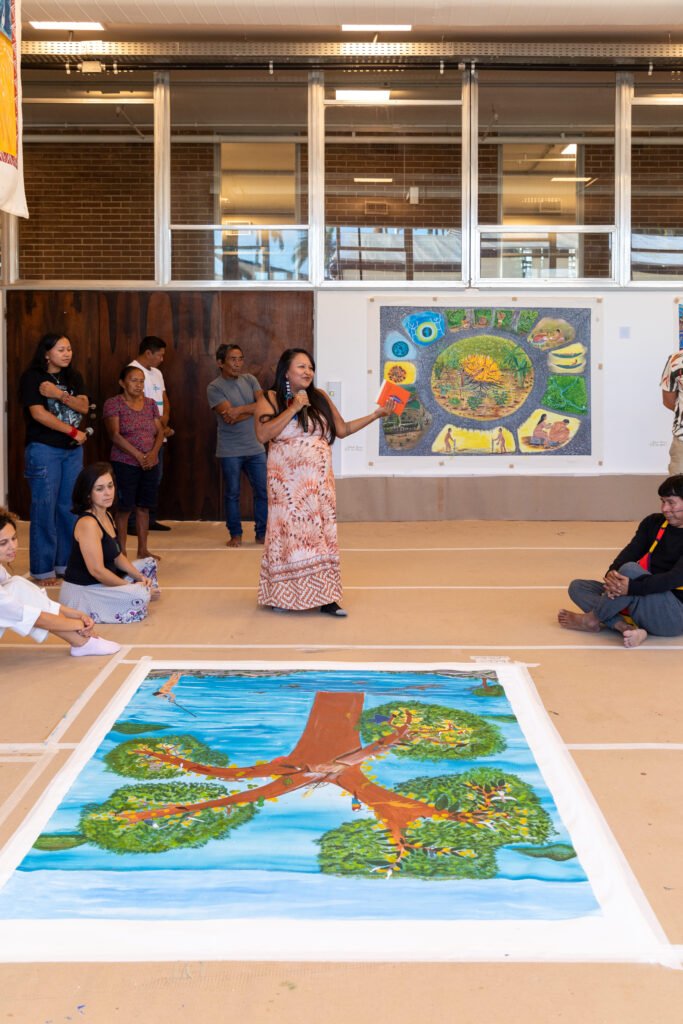
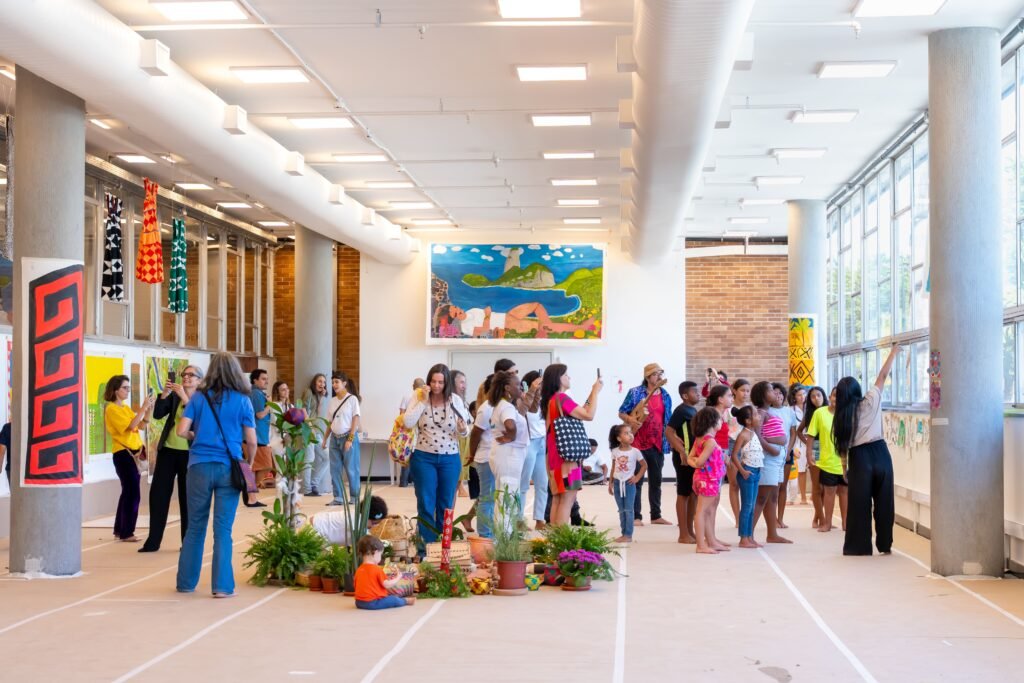
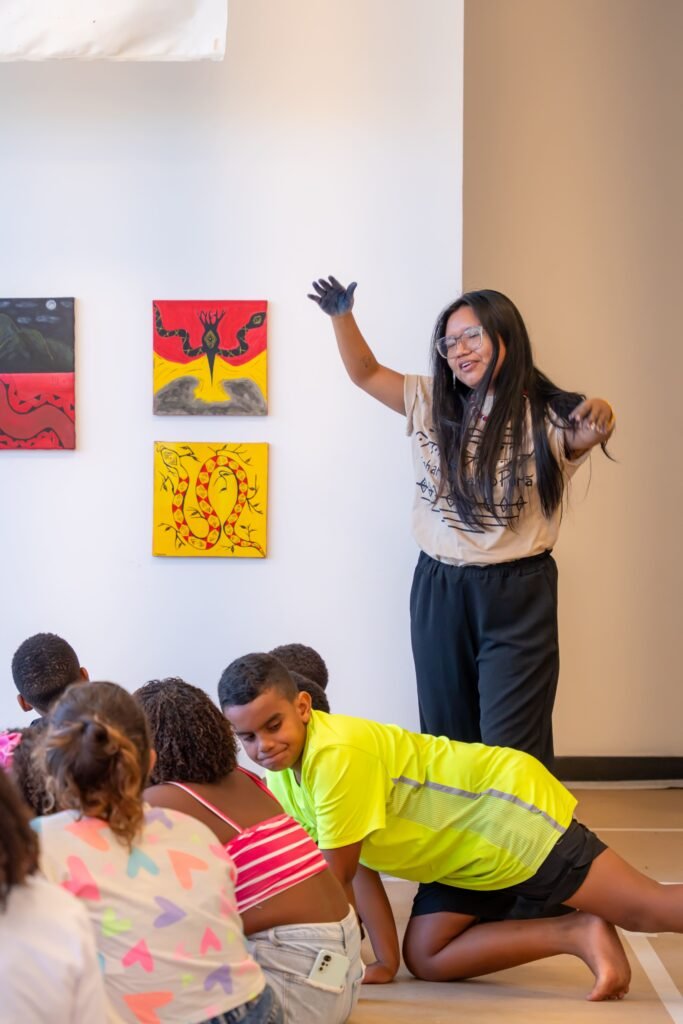
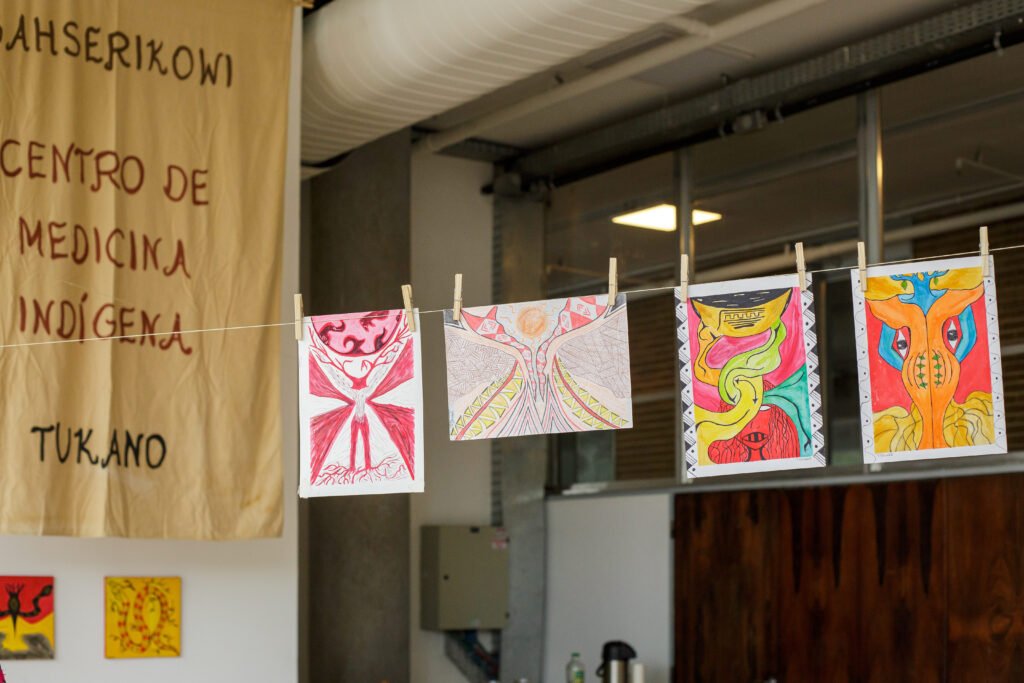
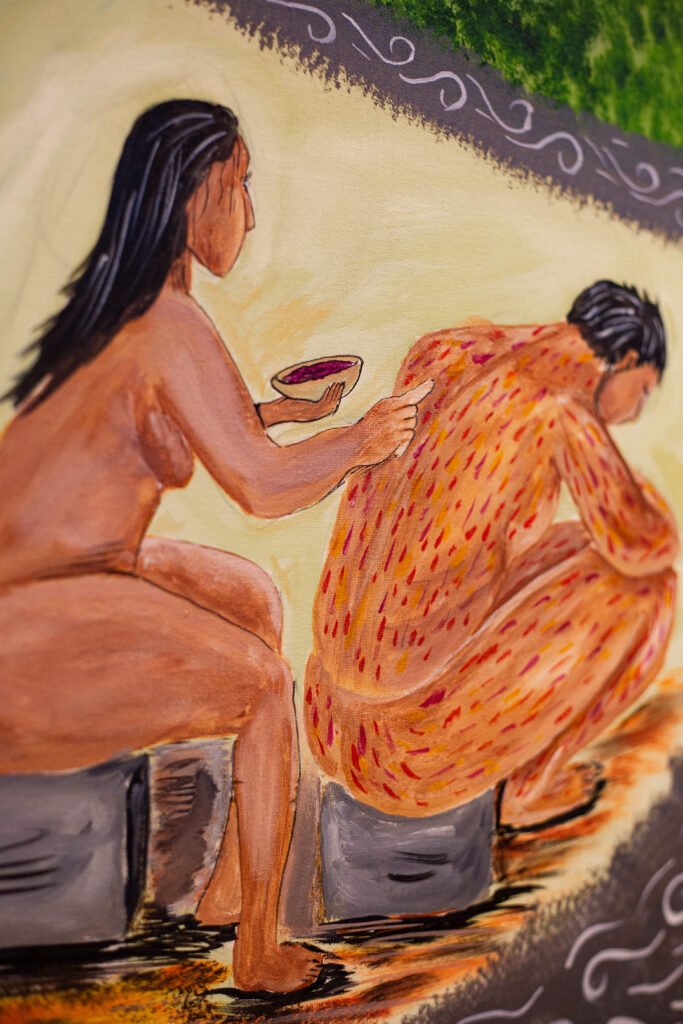
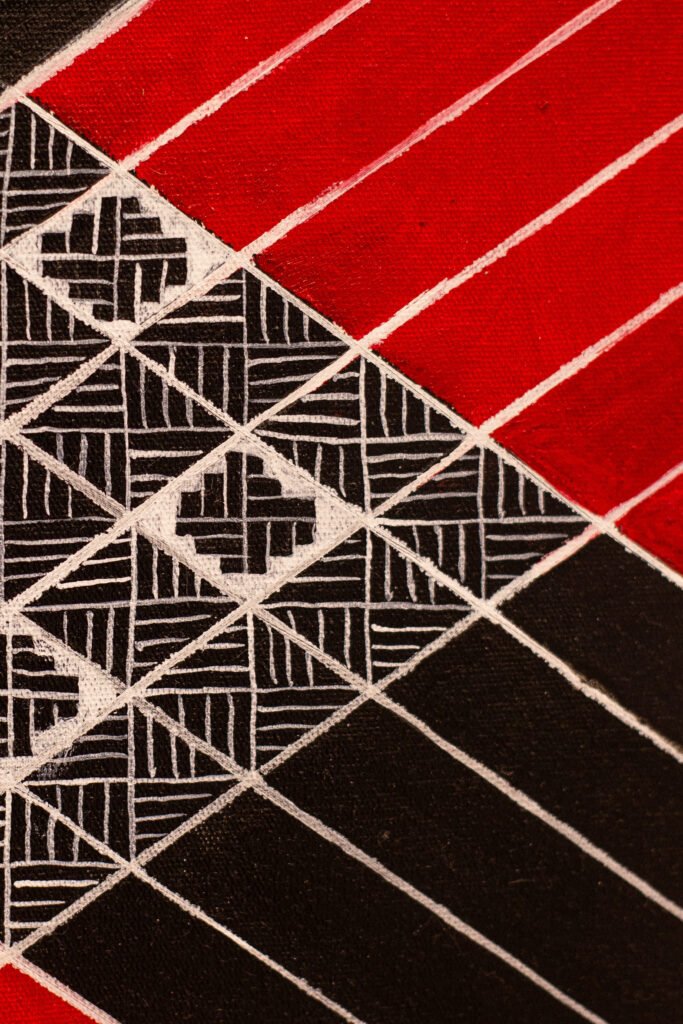
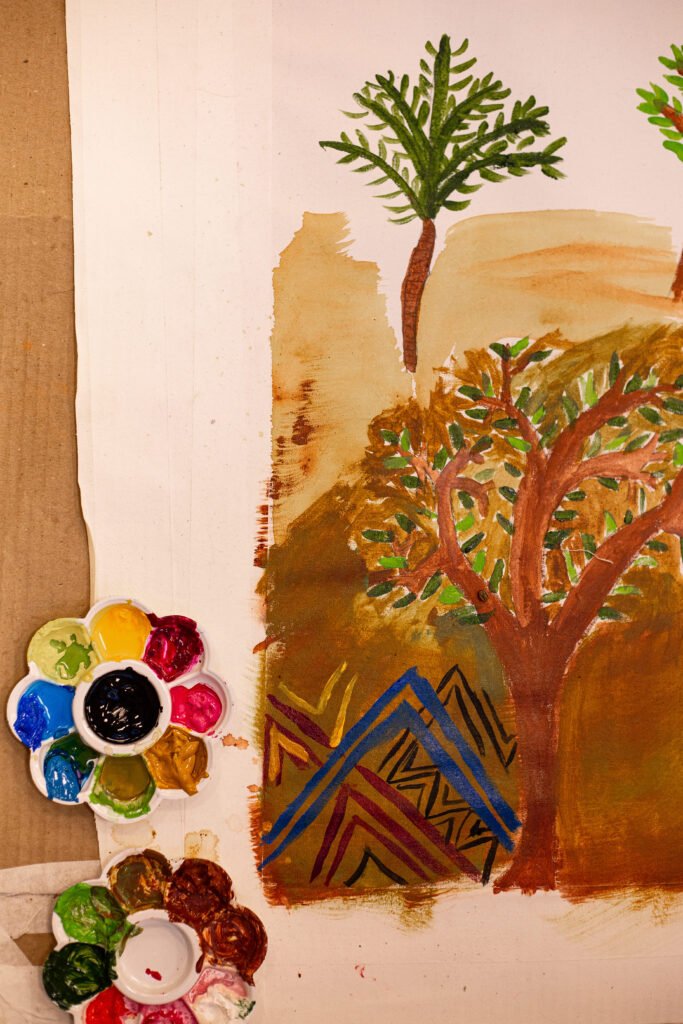
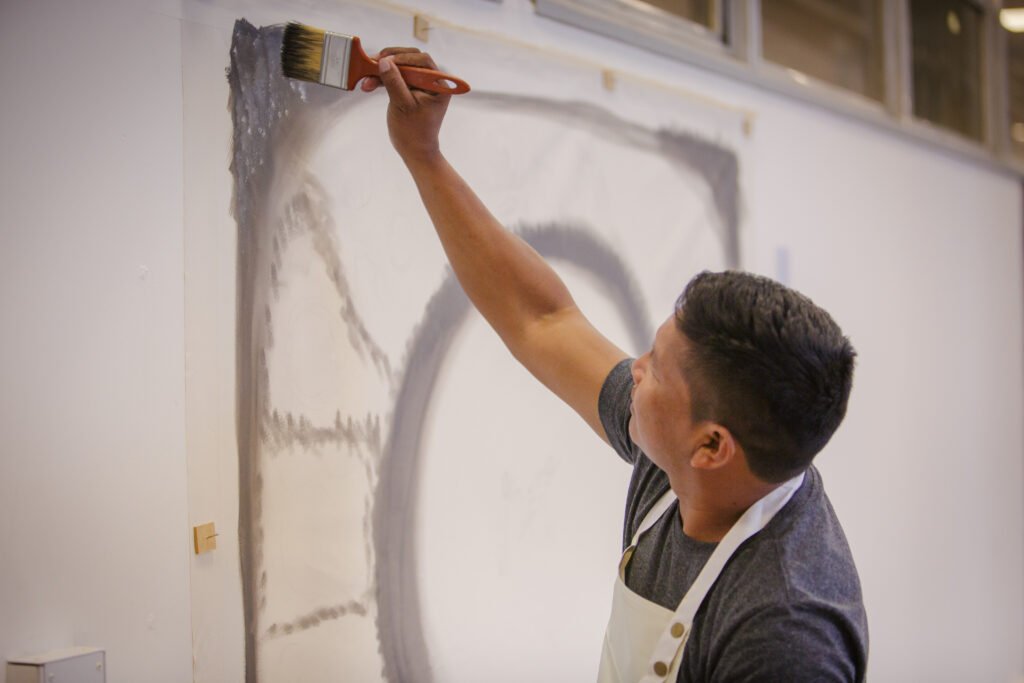
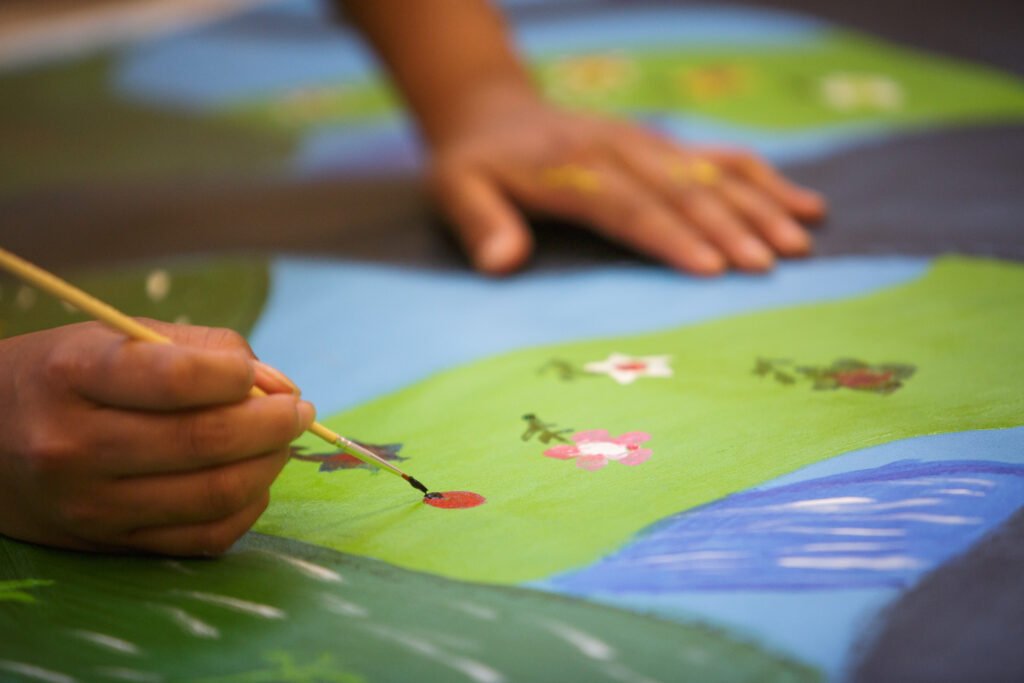
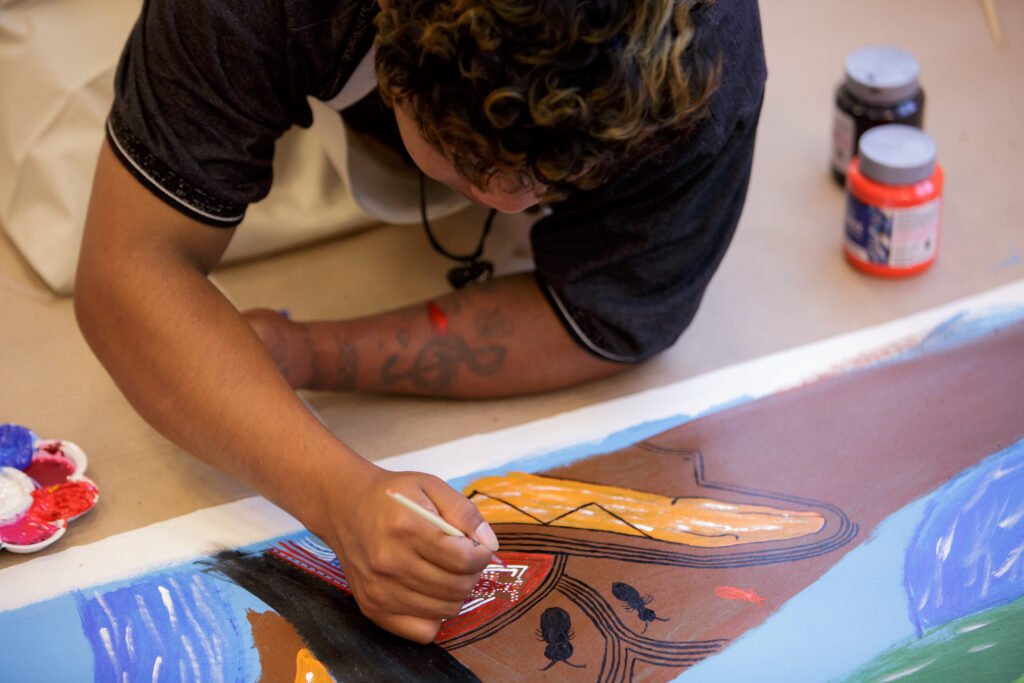
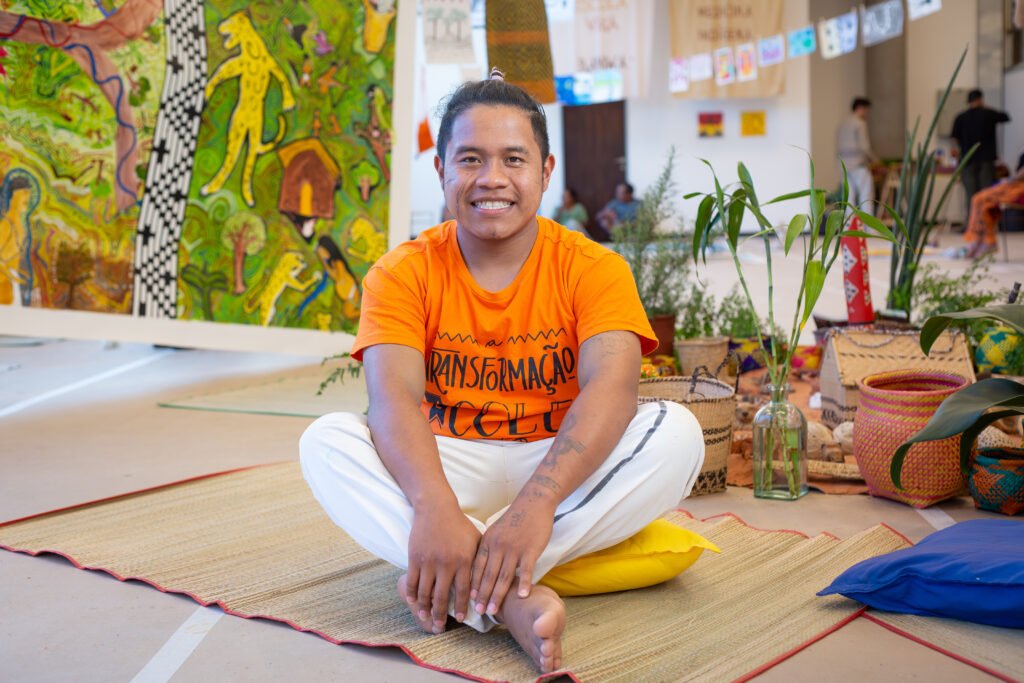
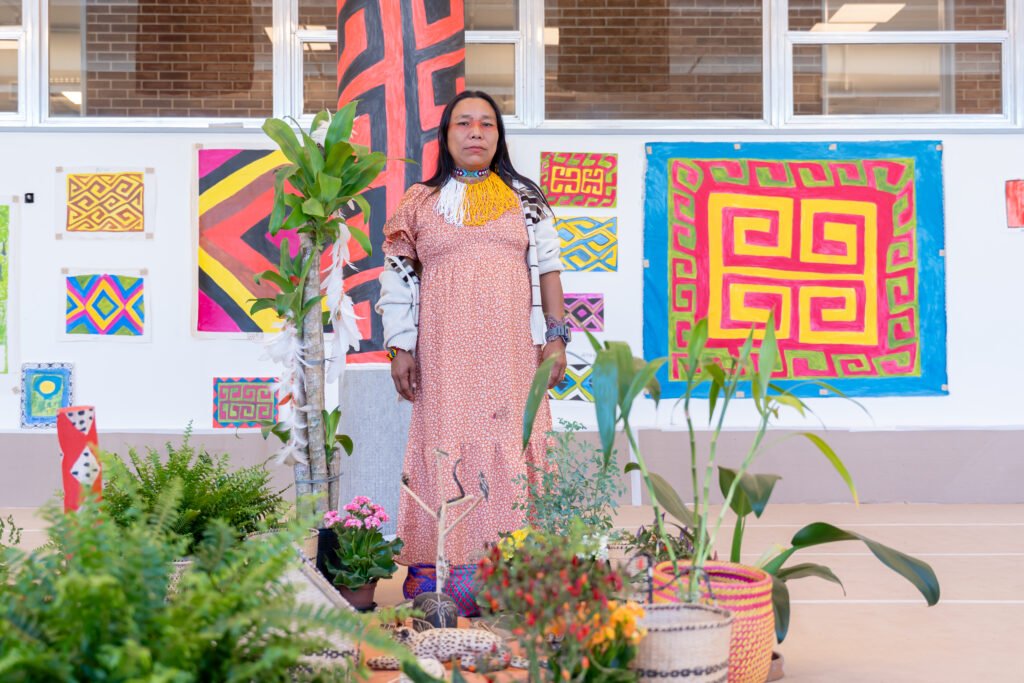
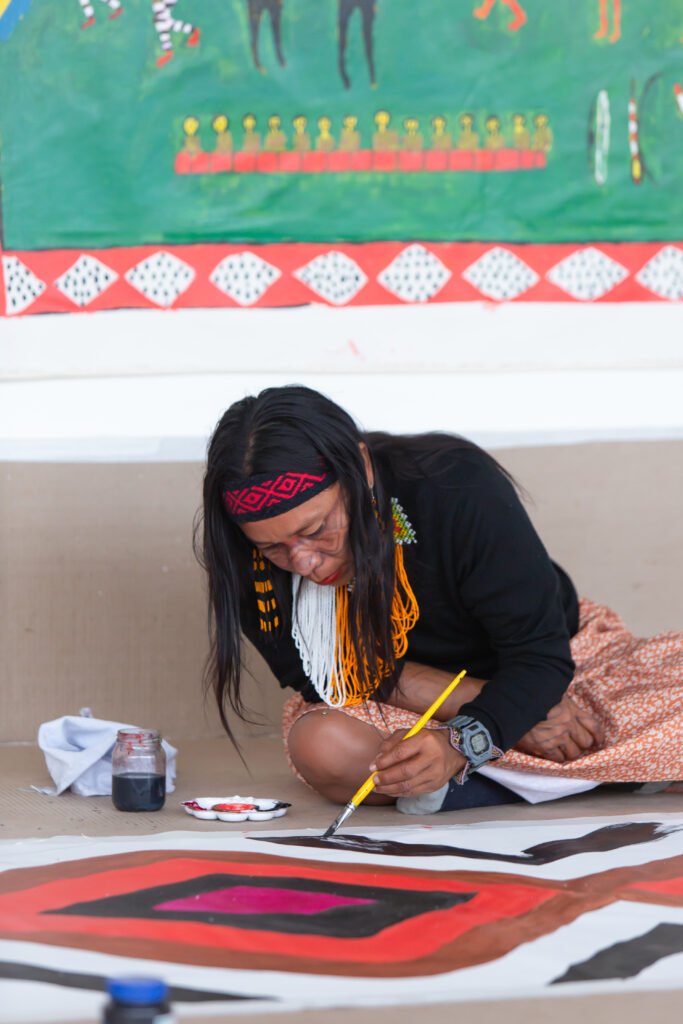
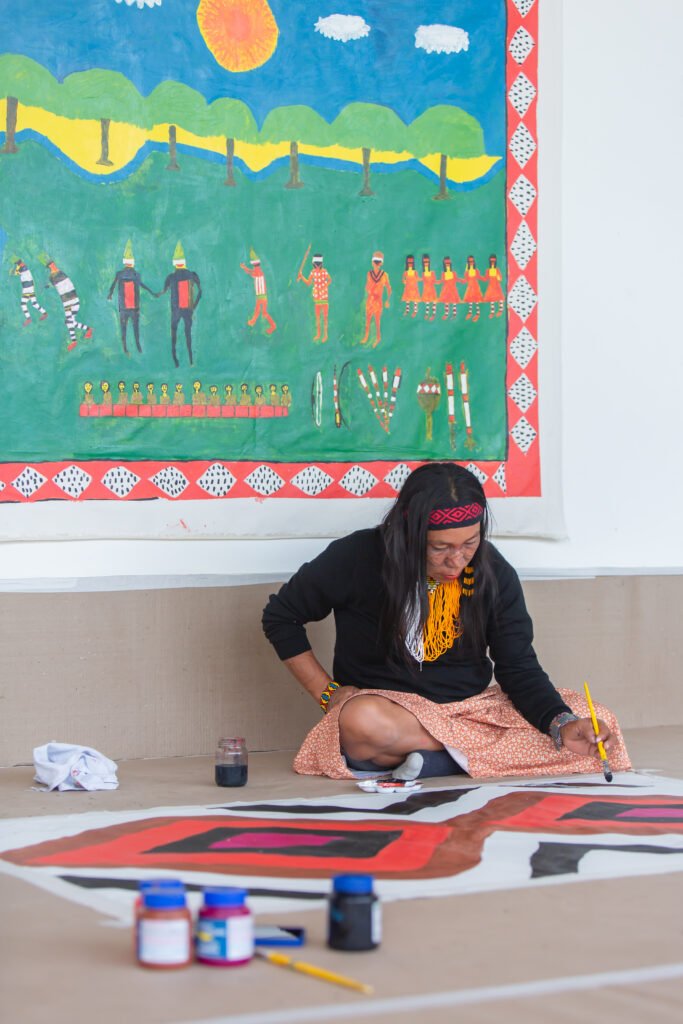
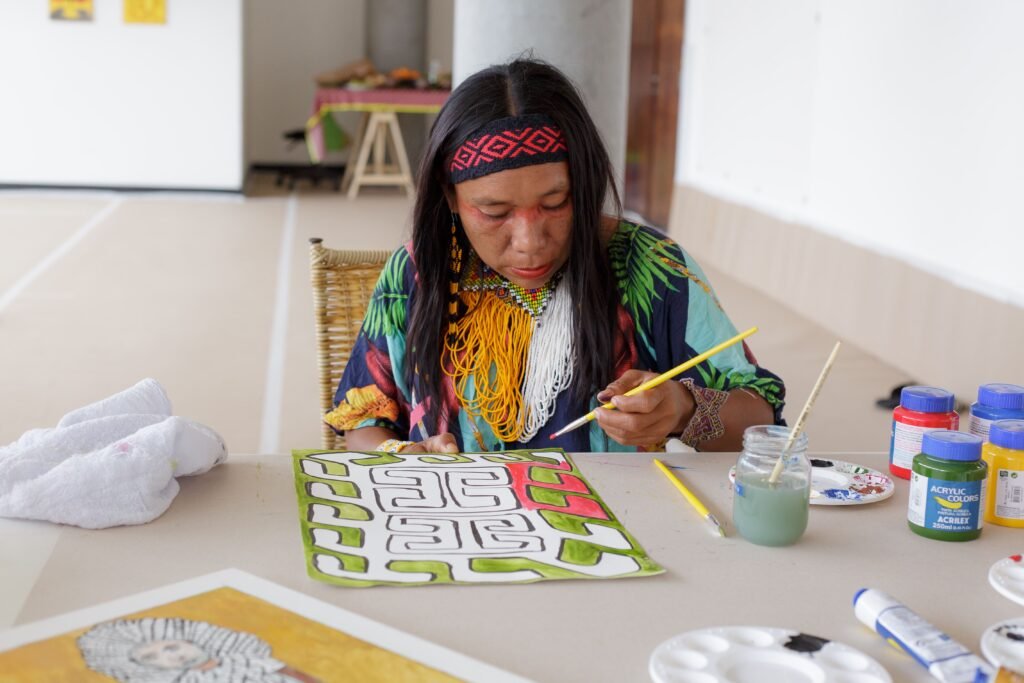
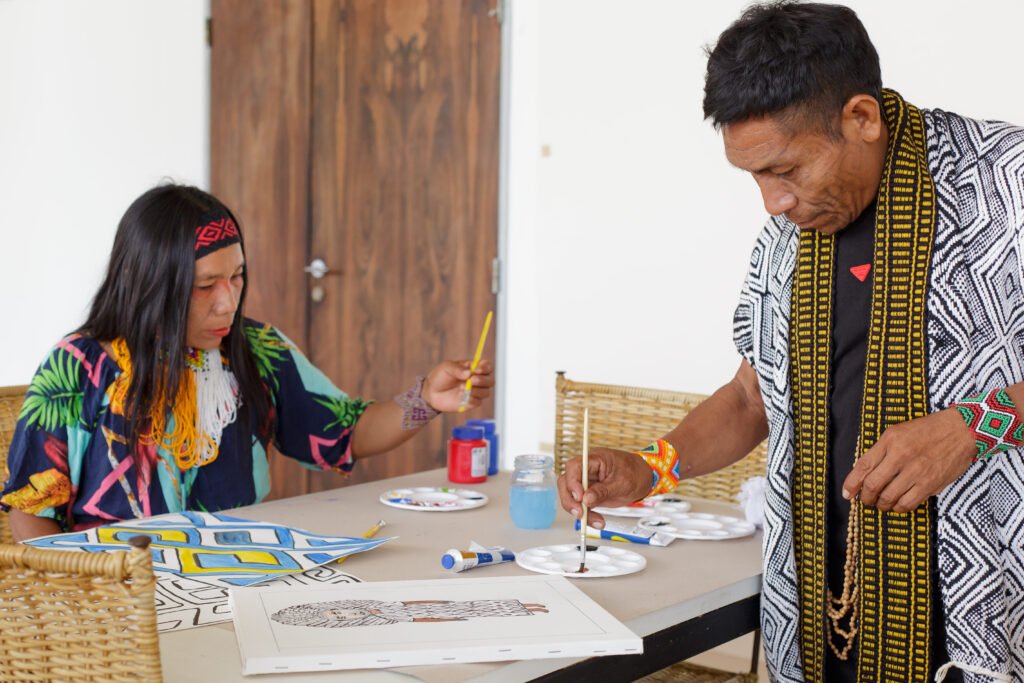
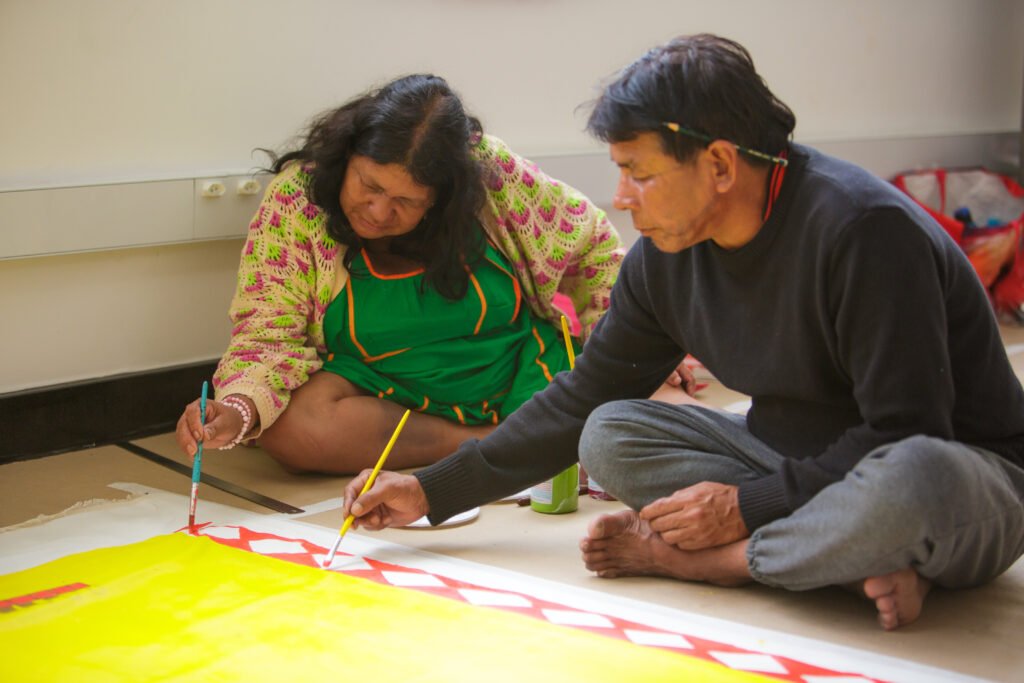
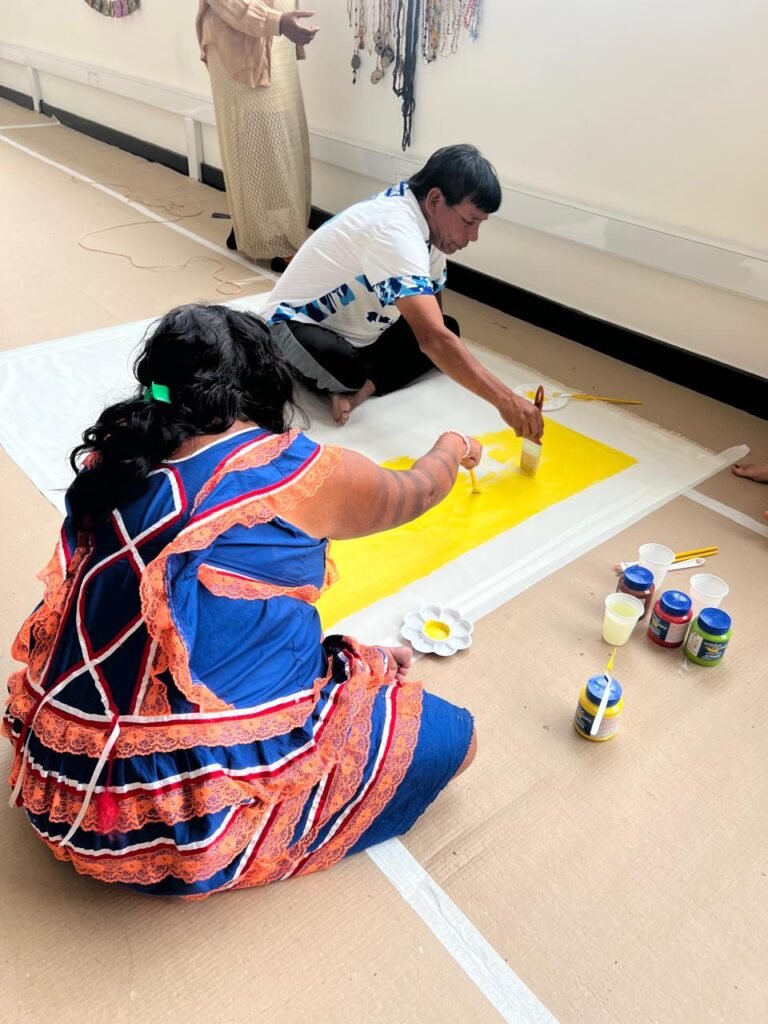
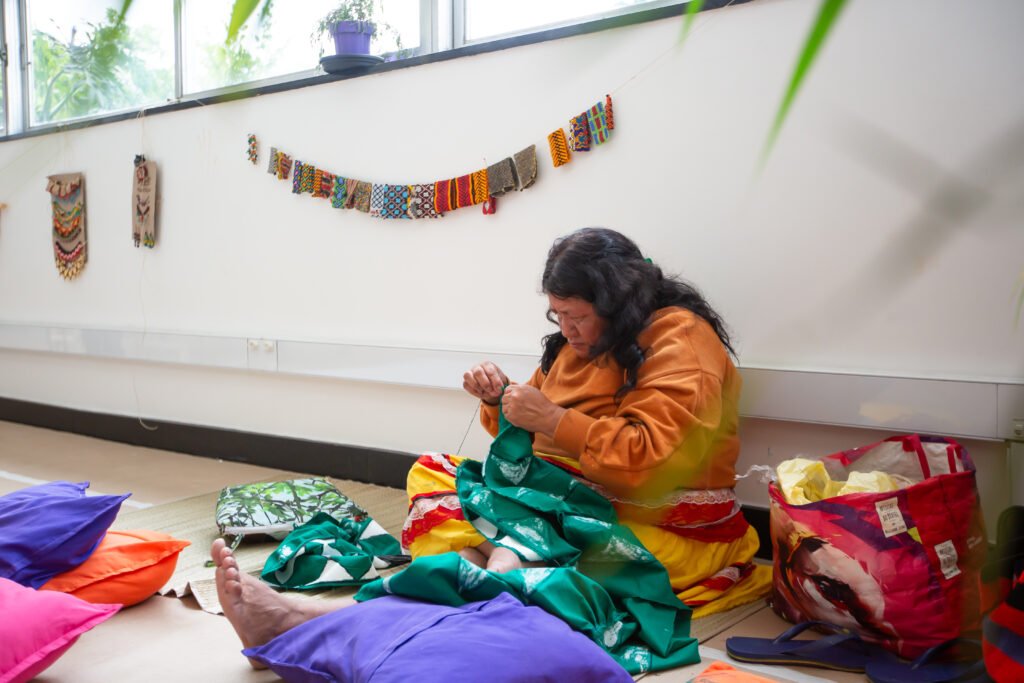
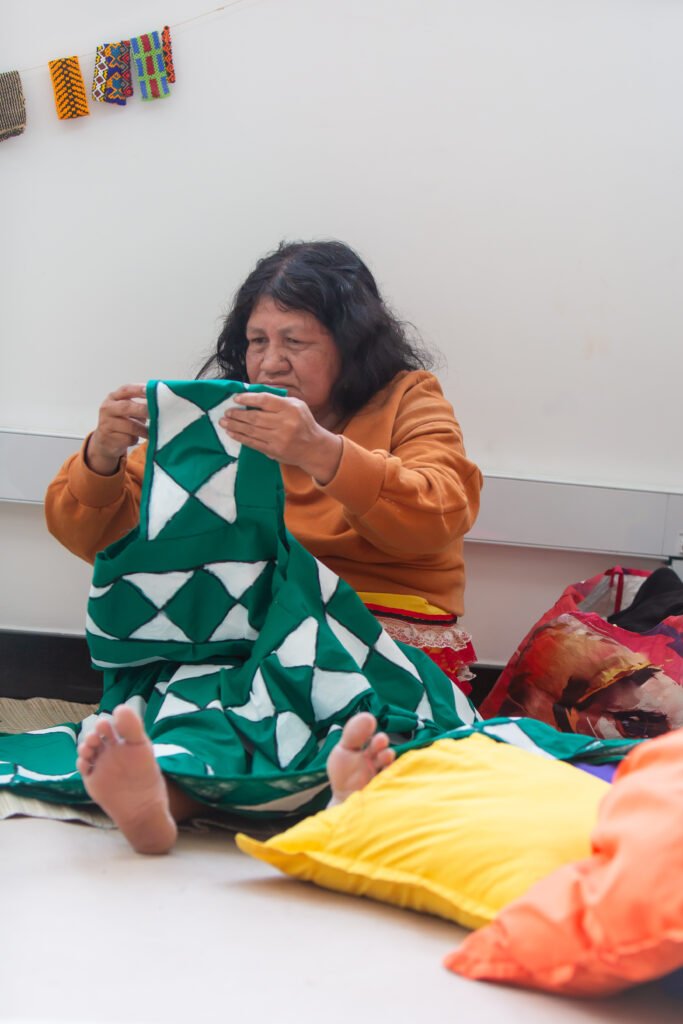
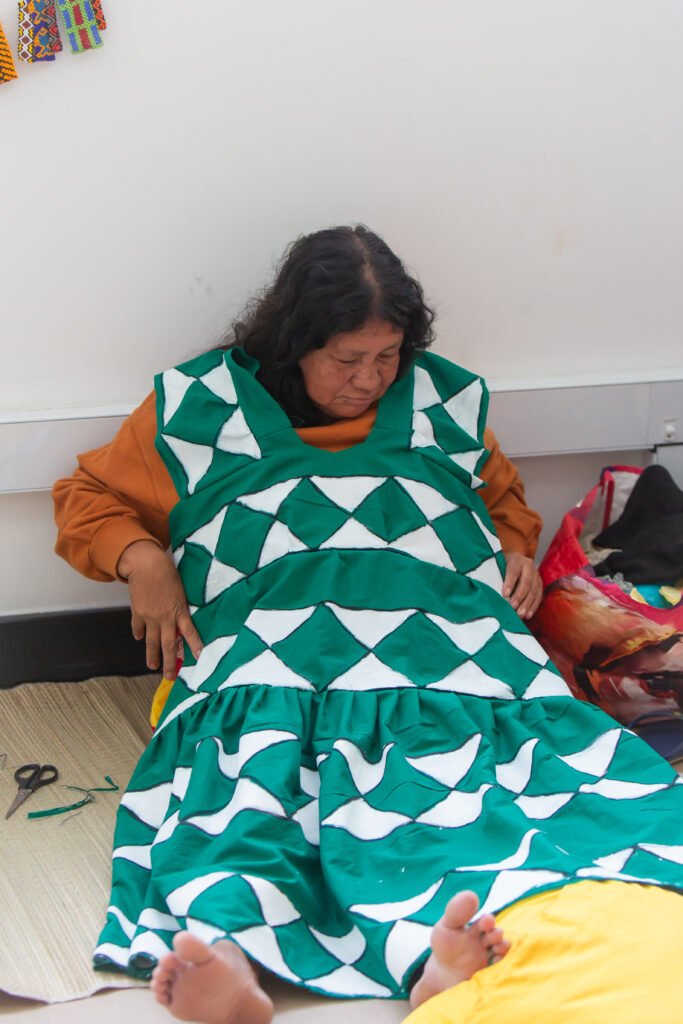
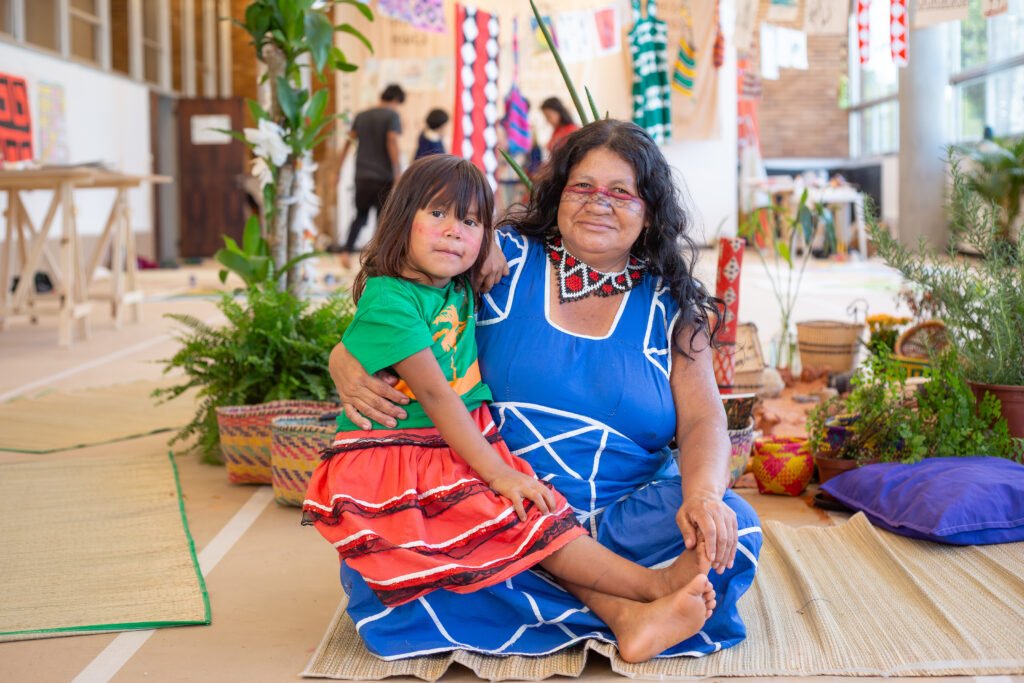
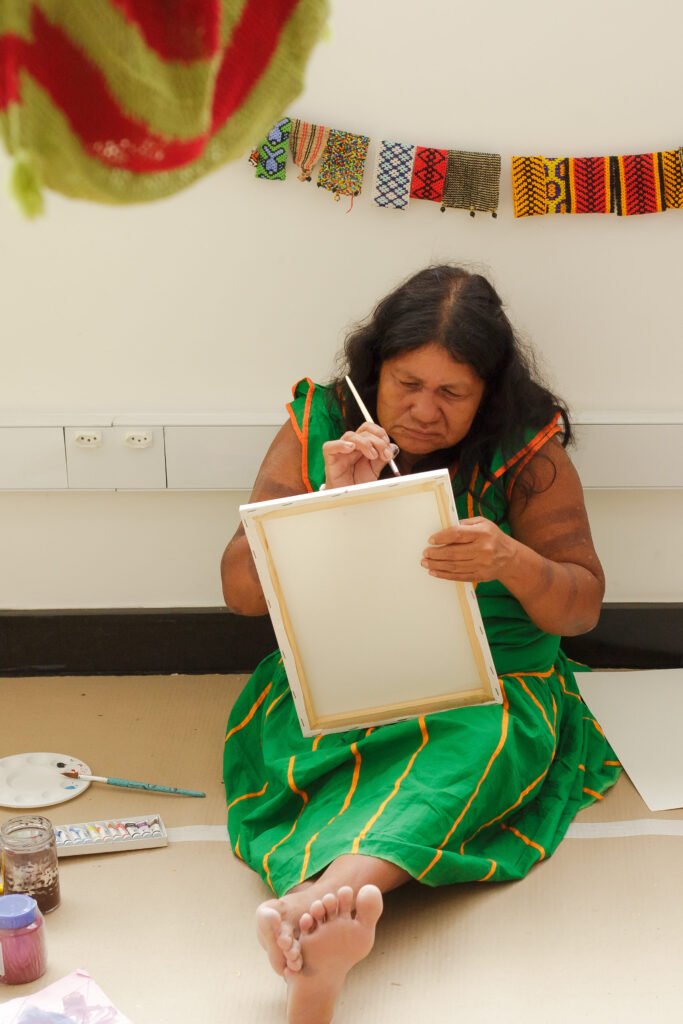
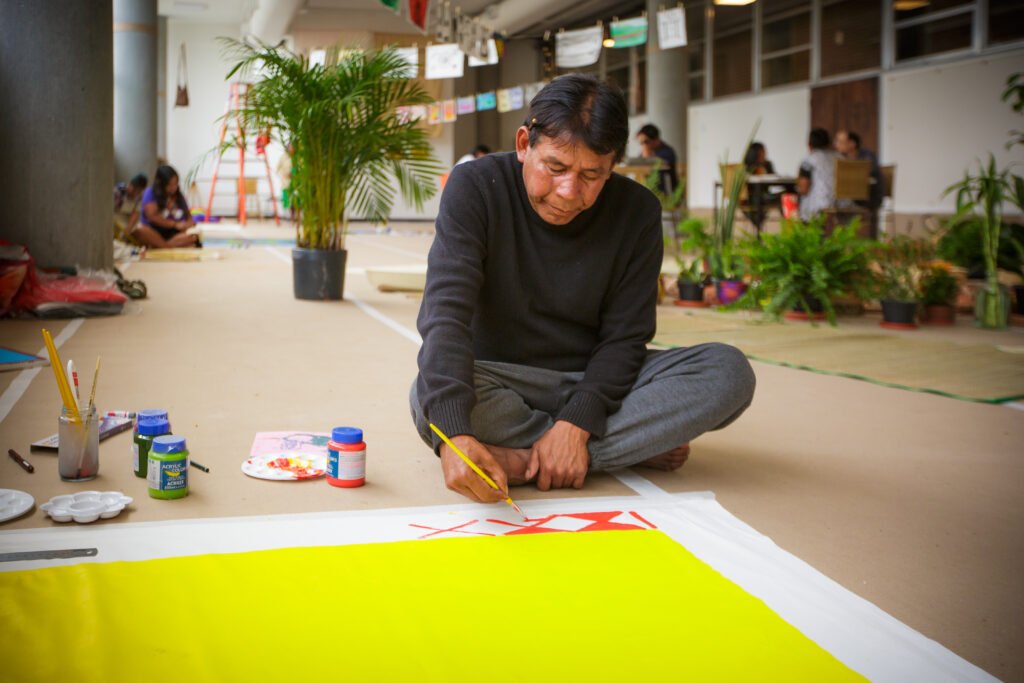
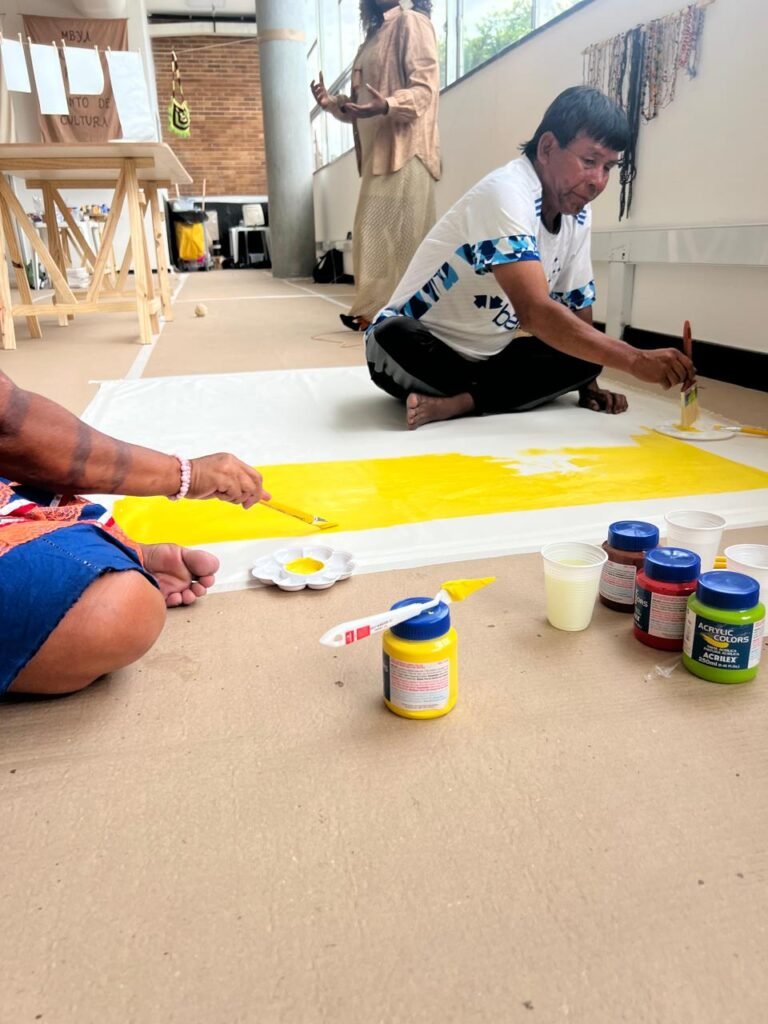
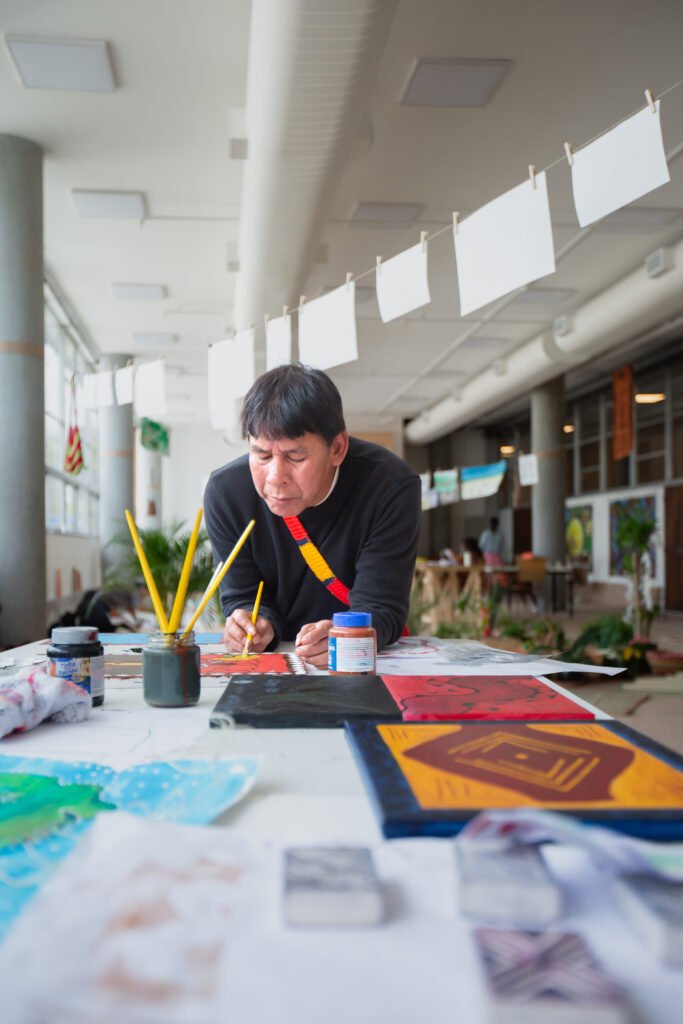
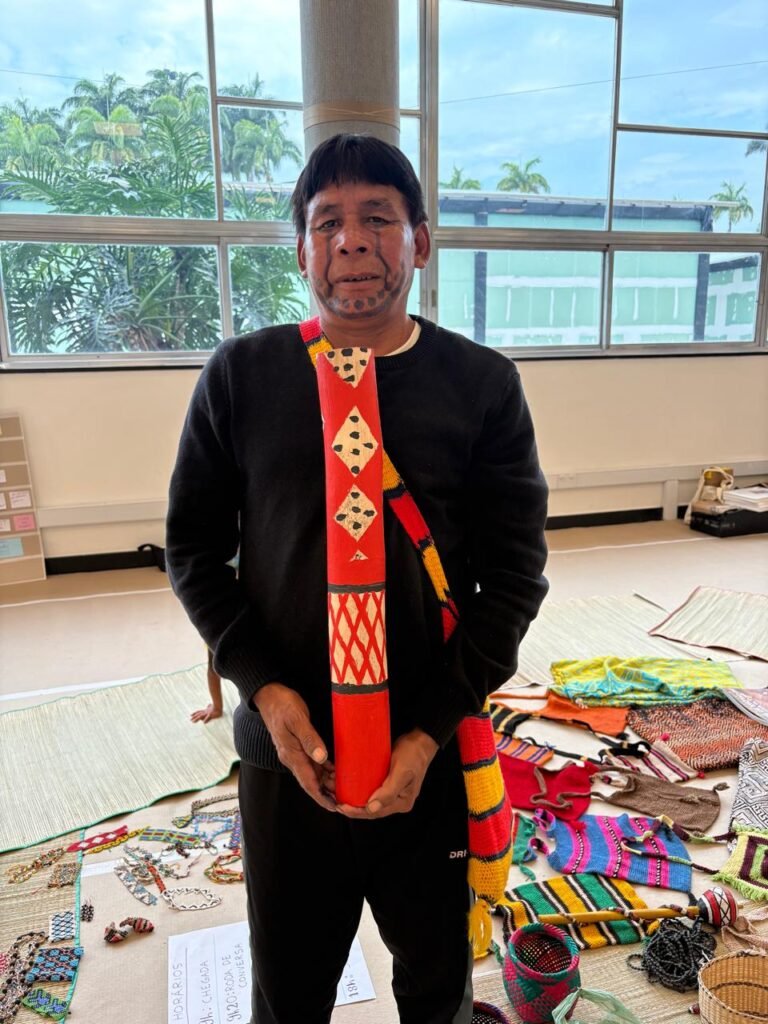
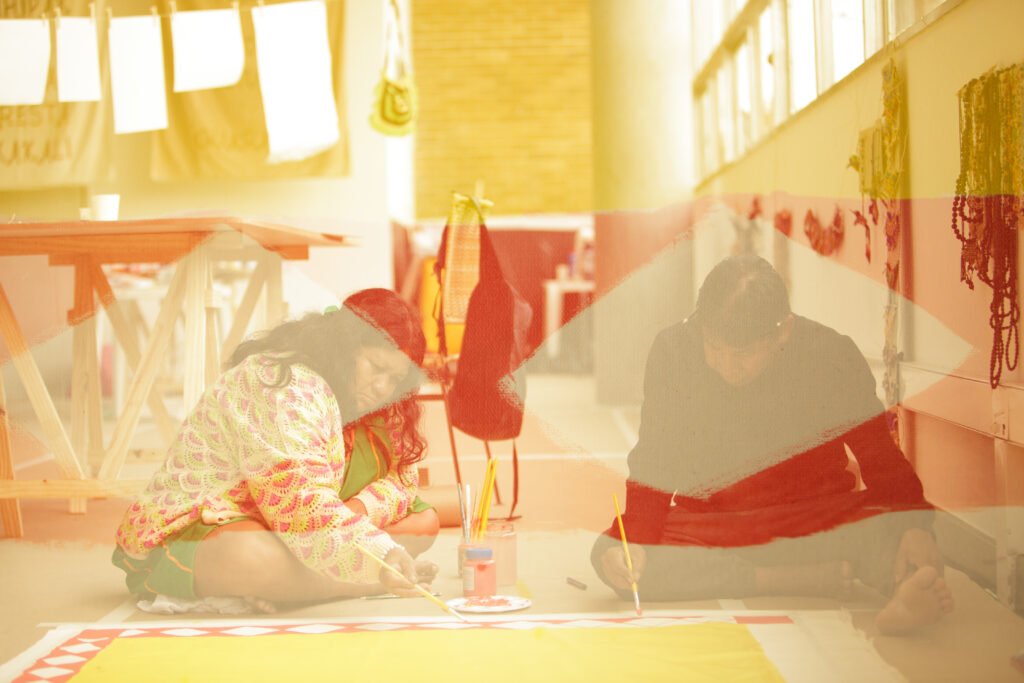
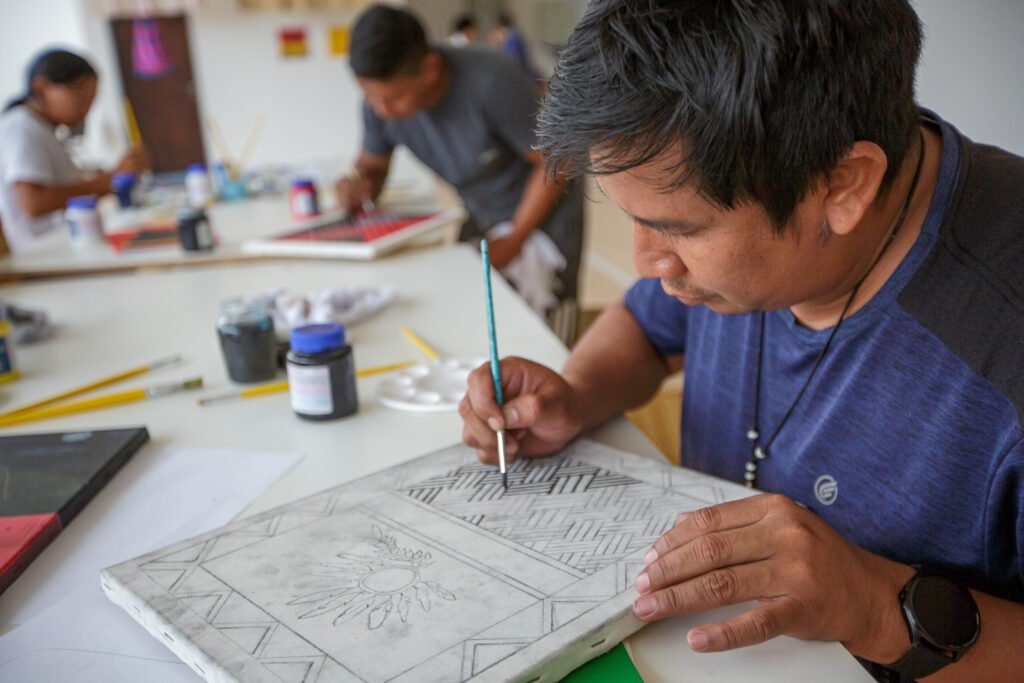
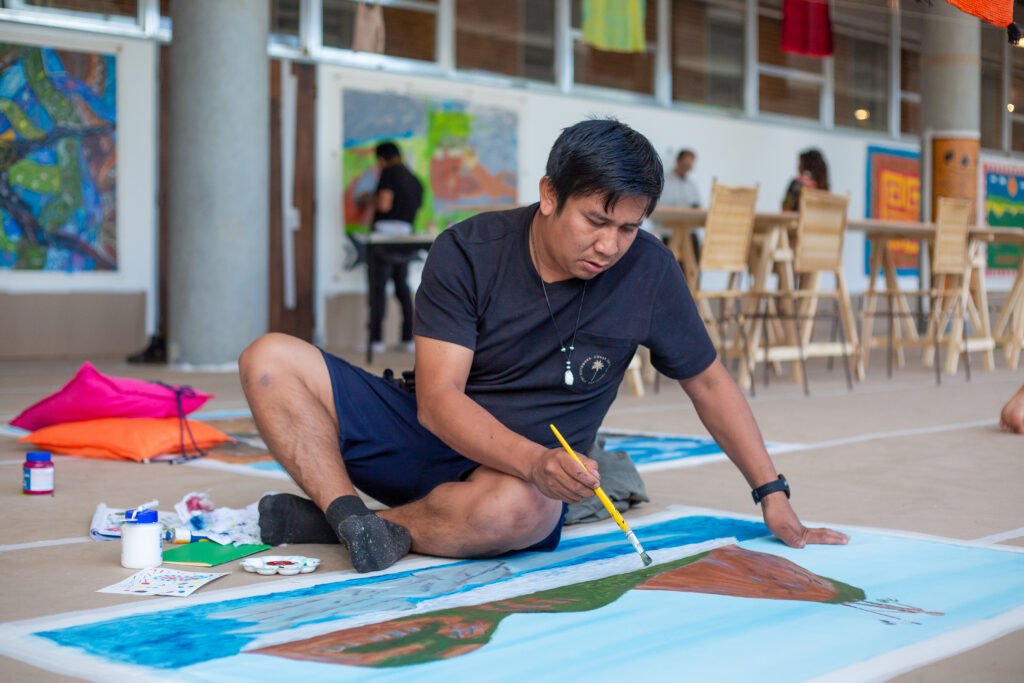
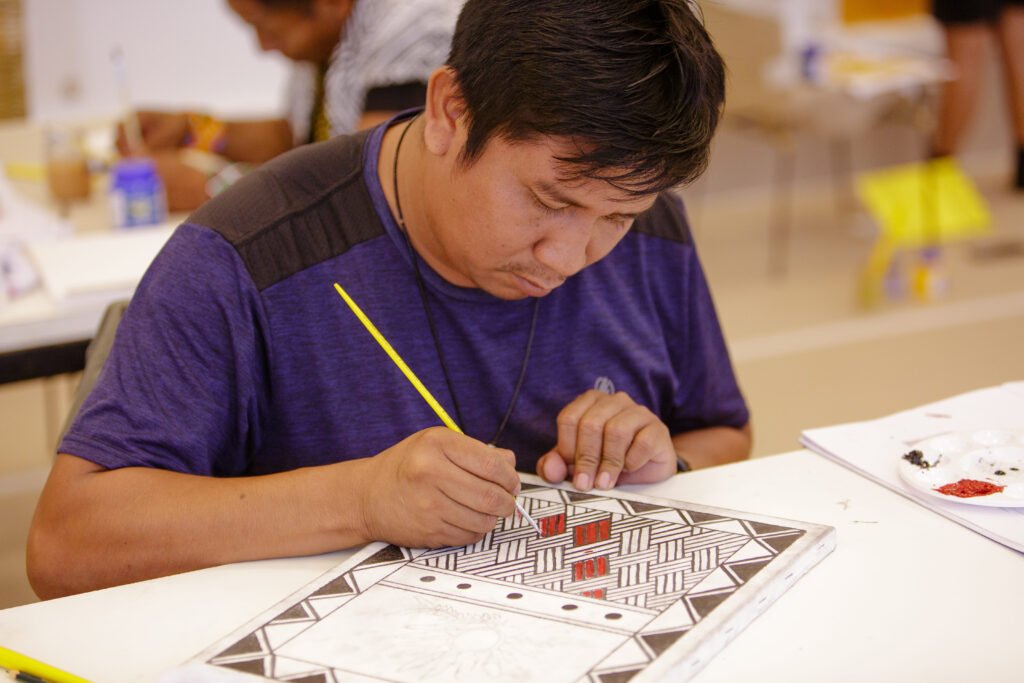
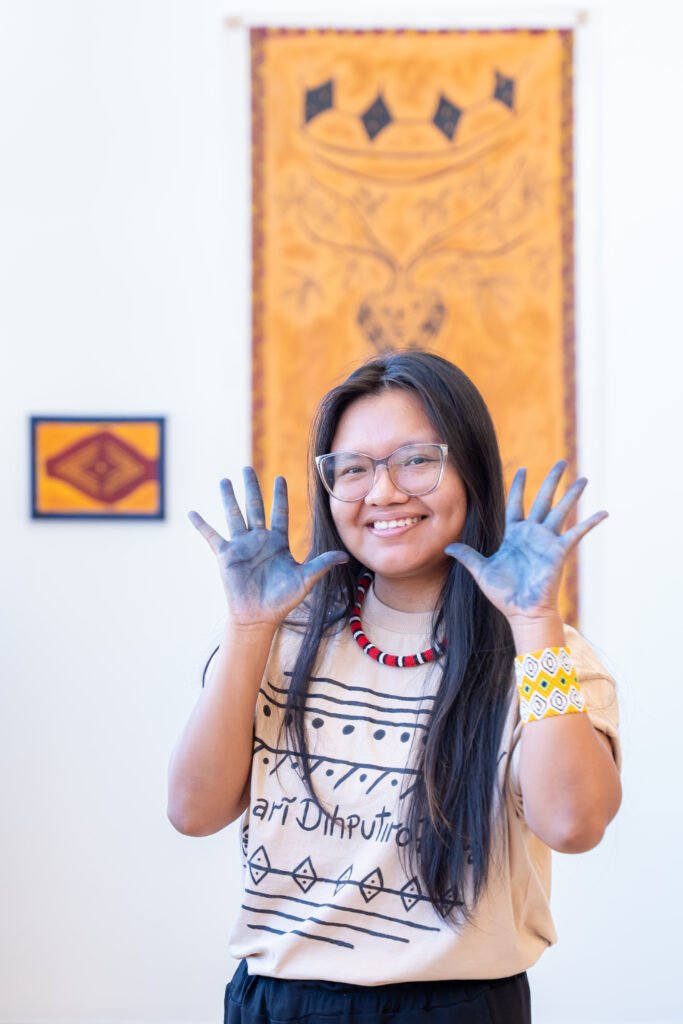
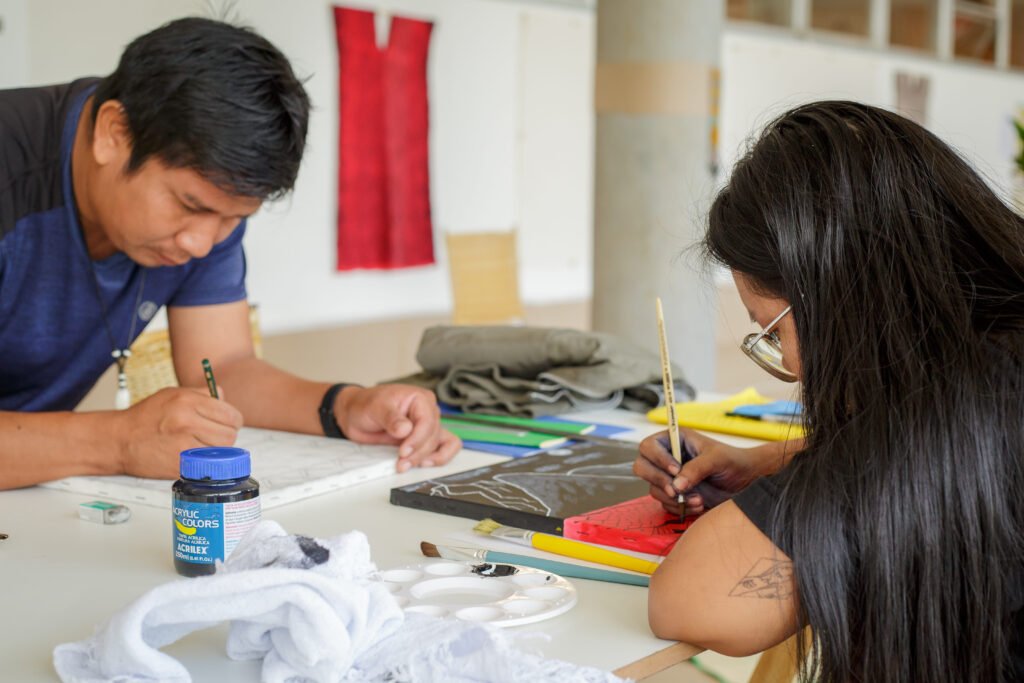
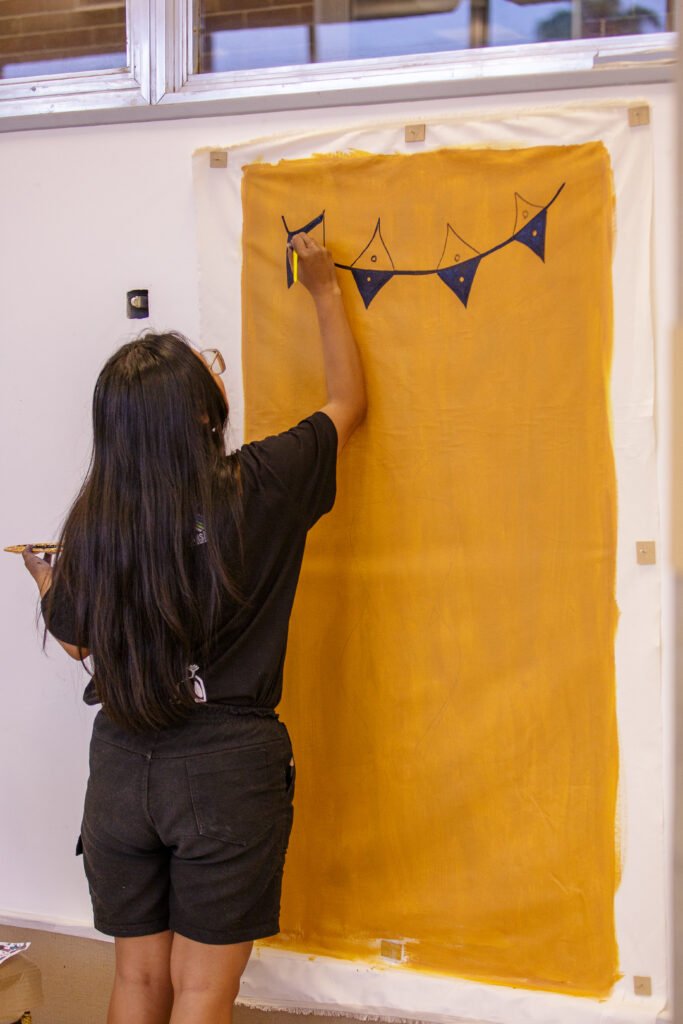
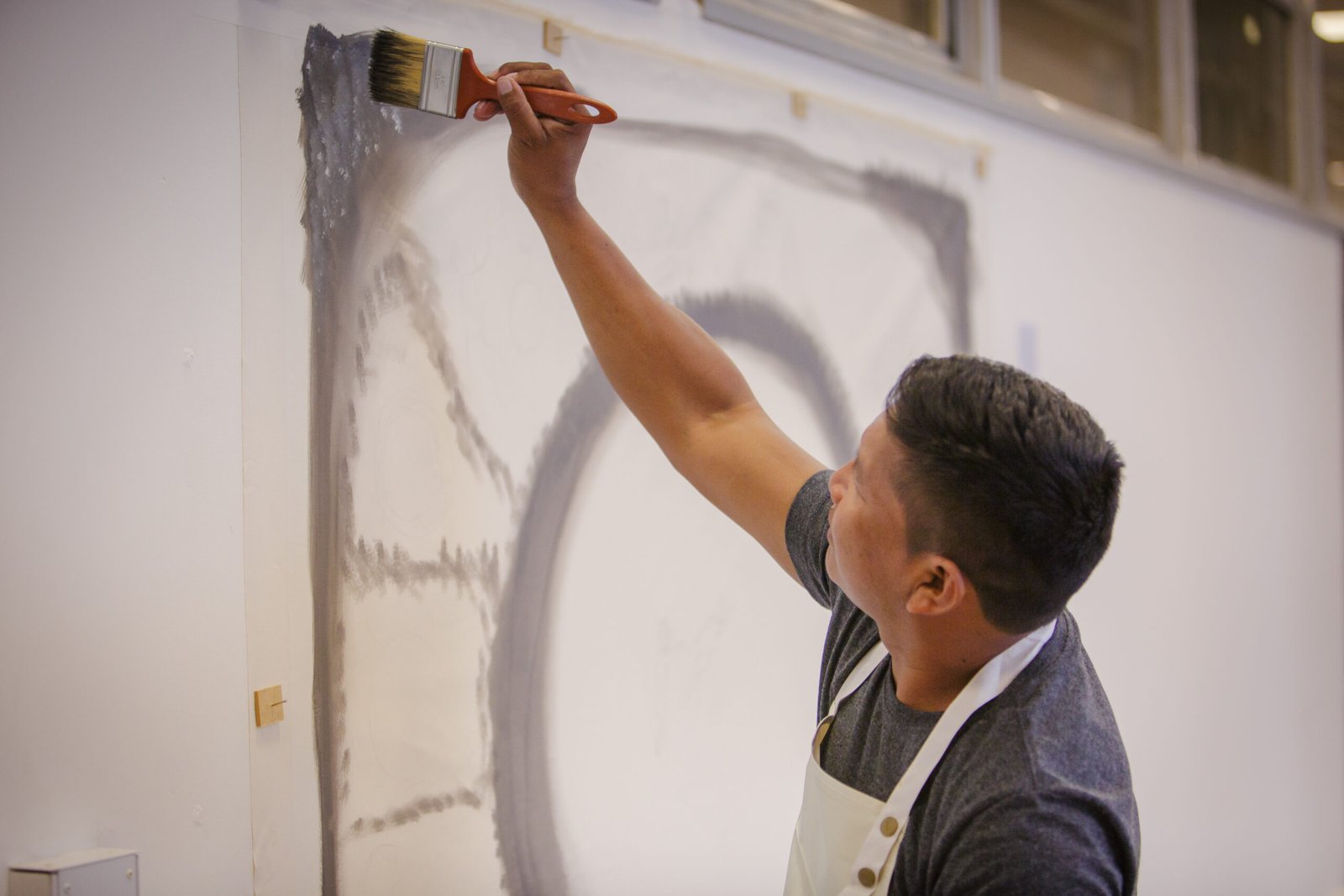
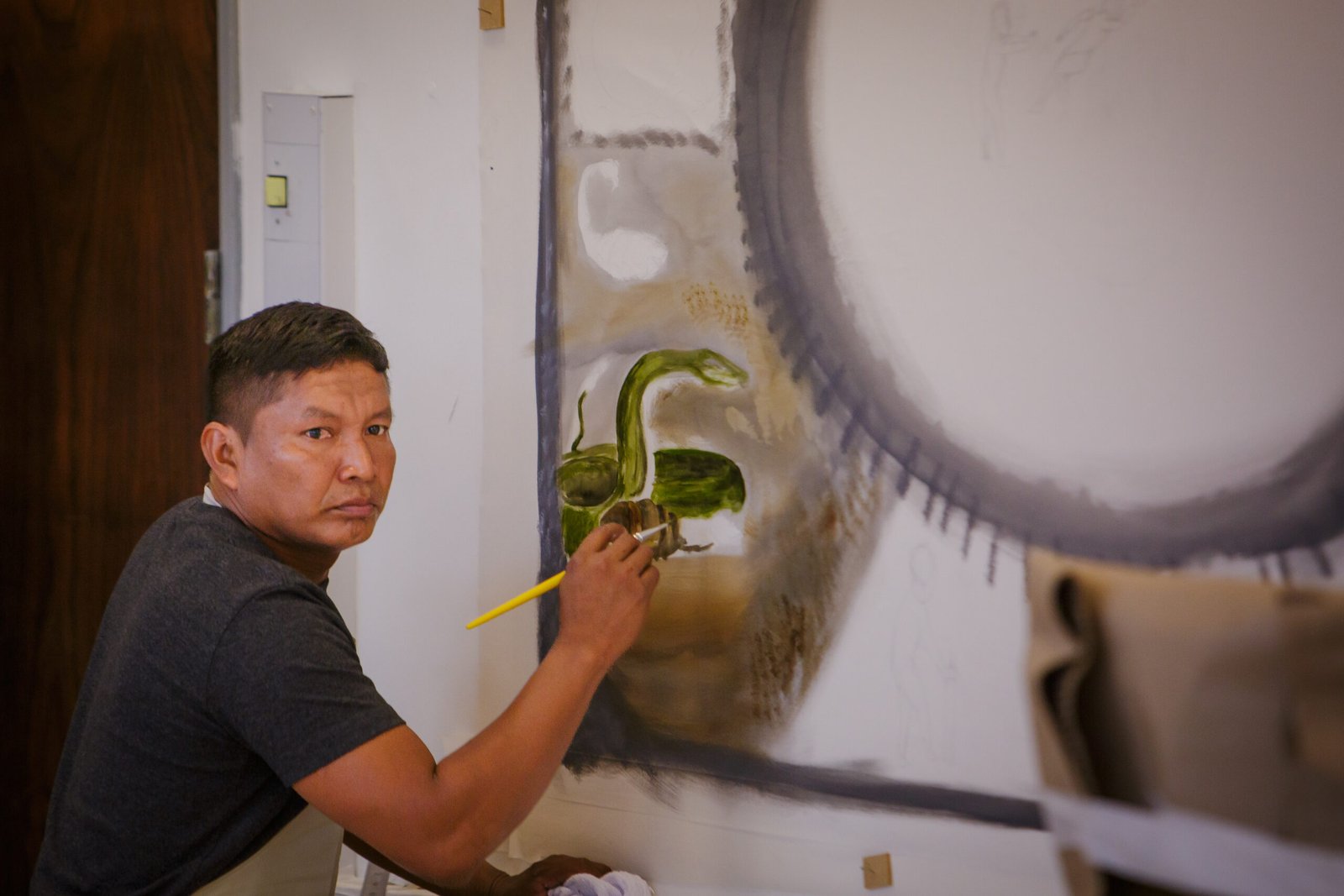
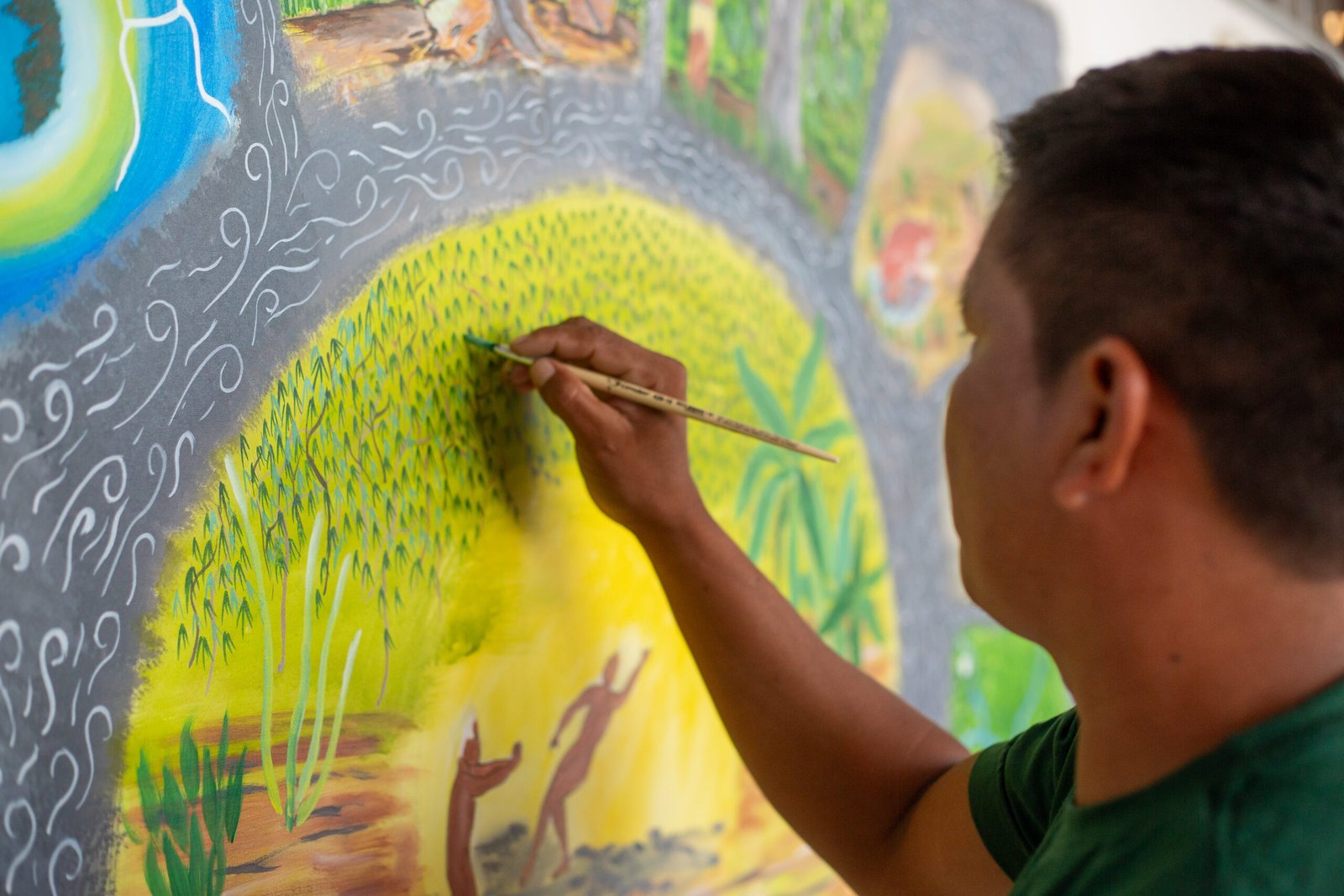
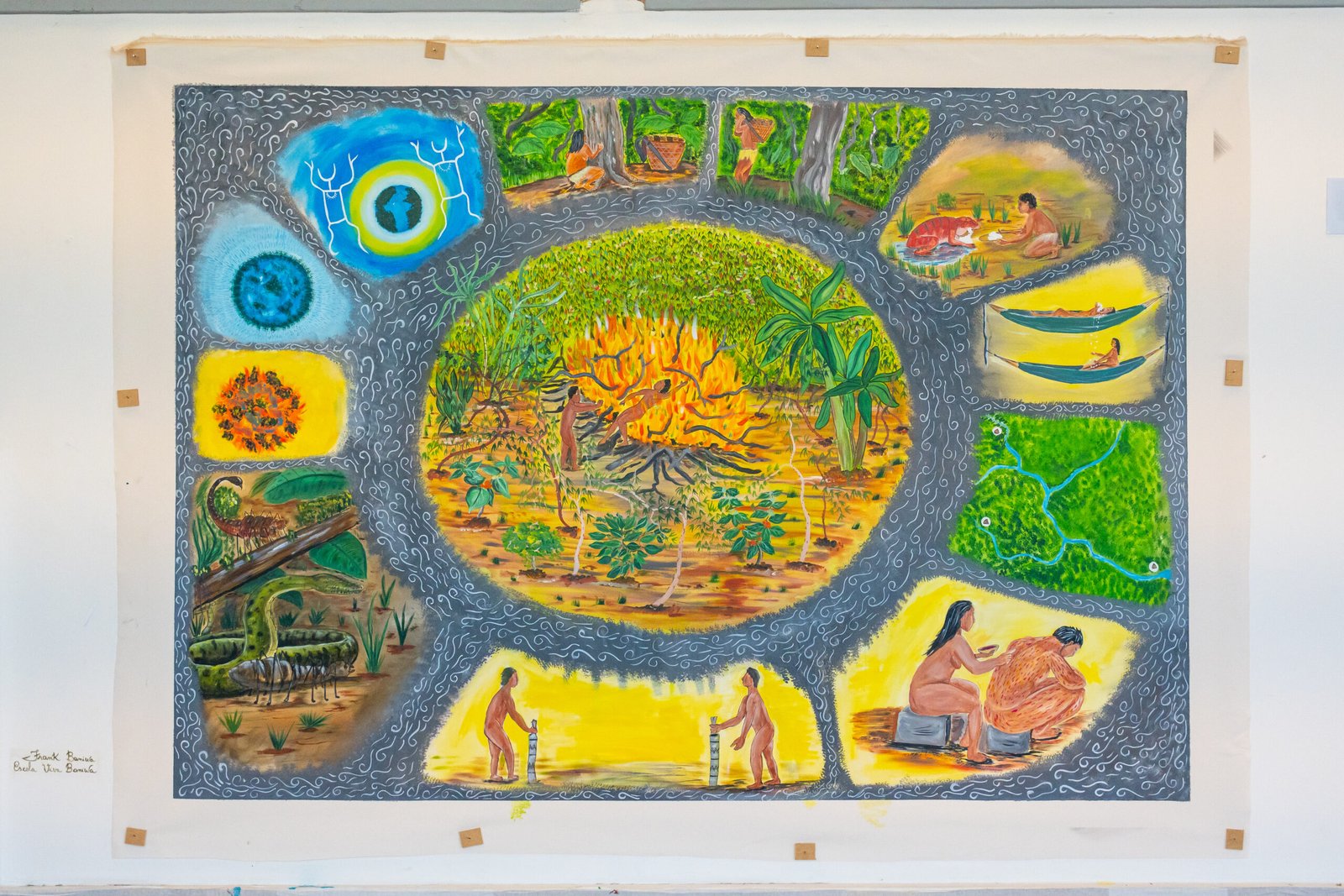
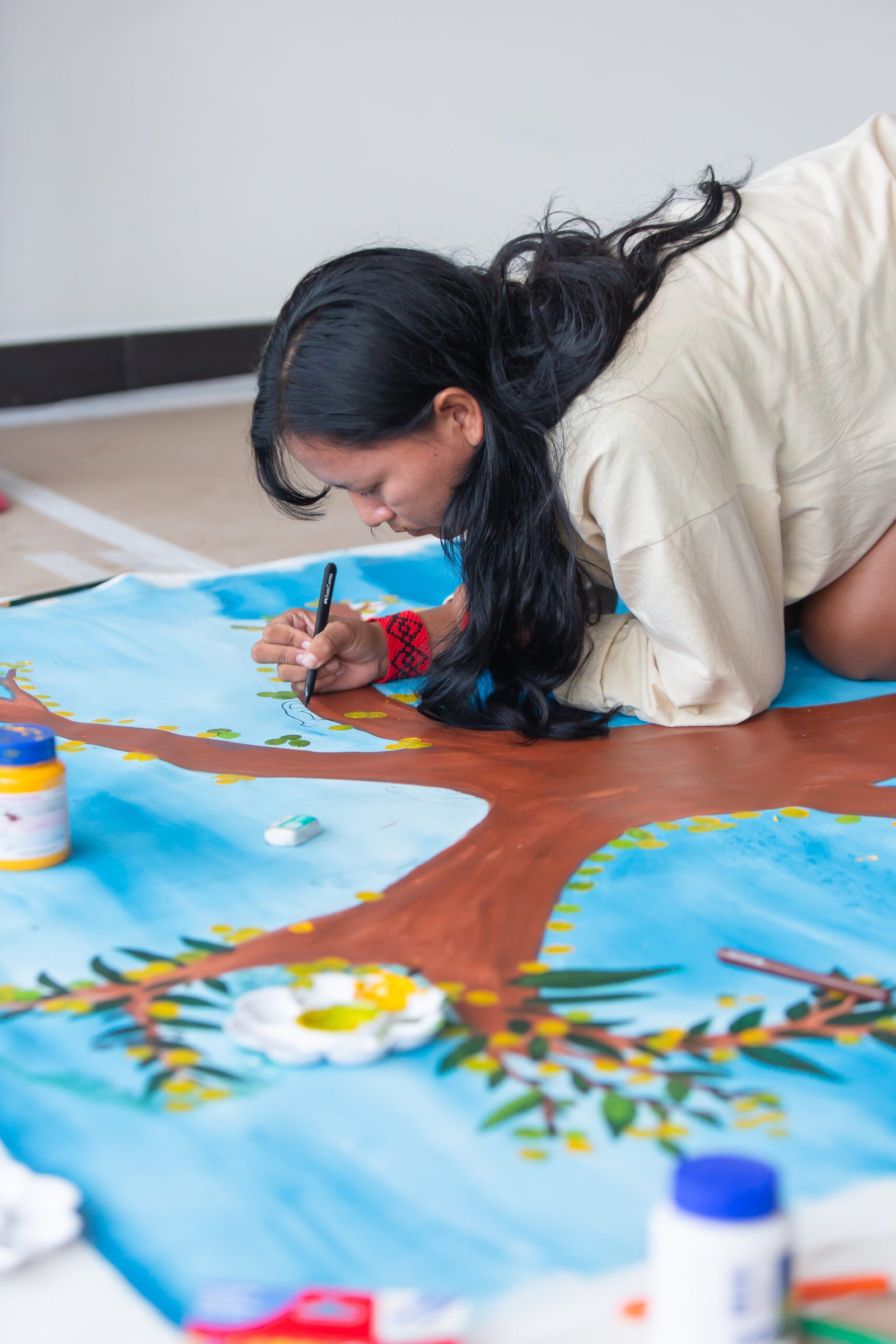
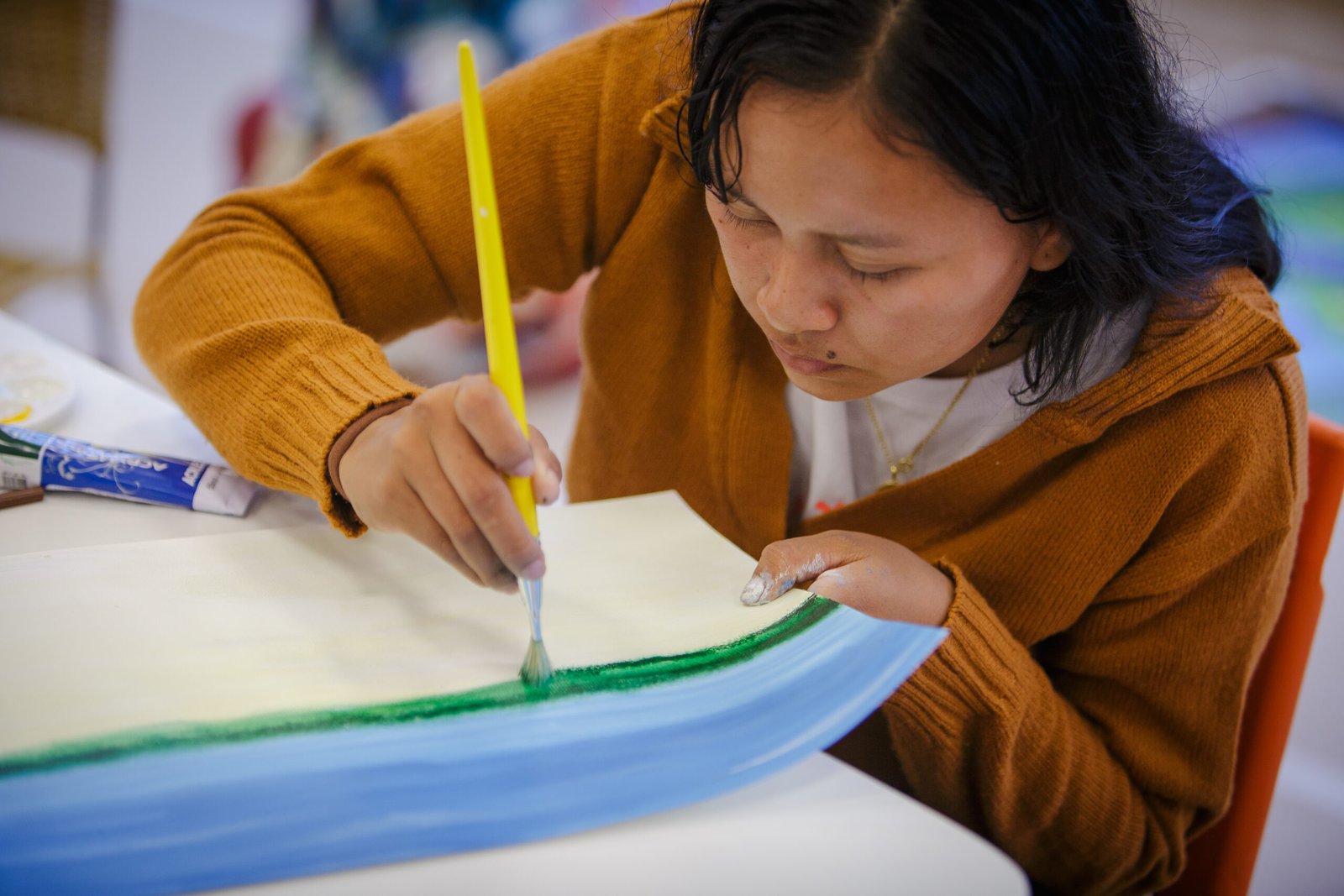
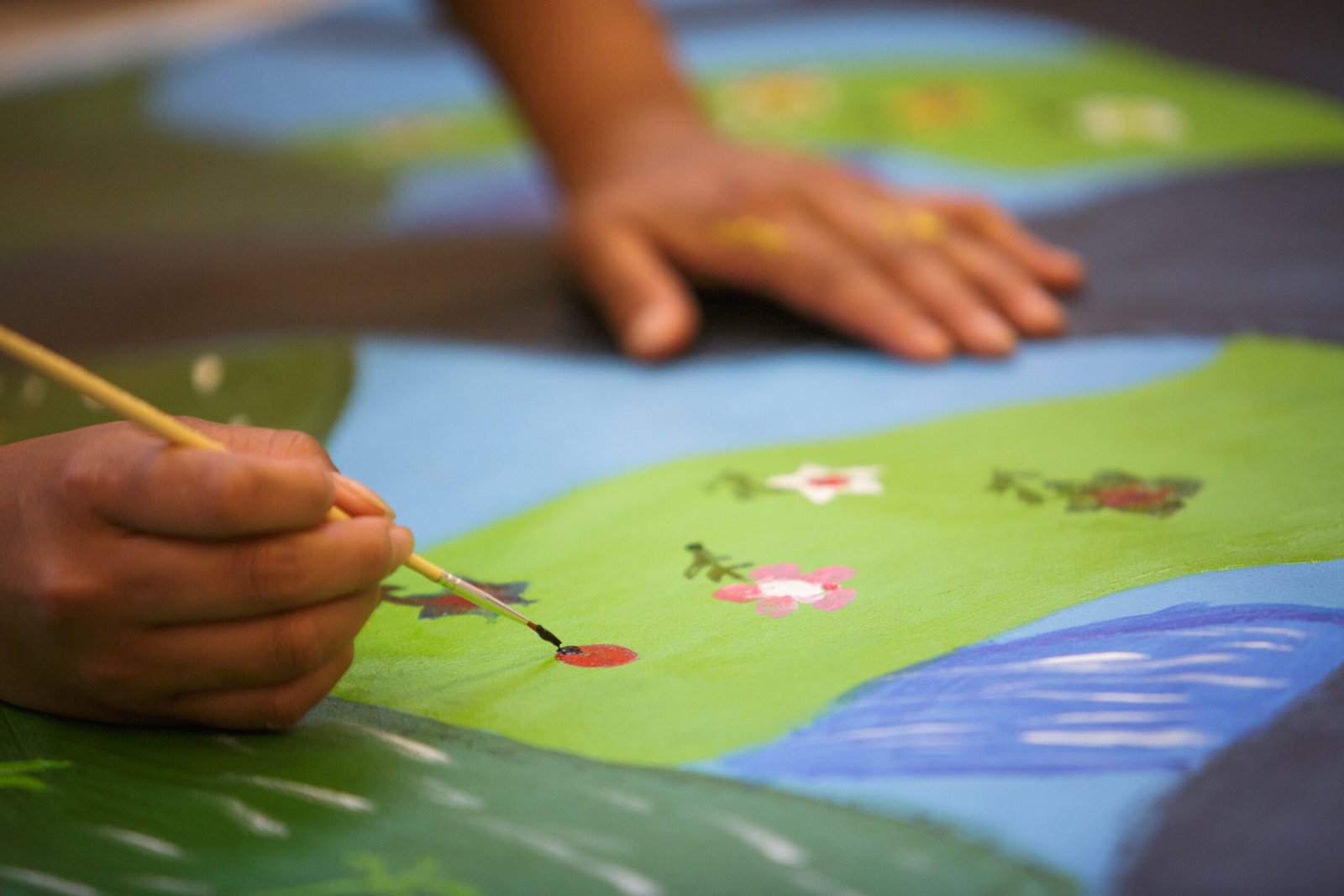
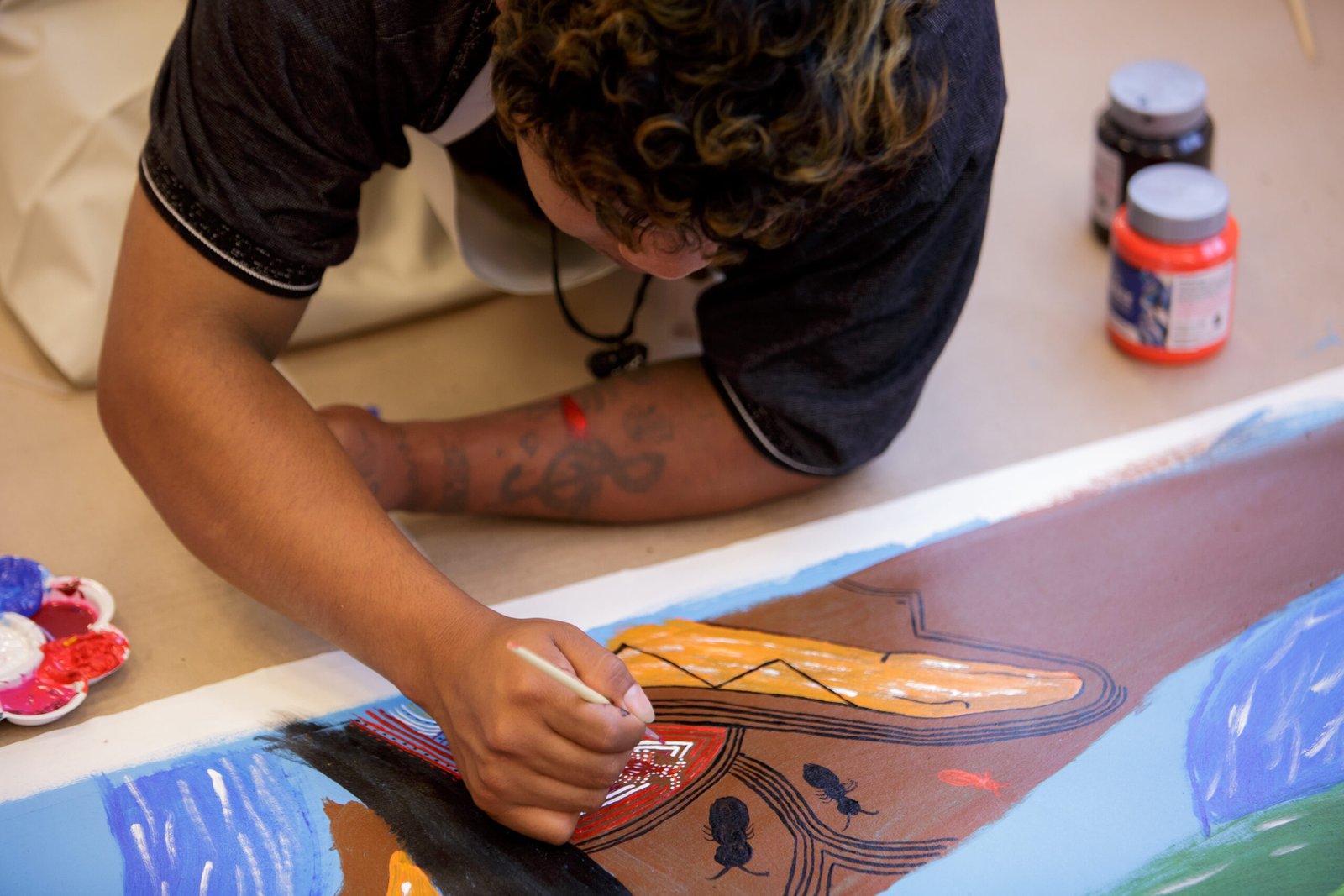
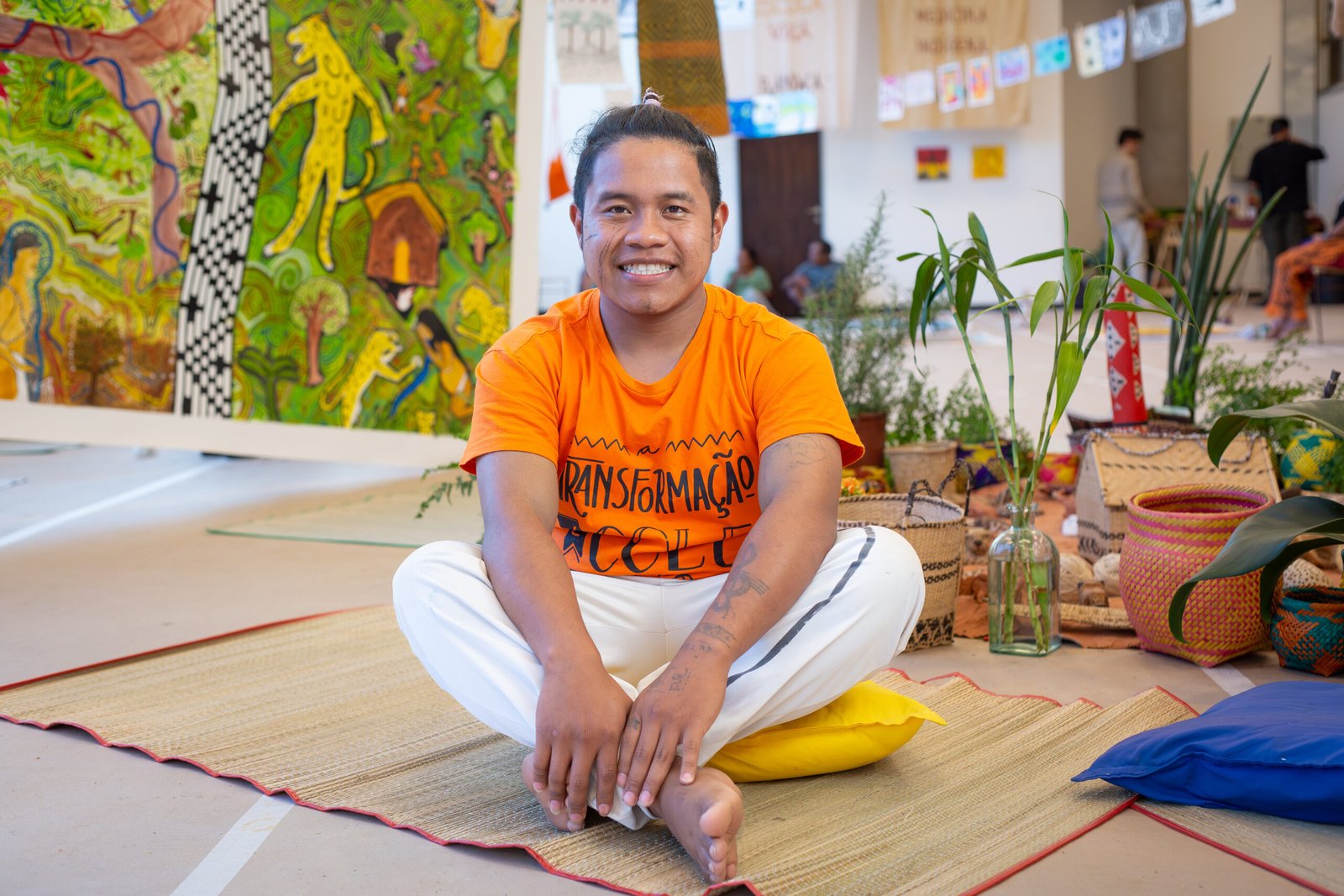
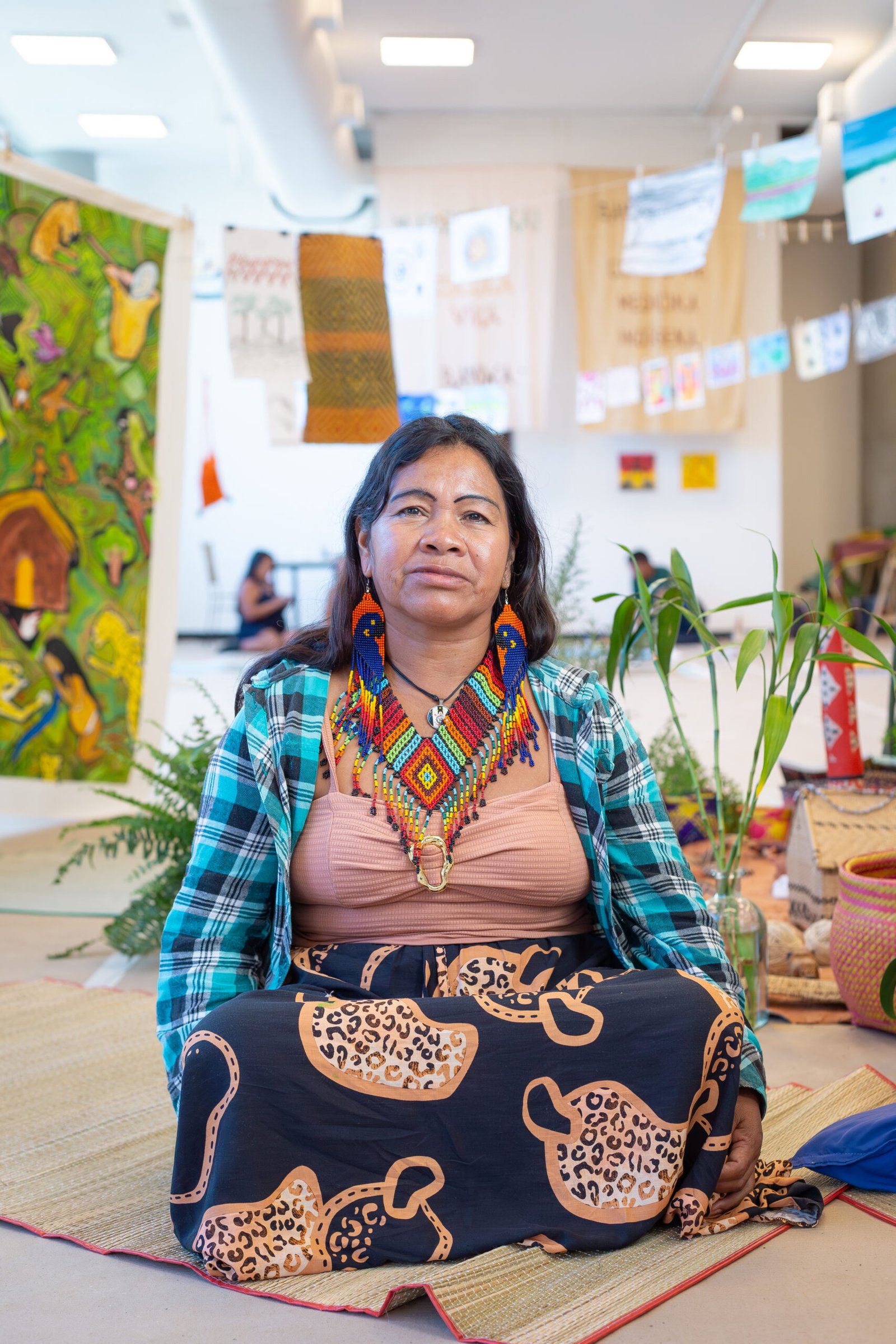
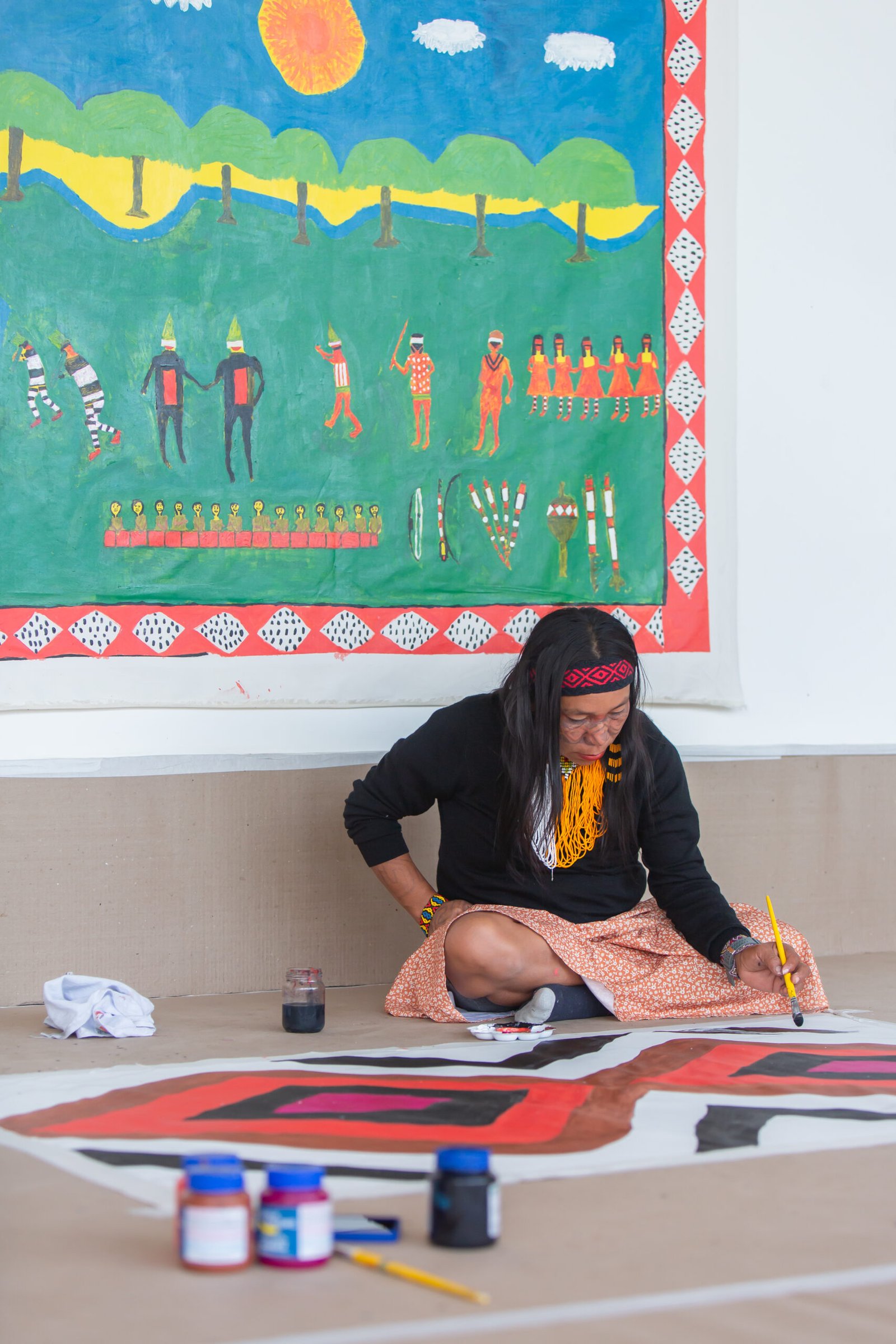
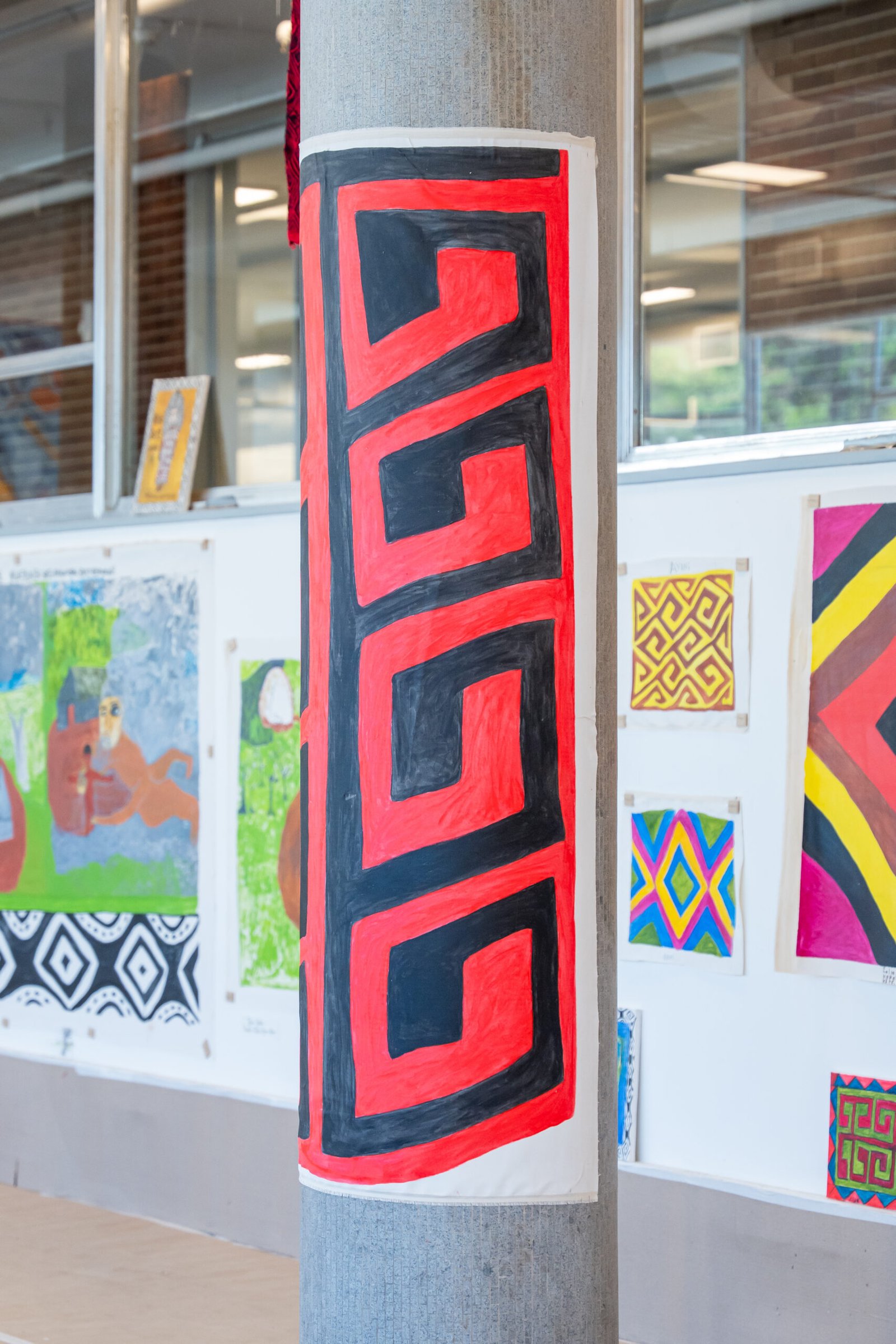
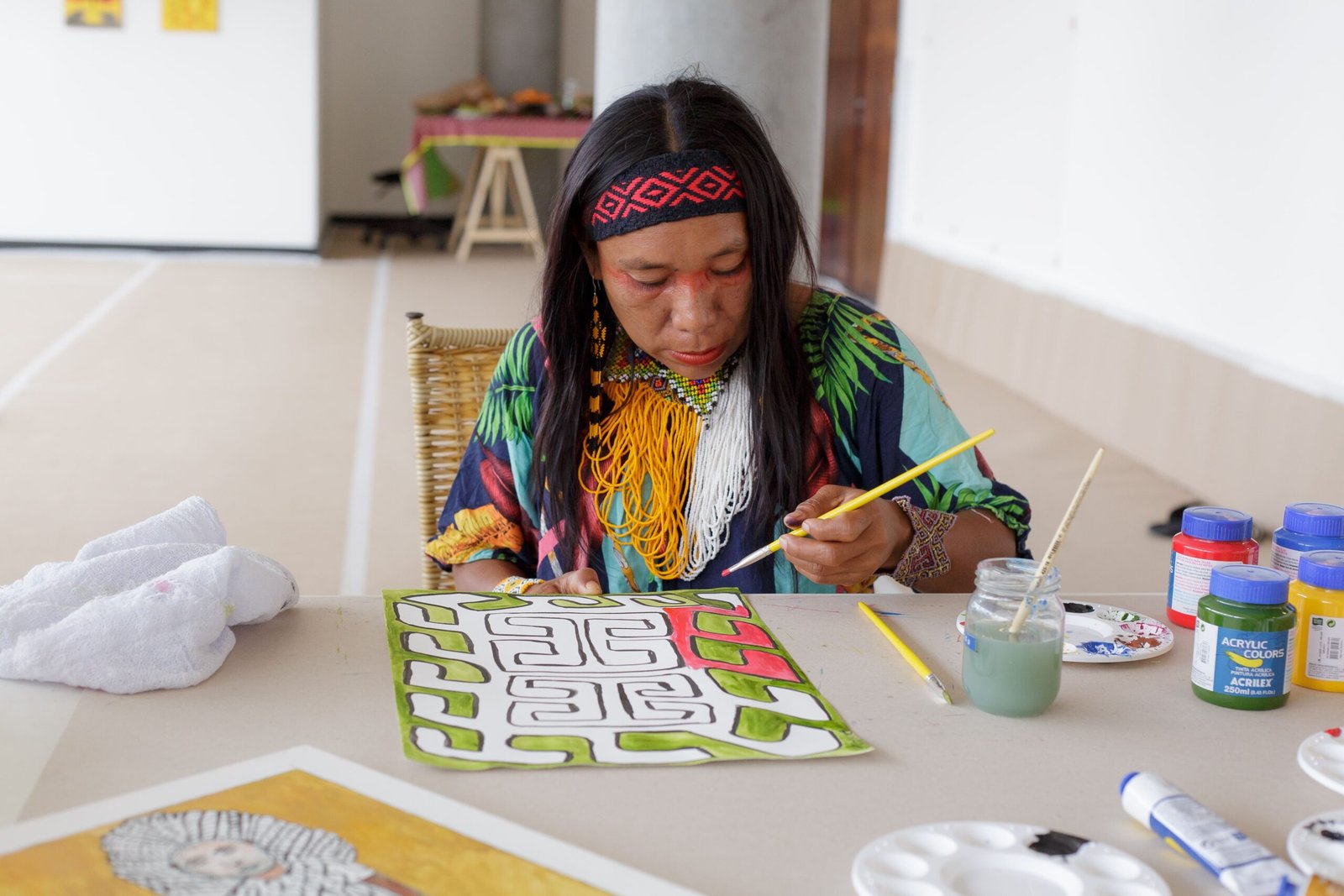
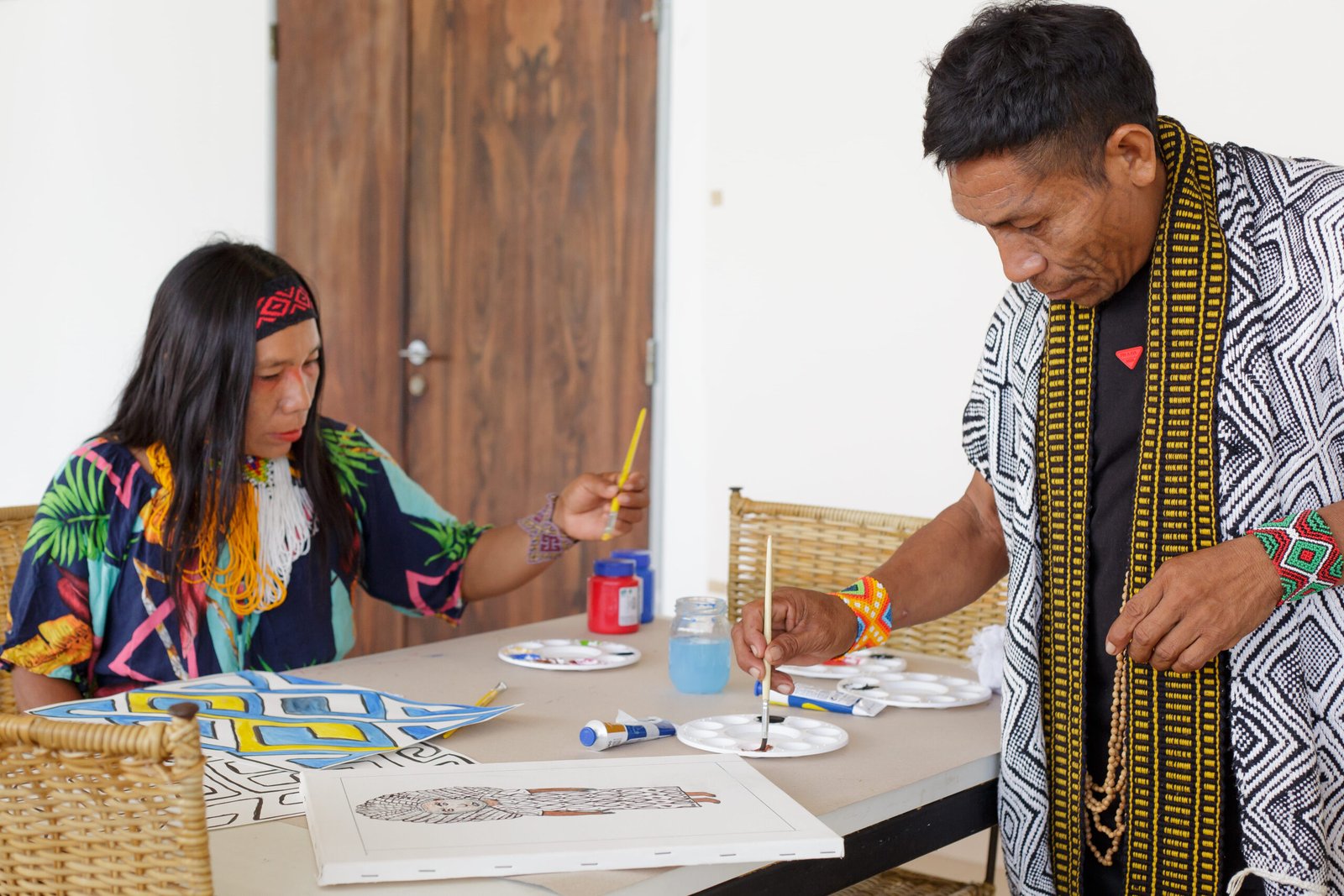
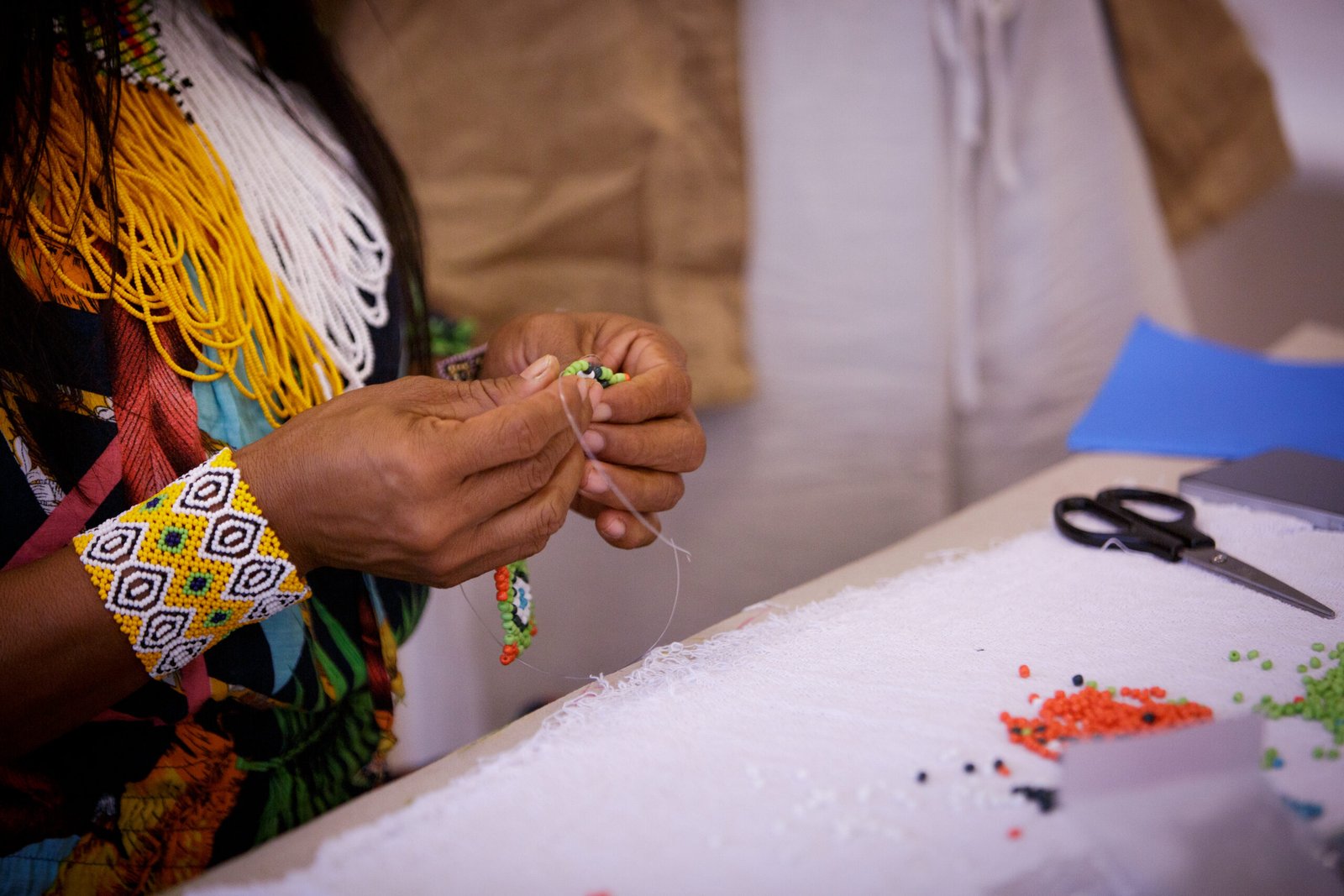
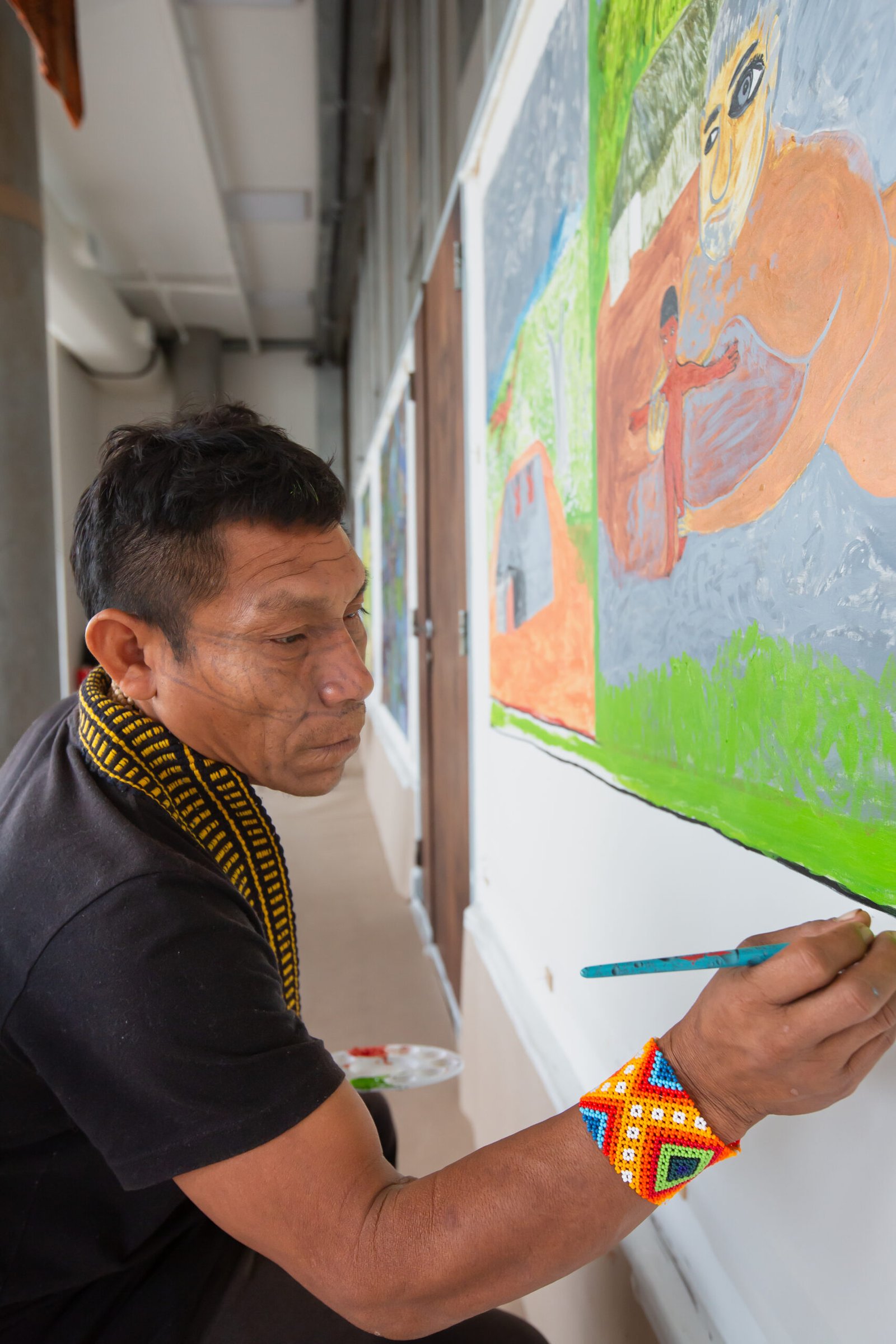
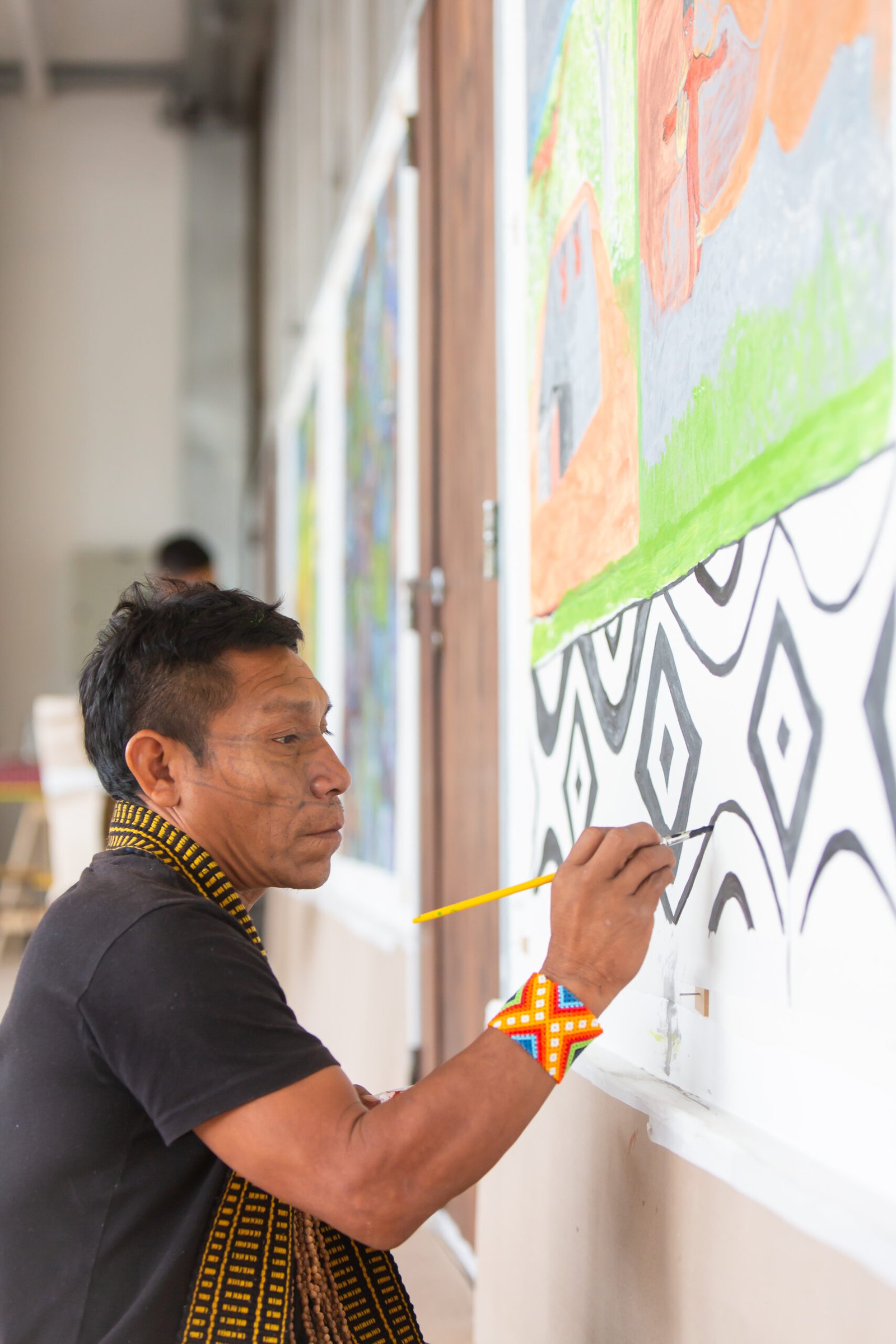
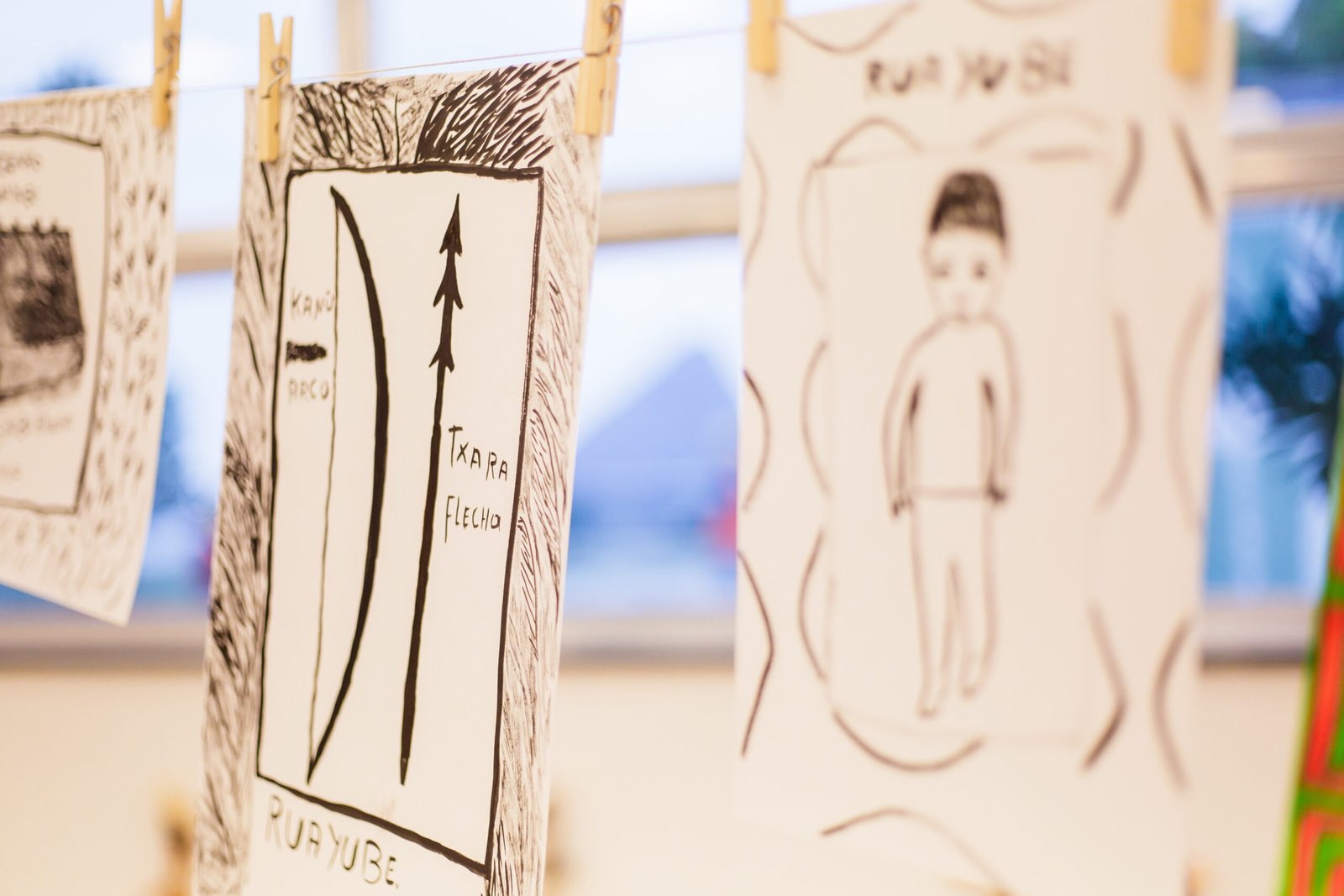
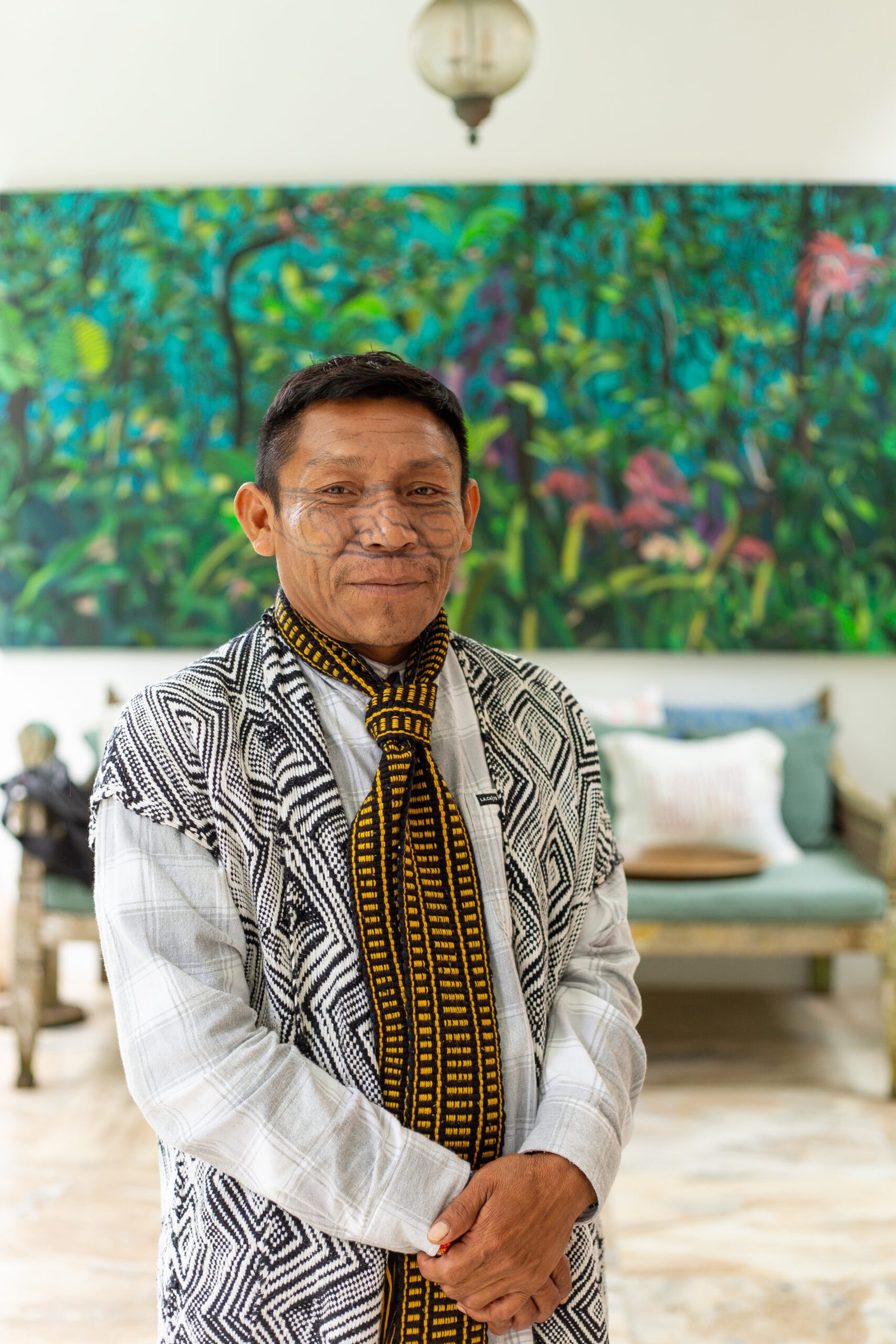
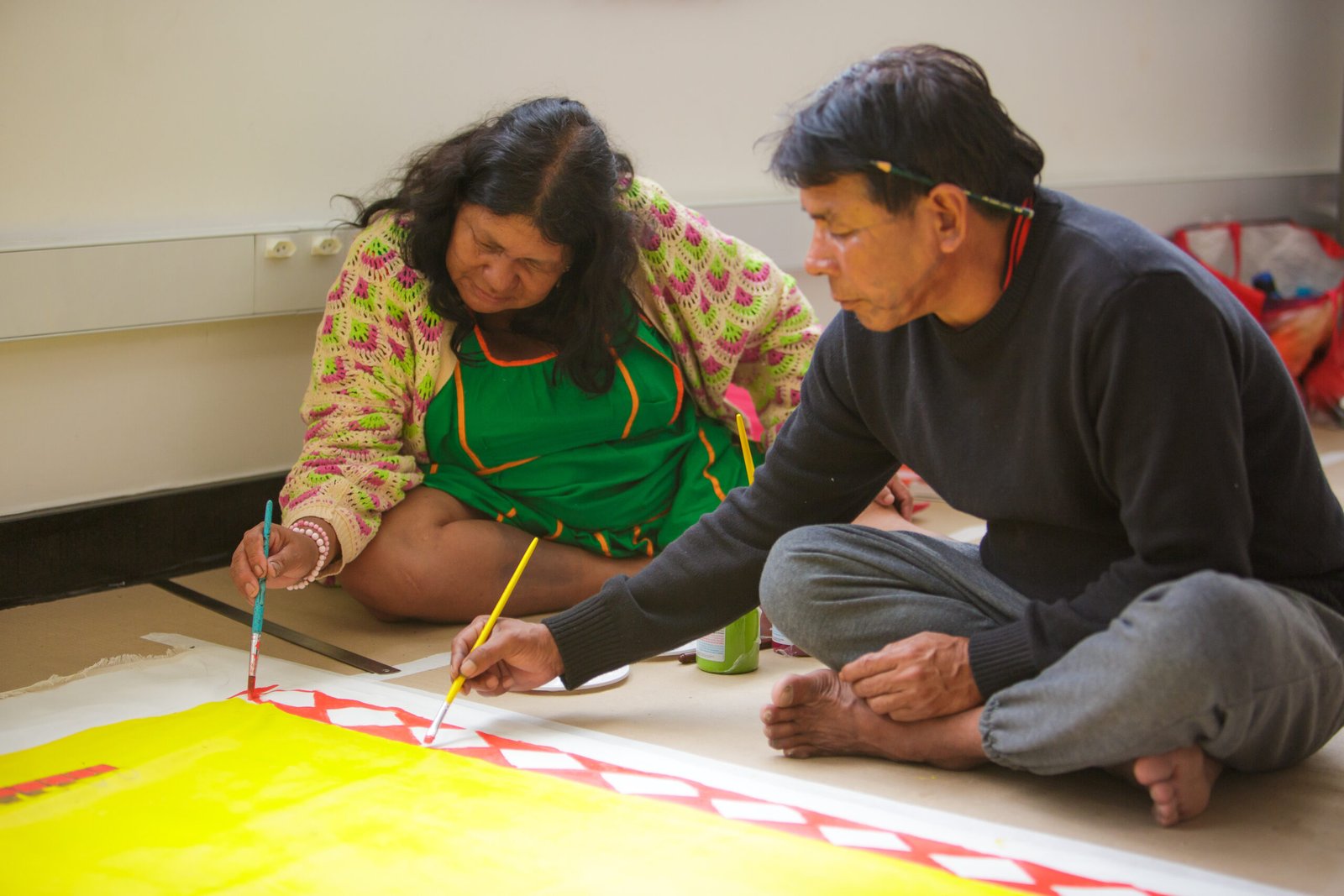
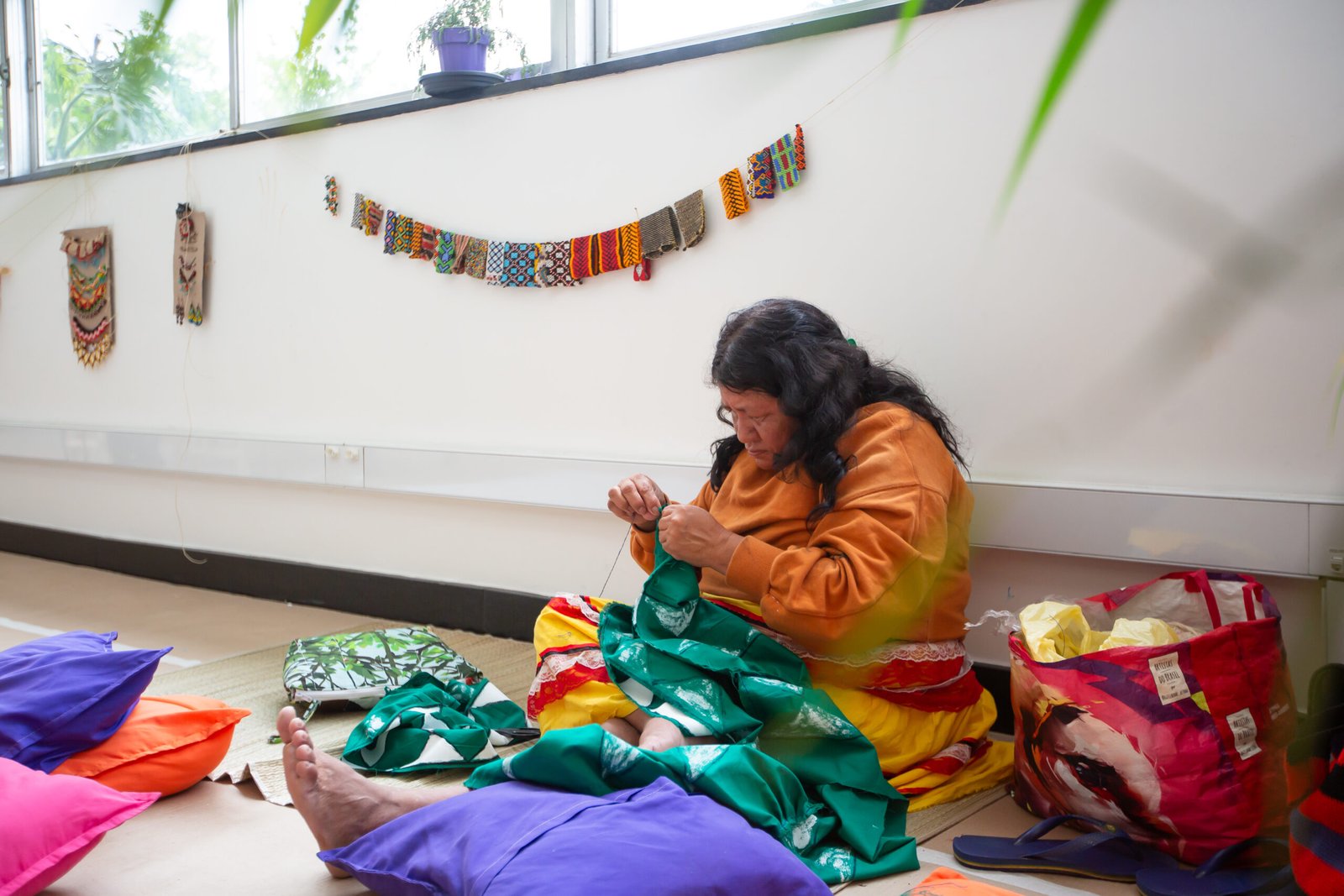
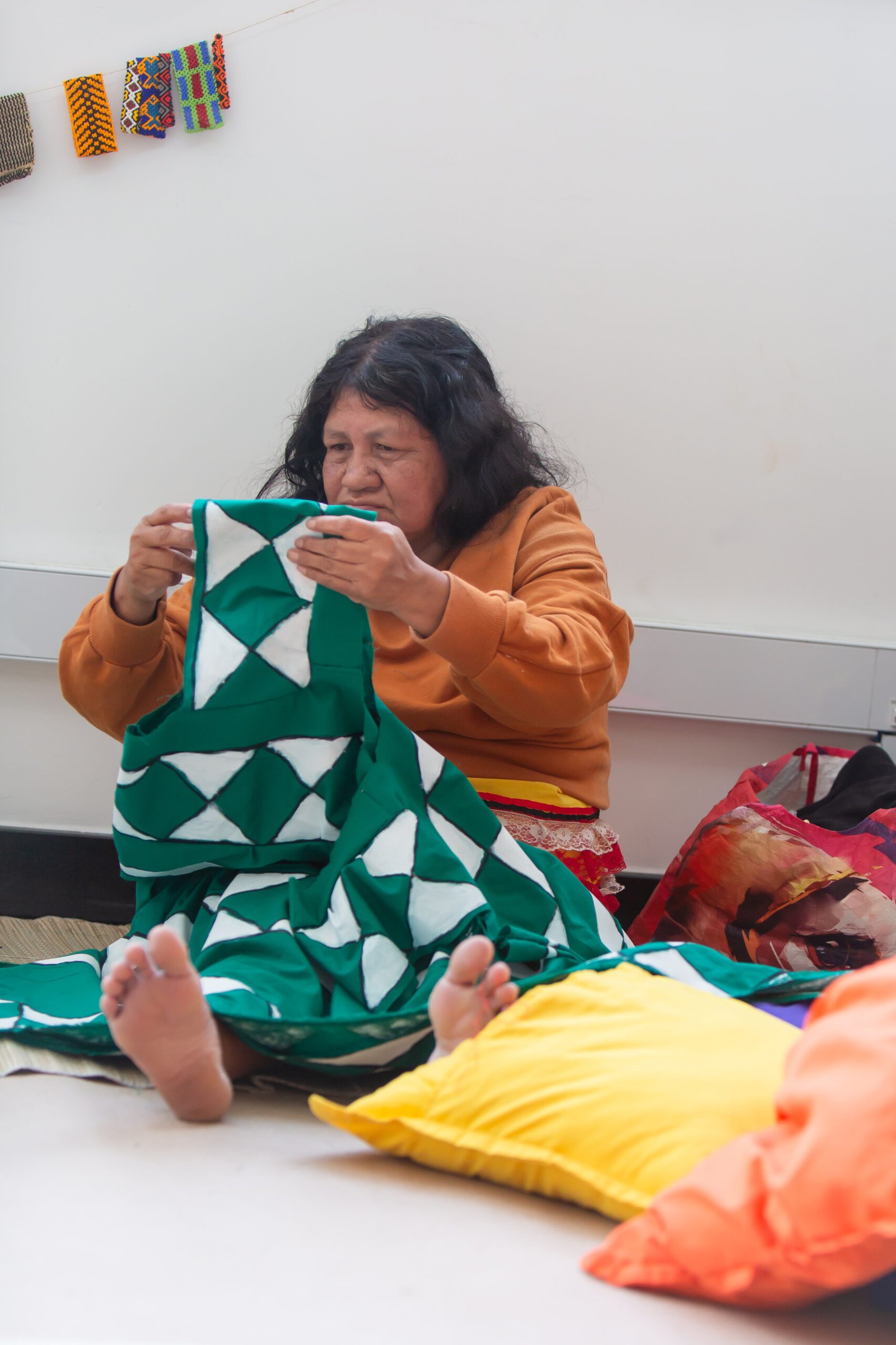
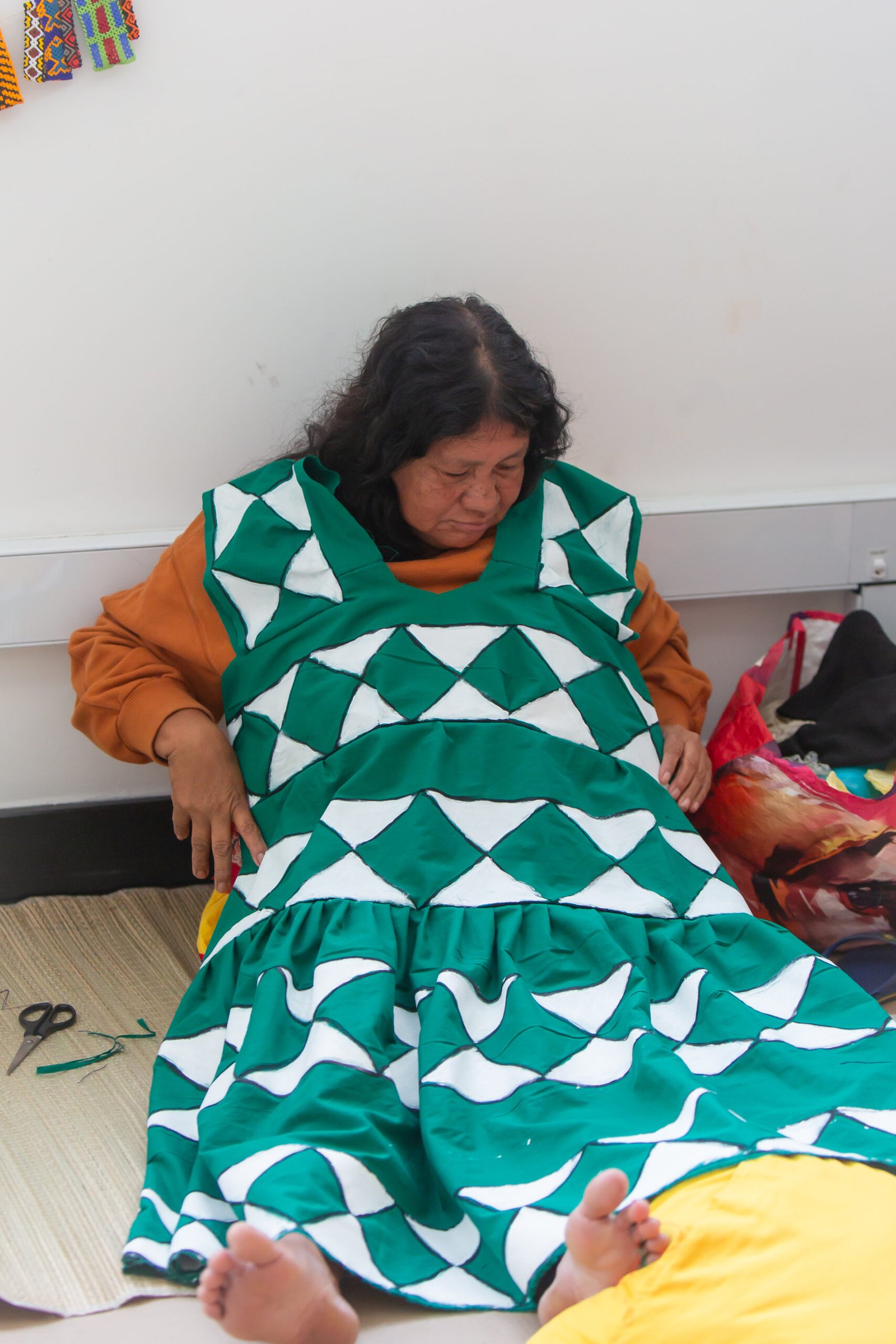
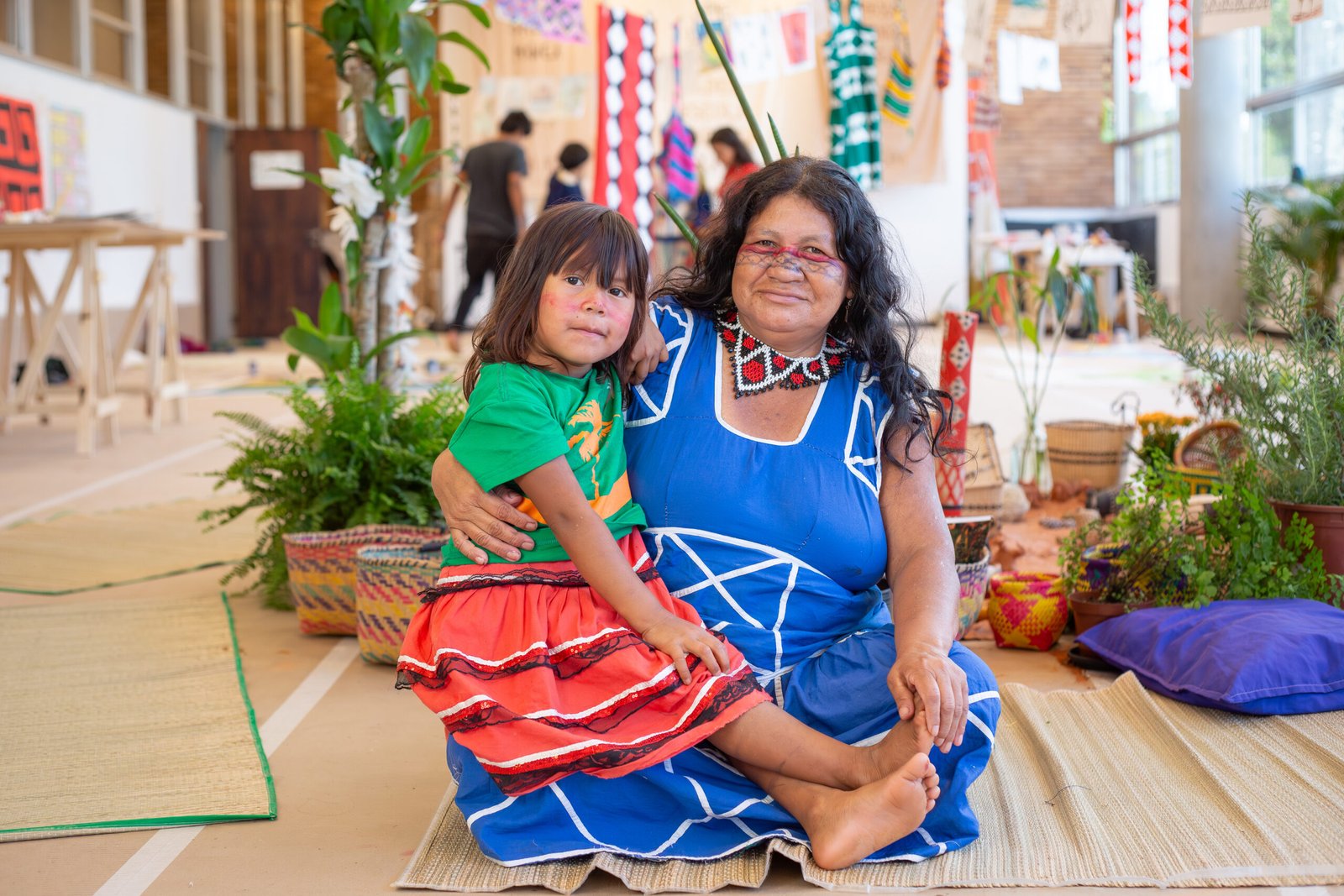
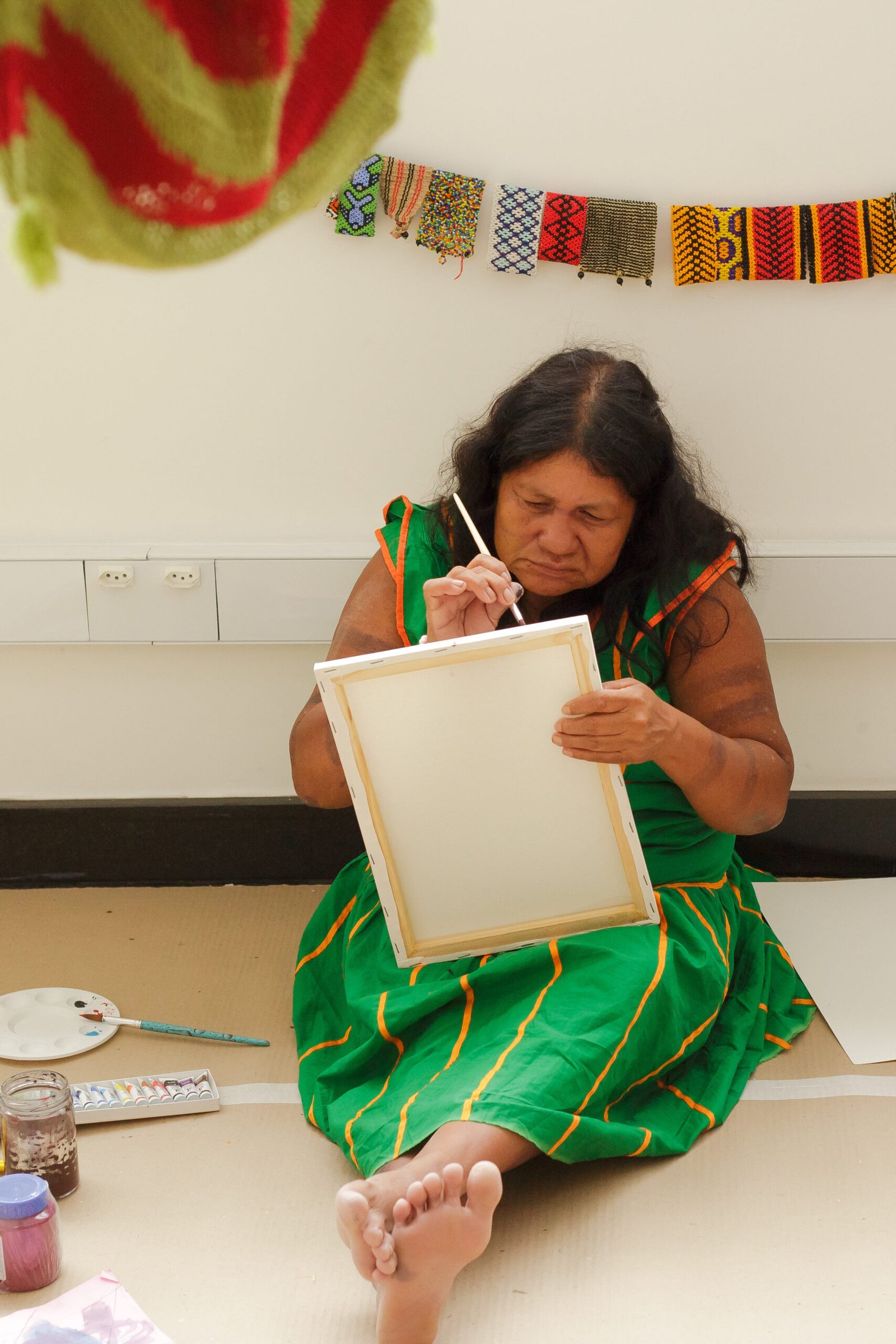
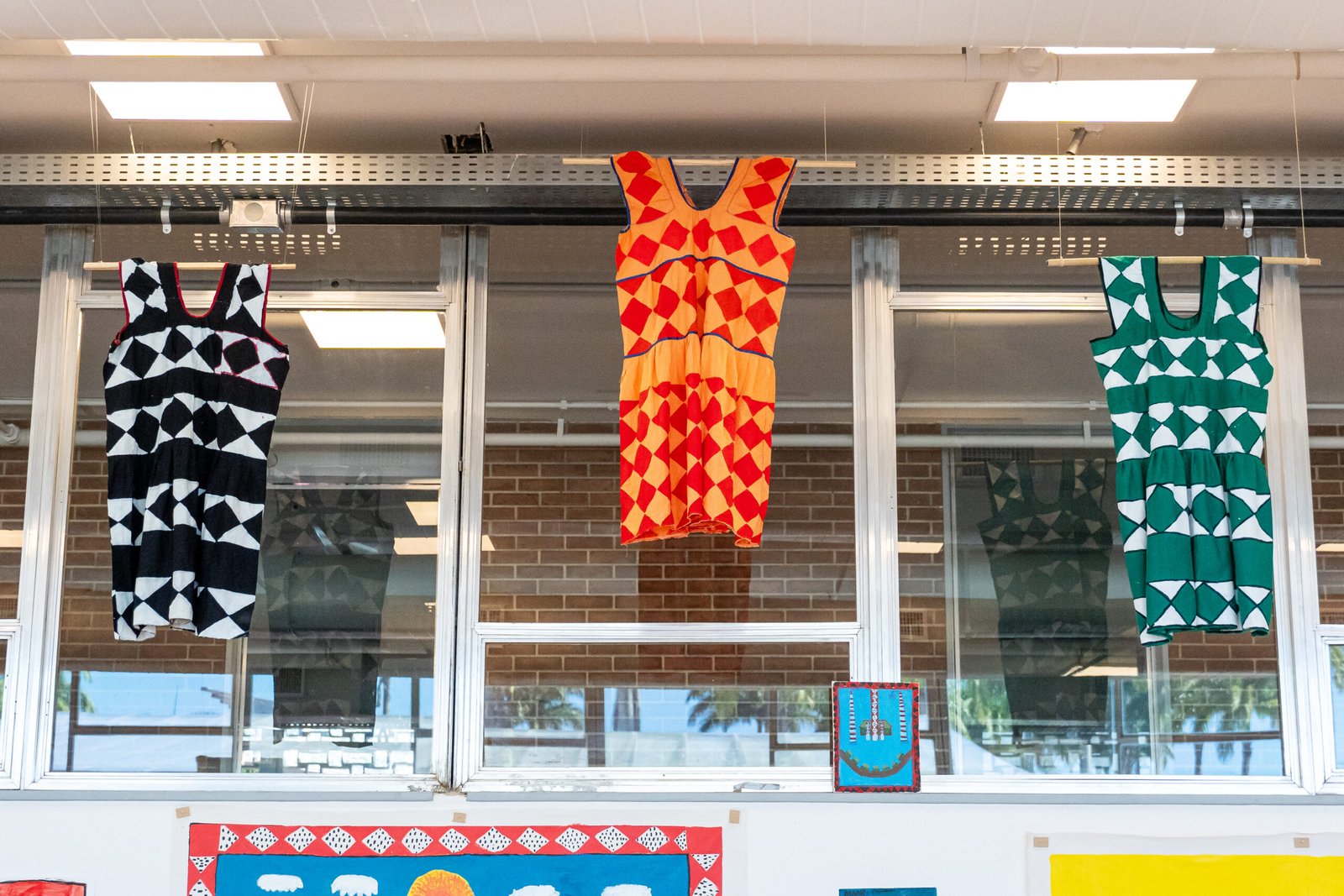
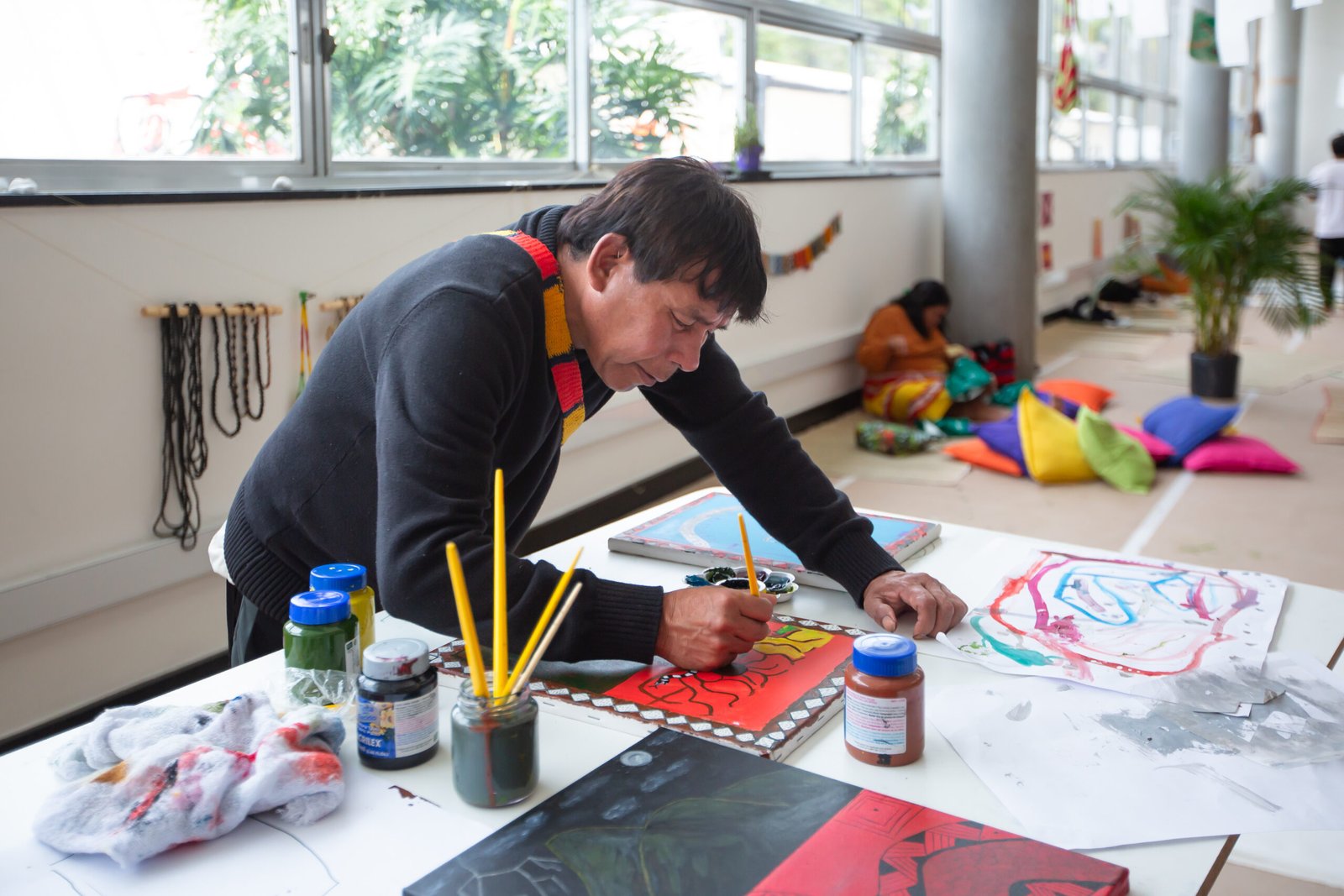
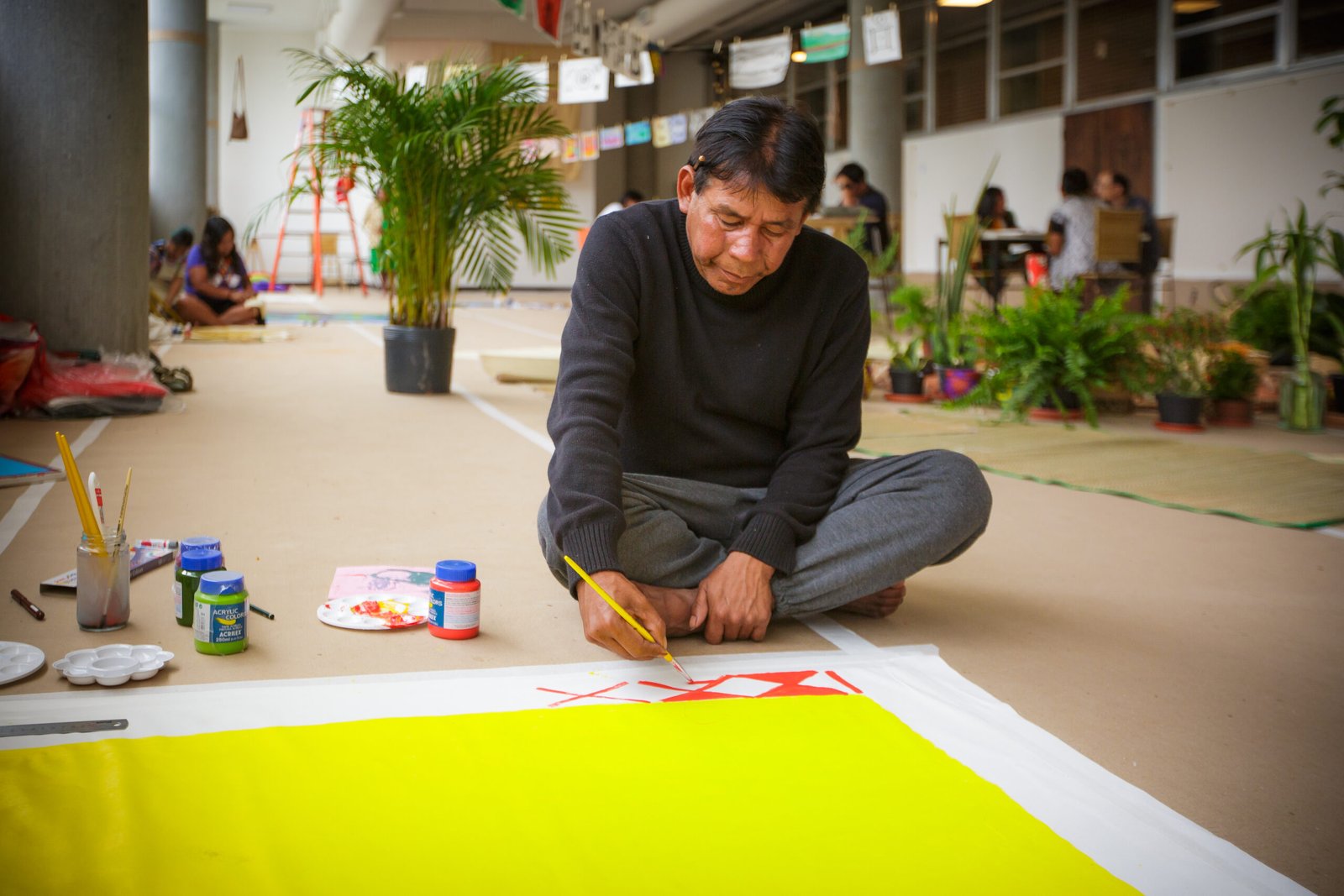
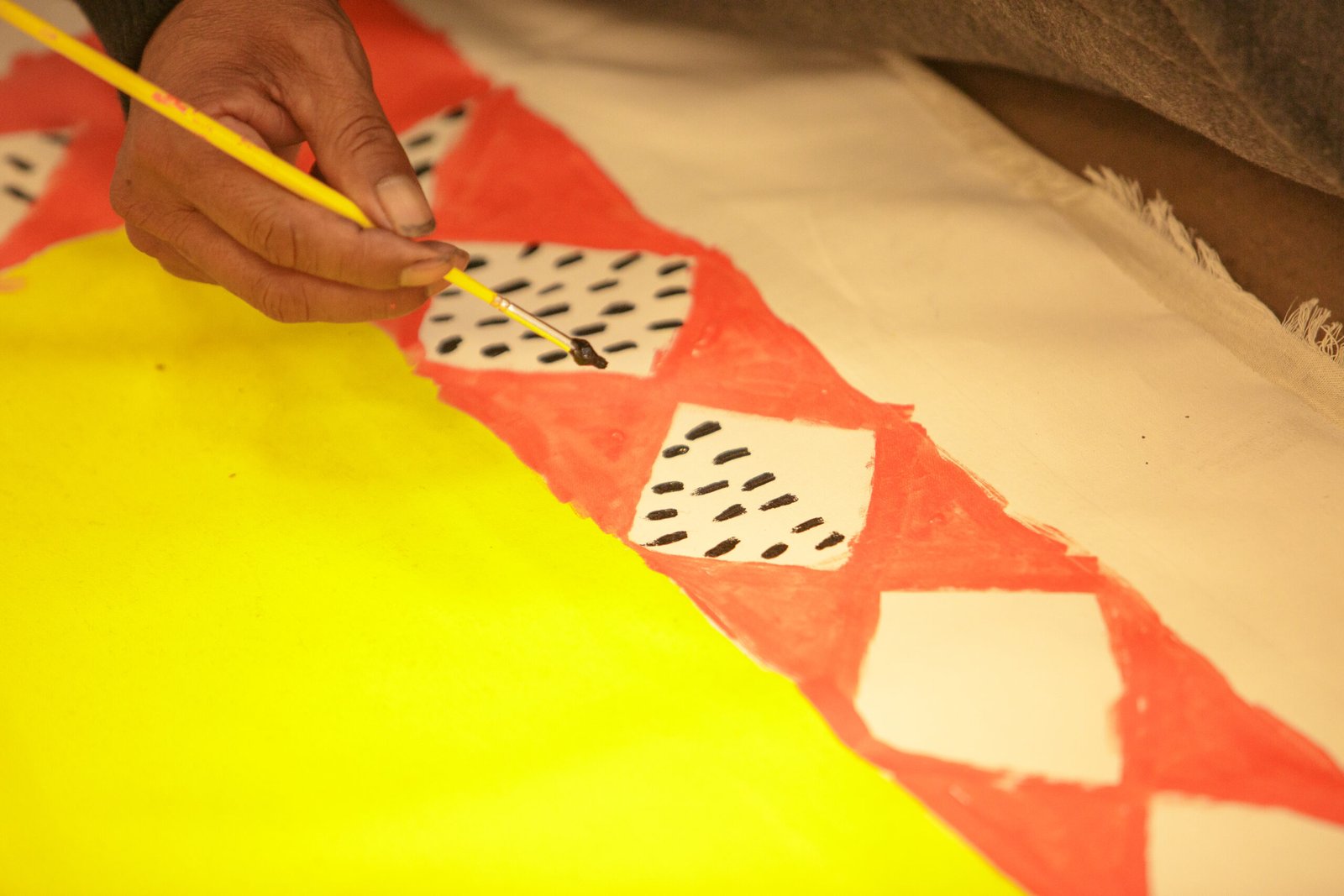
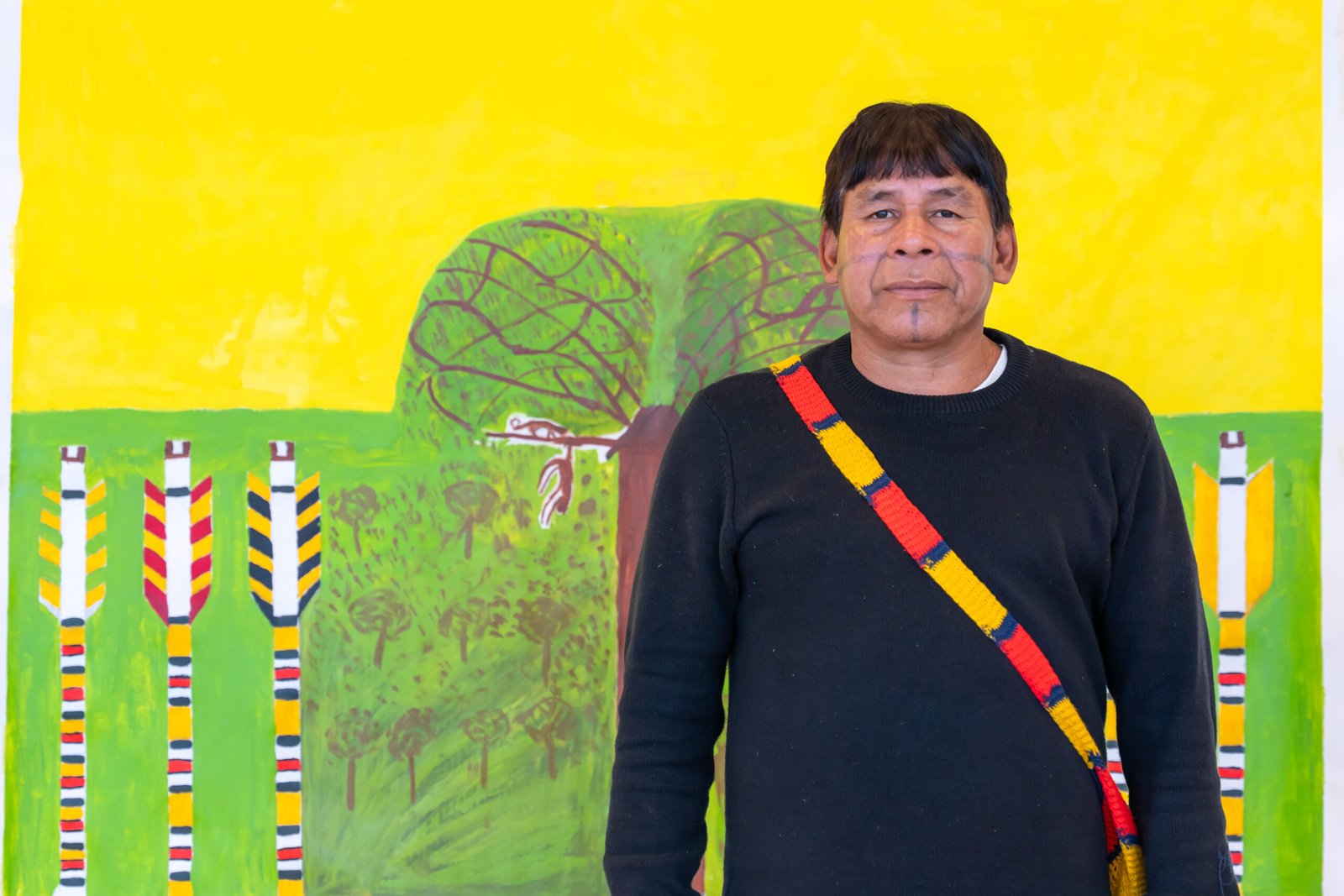
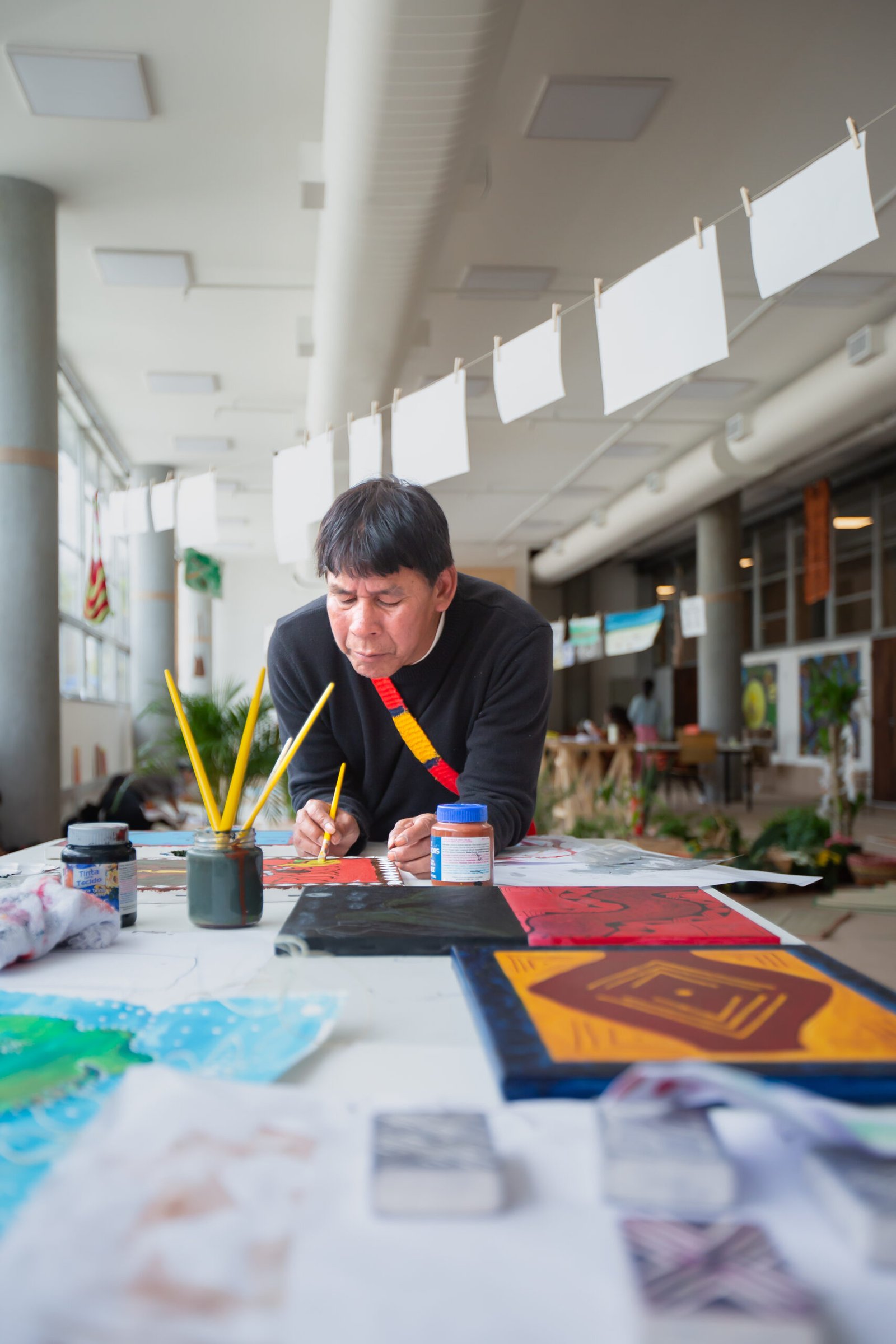
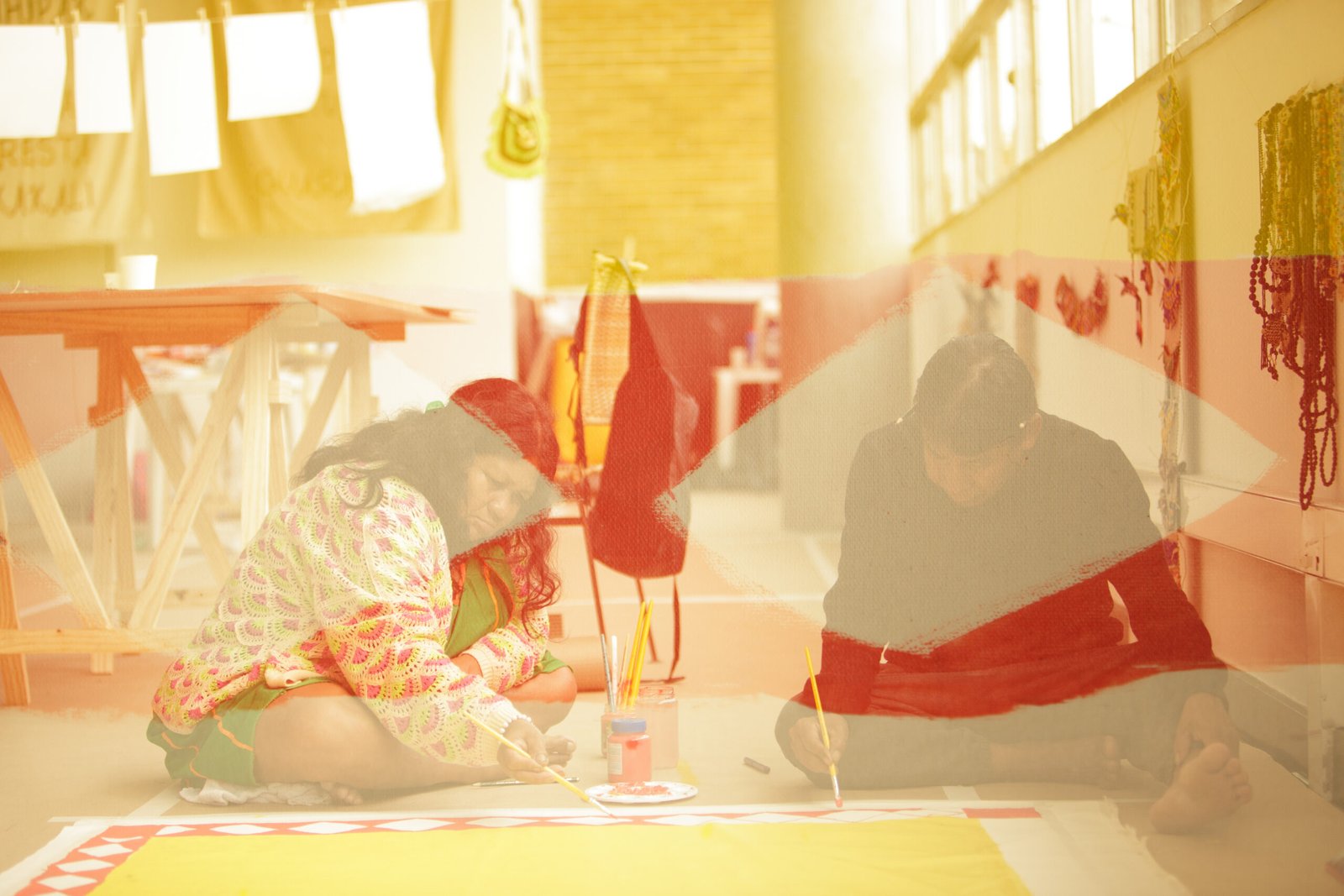
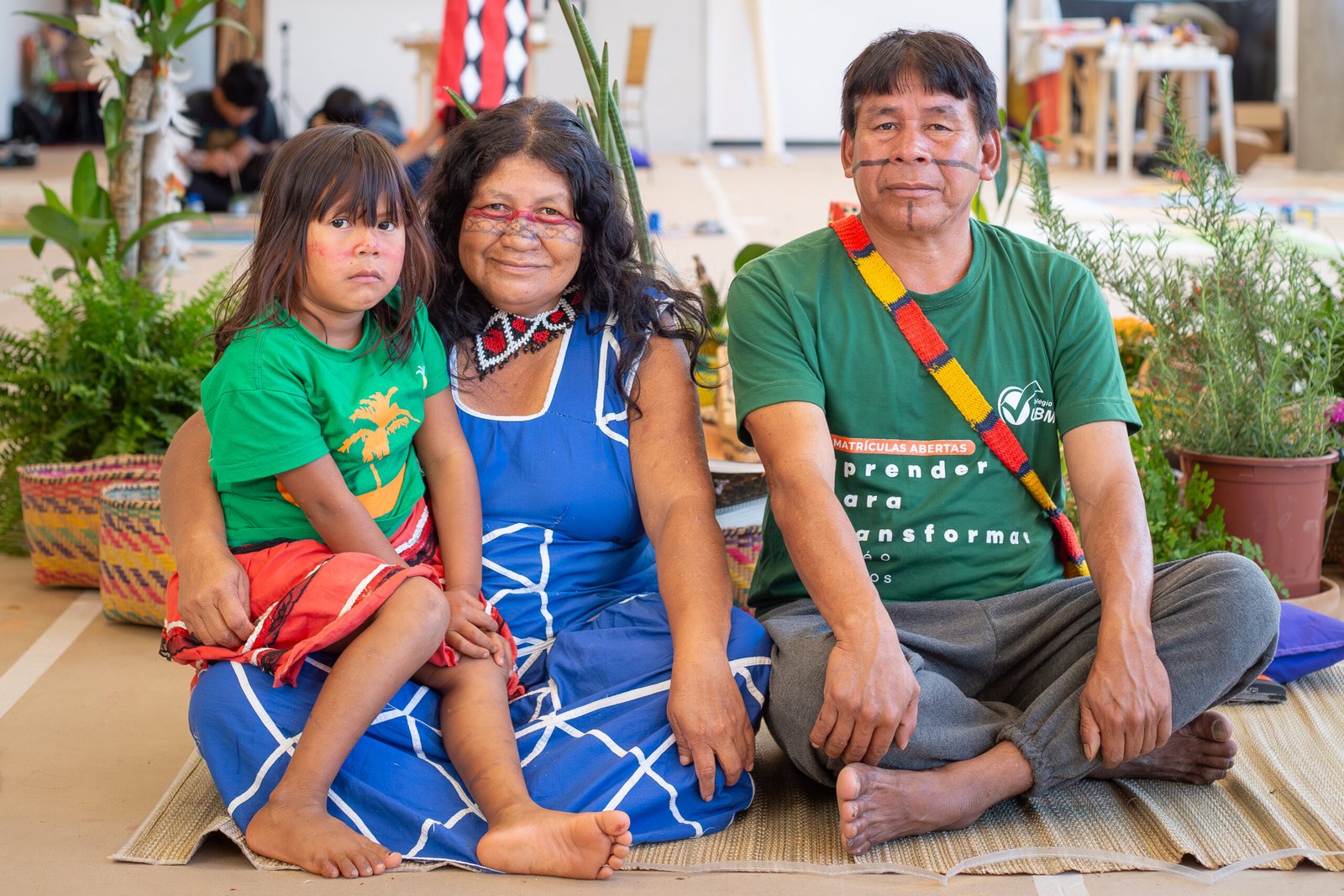
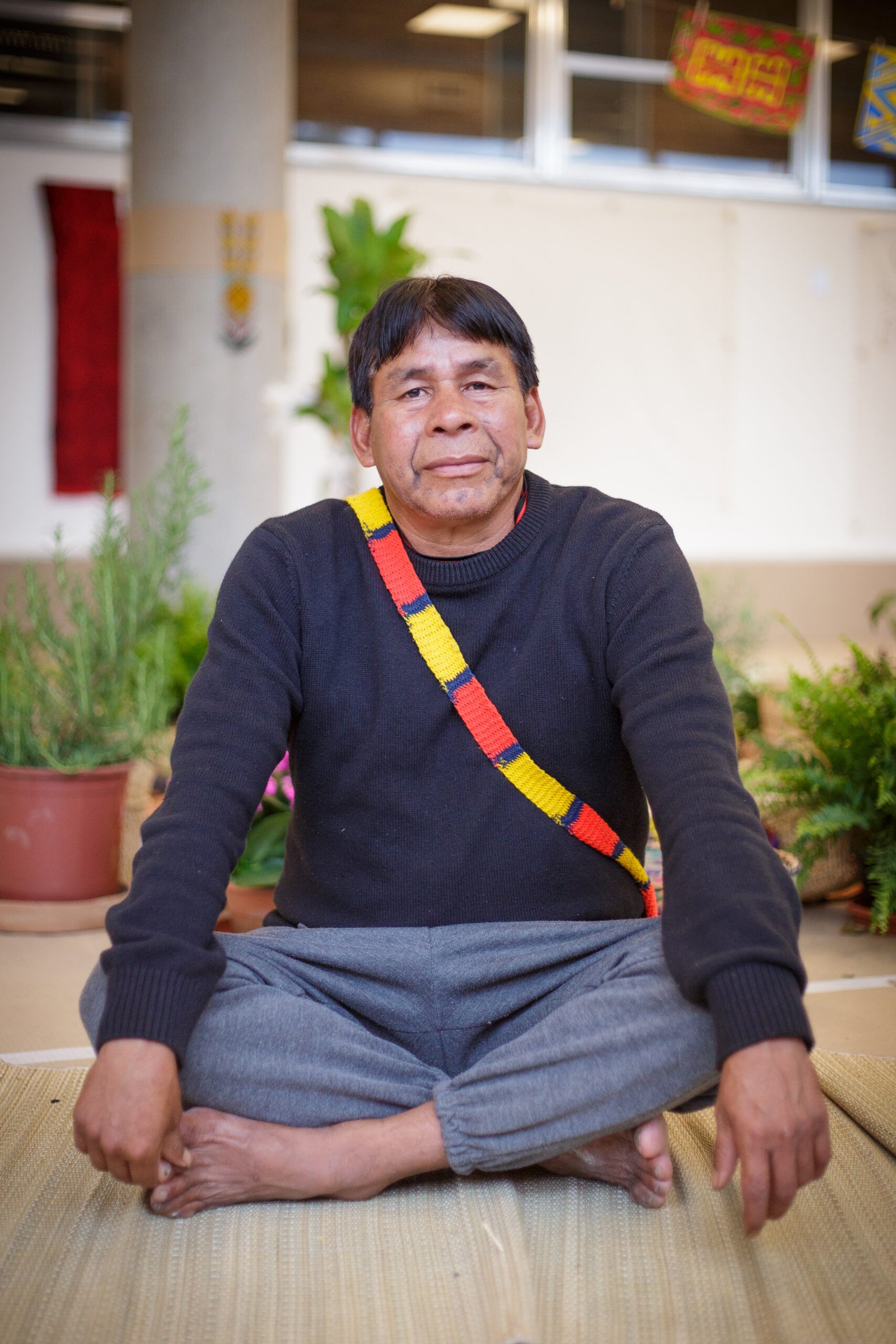
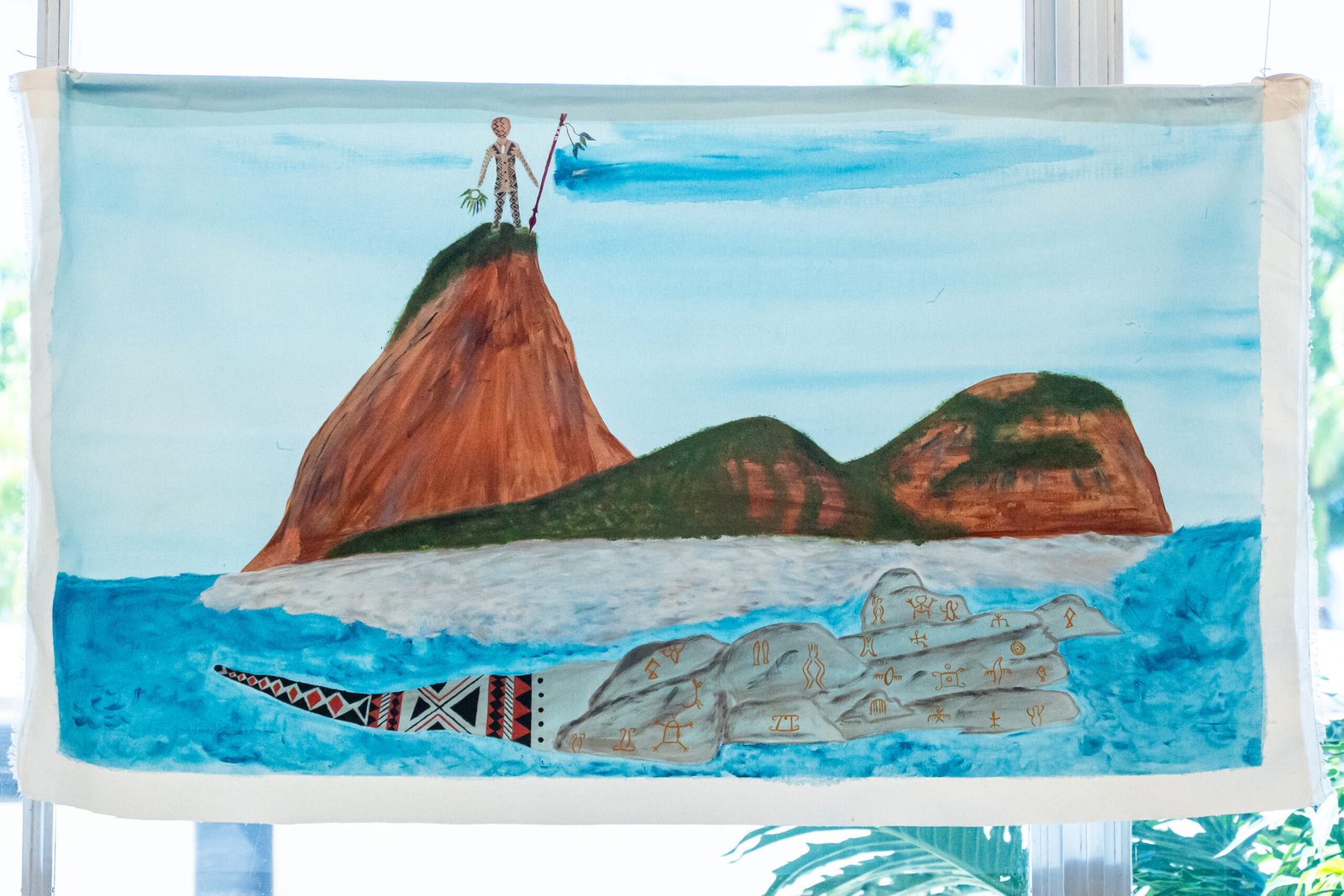
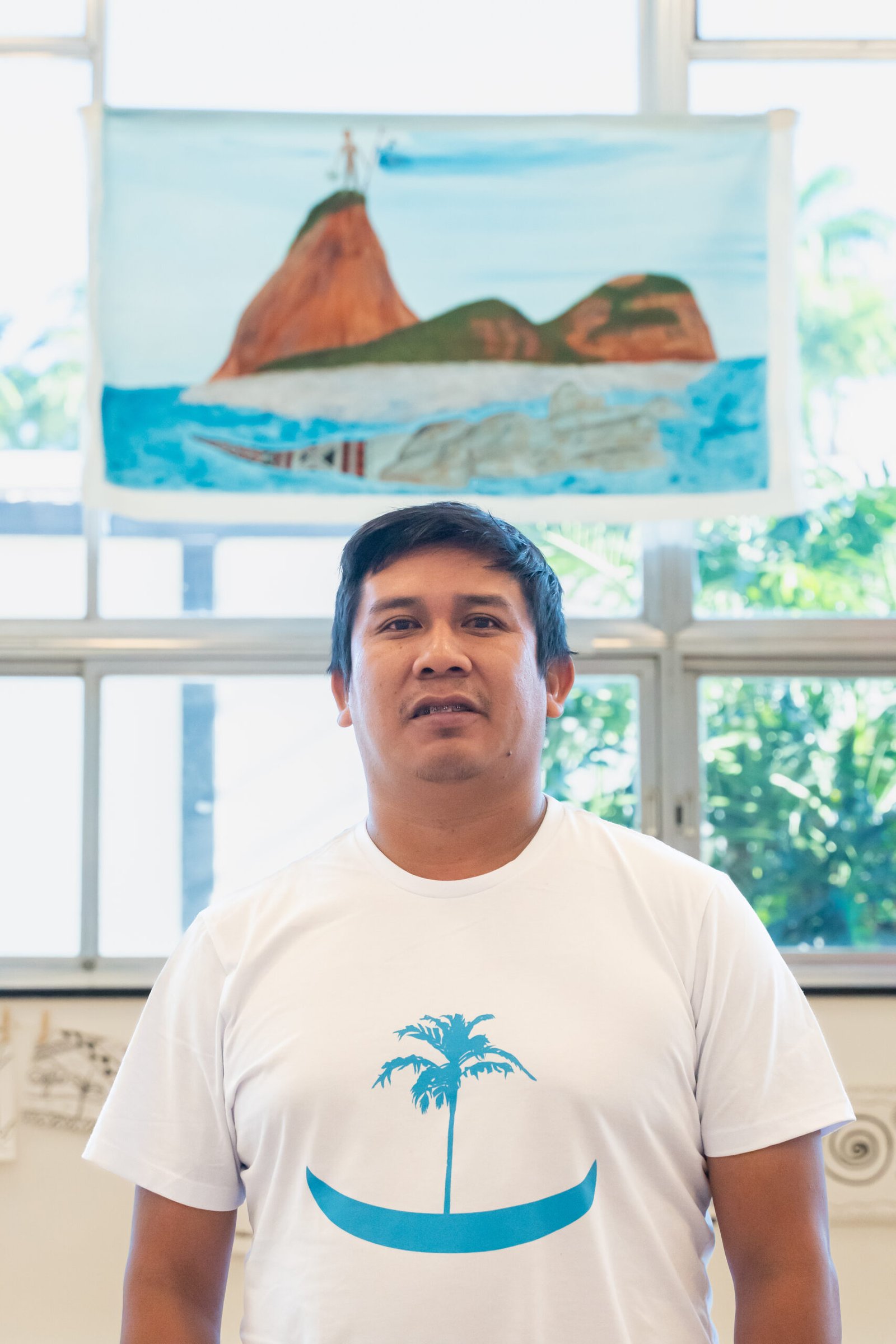
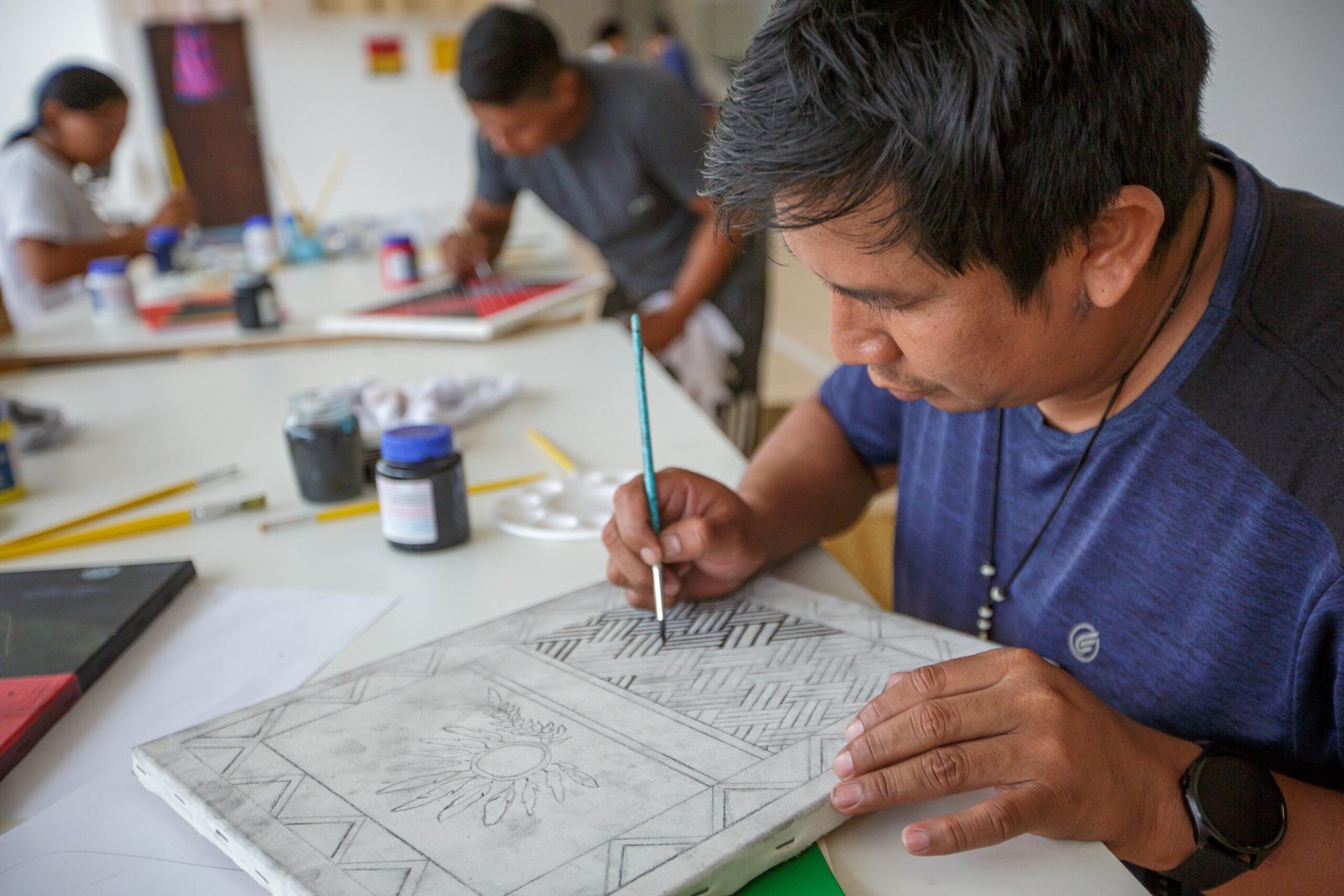
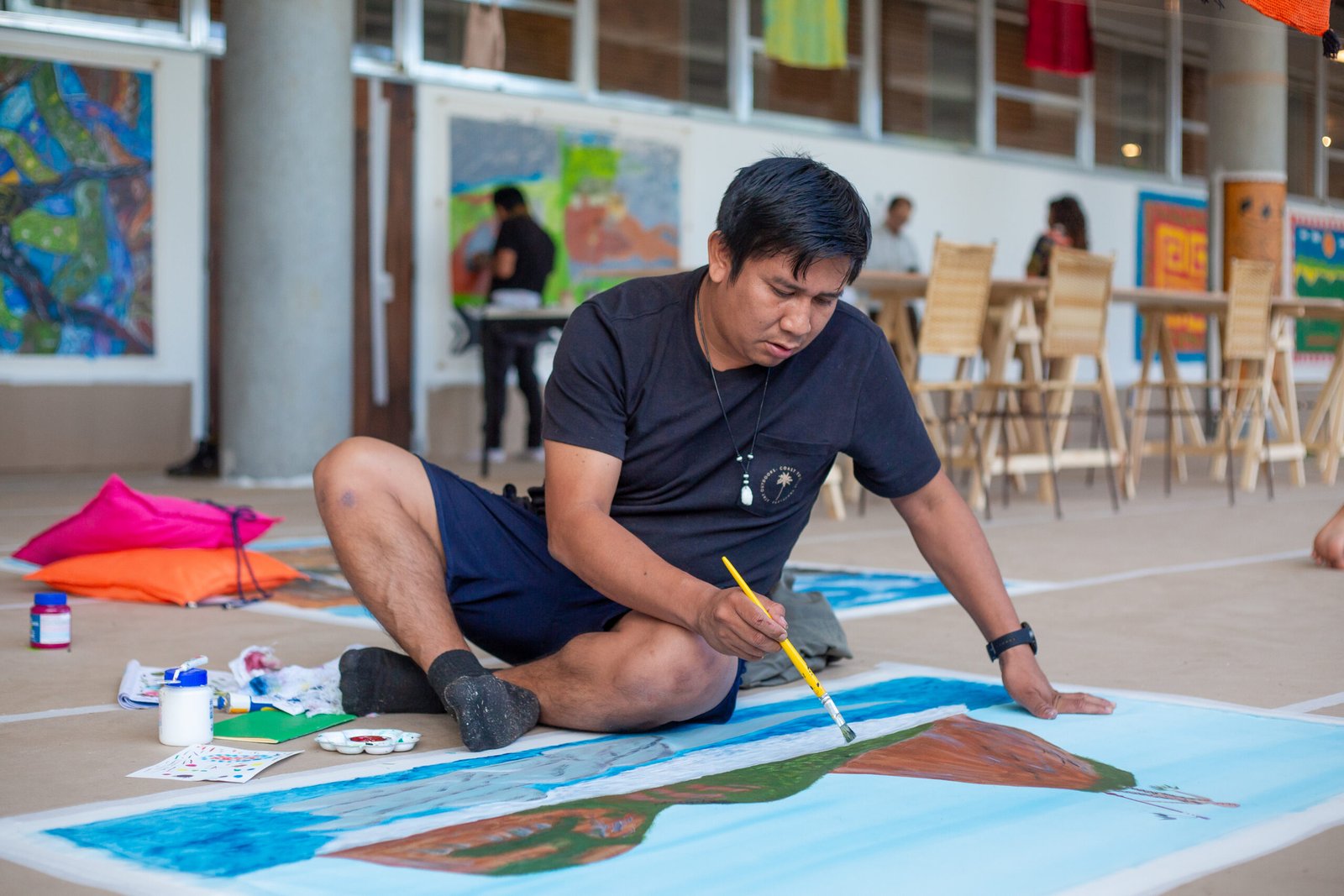
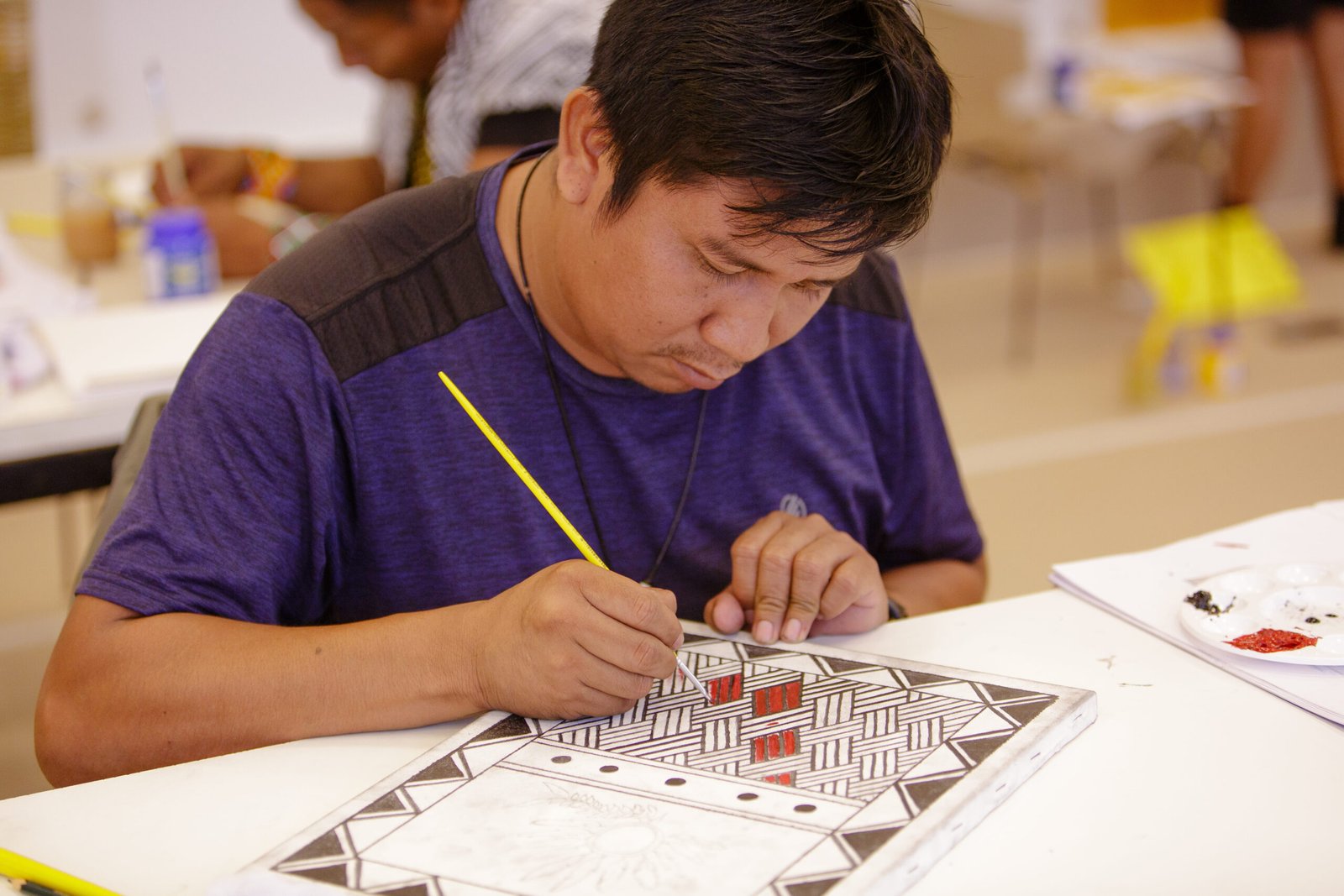
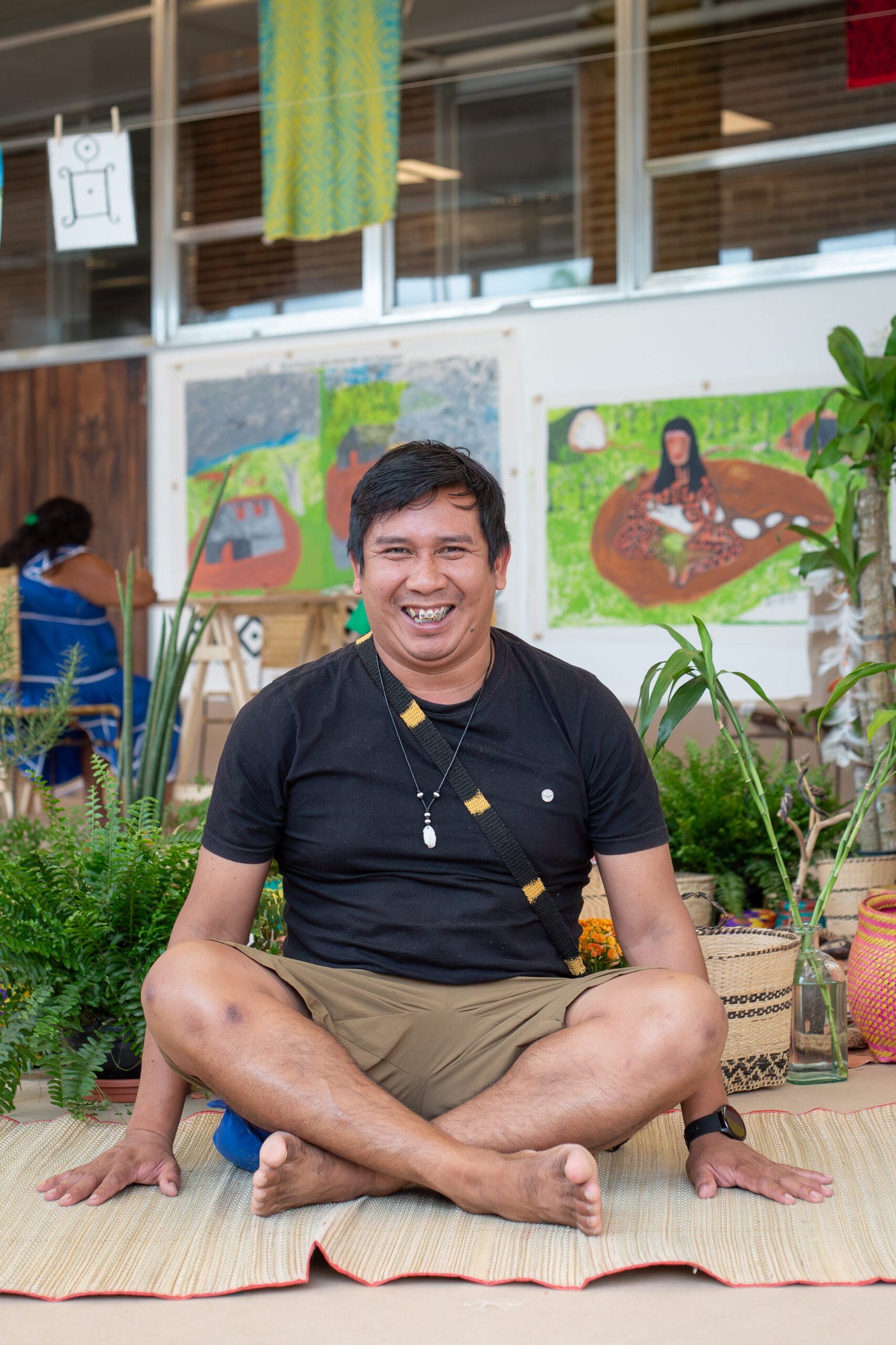
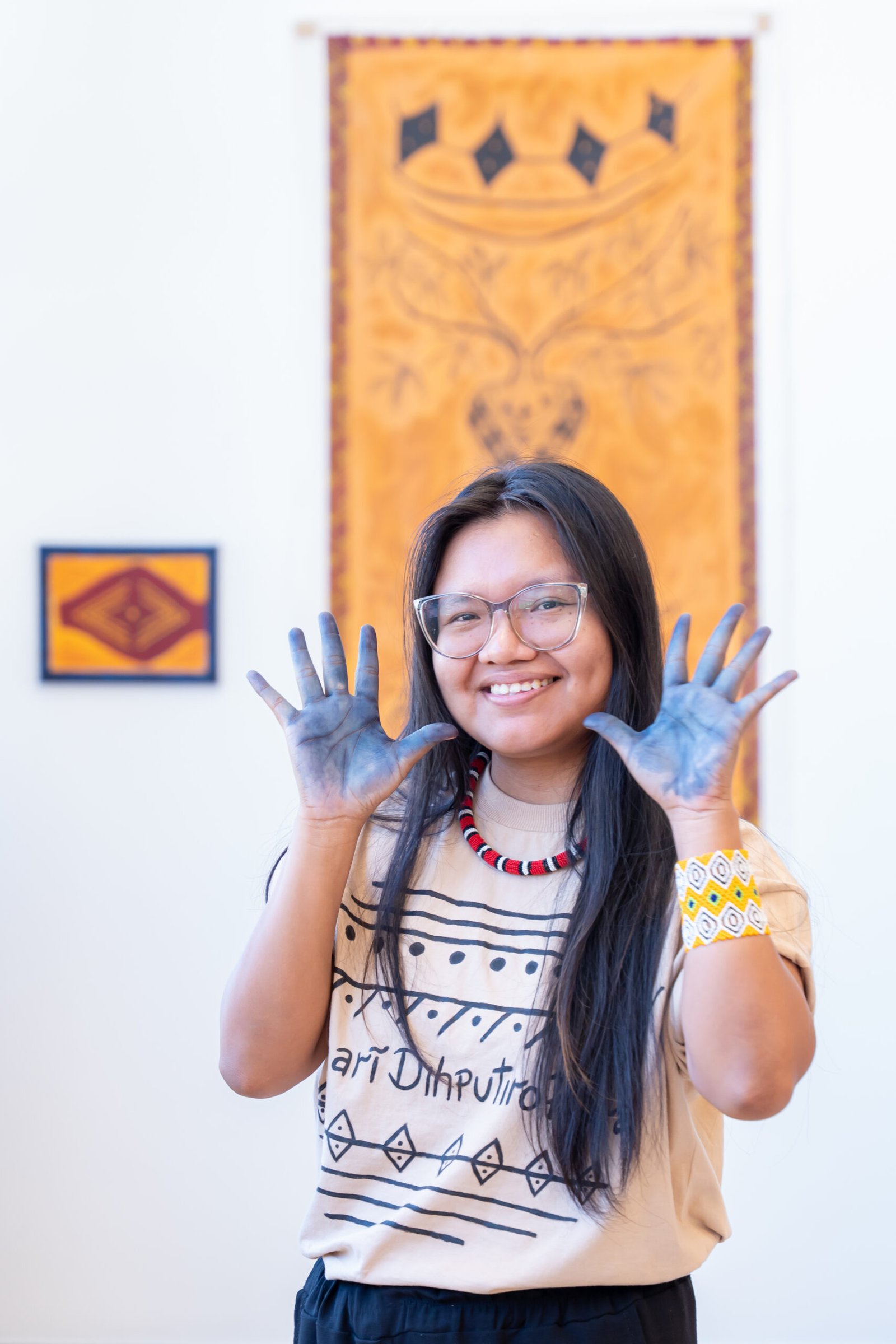
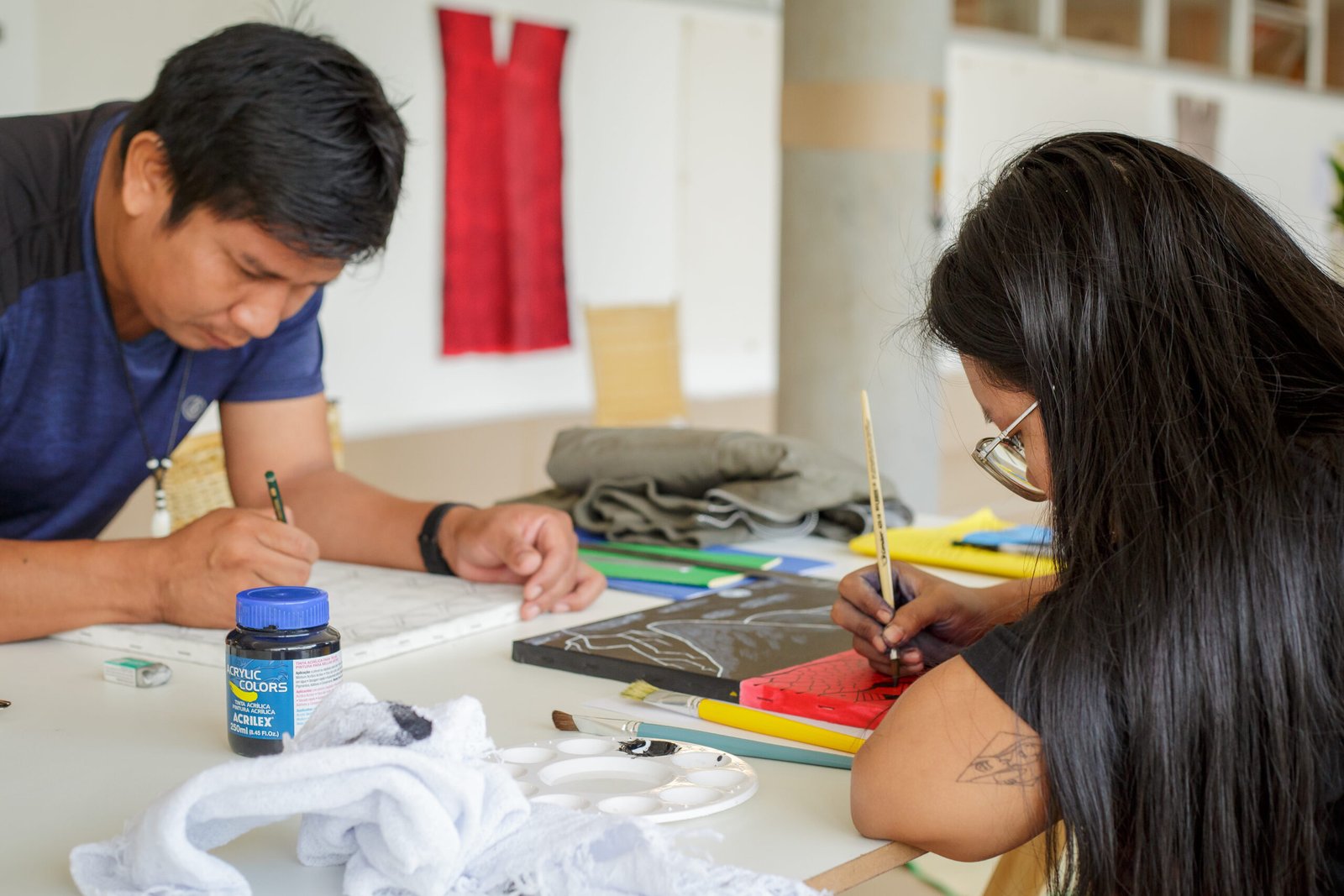
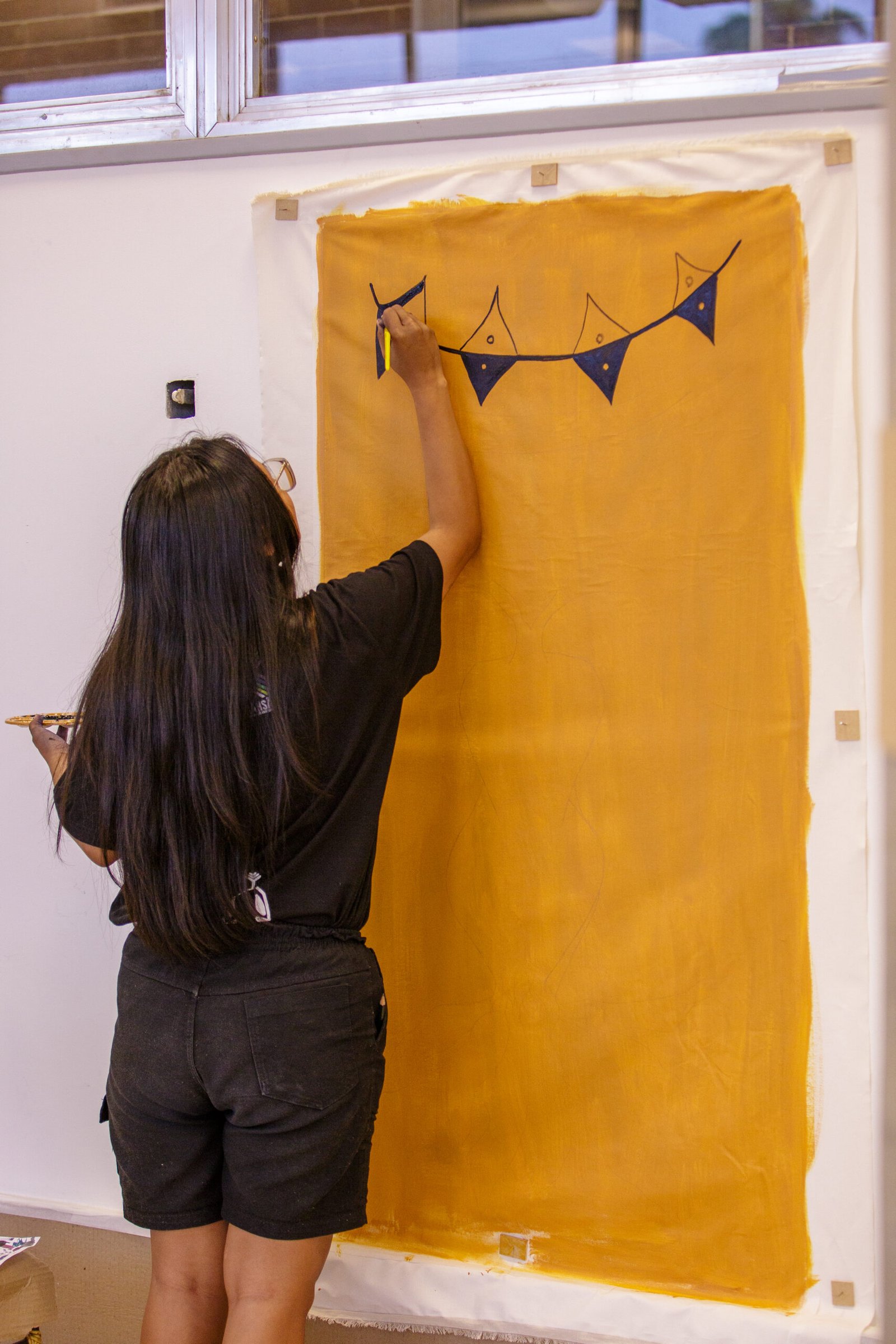
The artistic residency Living School House invited 10 artists, 2 from each Living Schools indigenous movement, and the Living Schools coordinators, to create, reflect, and share experiences, over the course of 15 days, about their artistic and collective practices at the Bloco Escola [School Block] in the Museum of Modern Art of Rio de Janeiro (MAM Rio).
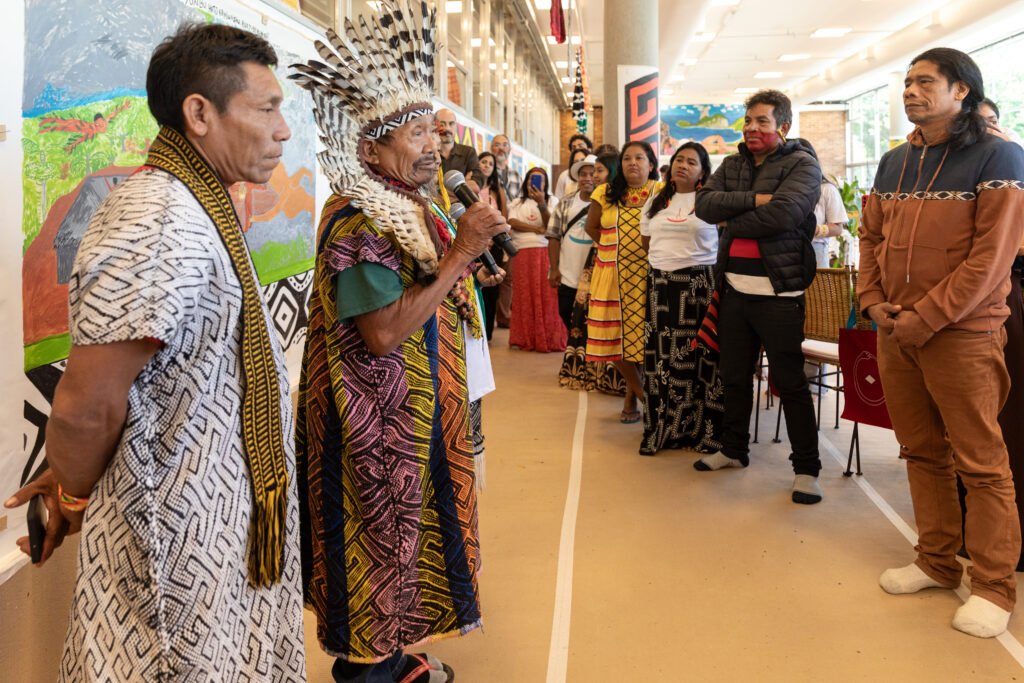
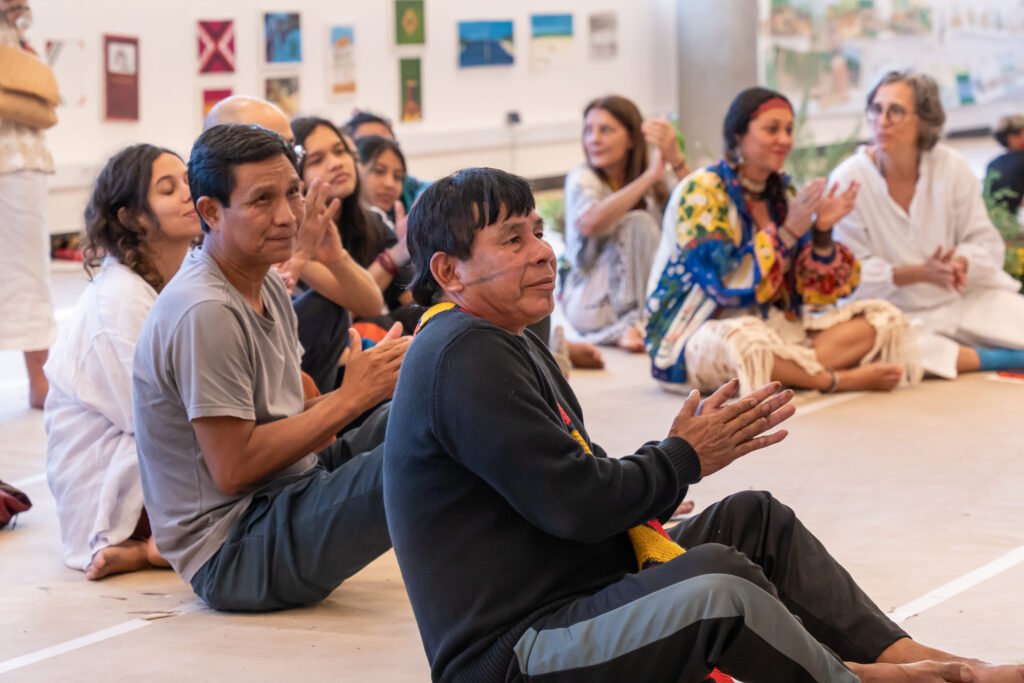
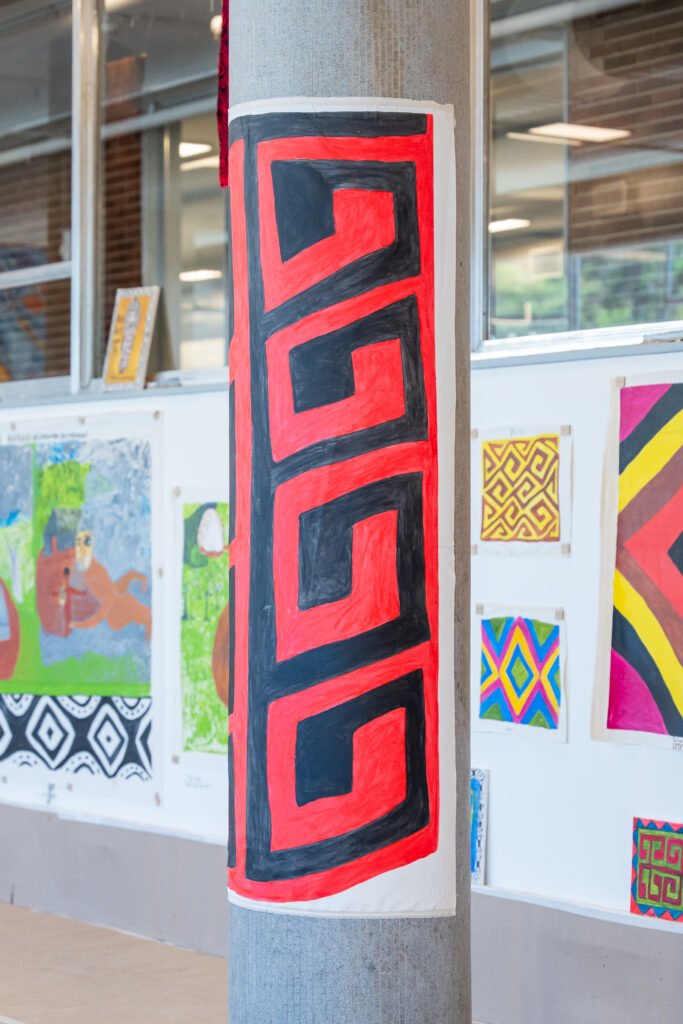
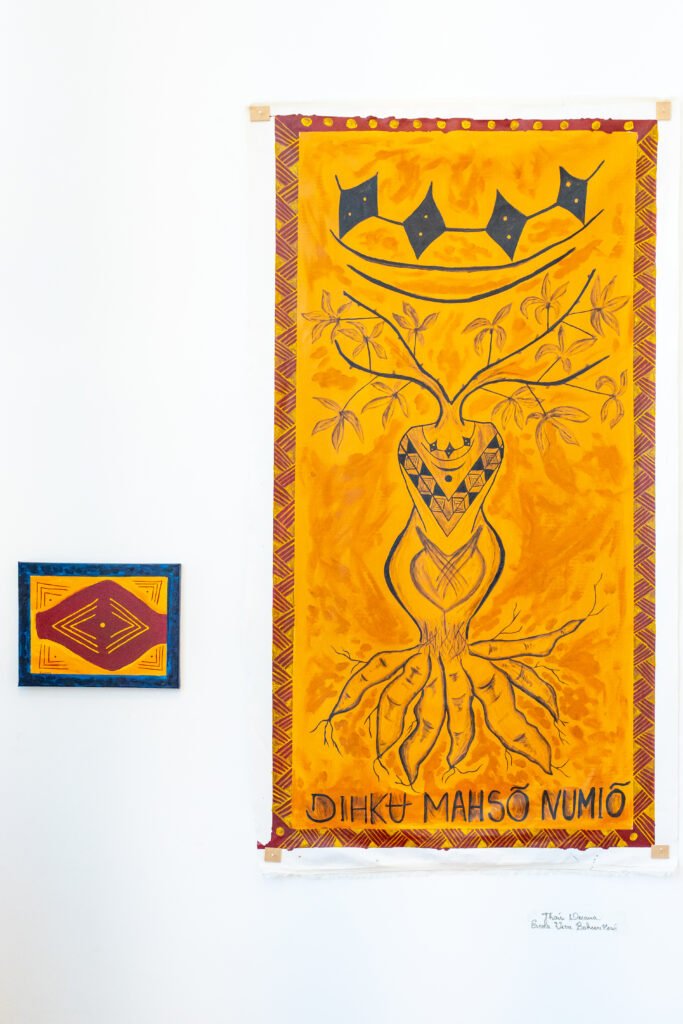
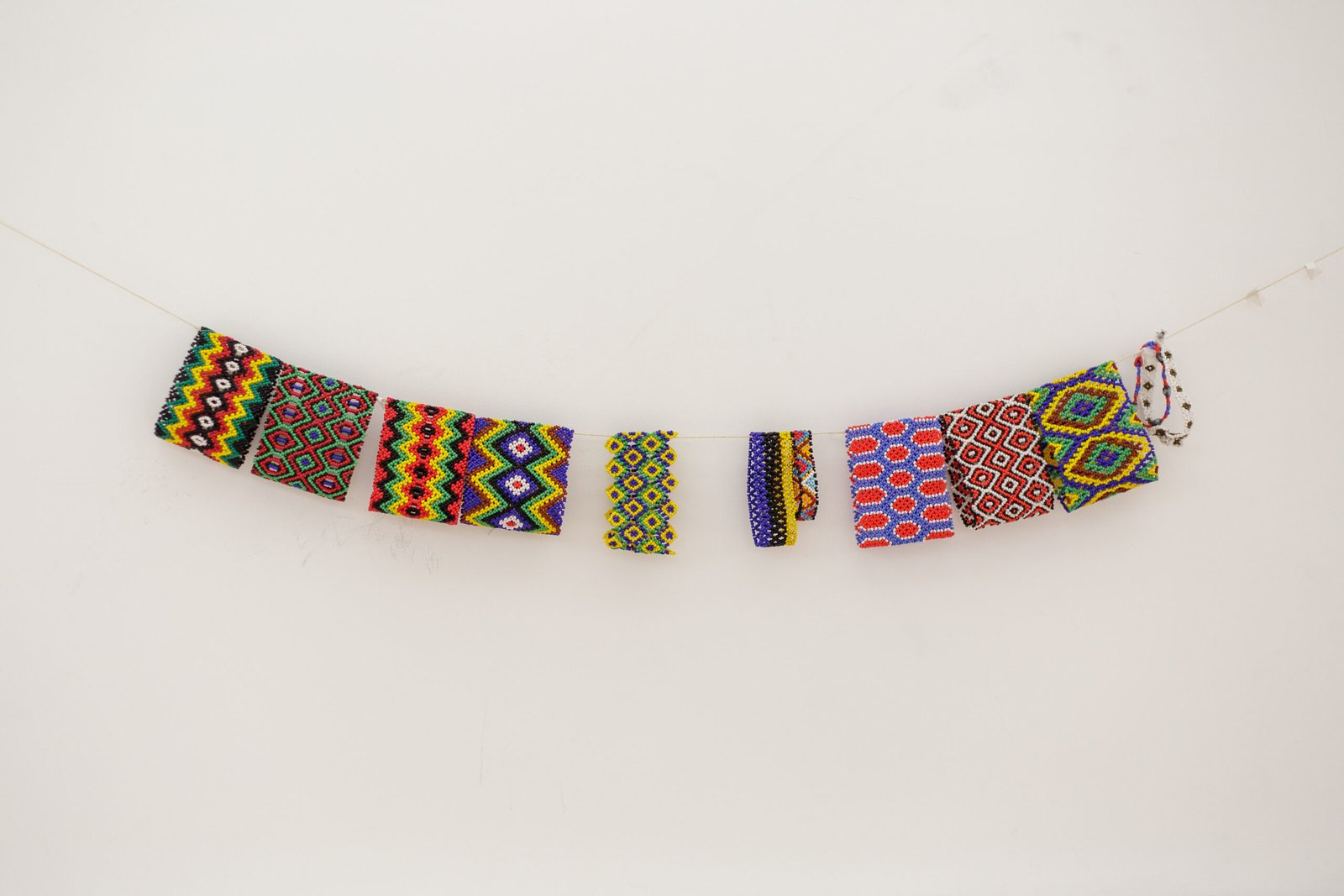
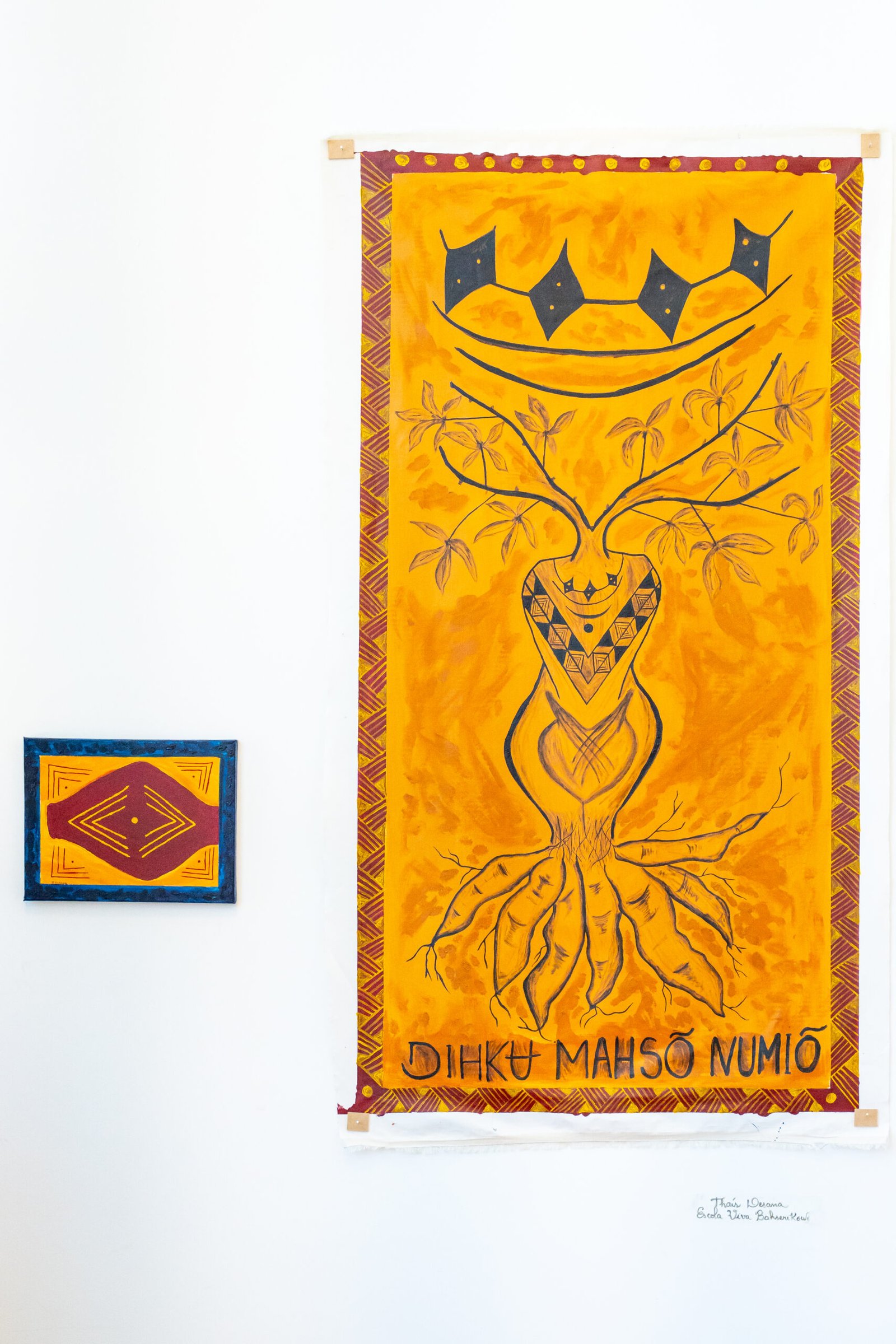
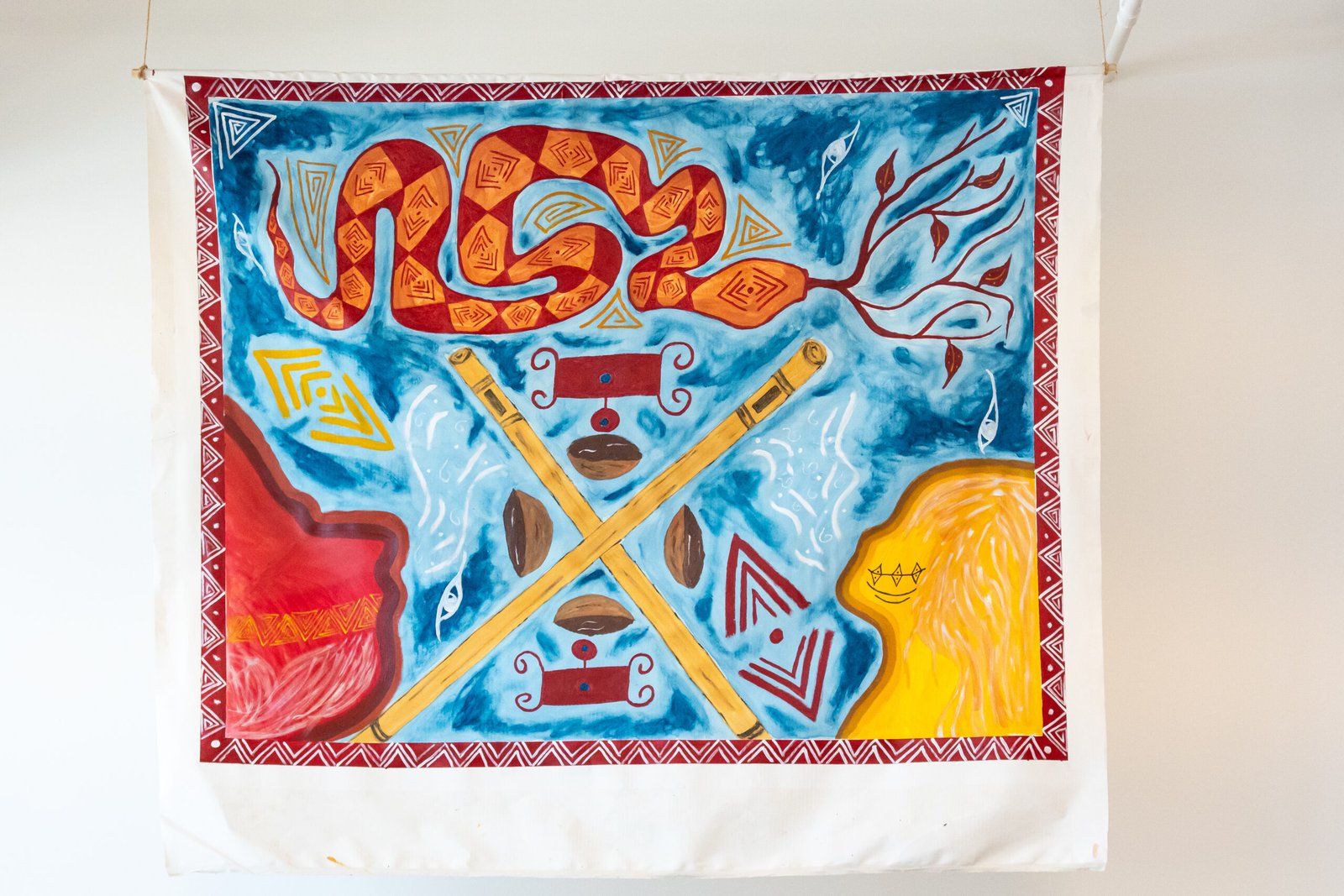
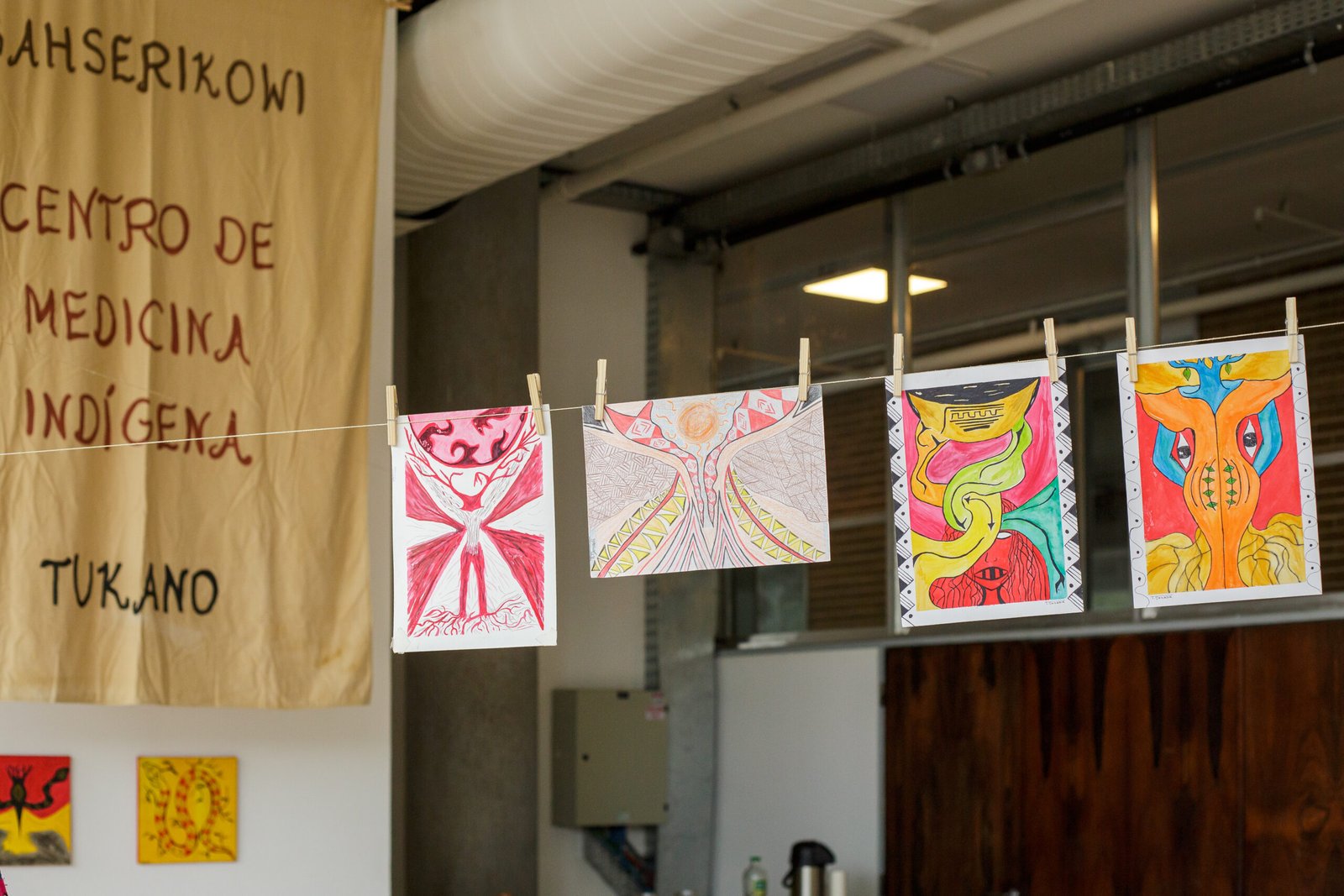
Living School House was an initiative of the Living Schools project aimed at encouraging artists to engage with the world beyond their local communities, whilst drawing, painting, experimenting, exchanging ideas and deepening their understanding of their own cultures. At the end of the process, on 23 and 24 October, an exhibition of the works was held, open to the public, attended by the artists and coordinators; and a round-table discussion entitled ‘Is Art a Commodity?’, attended by around 40 people, including the artists and coordinators of Living Schools, researchers, anthropologists and representatives from museums and art institutions.
Living School House was also an offshoot of the first Long Live the Living School exhibition, which took place at Casa França-Brasil between 2 December 2023 and 28 January 2024; in turn, the artworks created during the residency formed part of the second edition of the exhibition, held at the Tomie Ohtake Institute between June and August 2026.
TESTIMONIALS IN VIDEO AND NOTEBOOKS
At the end of the Living School House residency, the 10 resident artists recorded testimonials in which they discussed their career paths, inspirations, creative processes and reflections on the experience of living and exchanging ideas amongst the five Living Schools.
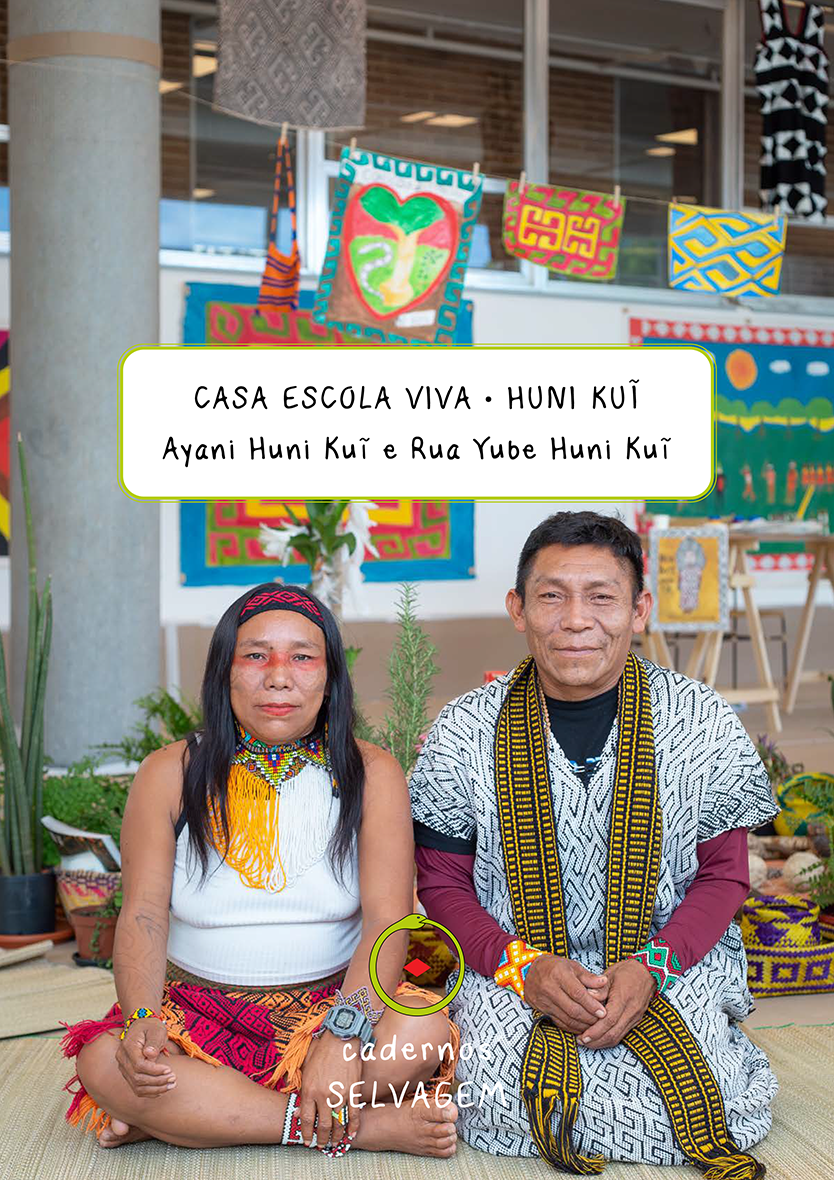
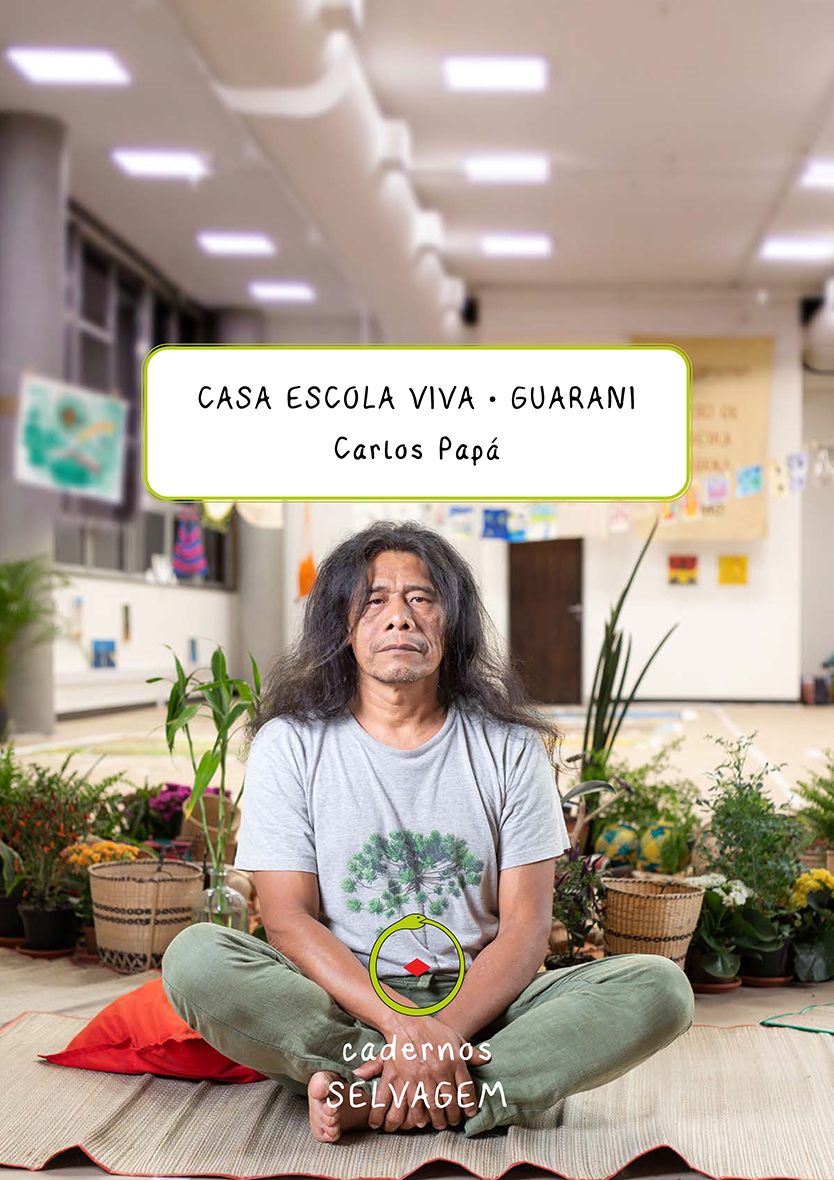
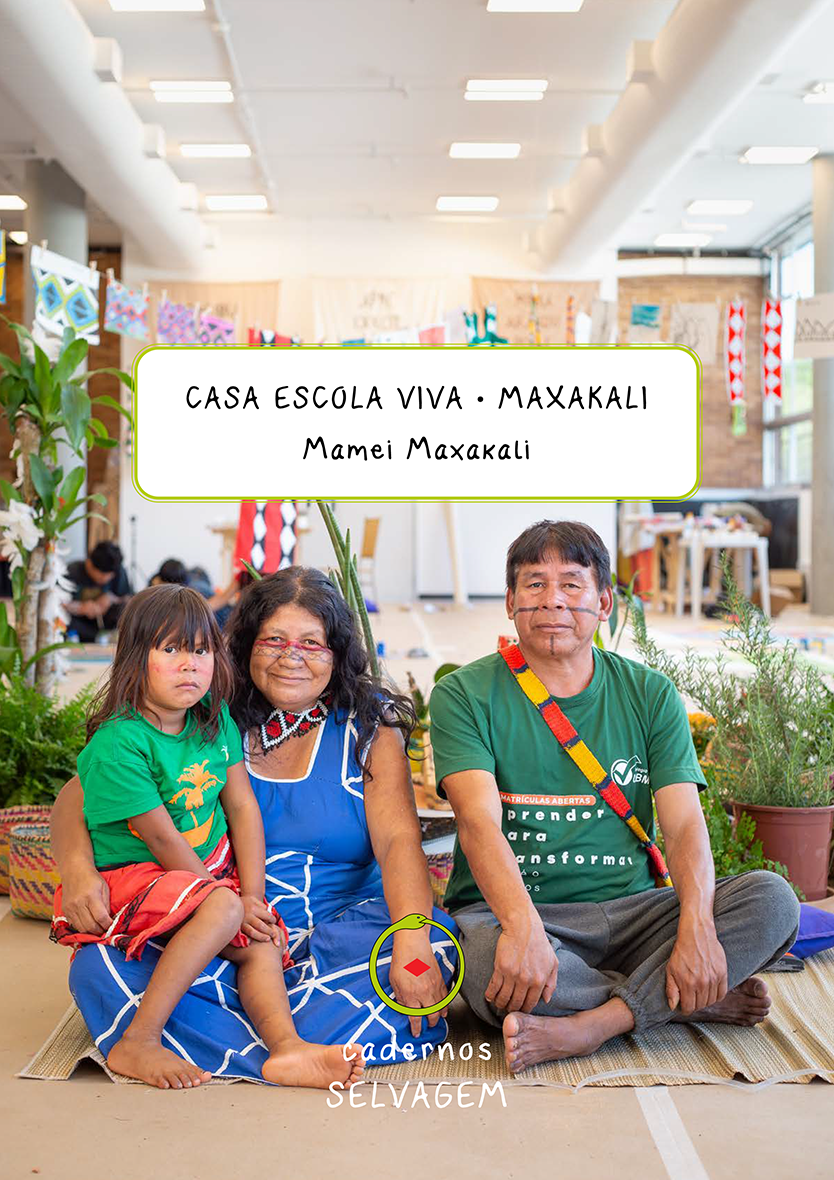
Throughout July, we will be publishing the Selvagem videos and notebooks featuring their words and songs. Learn more about the new releases:


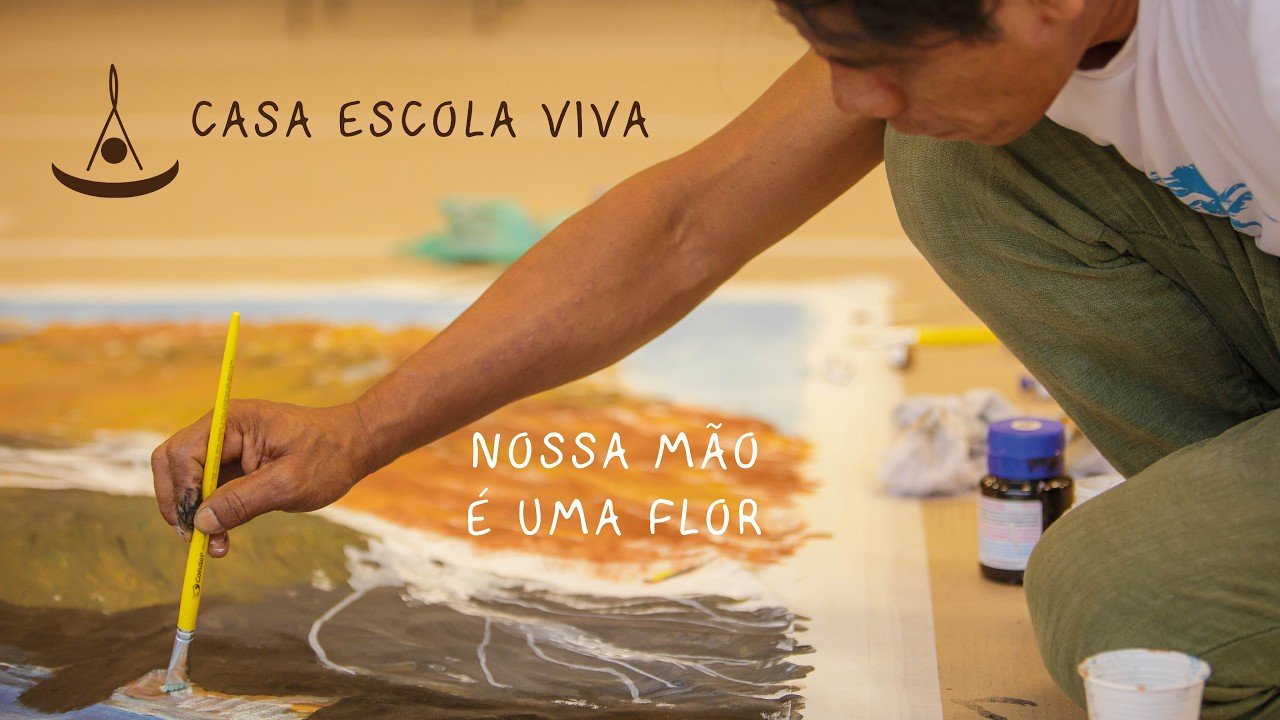
FILM "OUR HAND IS A FLOWER"
“We don’t call it ‘art’, we call it ‘playing’, which is ‘mbavyky’ […] The body gets warm, the body moves, and our hand is something that carries a flower. And the flower produces a seed.” – Carlos Papá
“It is this sense of community – of care, of affection, of being connected – that makes the Living School truly come alive.” – Cristine Takuá
OUR HAND IS A FLOWER [NOSSA MÃO É UMA FLOR] presents the indigenous artistic residency Living School House, following the gestures, processes and creation of works to the sound of the songs and voices of the masters of the Living Schools, where art and play go hand in hand, passed down and recreated from generation to generation.
NOTEBOOK "IS ART A COMMODITY?"

On 23 October, at the end of the Living School House residency, there was a round-table discussion entitled "Is art a commodity?", which invited reflection on the relationships between indigenous art, the art market, and cultural institutions and museums.
The discussion invited participants to consider alternative ways of integrating Indigenous art into art spaces, moving beyond traditional gallery models, which often focus on the commercialisation of works and the individualisation of artists. This booklet brings together the contributions of the artists, curators and representatives of cultural institutions and museums who were present on the day.
This publication features a selection of statements that help to answer the questions that guided the roundtable discussion: Where does indigenous art come from? Can there be a dialogue between the art world and indigenous art? Is art a commodity?
MEET THE ARTISTS IN RESIDENCE
- FRANK BANIWA
- LARISSA BANIWA
- FABIANO VERÁ
- NEUZILIA PARA
- AYANI HUNI KUÏ
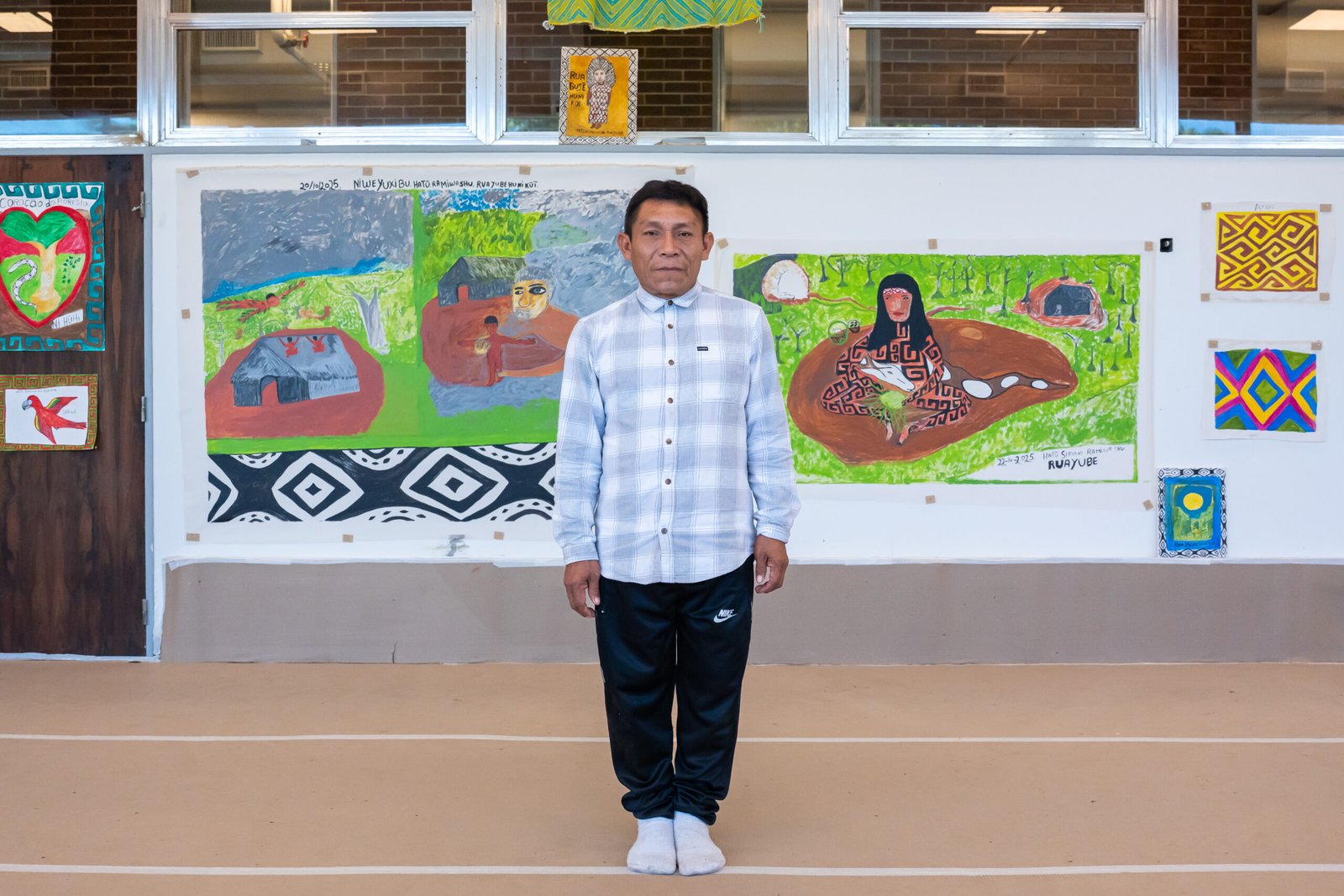
- RUA YUBE HUNI KUÏ
- ISABELINHA MAXAKALI
- MAMEI MAXAKALI
- IVAN TUKANO
- THAÍS DESANA
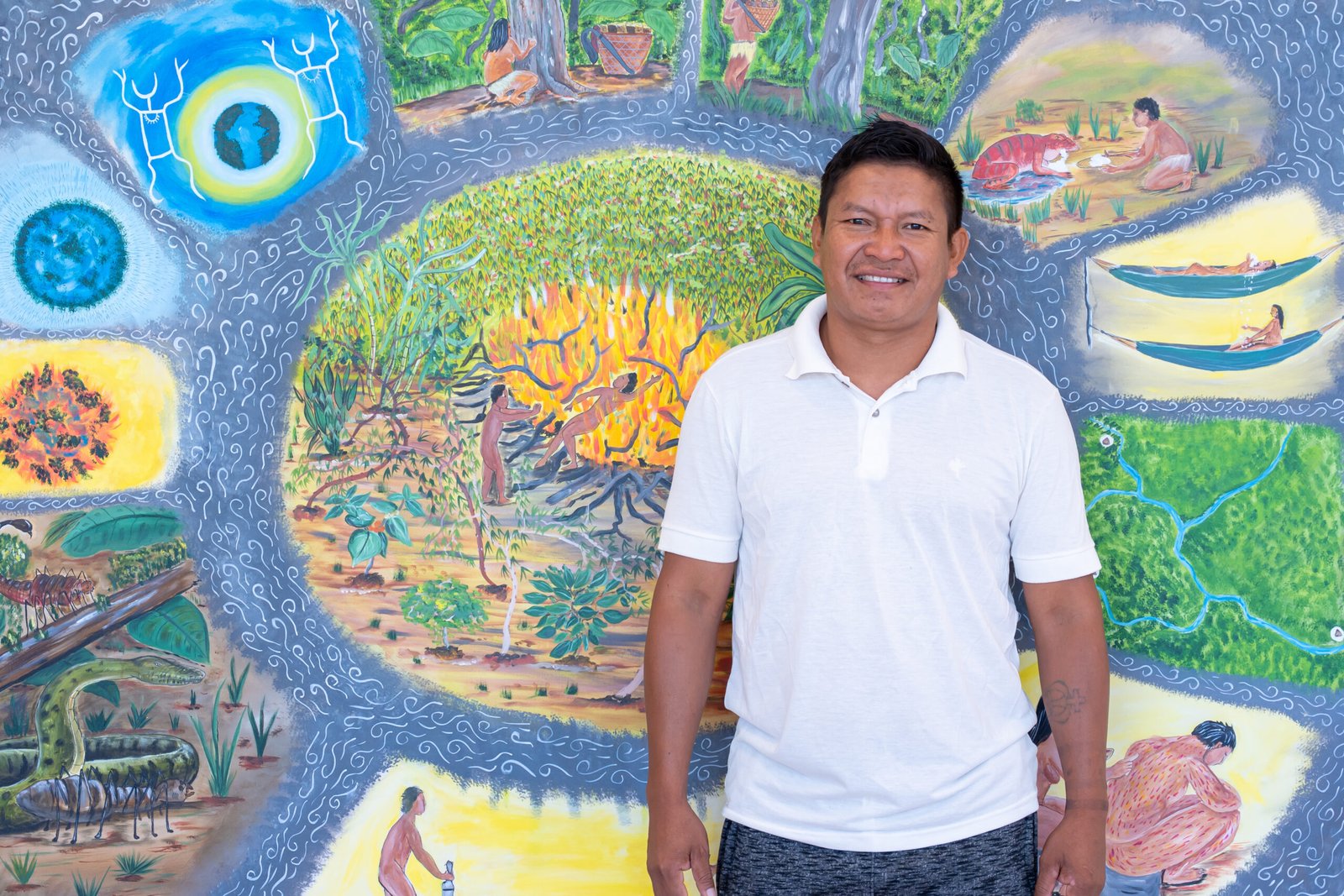
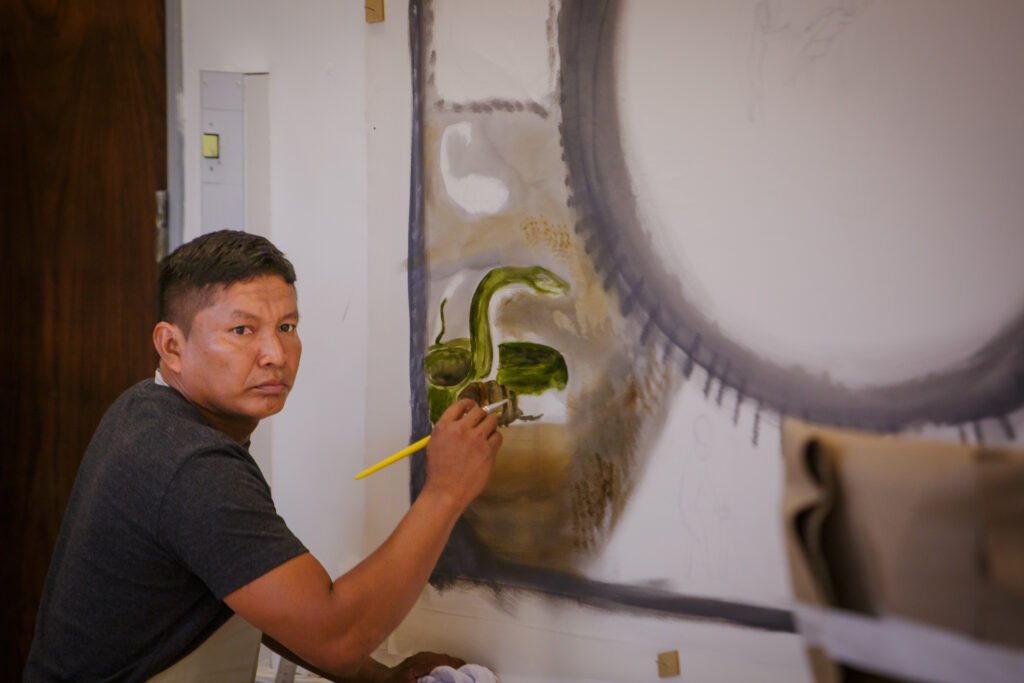
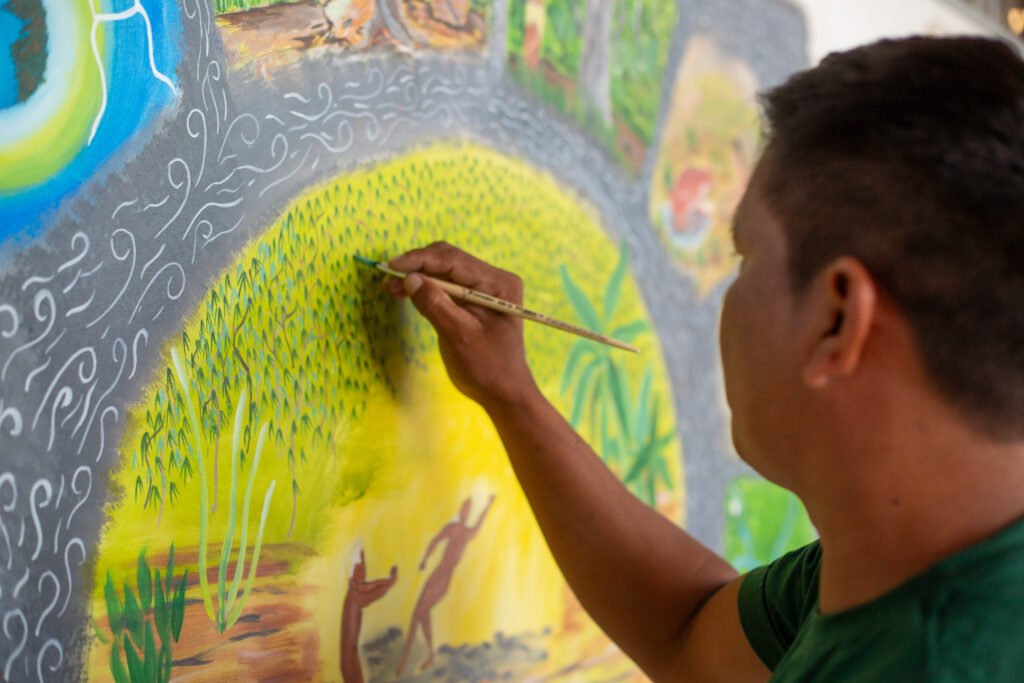
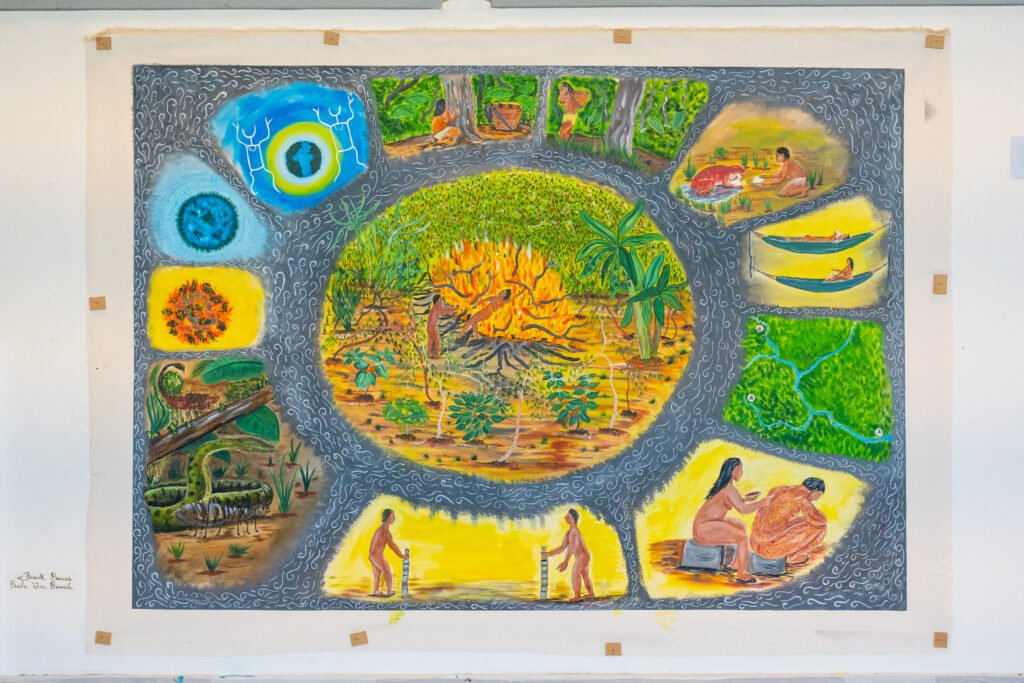
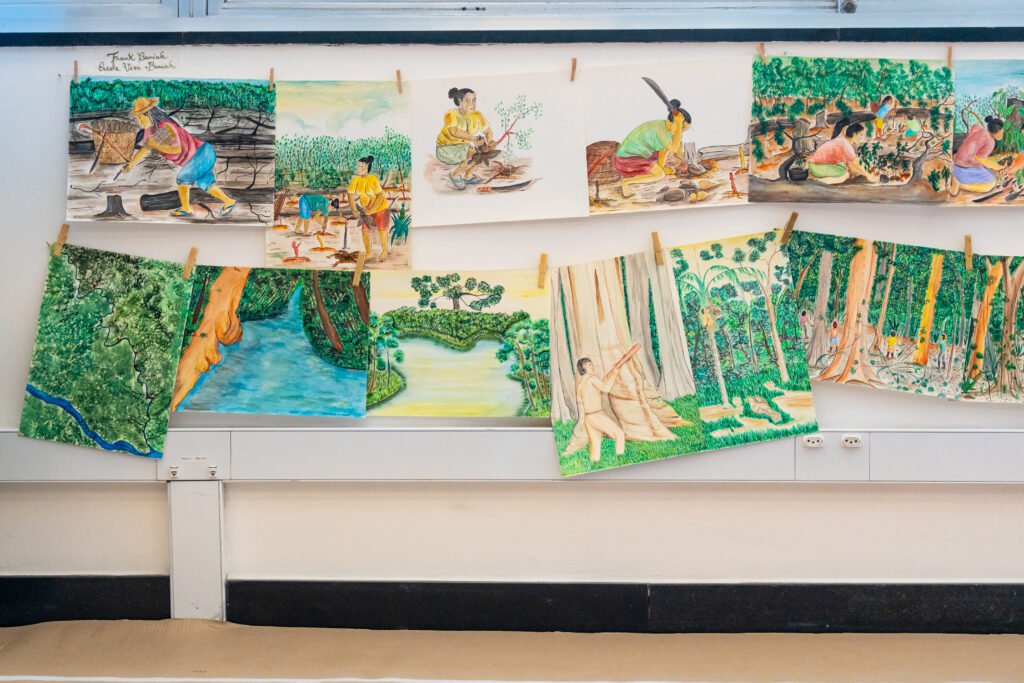
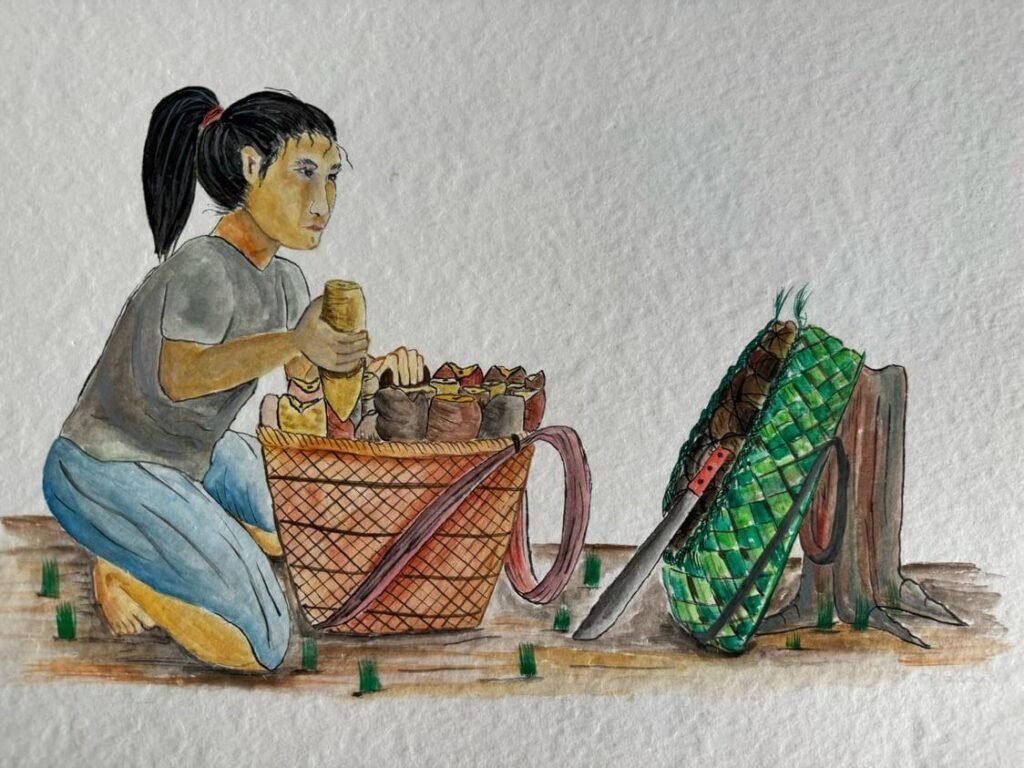
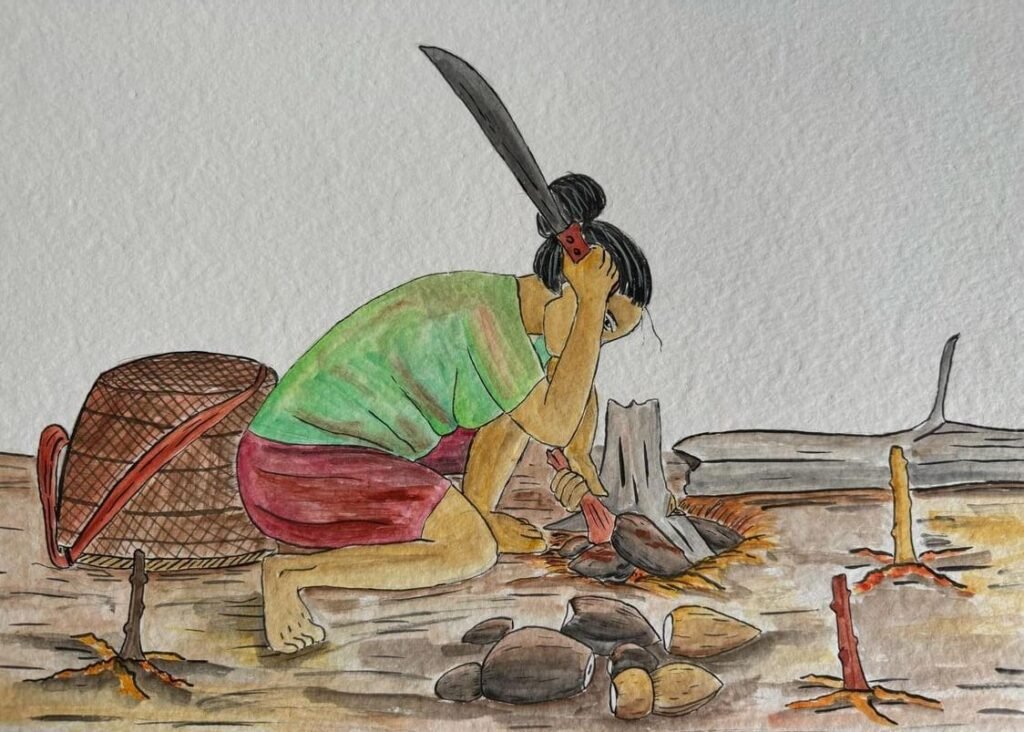
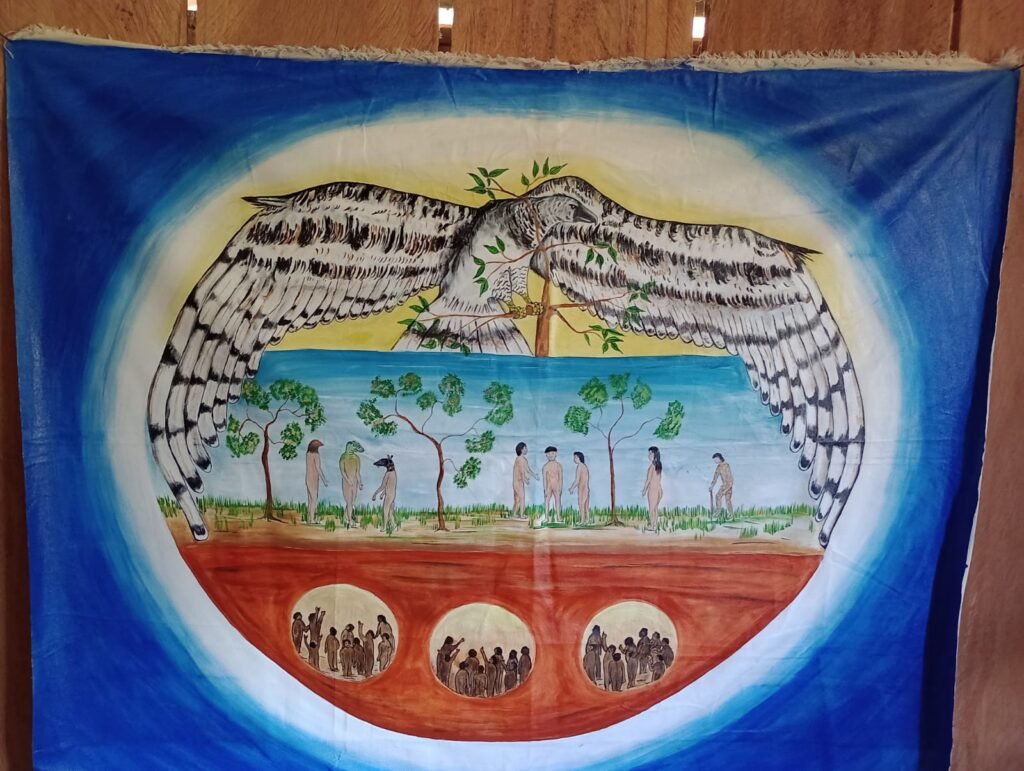
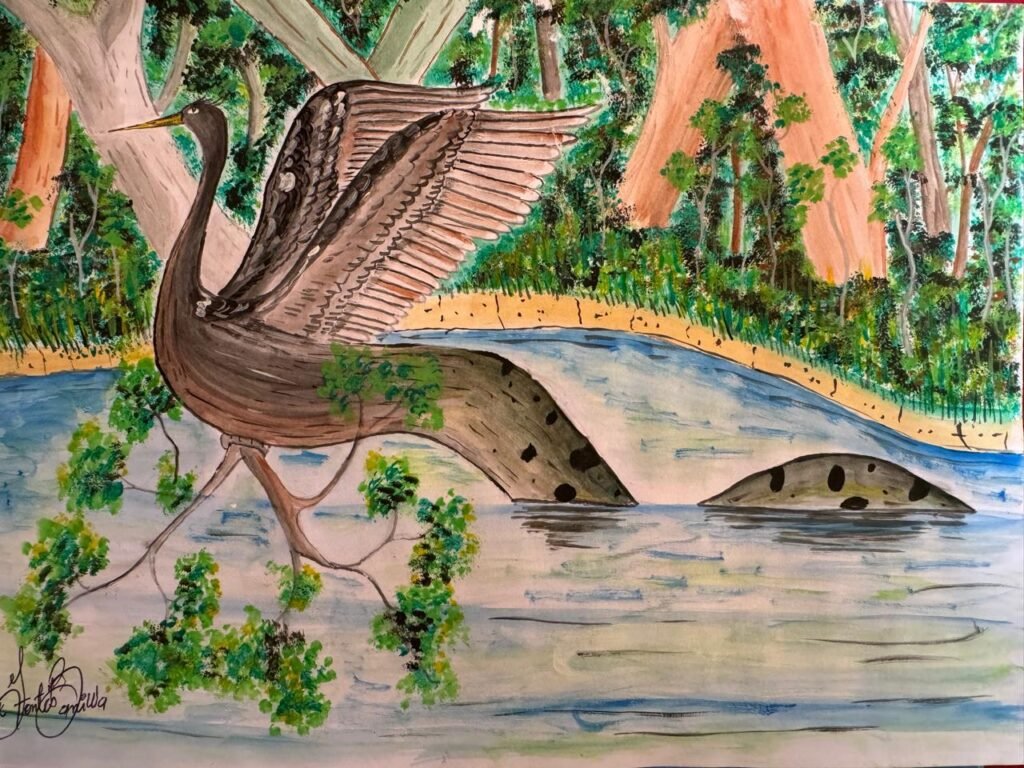
Frank Baniwa
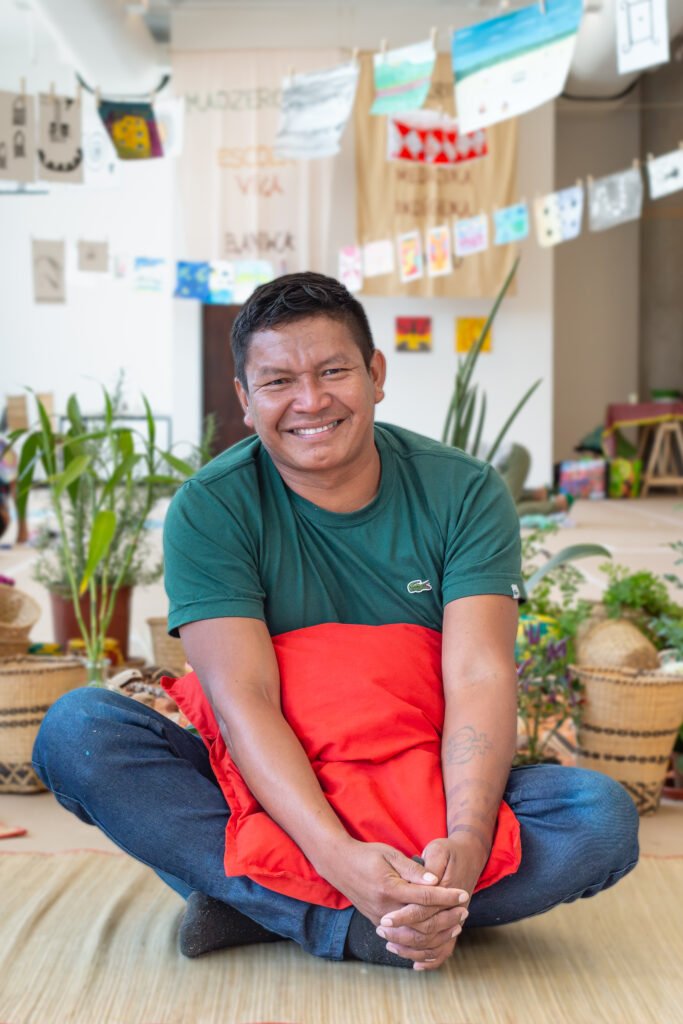
I am Frank Bitencourt Fontes, from the Baniwa people, of the Waliperidakenai clan. I was born on November 12, 1991, in the community of Assunção do Içana, son of Francisco Luis Fontes (Francisco Baniwa) and Lúcia Bitencourt, both farmers and artisans.
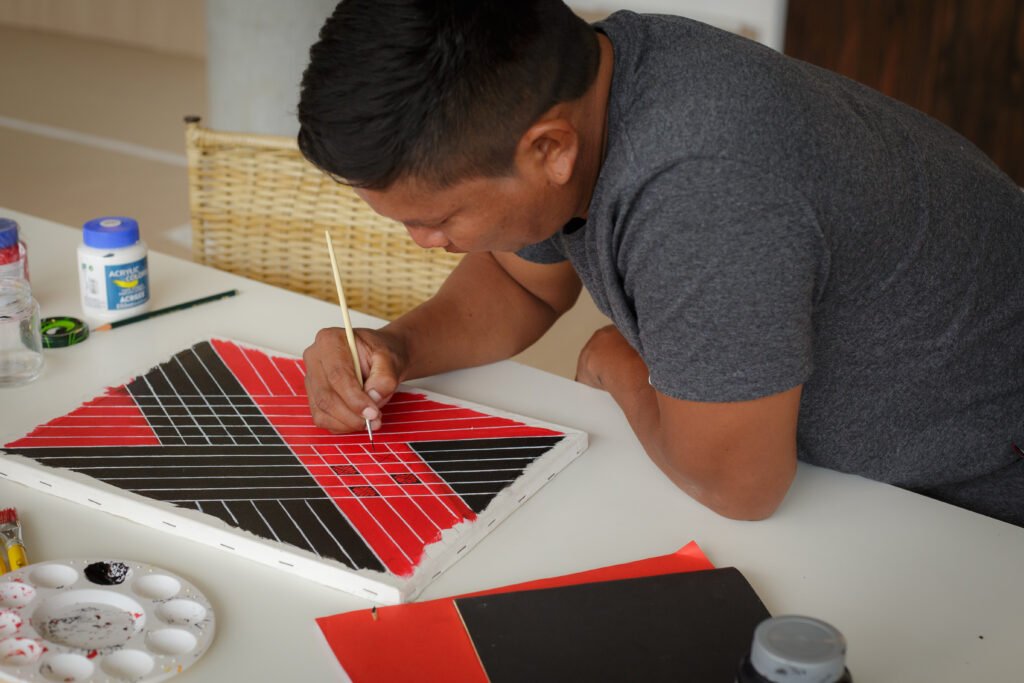
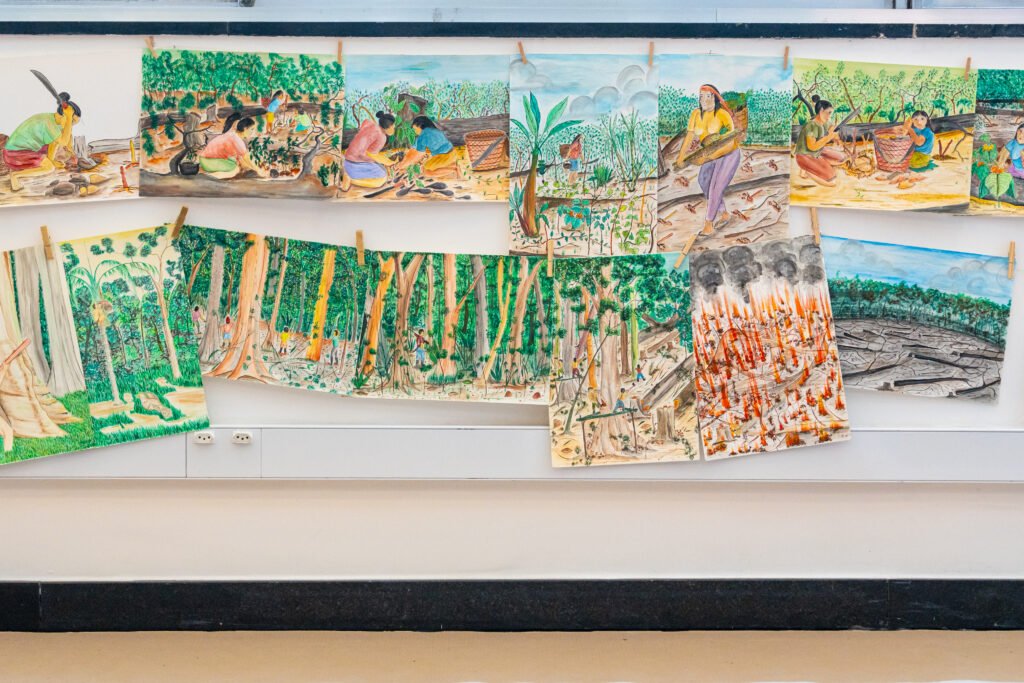
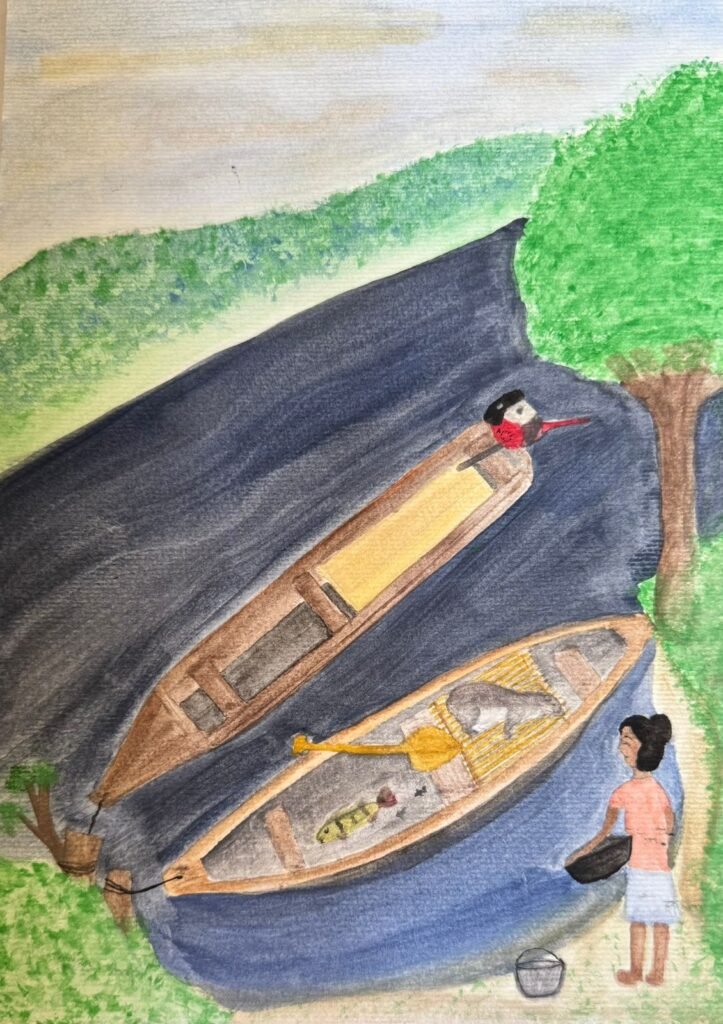
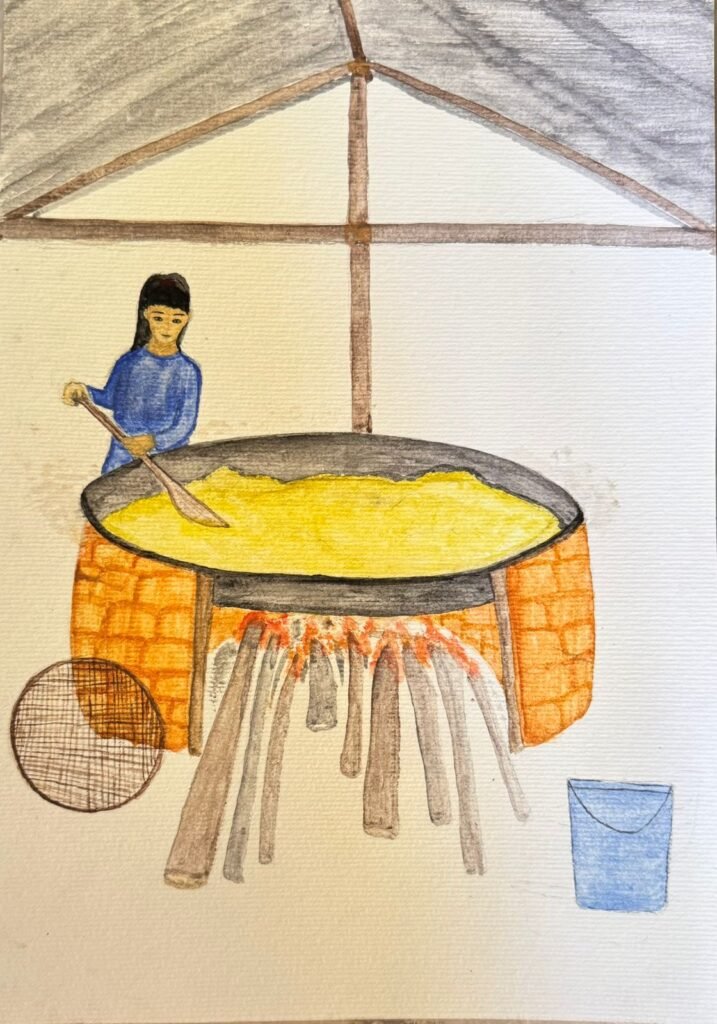
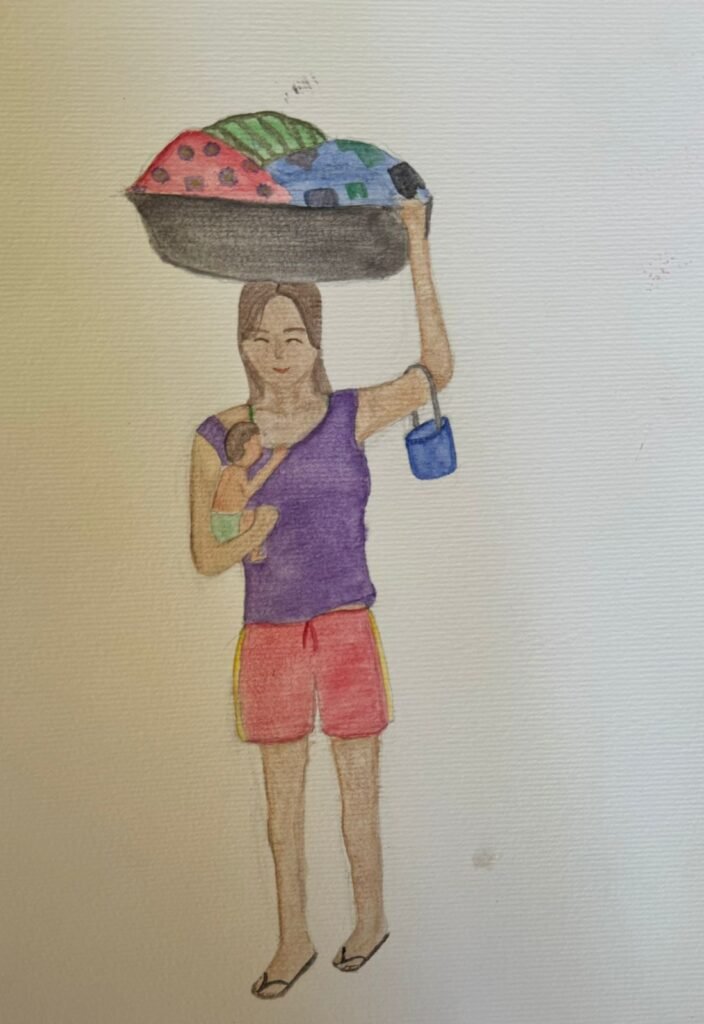
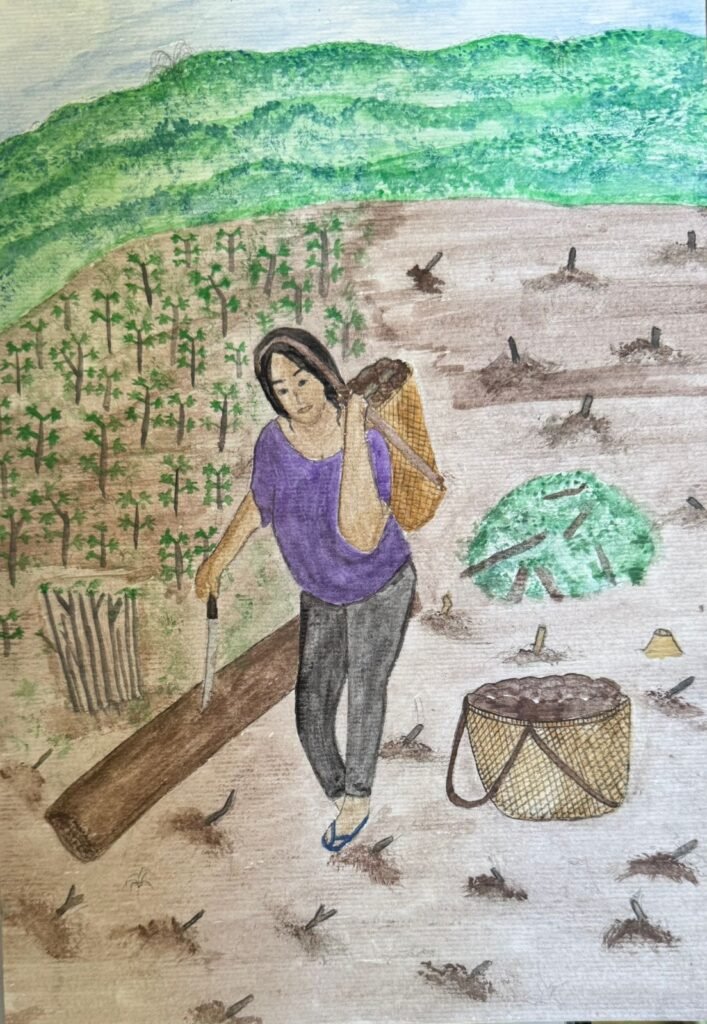
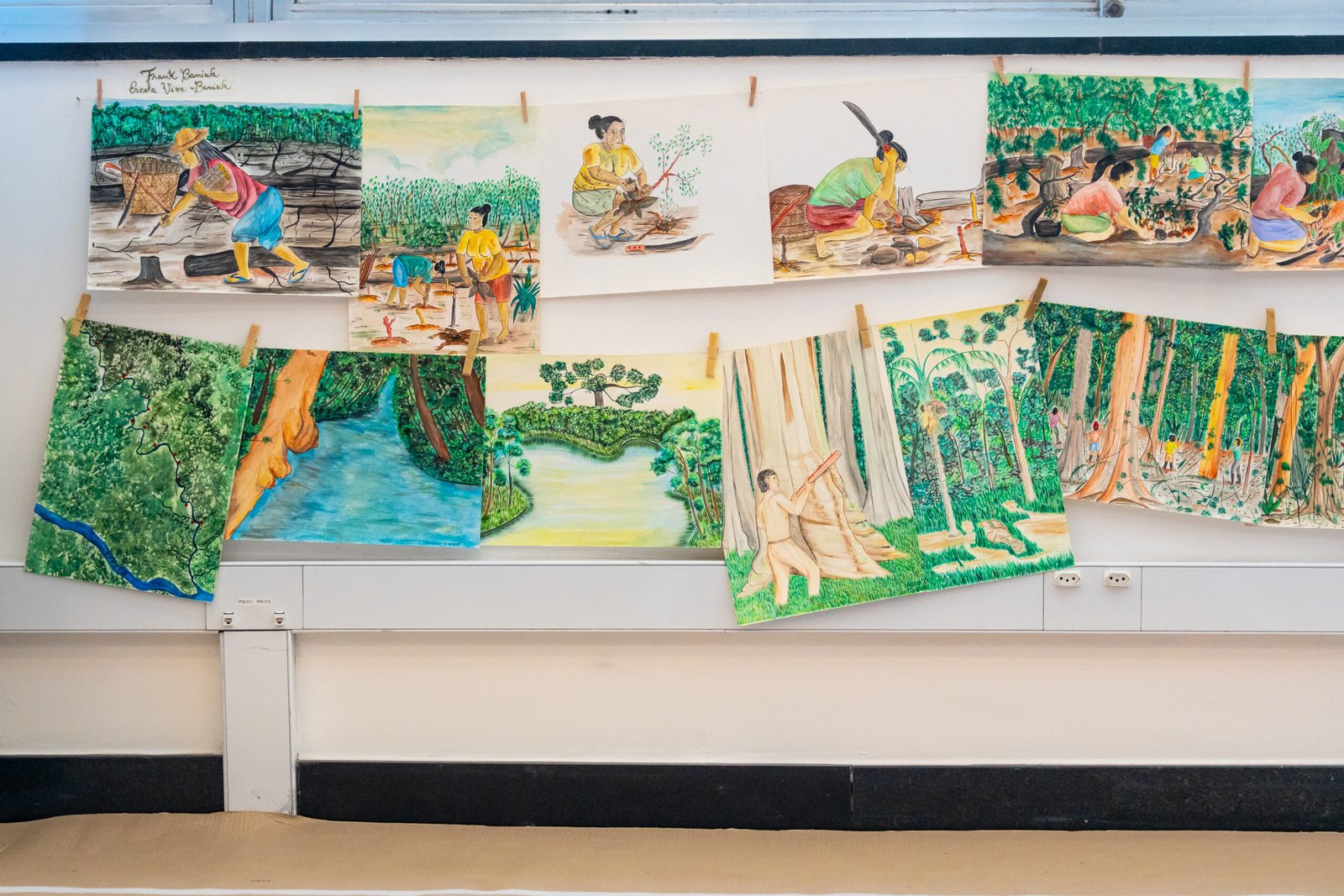
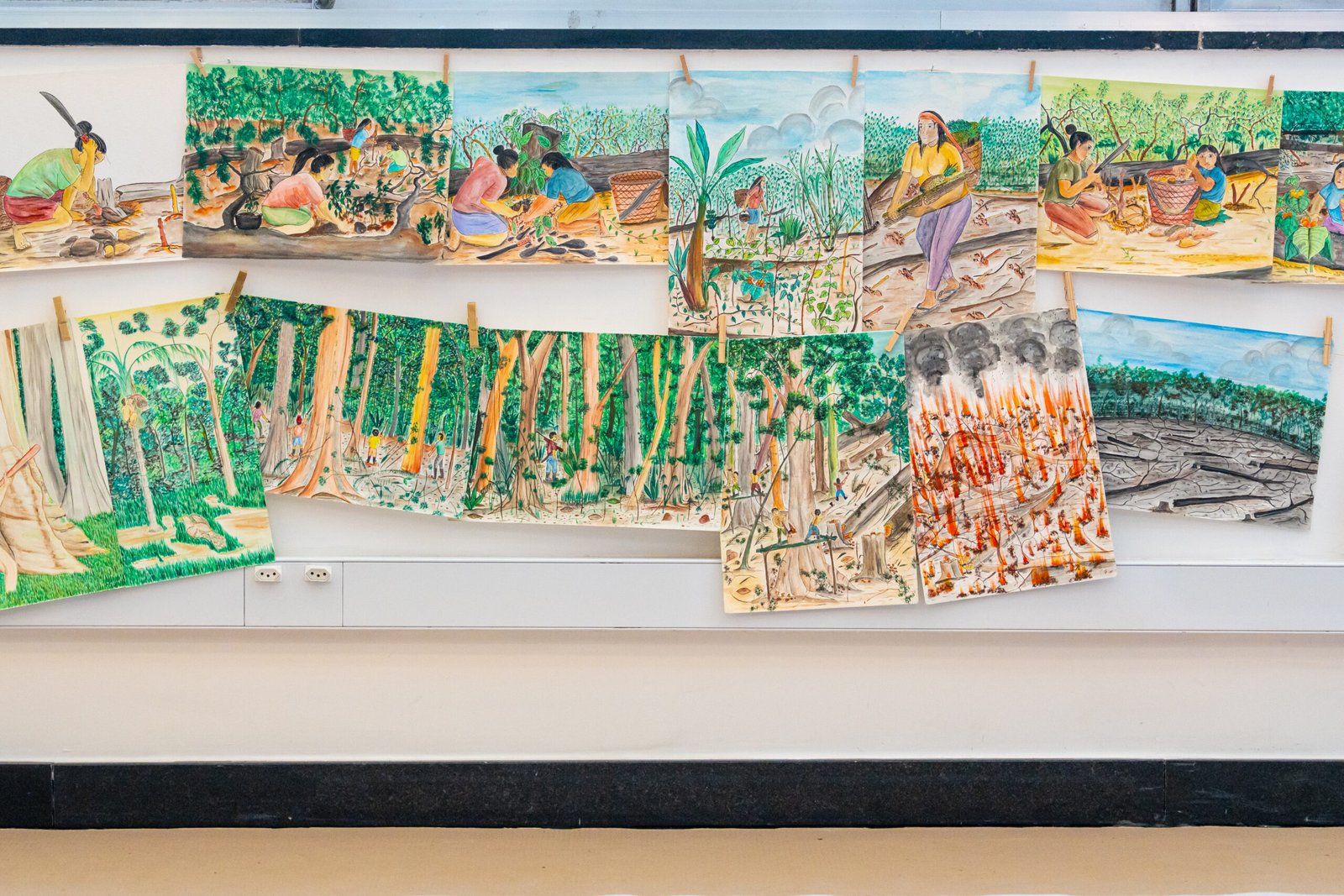
Since childhood, I have always enjoyed drawing and painting. Much of the talent I have today comes from my parents. Since school, I used to illustrate the research with the community’s elders about sacred places, medicinal plants, location of piracema [period of fish reproduction], musical instruments, songs, and traditional agriculture. I also drew and painted during Catholic religious events, such as the religious celebration of Gincana Mariana, which takes place every year in the community. One of the paintings I created was of Our Lady of the Amazon, and I also drew Our Lady of Nature, using creativity to imagine what this goddess protector of nature might look like.
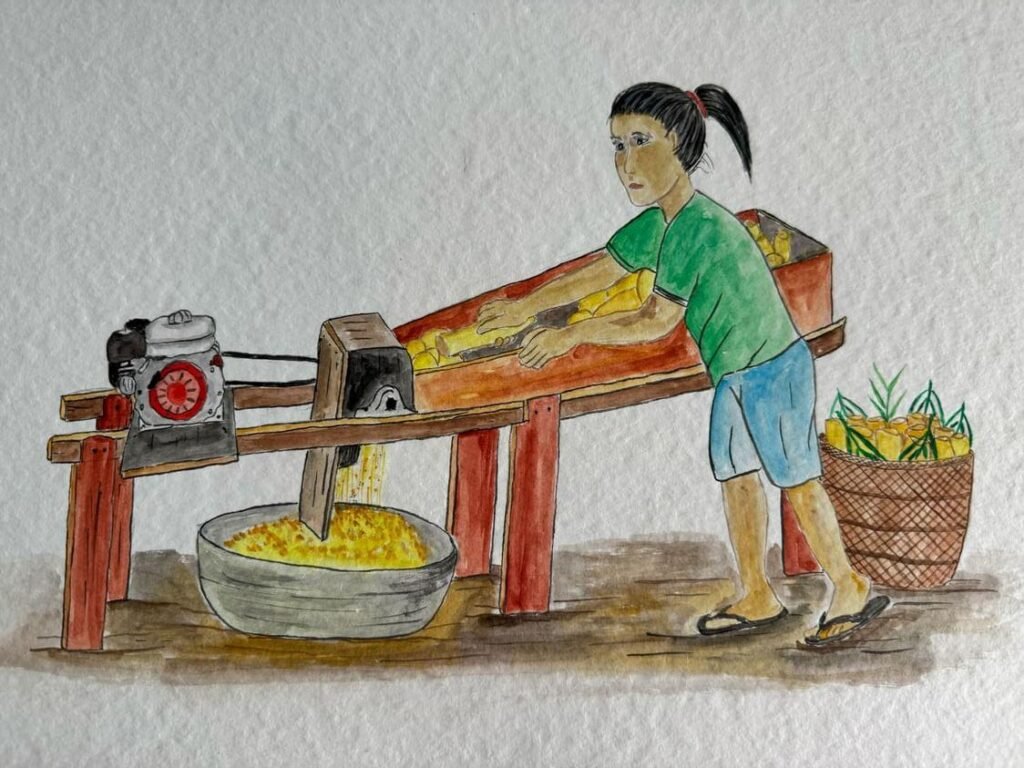
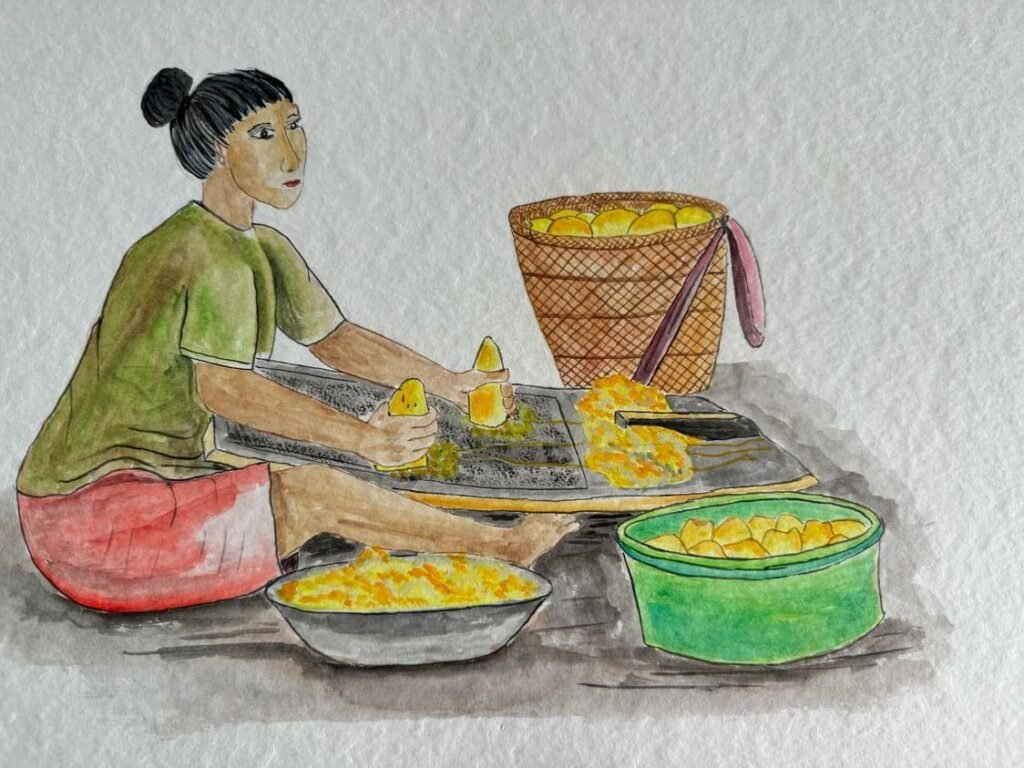
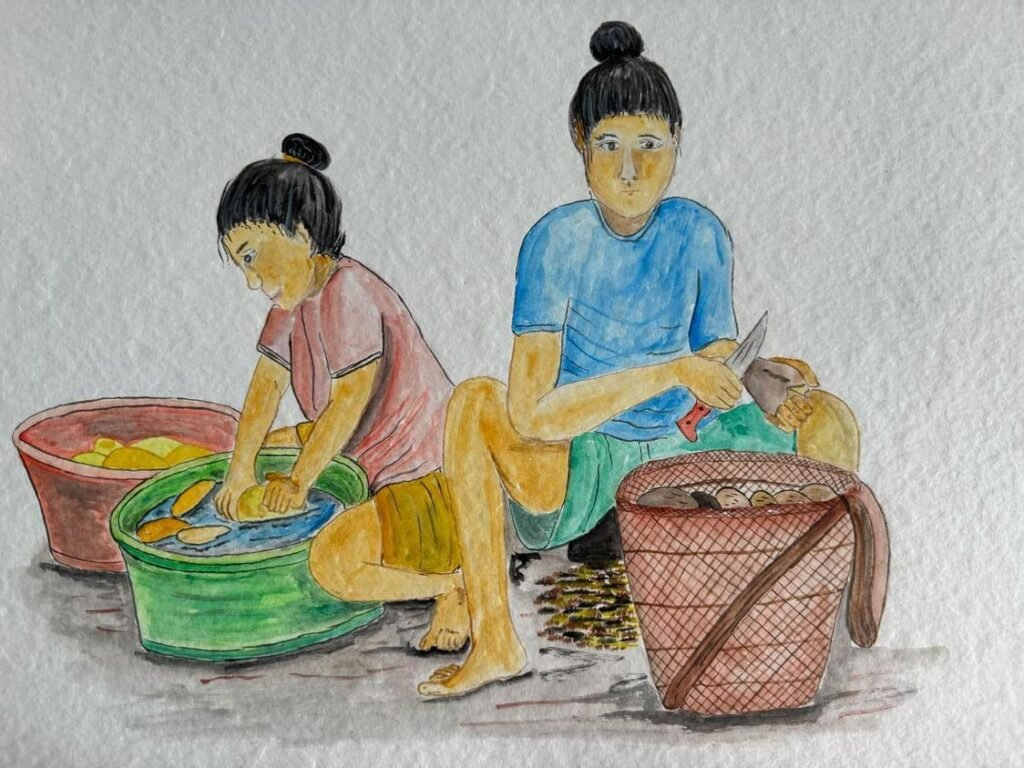
At the invitation of Francy Baniwa, I created the illustrations for the book Umbigo do Mundo [Navel of the World], a total of 75 works. I also painted 30 watercolours for Francy’s doctoral thesis on the donas de roça (knowledge keepers of traditional agriculture), depicting women’s work and star constellations that are essential to the life cycle within the territories. The 75 watercolours were acquired by the Inhotim Institute.
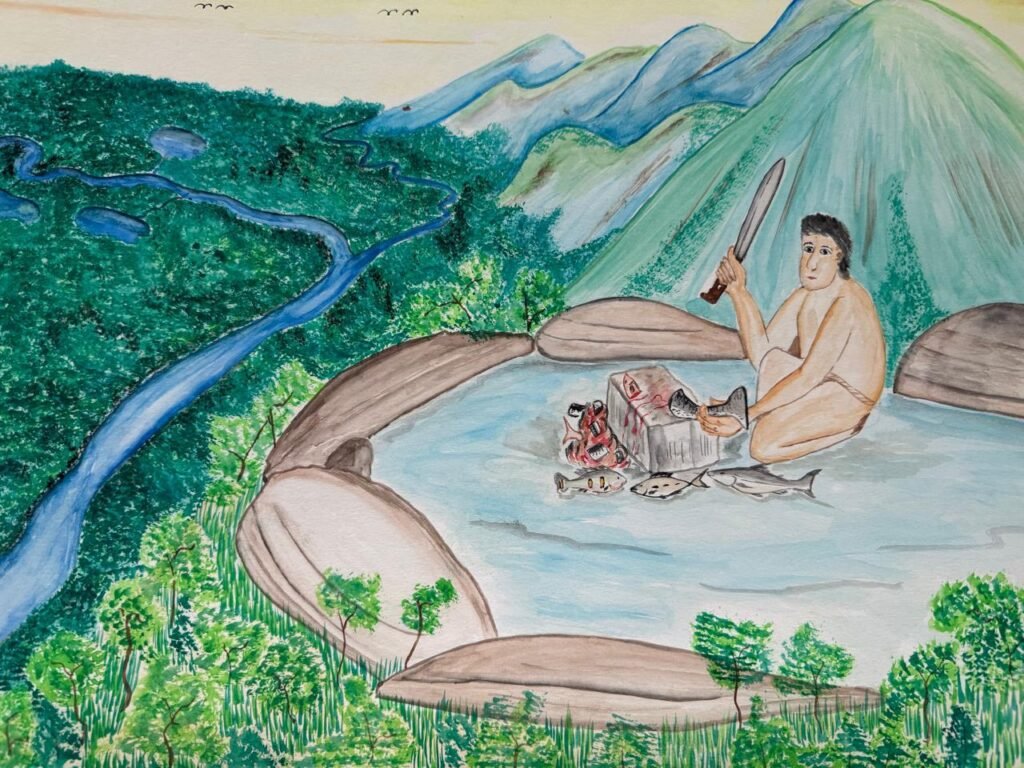
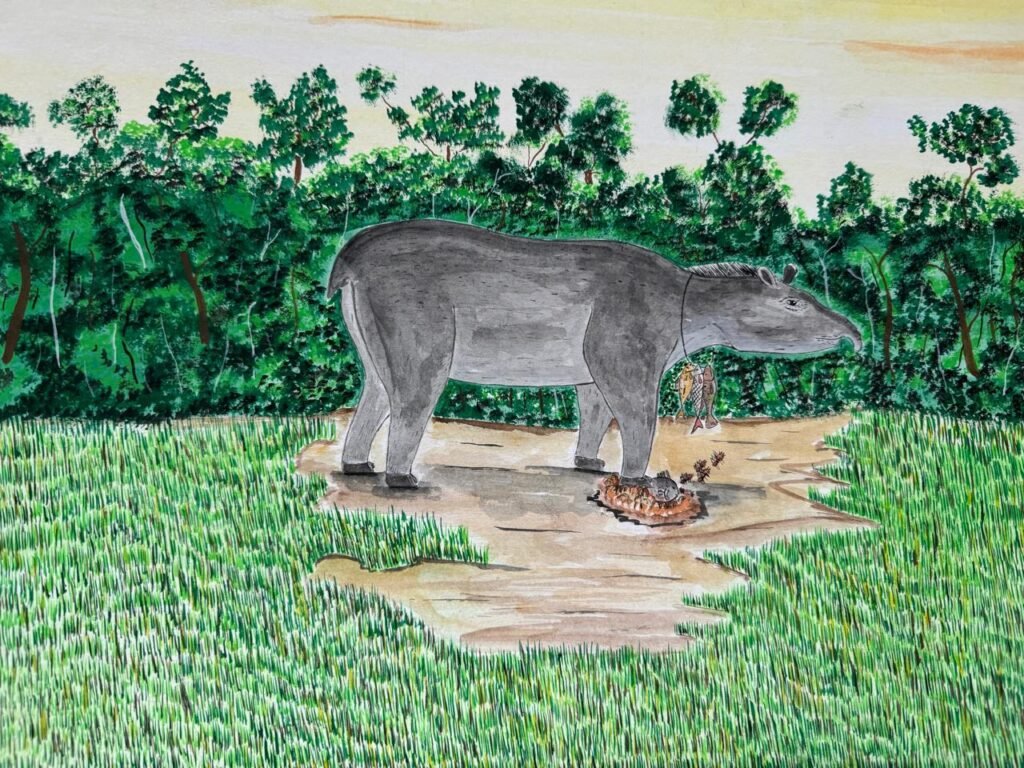
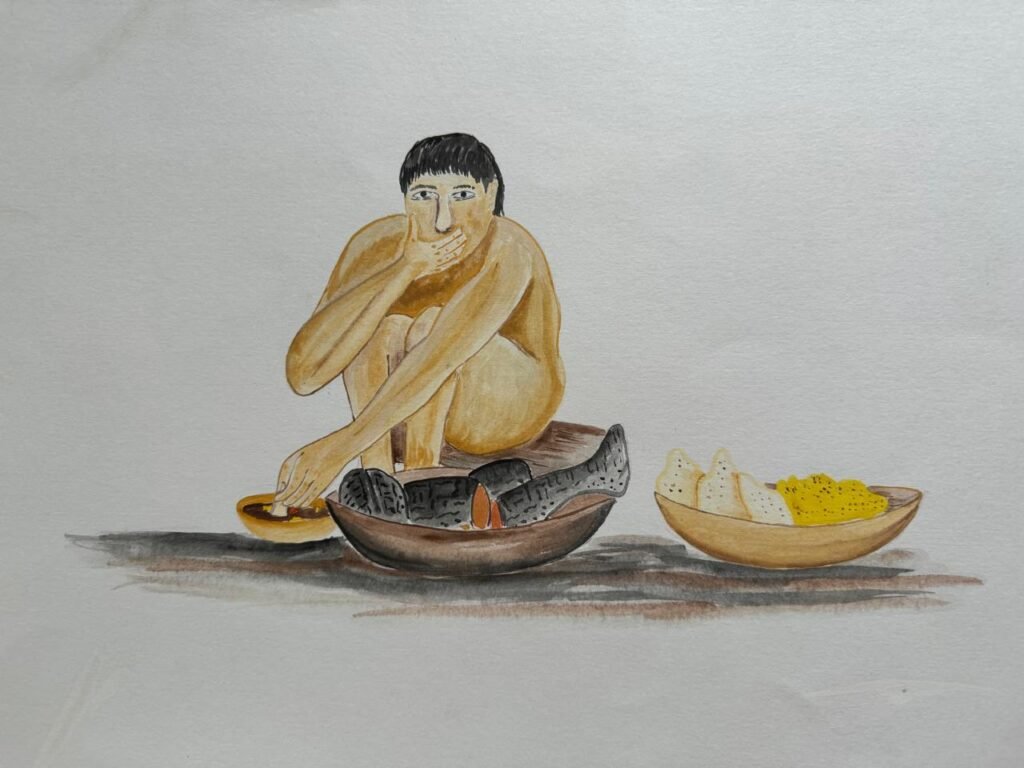
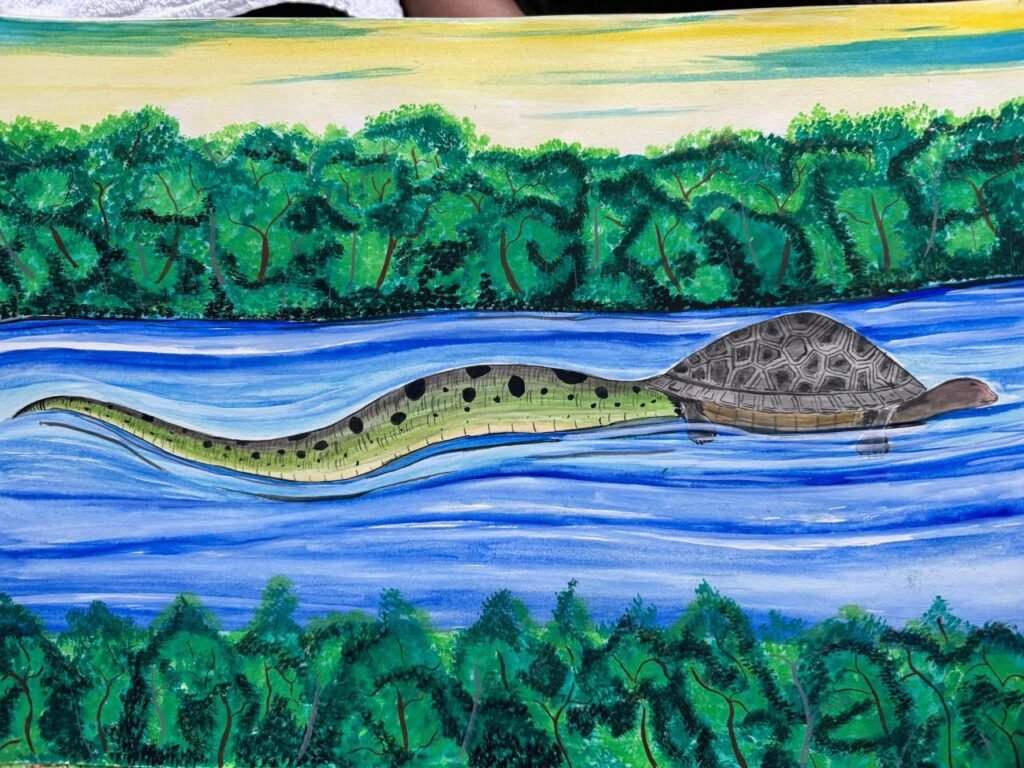
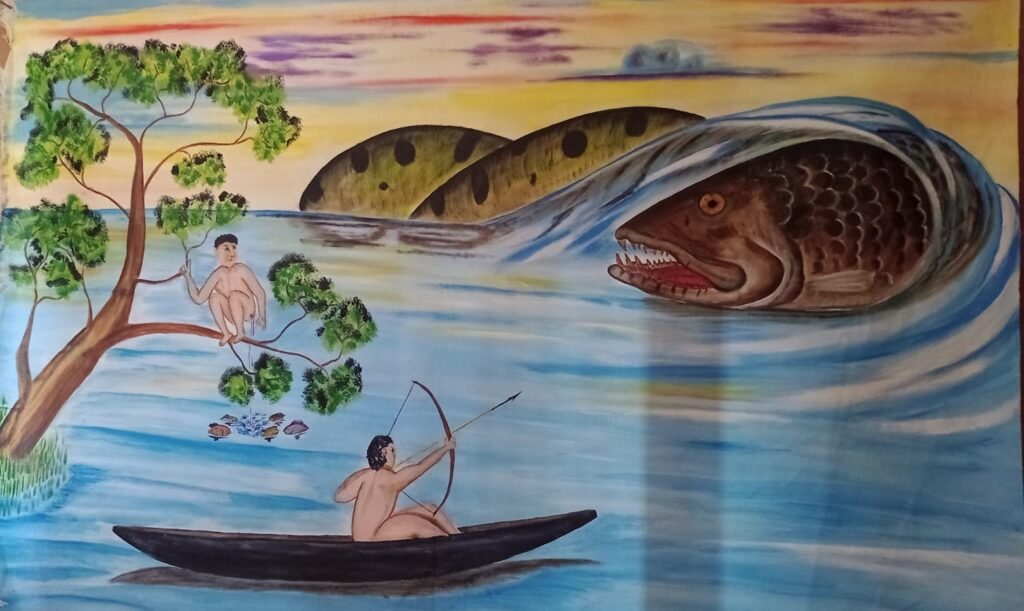
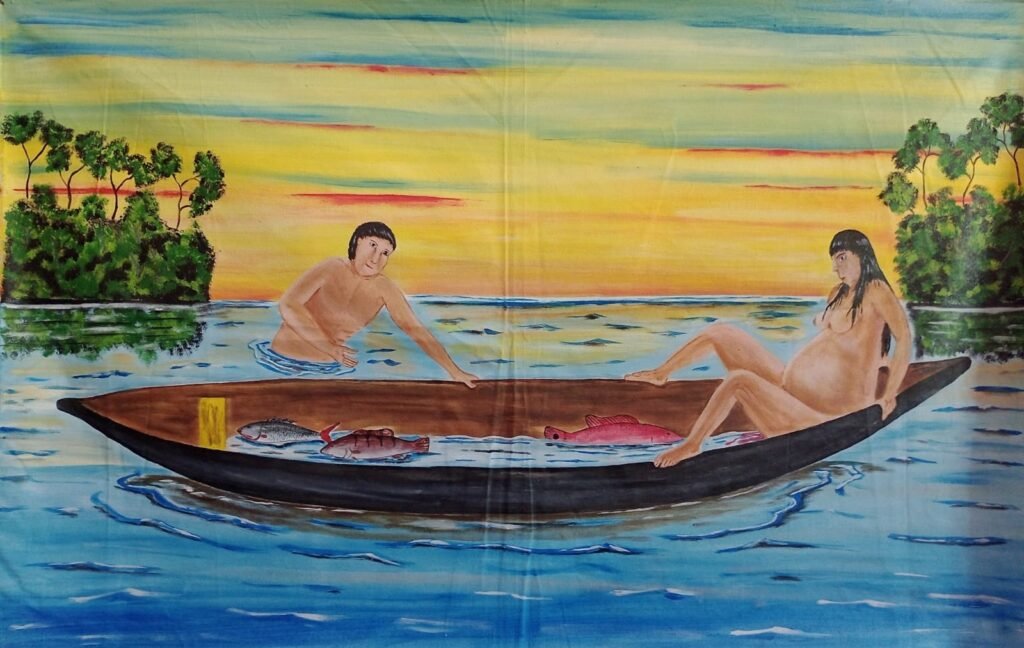
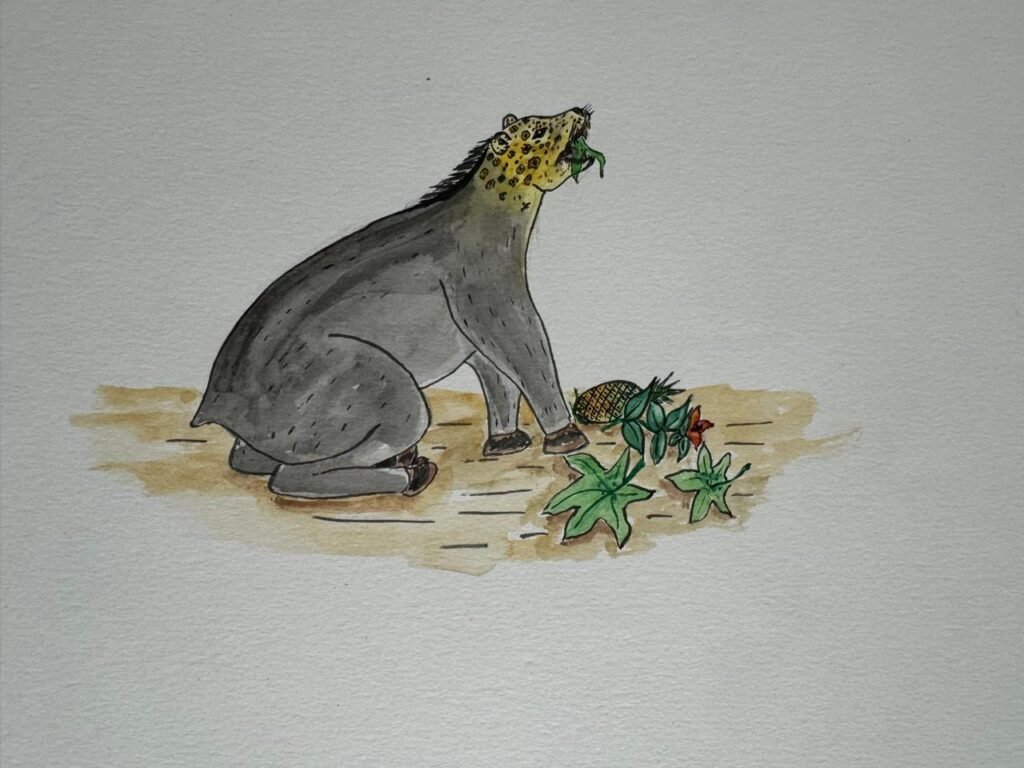

MADZEROKAI
Baniwa Living School
The Medzeniakonai are inhabitants of the cultural and multilingual system of the Upper Rio Negro, an area of approximately 250,000 km² that covers the north-west of the Amazon basin. It is in this territory that is located Madzerokai, the House of Ancestral Knowledge, the Baniwa Living School.

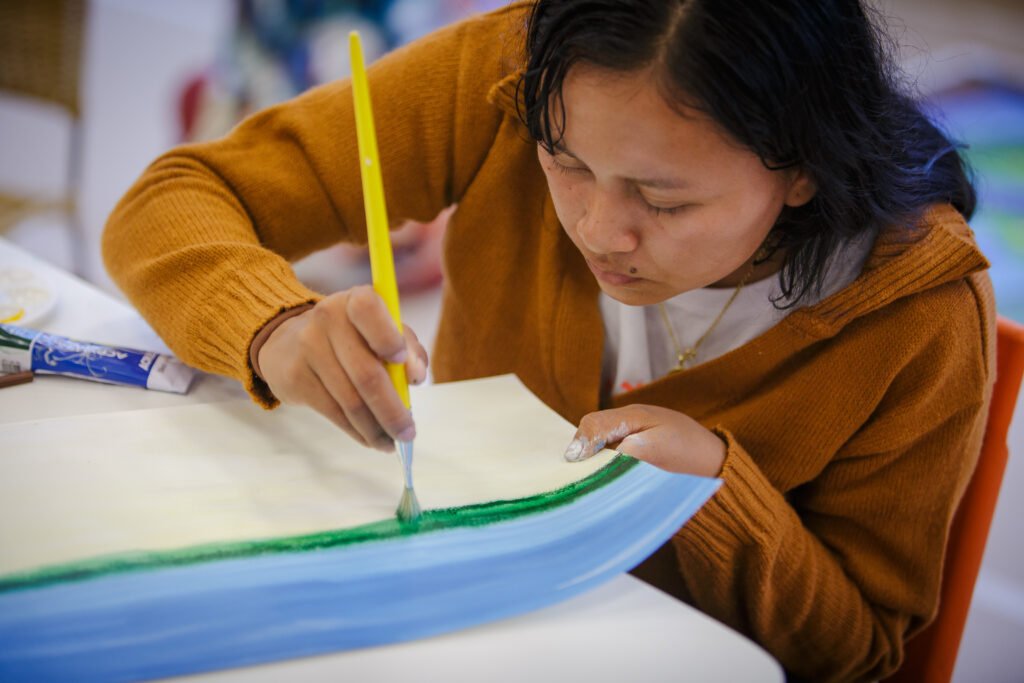
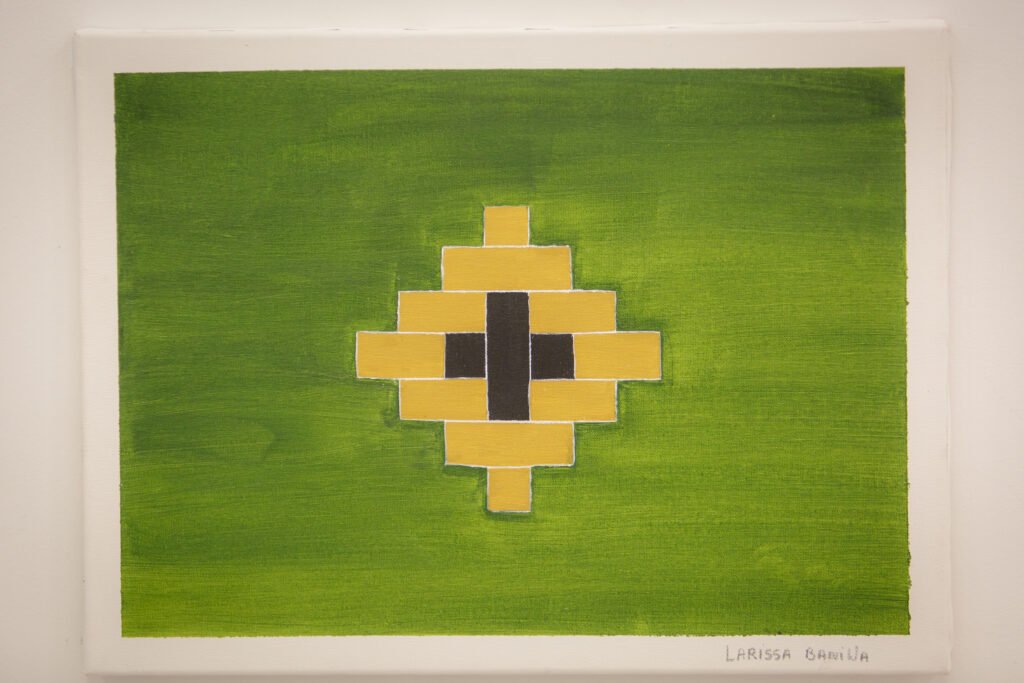
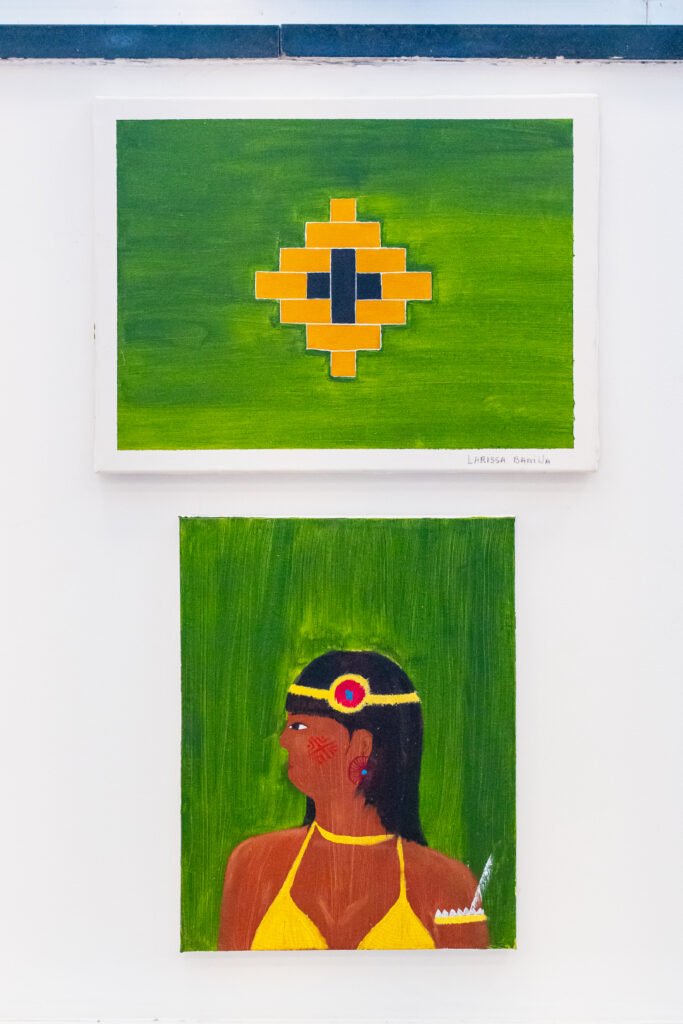
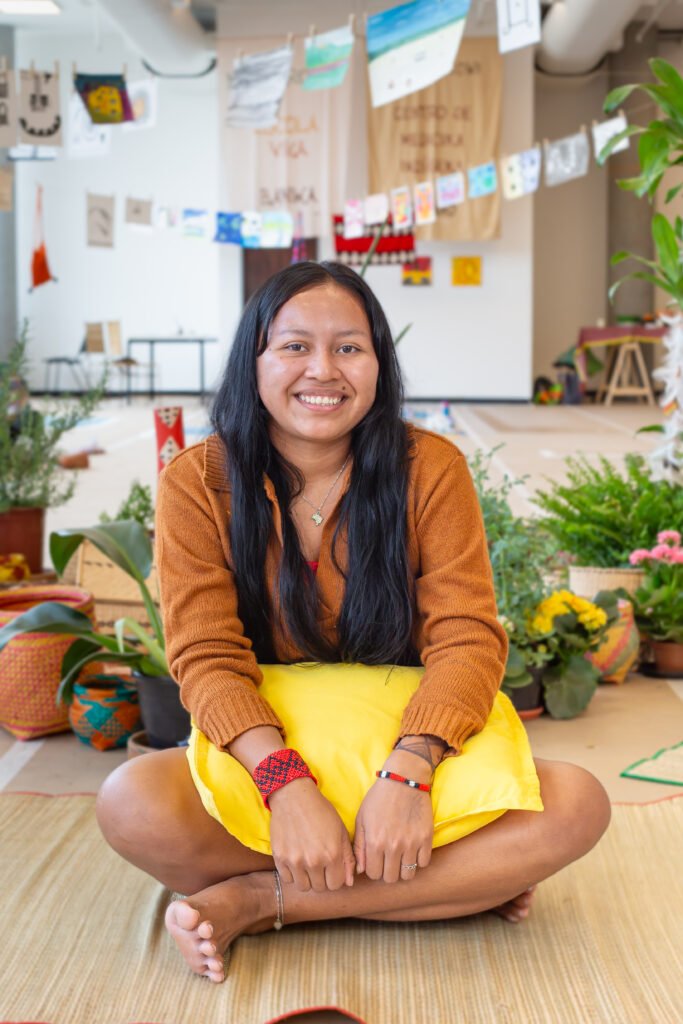
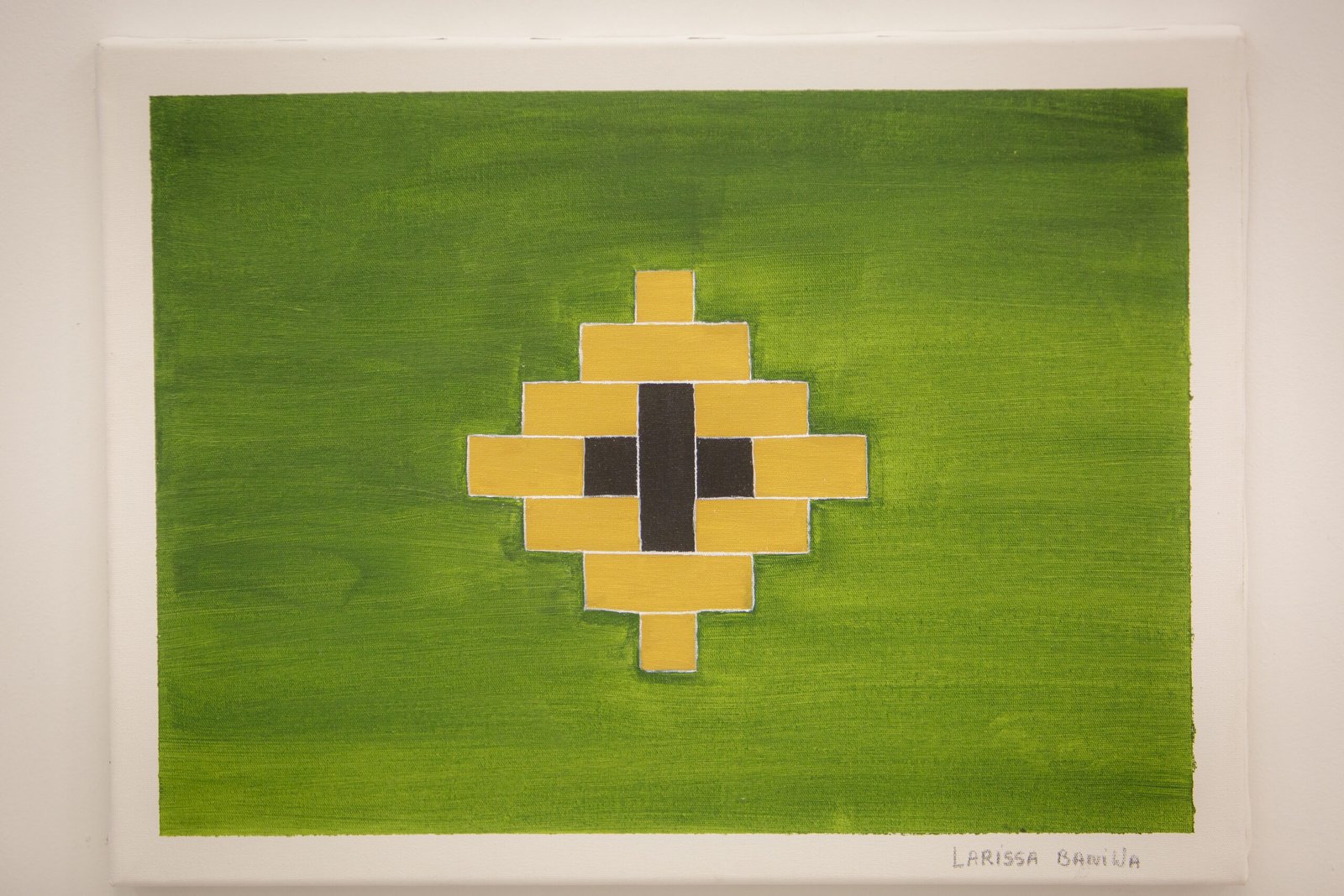
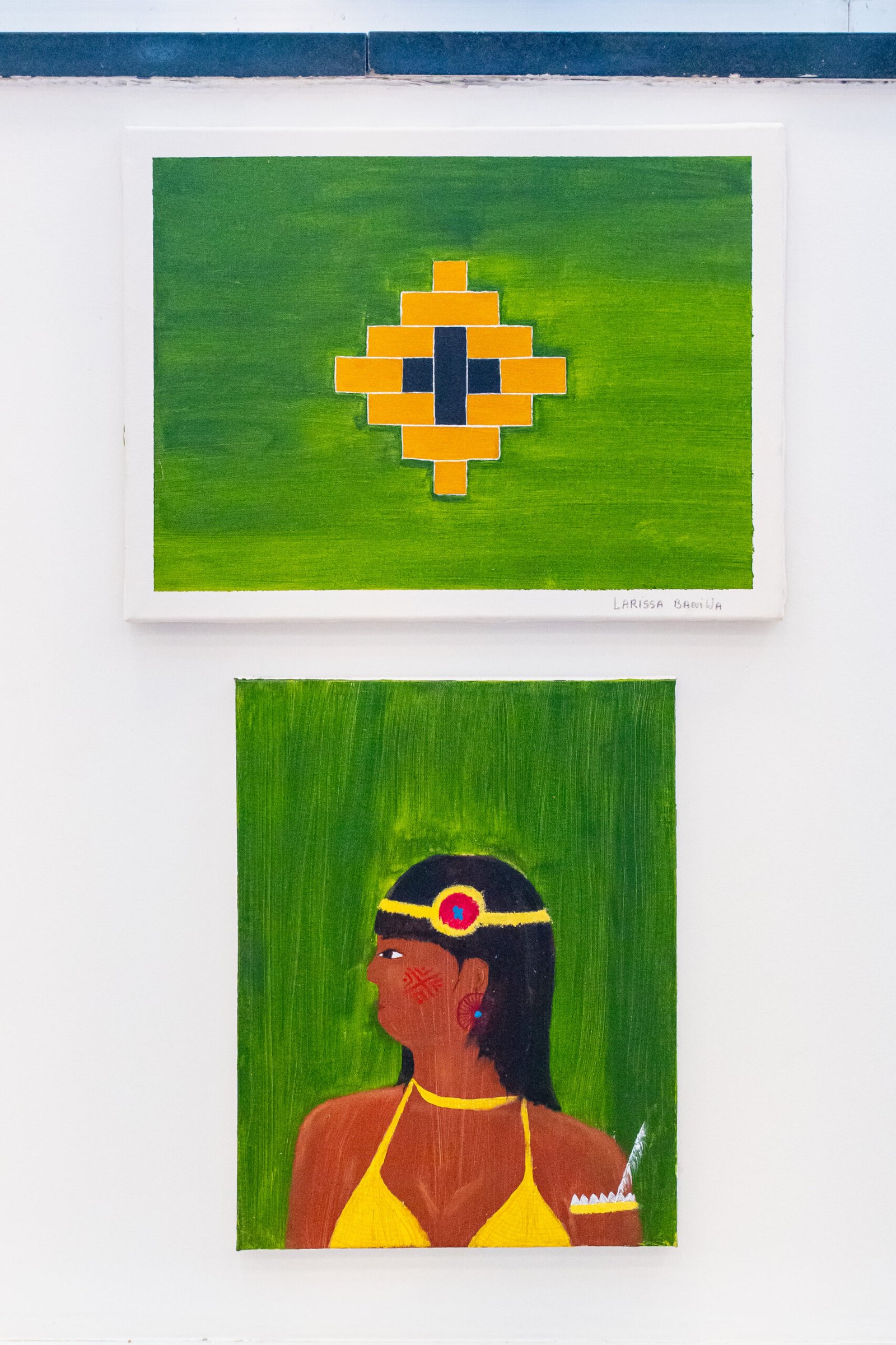
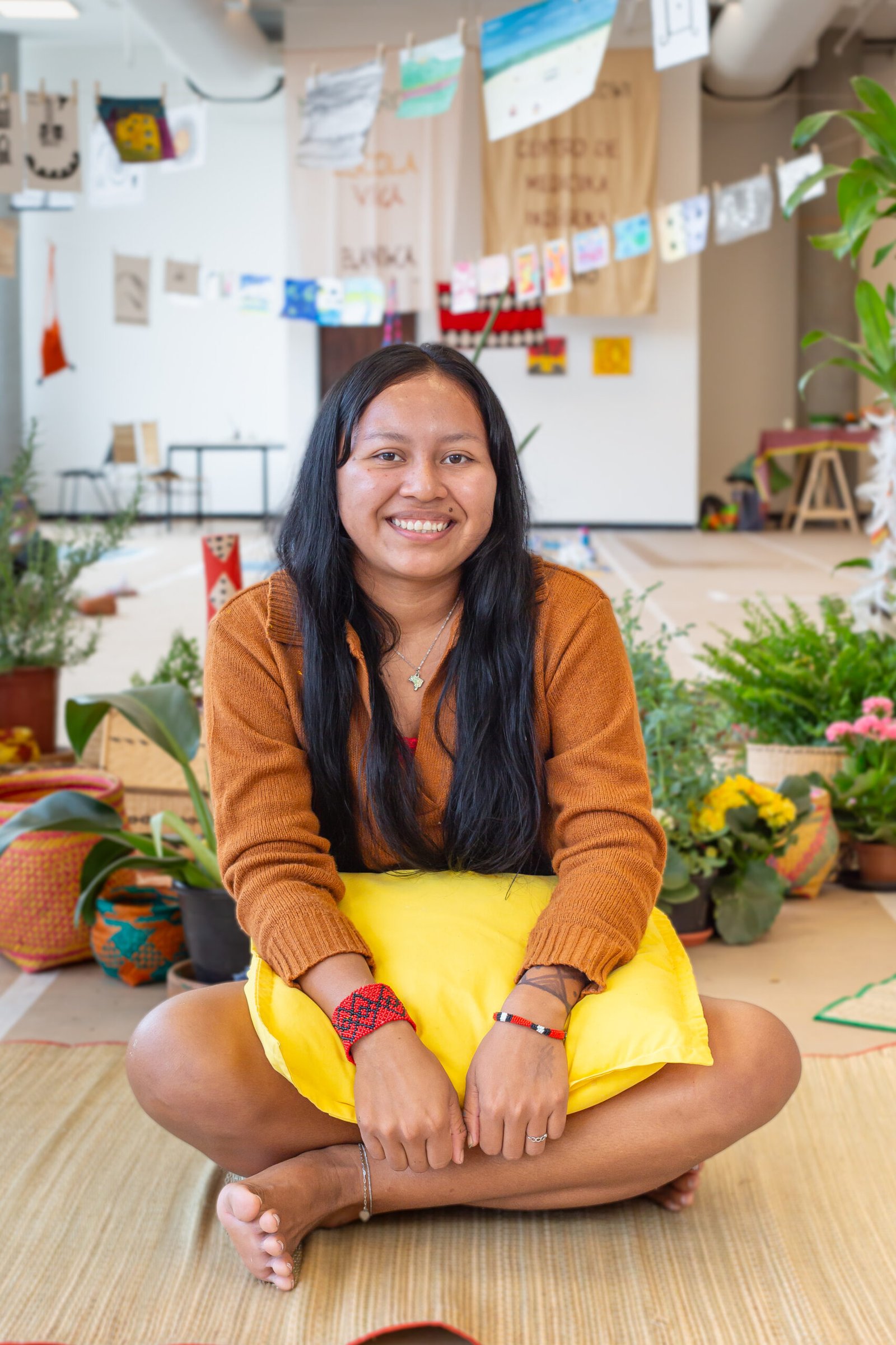
Larissa Baniwa
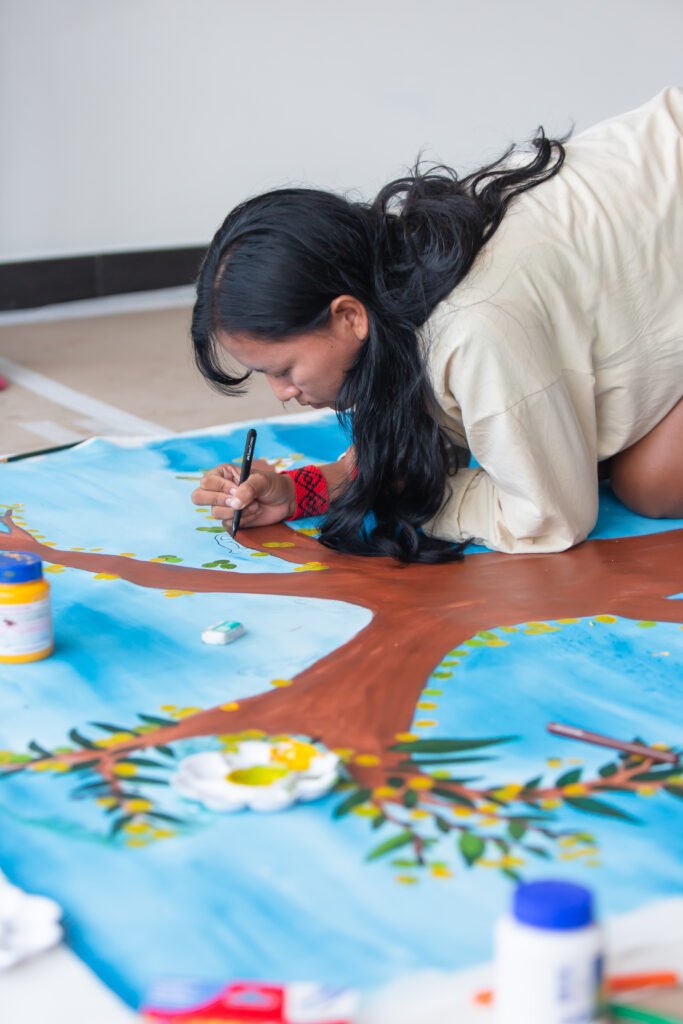
My name is Larissa Bitencourt Fontes, from the Medzeniako people – which means “Those who are born speaking the language”, my people are also known as Baniwa. I was born in the community of Assunção do Rio Içana, within the Alto Rio Negro Indigenous Land, in the municipality of São Gabriel da Cachoeira, Amazonas. I belong to a generation with a strong history, I come from a very important lineage to my Medzeniako people. My grandparents are people with great knowledge, who inspire me to follow in the footsteps of the knowledge keepers. I am a 19-year-old woman, am part of the community’s youth group, and I also am one of the young people who take part in institutional events of the Federation of Indigenous Organizations of the Rio Negro (FOIRN) – in assemblies, seminars, and workshops on various topics such as: education, sustainability, health, territory, and youth leadership within Indigenous lands.
I am a member of the school council, my grandmother Bibiana Fontes is a midwife and knowledge keeper of traditional agriculture; my grandfather Francisco is a great Madzero master; and my grandmother Lúcia Bitencourt is also a great cultivator of traditional agriculture. These people inspire me every day to look at my territory with new eyes, to value the elders, and to learn to listen to them more deeply. They are my sources of inspiration, just as my mother has been an example of determination and strength. My family is my foundation, my Indigenous university within the community. In my community, I am a youth leader who plays the guitar and the transverse flute. I am a dreamer and part of the Baniwa Living School Madzerokai – House of Ancestral Knowledge, a collective dream.
MADZEROKAI
Baniwa Living School
The Medzeniakonai are inhabitants of the cultural and multilingual system of the Upper Rio Negro, an area of approximately 250,000 km² that covers the north-west of the Amazon basin. It is in this territory that is located Madzerokai, the House of Ancestral Knowledge, the Baniwa Living School.

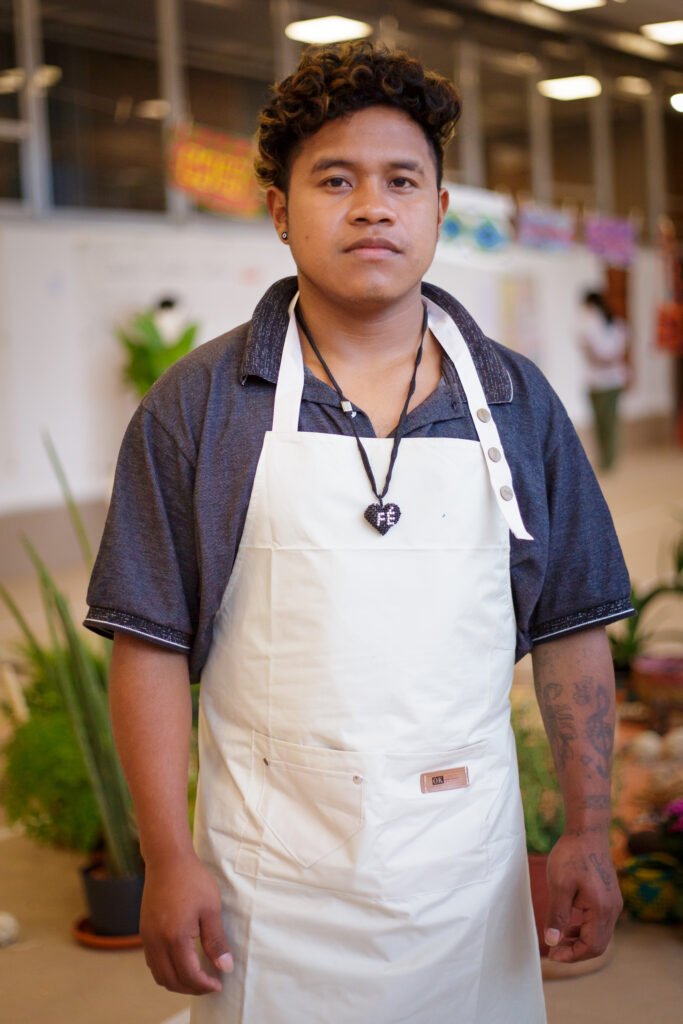
Fabiano Verá
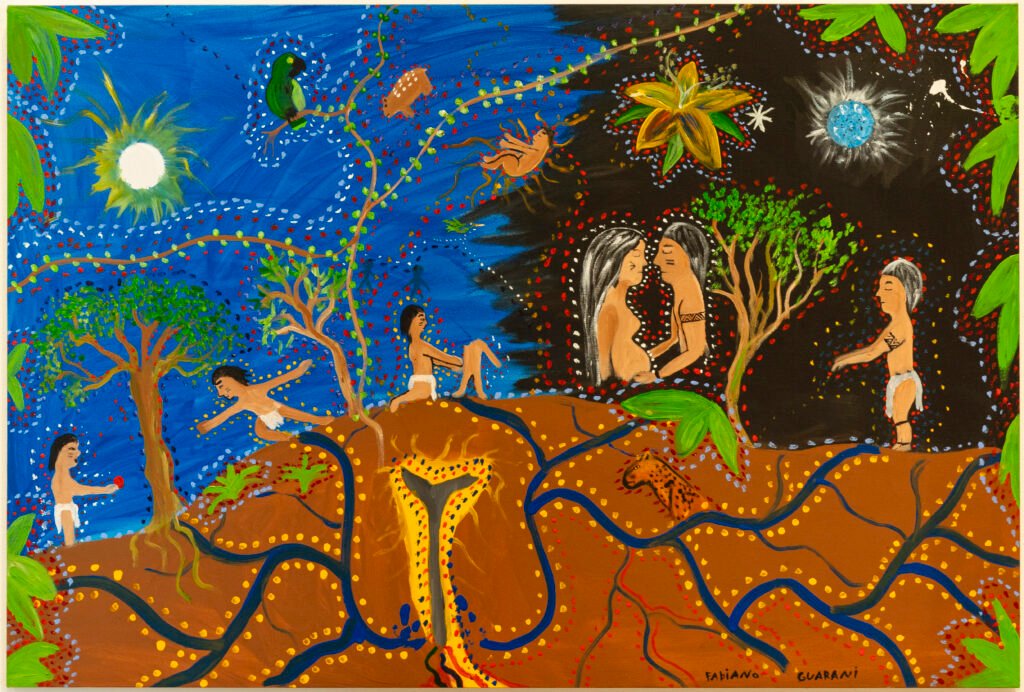
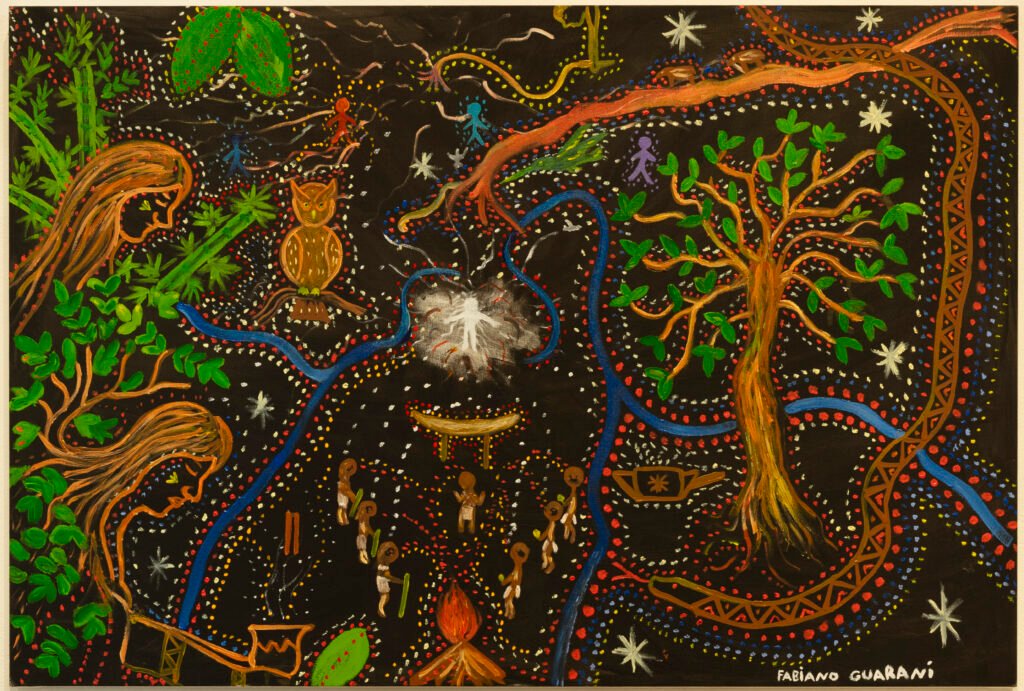
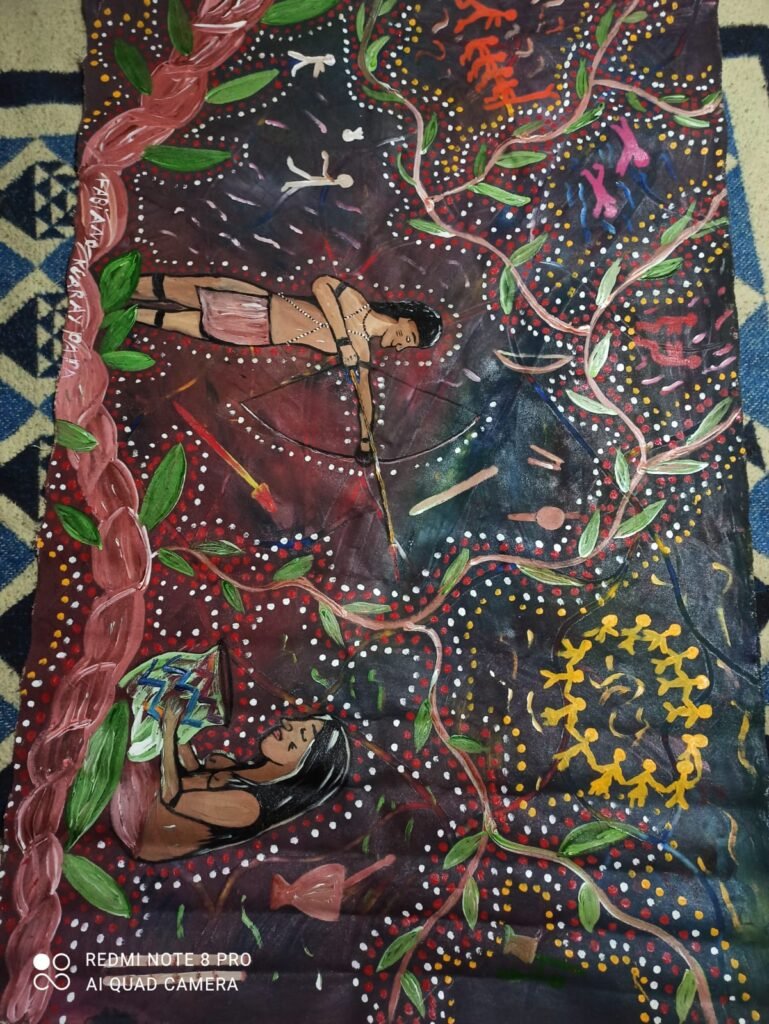
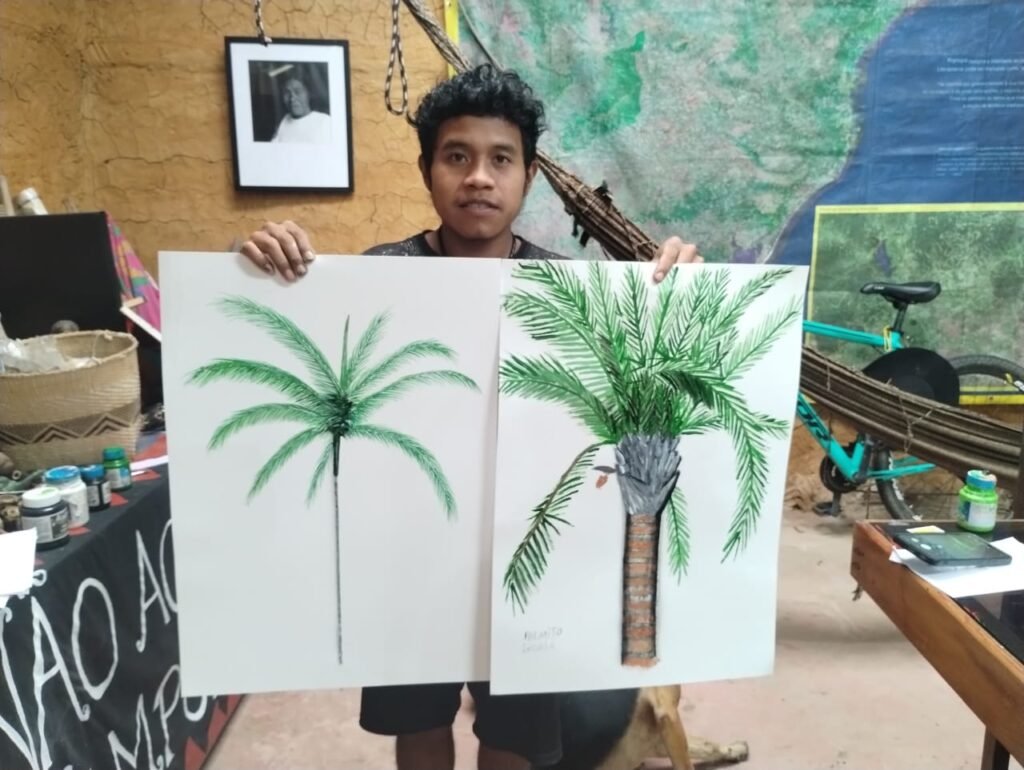
I am Guarani Mbya from the Ribeirão Silveira Indigenous village, born in Paraty (State of Rio de Janeiro) and currently living in the Tenondé Porã village, Guarani Mbya (State of São Paulo). I grew up among cassava, sweet potato, and corn fields. Since childhood, I have been an artist and a researcher of natural medicine and the traditional songs of the Guarani and other peoples.
In the houses of prayer, through rites and sharing stories with the elders, I learned to respect, care for, and live in balance, understanding that no day will ever be the same as the next. When I begin a painting, I like to reflect on the waters and mountains, observe waterfalls and birds. Through this, I imagine and am enchanted. It is also in this process that the healing of imagining and dreaming comes, because I understand that we, human beings, are made to struggle day by day. The artist and writer Jaider Esbell, whom I greatly admire, encouraged me to continue following this path through painting and art.
I mainly work with artisanal work, drawings, and paintings inspired by the stories told by the elders. I research natural medicines and enjoy creating, imagining, dreaming, and learning to make essential oils from plants. I also enjoy photographing and filming the village’s activities.

ARANDU PORÃ
Guarani Living School
At Arandu Porã, name of the Guarani Living School, young people have begun to awaken their dormant memories. Ancestral practices are in dialogue with agroforestry techniques and bee cultivation. In this territory, where the Guarani language is dominant, children and young people find at the Living School a place to learn the stories of their people, practise their art and science.

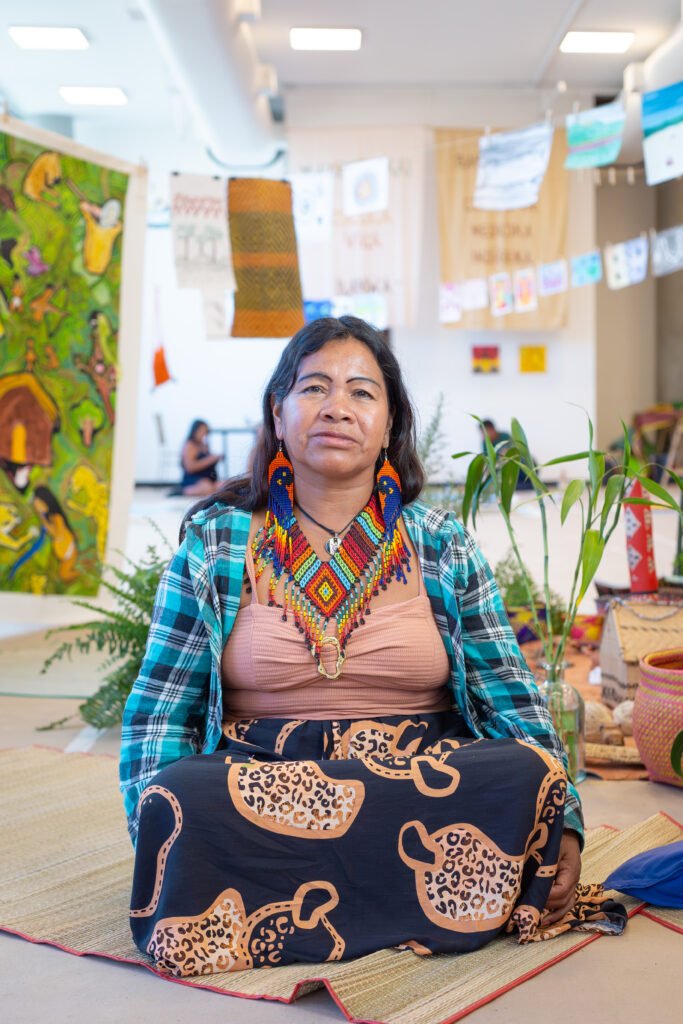
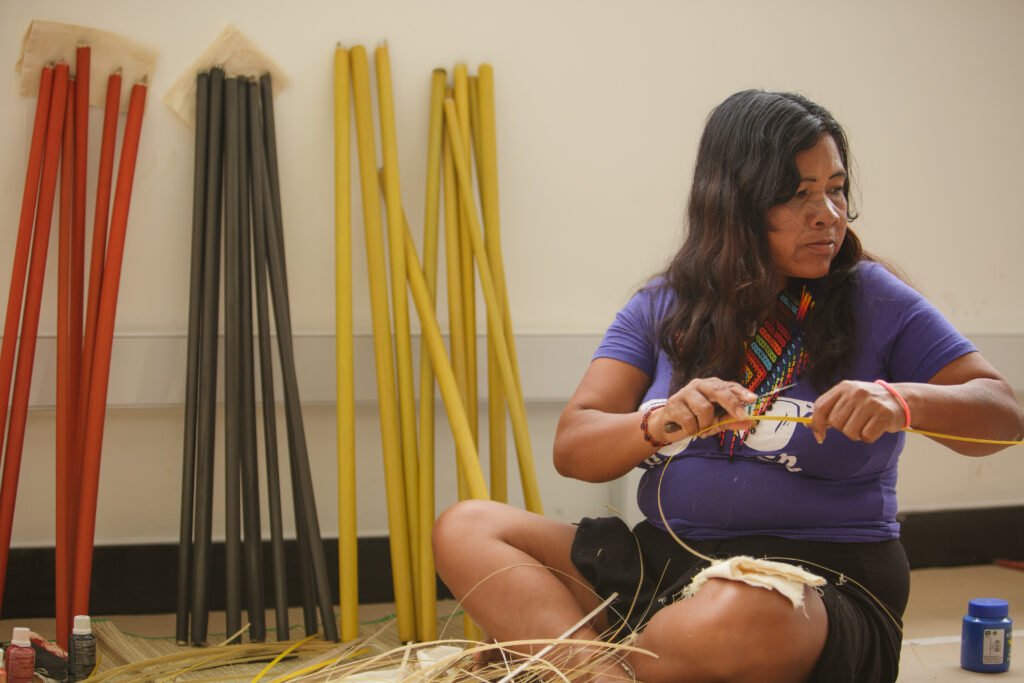
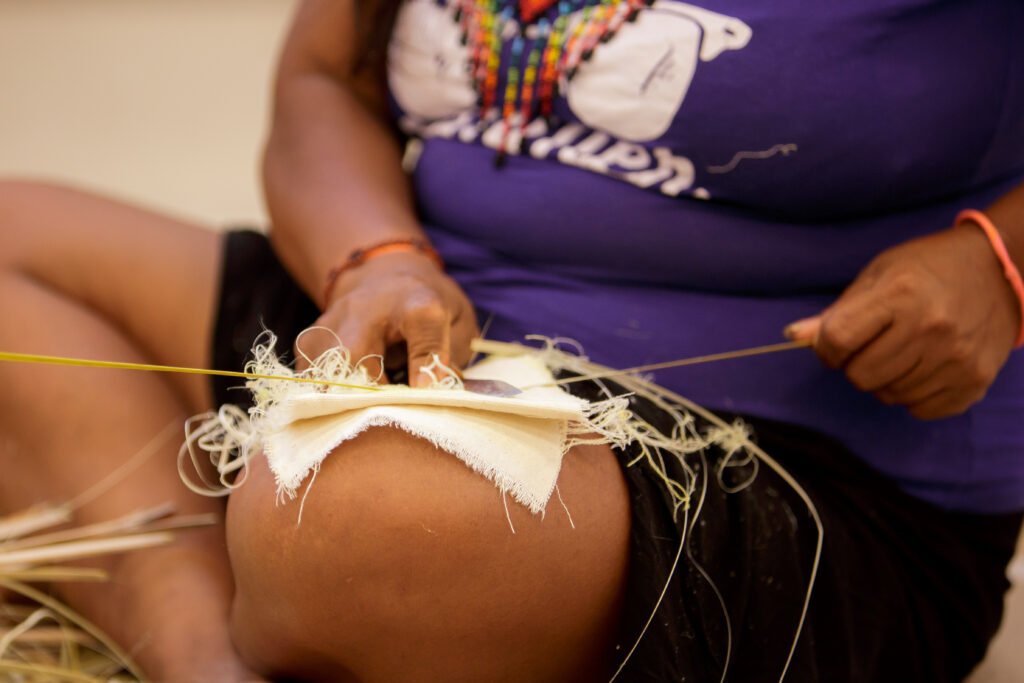
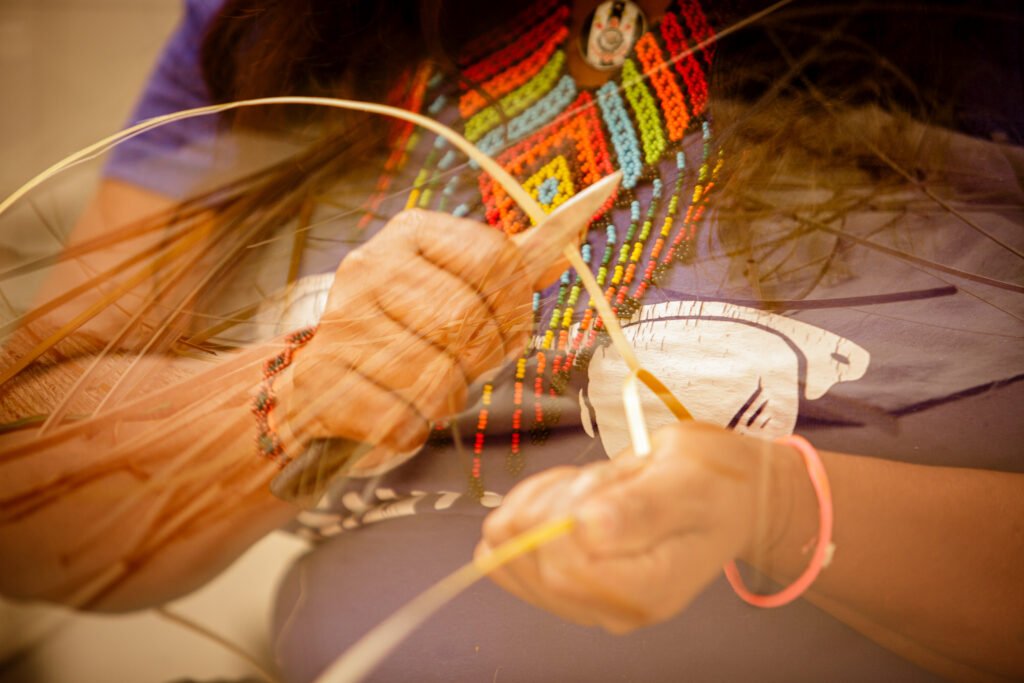
Neuzilia Para
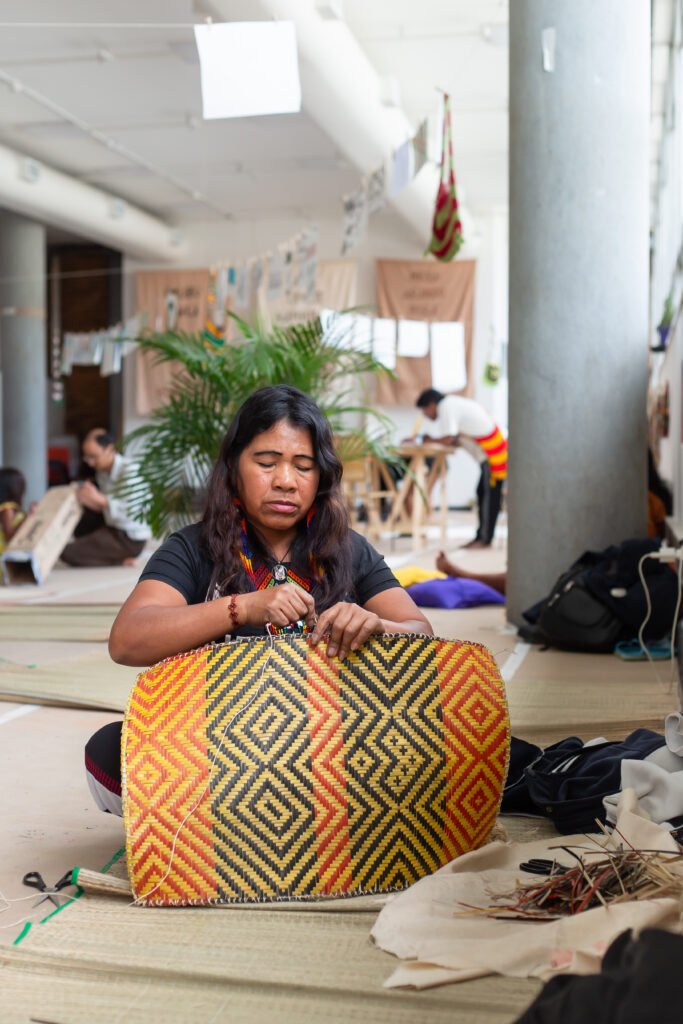
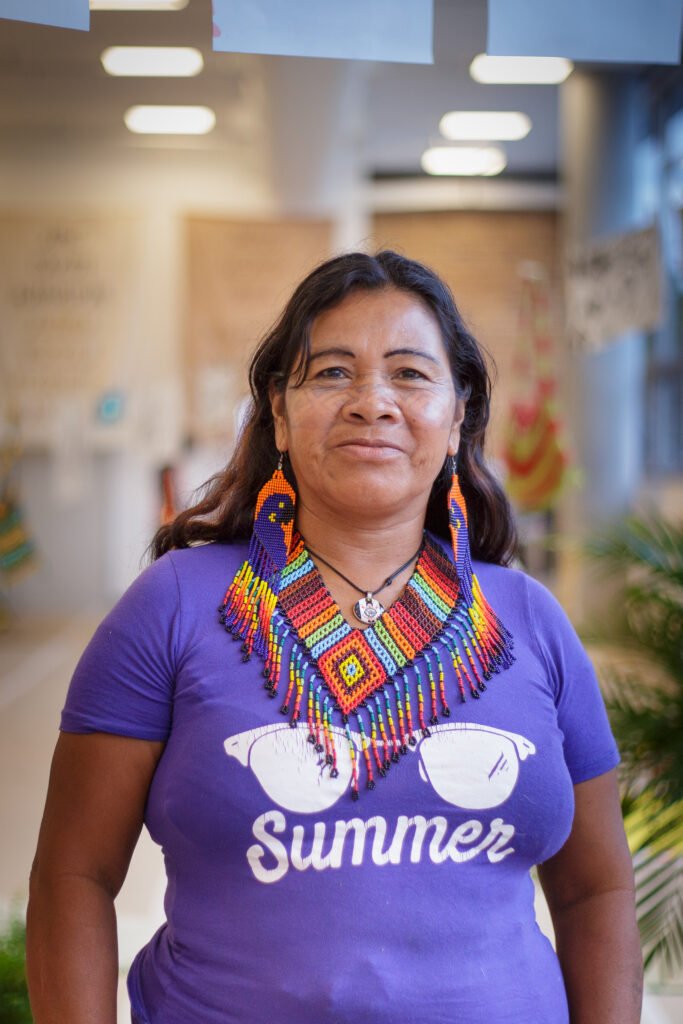
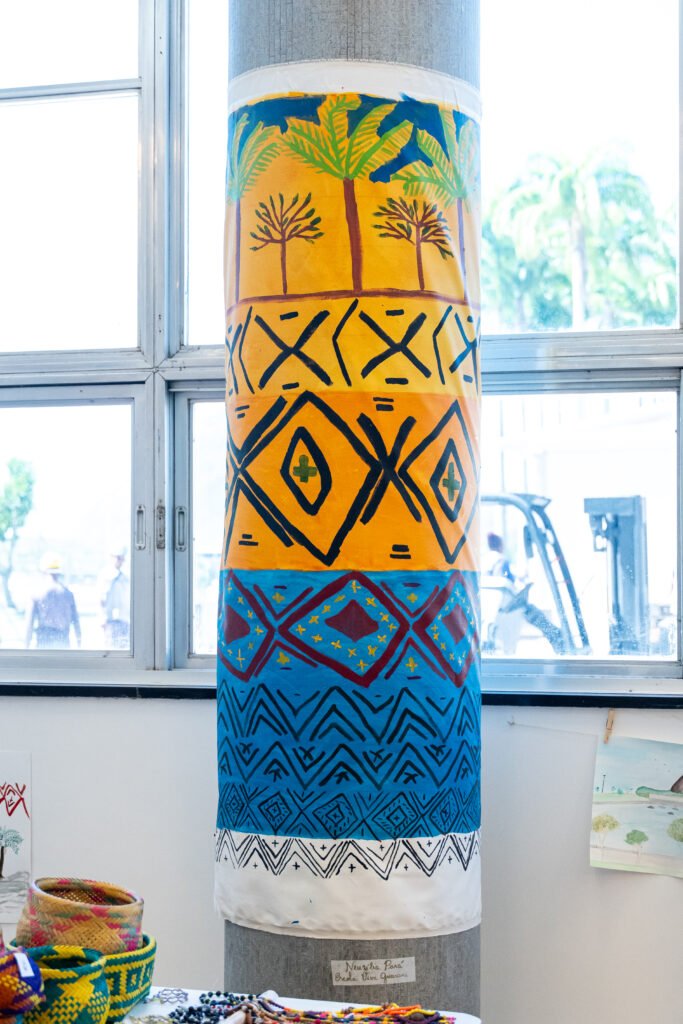
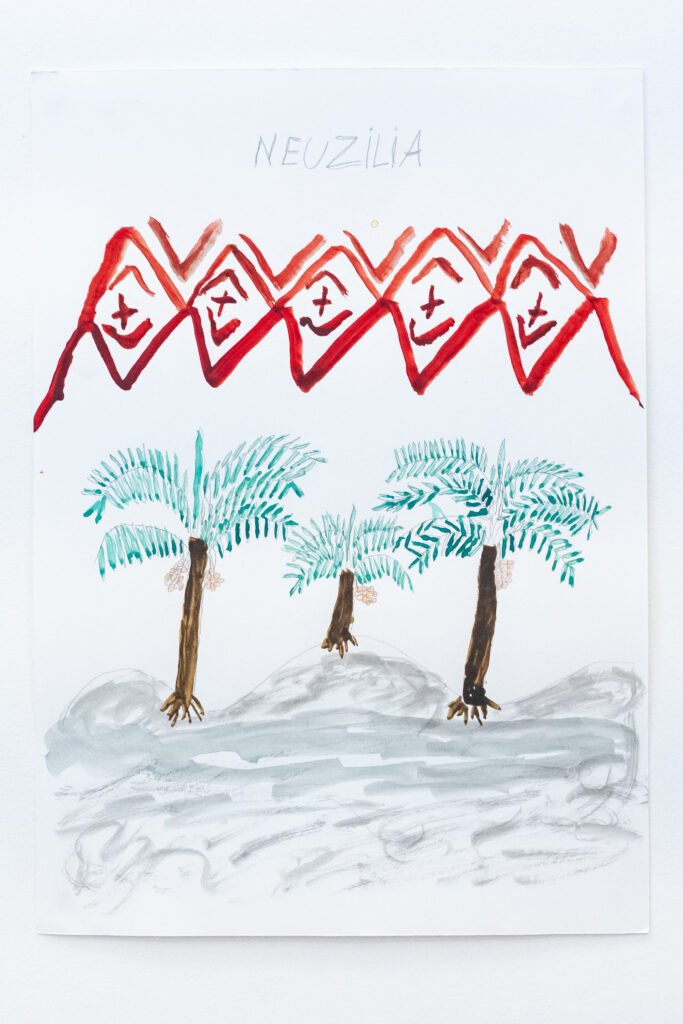
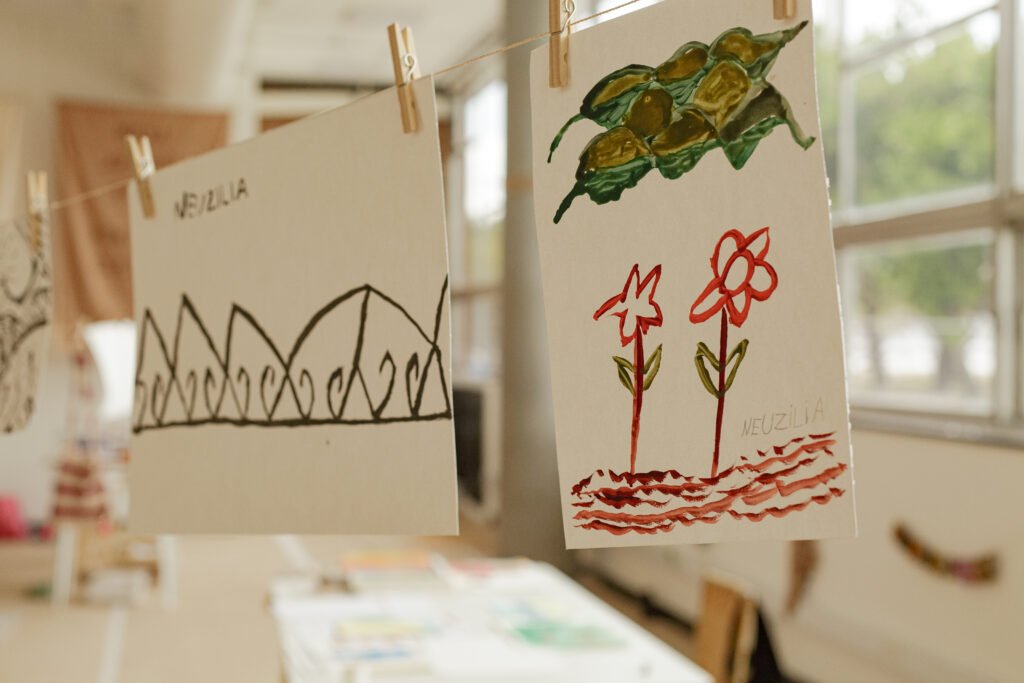
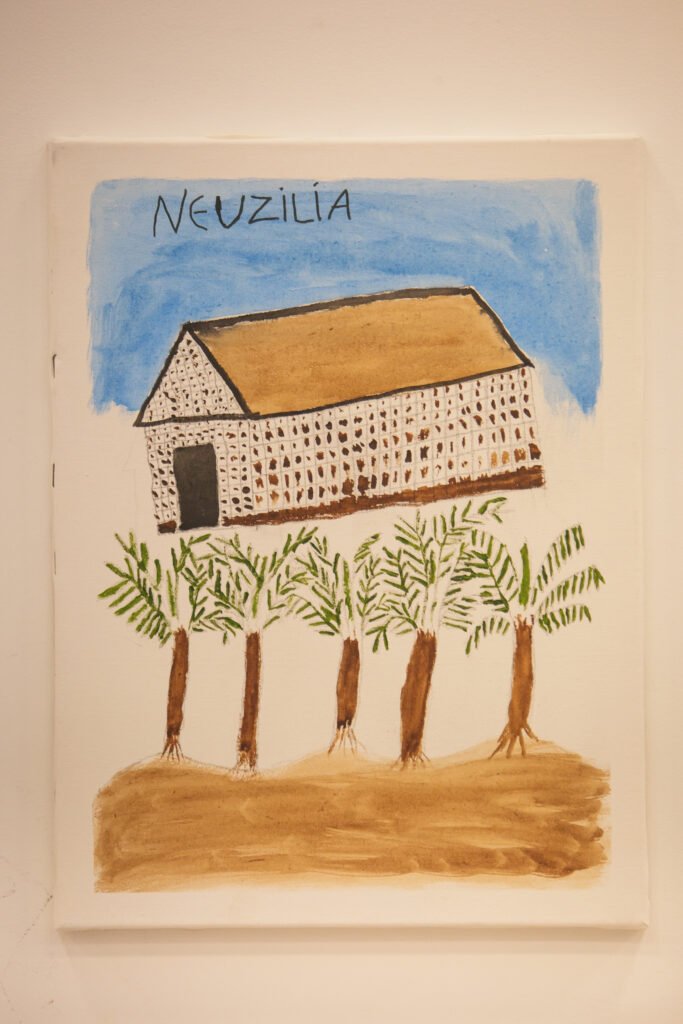
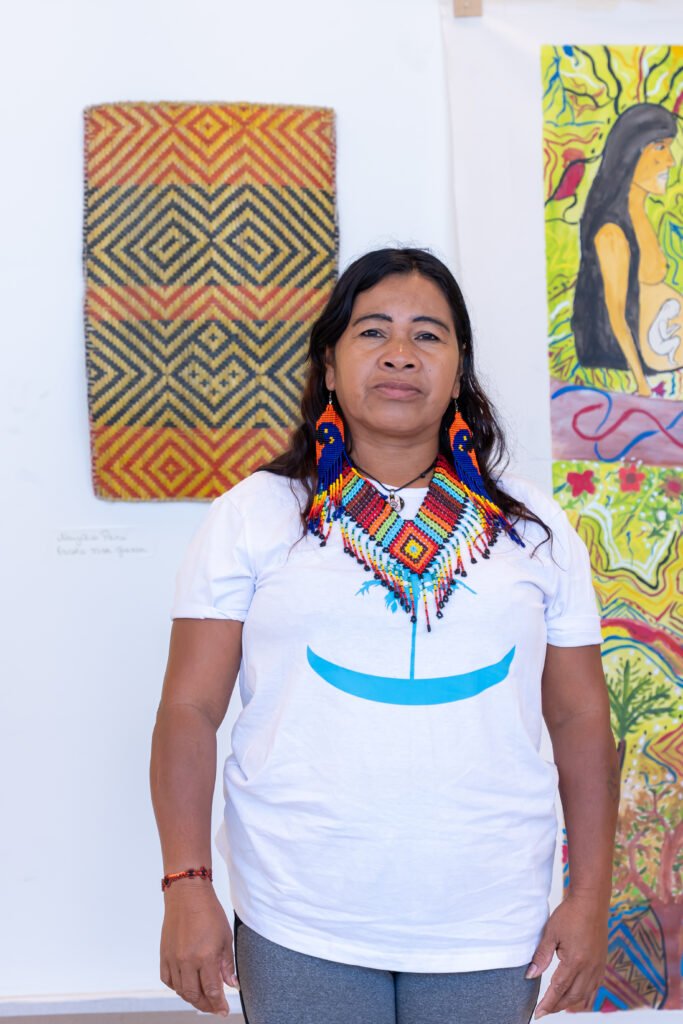
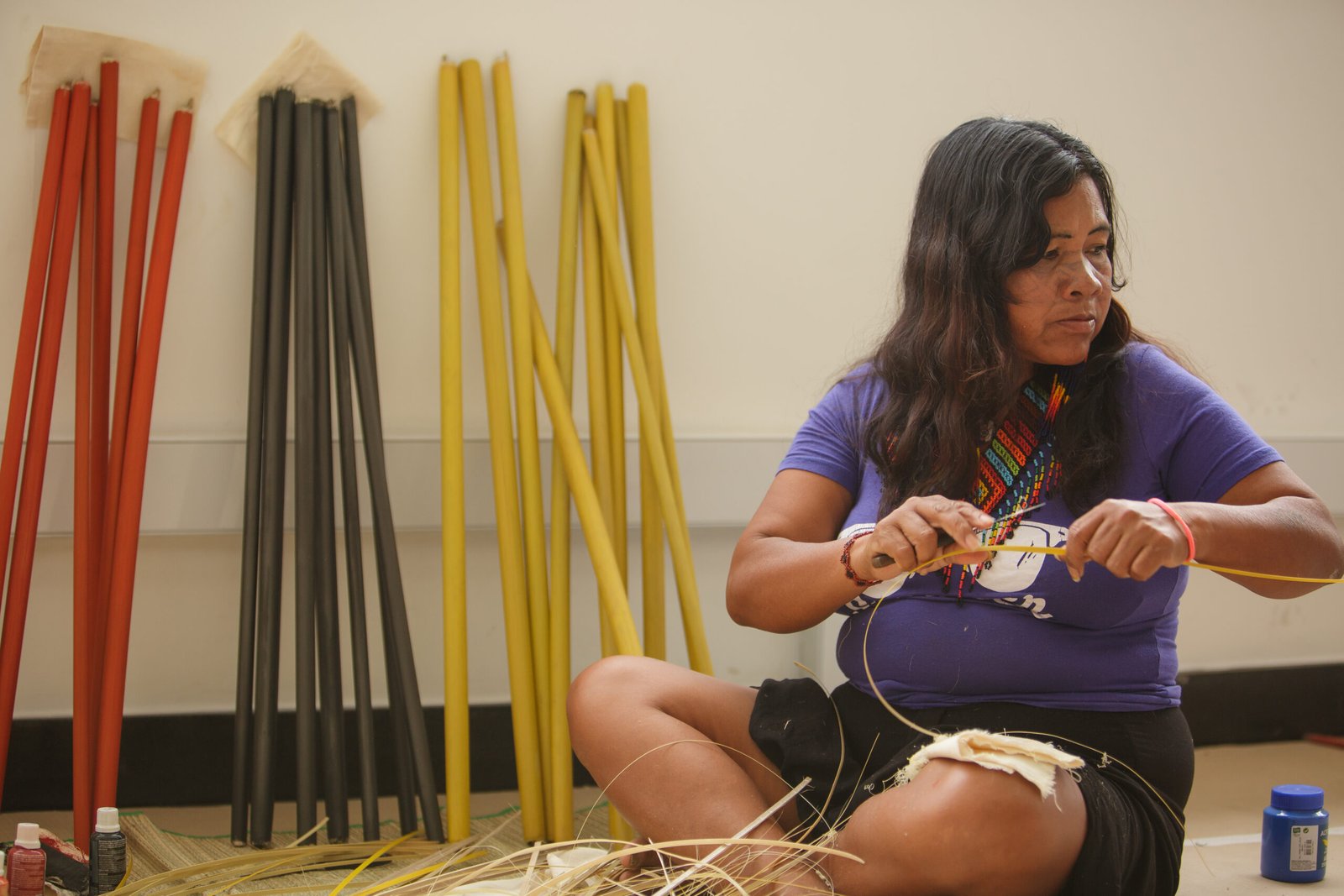
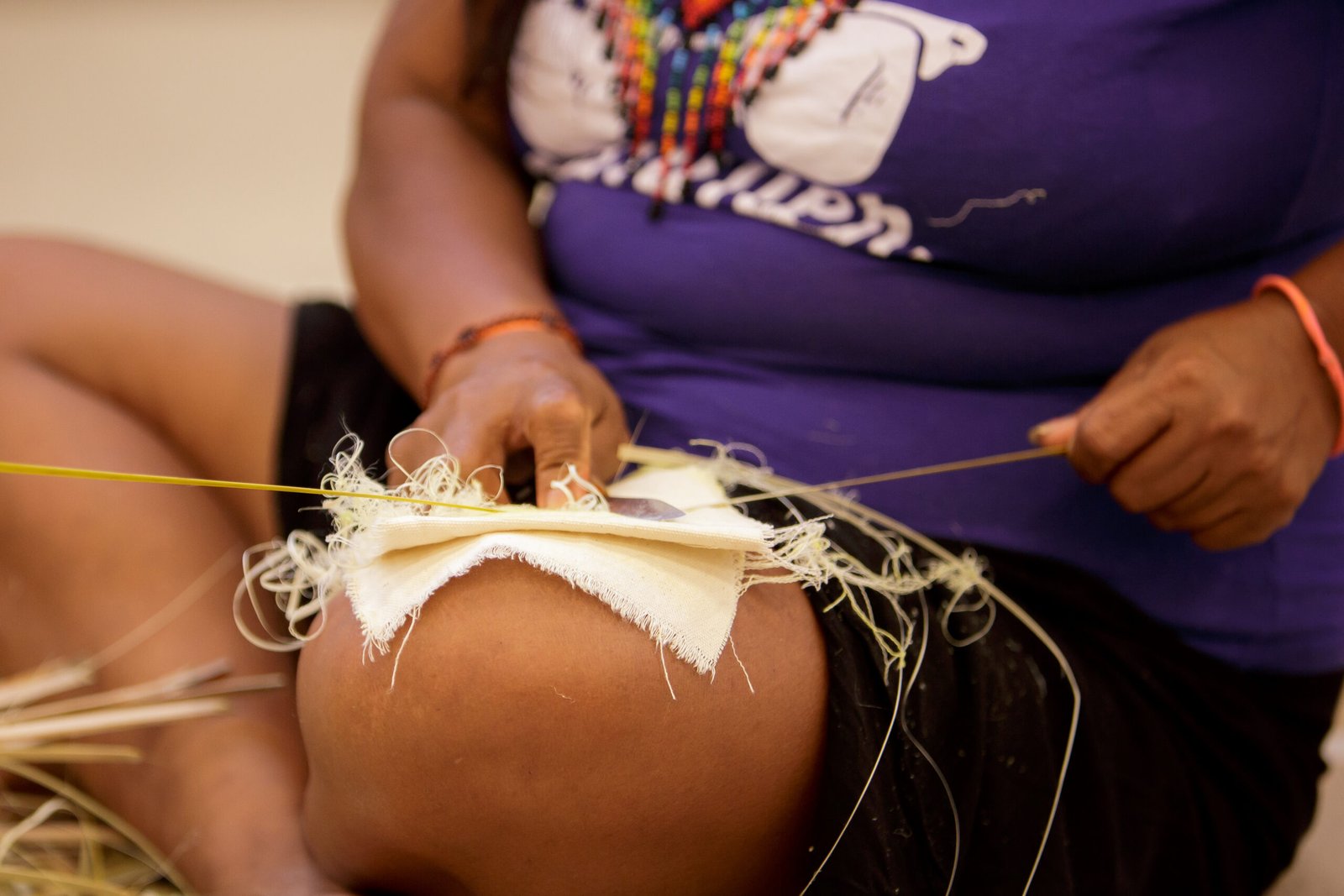
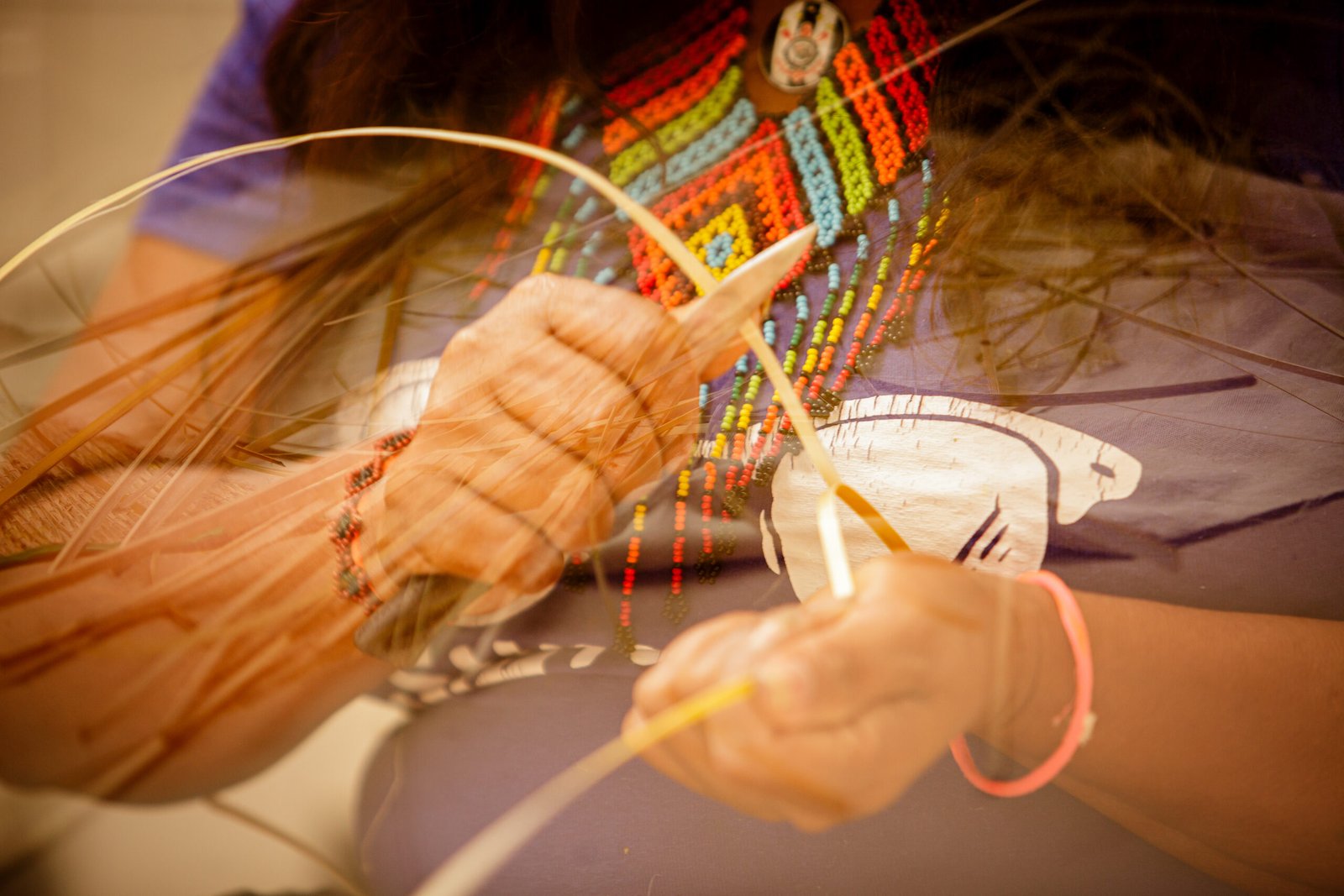
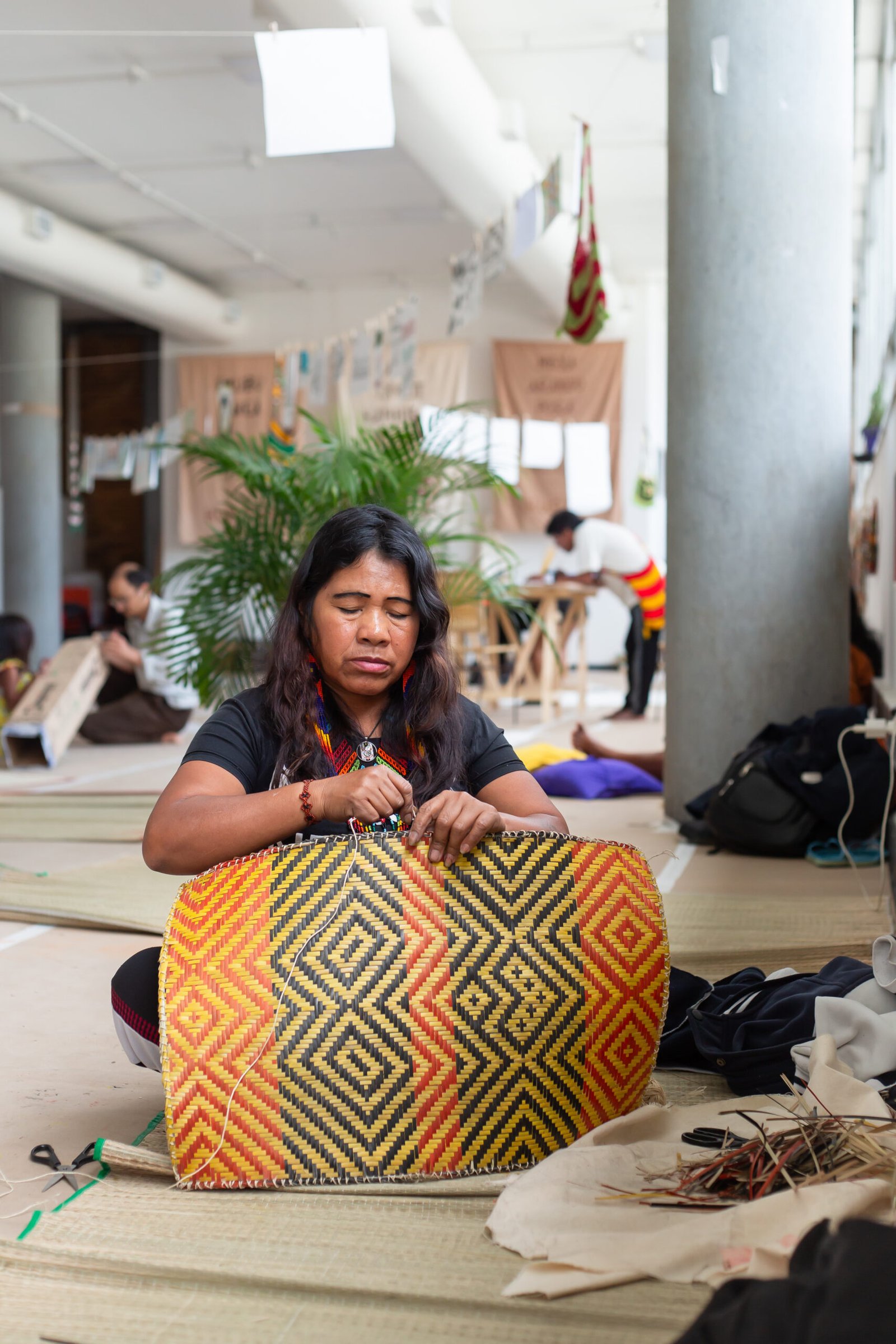
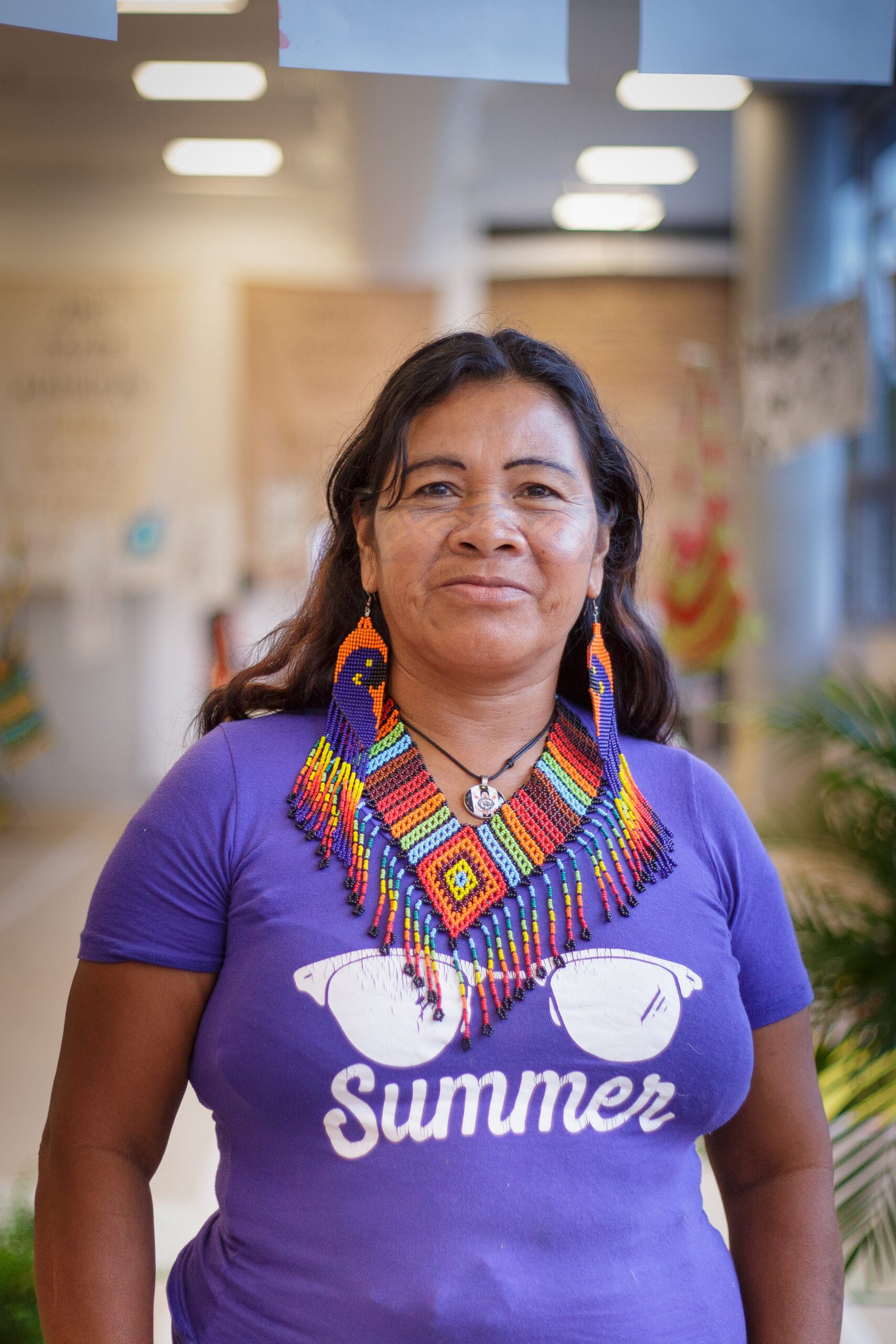
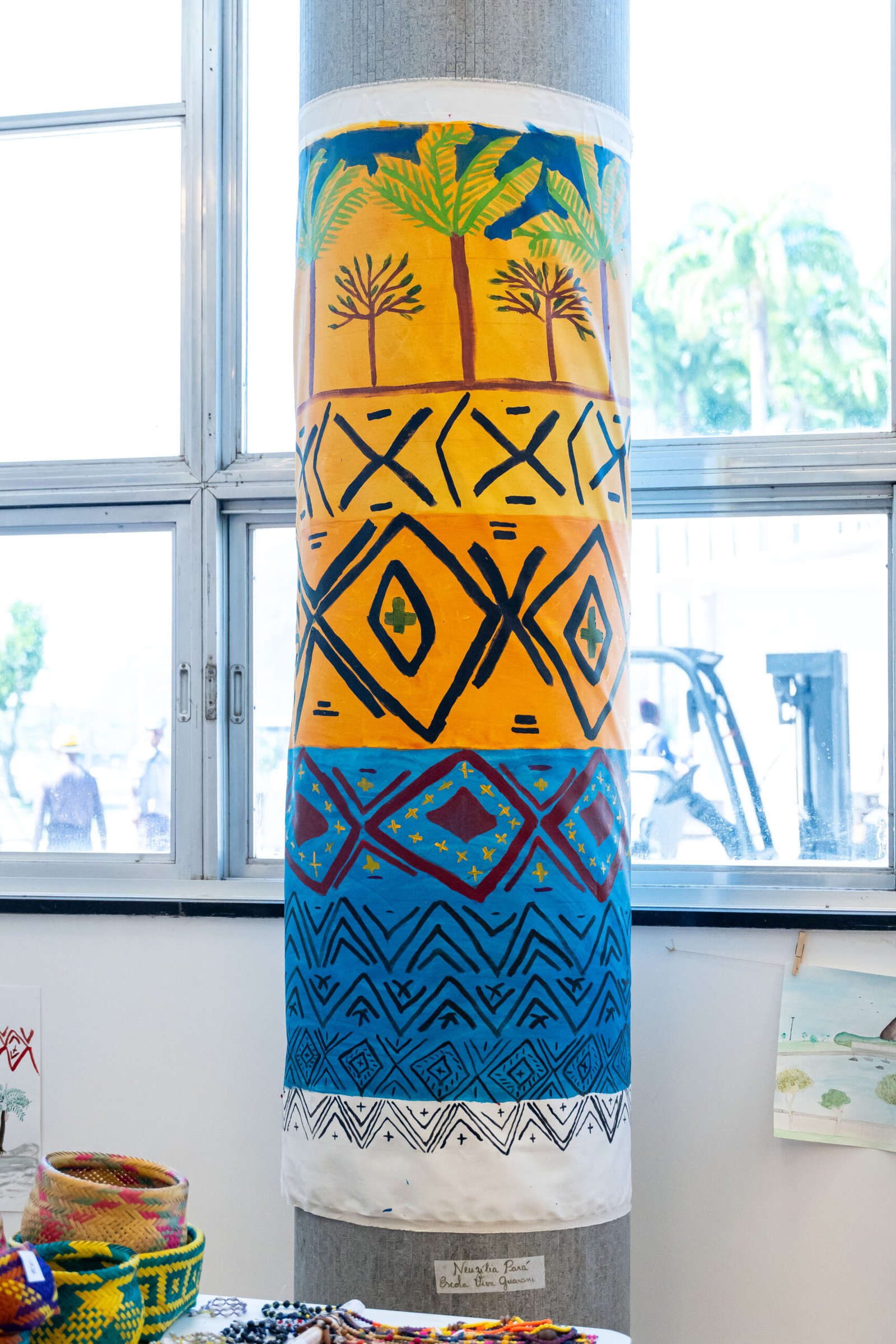
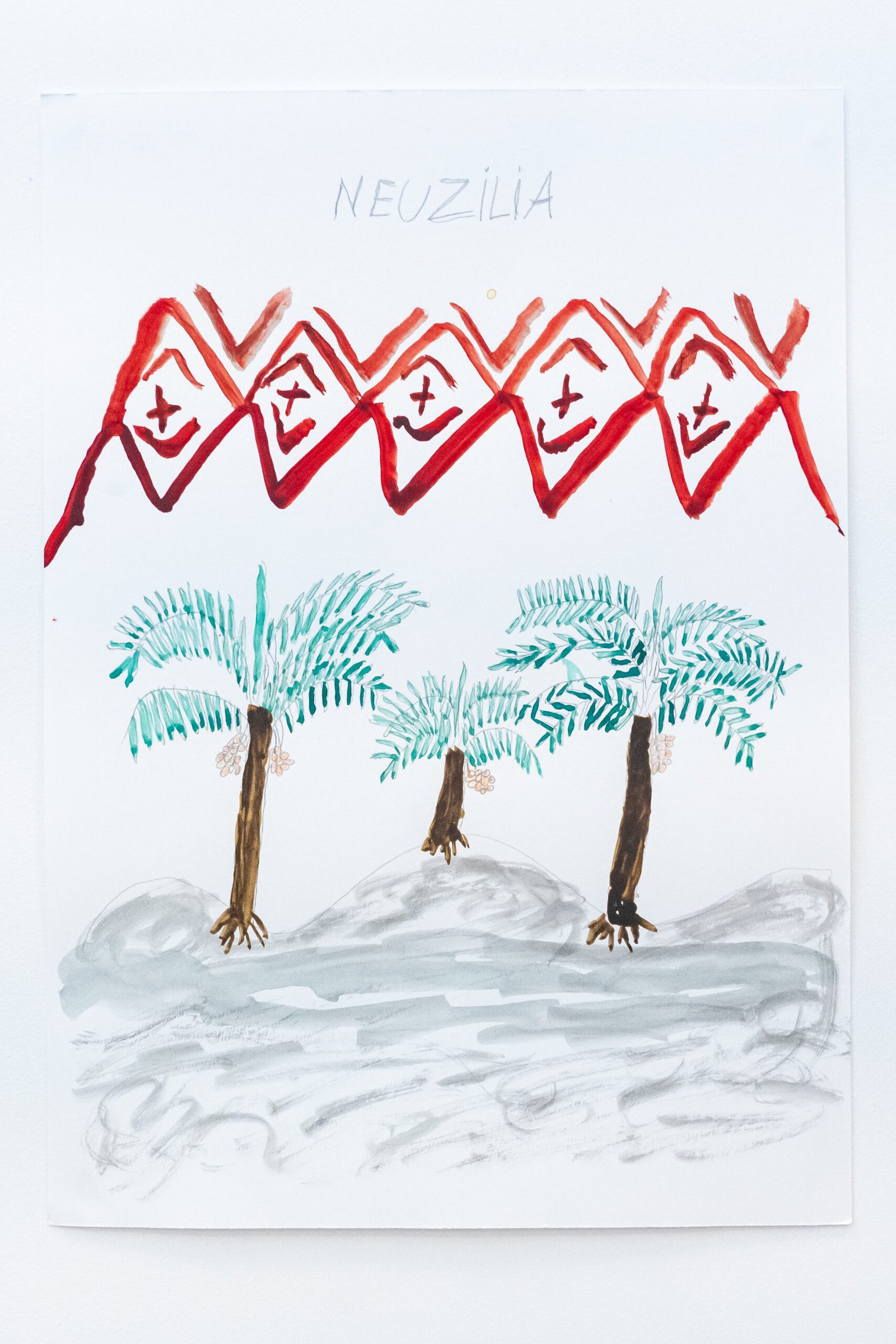
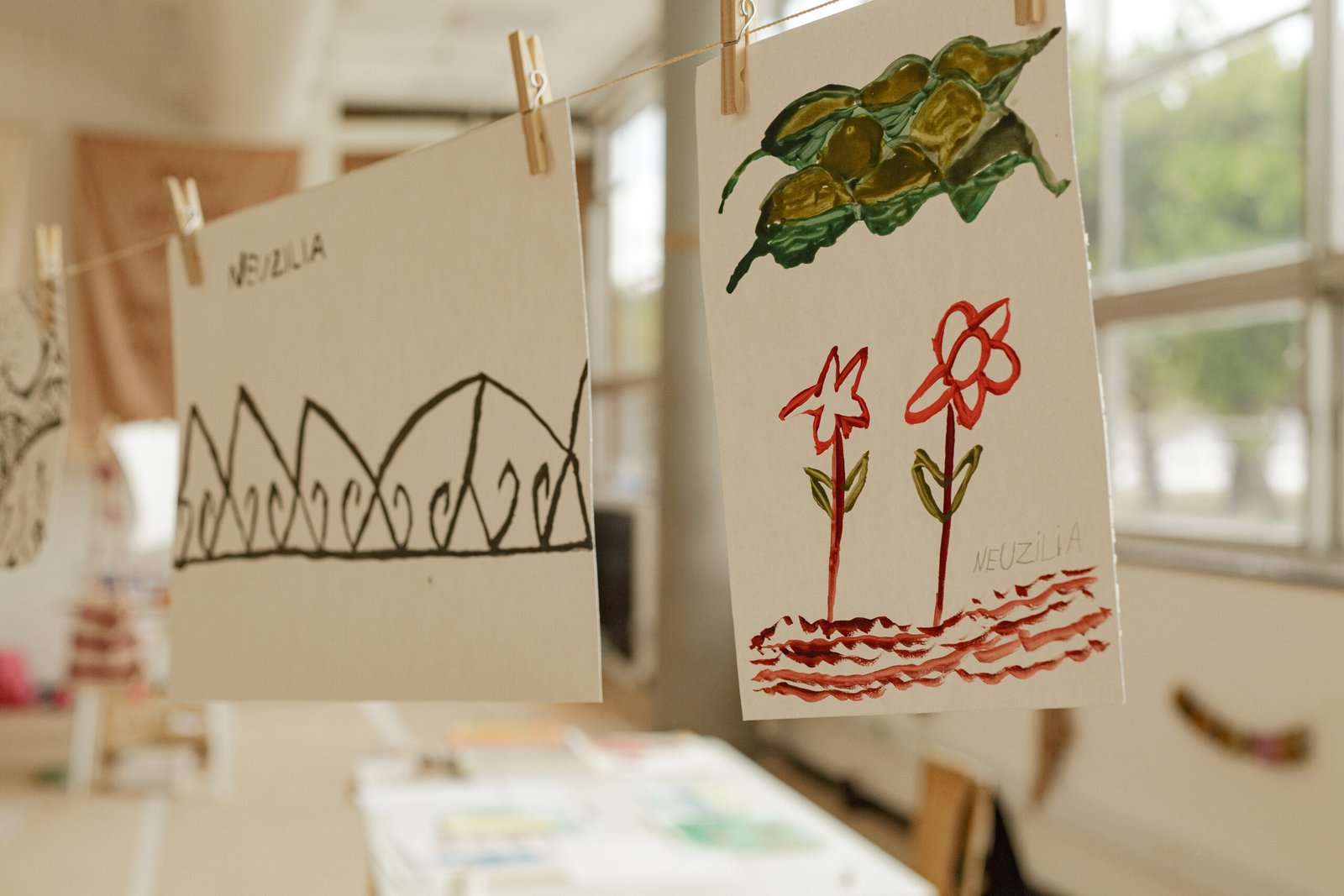
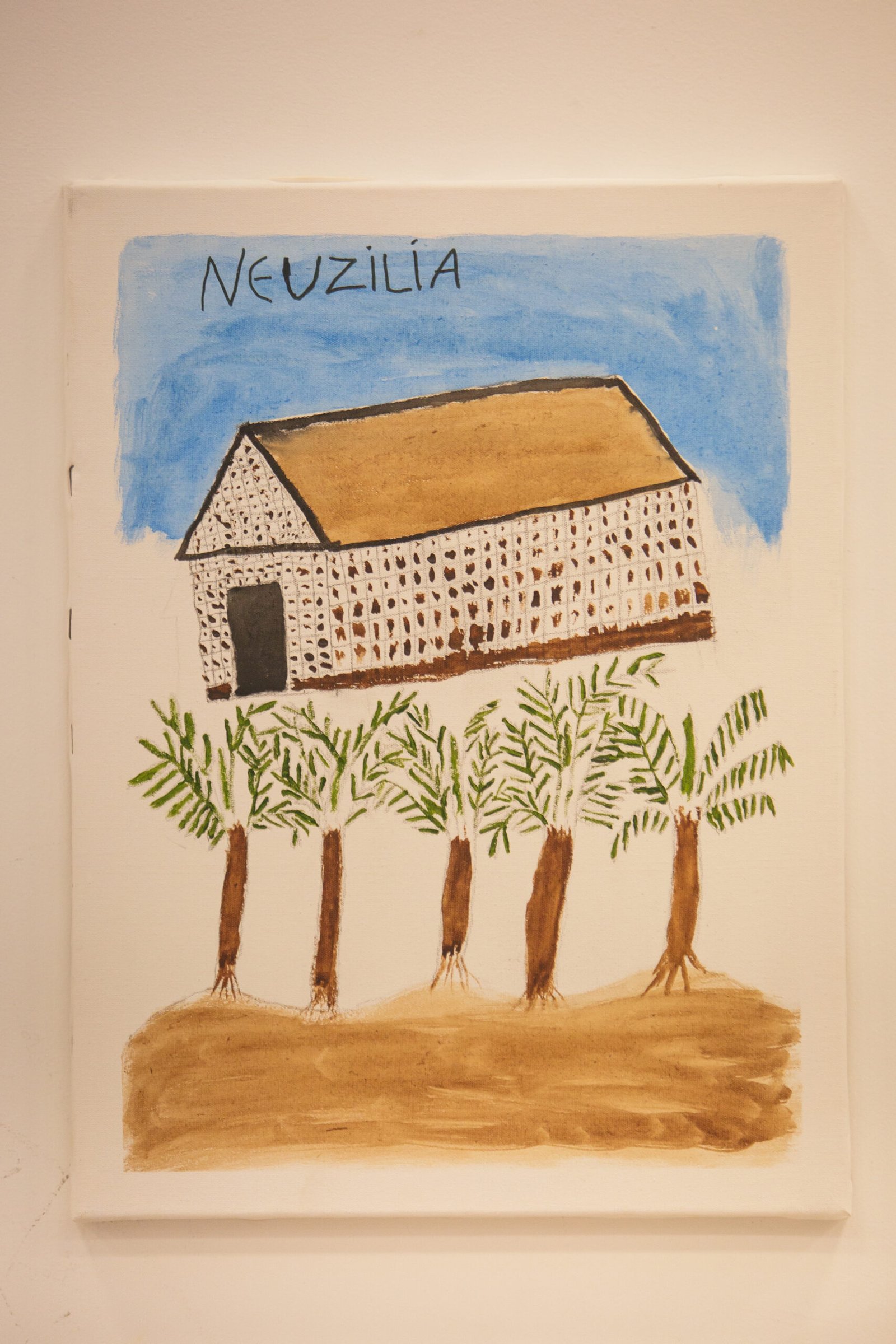
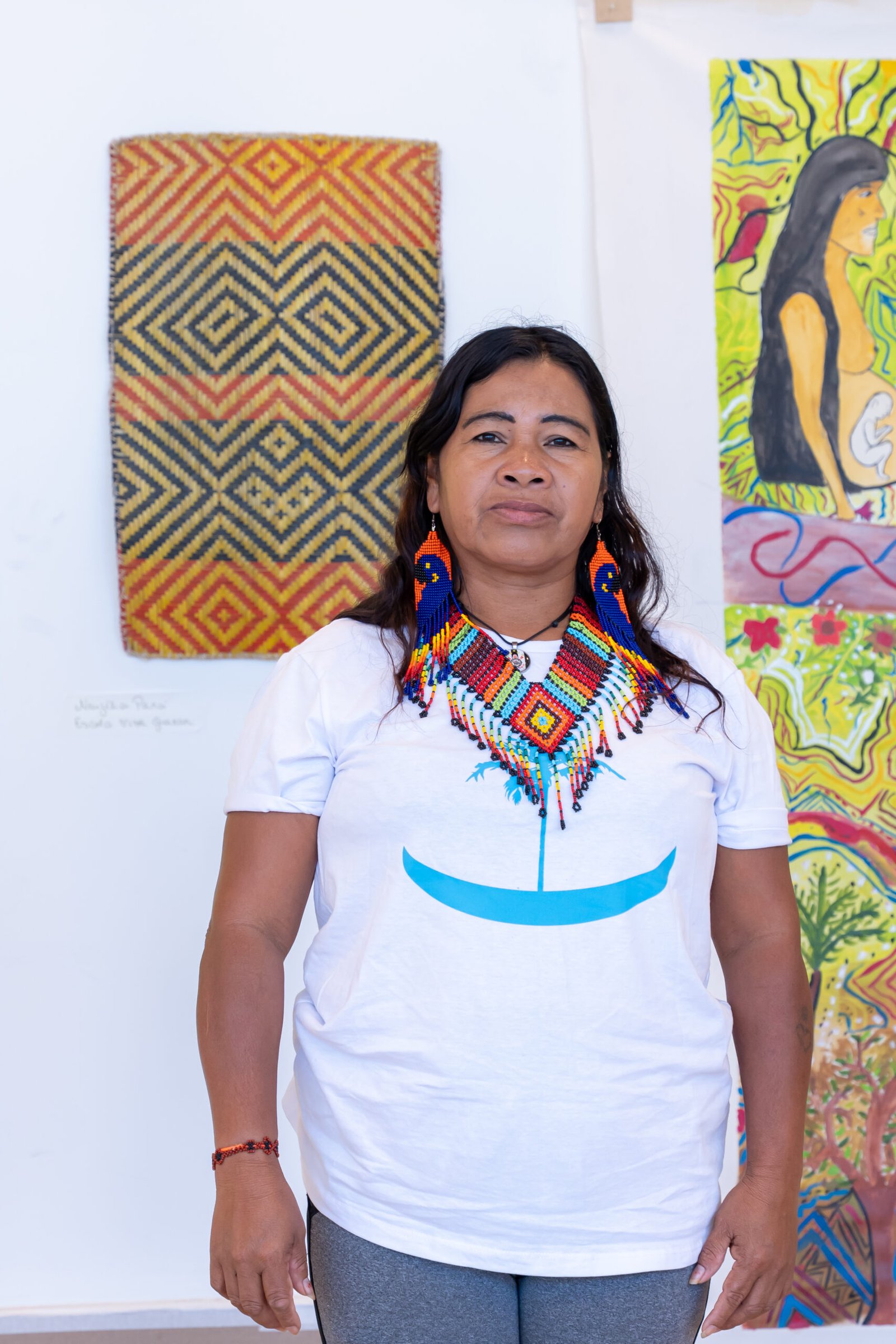
Neuzilia Para is from the Guarani Mbya people, an artisan and a knowledgeable keeper of medicinal plants and the cosmological wisdom of her people. A master of weaving, she creates straw baskets and, through her art, works to support her family.
ARANDU PORÃ
Guarani Living School
At Arandu Porã, name of the Guarani Living School, young people have begun to awaken their dormant memories. Ancestral practices are in dialogue with agroforestry techniques and bee cultivation. In this territory, where the Guarani language is dominant, children and young people find at the Living School a place to learn the stories of their people, practise their art and science.
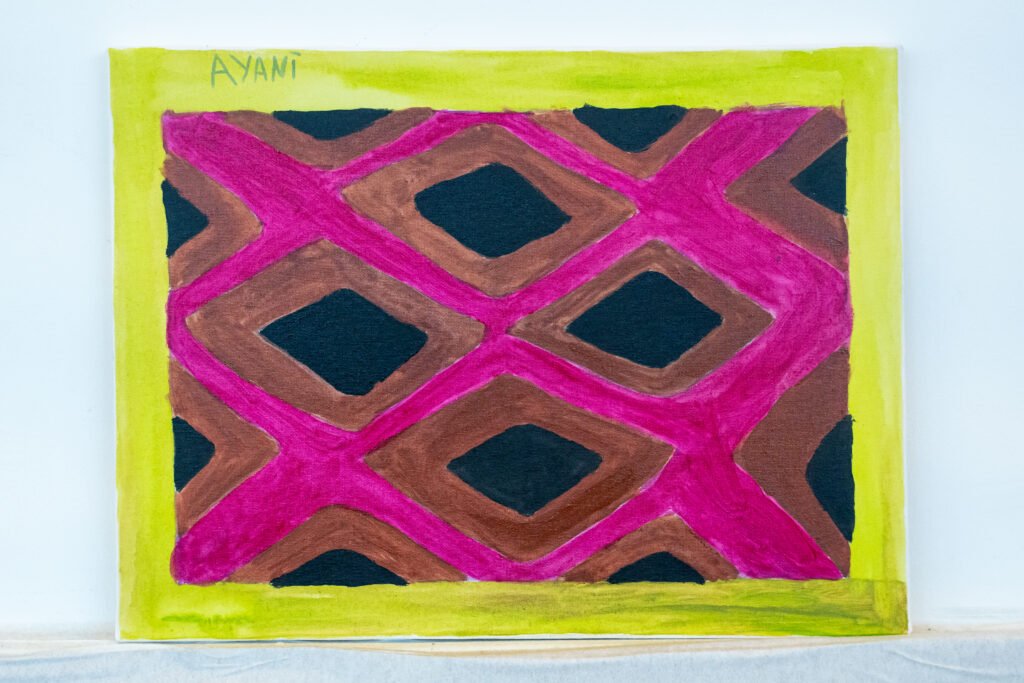
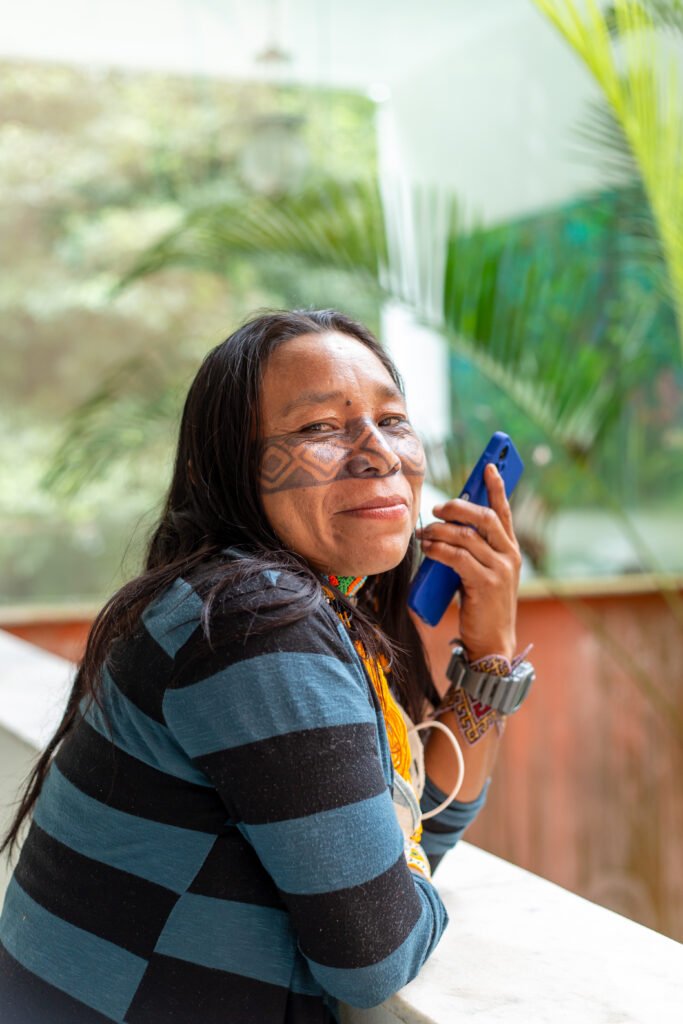
Ayani Huni Kuï
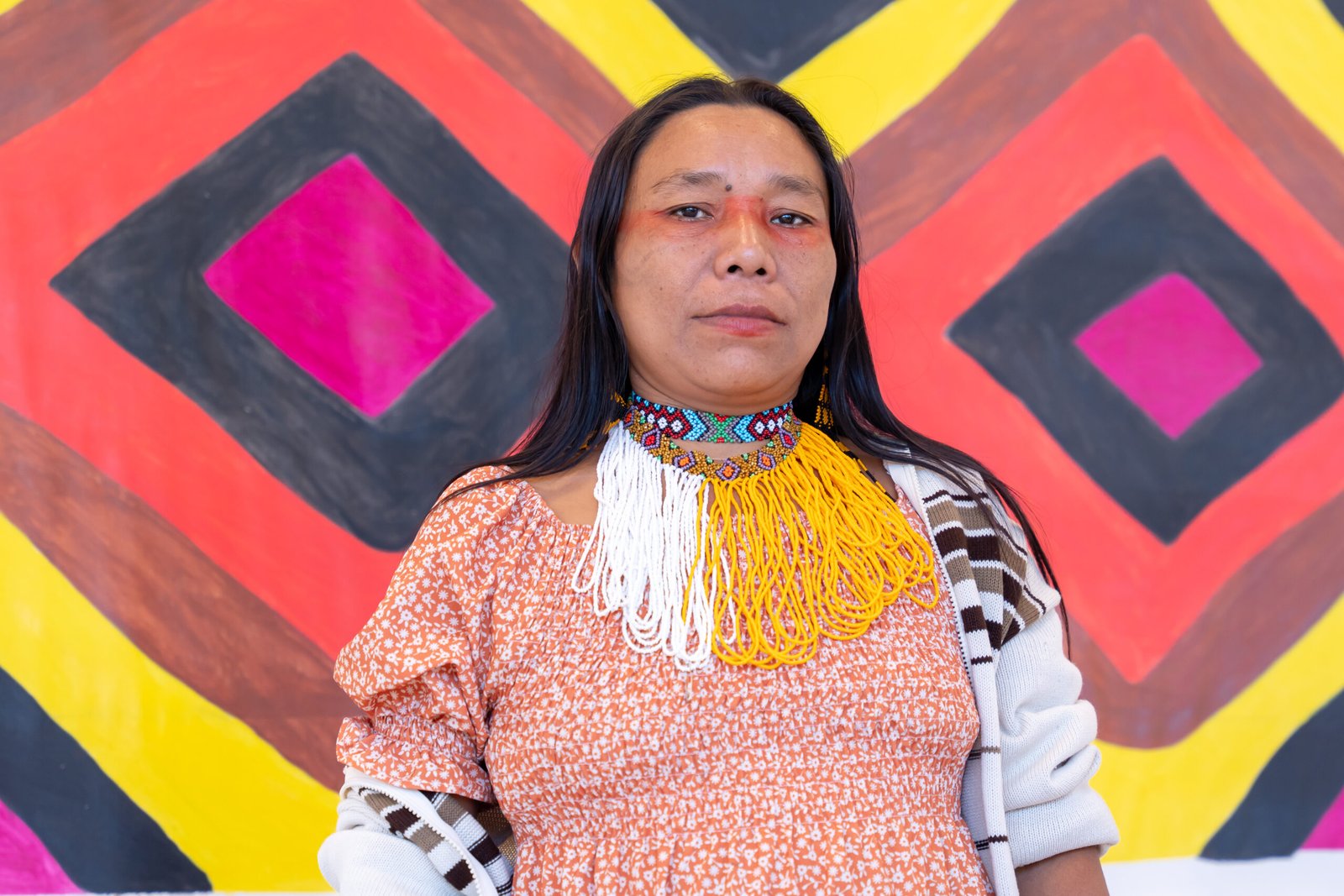
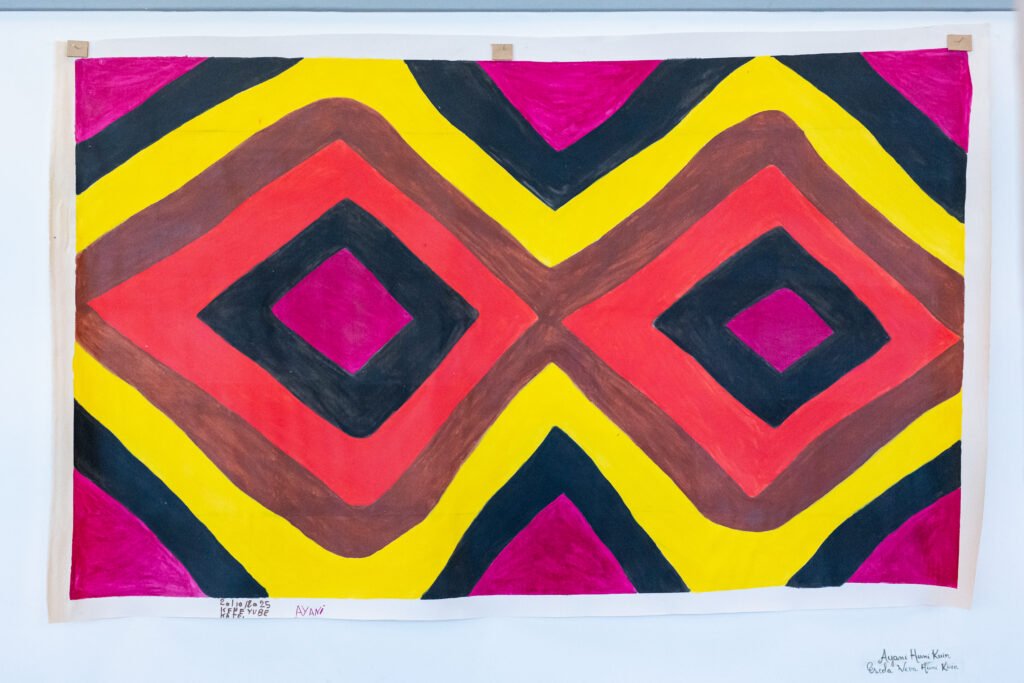
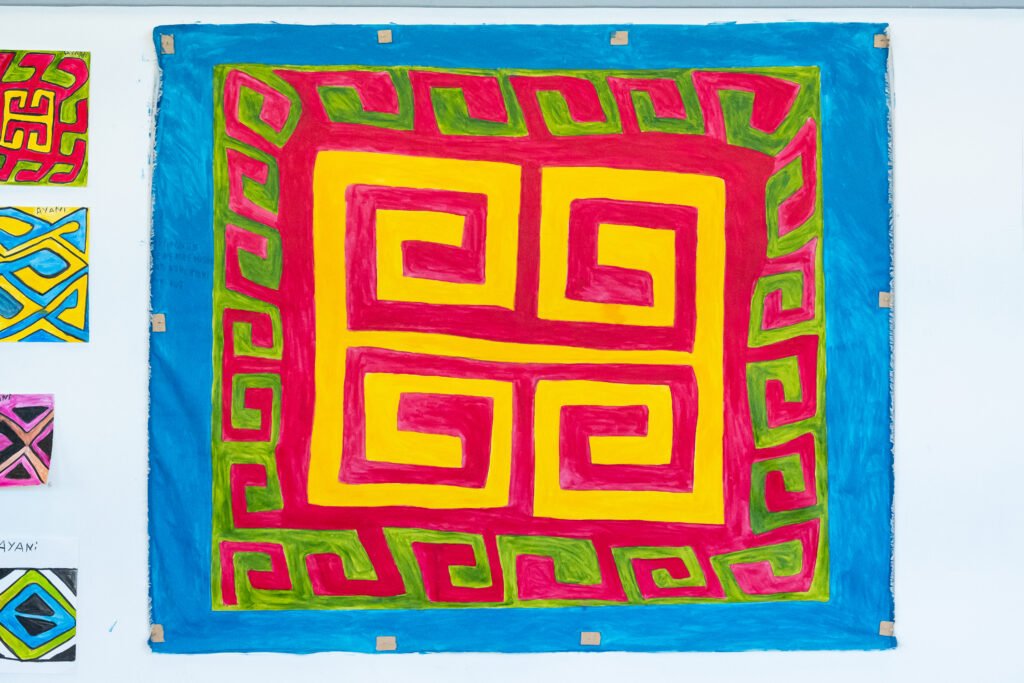
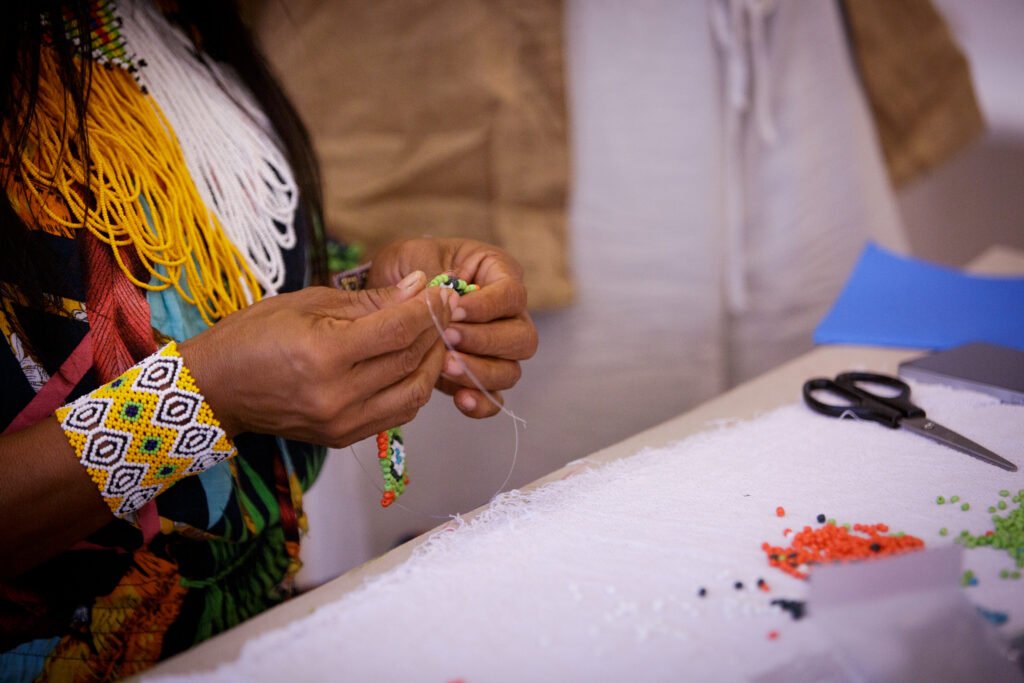
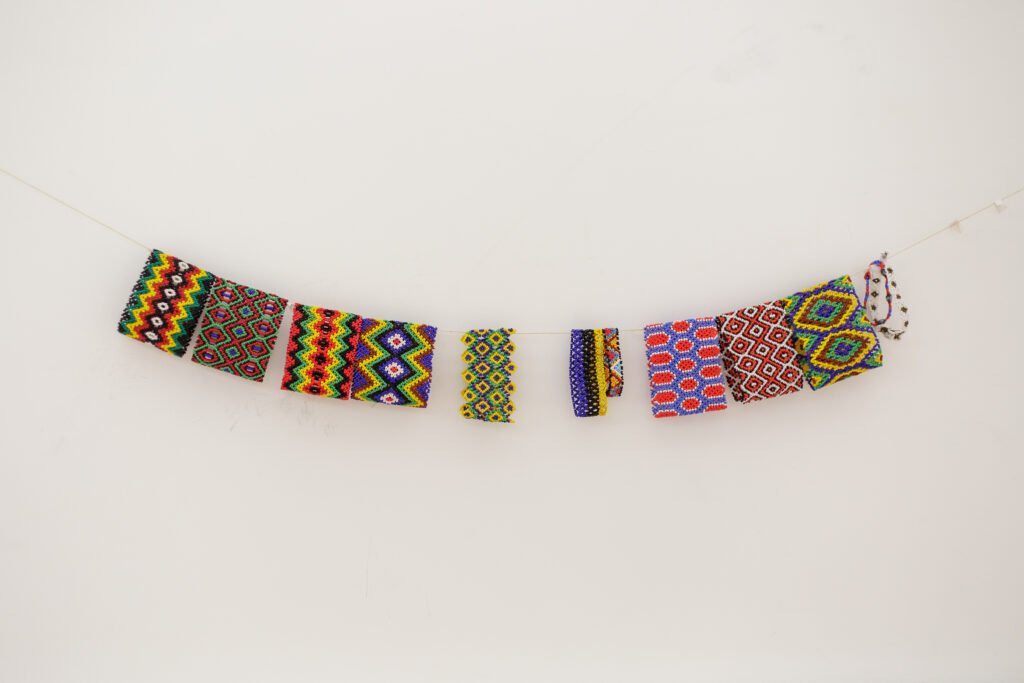
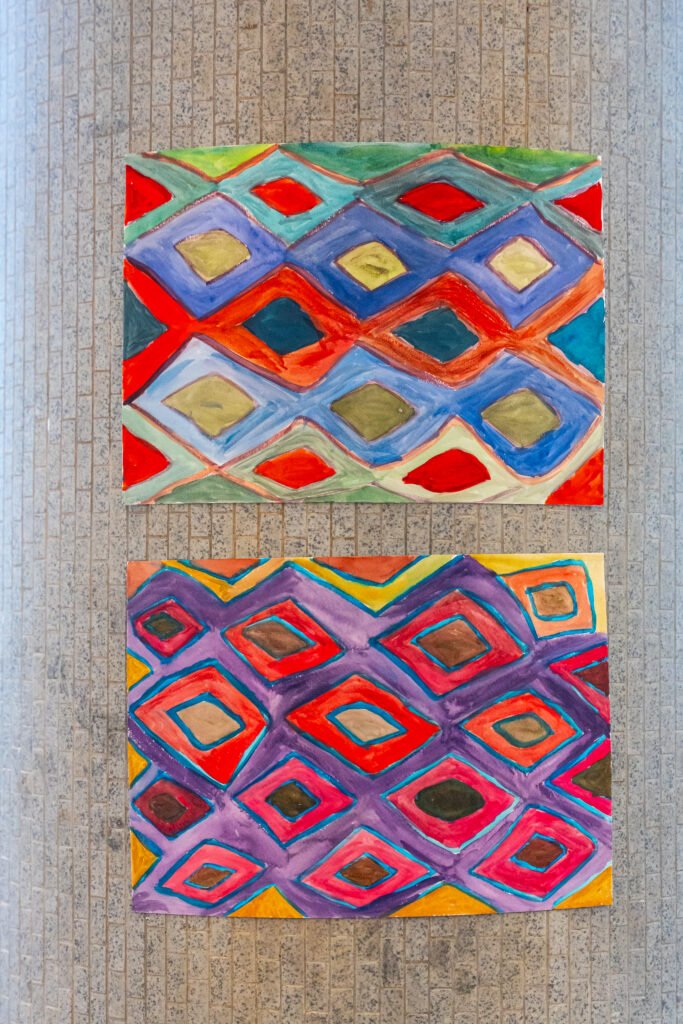
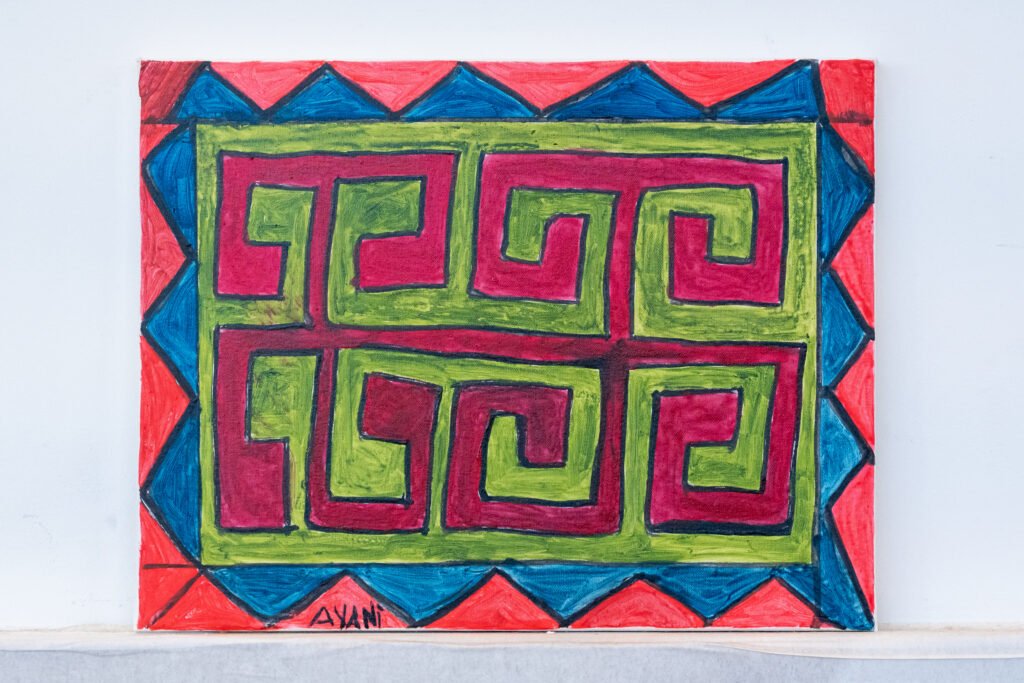
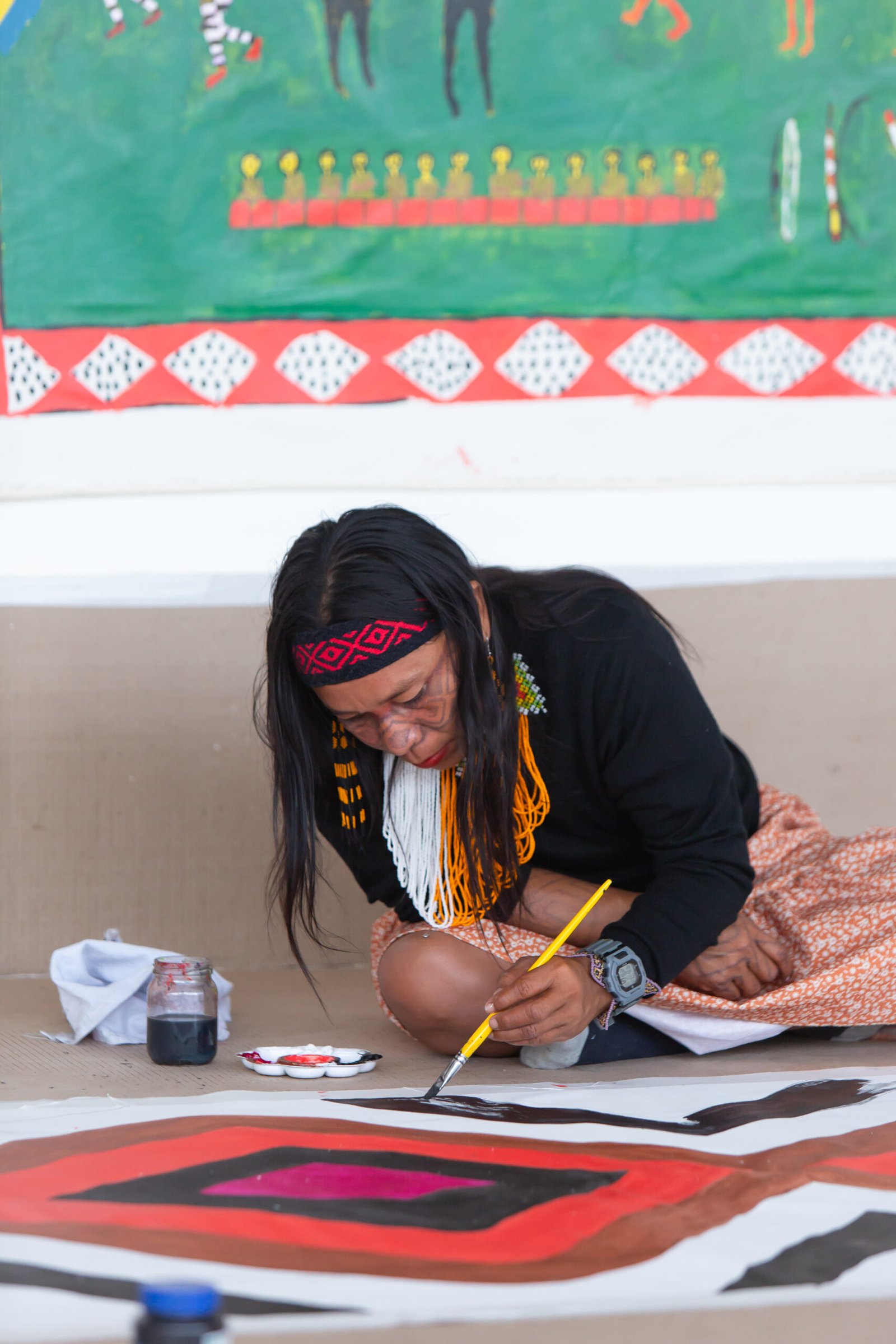
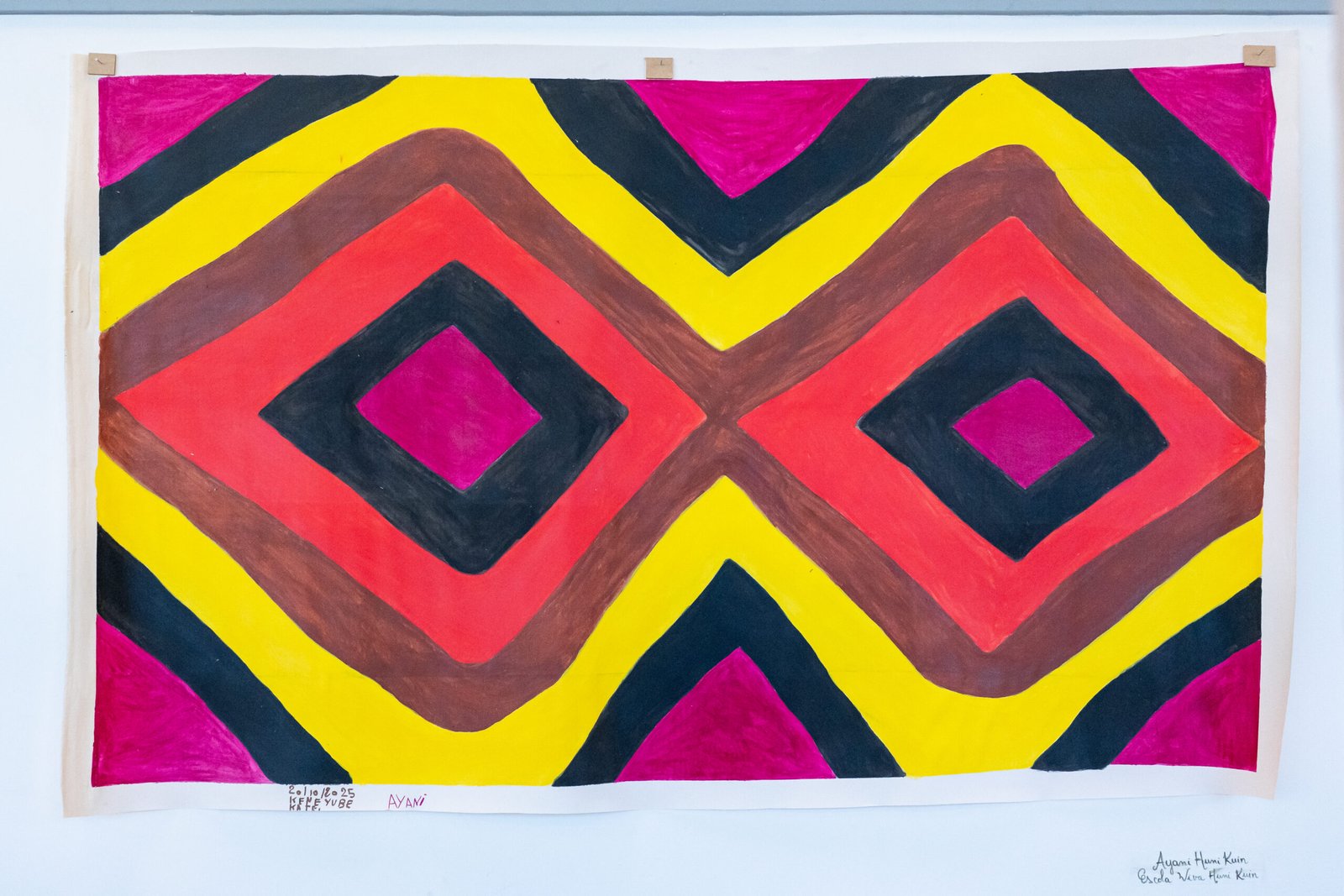
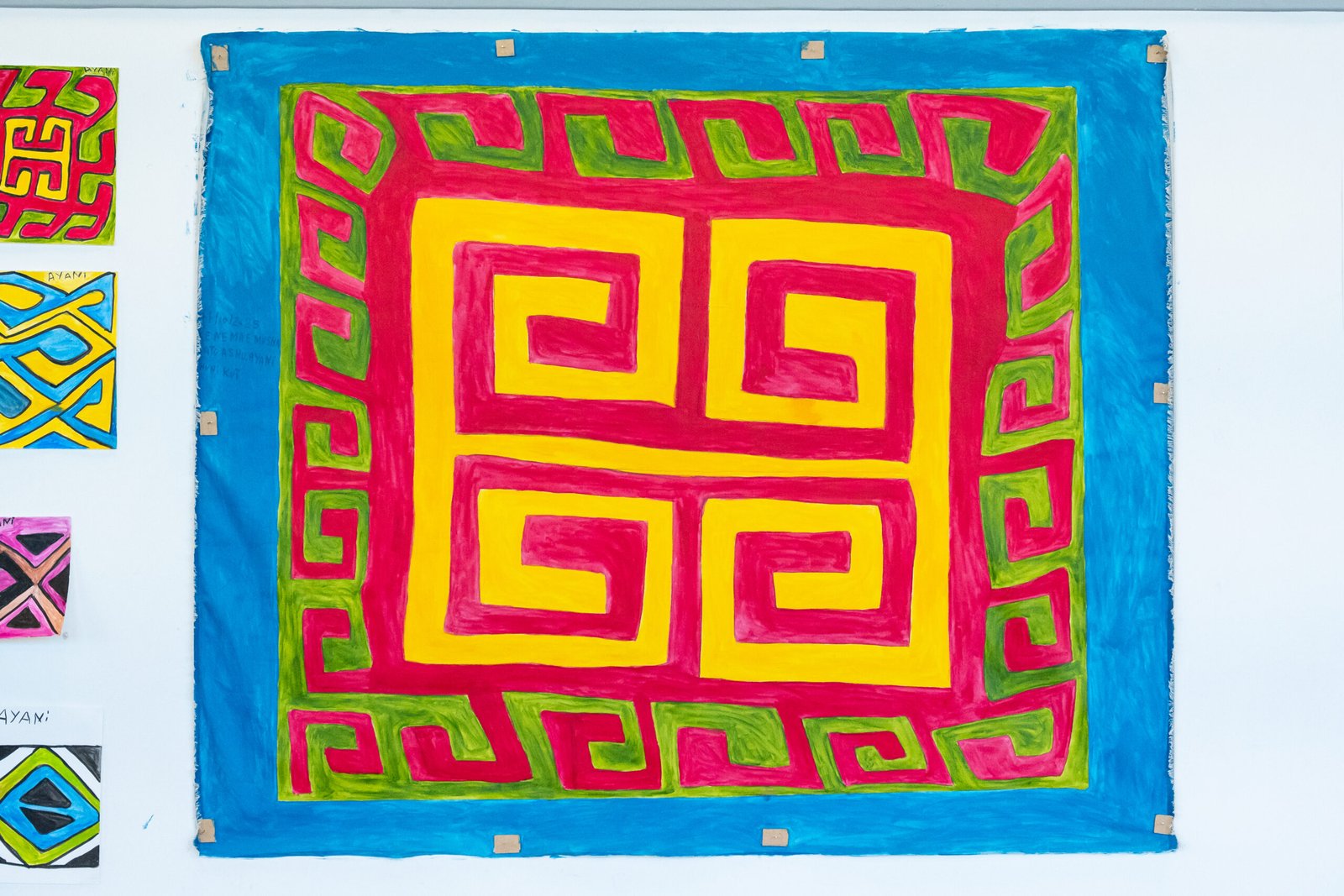
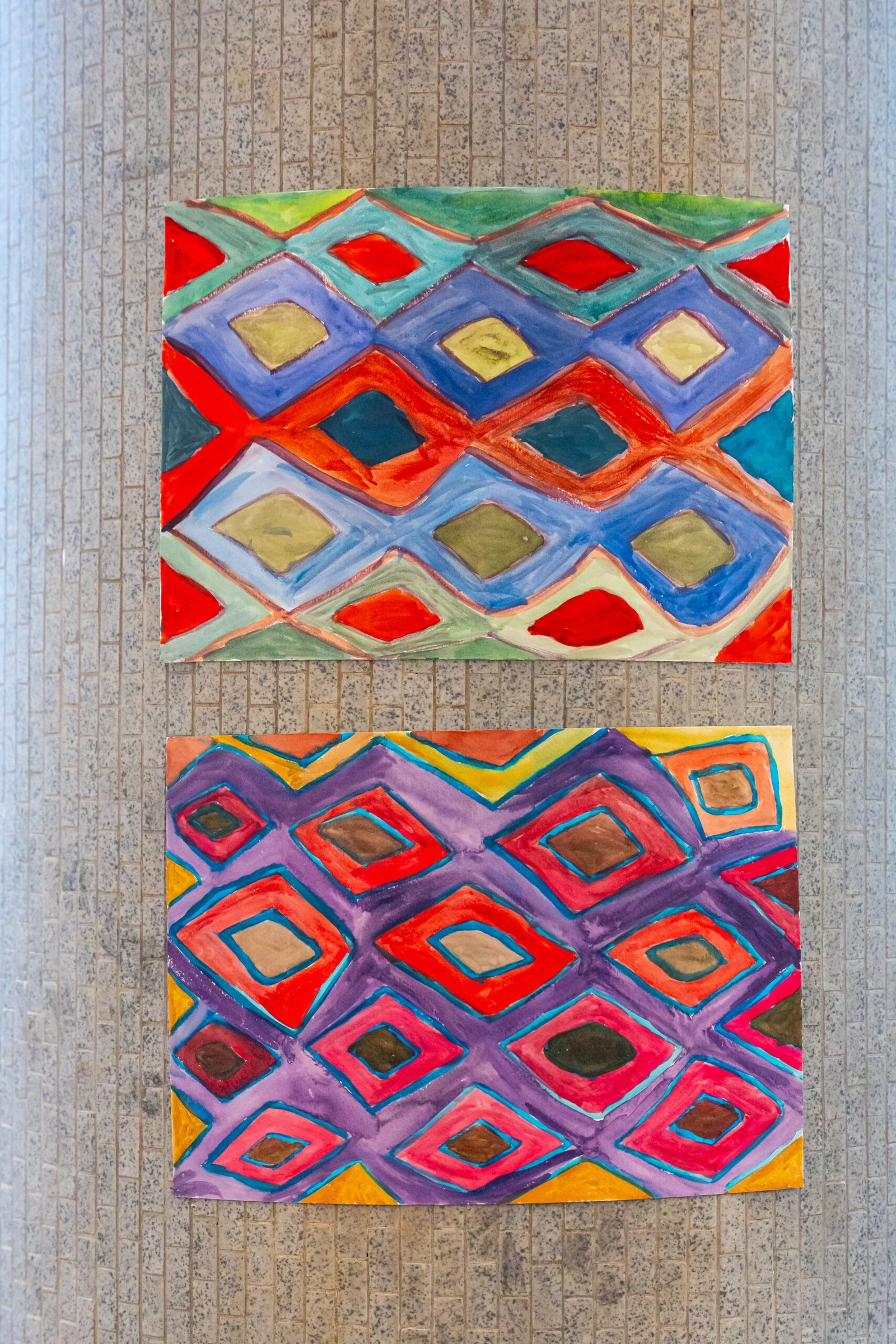
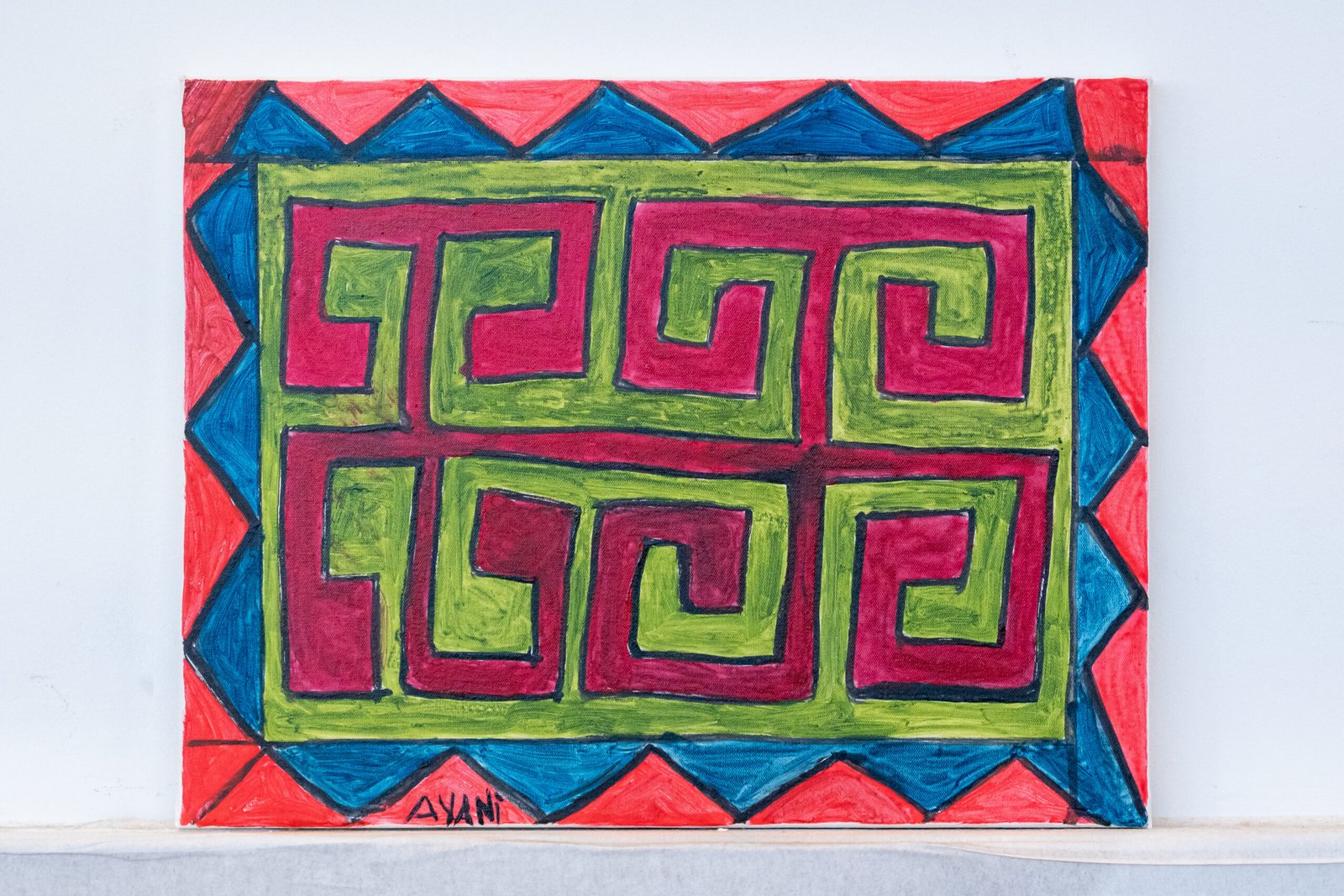
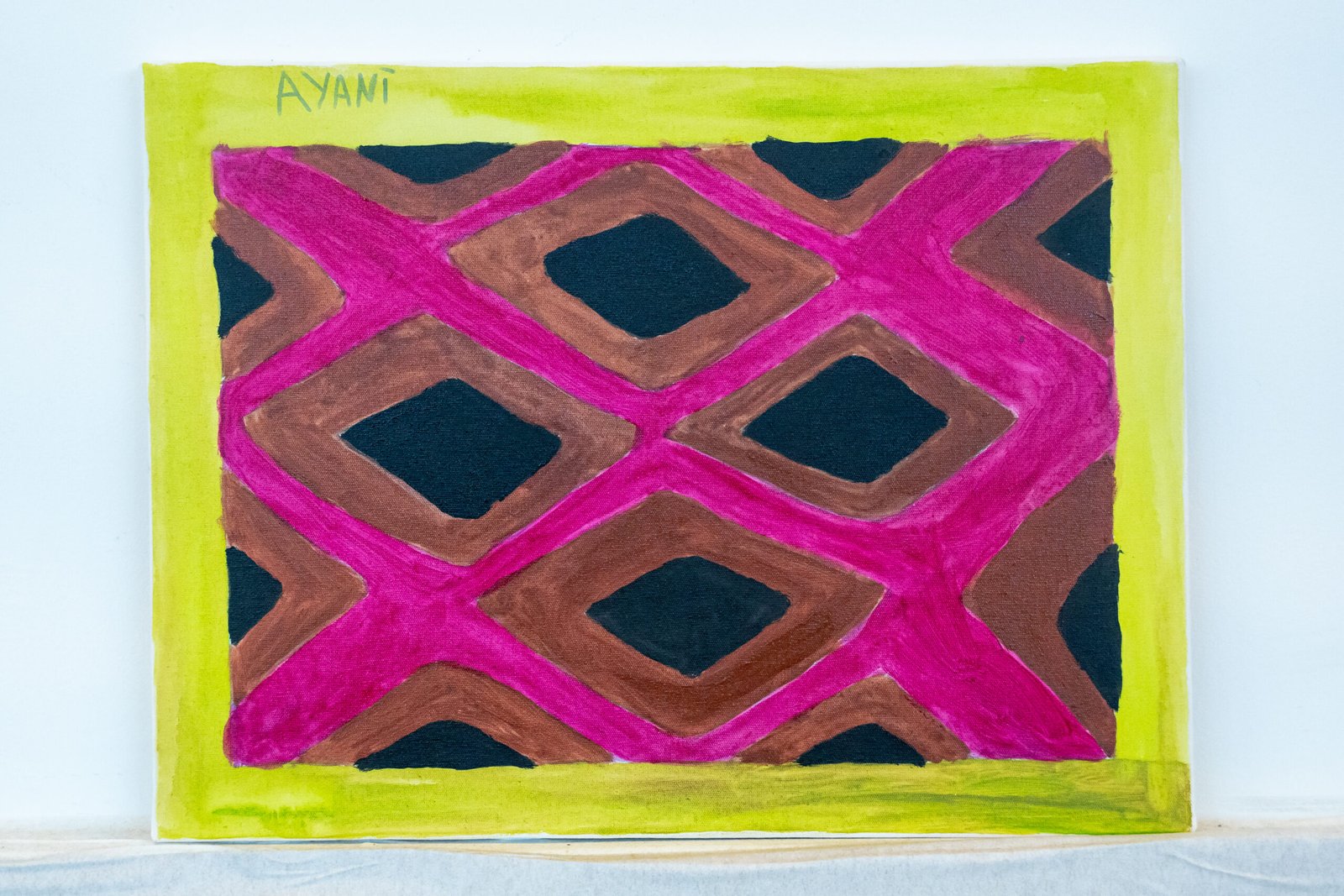
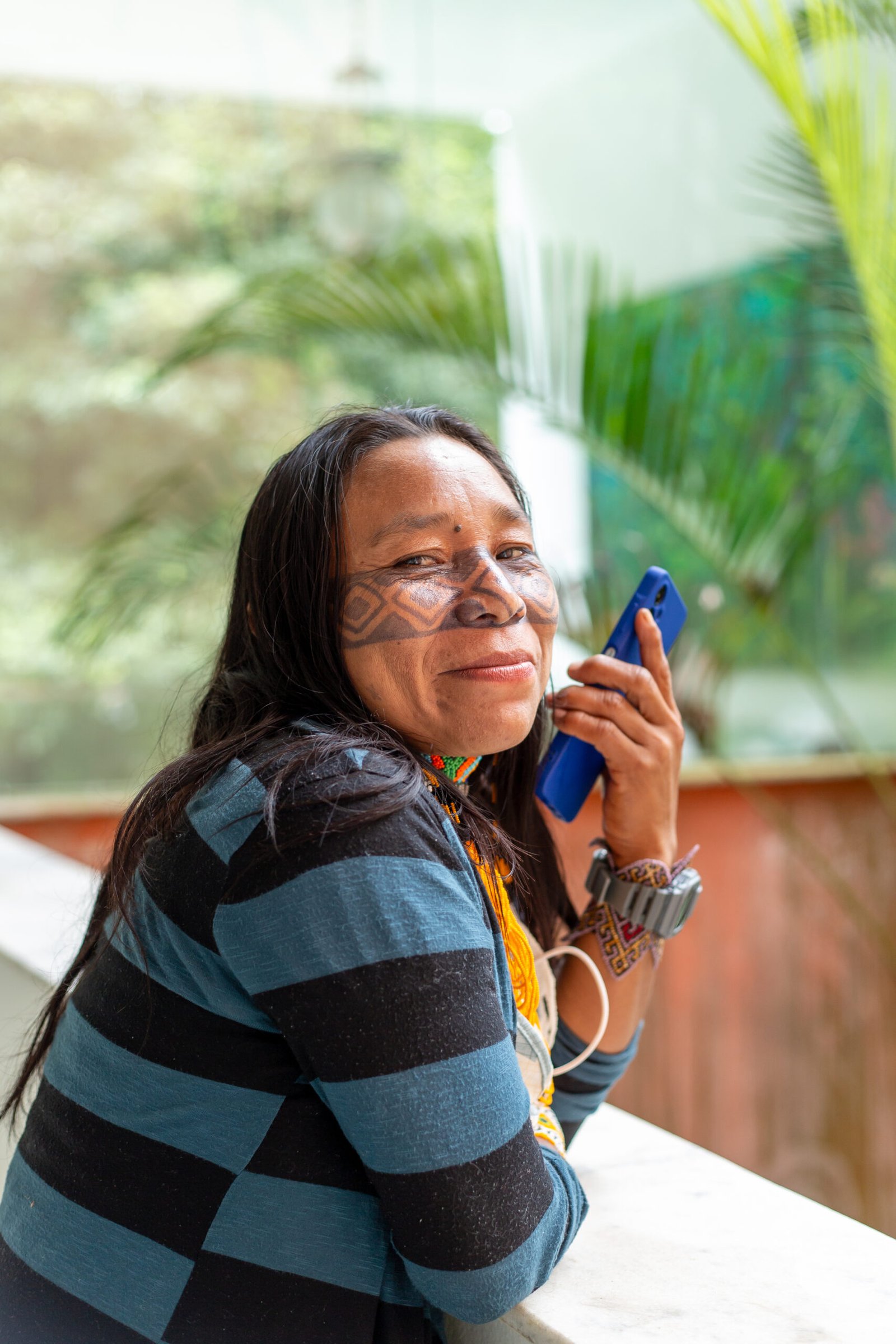
Ayani Huni Kuin (1988, Kaxinawá Indigenous Land of the Jordão River, Brazilian State of Acre) is an artist and mother. She works across a variety of artistic languages, such as painting, drawing, weaving, and beadwork. Ayani first learned these practices from her mother during childhood and now passes on artistic knowledge to her children. In addition to creating artworks within her territory, at the Coração da Floresta Village – Huni Kuin Living School, Ayani also collaborates with artists from other communities in the Jordão River territory.

SHUBU HIWEA
Huni Kuï Living School
The Shubu Hiwea Living School is a dream of the pajé DUA BUSË. He lives with his family in the Indigenous village Coração da Floresta [Heart of the Forest], on the Upper Jordan River. Dua Busë has deep knowledge of the Huni Kuï culture – of stories, medicine, music and spirituality - and over the years he has passed on his knowledge to other pajés and apprentices. In his village, he has created a large garden, which he has named Parque União da Medicina [Medicine Union Park], where the traditional medicine of his people is cultivated, studied and practiced.

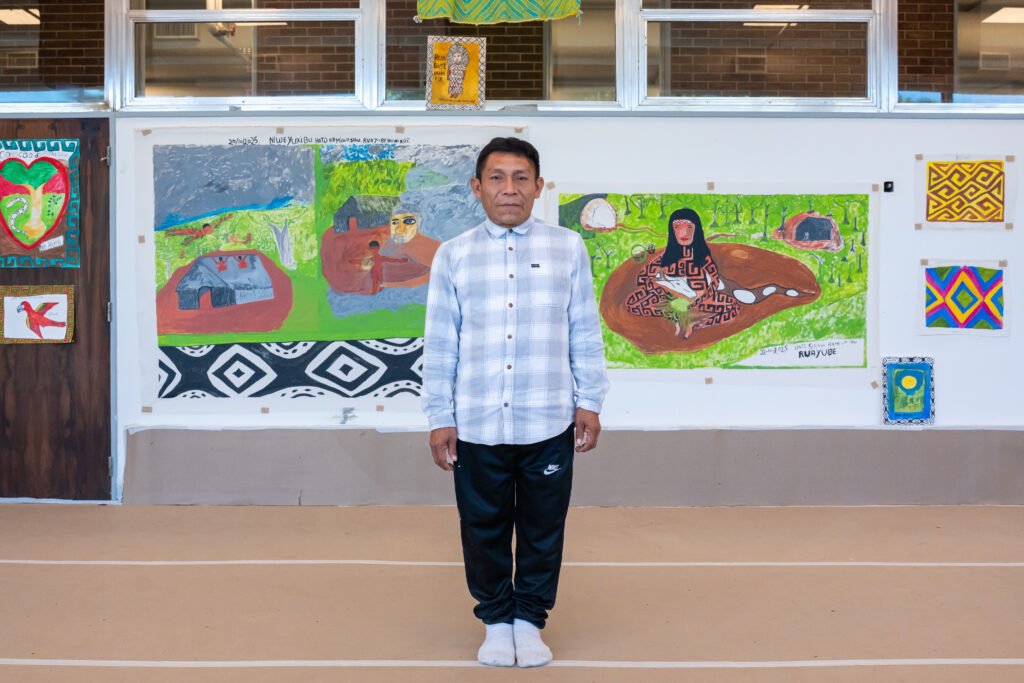
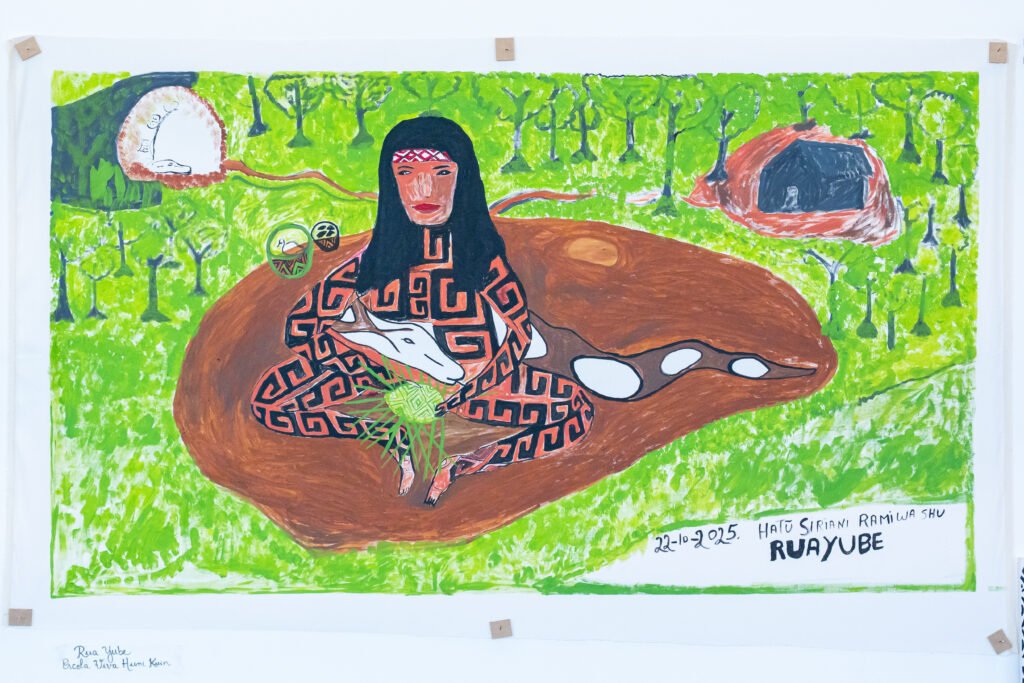
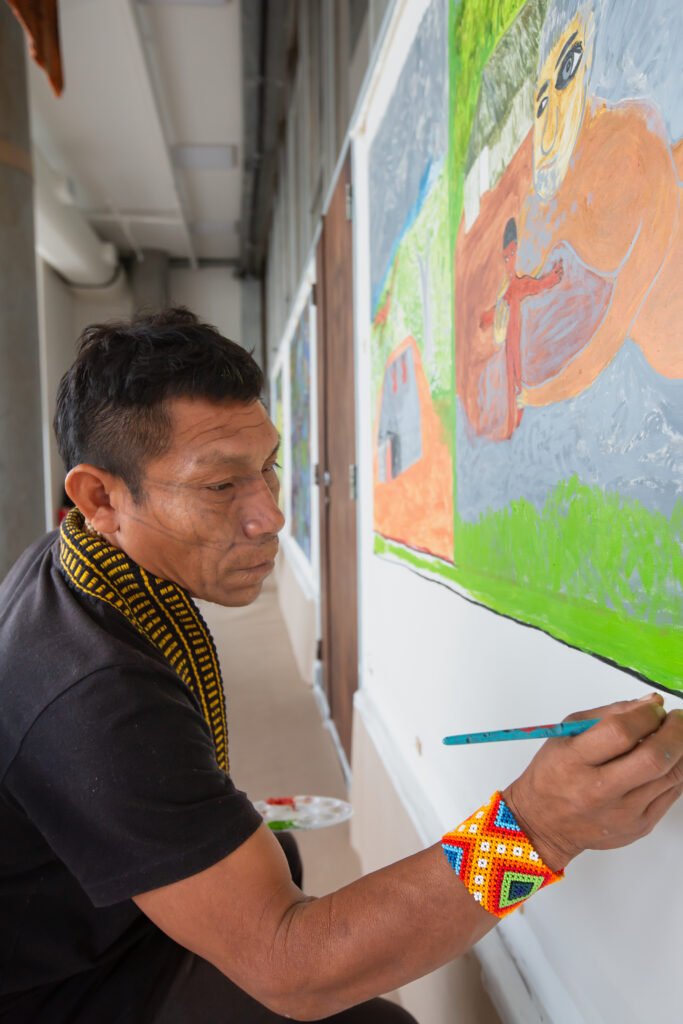
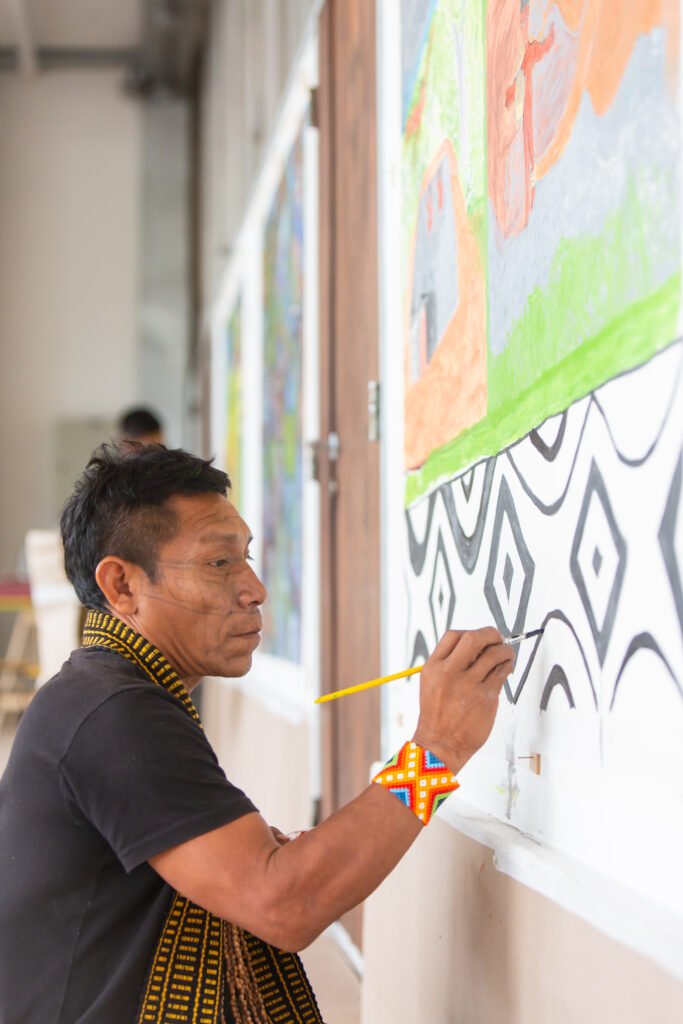
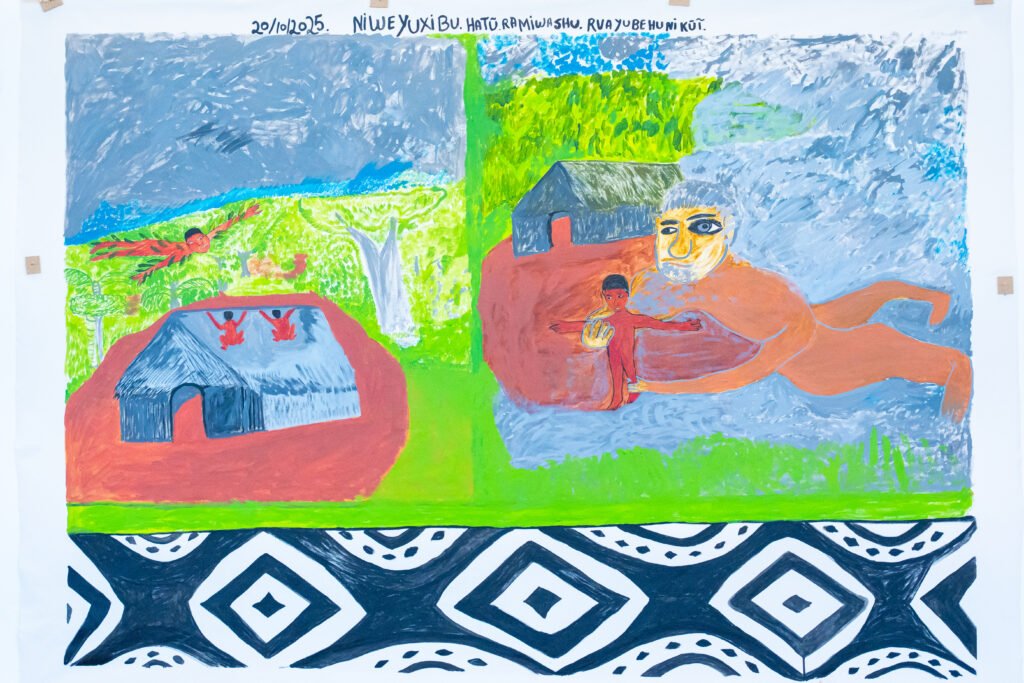
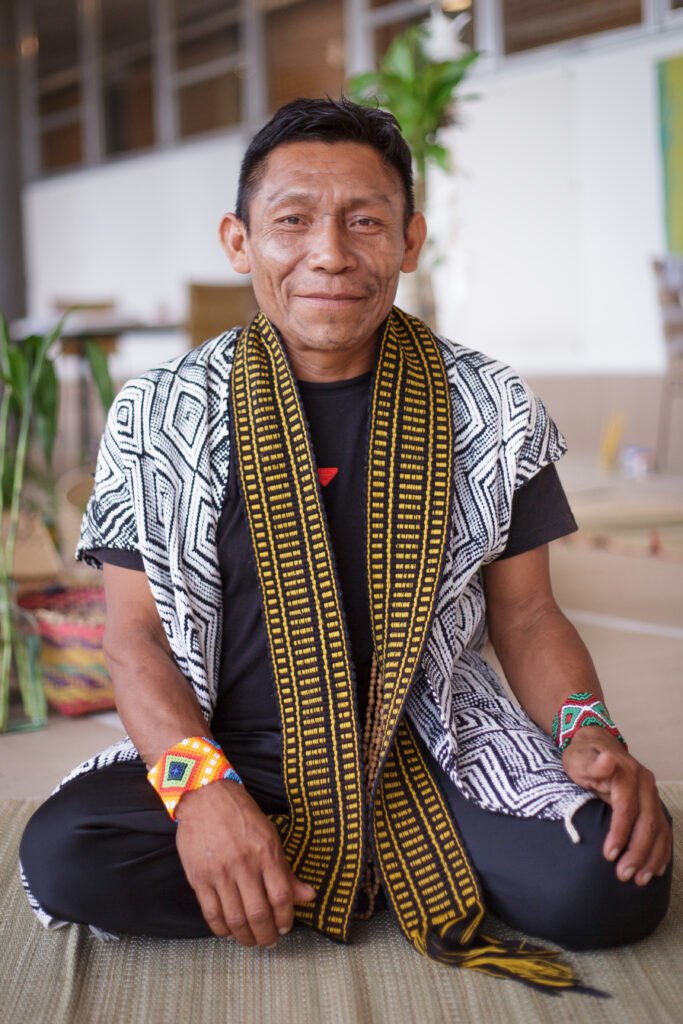
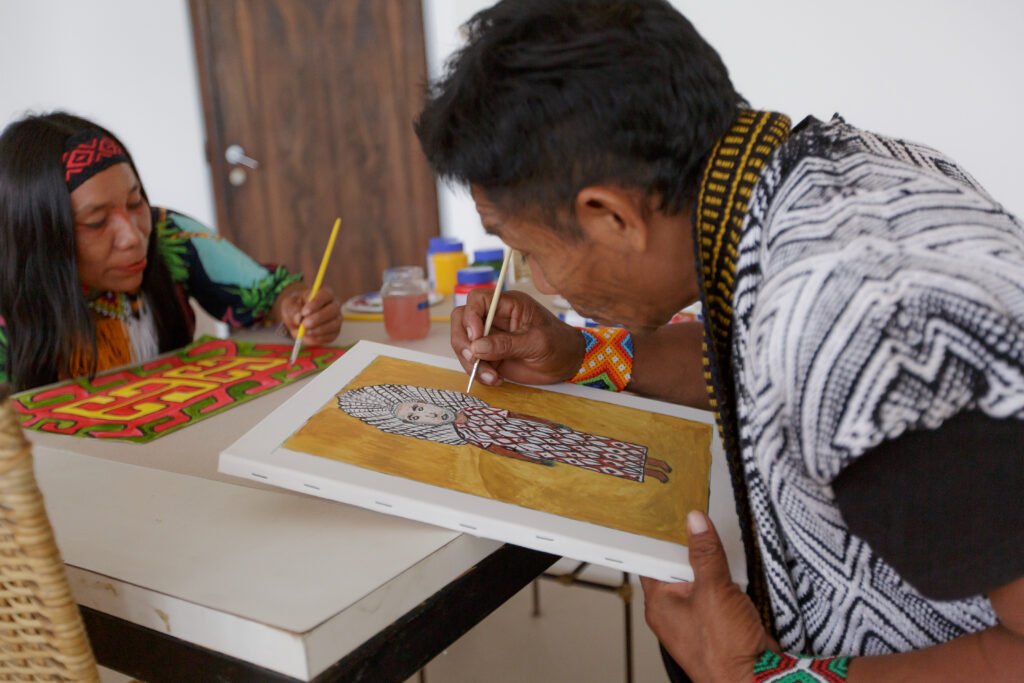
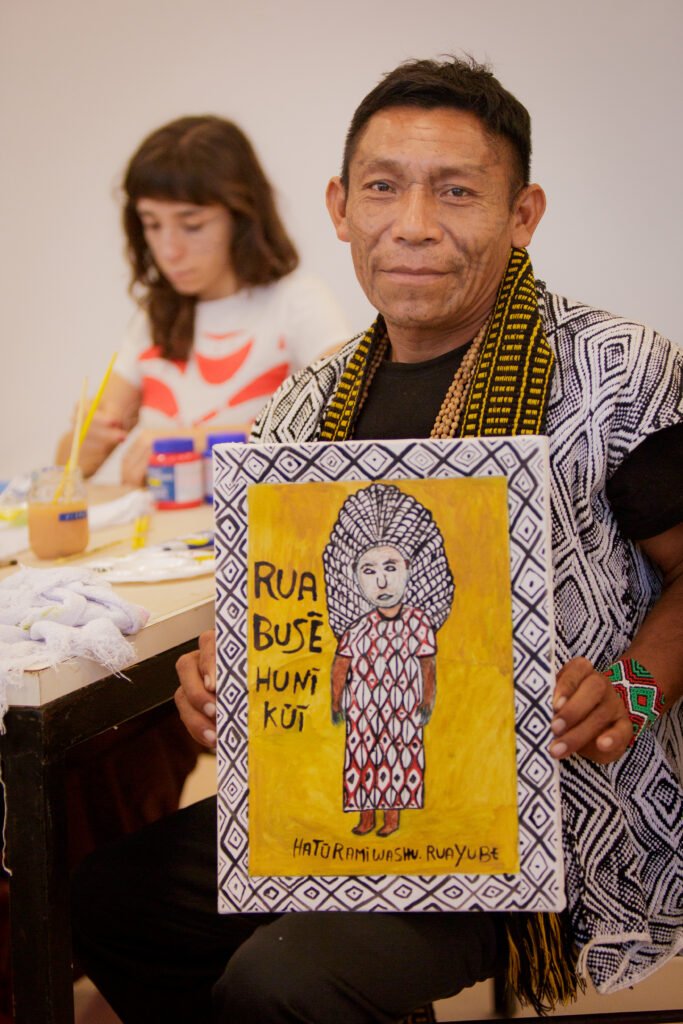
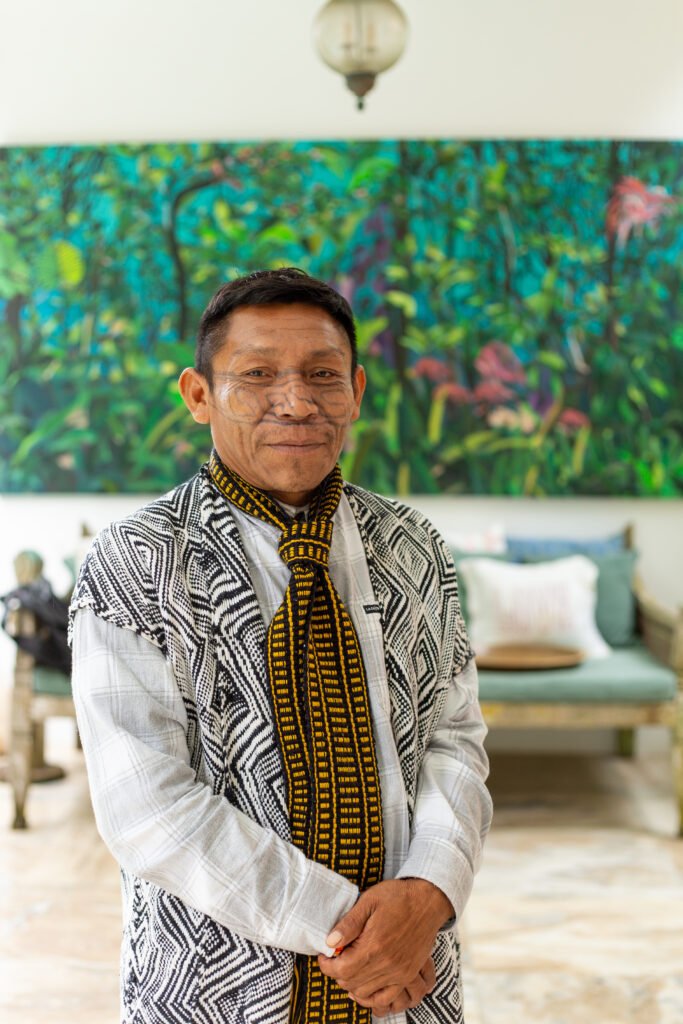
Rua Yube Huni Kuï
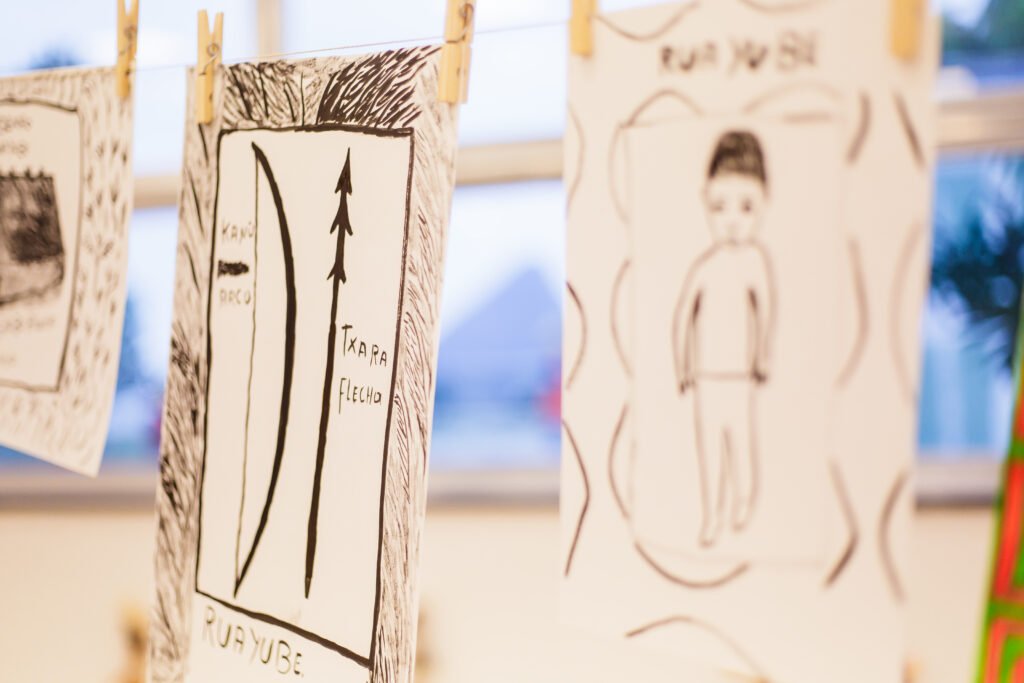
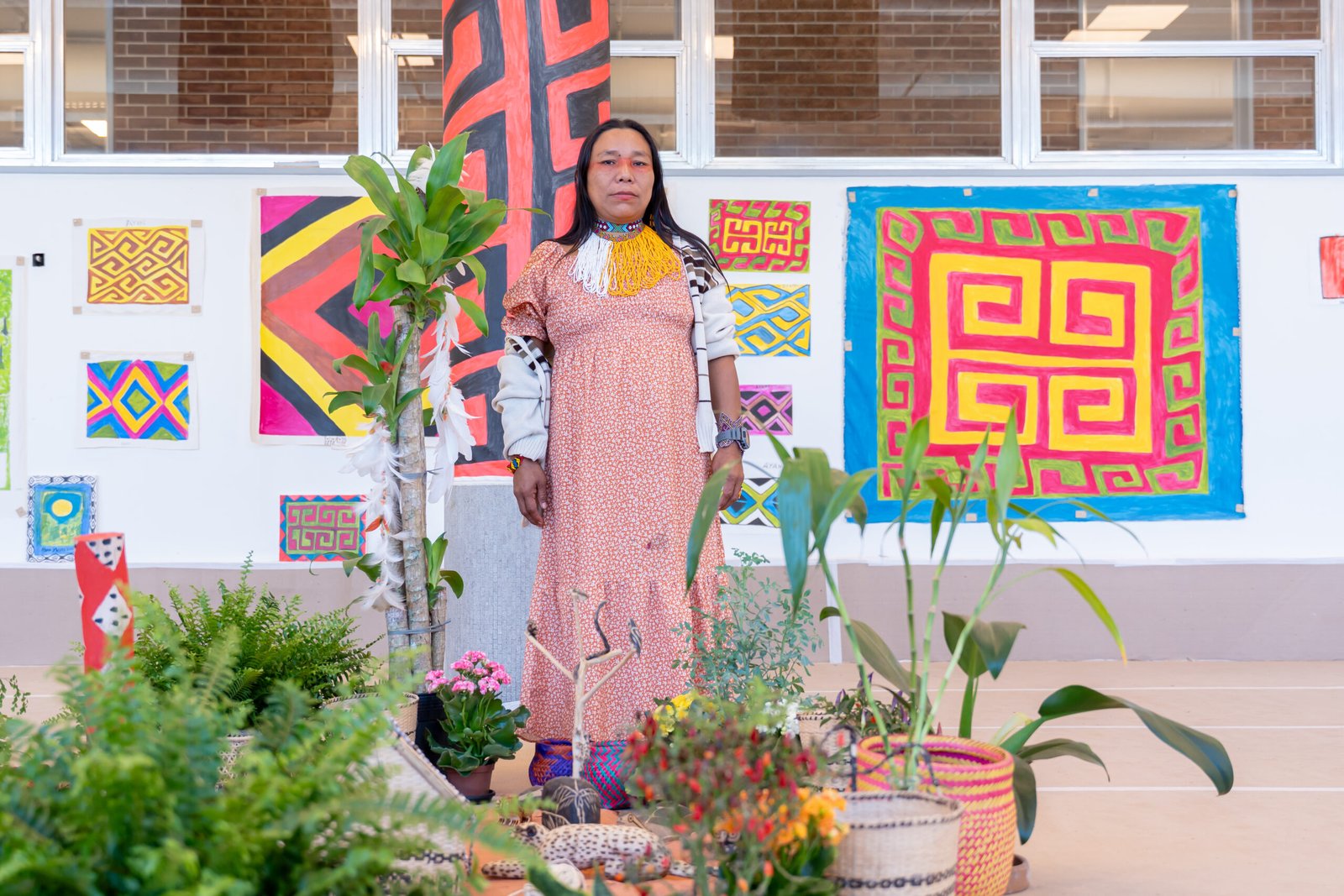
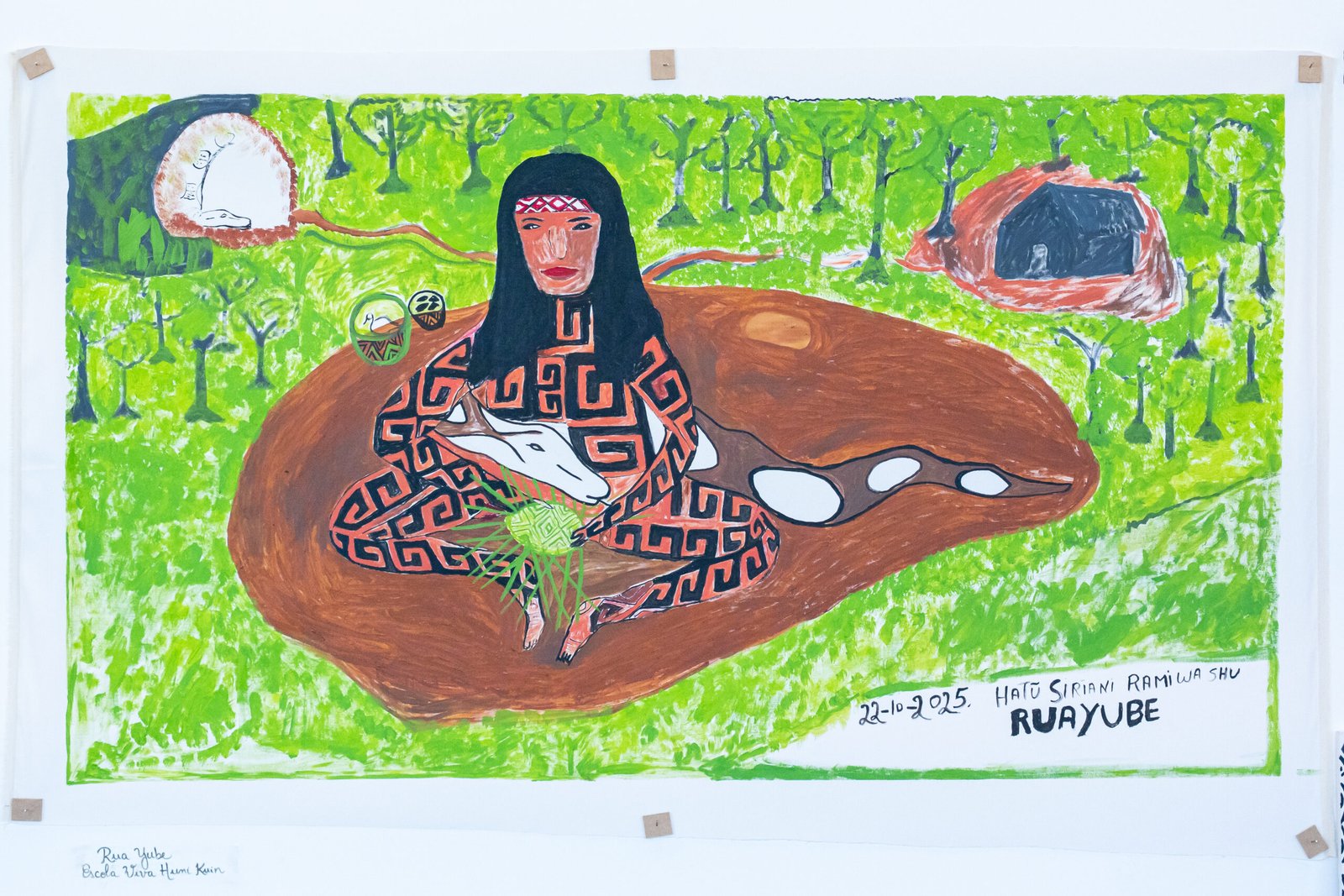
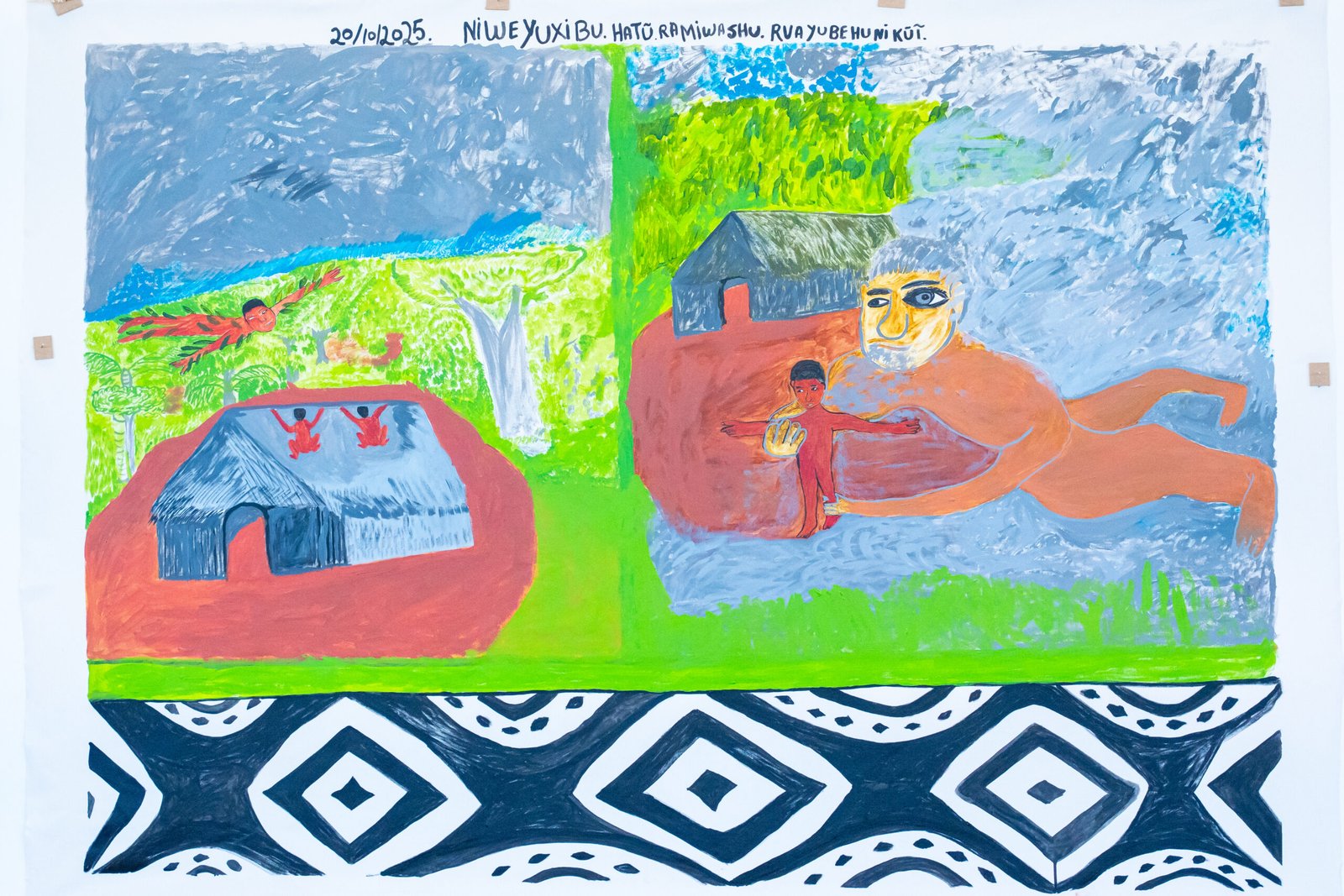
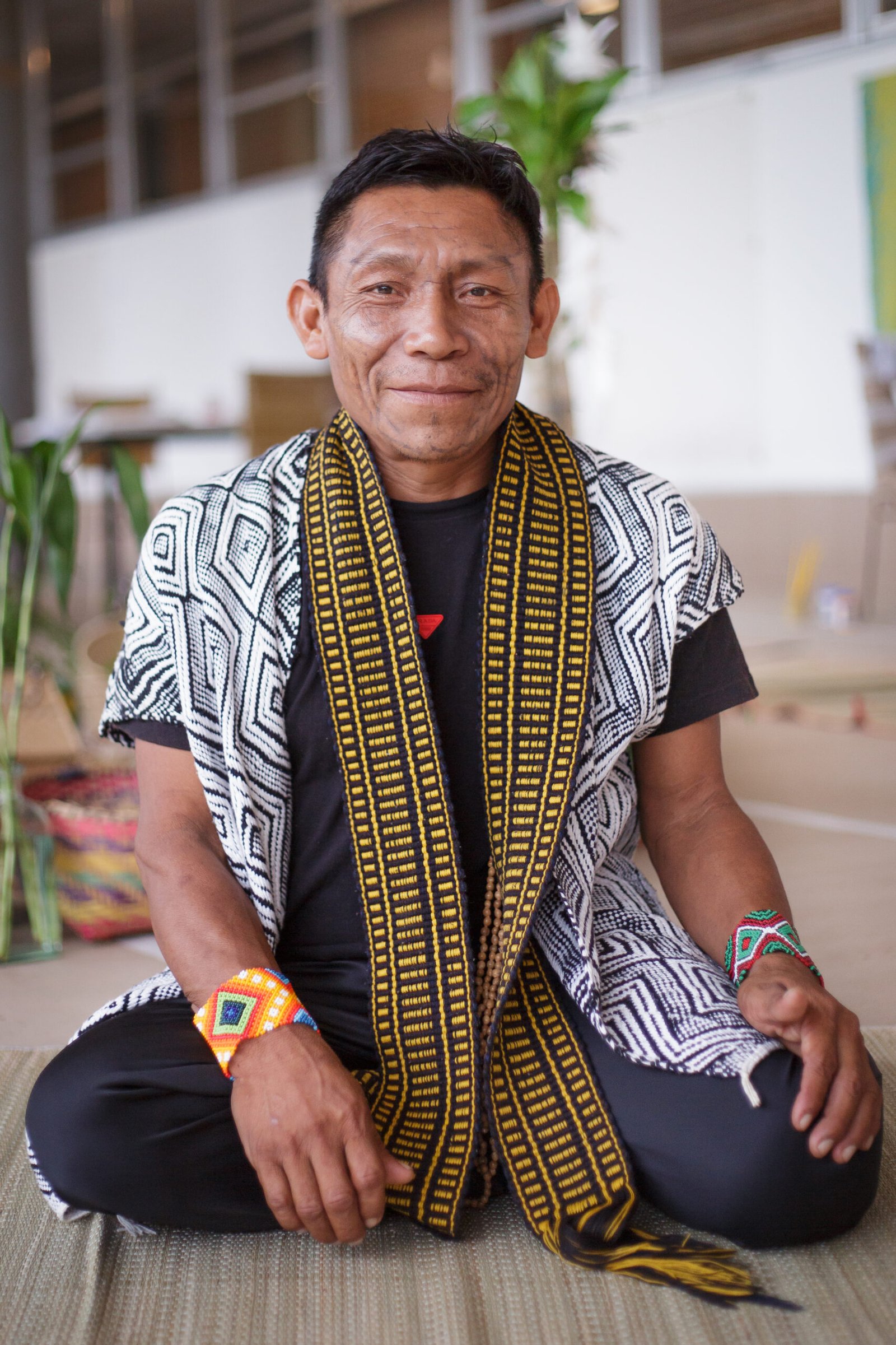
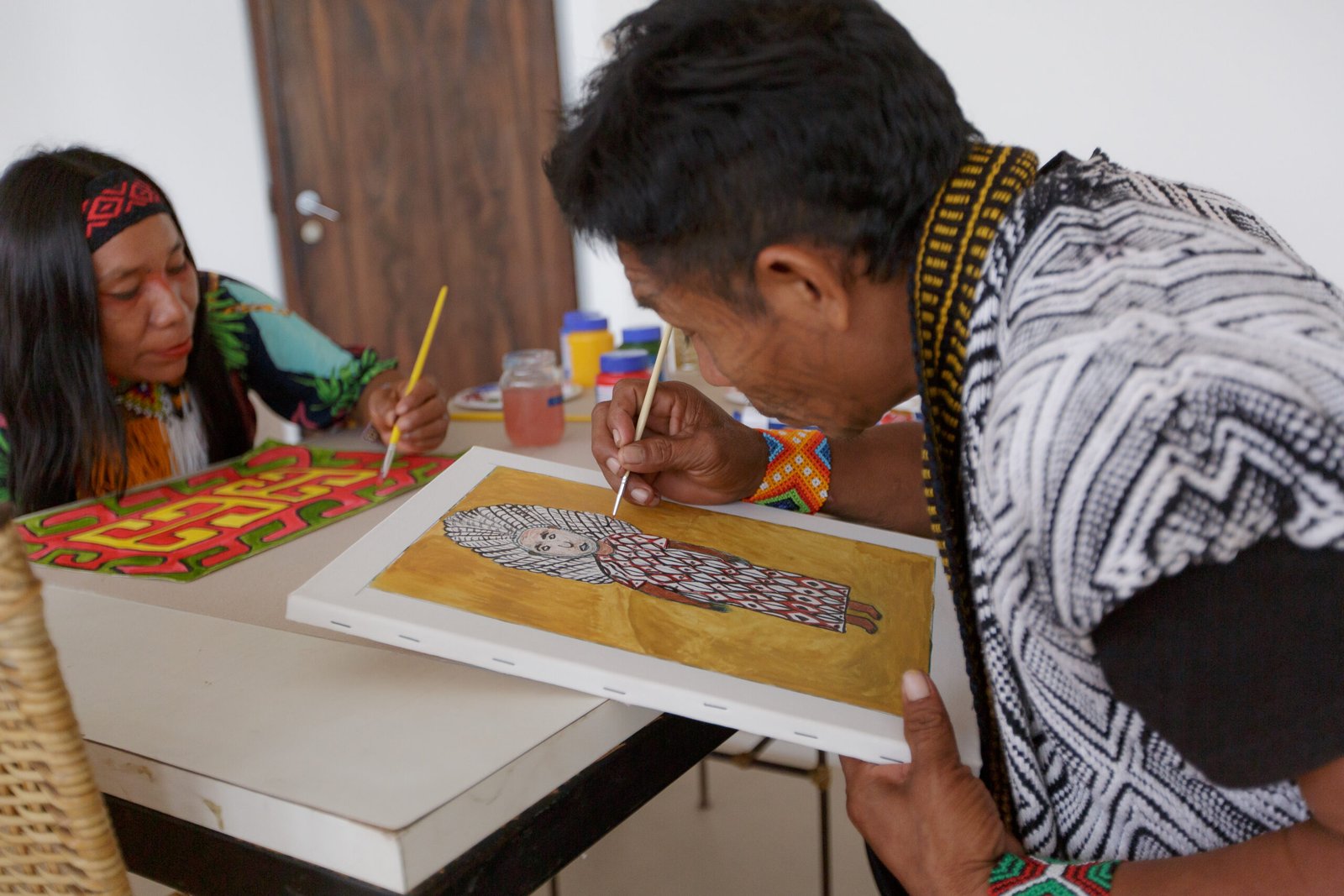
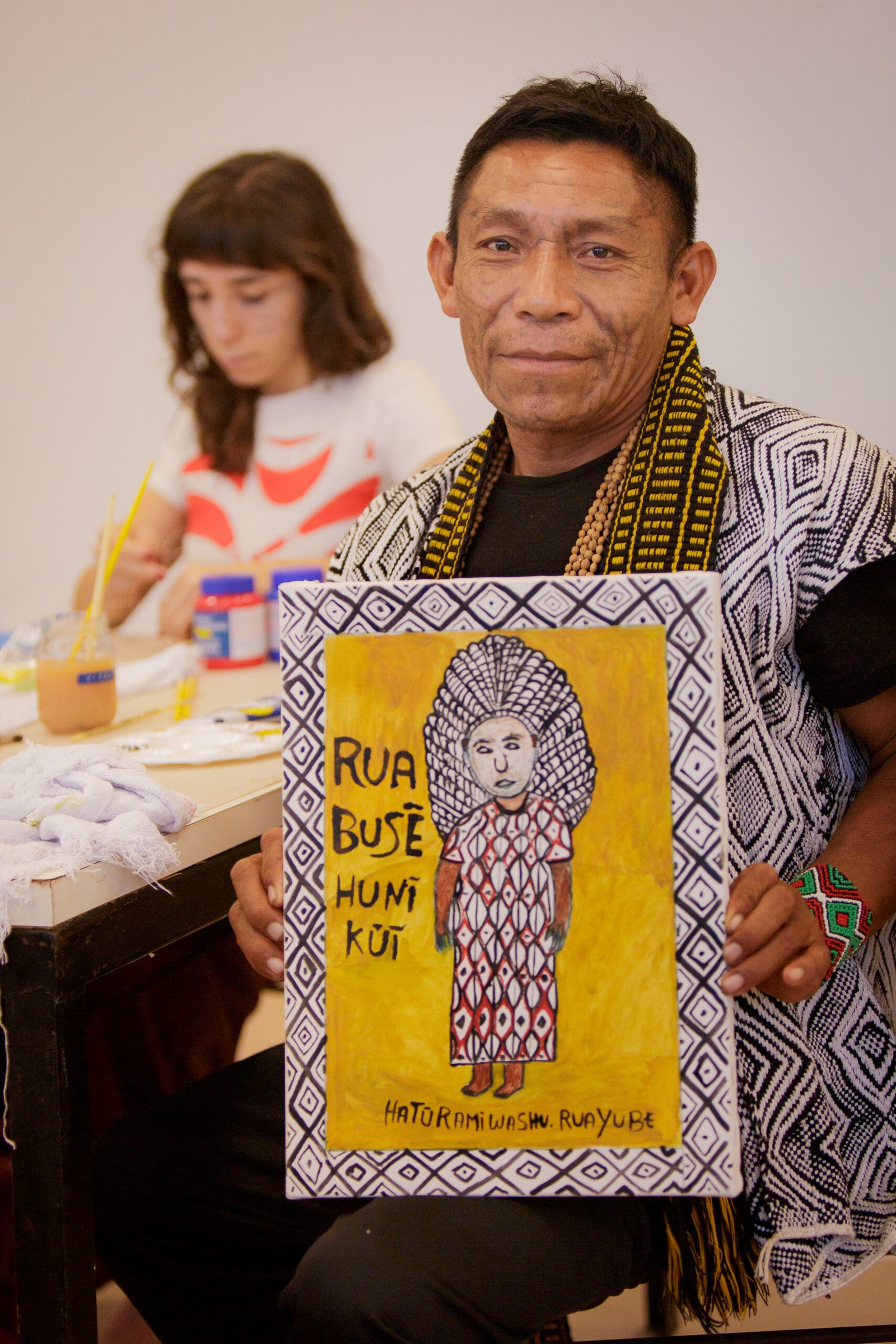
Rua Yube Huni Kuin (1976, Kaxinawá Indigenous Land of the Jordão River, Brazilian State of Acre) is an artist, father of 9 children, and teacher in the Coração da Floresta Village, Acre. As an artist, he works with drawing, canvas painting, and body painting with the natural jenipapo dye, and he also sings in the traditional ceremonies of his people. As an educator, he currently works with 26 children in the village school, teaching history, music, and traditional culture in the Hatxa Kuin language. He also accompanies and assists pajé Dua Busë, coordinator of the Huni Kuin Living School, in his activities with medicinal plants and the training of young people within the territory. hatxa kuinHe also supports and assists the pajé [shaman] Dua Busë, coordinator of the Huni Kuin Living School, in his work with medicinal plants and in training young people within their territory.
SHUBU HIWEA
Huni Kuï Living School
The Shubu Hiwea Living School is a dream of the pajé DUA BUSË. He lives with his family in the Indigenous village Coração da Floresta [Heart of the Forest], on the Upper Jordan River. Dua Busë has deep knowledge of the Huni Kuï culture – of stories, medicine, music and spirituality - and over the years he has passed on his knowledge to other pajés and apprentices. In his village, he has created a large garden, which he has named Parque União da Medicina [Medicine Union Park], where the traditional medicine of his people is cultivated, studied and practiced.
Isabelinha Maxakali
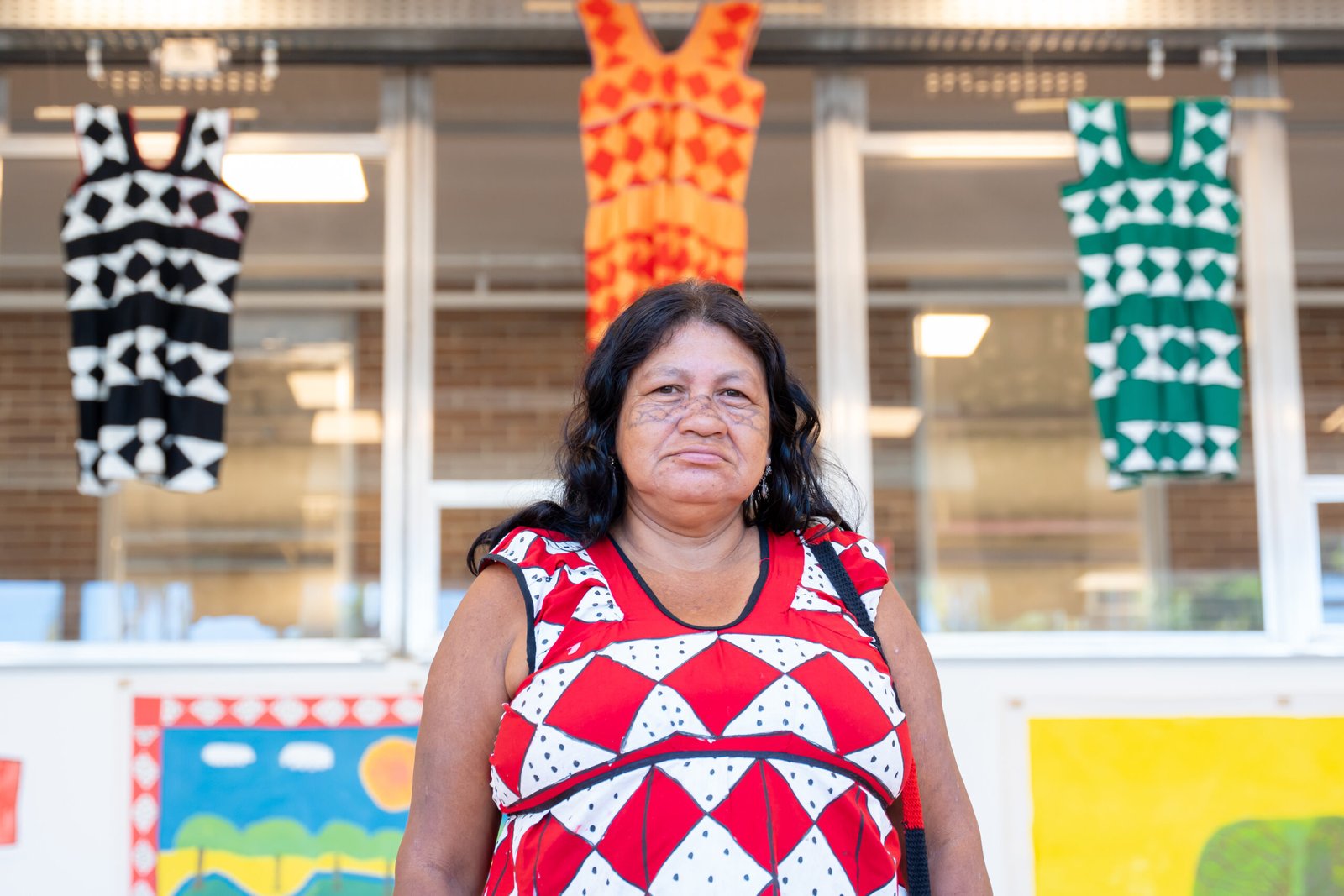
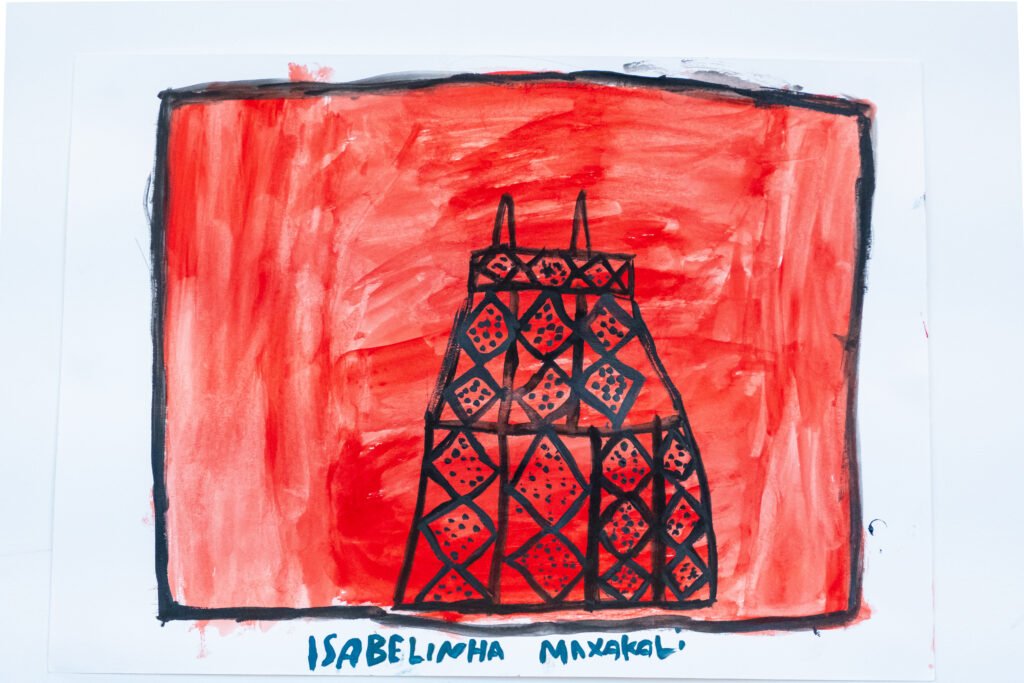
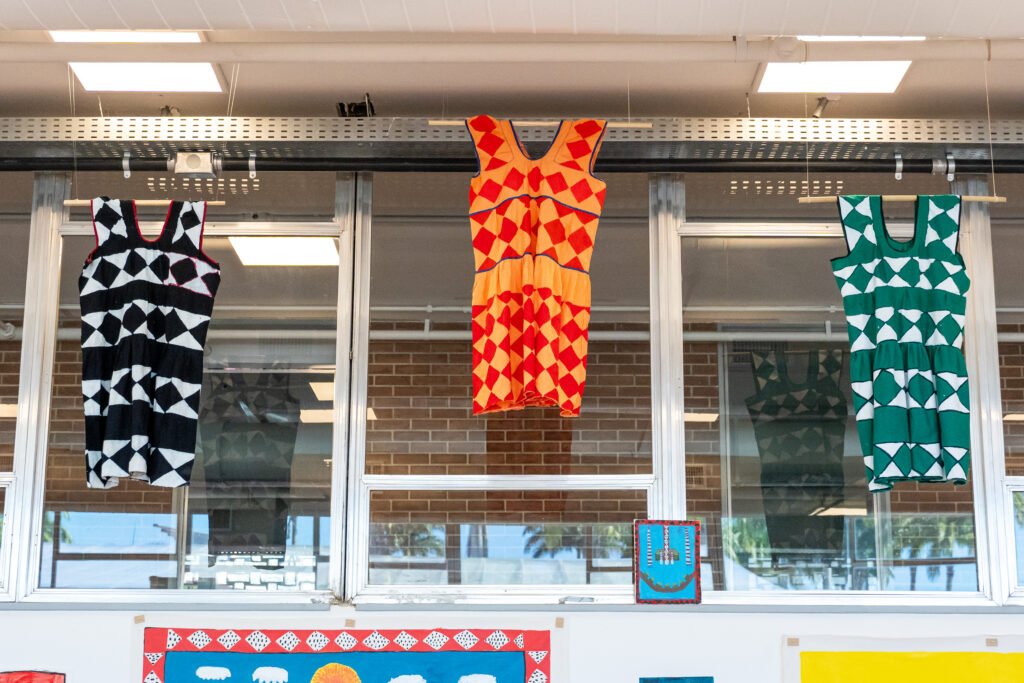
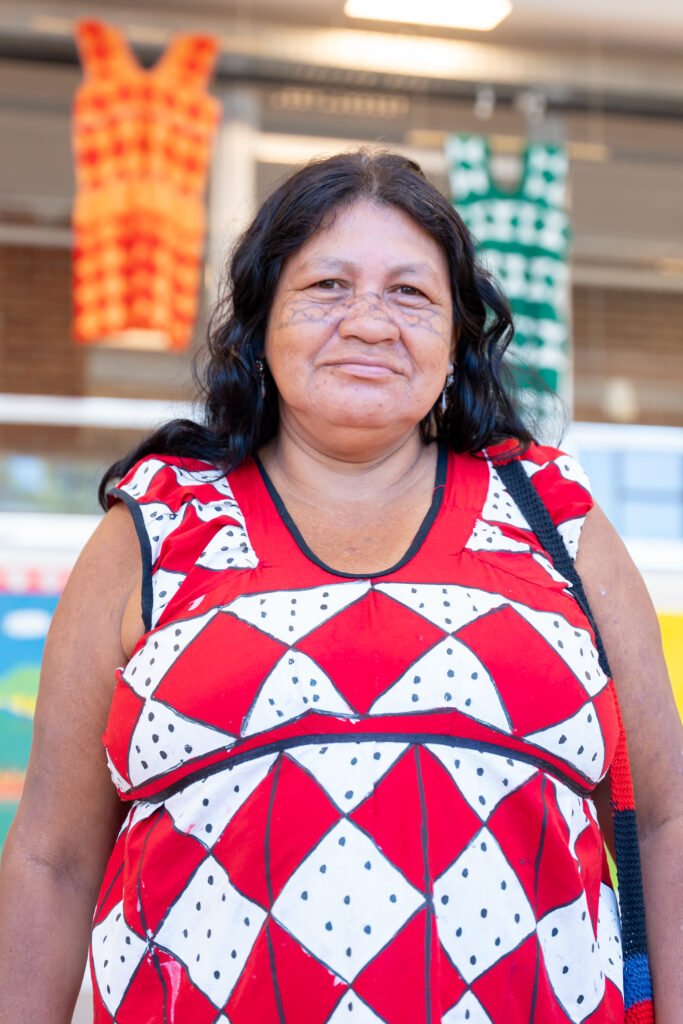
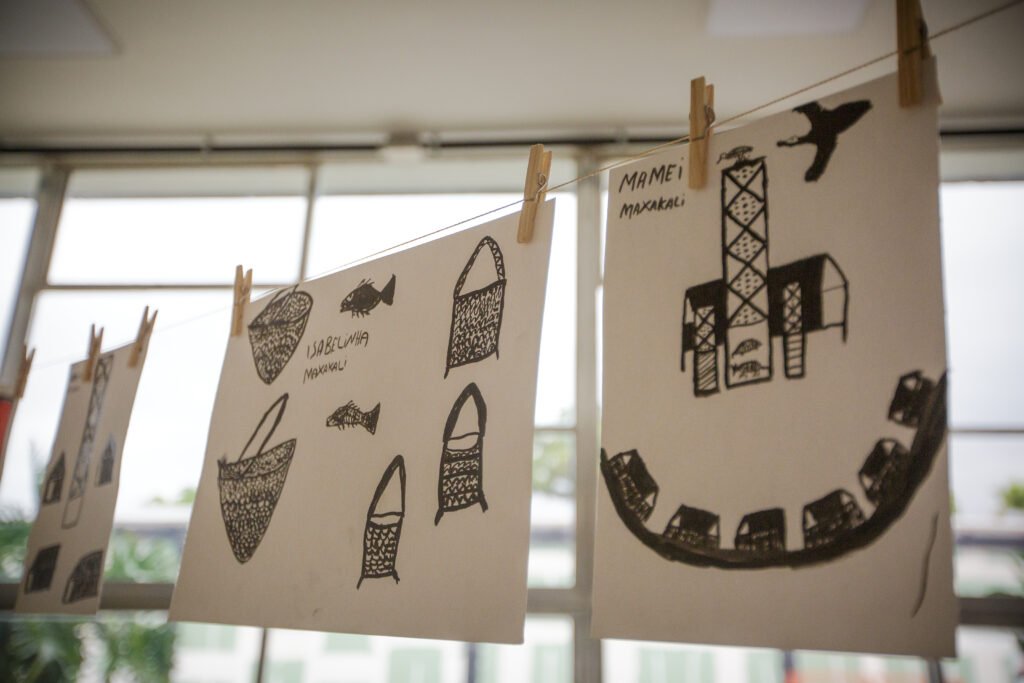
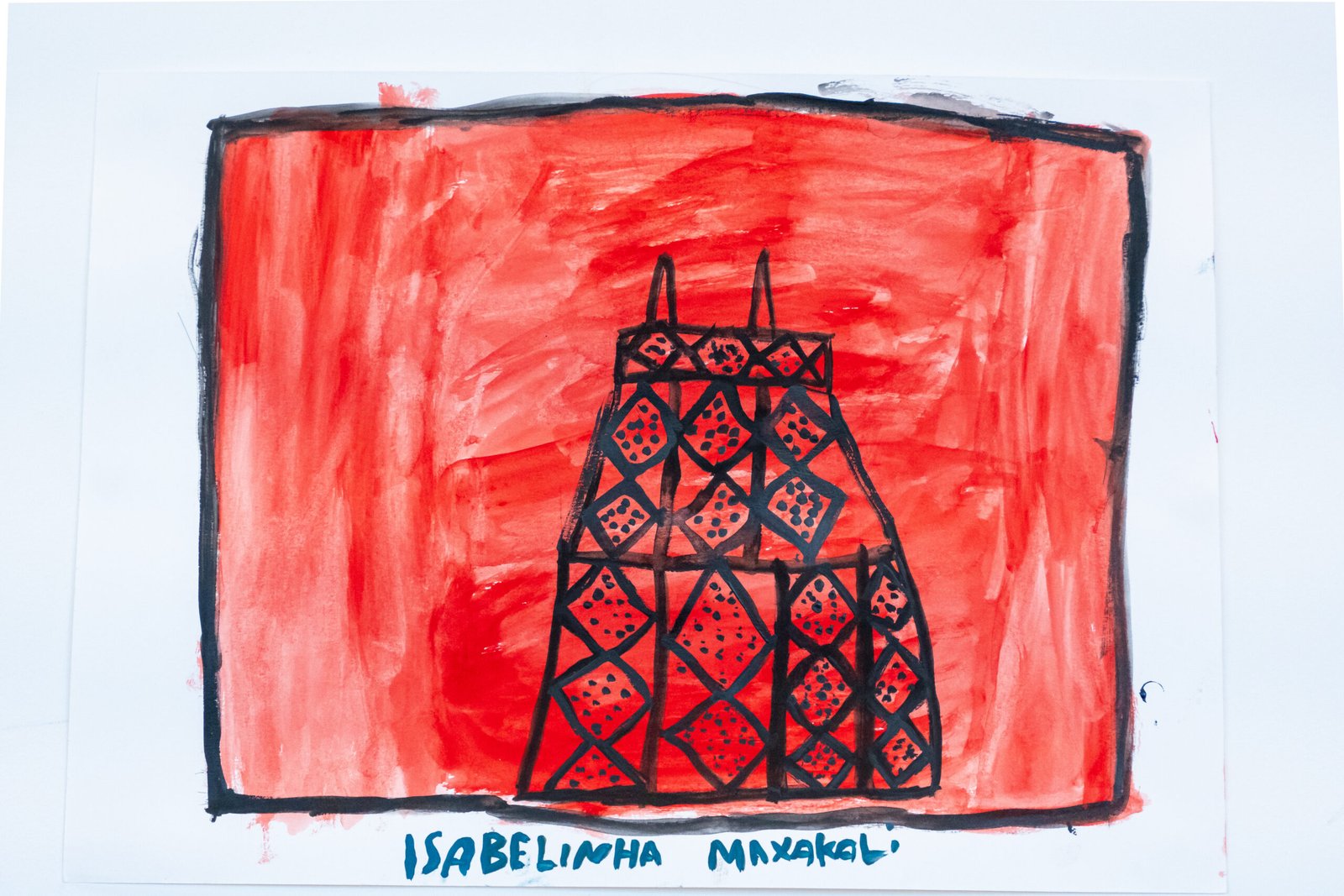
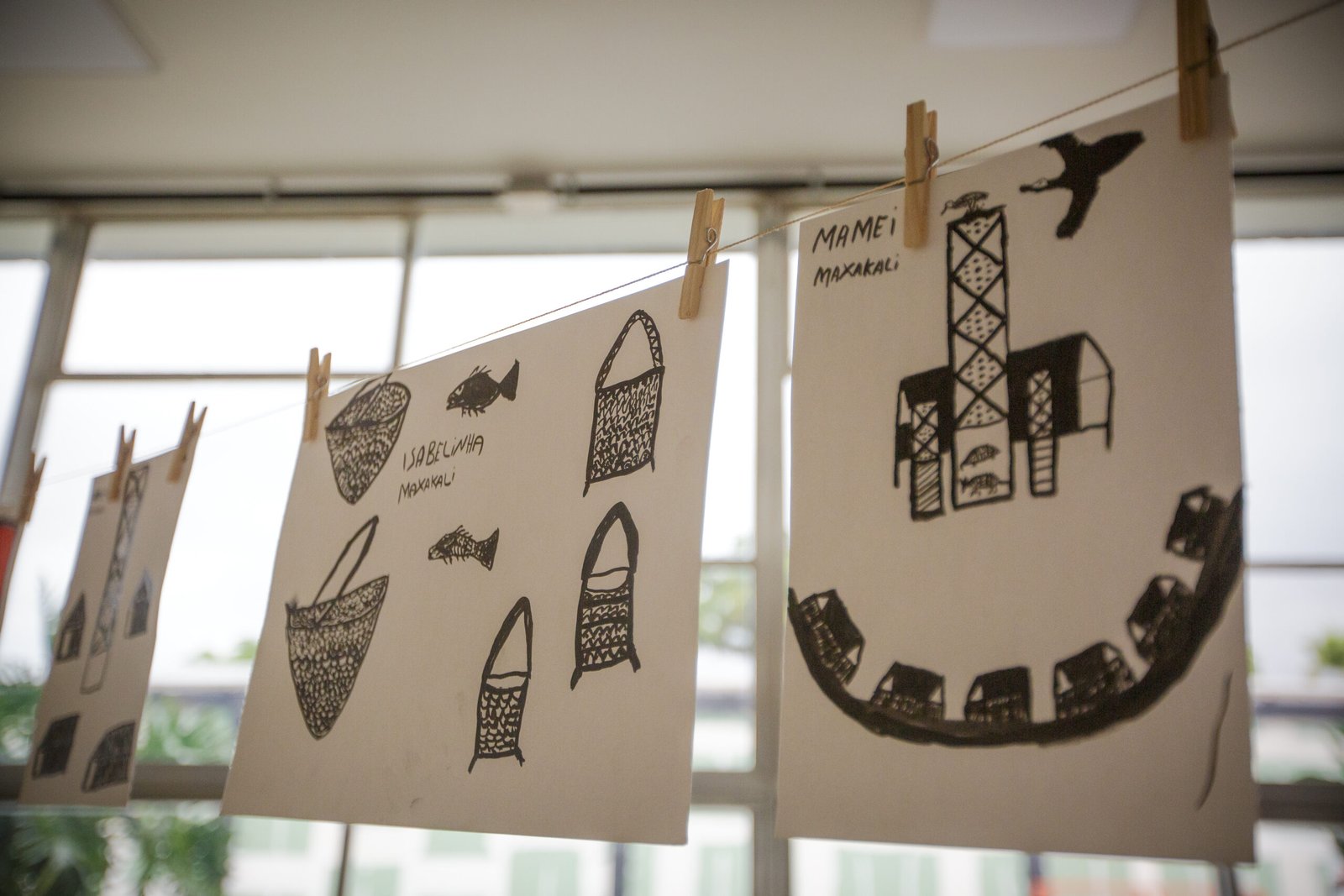
Isabelinha Maxakali (1980, Água Boa, Maxakali Indigenous Land – Minas Gerais) is an artist and mother of the yãmïyxop (spirit-peoples of the Atlantic Forest). She lives and works in the Forest School Village, where she plays a leading role in organizing healing rituals, collaborating daily with the elders and pajés to strengthen her people’s culture. She is a master artisan in the making of adornments and artifacts crafted from embaúba fiber and beads. In addition to her traditional artistic activities, in recent periods Isabelinha has expanded her practice by exploring the languages of drawing, painting, watercolour, and textile sculpture.

APNE IXKOT HÂMHIPAK
Maxakali Living School
The Maxakali are ancestral inhabitants of the forests that used to cover the north-east of Minas Gerais and the extreme south of Bahia. They are a people of approximately 3,000 who speak the Maxakali language, one of the last native languages of the region. The Forest School Village, Maxakali Living School, was created from the retaking of a federal property, located in the rural area of Teófilo Otoni (MG).

Mamei Maxakali
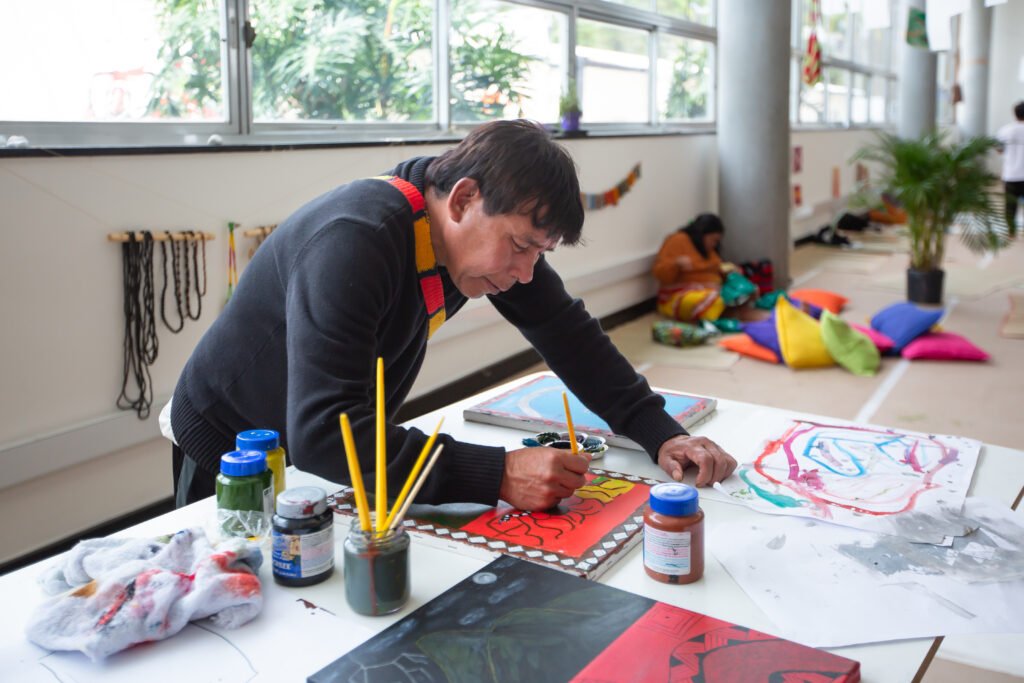
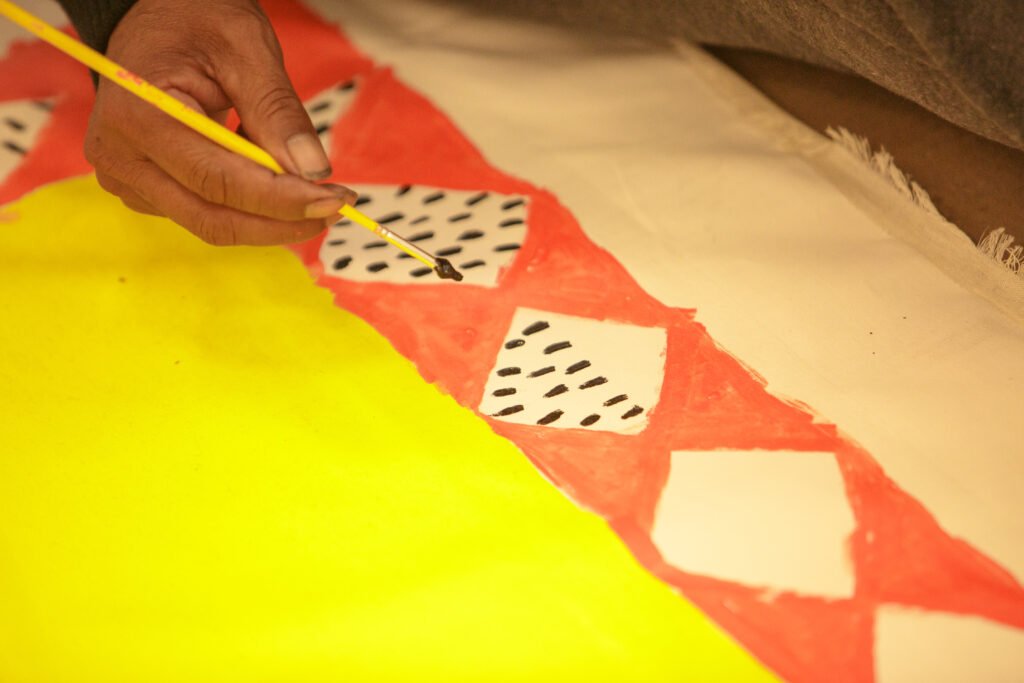
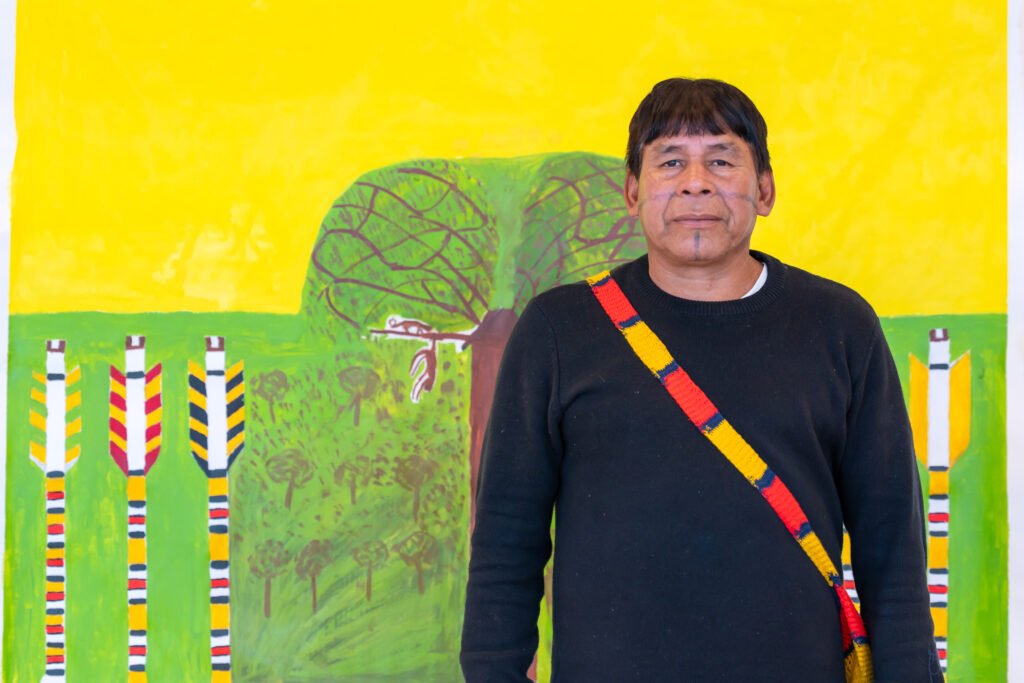
Mamei Maxakali (1980, Água Boa, Maxakali Indigenous Land – Minas Gerais) is a pajé, artist, and teacher. He lives and works in the Forest School Village, where he cares for one of the kuxex (ritual houses) and collaborates on the Maxakali reforestation project Hãmhi Terra Viva [Hãmhi Living Land]. Mamei stands out for his dedication to the struggle for the expansion of his people’s lands and the strengthening of traditional knowledge, especially the initiation rituals for Maxakali boys and the healing rituals carried out with the yãmïyxop (spirit-peoples of the Atlantic Forest). Recently, he has expanded his artistic practice from songs and body painting to also include works on canvas and drawings.
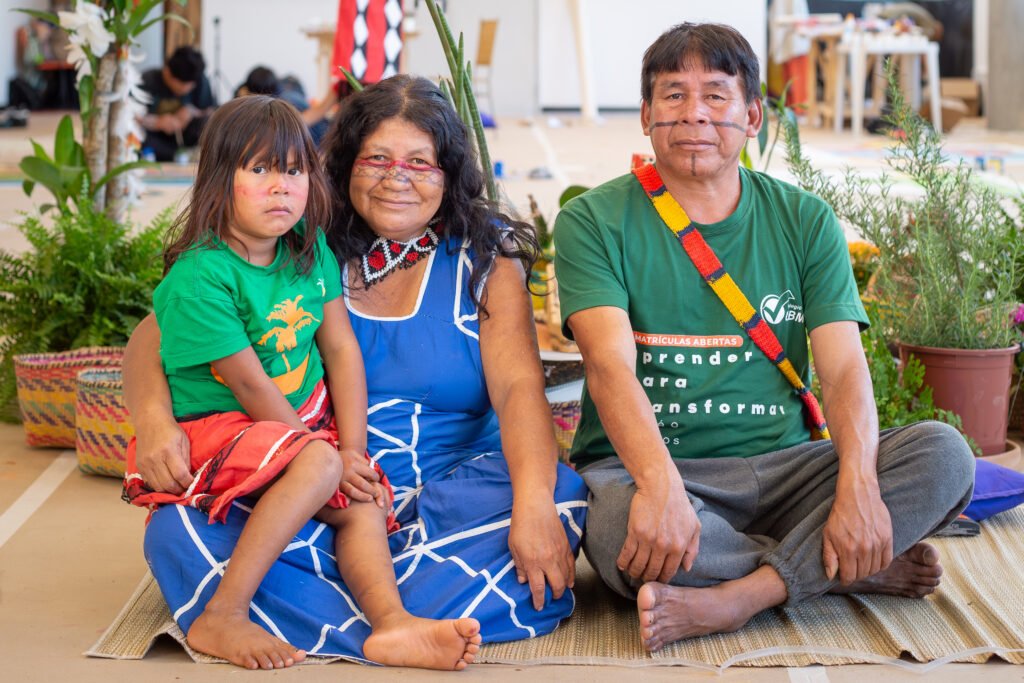
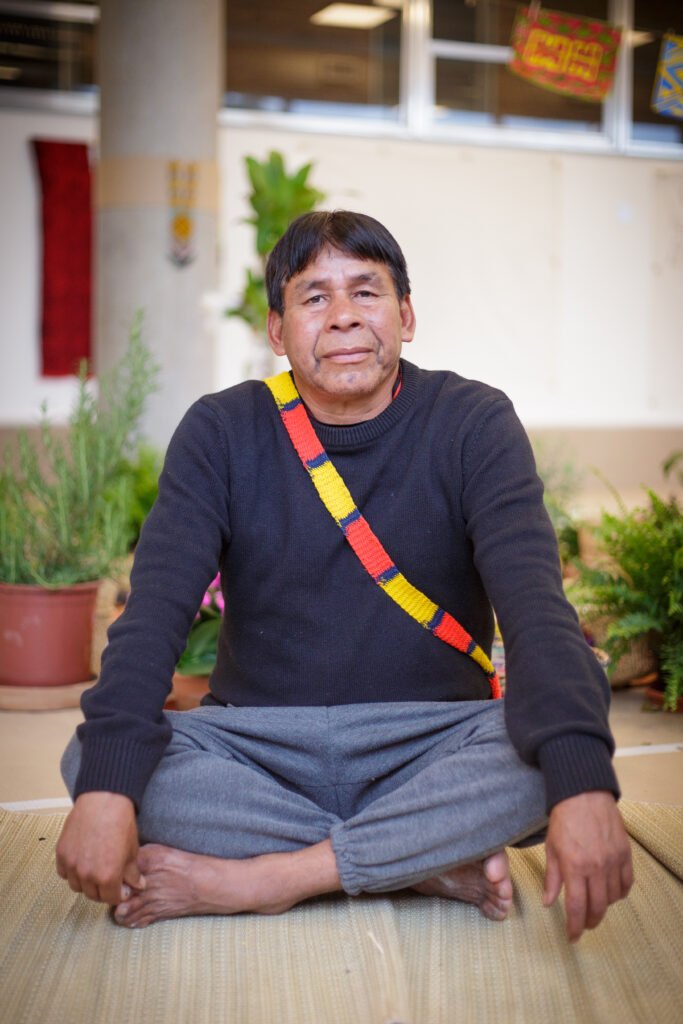
APNE IXKOT HÂMHIPAK
Maxakali Living School
The Maxakali are ancestral inhabitants of the forests that used to cover the north-east of Minas Gerais and the extreme south of Bahia. They are a people of approximately 3,000 who speak the Maxakali language, one of the last native languages of the region. The Forest School Village, Maxakali Living School, was created from the retaking of a federal property, located in the rural area of Teófilo Otoni (MG).

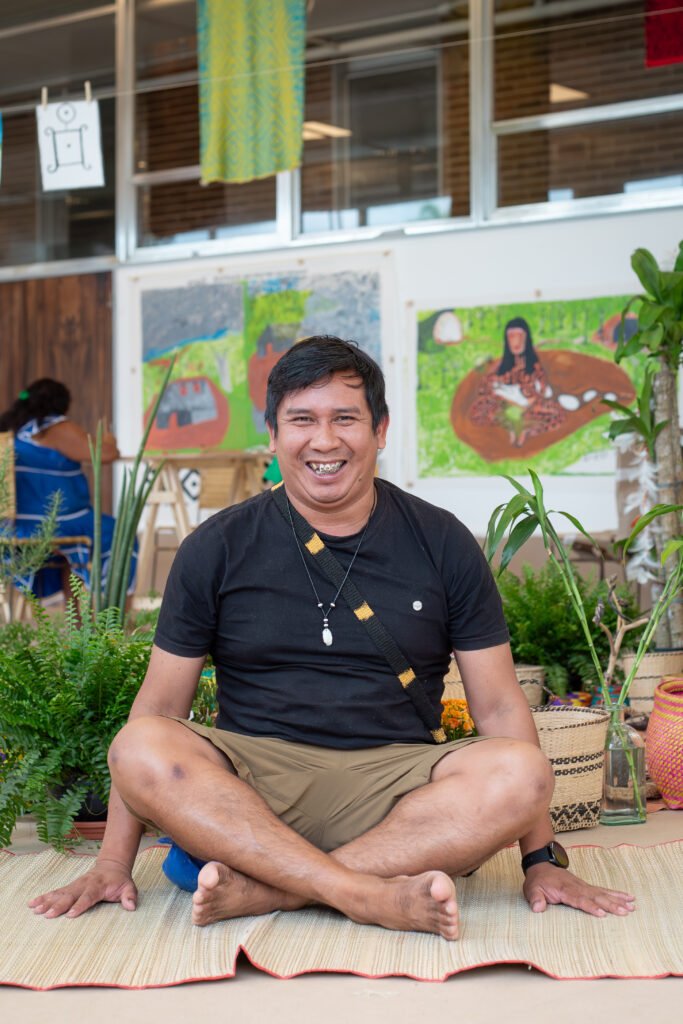
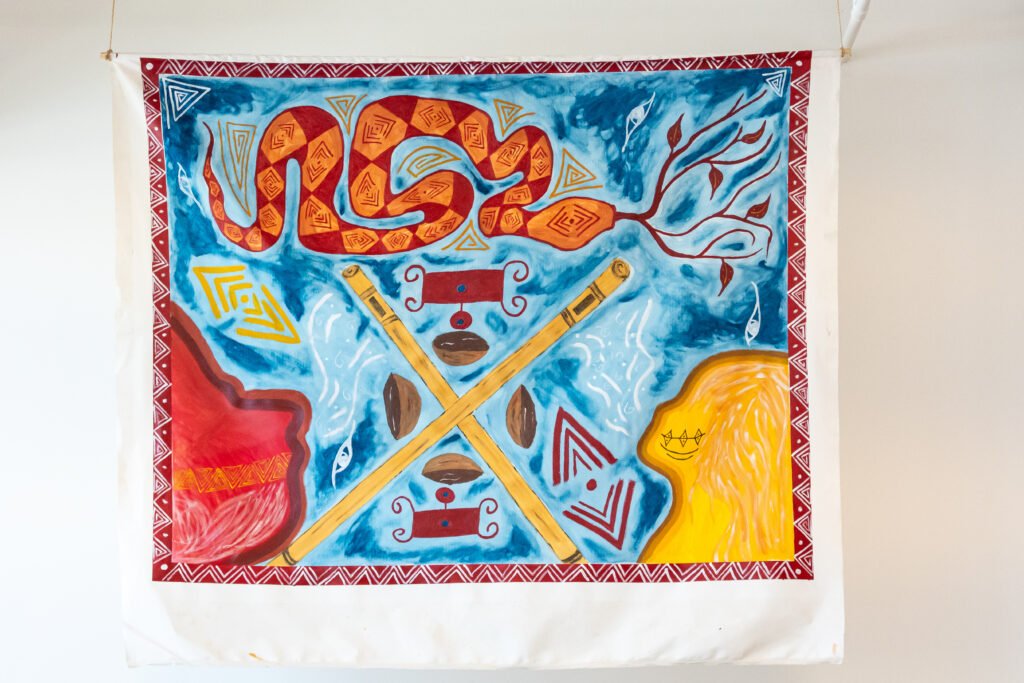
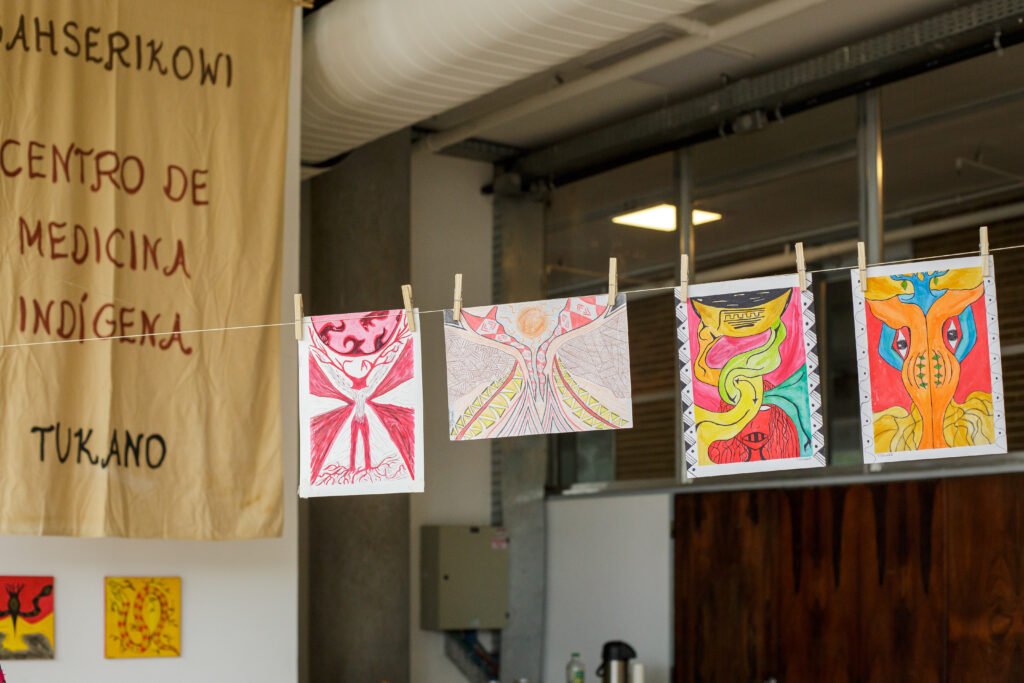
Ivan Tukano
Reality is not just one. For the Tukano people, existence is not limited to the visible world; there are other worlds that coexist with ours. My art and music are a direct record of these other dimensions. This is not a metaphor, but a representation of a fact. The Tukano worldview is the foundation for understanding and navigating these multiple realities.
Each visual and sound work I create results from direct observation, a documentation of what exists beyond what is perceived at first glance. My work serves as a map to these other worlds, a way to make tangible the complexity of reality.
Born in São Gabriel da Cachoeira, I am today one of the coordinators of the Bahserikowi Indigenous Medicine Center in Manaus, a space where this same worldview manifests through the practice of healing and the connection to our culture.
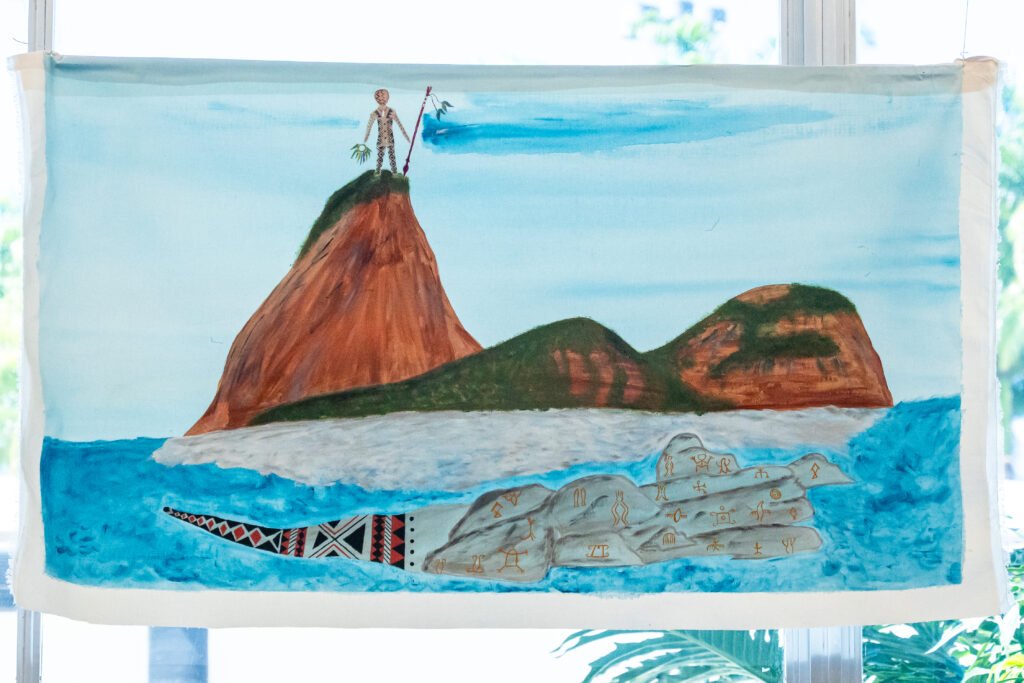
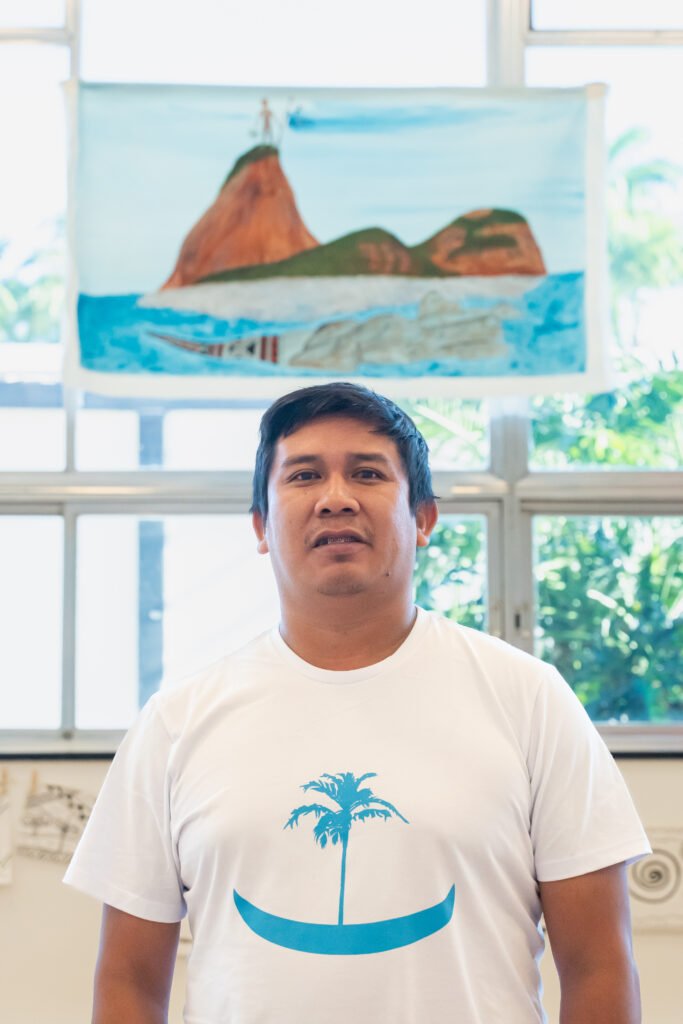

BAHSERIKOWI
Tukano-Desana-Tuyuka Living School
The Bahserikowi Indigenous Medicine Center is located in the city of Manaus, the capital of the state of Amazonas, and articulates relationships with various institutions, such as the Pan American Health Organization, the Brazilian Secretariat of Indigenous Health (SESAI), the Oswaldo Cruz Foundation (Fiocruz), and the Federal University of Amazonas (UFAM).
The kumuã specialists who consult at the Bahserikowi Indigenous Medicine Center come from the Yepamahsã (Tukano), Utãpirõ-porã (Tuyuka) and Umukori-mahsã (Desana) Indigenous communities of the Upper Tiquié River.

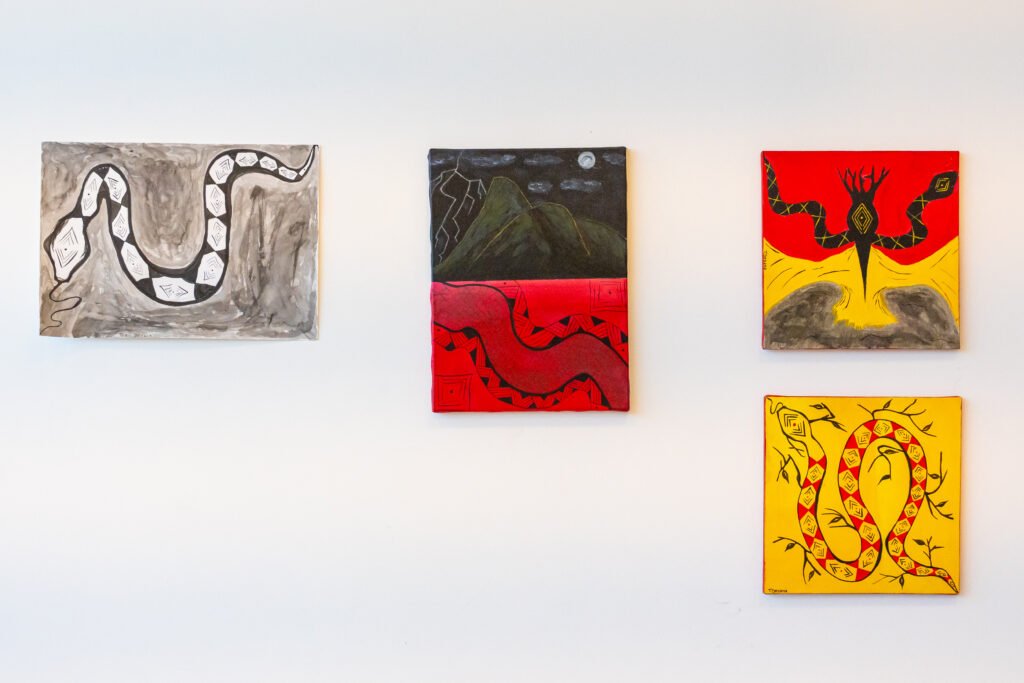
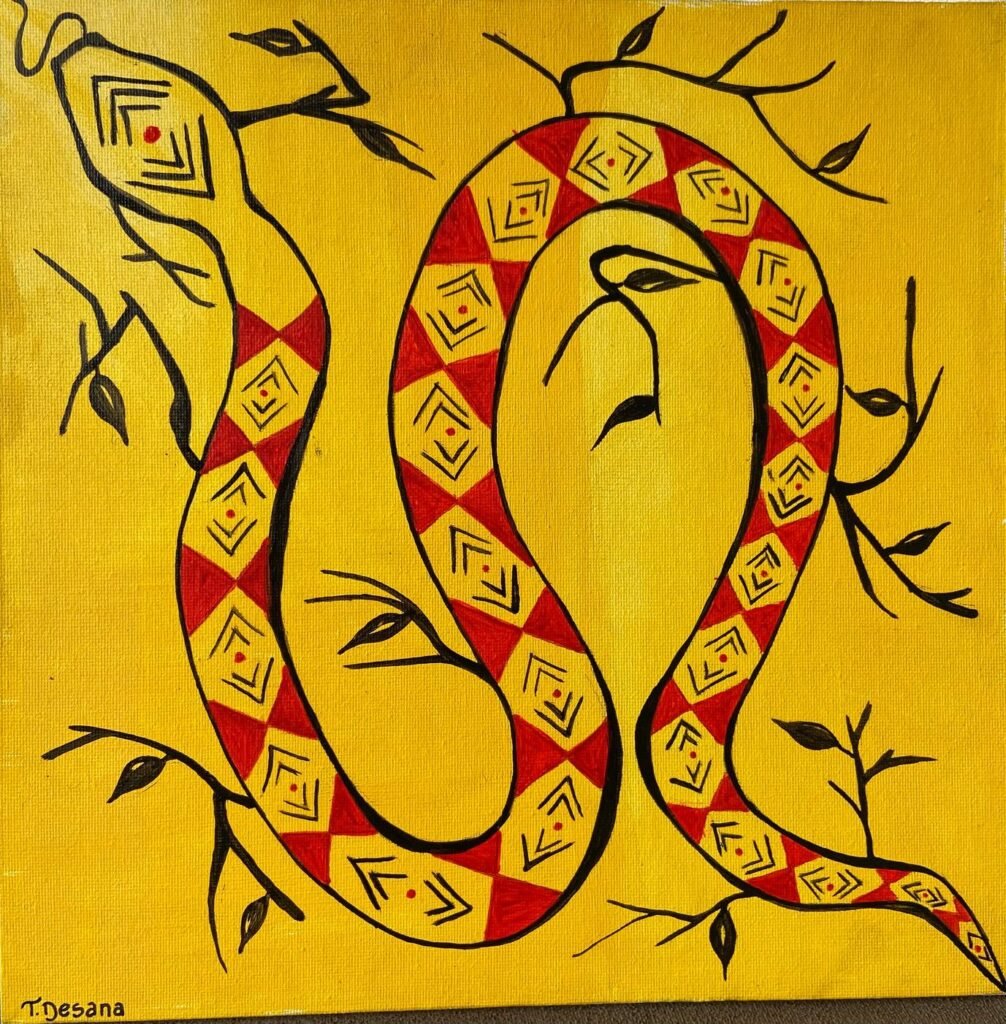
Thaís Desana
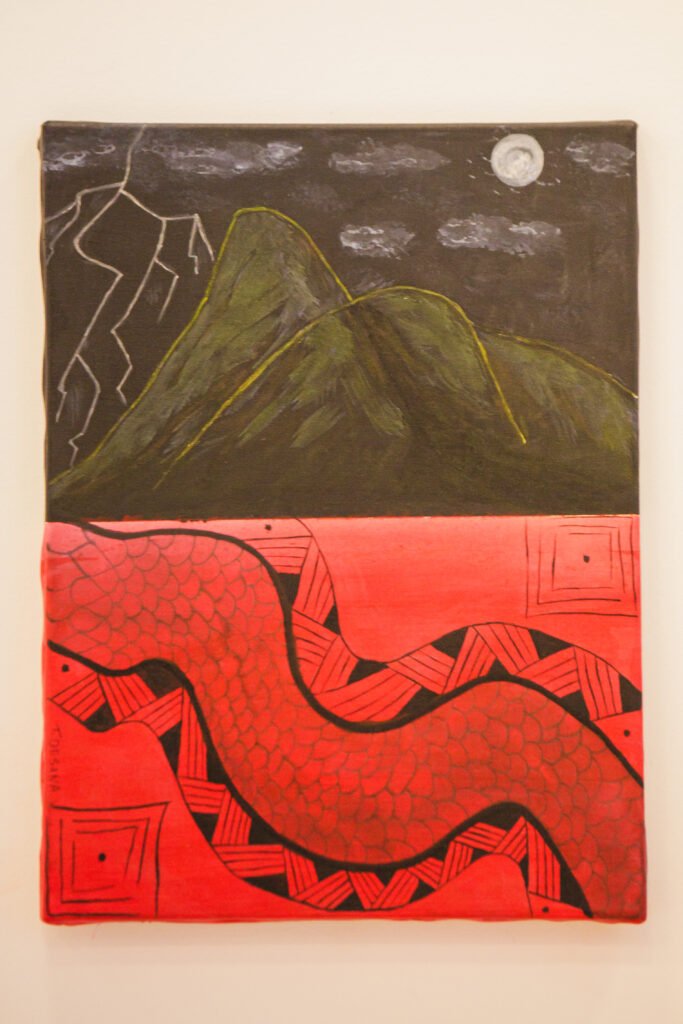
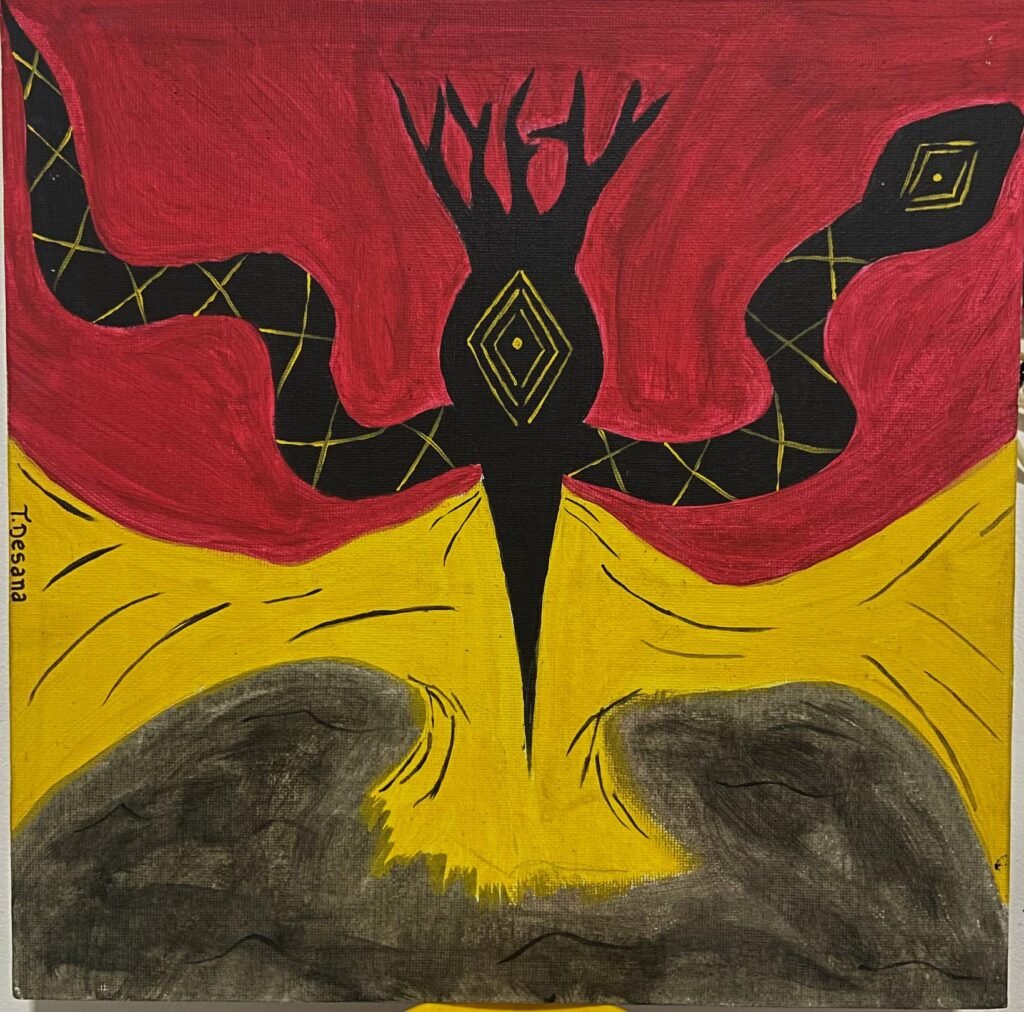
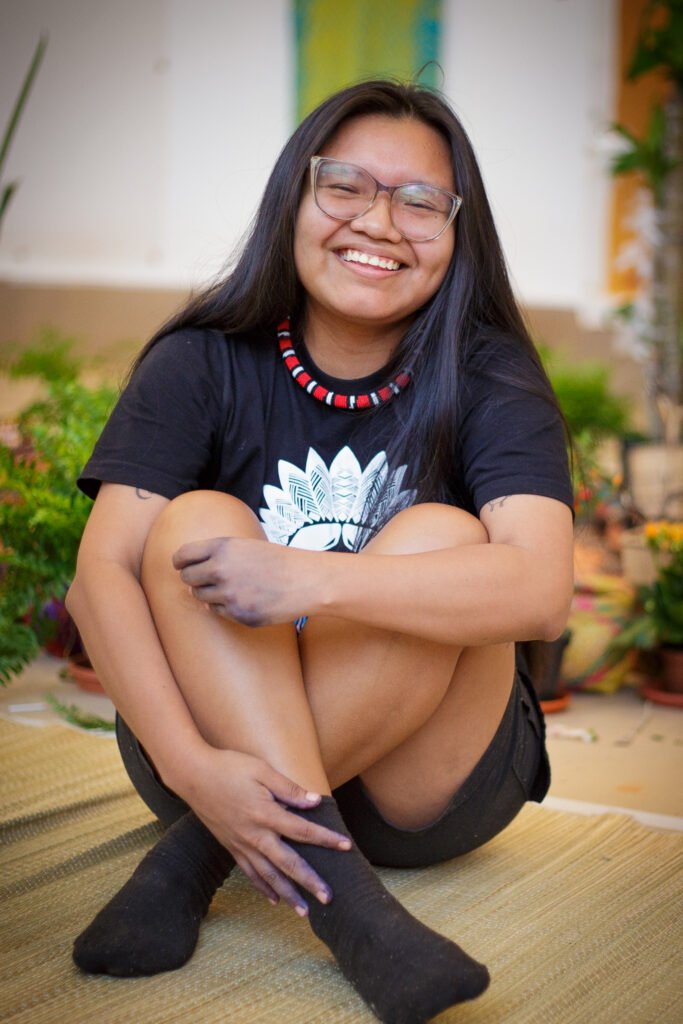
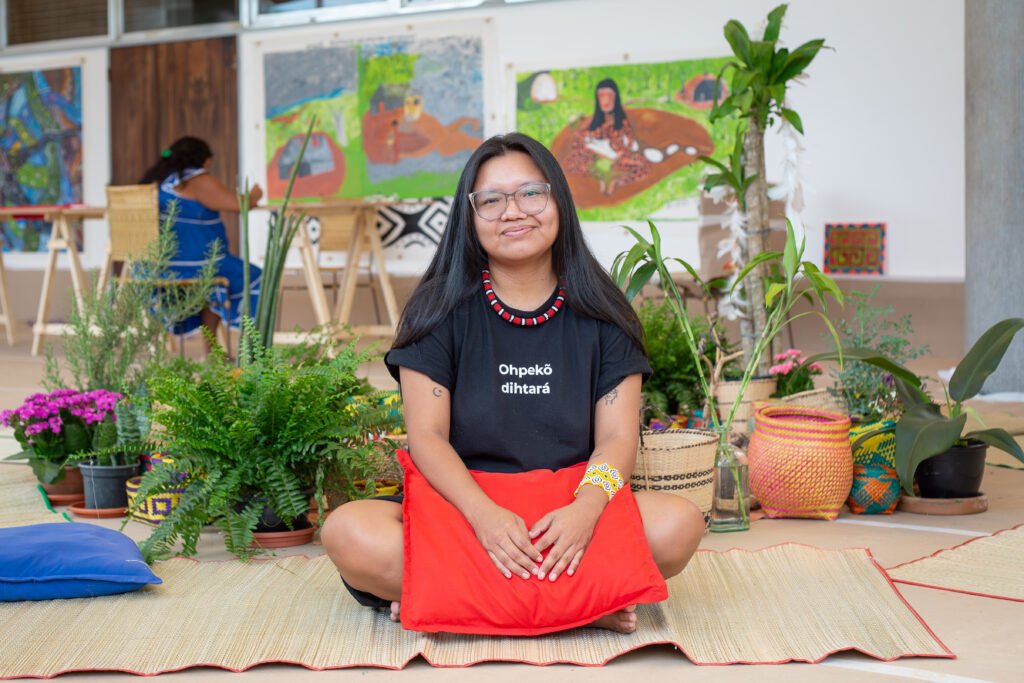
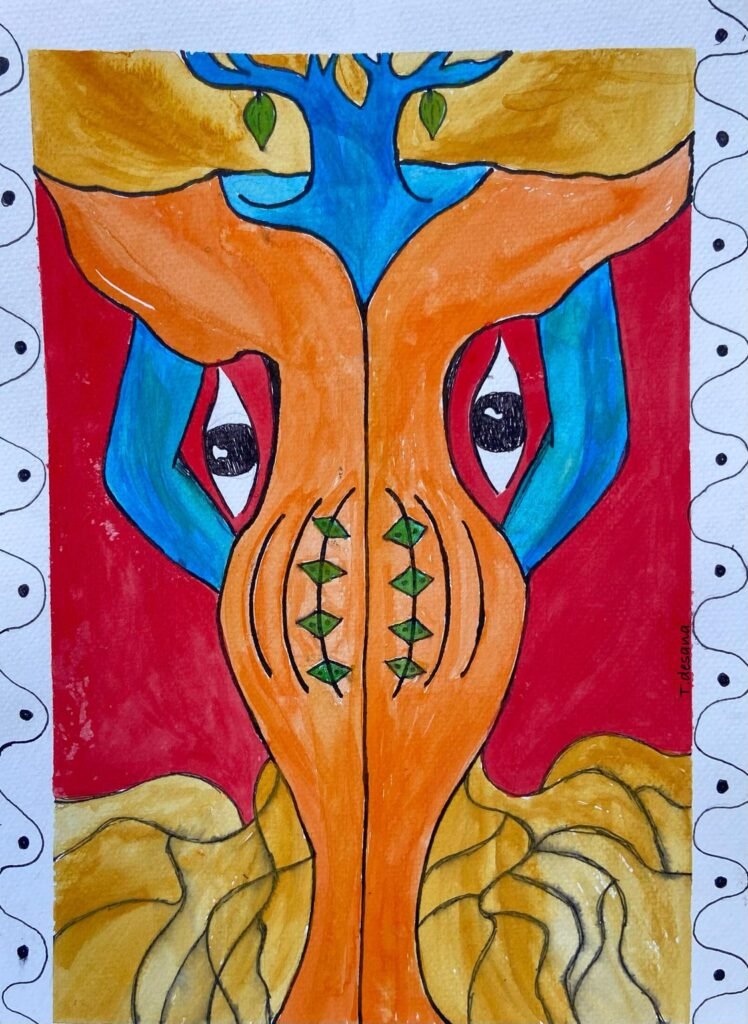
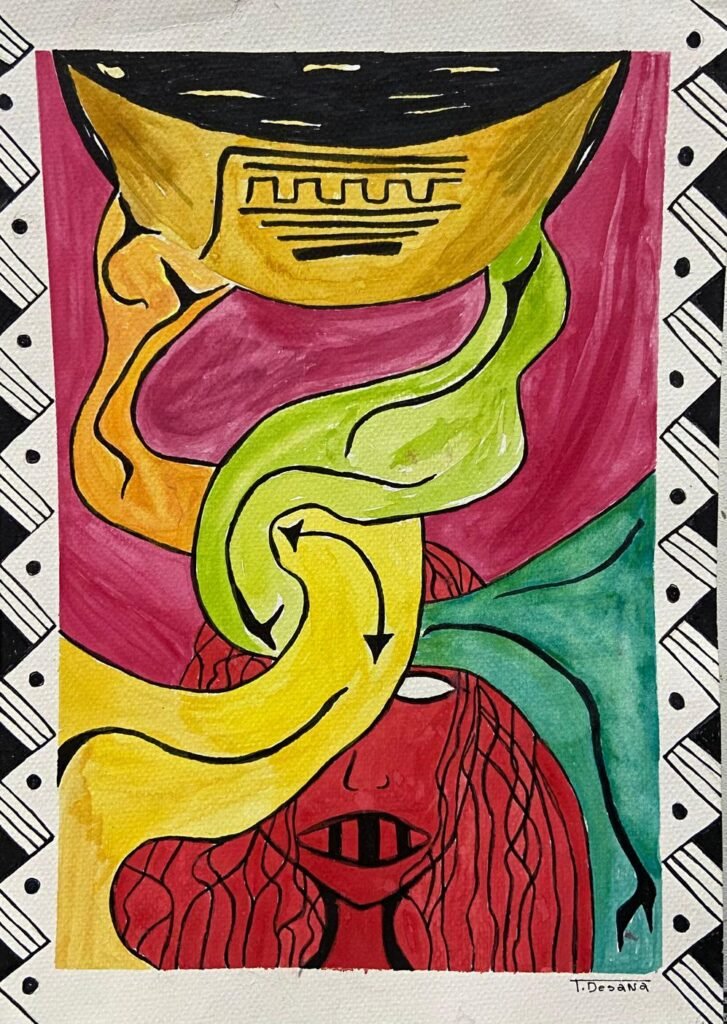
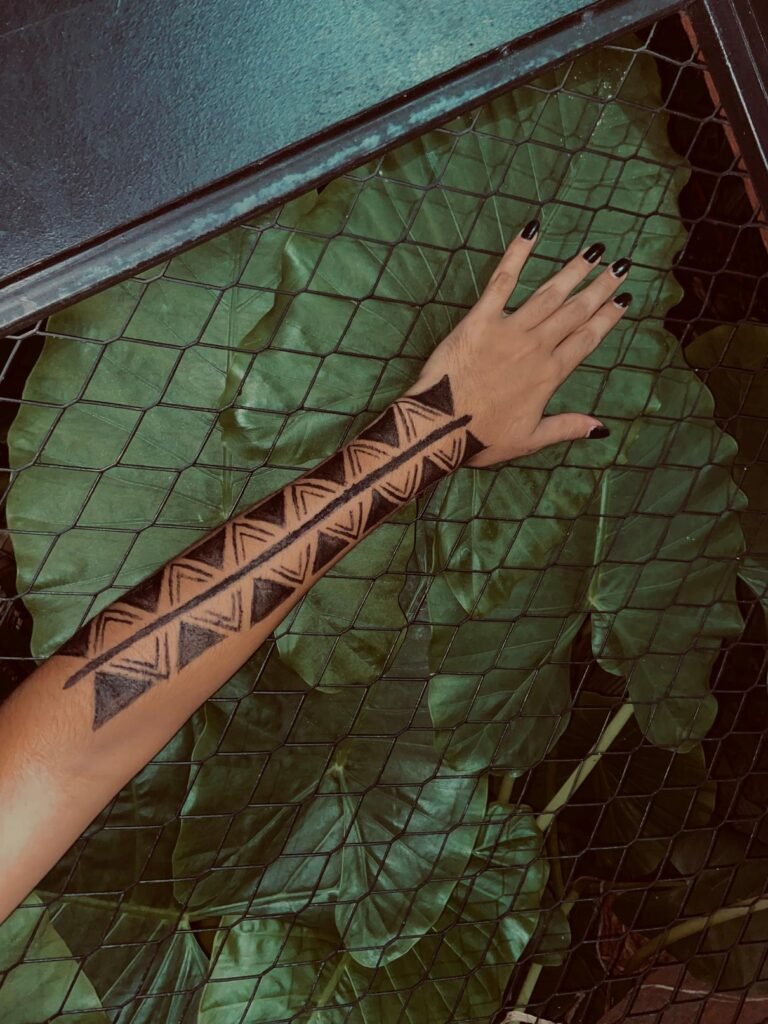
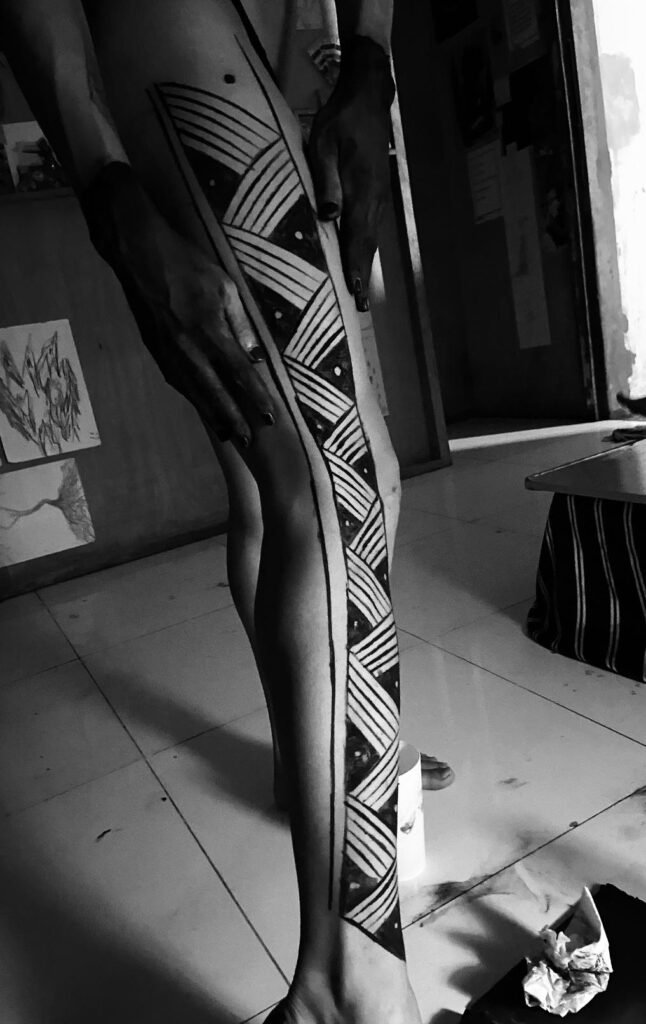
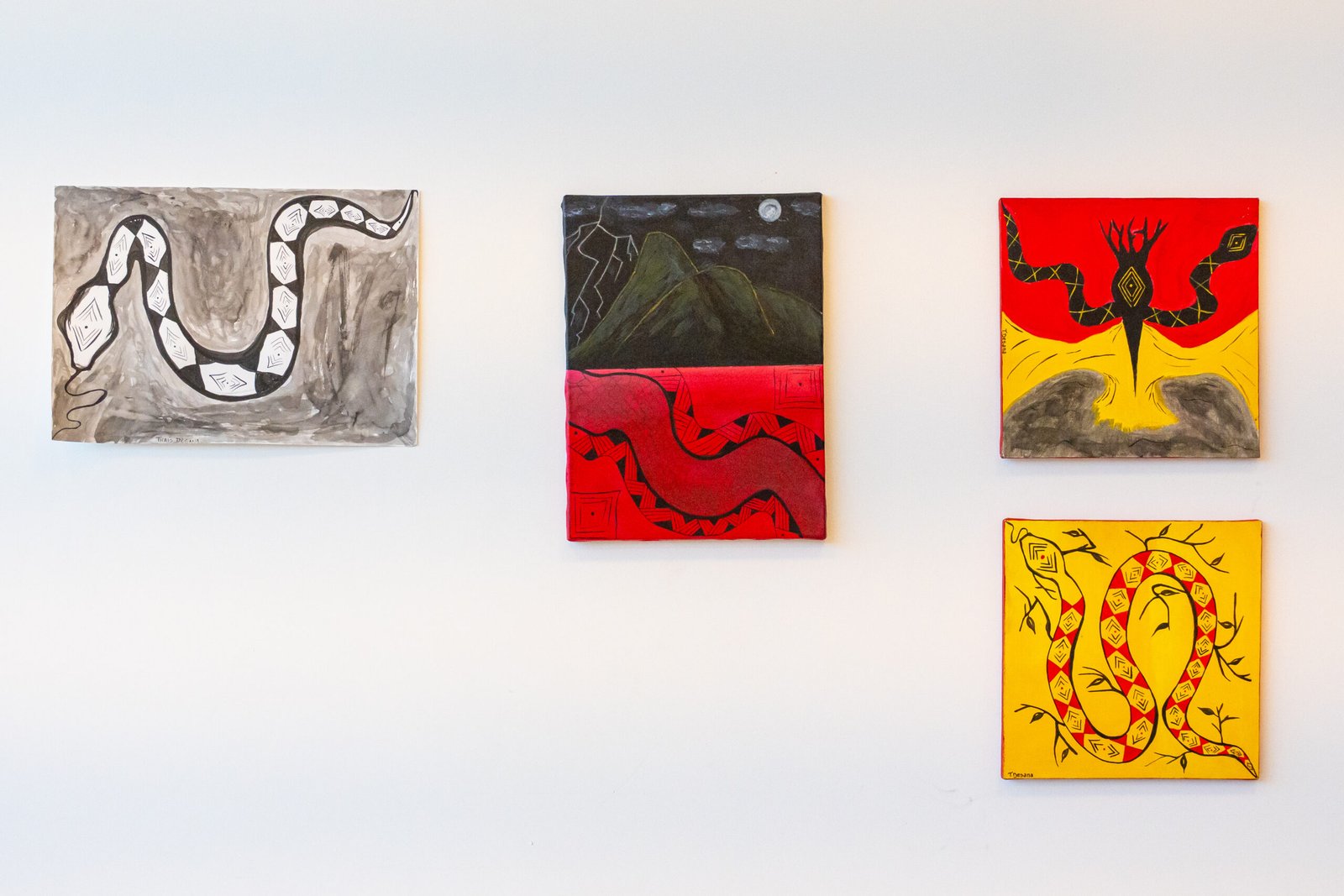
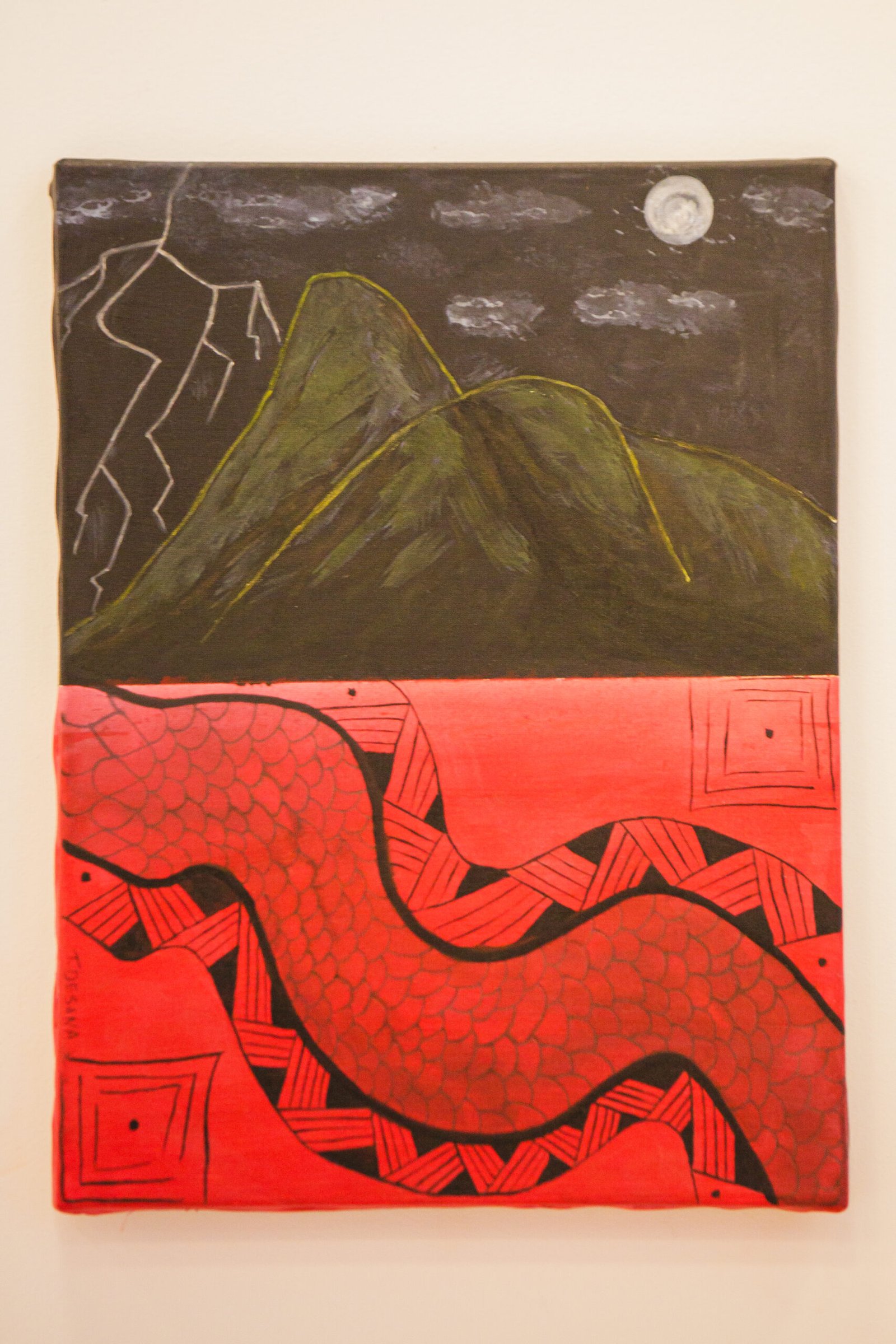
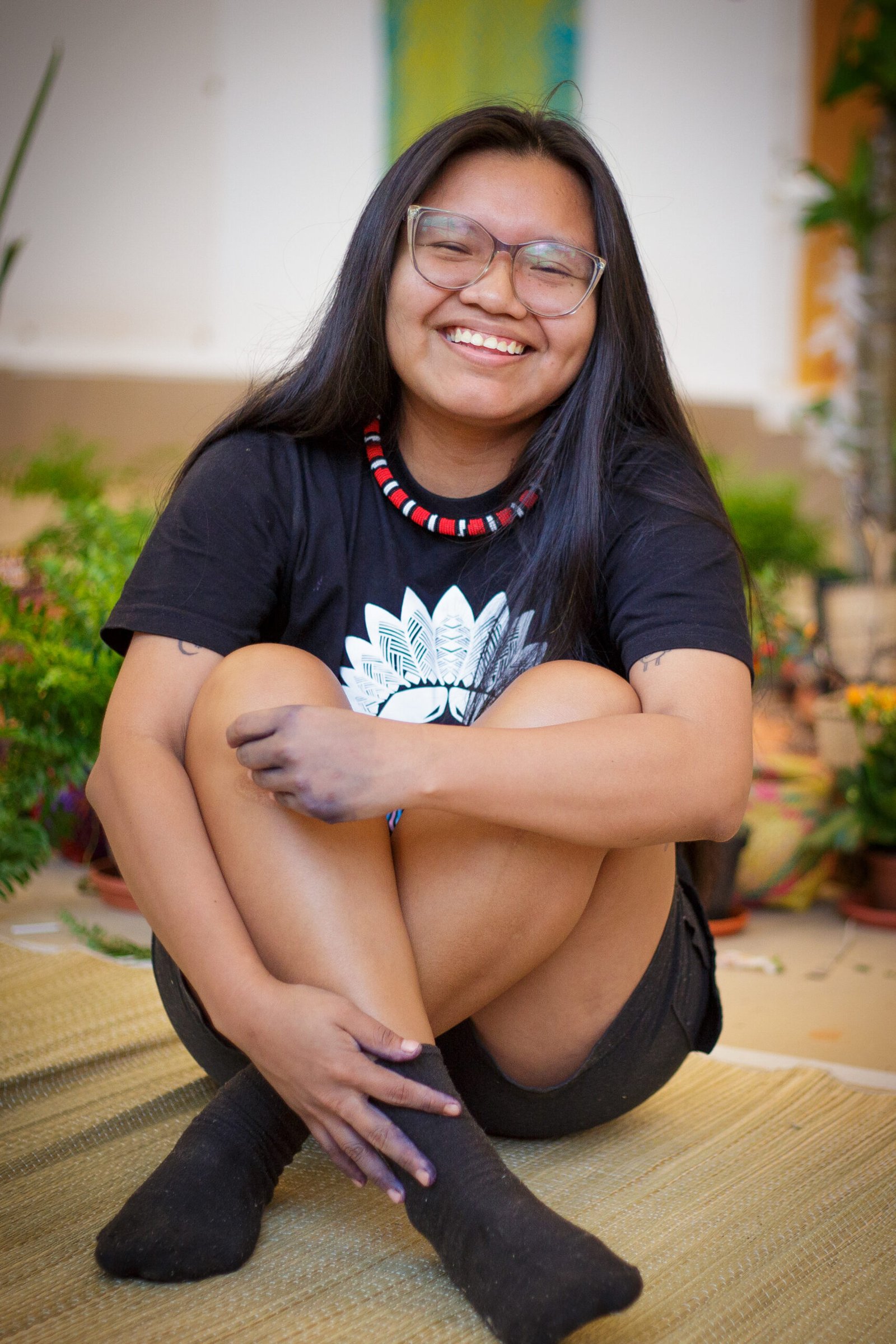
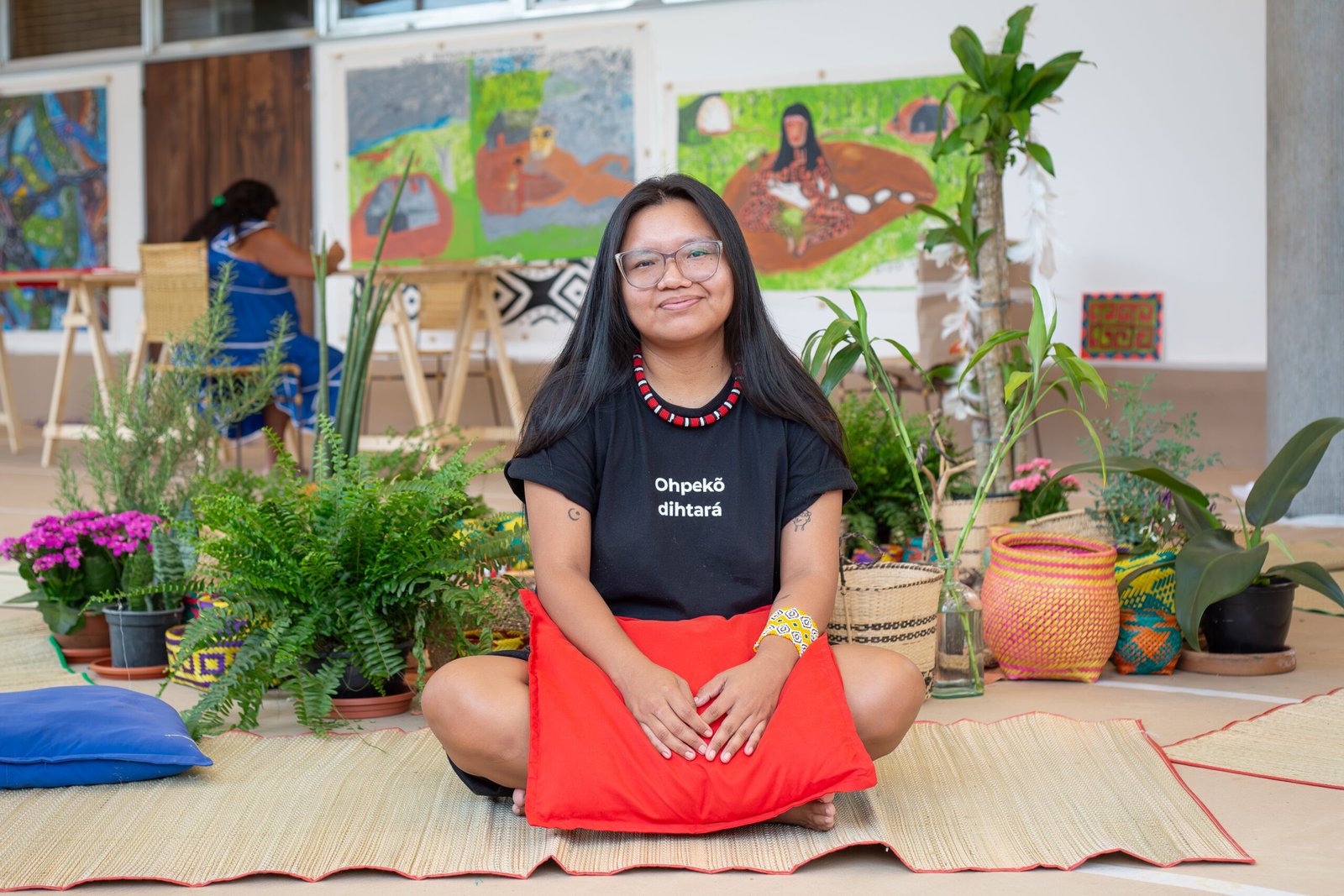
Indigenous researcher and artist from the Desana people, originally from the Upper Rio Negro region, city of São Gabriel da Cachoeira, Brazilian State of Amazonas. Founder of the LGBTQIA+ Indigenous Collective of Amazonas – Miriã Mahsã. Her research centers on the expressions of sexuality and gender of Indigenous bodies, using art in drawing, painting, and photography as methodological tools to explore the formation of bodies within the cosmological universe and affective perspectives.















BAHSERIKOWI
Tukano-Desana-Tuyuka Living School
The Bahserikowi Indigenous Medicine Center is located in the city of Manaus, the capital of the state of Amazonas, and articulates relationships with various institutions, such as the Pan American Health Organization, the Brazilian Secretariat of Indigenous Health (SESAI), the Oswaldo Cruz Foundation (Fiocruz), and the Federal University of Amazonas (UFAM).
The kumuã specialists who consult at the Bahserikowi Indigenous Medicine Center come from the Yepamahsã (Tukano), Utãpirõ-porã (Tuyuka) and Umukori-mahsã (Desana) Indigenous communities of the Upper Tiquié River.