




"LONG LIVE THE LIVING SCHOOL",
a new exhibition of thought
6 July 2026
“You're probably used to visiting art exhibitions, but what we create are exhibitions of thought, a thought that comes from a very ancient memory, from what the grandmother of the grandmother of the grandmothers of us all has always dreamt of and practiced: living in peace." - Cristine Takuá, curator of the exhibition and coordinator of the Living Schools
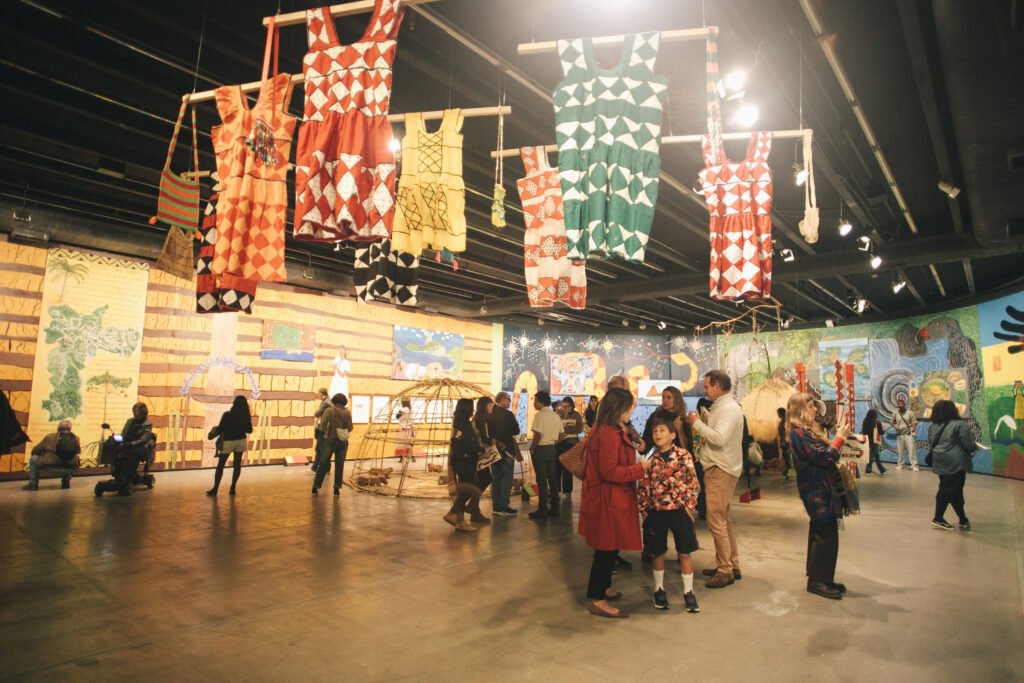
“Long Live the Living School” is the new exhibition by the Living Schools movement, on view until August 9 at the Tomie Ohtake Institute in São Paulo, curated by Cristine Takuá. The exhibition is the continuation of a dream that began with the first edition of “Long Live the Living School” at Casa Brasil and is the result of many years of care, collaboration, and collective creation with the five Living Schools.
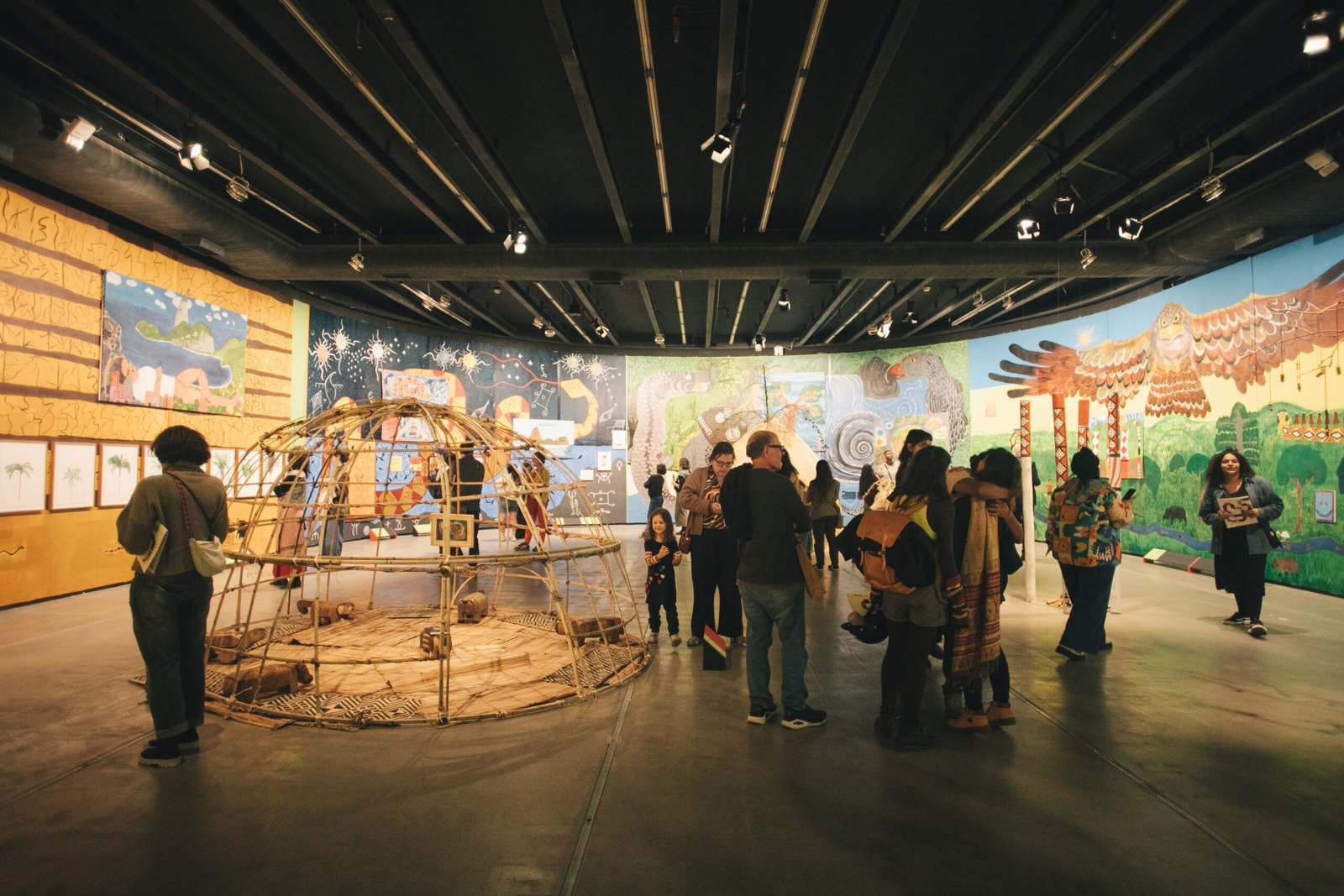
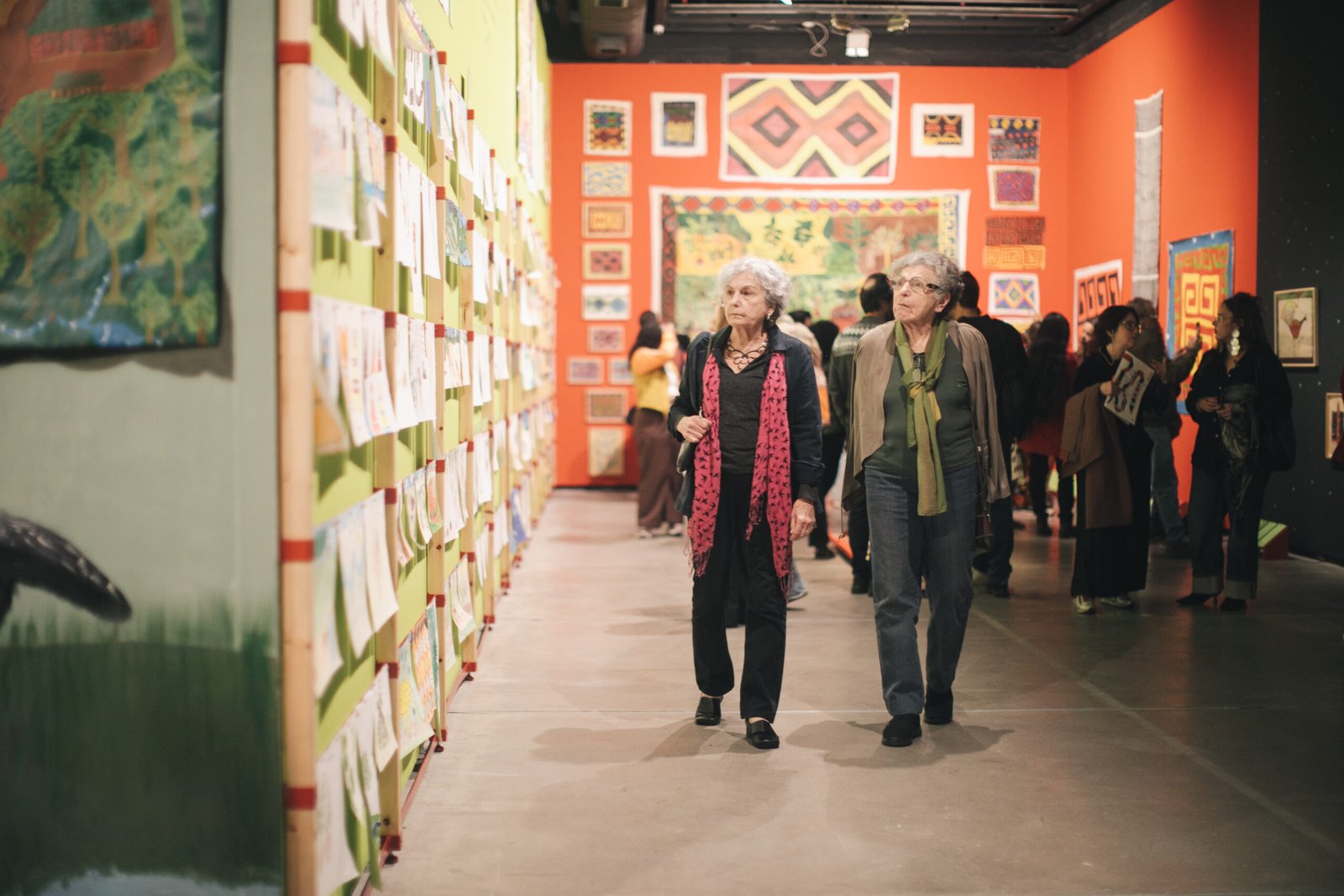
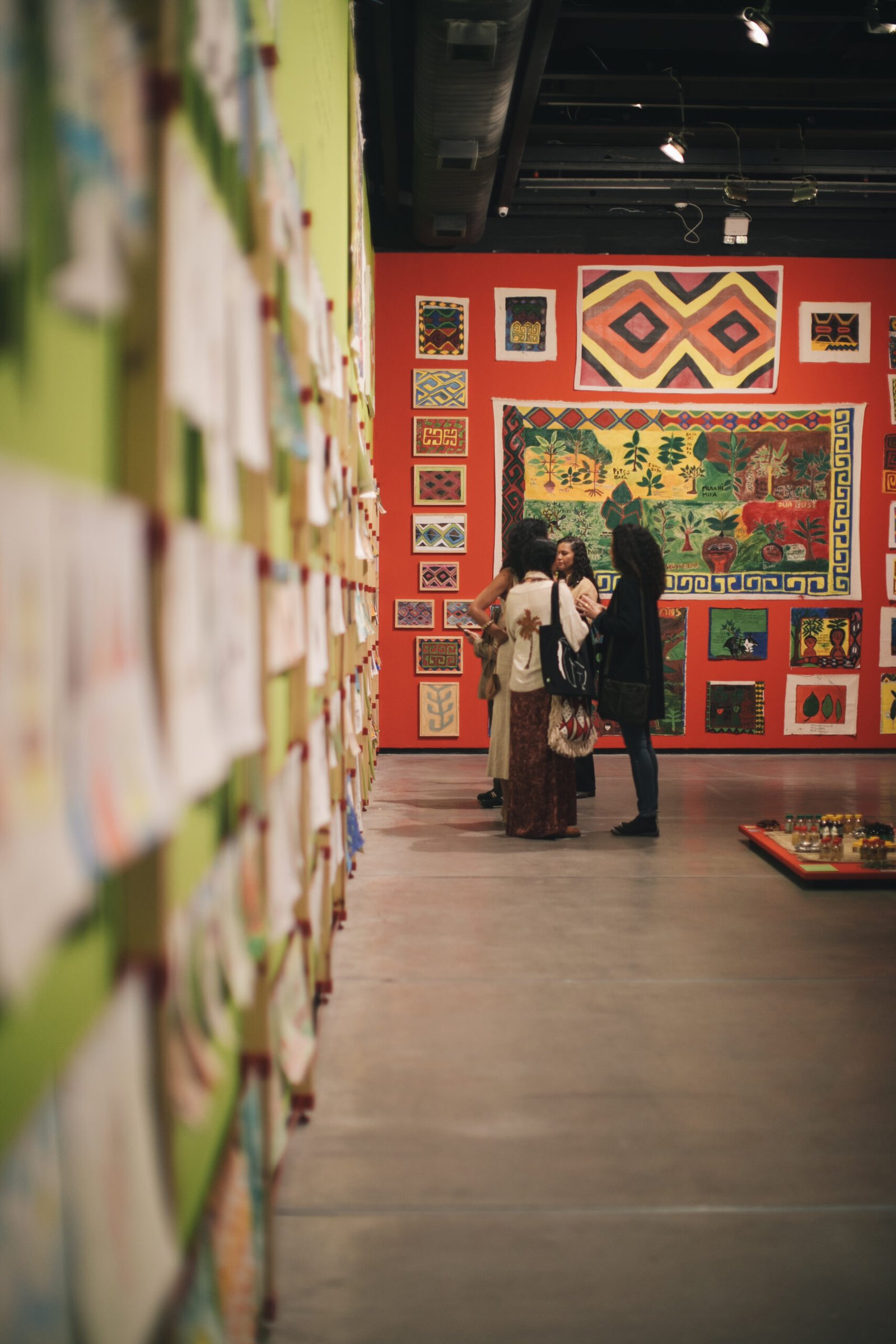
Guarani, Tukano-Desana Tuyuka, Baniwa, Maxakali and Huni Kuin sections.
Photos: Filme d’água.
“This exhibition is the greatest dream of ours as the Living Schools. It is our science, our wisdom, our languages, our narratives, our memory, our oral traditions. Today we are sharing with you this deep dive into cosmology, this deep dive into other worlds that we are presenting to you, this is living knowledge from our territories." - Francy Baniwa, coordinator of the Baniwa Living School
Coordinated by educator, mother, midwife, and thinker Cristine Takuá, of the Maxakali people, the Living Schools are a movement dedicated to strengthening and transmitting knowledge across five Indigenous territories belonging to the Baniwa, Guarani, Huni Kuin, Maxakali, Tukano, Desana, and Tuyuka peoples. The name "Living Schools" originated in Hatxa Kuĩ, the language of the Huni Kuin people, as "Shubu Hiwea", through Huni Kuin shaman Dua Busë, coordinator of the Huni Kuin Living School and the first to conceive the drawing that gave form to this concept. The Living Schools are woven into every aspect of the Selvagem Association through an ongoing flow of exchanges, collaborative partnerships, and financial support for the territories.
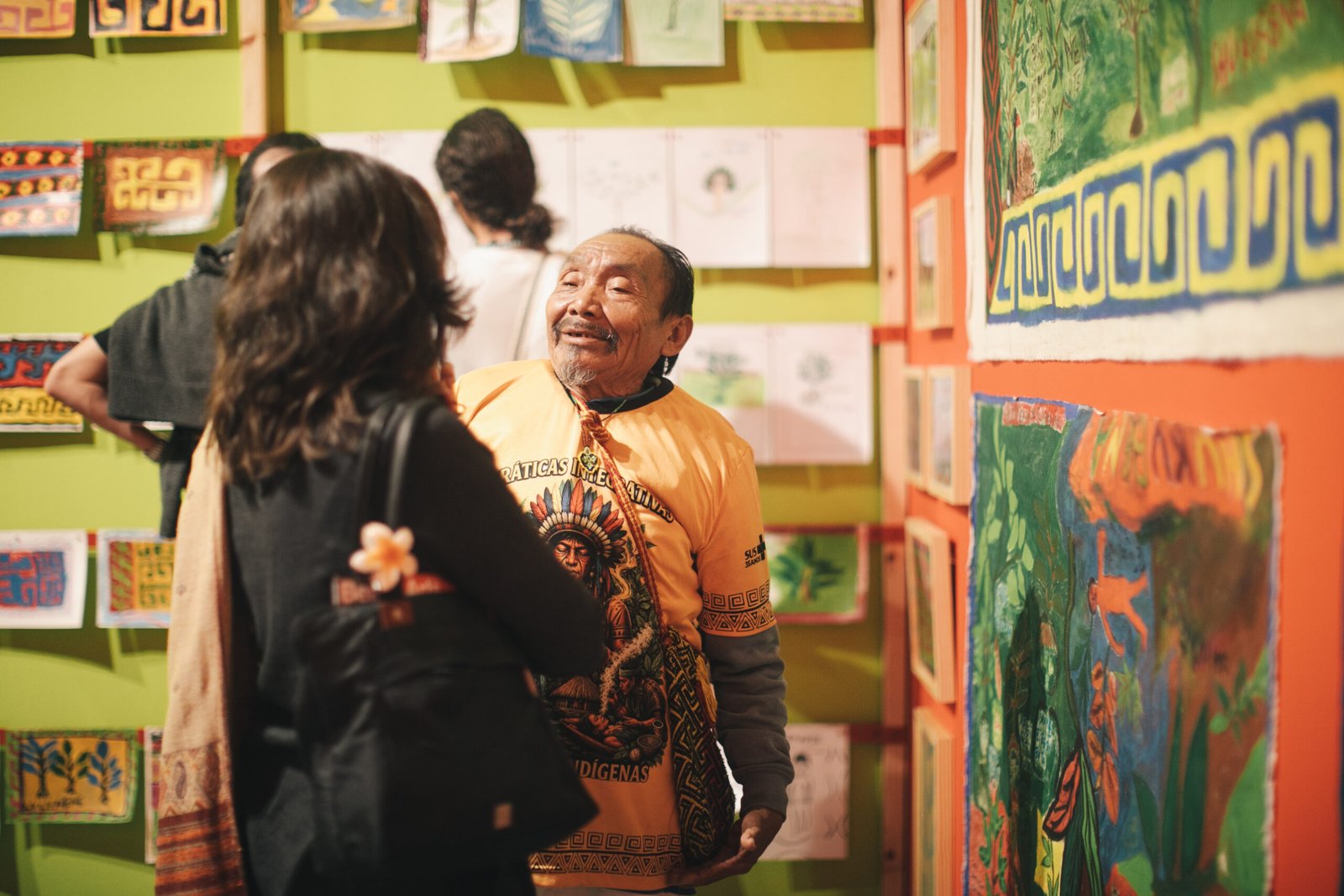
Shaman and coordinator of the Huni Kuin Living School Dua Busë on the preview of “Long Live the Living School”.
Photo: Filme d’água.
"The support that Selvagem offers the Living Schools is entirely reciprocal, because it is built on trust, friendship, and on a continuity of work. It does not have an end date, like a work project. It is something we hope will be like a forest, something that lasts forever." - Anna Dantes, director of the Selvagem Association
Since 2024, a wide range of works have been created in the Living School territories in workshops held for the exhibition, bringing together children, young people, elders, and knowledge keepers to develop artistic creations rooted in the interests and traditional practices of each community. Alongside these workshops, organised in partnership with the Tomie Ohtake Institute, the Living School House artistic residencytook place in October 2025 at the Museum of Modern Art of Rio de Janeiro (MAM Rio), giving rise to many of the works now featured in the exhibition. The residency also gave birth to the filmOur hand is a flower, which offers a glimpse into the gestures, chants, and creative processes behind the works that now make up the new exhibition.
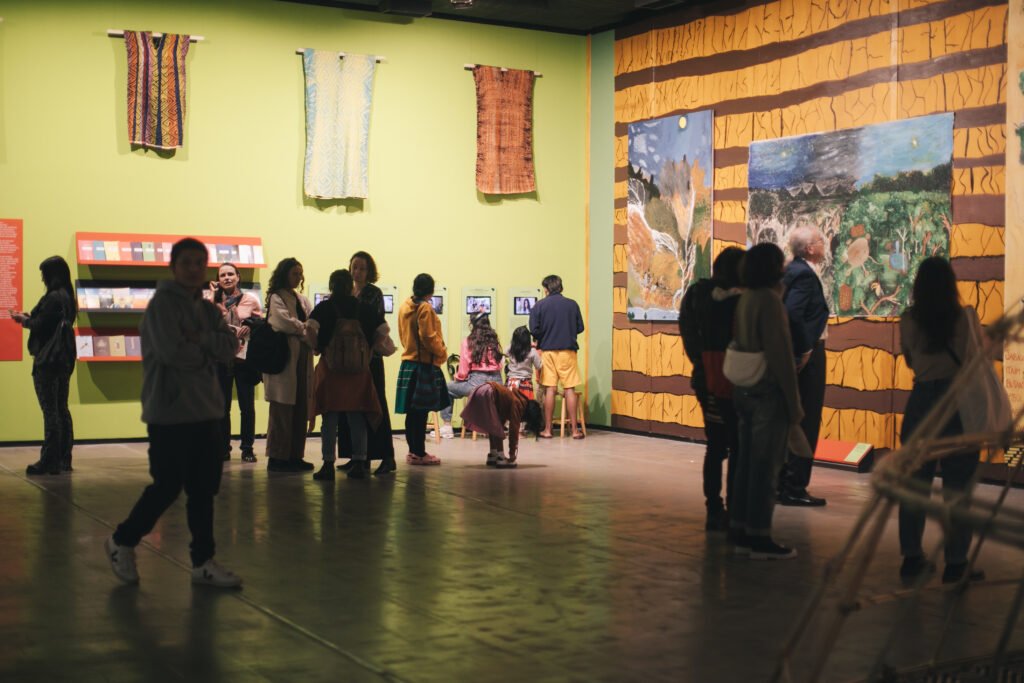
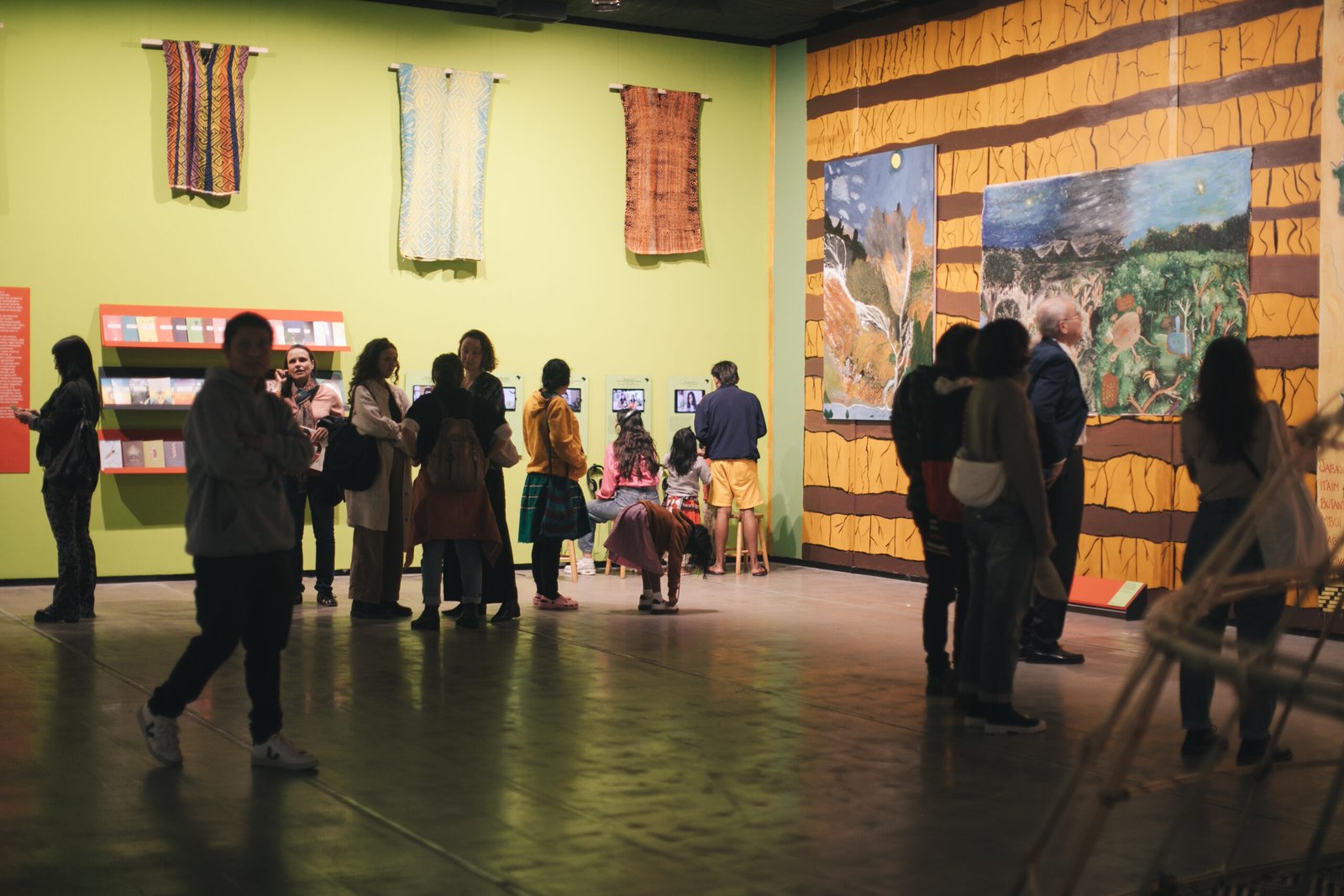
Visitors to the exhibition can also get to know the resident artists through five video-testimonials recorded at the end of the residency, in which each participant reflects on their path, inspirations, and impressions of the days of collective exchange. These recordings also unfolded into five new Selvagem notebooks, one dedicated to each Living School, which will be published throughout July, along with the notebook "Is Art a Commodity?", bringing together the conversations from the roundtable on Indigenous arts, the art market, and cultural and museum institutions that took place at the close of the residency.
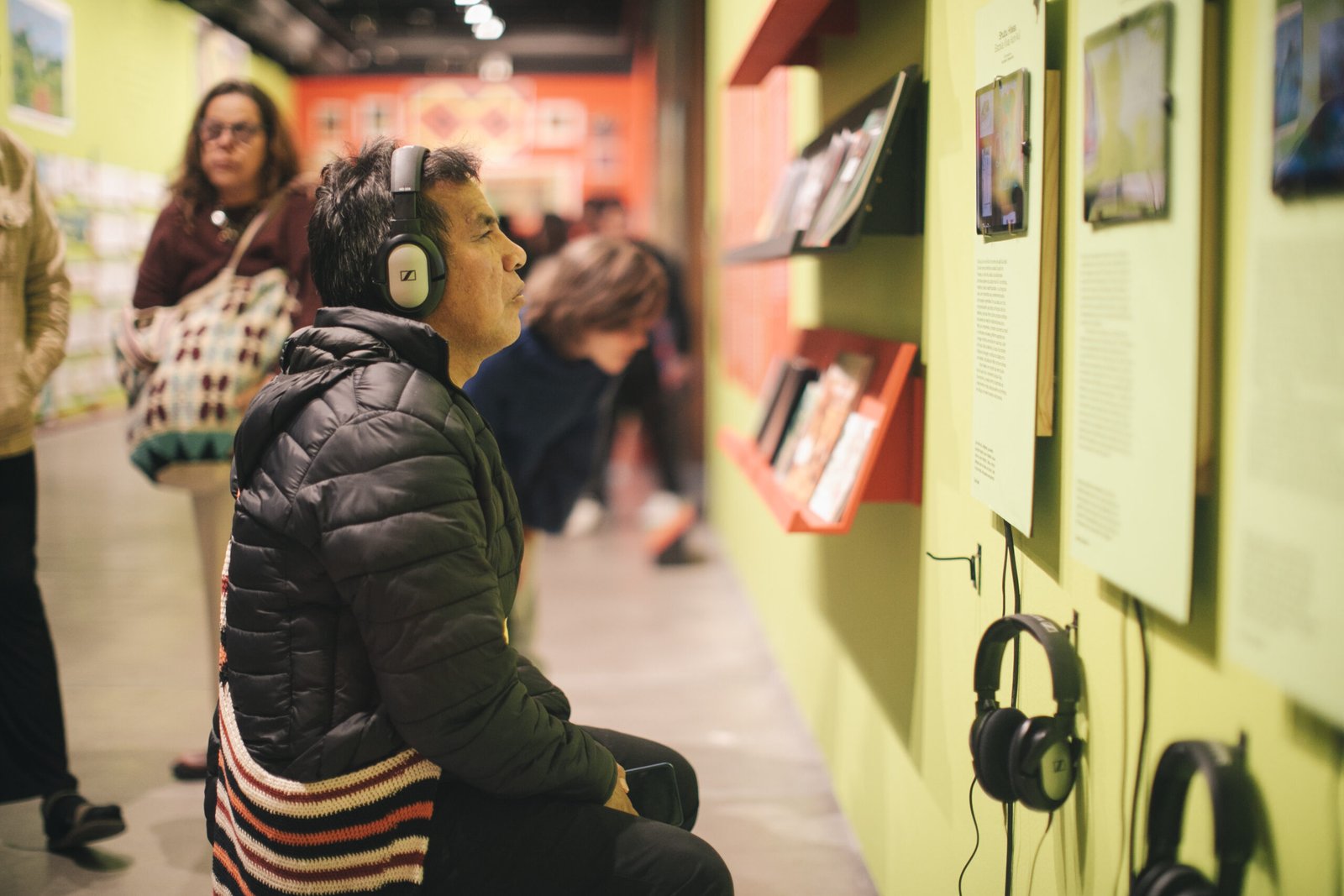
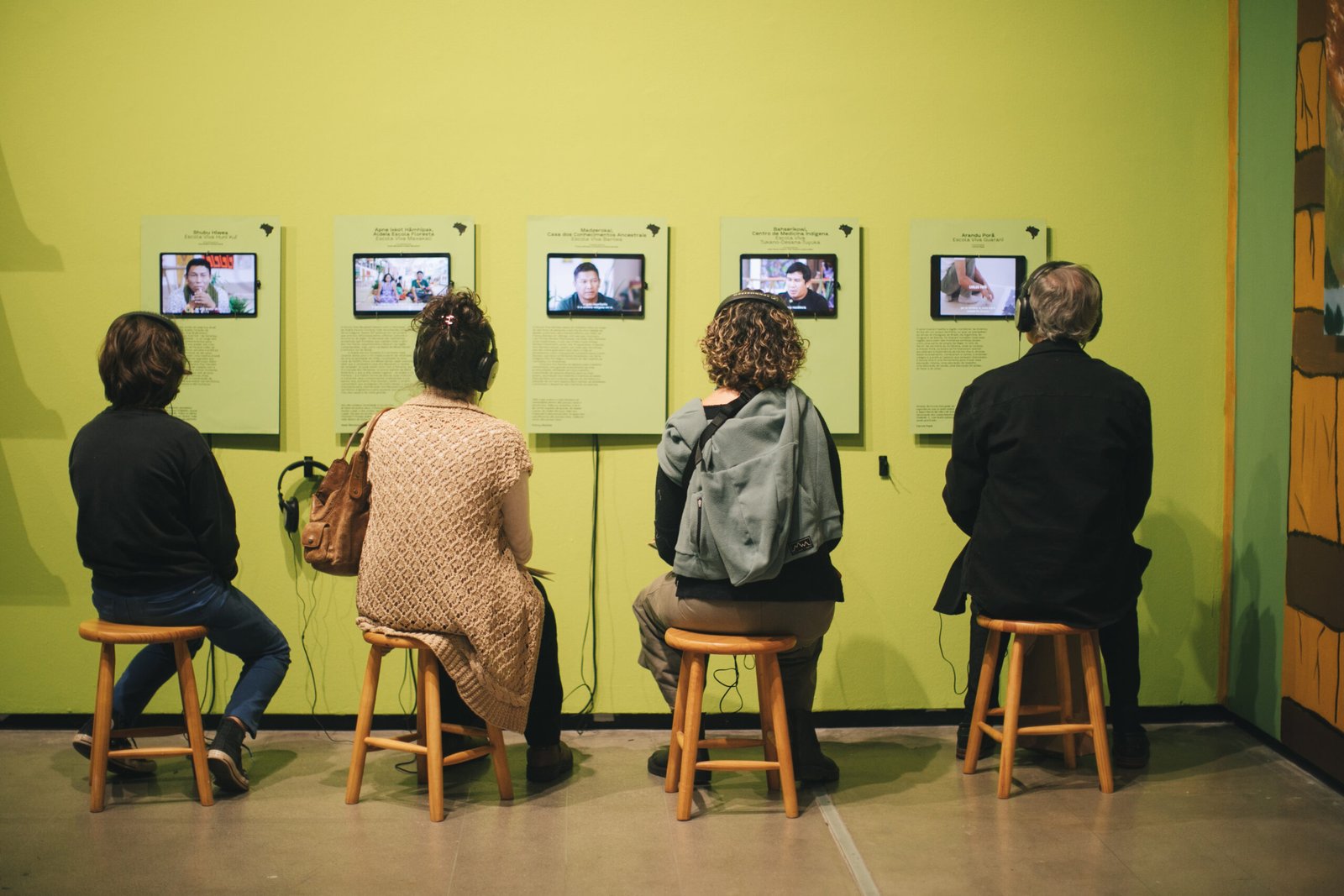
Artists’ testimonials recorded during the Living School House residency, on view in the exhibition.
Photos: Filme d’água.
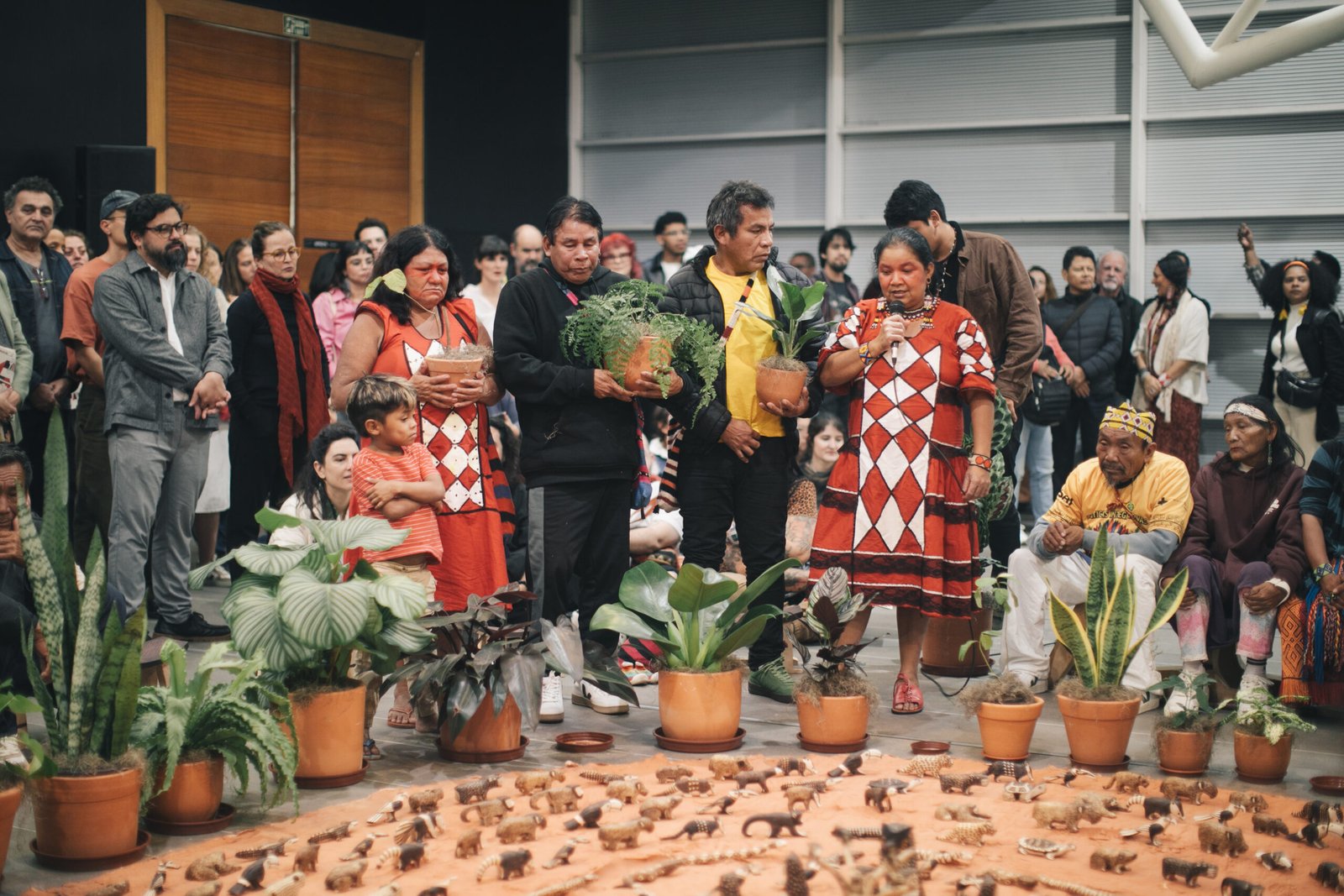
Sueli and Isael Maxakali, coordinators of the Maxakali Living School, together with Mamei and Isabelinha Maxakali on the exhibition preview.
Photo: Filme d’água.
"This isn't just an exhibition, we are bringing all of our knowledge, all the strength of nature, all the spirits that walk with us, the people who came before us and left this knowledge in our care, our living memory." - Sueli Maxakali, coordinator of the Maxakali Living School
In addition to the sections dedicated to the knowledge of each Living School, the exhibition includes a space honoring the “grandparents” - the elders understood as essential references in preserving and transmitting knowledge. Through stories, chants, and everyday practices, they sustain a living memory that stretches across time and connects different levels of existence. By bringing these presences into the exhibition through works by Ailton Krenak, Ehuana Yanomami, Tõrãmu Kẽhíri (Luiz Lana), and Moisés Piyãko, the exhibition invites visitors to engage with ways of knowing grounded in listening, lived experience, and continuity across generations.
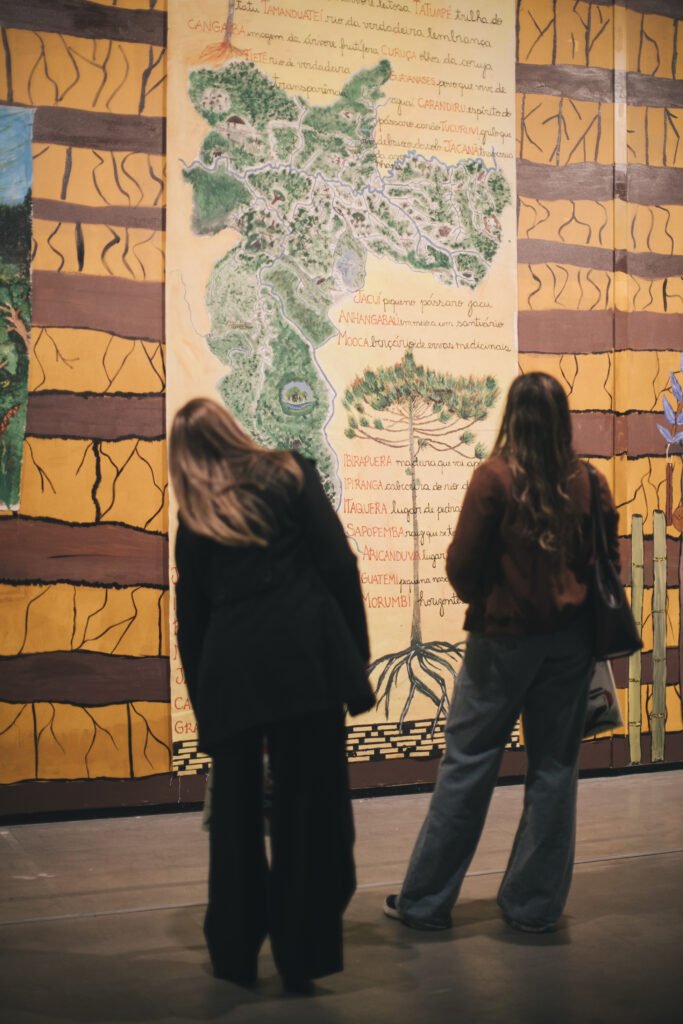
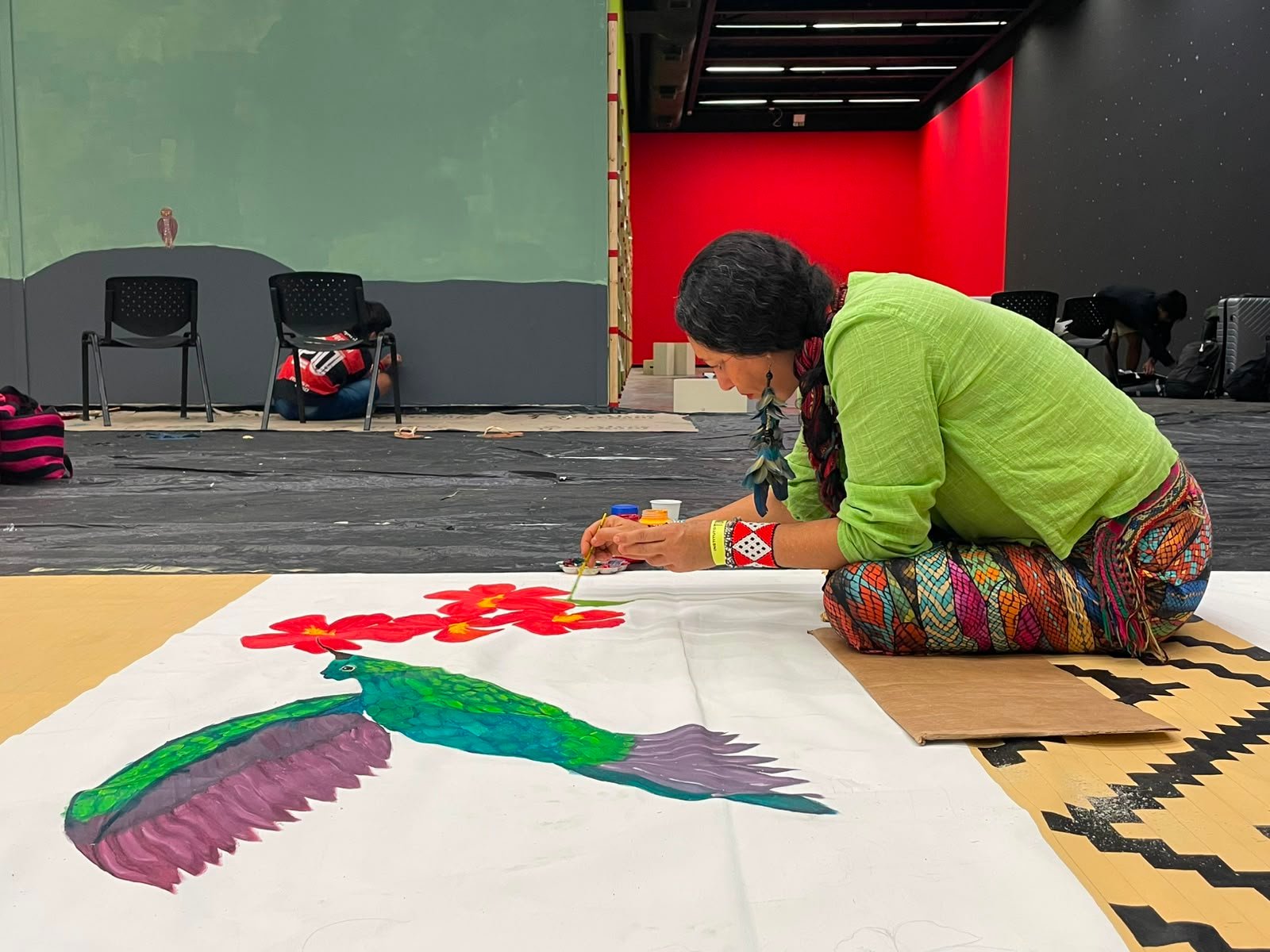
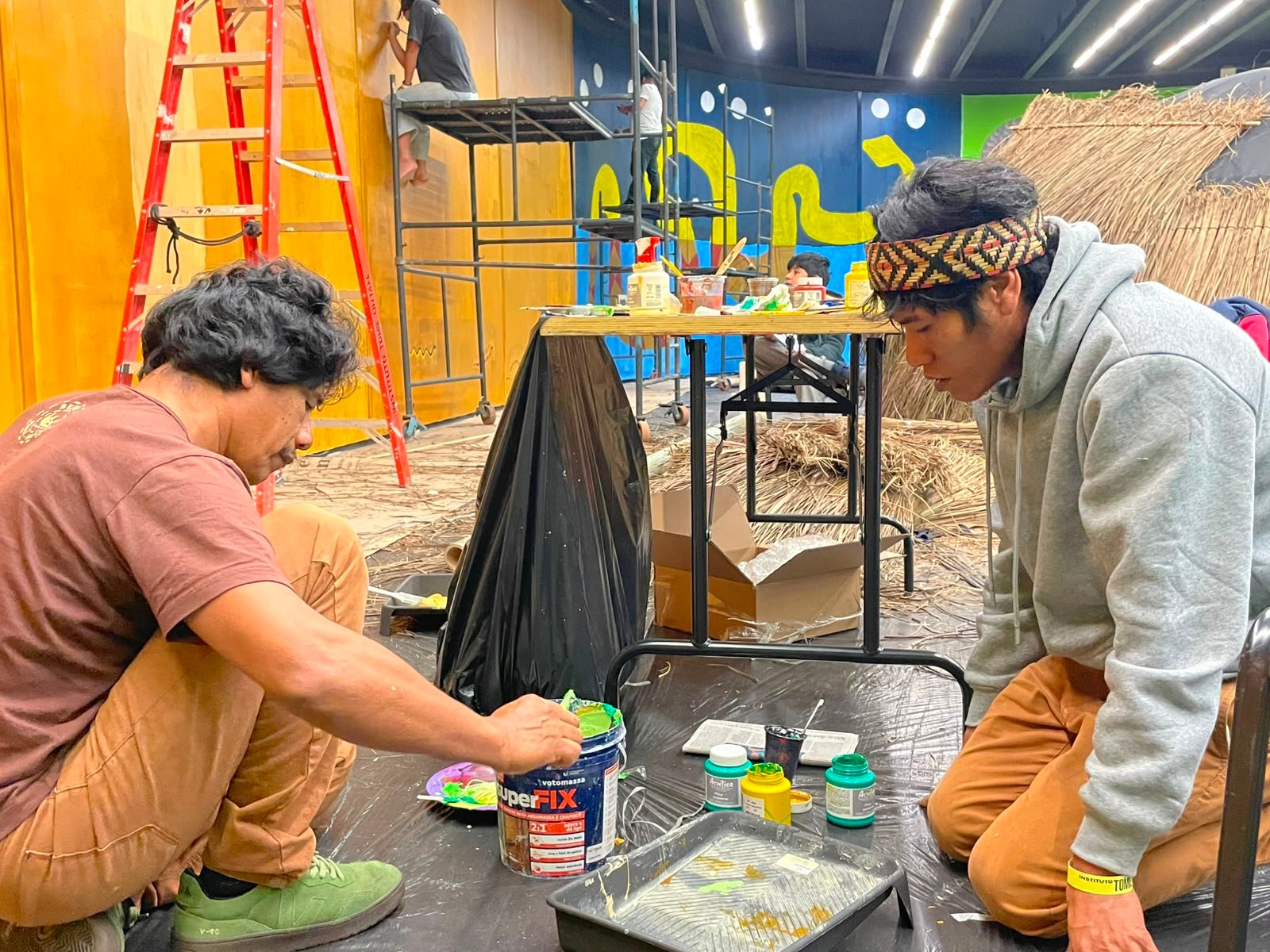
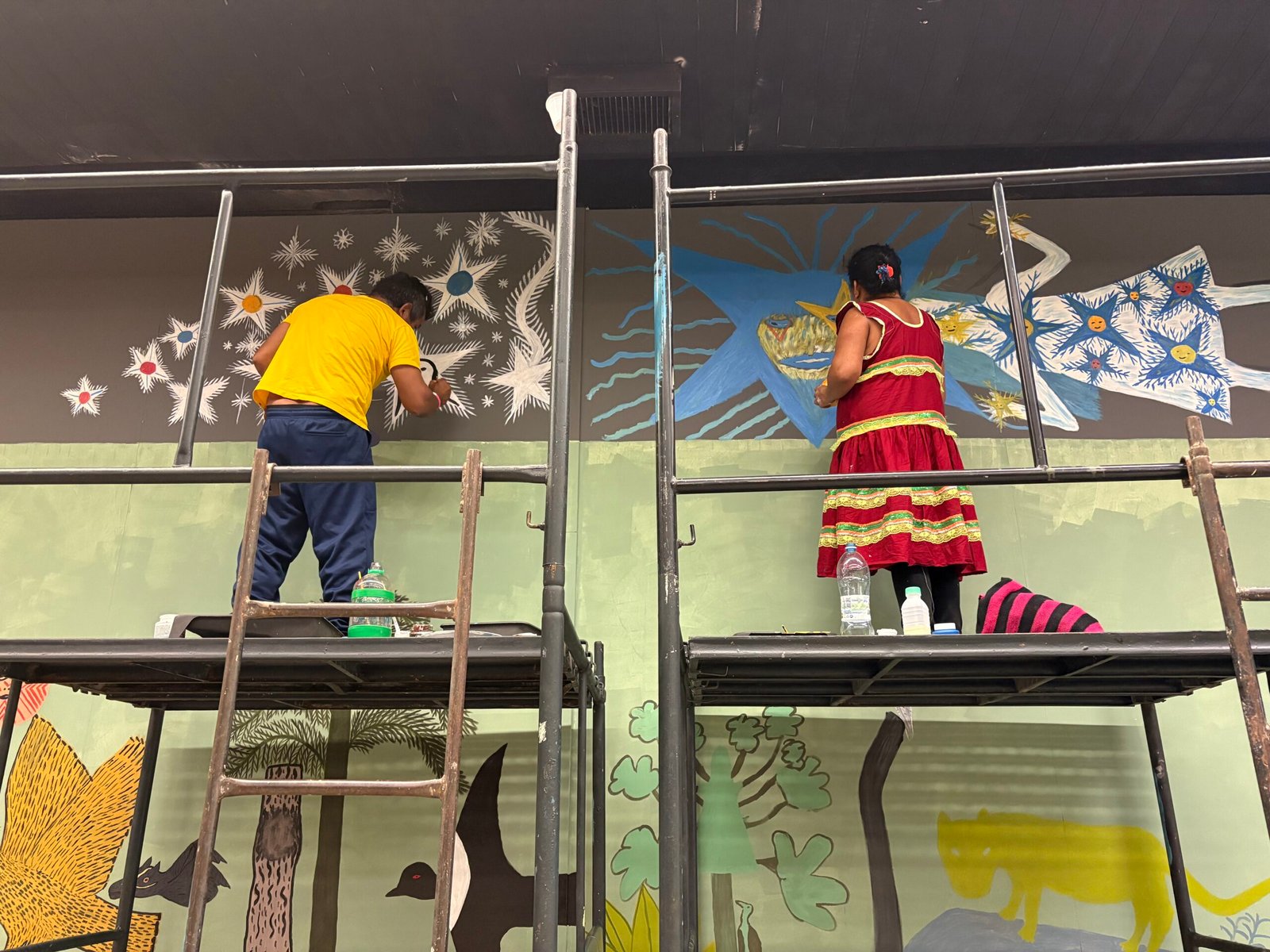
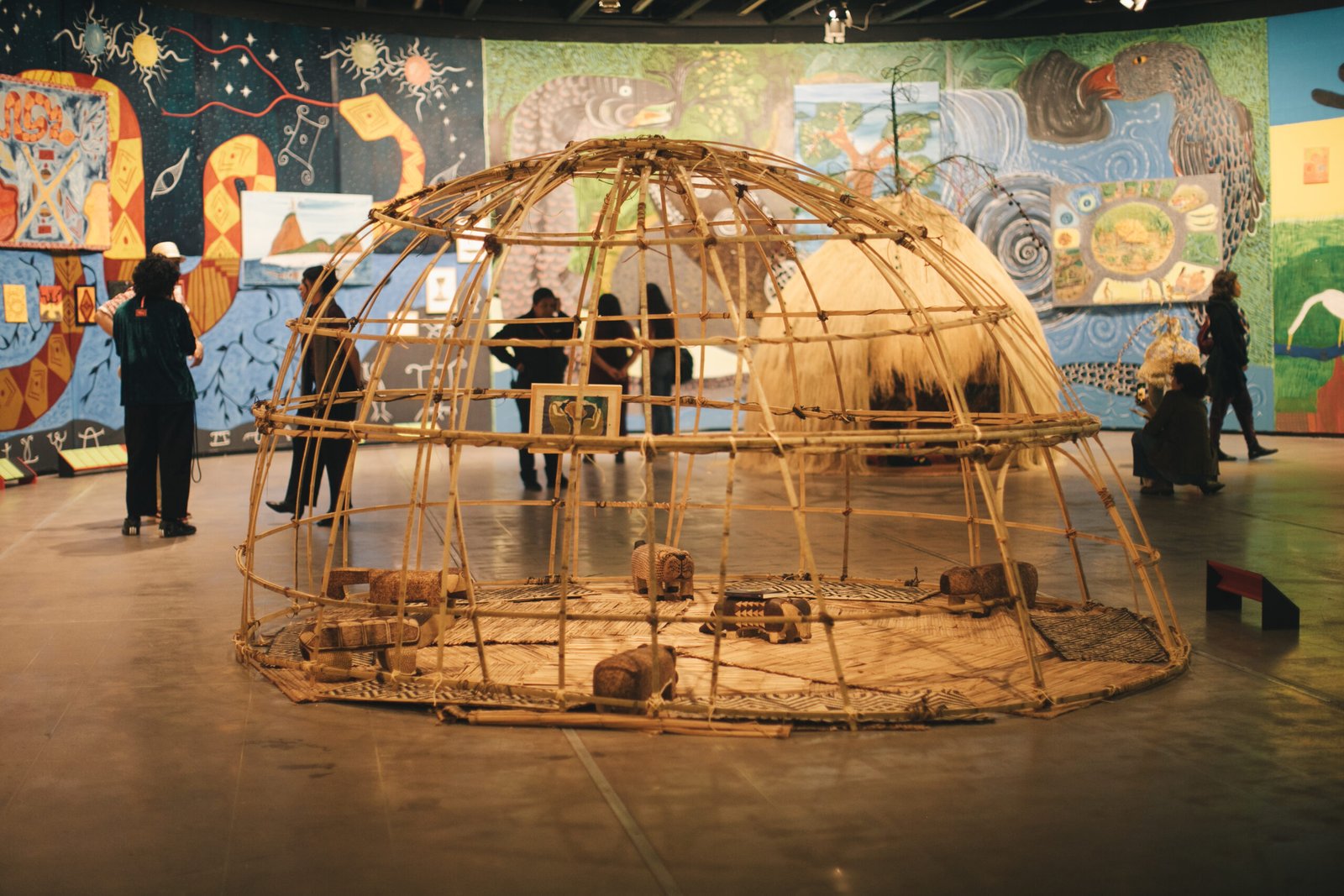
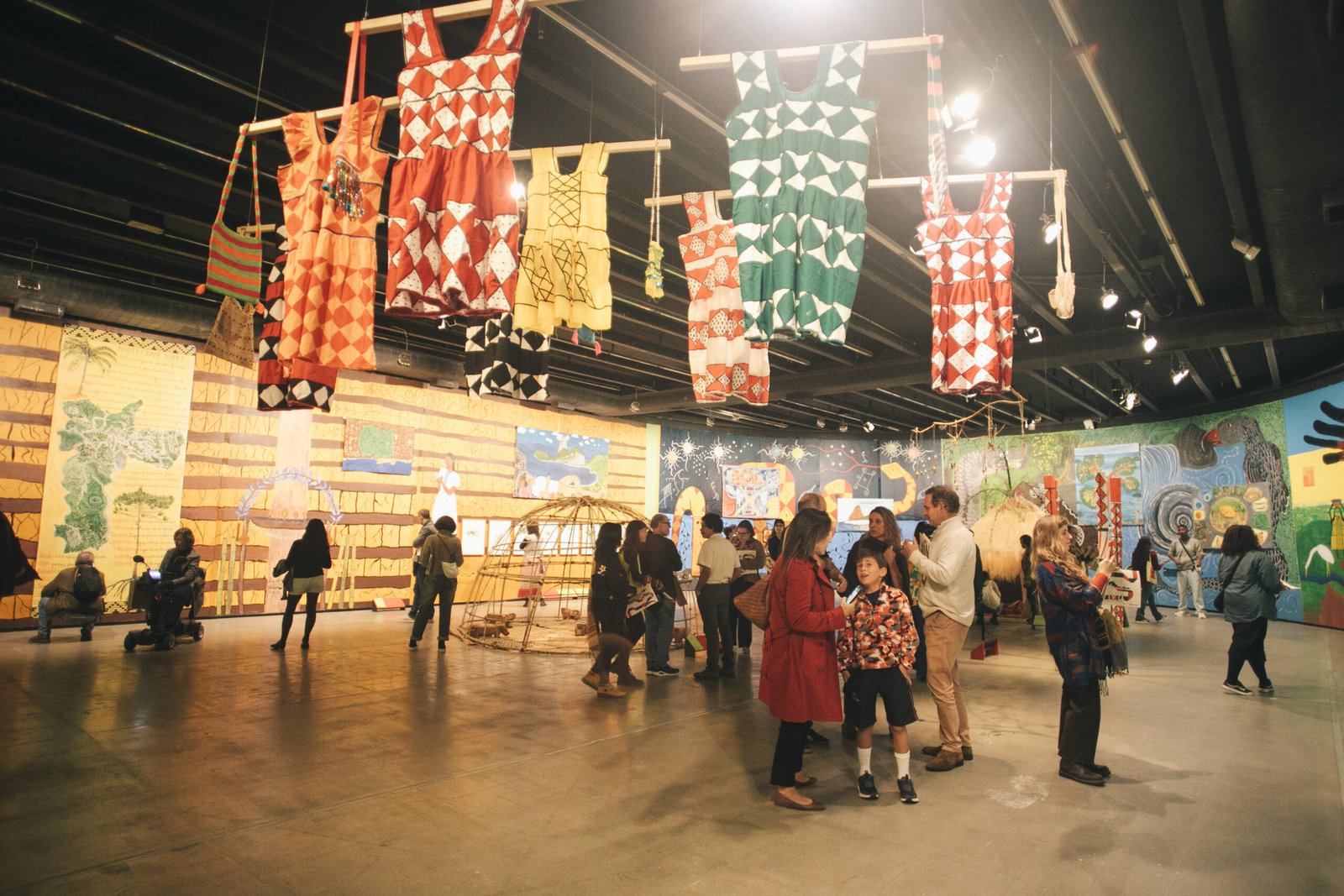
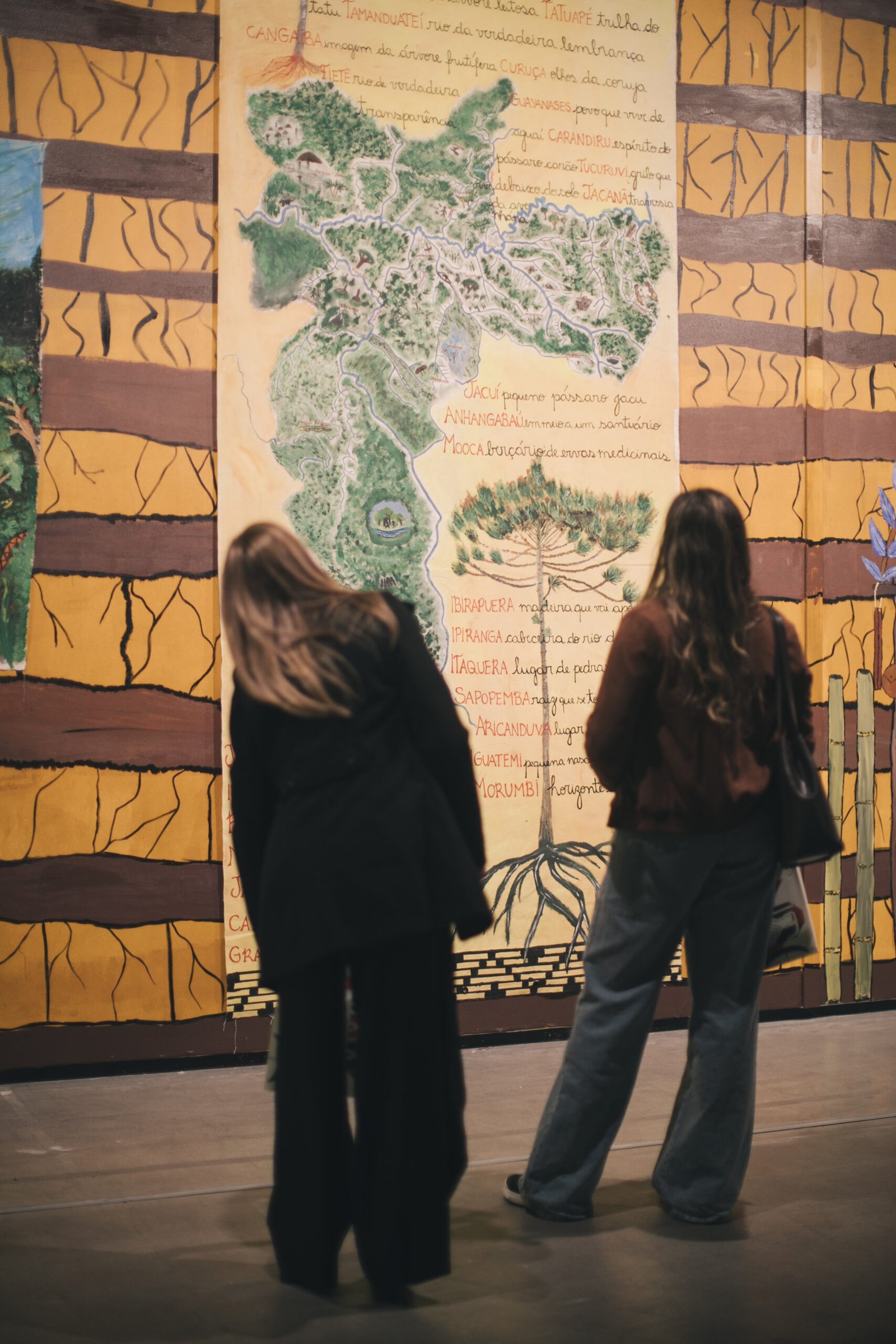
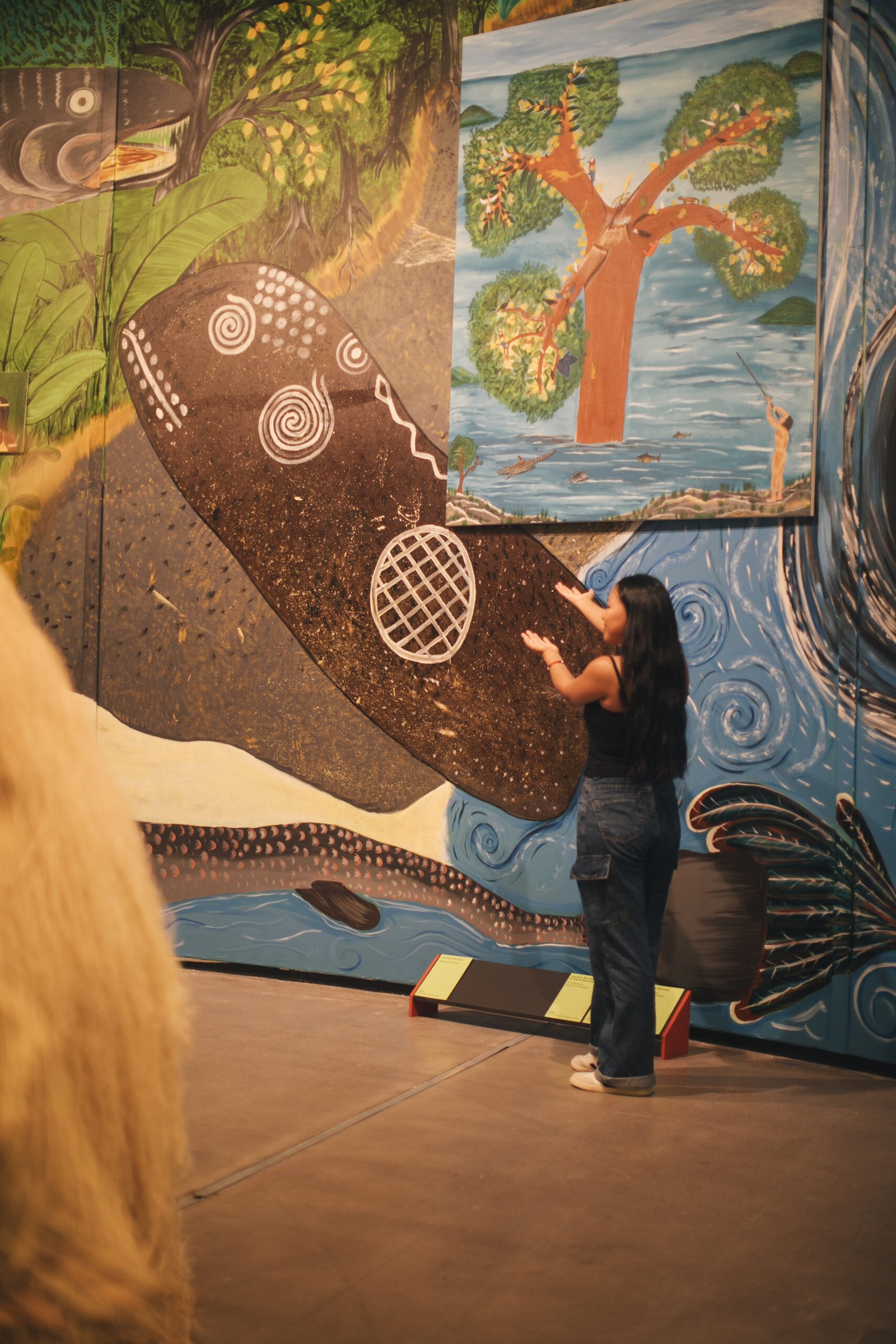
The exhibition also features large-scale murals painted by 25 Living School artists at the Tomie Ohtake Institute during the installation period. During the installation, five flags bearing the graphic traditions of the Living School peoples were also created and raised. Visitors can access a newspaper produced especially for the exhibition, bringing together the exhibition texts, photographs of the artworks, and additional materials that deepen the understanding of the Living Schools, including information about each of the participating peoples. The publication is available both at the exhibition or in a digital version here.
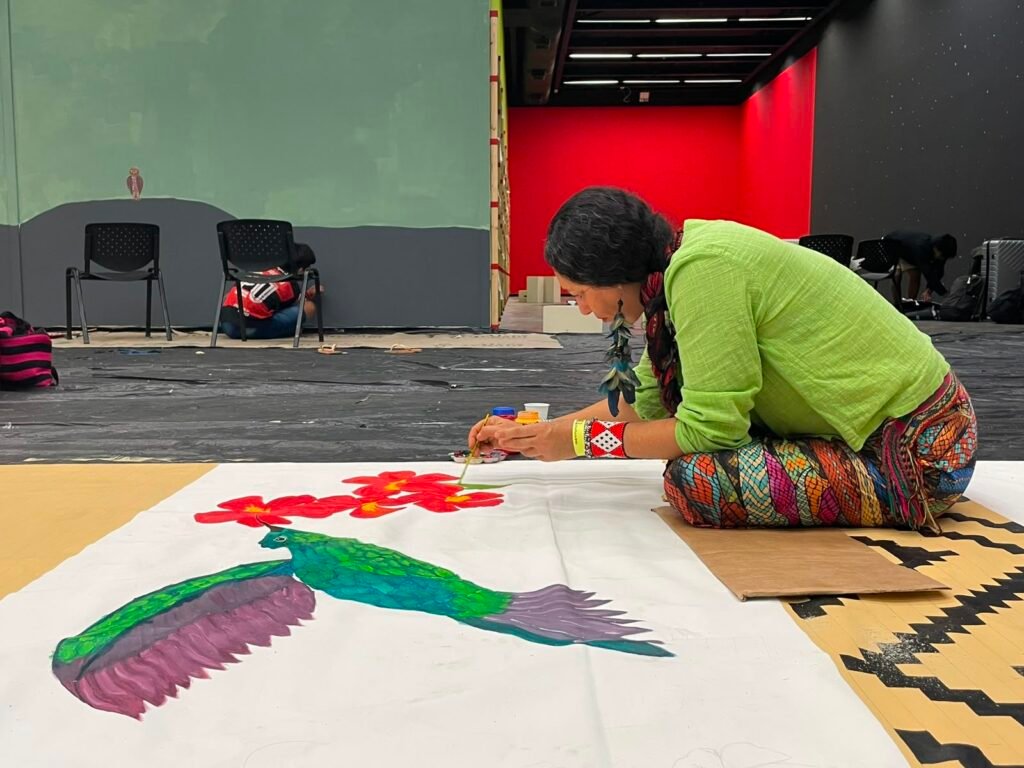
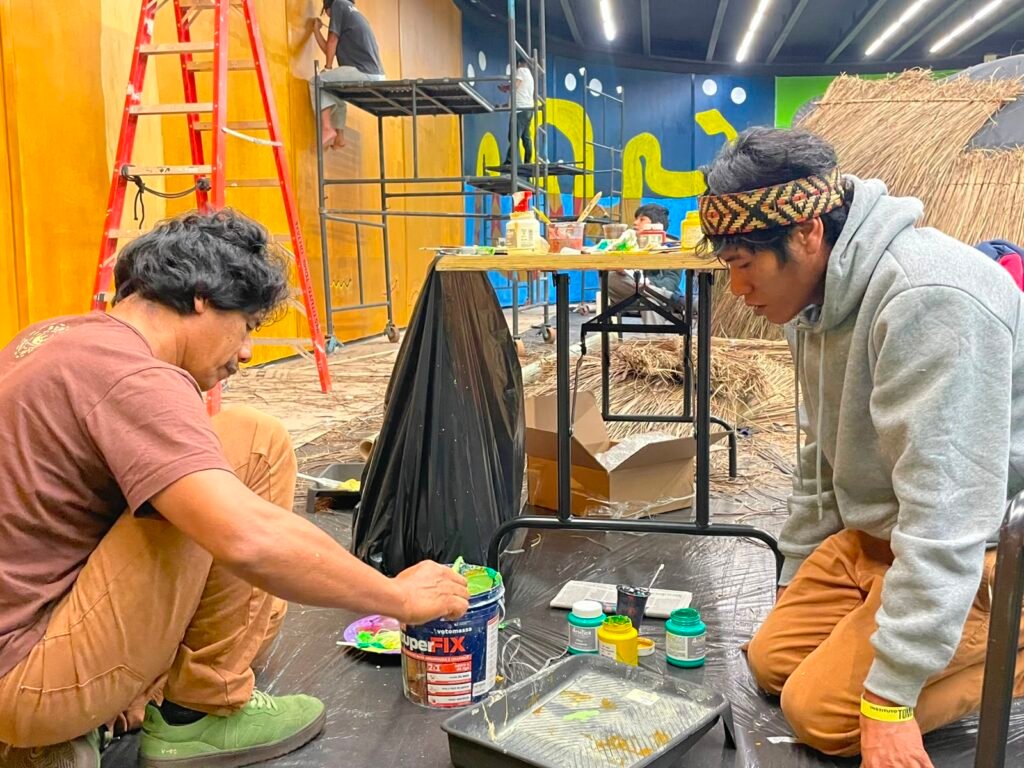
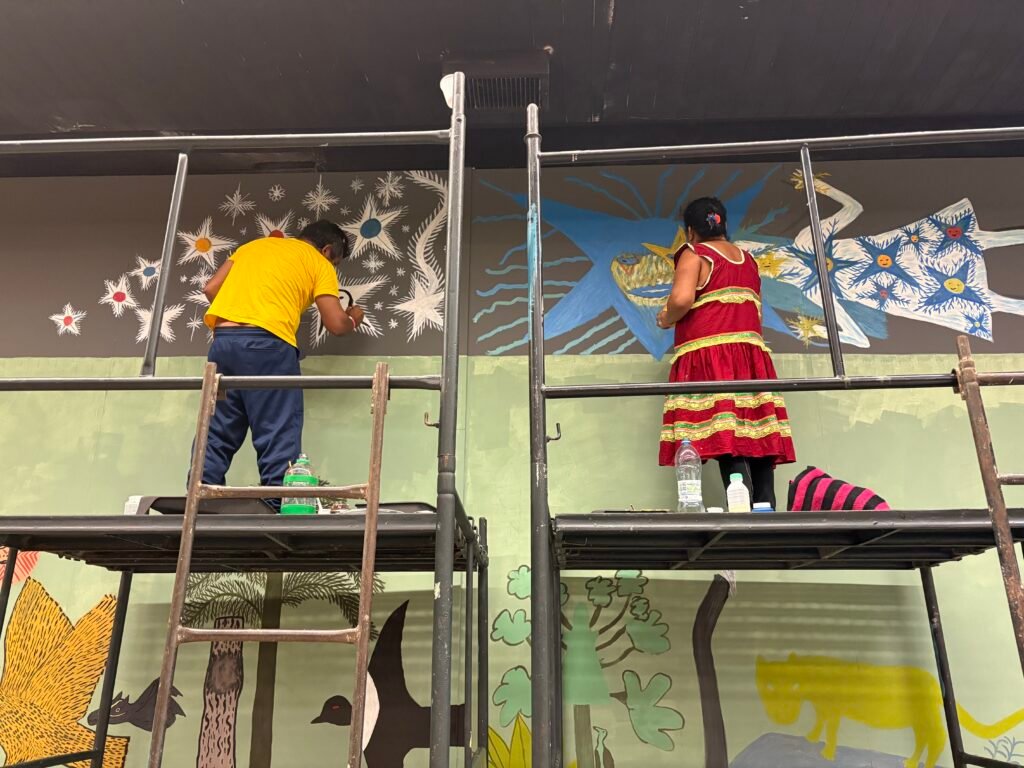
Creations during the installation of the exhibition.
Photos: Selvagem Collection
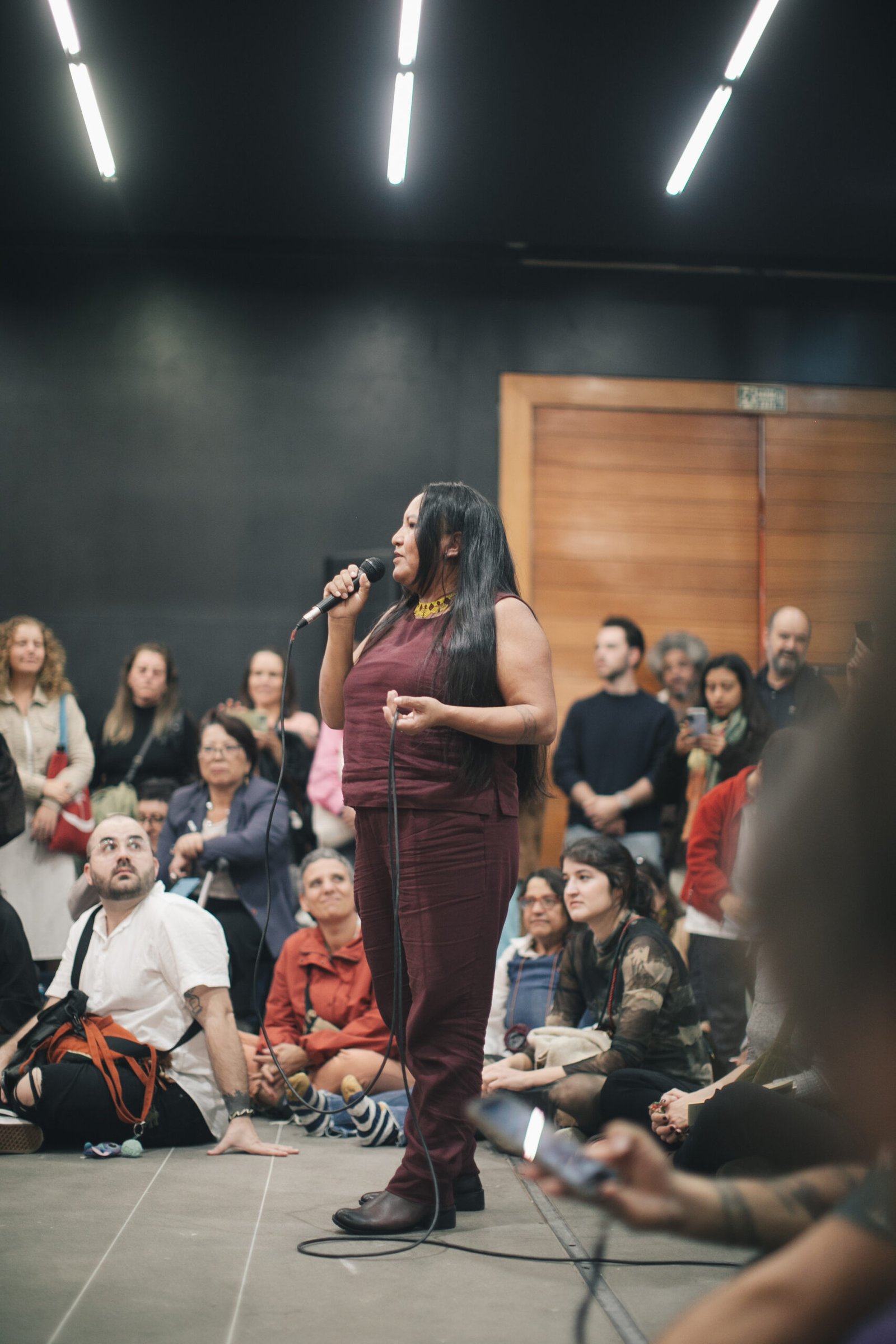
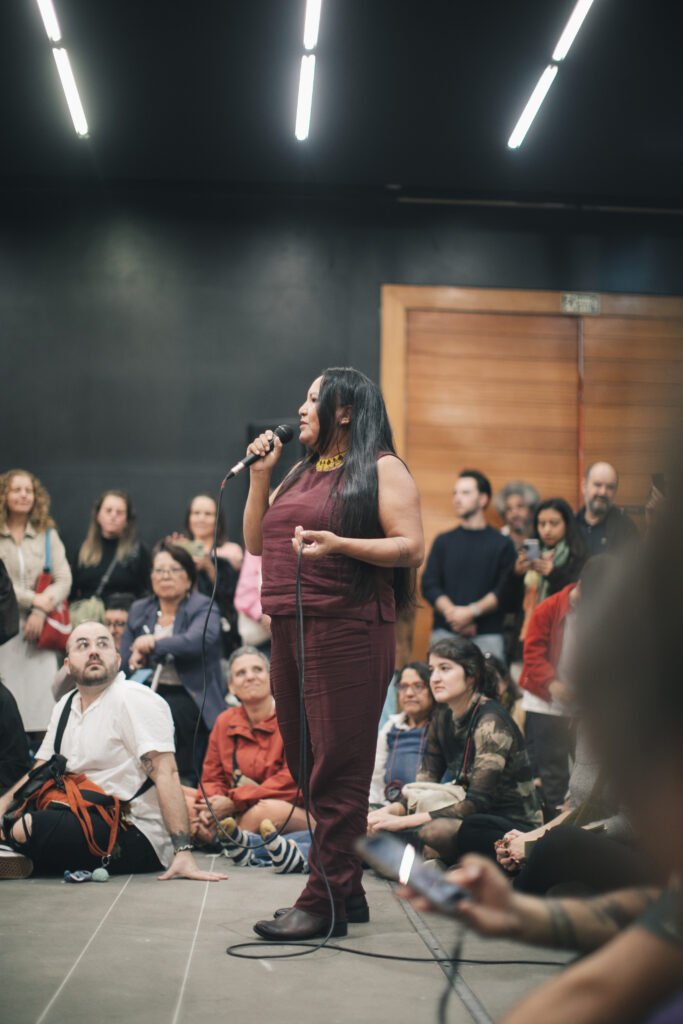
Francy Baniwa, coordinator of the Baniwa Living School, during her talk at the exhibition preview.
Photo: Filme d’água.
"We're here to share with you all the wisdom that we live in our territories. Whenever you pause to look at and contemplate a painting, know that you are taking a step onto ancestral land." - Francy Baniwa, coordinator of the Baniwa Living School
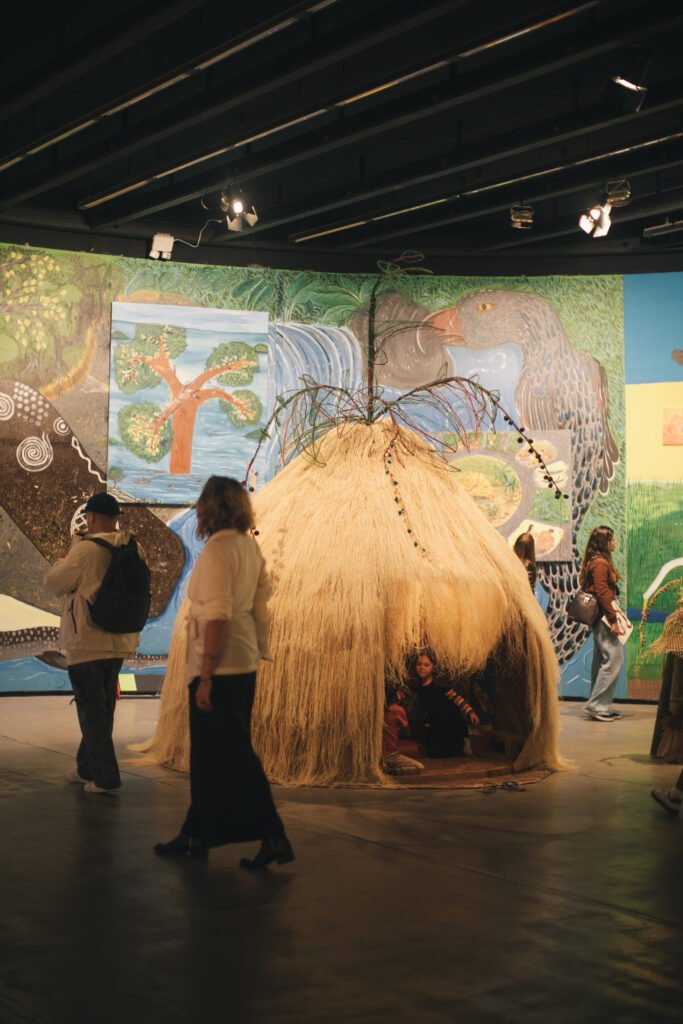
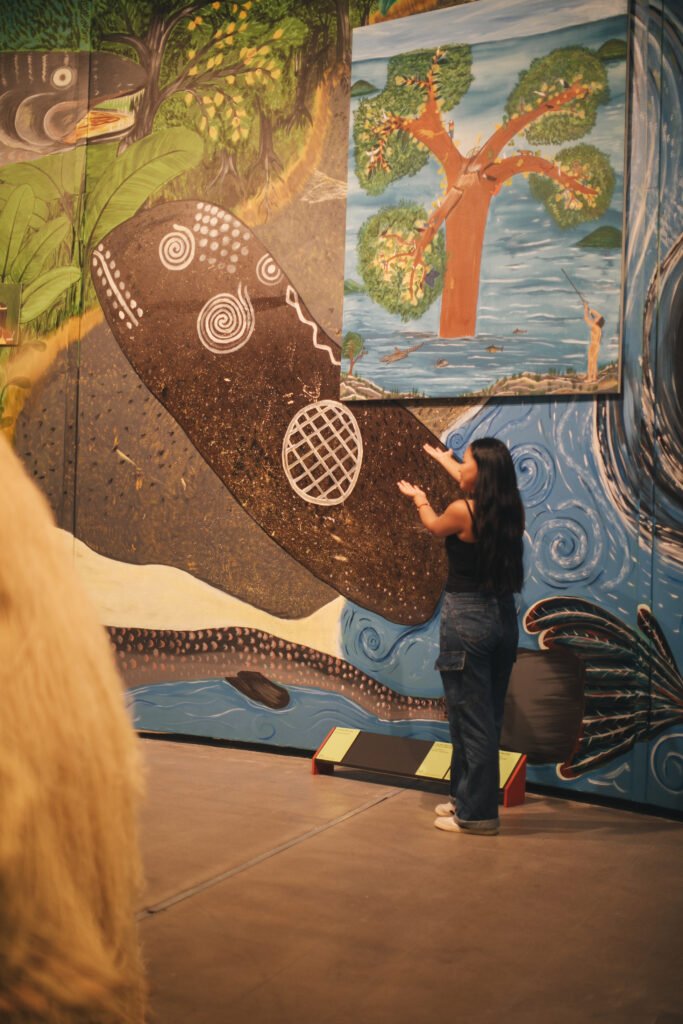
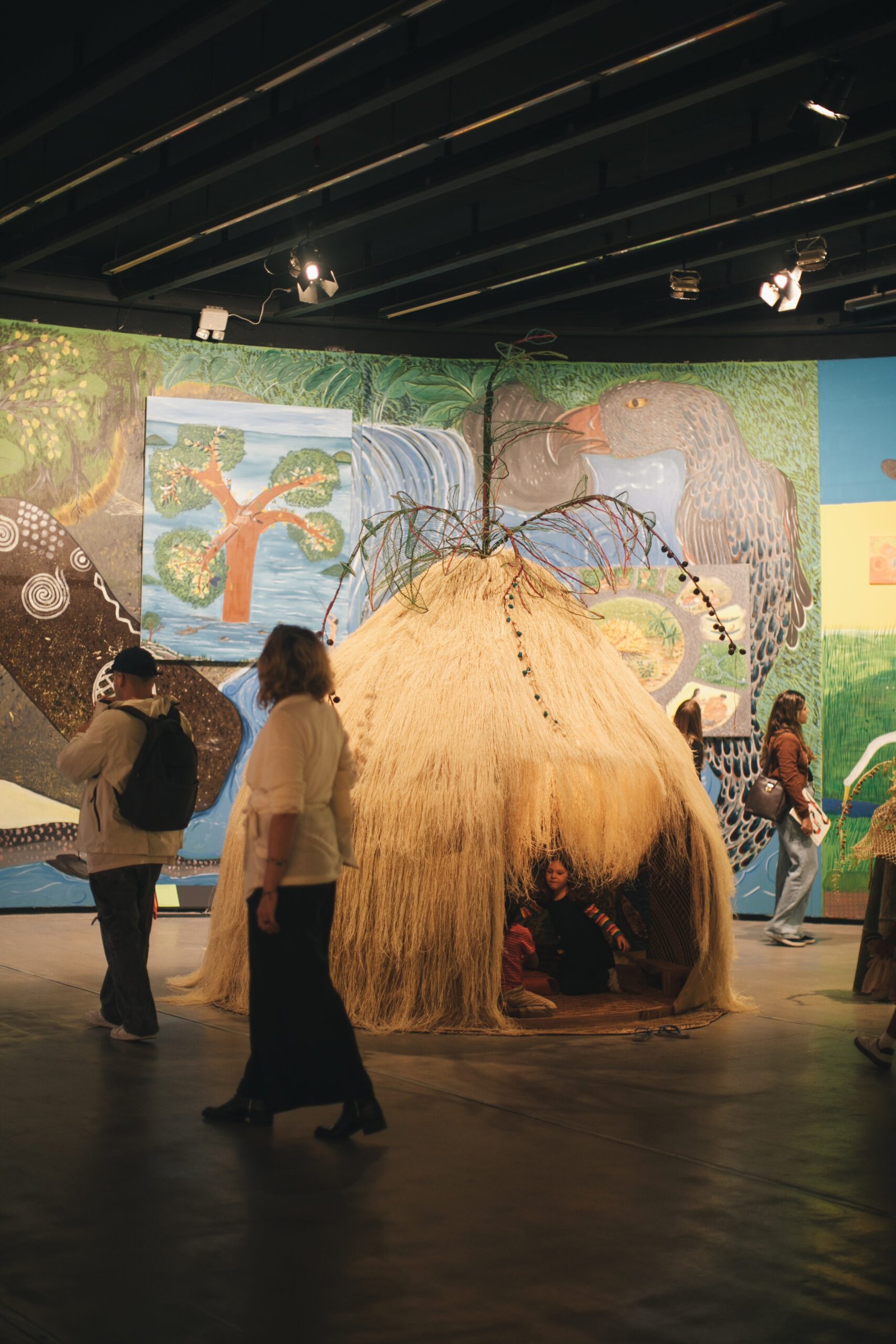
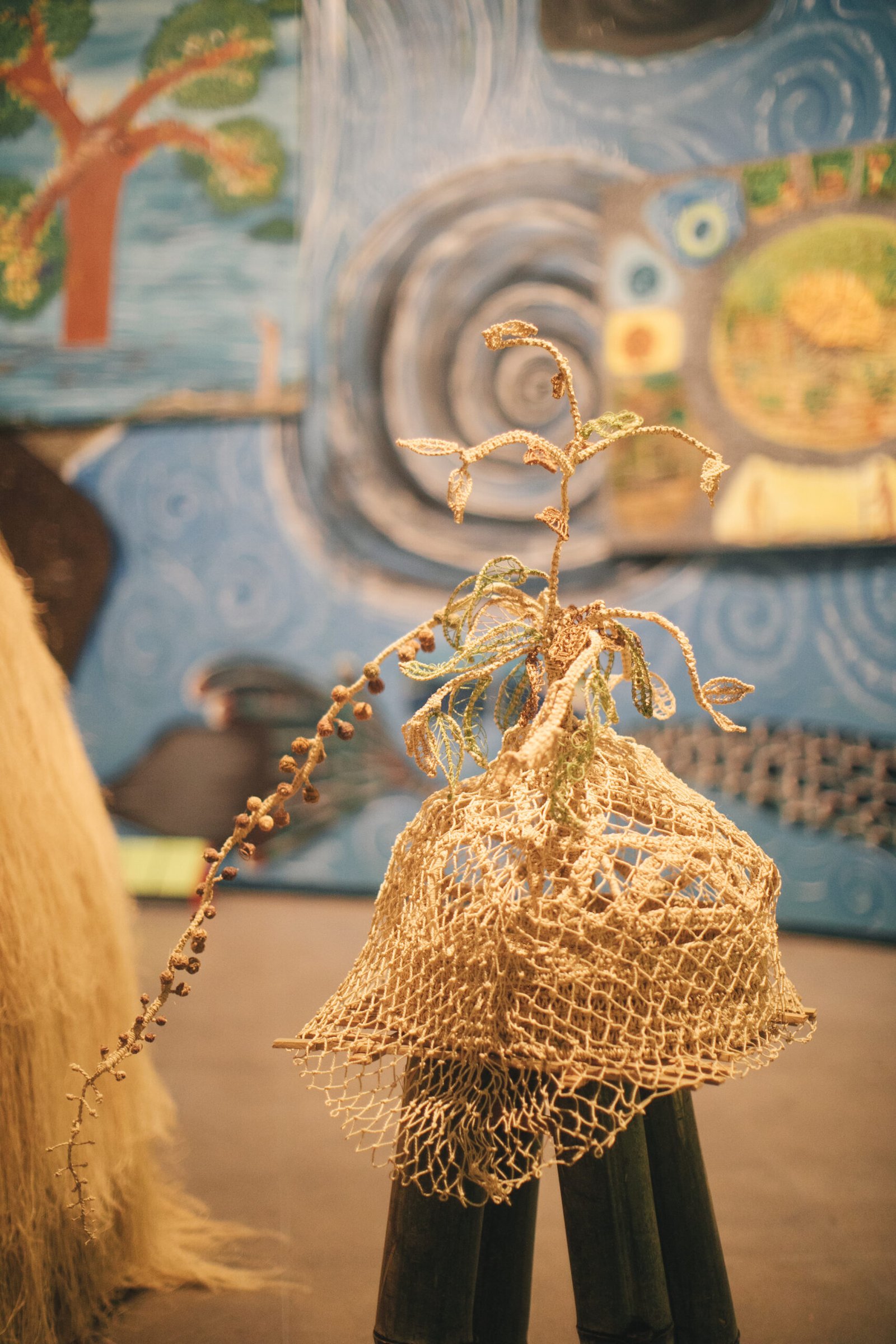
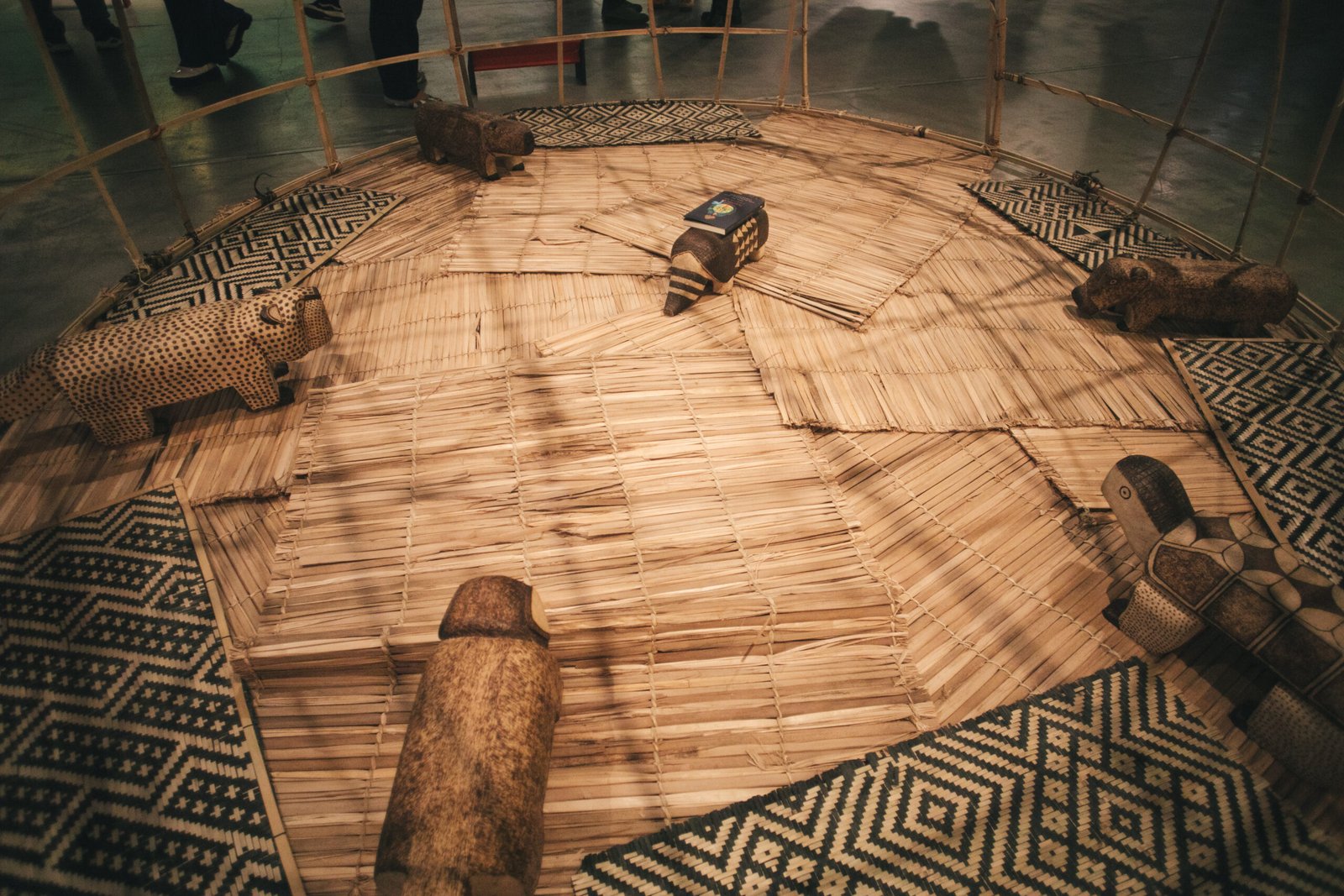
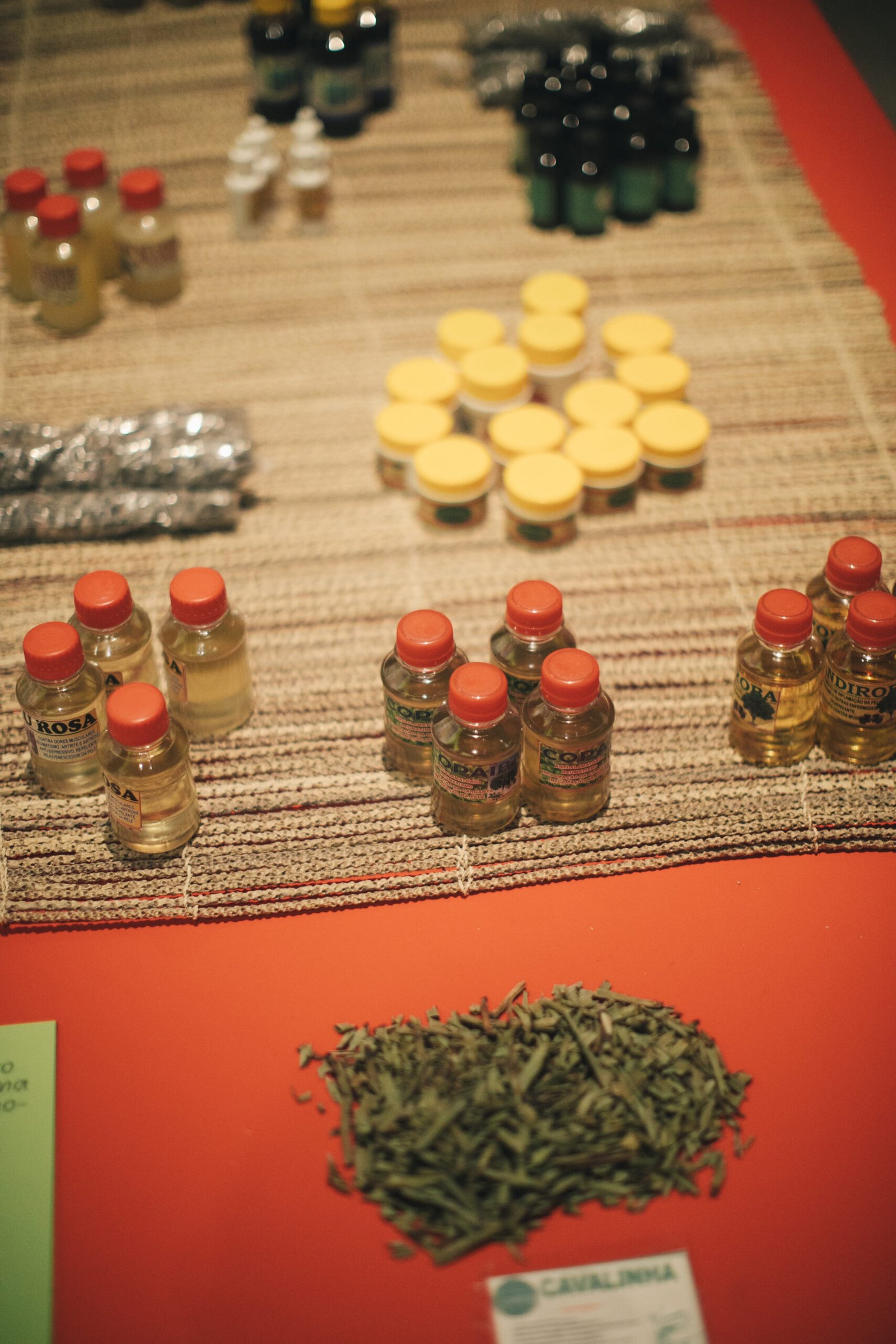
Long Live the Living School features drawings, paintings, installations, and notebooks of Indigenous knowledge published by Selvagem. Among the installations is “Navel of the World”, created by the Baniwa people: the primordial womb, whose membrane is made from painted tururi tree bark depicting the myths and teachings that accompany Baniwa pregnancy. The work began to take shape in early 2025 during a workshop held in the community of Assunção do Içana, in Baniwa territory, as part of the preparations for the exhibition. It draws on the narratives found in the bookUmbigo do mundo [Navel of the world](Dantes, 2023), written by Francy Baniwa together with her family. The installation was created in stages – from preparing the materials, to building the structure of the belly and womb, to covering it with woven tucum palm fiber using ancestral Baniwa women's techniques. Many of the kenes from the Huni Kuin people, the Guarani Living School sculpture Tekoypy rã, and the Maxakali poles and canvases were likewise created during workshops held in their territories throughout 2026.
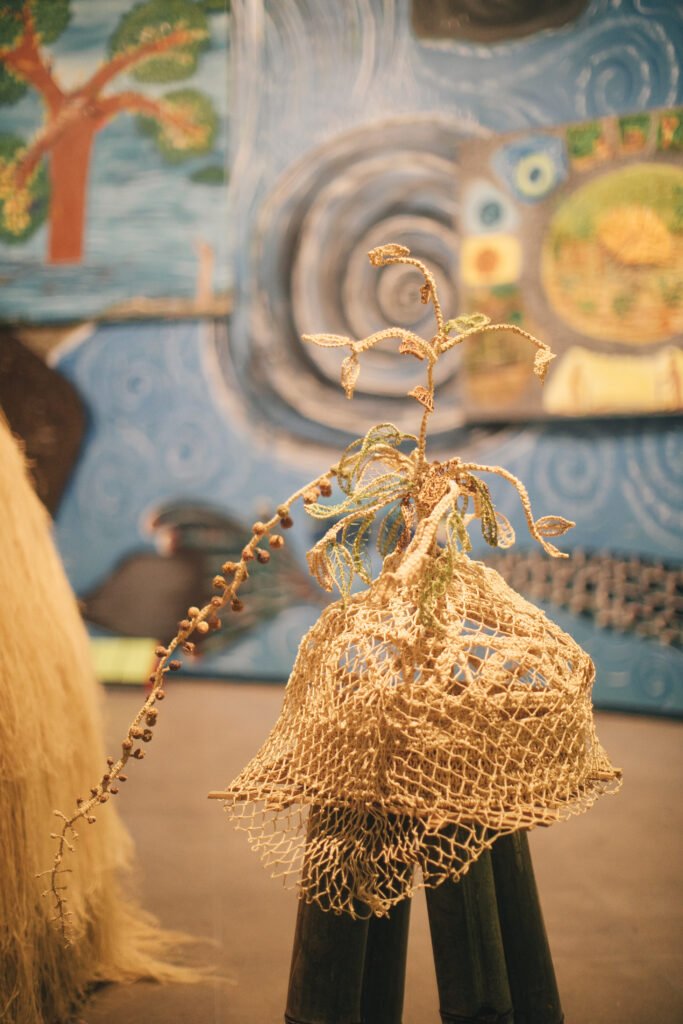
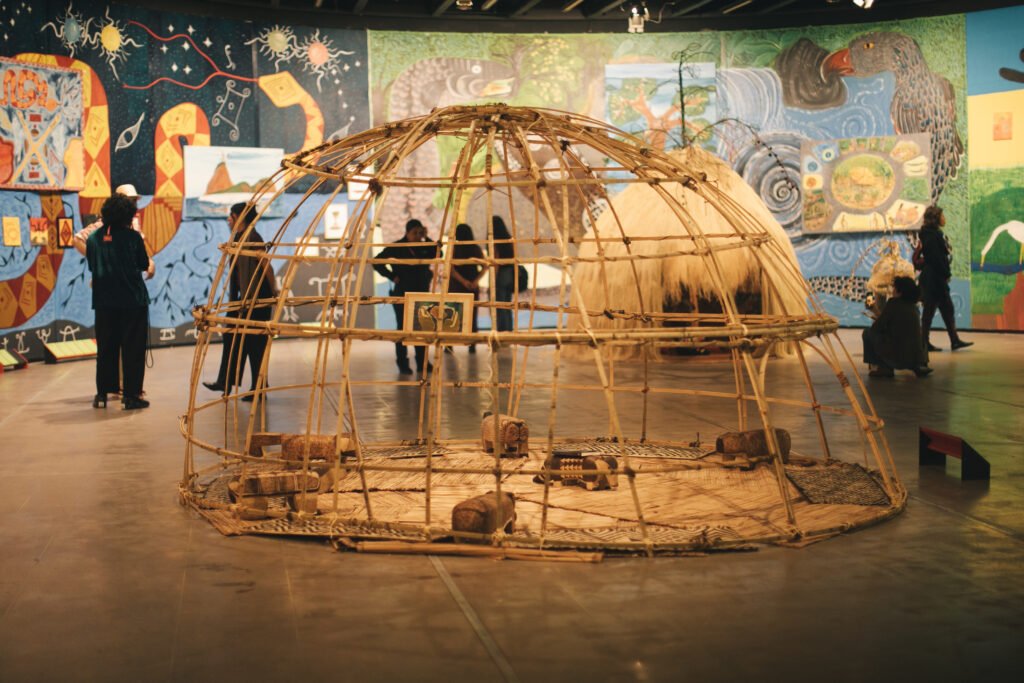
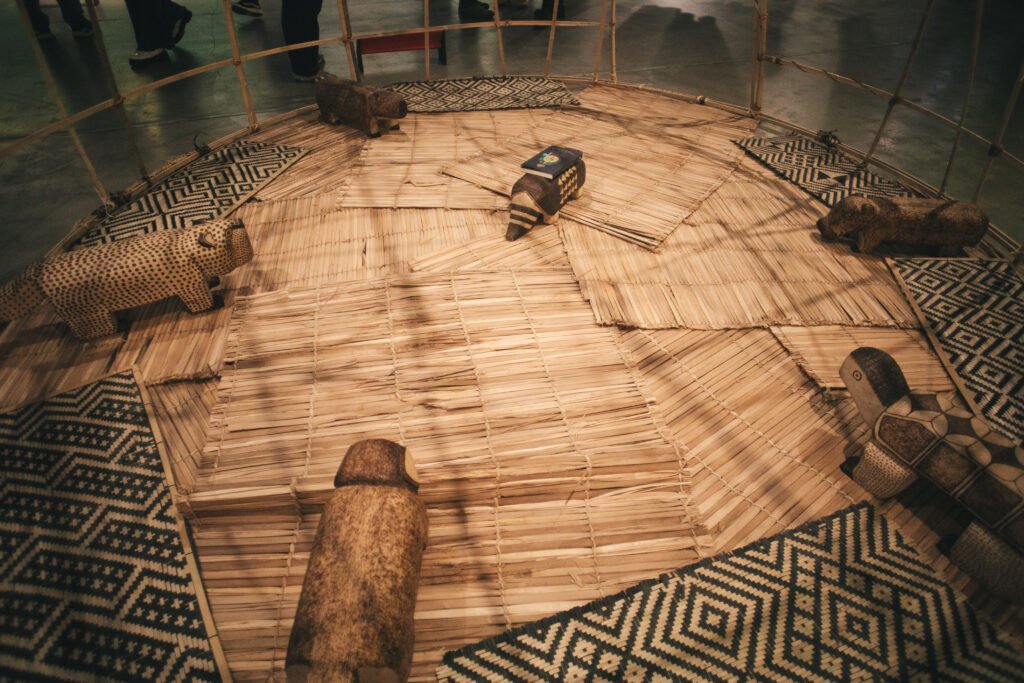
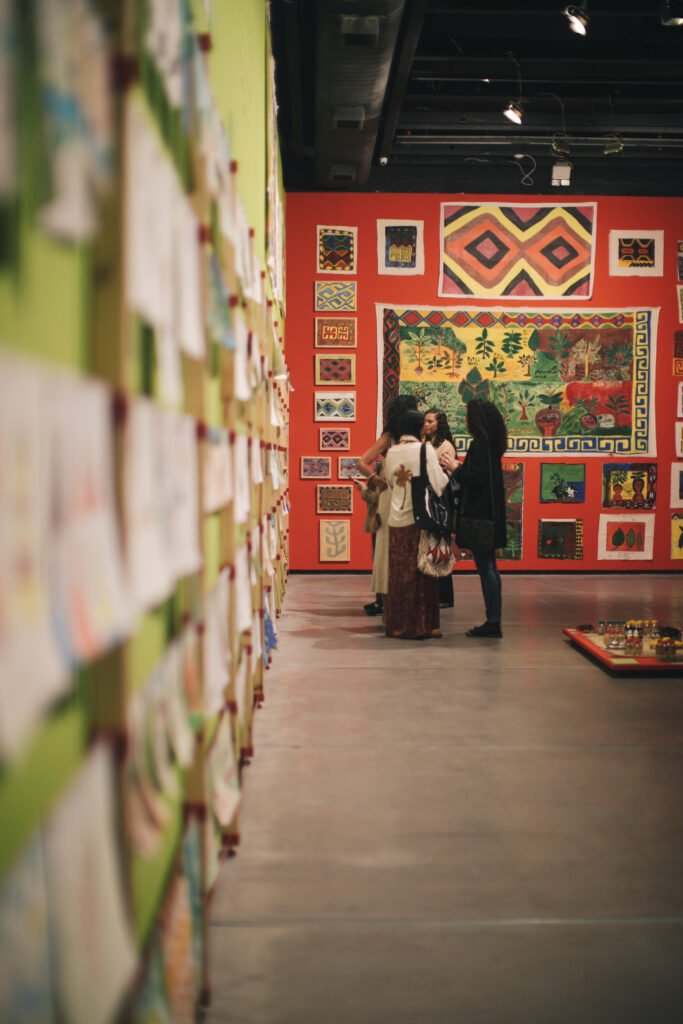
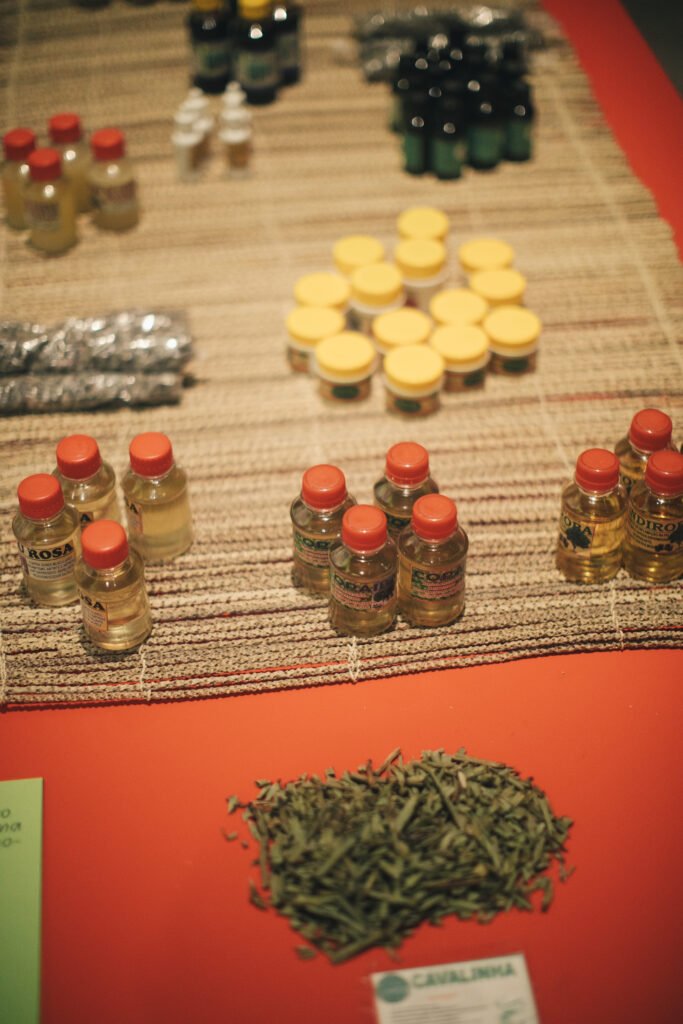
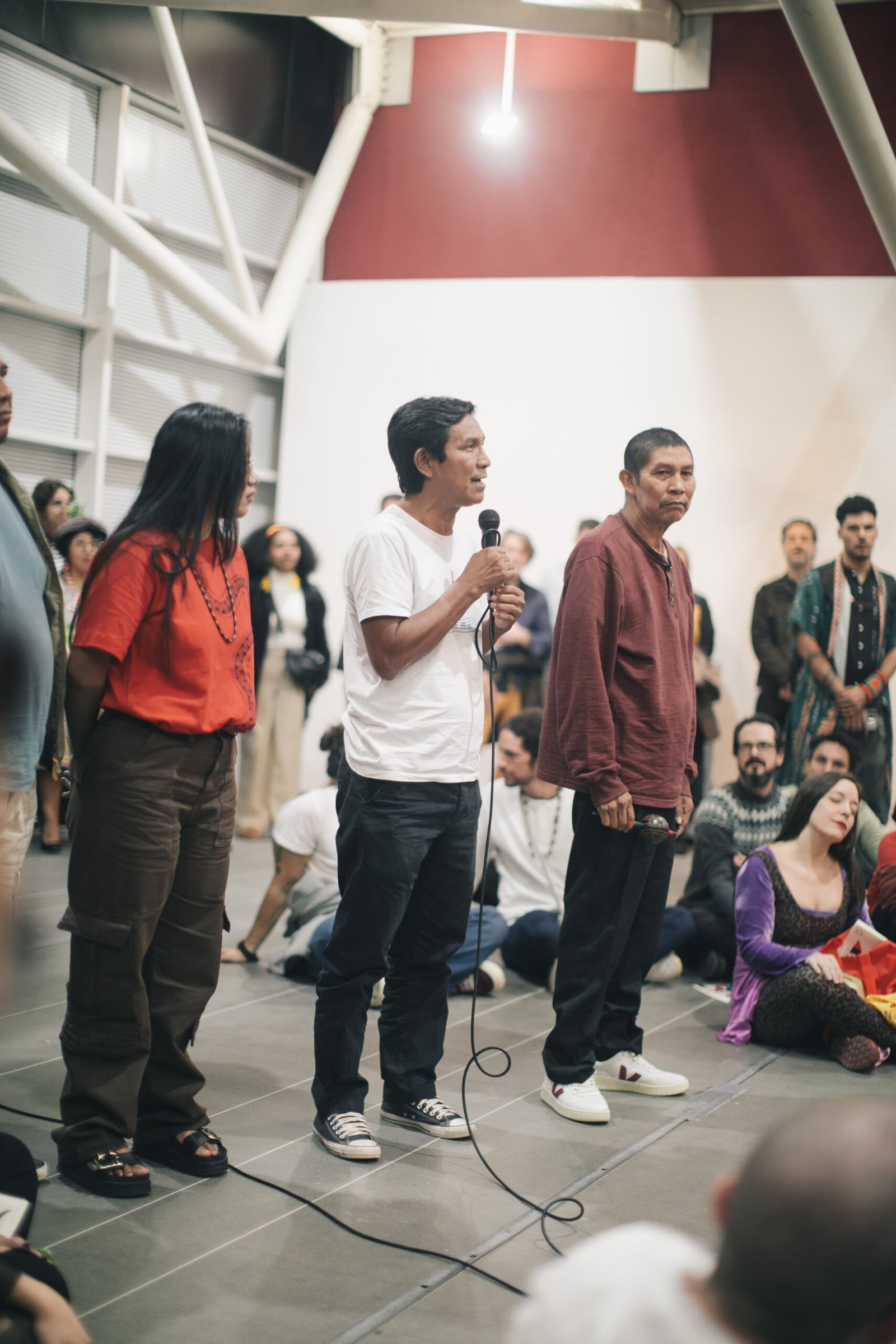
Thais Desana, João Paulo Tukano, coordinator of the Tukano-Desana-Tuyuka Living School, and kumu Anacleto Tukano.
Photo: Filme d’água.
"Every painting, every animal, every plant portrayed is a portal. Behind each one are stories, there are our stories and our ways of existing." – João Paulo Tukano, coordinator of the Tukano-Desana-Tuyuka Living School
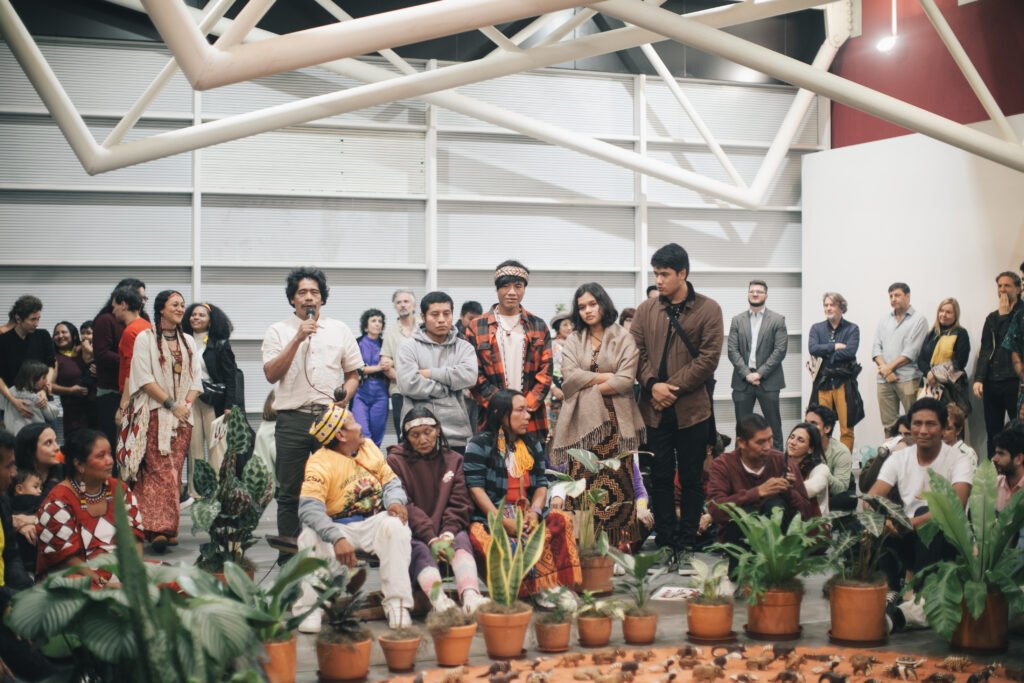
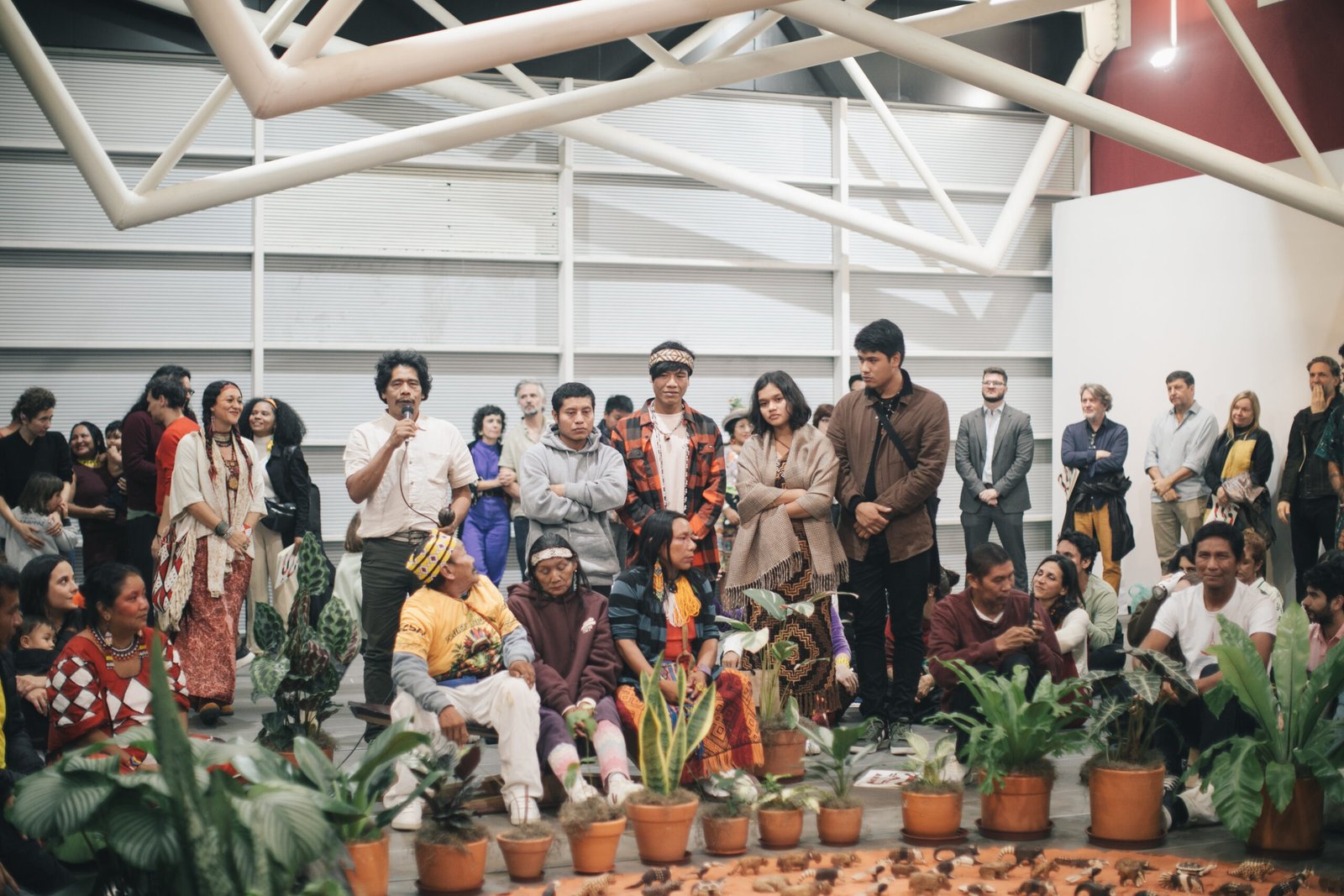
On June 9, at the exhibition preview, coordinators and artists from the Living Schools gathered alongside an audience of 1,616 people who came to see, listen, and celebrate another step of the journey shared by the Living Schools and the Selvagem Association. Throughout the evening, visitors experienced chants, conversations, Indigenous crafts, and the launch of the book "Tekoypy rã, a origem de nós [Tekoypy rã, the origin of us]" by Carlos Papá, coordinator of the Guarani Living School, published by Dantes Editora Publishing House.
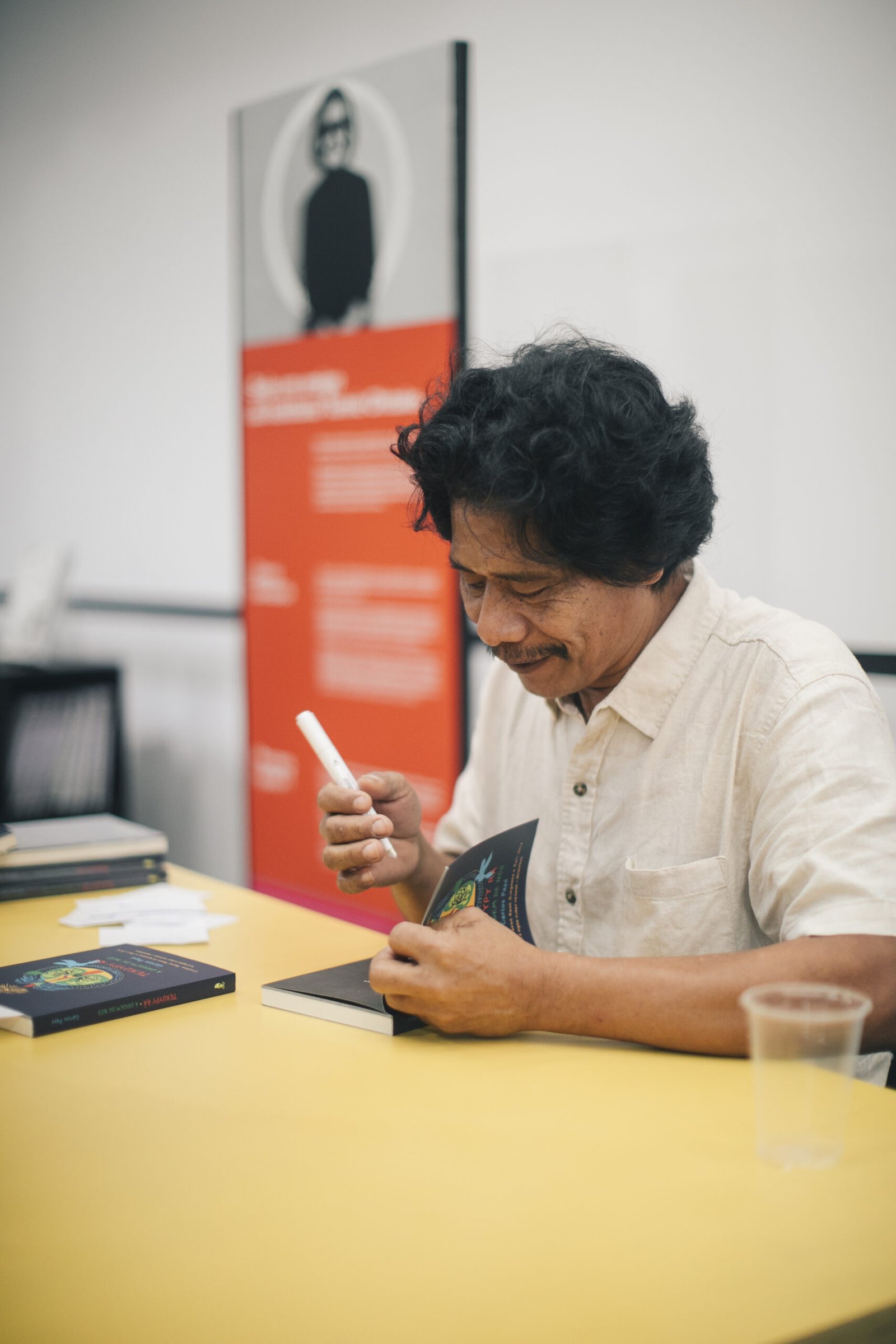
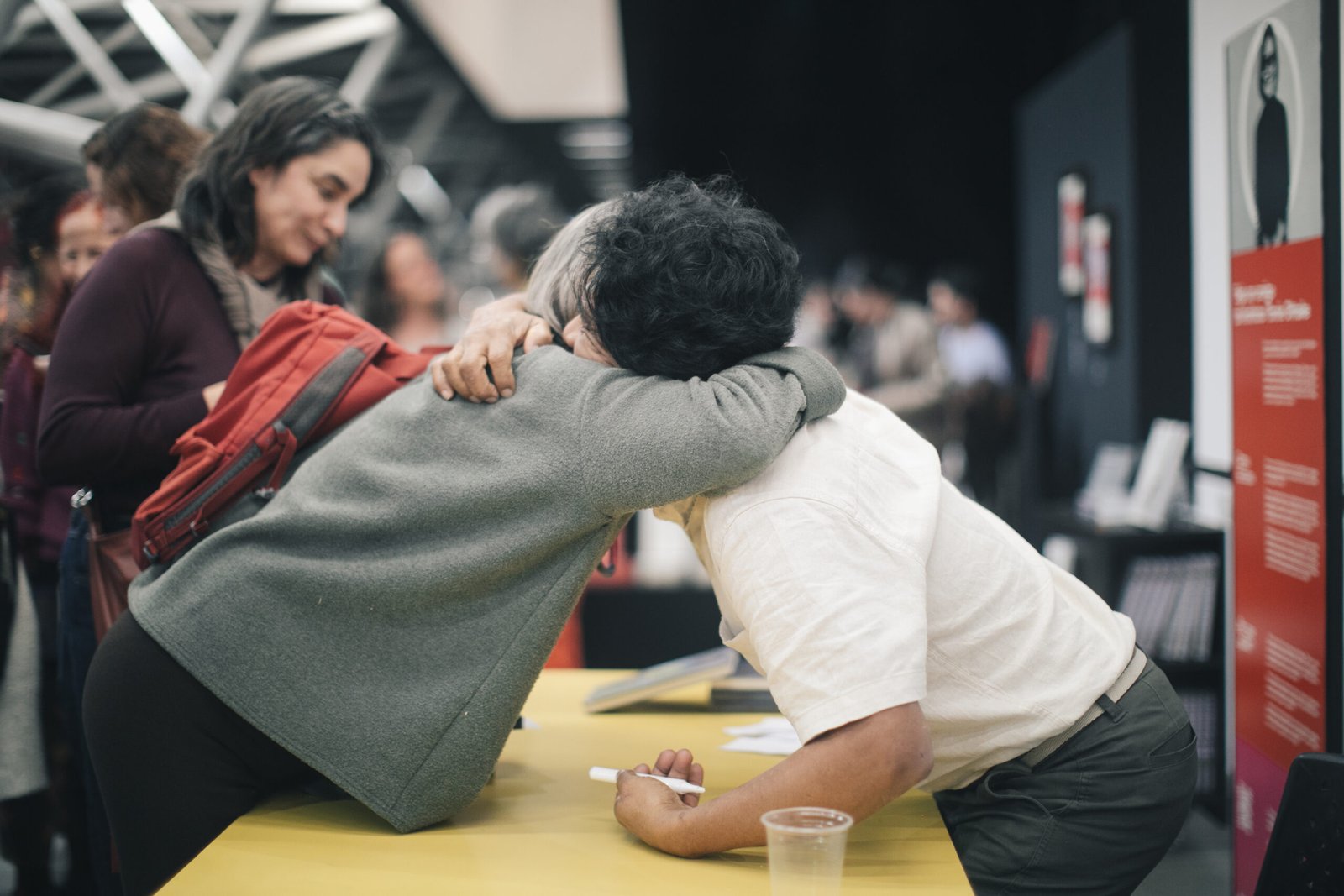
Carlos Papá, author and coordinator of the Guarani Living School, at the launch of his book “Tekoypy rã – A origem de nós” (Dantes, 2026)
Photos: Filme d’água.
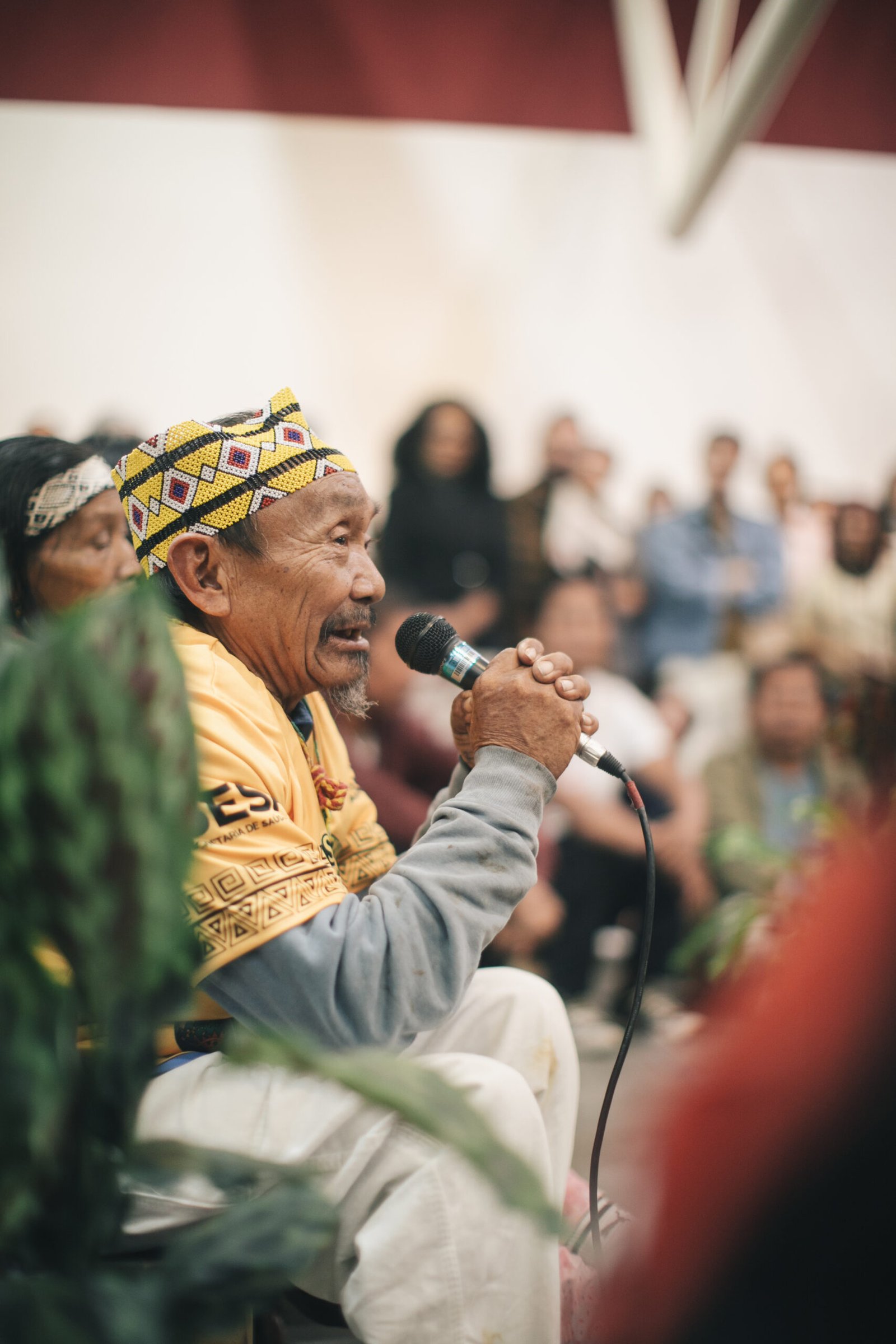
Shaman Dua Buse during his talk at the exhibition preview.
Photo: Filme d’água.
"Our Living School is no game, it is something real." – Dua Buse, coordinator of the Huni Kuin Living School
For the installation and preparation of the exhibition, the artists and coordinators of the Living Schools stayed together in a shared house in São Paulo. Following the opening, they travelled together for an immersion at the Guarani Living School in the Ribeirão Silveira Indigenous Territory. Since the first edition of the exhibition, held between December 2023 and January 2024, this was the second opportunity to bring together all the Living School coordinators in person, along with many of the artists from their communities.
The exhibition programme also includes free workshops led by Veronica Pinheiro, coordinator of the Selvagem Ways of Knowing Lab – LAS. Her workshops invite participants to shift their perspective by slowing down their gaze to observe what continues to resonate after the visit. The next workshop, “All in Memory”, is open to the public and will take place on July 11 at 11 a.m, and registration is available here.
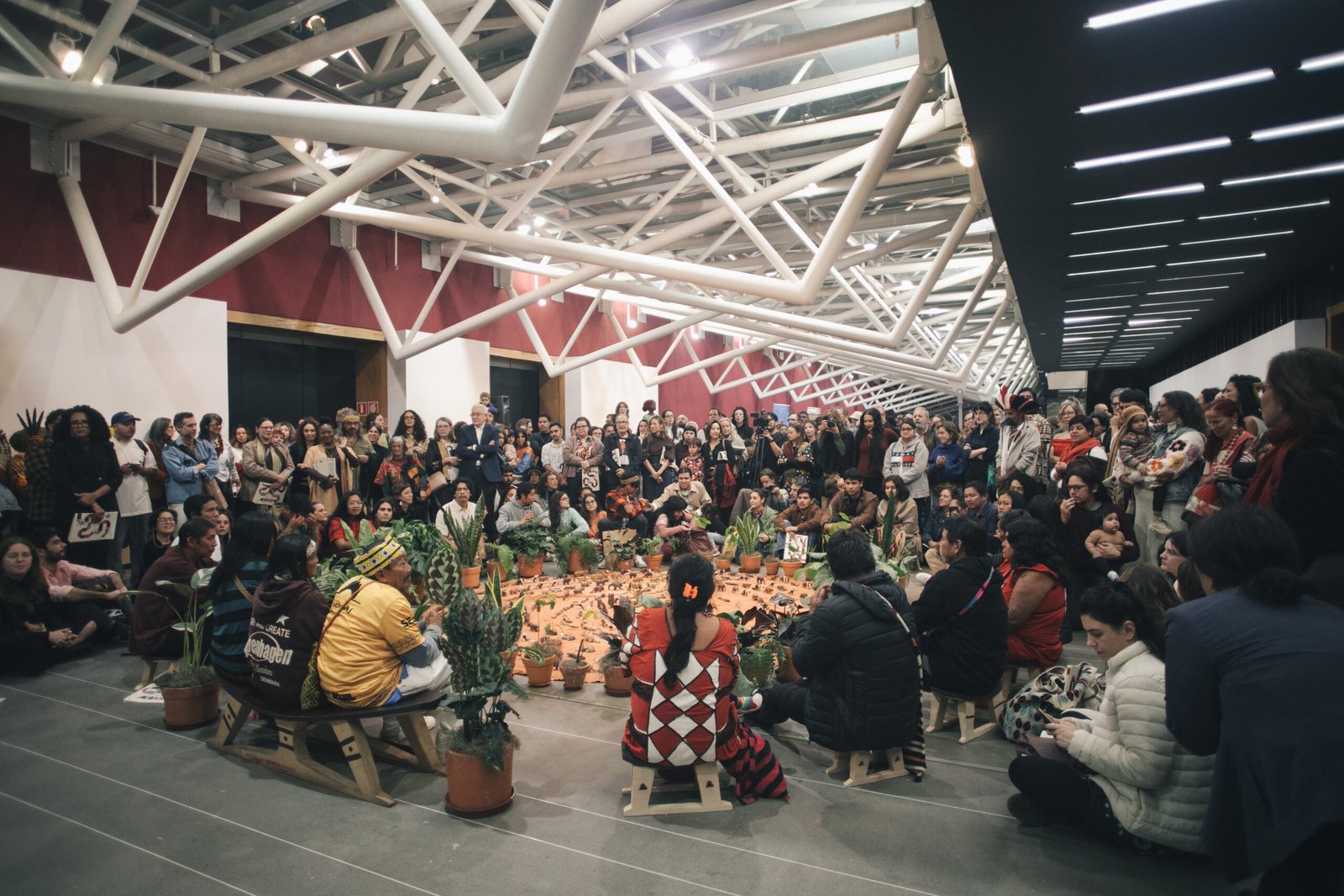
Circle of talks and chants at the exhibition's opening night
Photos: Filme d’água.
The new exhibition Long Live the Living School is a great gathering that, in the words of curator Cristine Takuá, brings together ways of thinking grounded in abundance, reciprocity, and bem viver – values rooted in ancestry, memory, forests, spirits, and territories, and now generously shared with the public. To delve deeper into the exhibition:
Workshops in the territories
As an extension of the Living School House residency and the partnership with the Tomie Ohtake Institute, artistic workshops were held in the territories of the five Living Schools between 2024 and 2026. Three of these workshops took place after the Living School House residency, in collaboration with the Guarani, Maxakali, and Huni Kuin Living Schools, resulting in the paintings, installations, and artistic objects that are now part of the exhibition. These workshops continued the processes initiated during the residency, expanding collective creation within the communities' own territories.
To learn more, you can read the article "Long Live the Living School": Pathways to the New Living Schools Exhibition on our website and watch the videos of the Guarani, Maxakali, Huni Kuï and Tukano-Desana-Tuyuka workshops on the Selvagem YouTube channel.
Living School House Indigenous artistic residency
The Living School House residency page offered 10 Living School artists, 2 from each of the 5 Living Schools, the opportunity to dedicate themselves entirely to artistic creation for two weeks at the Museum of Modern Art of Rio de Janeiro (MAM Rio), where children were also welcomed and actively participated in the creative process. At MAM Rio, the residency was coordinated on a daily basis by visual artists and educators Vidi Descaves and Olivia Silveira, who welcomed and encouraged the artistic practices that each participant brought from their own territory while also creating opportunities for learning and new ways of seeing.
The residency focused on fostering exchanges among the Indigenous artists while offering them the opportunity to dedicate themselves fully to artistic creation over an extended period. At its conclusion, the public was invited to visit an open exhibition presenting both the artists and the works produced during the residency, which welcomed more than 200 visitors. It was the first time that Bloco Escola [School Block] had hosted Indigenous artists and, moreover, the first entirely Indigenous artistic residency, deeply connected to the territories and communities of origin through the Living Schools movement.
Alongside the artists’ daily work in the Bloco Escola studios, the residency also included visits to two exhibitions at MAM Rio, to Sugarloaf Mountain, and to the studio of visual artist Mucki Botkay; a workshop on the preparation and use of natural pigments led by Jhon Bermond; a children's painting workshop with Veronica Pinheiro, coordinator of the Selvagem Ways of Knowing Lab (LAS); and the conversation “Is Art a Commodity?”, which brought together around forty participants – including representatives from museums, universities, galleries, and cultural organisations, alongside Living School artists and coordinators – to talk about the presence of Indigenous art within artistic circuits.