




SELVAGEM WORKSHOPS AT THE "LONG LIVE THE LIVING SCHOOL" EXHIBITION
experiences through the body, memory and imagination
7 July 2026
Alongside the Long Live the Living School exhibition, the new exhibition from the Living Schools movement currently on display at the Tomie Ohtake Institute (São Paulo) until 9 August – a series of educational activities is taking place, inviting the public to experience the exhibition using more than just their two feet. Co-organised by Associação Selvagem, the Long Live the Living School exhibition features a programme which, in addition to guided tours and hands-on activities in the studio, includes workshops with Veronica Pinheiro, coordinator of the Selvagem Ways of Knowing Lab – LAS, alongside musician Odé. These workshops draw on the narratives, cosmologies and knowledge of the masters and mistresses of the Living Schools to create and share human and non-human memories and experiences.
The next workshop open to the public, “All in Memory”, takes place this coming Saturday, 11 July, at 11.00 am, and to take part, register here.
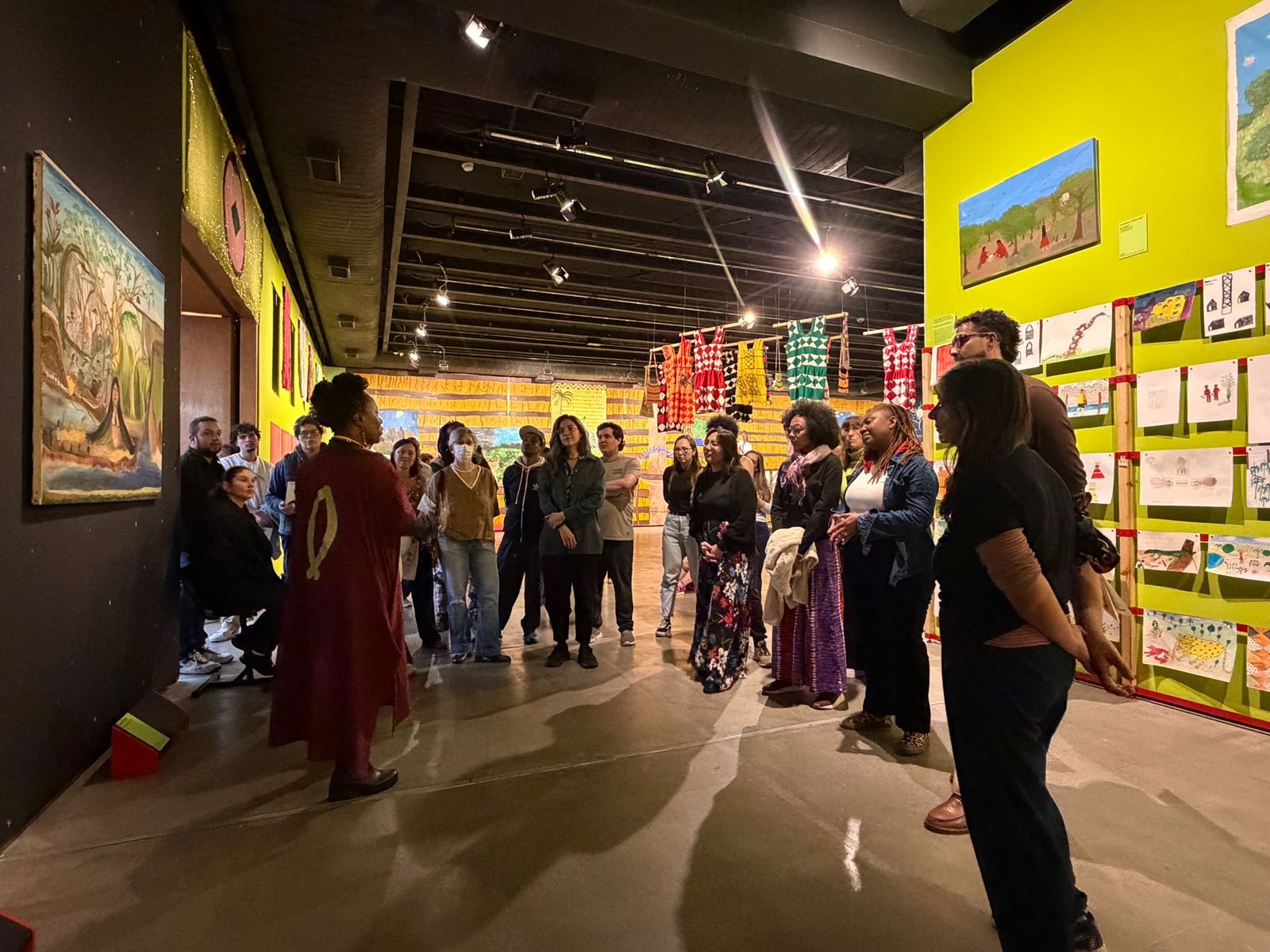
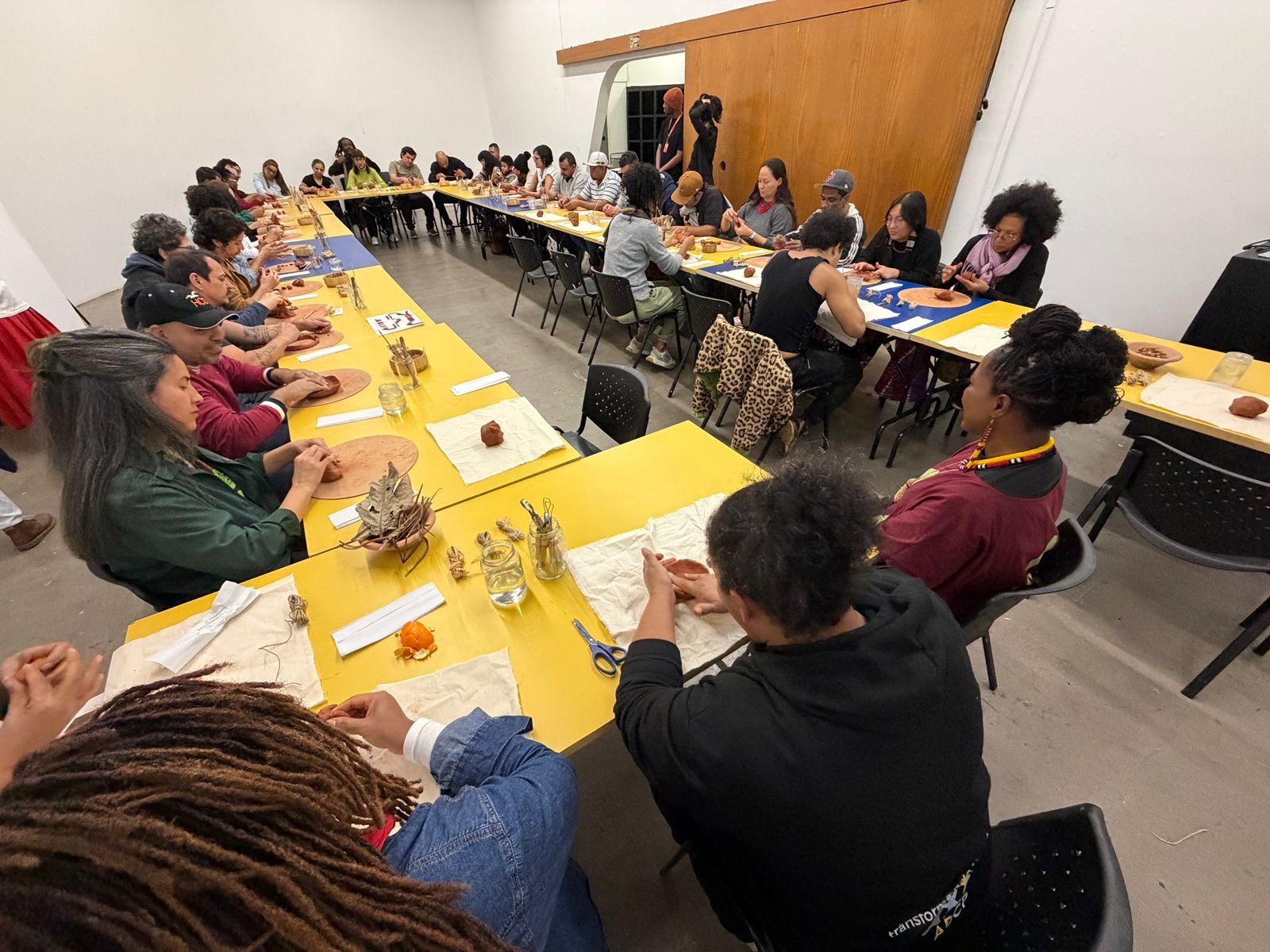
“All in Memory” workshop, led by Veronica Pinheiro for teachers and educators, at the Tomie Ohtake Institute.
According to the Tomie Ohtake Institute’s Education Team, 505 people have so far taken part in the exhibition’s educational activities, including students, teachers and members of the general public, as well as groups such as the ‘Mothers for Diversity’ Sociocultural Project, participants in the Residência Juntó [Juntó Residency] (Black Experiences Programme), teachers from the state and private school systems, and professionals from museums and the cultural sector.
In addition to guided tours and activities from the “Awakening Memory” workshop – which invites visitors to transform their memories into creative works at the end of the exhibition – the programme included the workshops “Navel of the World” and “All in Memory” with Veronica Pinheiro, the next session of which will take place this coming Saturday, 11 July, at 11.00 am. At the end of the month, Veronica will also be working with the Guarani Living School on the workshop "The Warrior's Dream", aimed at young Guarani people from the Jaraguá Indigenous Territory, exploring experiences of the quilombola communities and those living on the city’s outskirts through themes of territory and belonging.
On 11 July, the “All in memory” workshop offers a unique and unconventional way of experiencing the exhibition, inviting nature and the enchanted to take part in the life present in each artwork. According to Veronica, “a canvas is many things besides a work of art, and the aim of this mediation is to activate the forces of life and existence”. To take part in the workshop, register via the Tomie Ohtake Institute’s website..
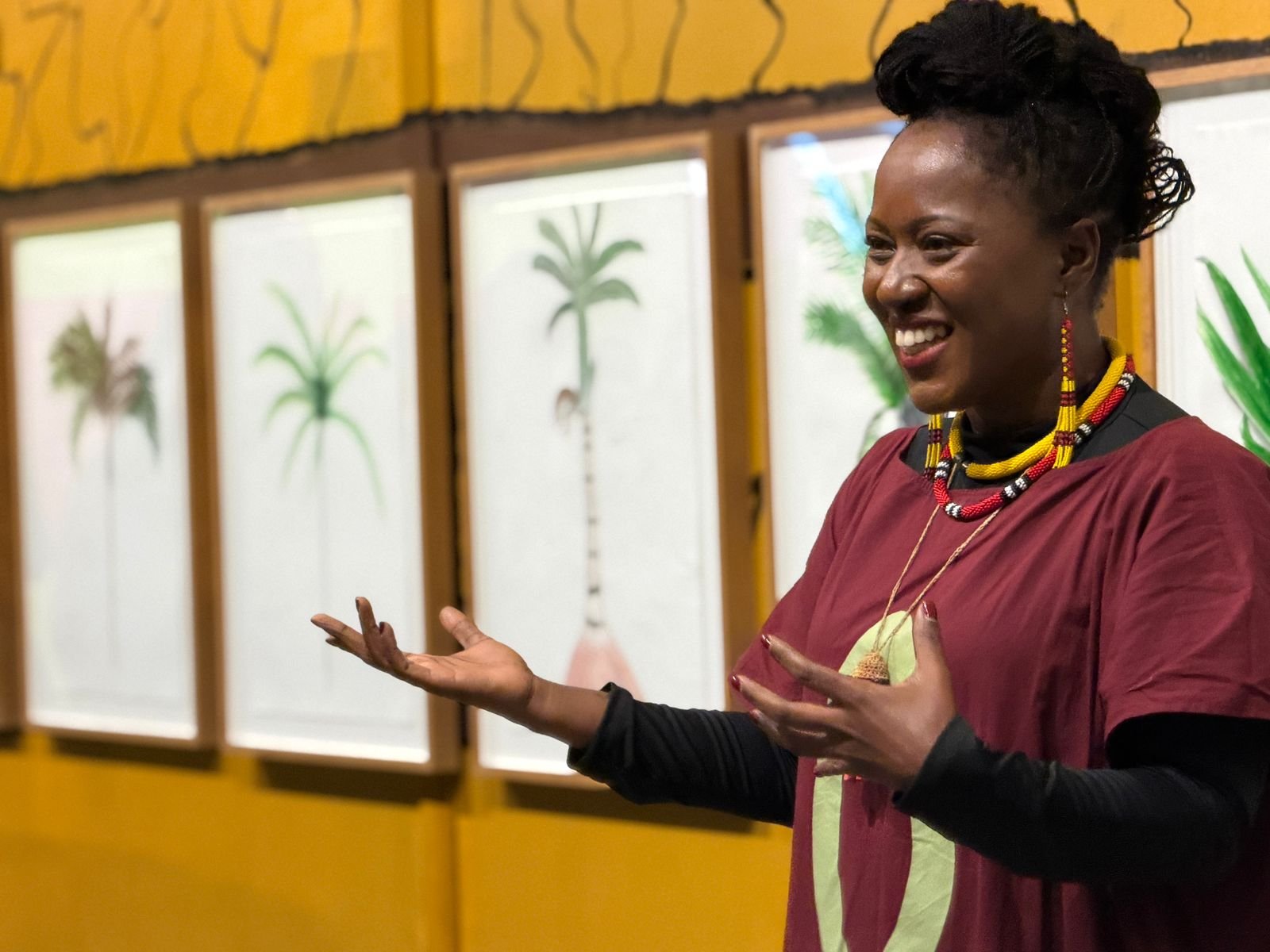
Veronica Pinheiro, who is carrying out the Selvagem workshops at the Tomie Ohtake Institute.
Mariana Per, head of the Institute’s Educational Programme, explained that one of the most common responses from participants in the workshops and other activities is the discovery of the breadth of Indigenous thought and the depth that the exhibition invites them to experience. According to her, the works particularly encourage teachers to reflect on how to teach the histories and knowledge of Indigenous peoples, stimulating new ways of studying and preparing lessons. To this end, visitors are invited to access materials such as the Selvagem notebooks printed for the exhibition and the book "Tekoypy rã – A origem de nós", by Carlos Papá, available at the Institute’s shop and via the Dantes Publishing House website.
By the time the exhibition closes on 9 August, at least seven schools and a group of teachers are expected to visit, as well as guided tours and workshop visits for members of the general public, in addition to Veronica’s workshops. This month, the Tomie Ohtake Institute’s Education Department has also launched accessibility initiatives such as the ‘Deaf Saturday’ Project, a monthly programme featuring guided tours in Brazilian Sign Language (Libras) of the three exhibitions currently on display at the Tomie Ohtake Institute: Long Live the Living School exhibition, Quando o Museu é Rio [When the Museum becomes a River] and Luiz Zerbini – Estrelas Escolhidas [Luiz Zerbini – Chosen Stars]. Between 21 July and 2 August, a further ten activities linked to ‘Long Live the Living School’ will also take place, forming part of the Tomie Ohtake Institute’s summer holiday programme with featured performances, guided tours and games.
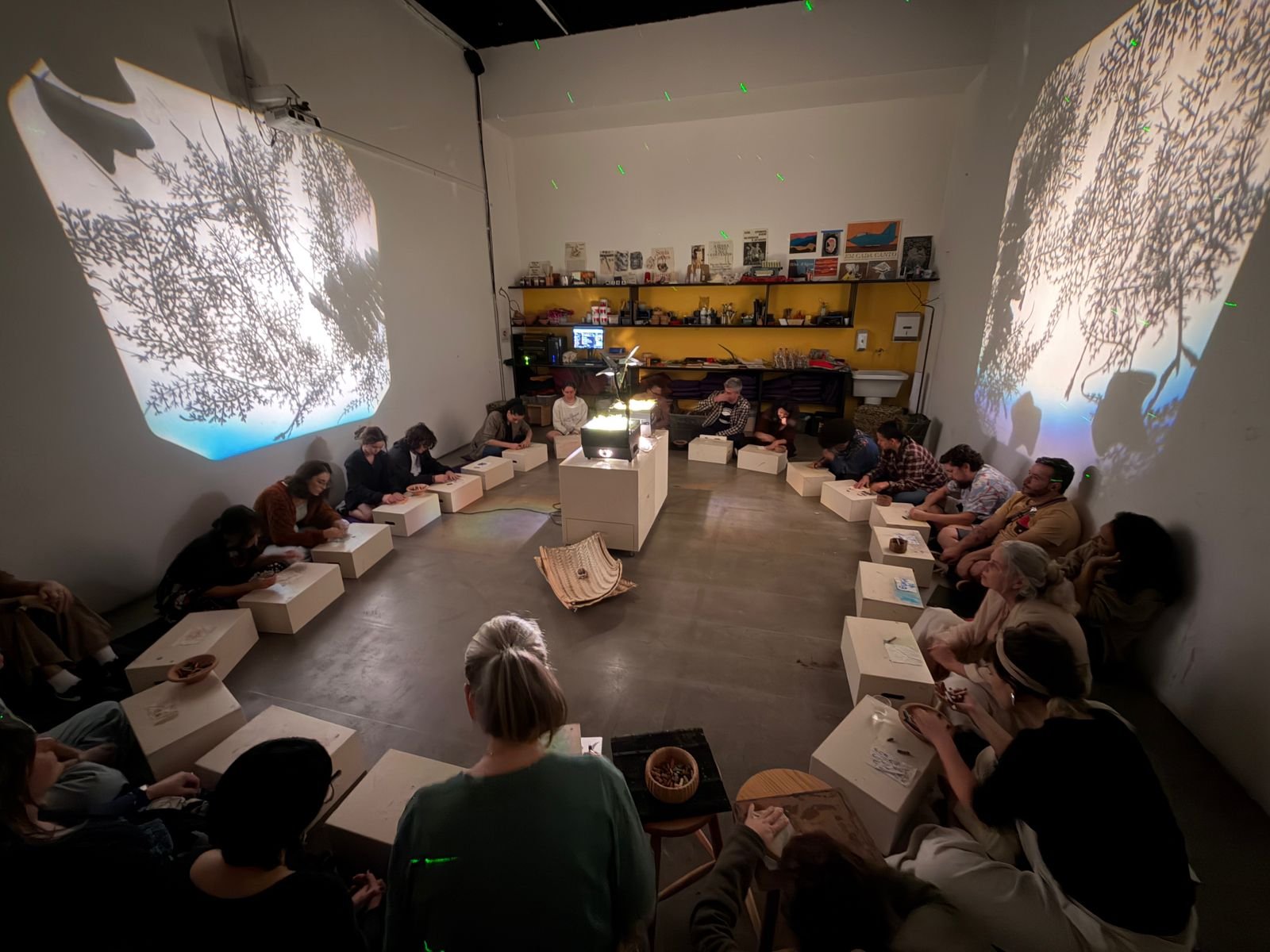
Activity in the ‘Awakening Memory’ atelier at the Tomie Ohtake Institute’s Education Department.
"All in memory" workshop
The first edition of “All in Memory” took place on Saturday 27 June and was primarily educational in nature, offering an engaging experience for the 40 teachers in attendance, who included professionals from the state and private sectors, basic education, universities and museum education programmes. The workshop introduced the exhibition through information, processes and references, whilst also fostering a dialogue with beauty, life and the potential for affection within the exhibition space through songs and games. Together with the musician and master Odé, Veronica led a guided tour of the exhibition, framing it as a journey between worlds and showcasing the knowledge shared by the Living Schools. She spoke about the process of creating the works, the workshops held in the communities, and the Living School House artistic residency, which took place in October 2025 at the Museum of Modern Art in Rio (MAM Rio). The residency also gave rise to the film Our hand is a flower and a series of publications featuring testimonials from the artists of the Living Schools.
In line with Law 11.645/2008, which mandates the teaching of indigenous history and cultures in schools, the workshop demonstrated how indigenous knowledge transcends the conventional divisions of the school curriculum. Discussing how painting, technology and science intertwine and can stem from a song, a memory or a narrative, the activity explored art as a source of belonging, healing and presence, organised and sustained through oral tradition. Through circles, games and songs, themes such as graphic symbols, medicinal plants, territories and cosmologies were explored, and, in the end, clay served as the medium for recording impressions of these living archives. During the visit, the educators were invited not to take notes, but to construct their memories of the encounter through their creations. With their eyes closed, everyone reflected on the mediation process and transformed the Tomie Ohtake Institute’s education studio into a cradle of memories, where they shared their drawings, sculptures and emotions following a morning brimming with life.
"Navel of the world" workshop
On Friday 26 June, around 30 children from the CEU Nazaré Neri Lima school, located in the eastern district of São Paulo, took part in the ‘Navel of the World’ workshop, accompanied by their teachers. Inspired by the expression and ancestral mythical narrative of the Baniwa people, “Navel of the World” – which also gives its name to Francy Baniwa’s book (Dantes, 2023) and to one of the installations in the exhibition – the workshop aimed to bring the cosmologies of the indigenous peoples of the Living Schools closer to the children’s own experiences and memories, through games and singing.
Before touring the exhibition, the pupils gathered around the Jardim Vivo [Living Garden], inhabited by the creatures of the Atlantic Forest, known to the Guarani people as Nhe’ëry. In this circle, they were able to introduce themselves and each chose a plant or animal to embody, based on the recognition that a territory is made up of many forms of life, just as a museum can be. Together with Master Odé, the children sang and were also able to play wind and percussion instruments in a circle, calling life to life through song, just like the paintings from the Huni Kuin Living School and the Maxakali Living School.
On entering the exhibition, the children were given some time to look around the room. Left to their own devices, they made their way towards the Upper Rio Negro, where they were able to experience the smells and textures of the ‘living pharmacy’ at the Tukano-Desana-Tuyuka Living School. The installations ‘Umbigo do mundo’ (Navel of the World), by the Baniwa Living School, and ‘Tekoypy rã’ (Tekoypy the Frog), by the Guarani Living School, were also among their first stops. Upon discovering the little stools and the animals inside them—which they said looked like little houses—Veronica recalled the words of Carlos Papá, the teacher, artist and coordinator of the Guarani Living School, who appears in the film Our hand is a flower, in which he says that, for the Guarani, “we don’t call it ‘art’, we call it ‘playing’, which is mbavyky“.
‘The Navel of the World’ served as a meeting point for a new conversation about the knowledge each of us carries within us, about the ways in which we are all connected to one another, about dreams, and about what this connection brings about. Excerpts from the book *Umbigo do mundo* by Francy Baniwa were read aloud, and, drawing on these, everyone was able to discuss the woven artefacts created by the Baniwa people, who brought their knowledge to the exhibition. After viewing the canvases by Frank Baniwa and Larissa Baniwa, the group moved to the educational studio to create beings to inhabit the world they had built together that Friday.
At the end, everyone described what they had created and how they had felt that morning. Everyone said they were returning home happy, full of life and delighted to have taken part in the gathering. “One girl summed up the experience by saying that Friday had only been beautiful and happy because we’d shared that experience together at the exhibition,” said Veronica. The session ended with everyone feeling moved and with the promise of a future reunion between Veronica and the children. “This was the first workshop, beginning with an impact of love and strength, placing everyone in a powerful and sacred space,” said Veronica.
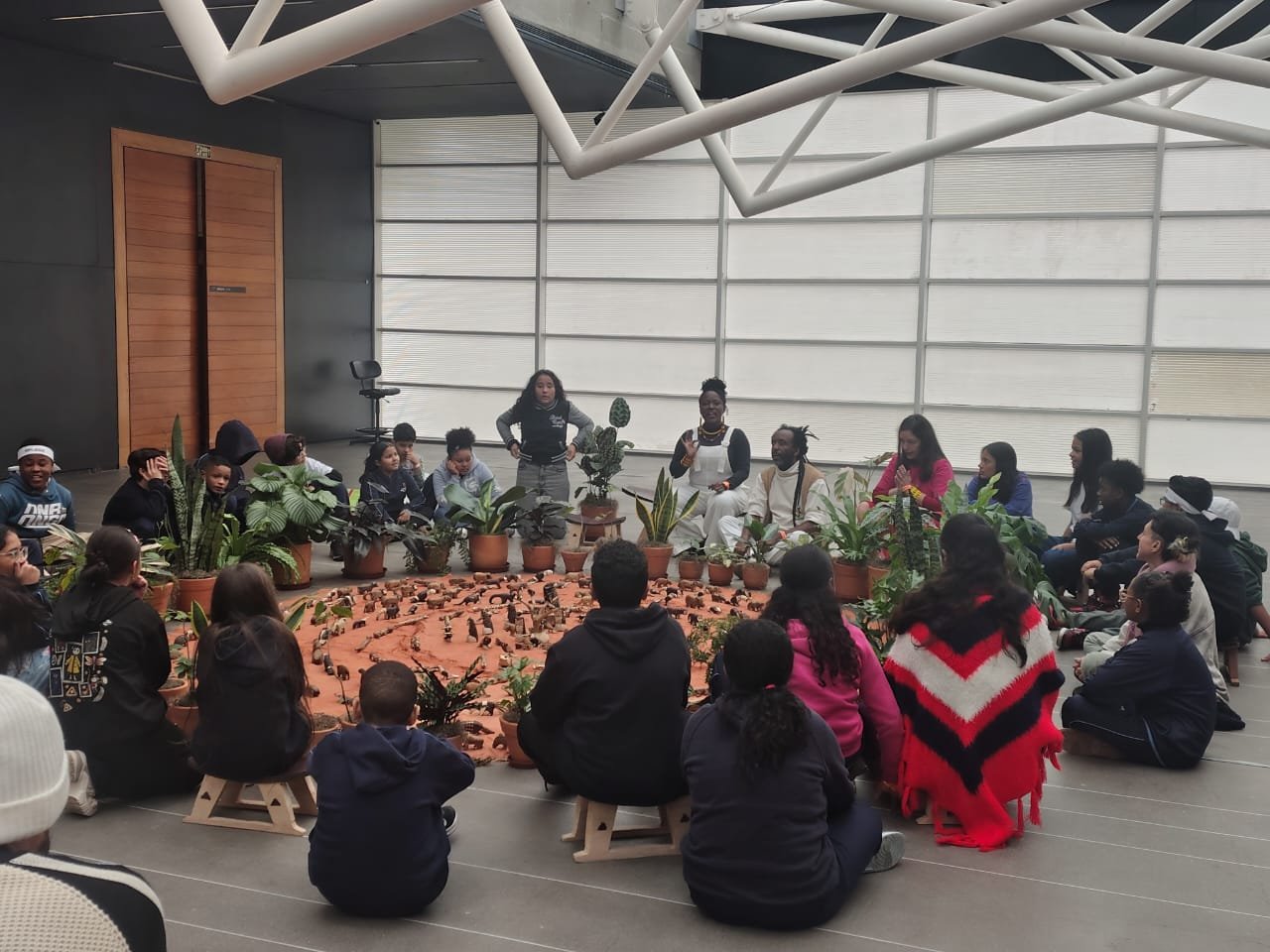
A circle with pupils and teachers from the CEU Nazaré Neri Lima school during the “Navel of the World” workshop, led by Veronica Pinheiro.