




BETWEEN SKY AND EARTH, THE LIVING SCHOOLS KEEP ON DREAMING
6 October 2026
“The Living School is our wisdom, our understanding. It is meant to preserve what we were losing. This is exactly what I dreamed of. I am thanking you with my heart. The Living School continues."
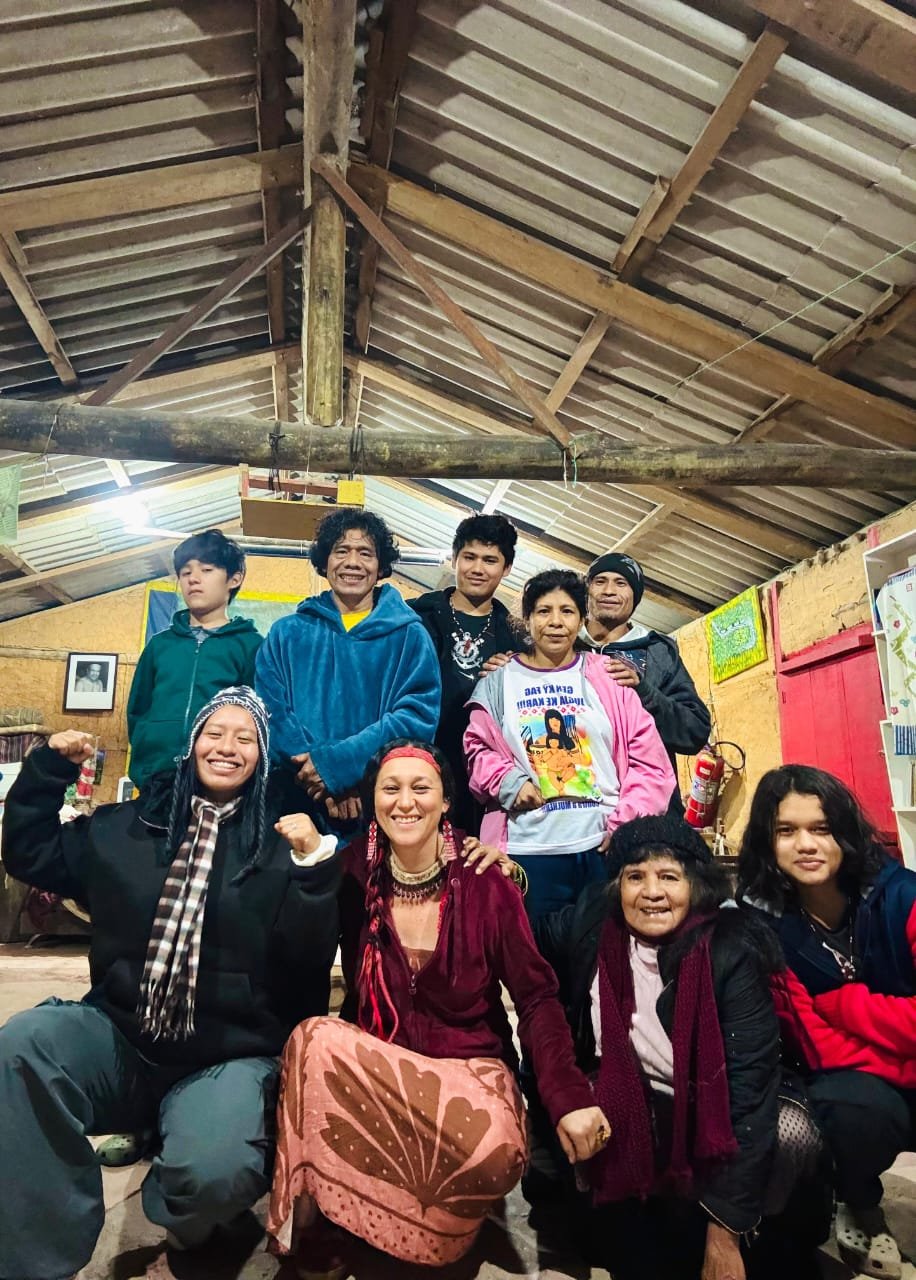
Dua Busë, pajé and coordinator of the Huni Kuï Living School
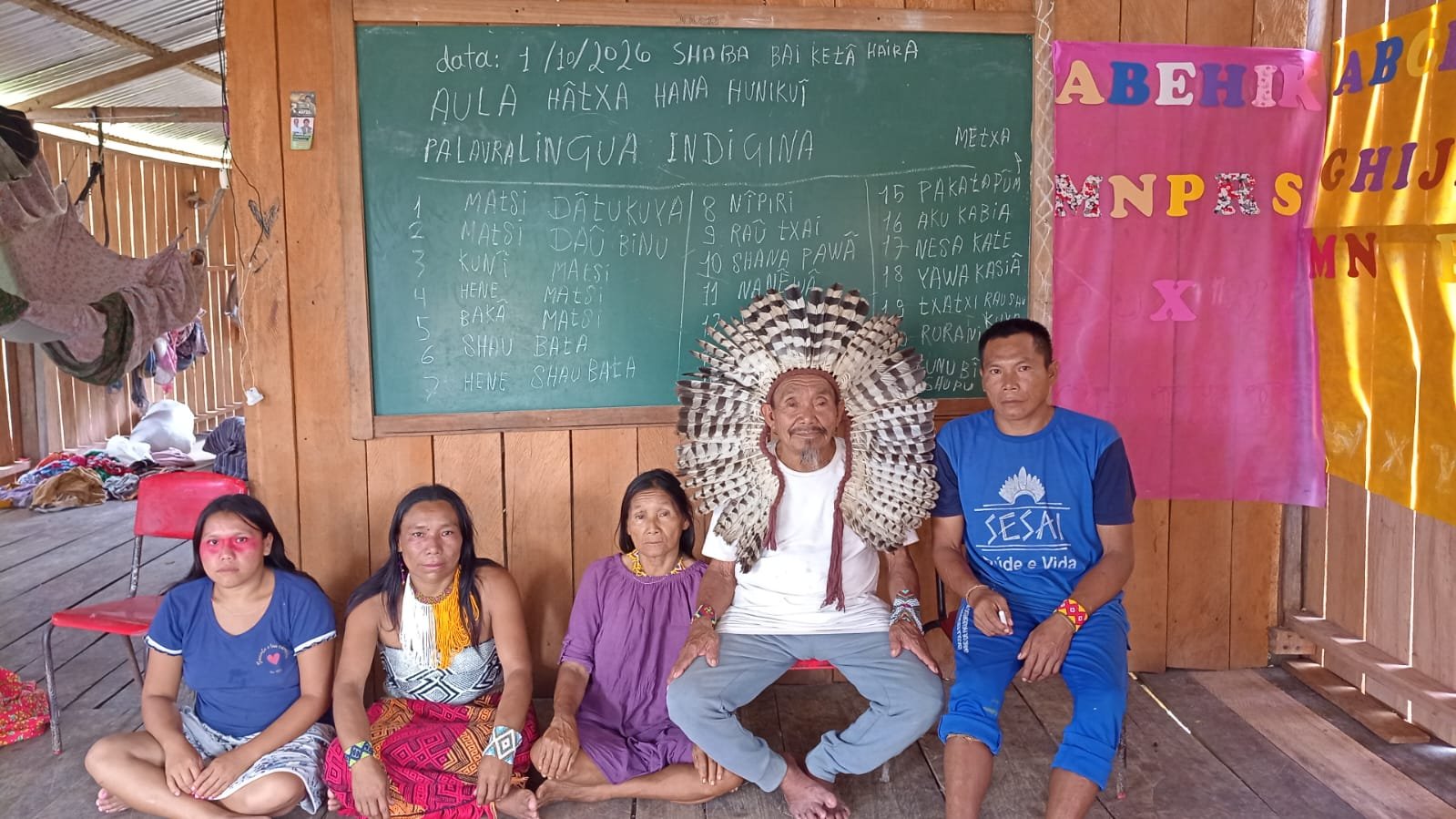
Coordinators Dua Busẽ and Netẽ Huni Kuĩ with their family, at an online meeting of the Living Schools
The Living Schools movement is a movement that supports the strengthening and transmission of traditional knowledge across five indigenous territories: Guarani, Maxakali, Huni Kuin, Baniwa and Tukano-Desana-Tuyuka. We invite you to find out more about and support the movement via the page on our website.
Over the past few months, the five Living Schools have been developing new projects and partnerships, strengthening relationships that span different territories and bodies of knowledge.
Some of the highlights included exchange activities at the Guarani Living School, Arandu Porã, their participation in the TV Cultura programme "The Value of Indigenous Traditions”, and international exchanges in Rio de Janeiro, China and France.
At the Tukano-Desana-Tuyuka Living School– the Bahserikowi Centre for Indigenous Medicine –, the highlights included new visits to the Living School and meetings with communities from the Upper Rio Negro territories in São Gabriel da Cachoeira. They also participated in the official launch of the Territorial and Environmental Management Plans (PGTA) for the Uneiuxi and Paraná do Boa Boa Indigenous Lands, and in the ‘Perspectiva dos Pássaros’ International Seminar, a partnership between Selvagem Association and Goethe-Institut.
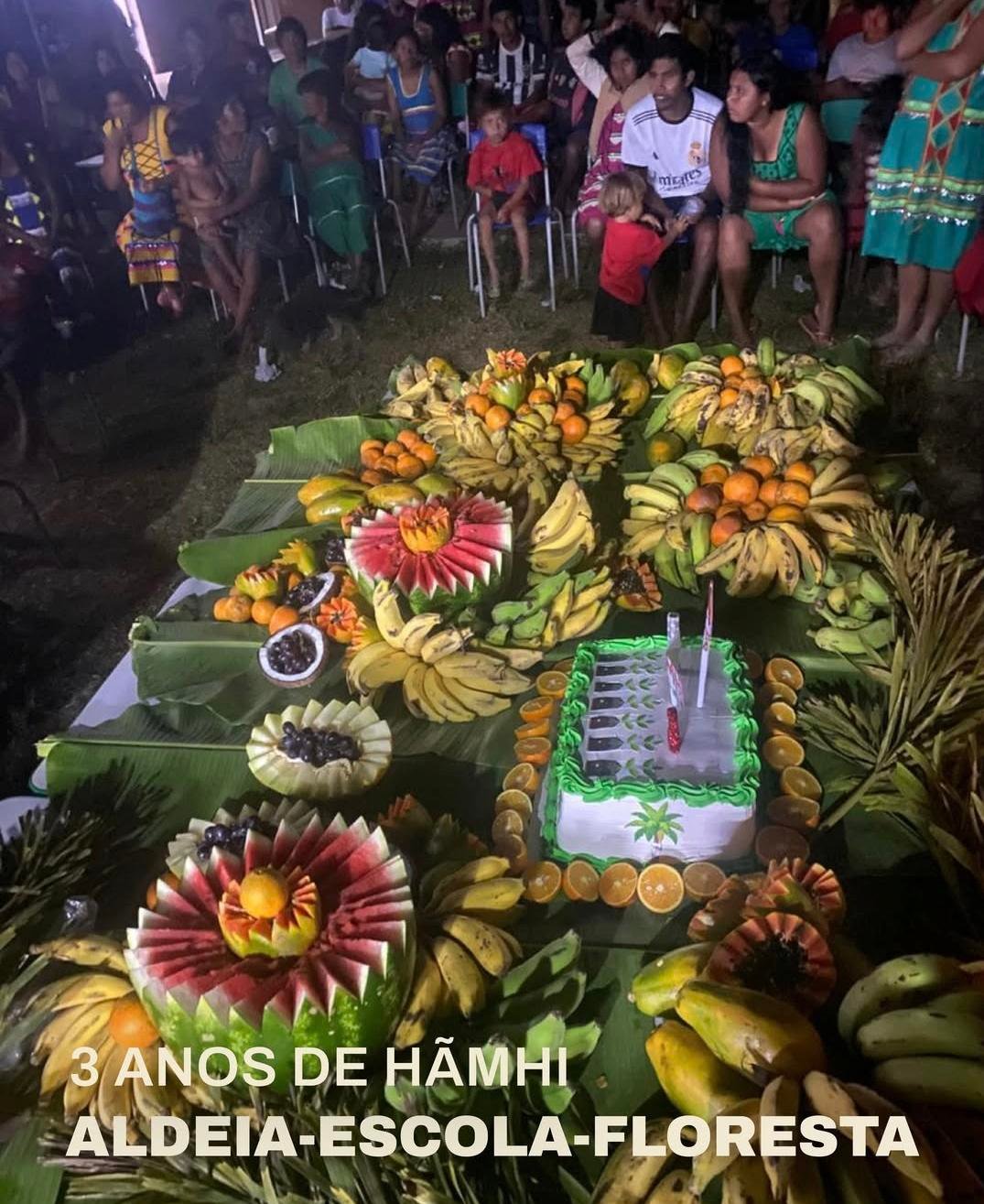
At the Escola Viva Huni Kuĩ, Shubu Hiwea, lessons on traditional medicines and activities involving arts and planting continue. At the Baniwa Living School, Madzerokai, the leader Maria Bidoca gave an update on the progress of the construction of the Madzerokai Ways of Knowing House. At the Maxakali Living School, the Forest School Village, the past few months have been filled with many rituals to strengthen the community and with celebrations marking the third anniversary of the Hãmhi Terra Viva project, which included a big festival in September.
GUARANI LIVING SCHOOL
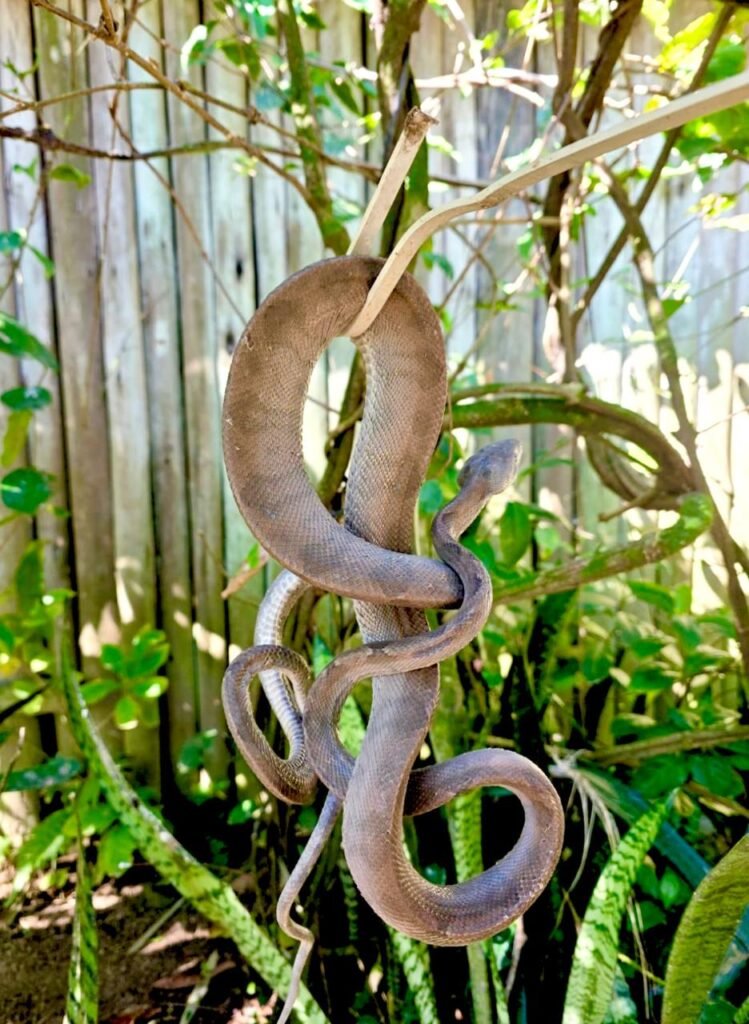
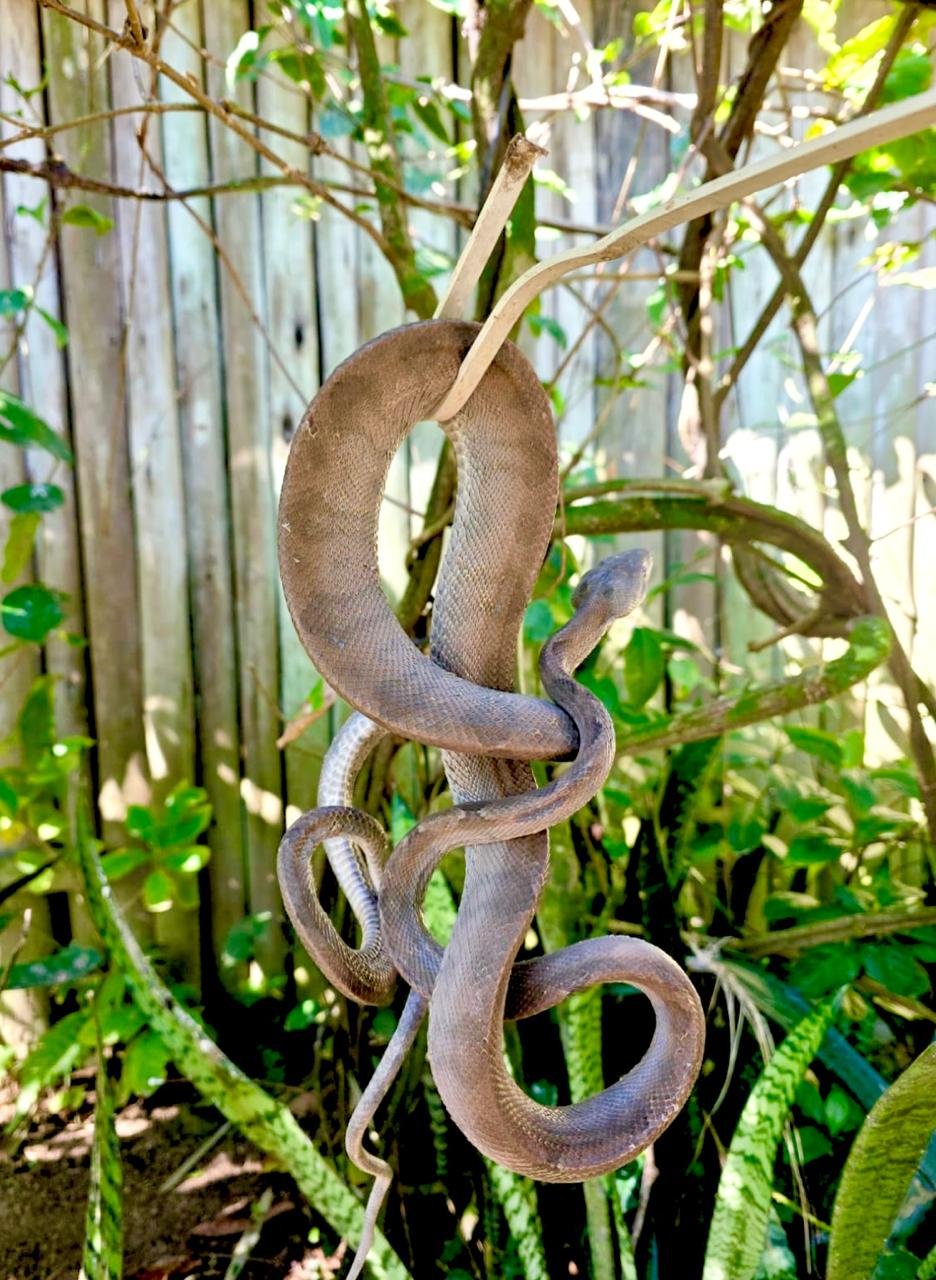
In recent months, the Guarani Living School has welcomed visitors from Escola Invisível [Invisible School] in Barra do Una, in the municipality of São Sebastião; from Tekoa Biguaçu in Santa Catarina; and even from a boa constrictor, taken to the ‘forest classroom’, to continue being the guardian of the Living School.
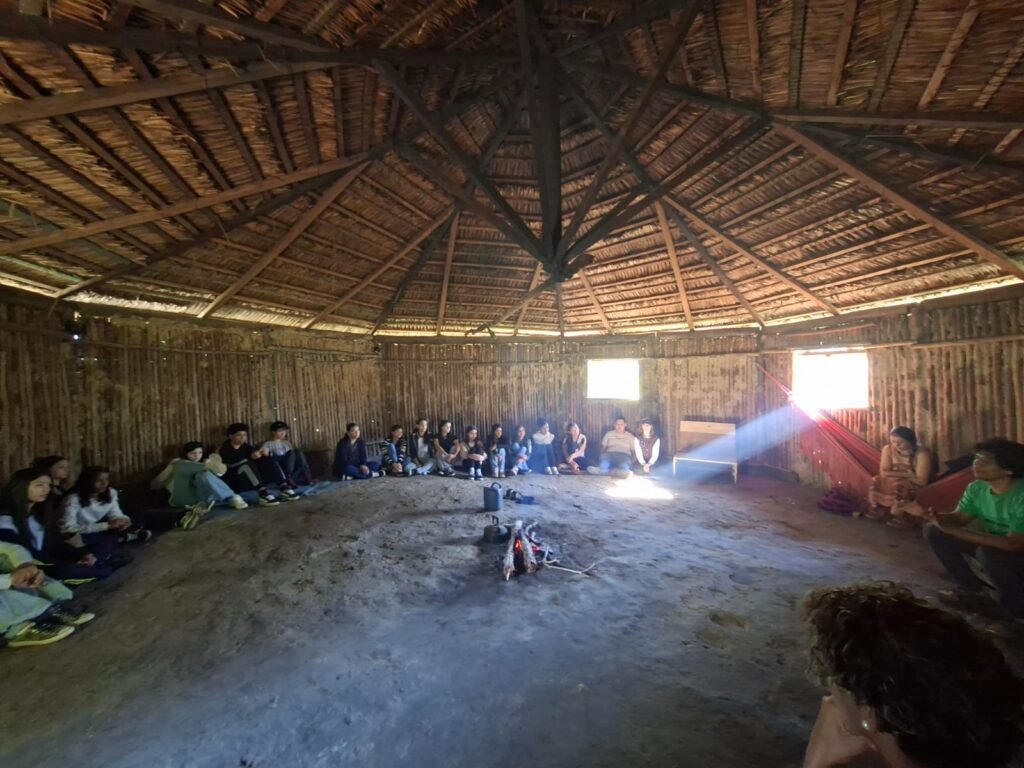
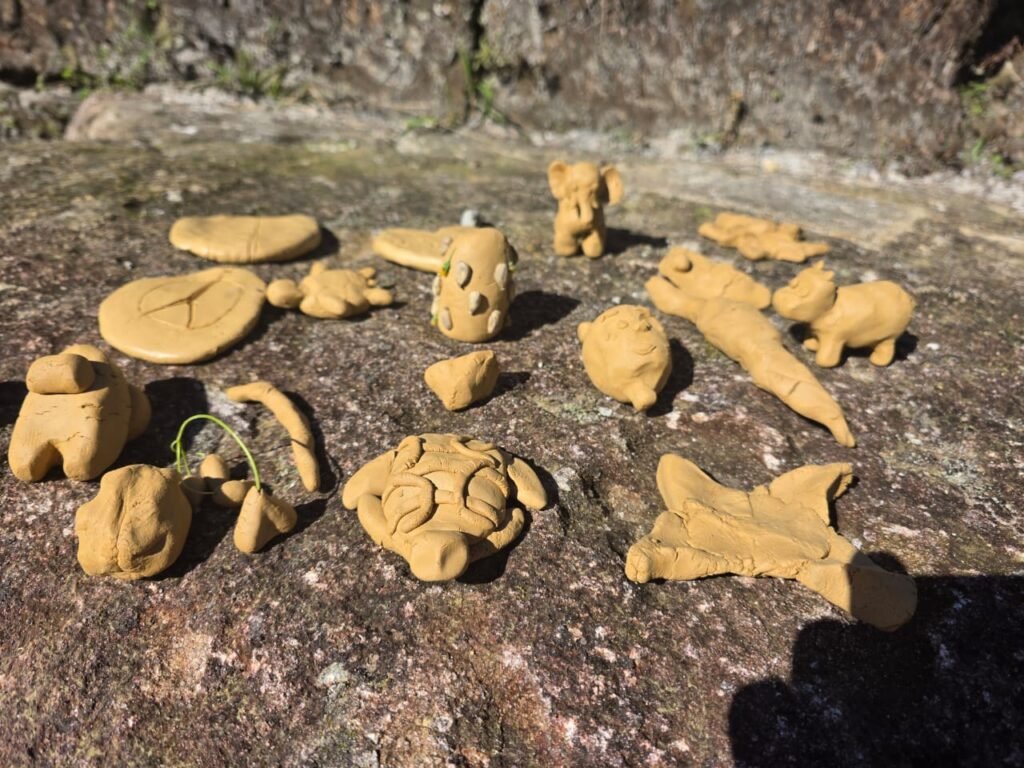
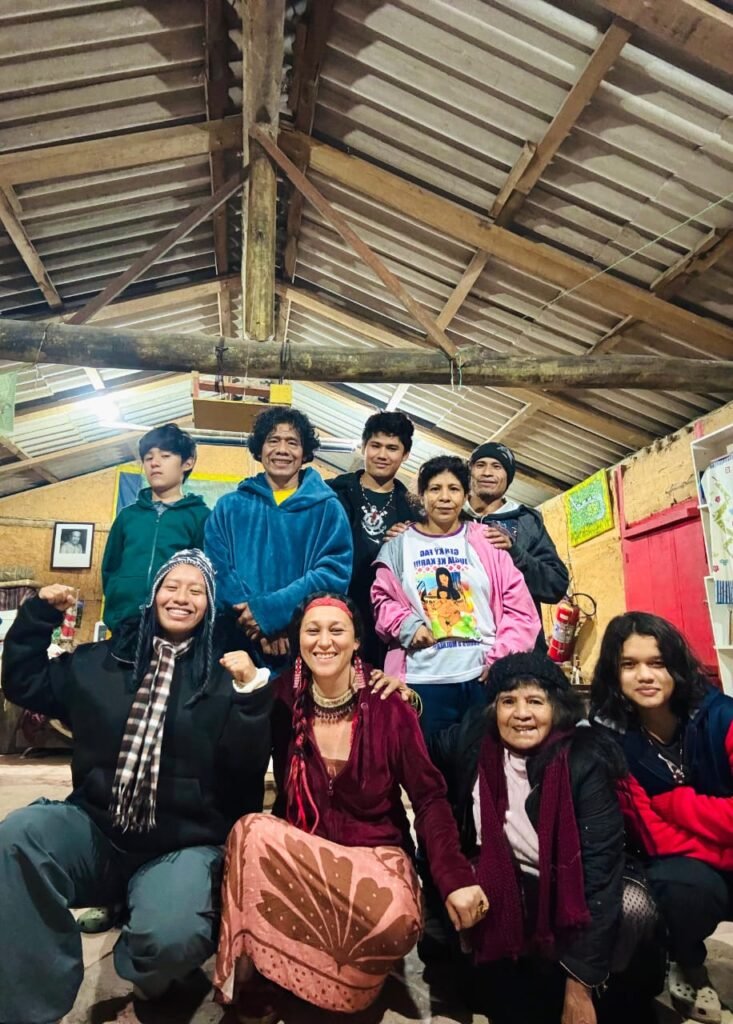
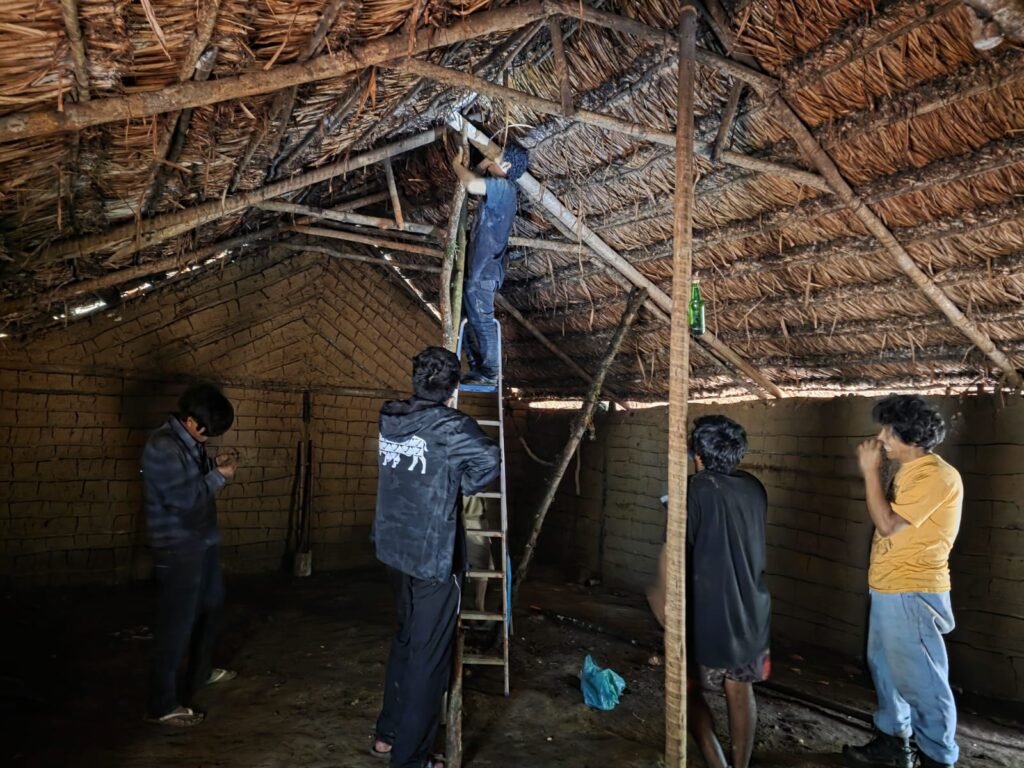
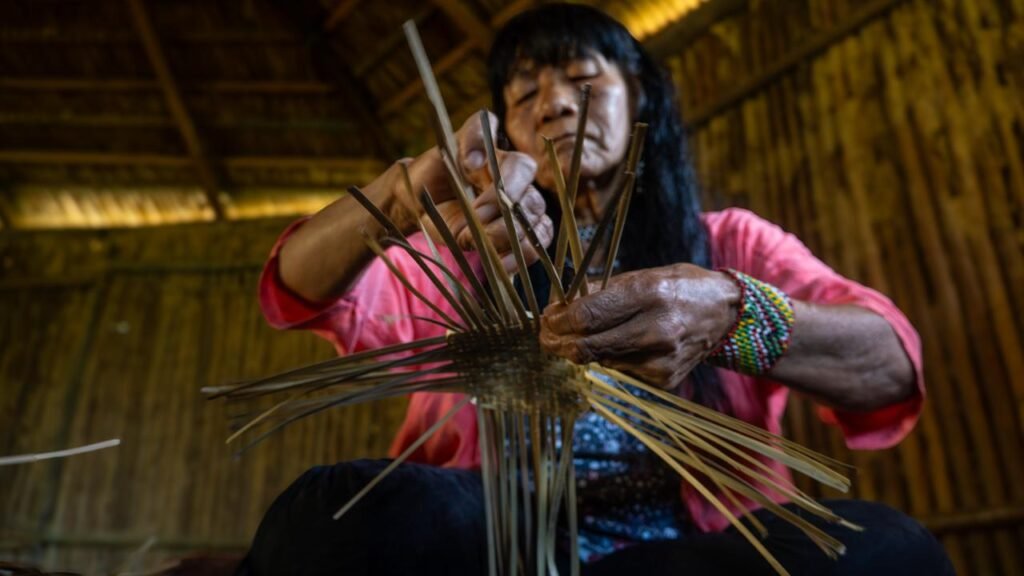
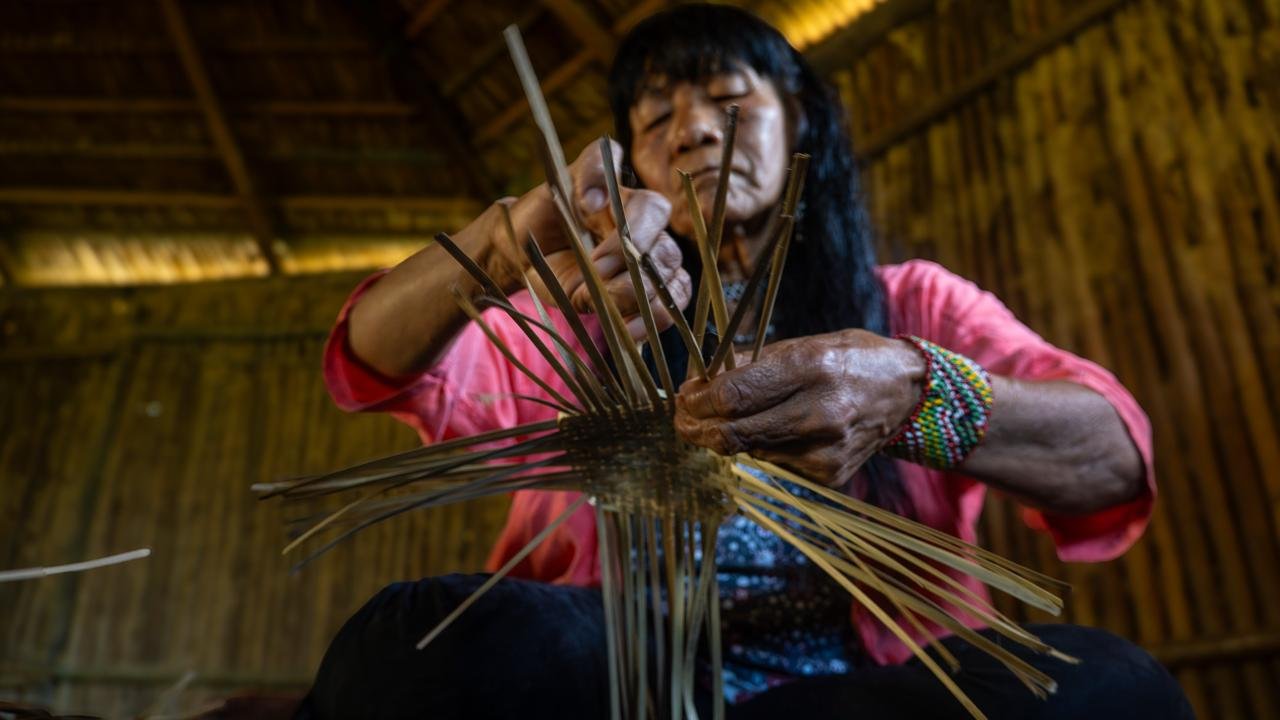
In July, the exchange programme with the Tekoa Biguaçu welcomed Roseli Takuá and her family for several days of sharings about forest medicines. This period also brought the Guarani Living School closer to the new Tekoa Ka’aguy Mirim, in Barra do Una, with a visit to support the families currently involved in the land demarcation process there. In the same month, the Guarani Living School took part in the filming of the TV Cultura programme "The Value of Indigenous Traditions", featuring Cristine Takuá, coordinator of the Living Schools movement. They also organised a group effort with the children, the renovation of the prayer house and taquara basket-weaving classes with Clementina Ara. Their goal was to encourage young people to embrace the teachings, feelings and perspectives of the Guarani Mbya philosophy.
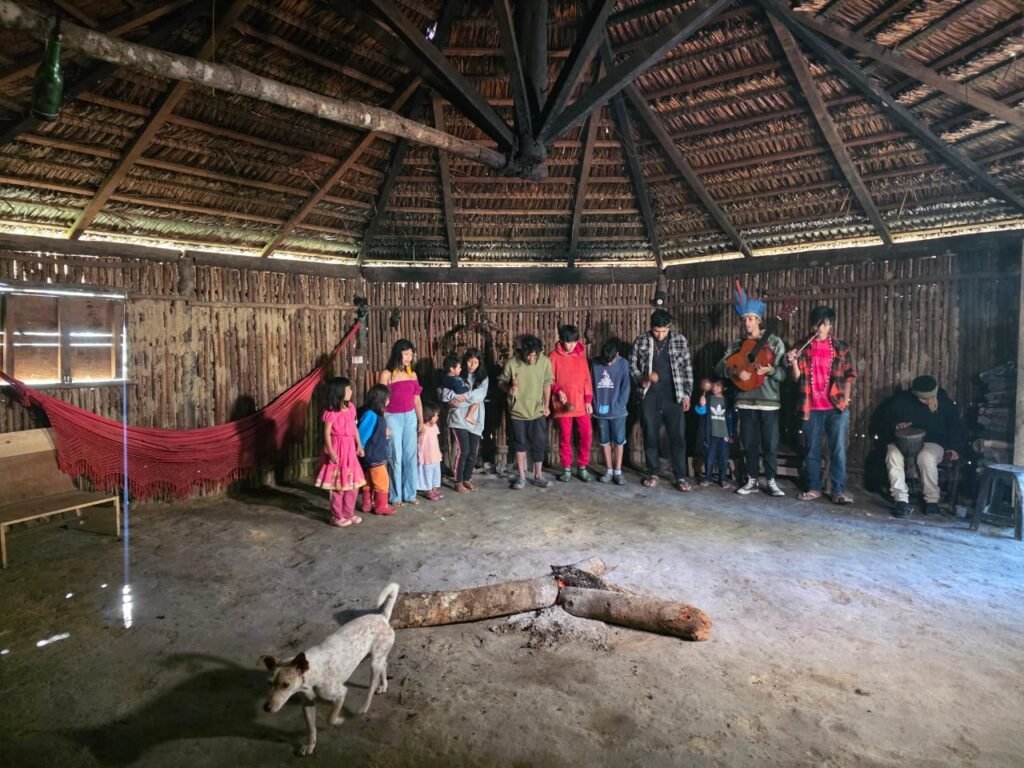
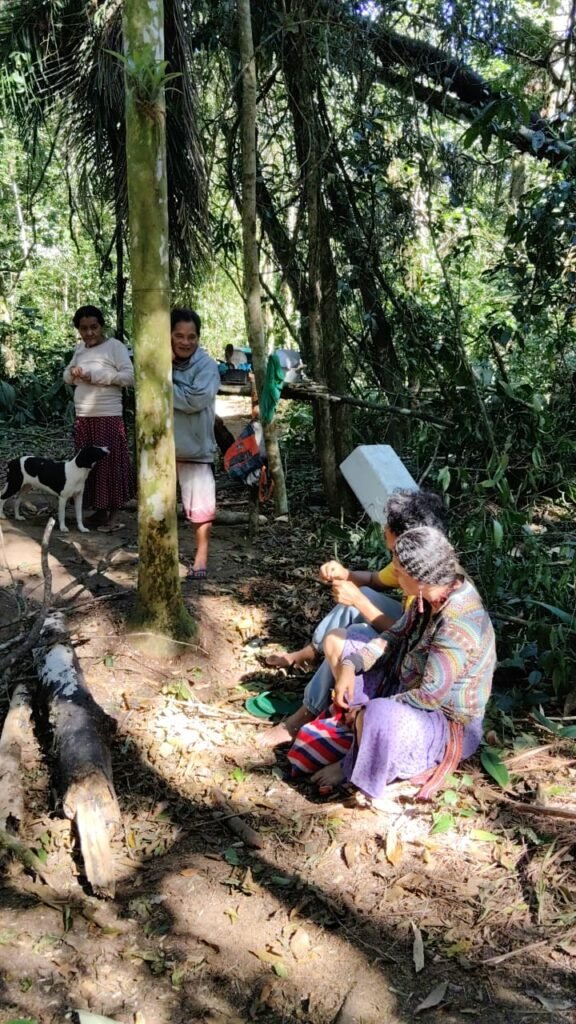
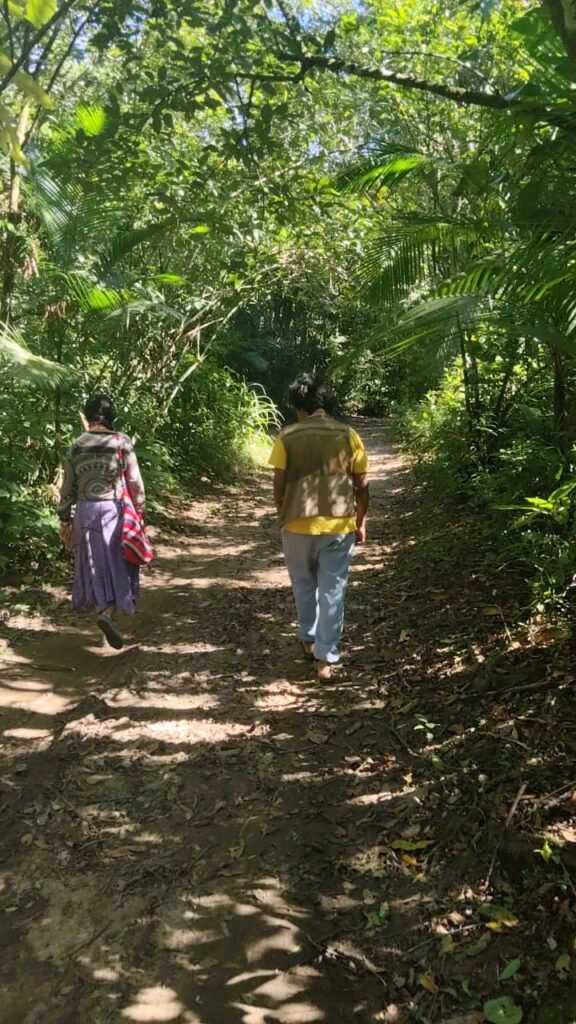
In August, the Guarani Living School held a meeting with children from the Nhembo’e a Porã Municipal School, in the Ribeirão Silveira Indigenous Land community. The children came to the territory to talk about Nhandereko, the Guarani way of life, and about medicinal plants.
“These were very beautiful moments of exchange and learning. The non-indigenous teachers who work at the Municipal School were also present and were able to learn, ask questions and have access to this ancient knowledge”, said Cristine Takuá.
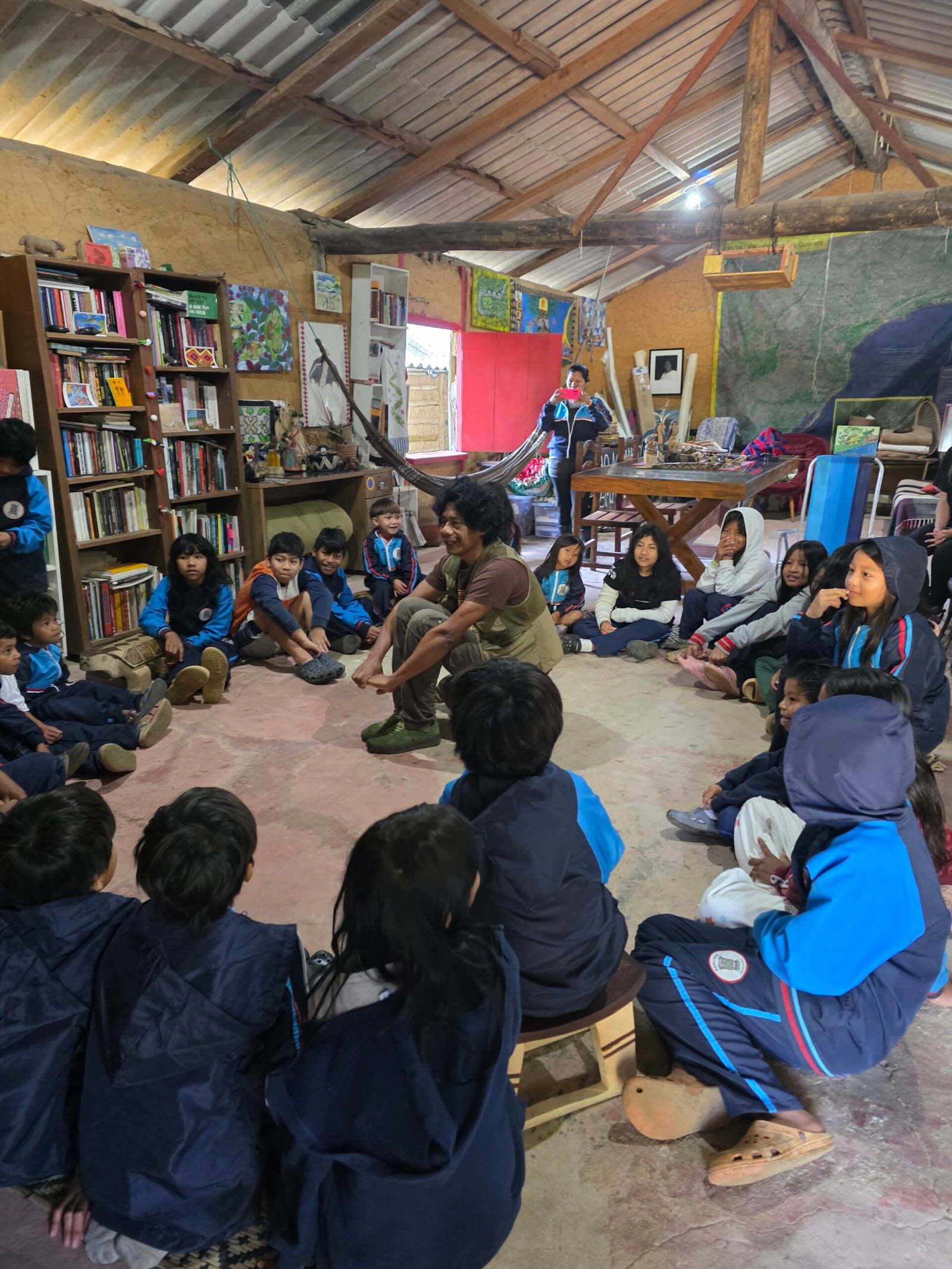
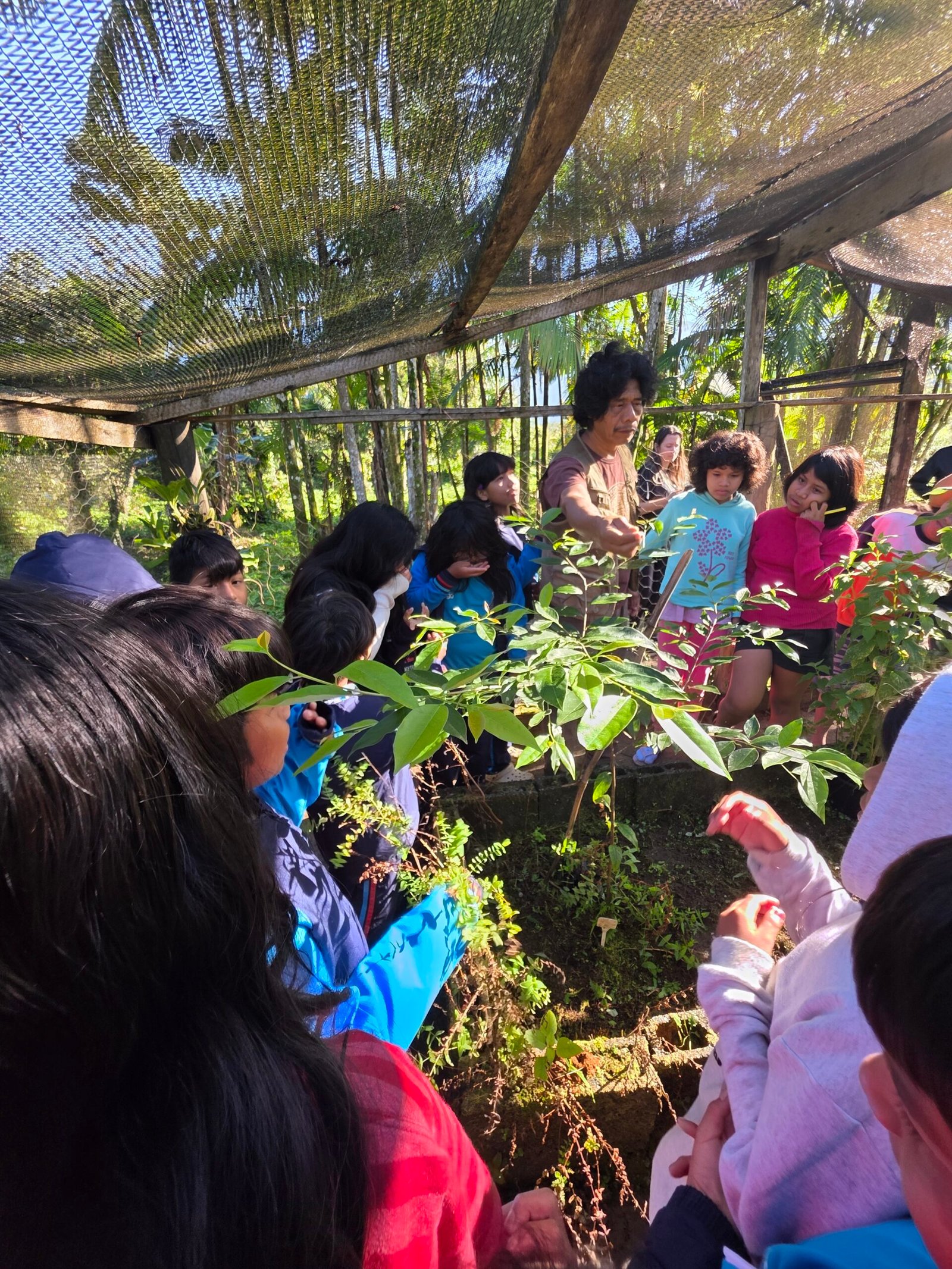
Atividades com as crianças da Escola Municipal Nhembo’e a Porã.
Between August and September, the Living School also took part in international exchanges, such as the talk given by Léo Wera, a member of the Guarani Living School, to the French Embassy in Brazil’s Translation Awards. Also, Carlos Papá, coordinator of the Guarani Living School. Another exchange involved educators form FORMABIAP, from Iquitos, Peru. These exchanges with educators were also part of the closing programme for the second edition of the Long Live the Living School exhibition exhibition and included activities in the city of São Paulo, such as planting seedlings in Bixiga Park and a conversation circle, Nosotras: a conversation on intercultural education.
Last month, Carlos Papá also traveled with Cristine Takuá and their children, Djeguaká and Kauê, to The Breath of Dragonsin France. The event was a continuation of the research work carried out by Sorbonne’s Chair in Earth's Habitability and Just Transitions, coordinated by the anthropologist and thinker Nastassja Martin. Between 9 and 18 September, Papá and Cristine gave talks and took part in an international research and creative residency with their children, Anna Dantes, director of the Selvagem Association, and guests from around the world.
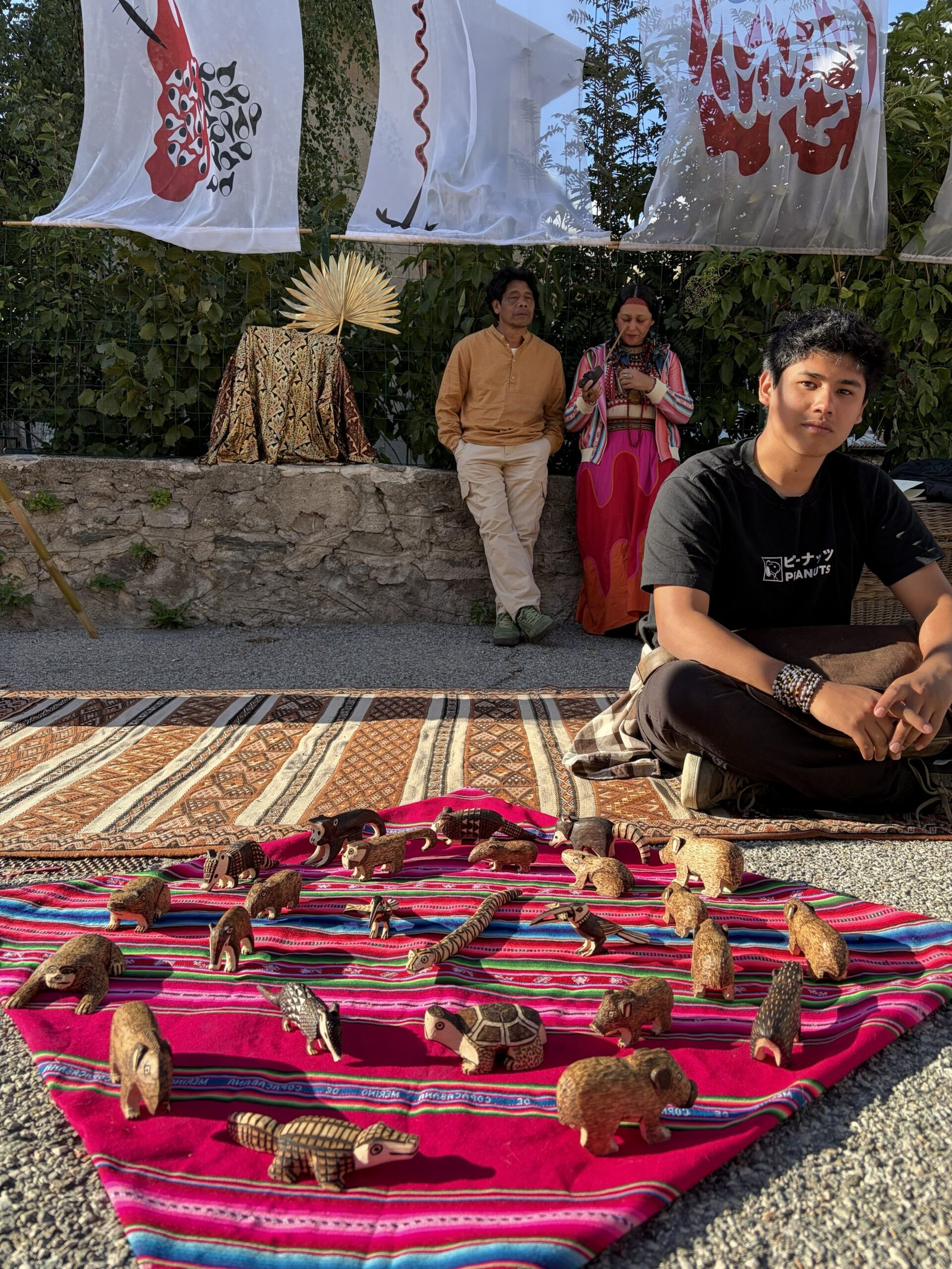
Carlos Papá, Cristine Takuá and Djeguaká, from the Guarani Living School, during The Breath of Dragons residency in the French Alps.
The exhibition Ayvu Porã – Beautiful Words, is also on display until December at the Museum of Indigenous Cultures in São Paulo, featuring works by young Guarani people from the Guarani Living School, from Jaraguá Indigenous Land and from Vale da Ribeira.
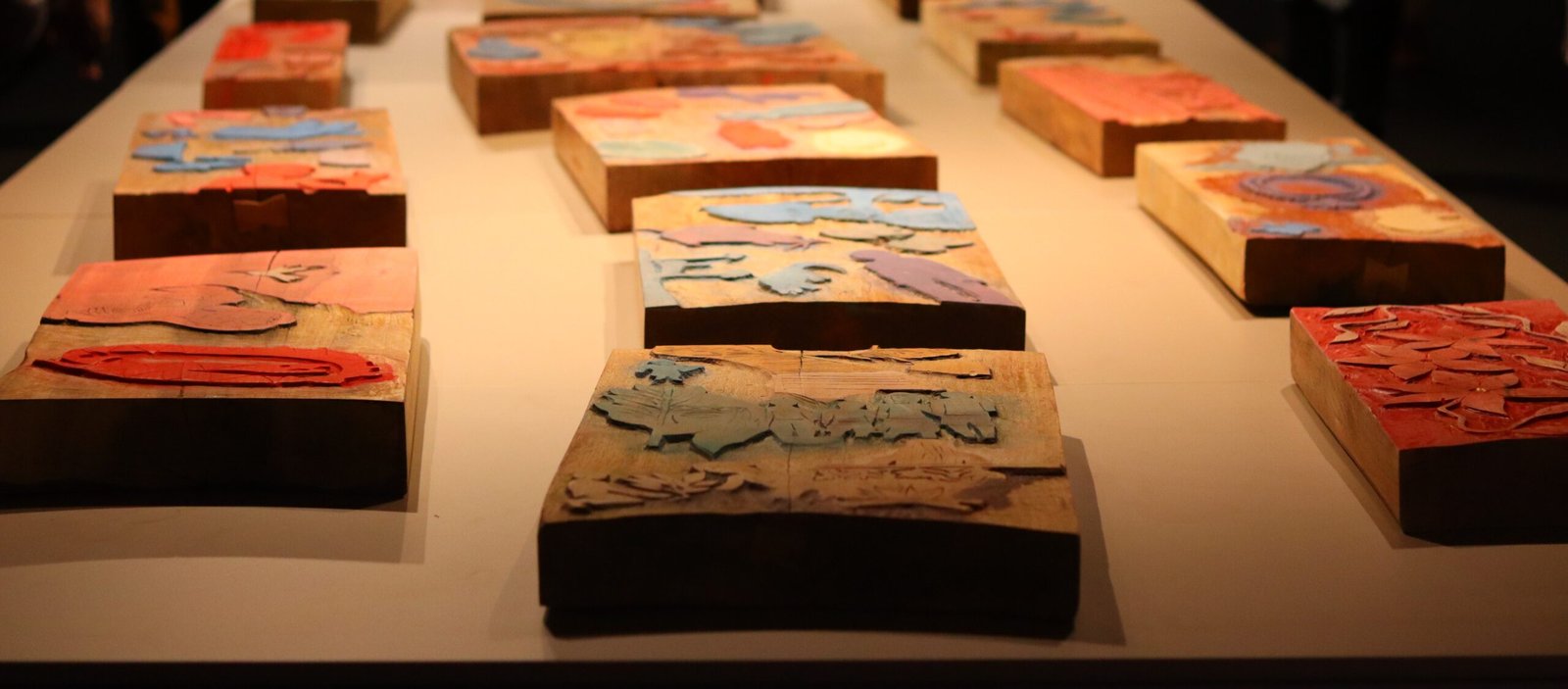
‘Ayvu Porã’ exhibition at the Museum of Indigenous Cultures. Photo: MCI Collection – Gabie Pereira.
TUKANO-DESANA-TUYUKA LIVING SCHOOL
In Manaus, the Tukano-Desana-Tuyuka Living School, located at the Bahserikowi Centre for Indigenous Medicine, welcomed postgraduate students from the State University of Amazonas (UEA) and the National Institute for Research in the Amazon (INPA). The students learned about the history of Bahserikowi and discussed the production and dissemination of Indigenous knowledge in an urban context. In July, the coordinators of the Tukano-Desana-Tuyuka Living School, Ivan Tukano and Carla Wisu, were also invited to take part in the official launch of the Territorial and Environmental Management Plans (PGTA) for the Uneiuxi and Paraná do Boa Boa Indigenous Lands, contributing to discussions on health and education.
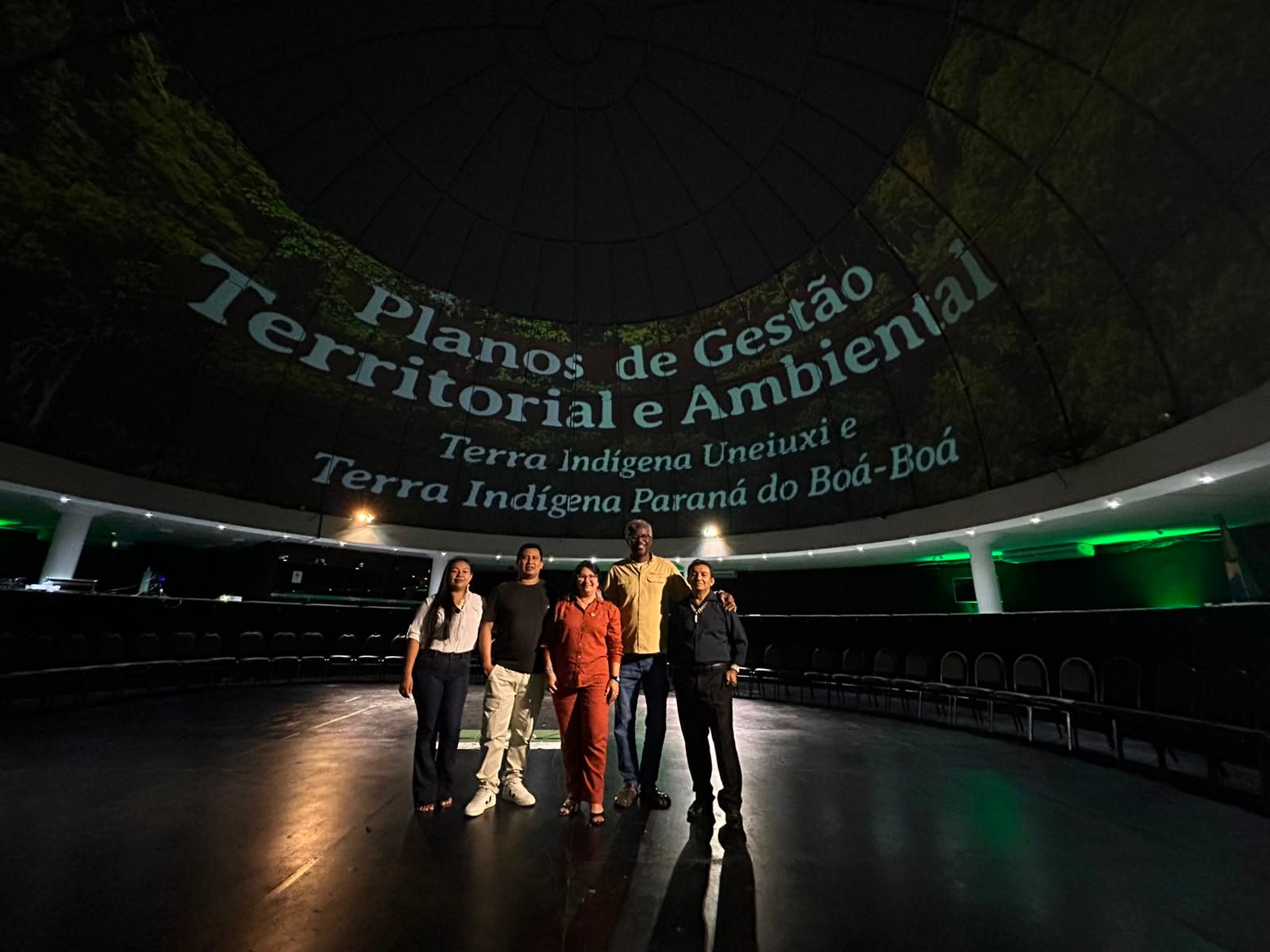
Carla Wisu and Ivan Tukano at the launch of the PGTA.
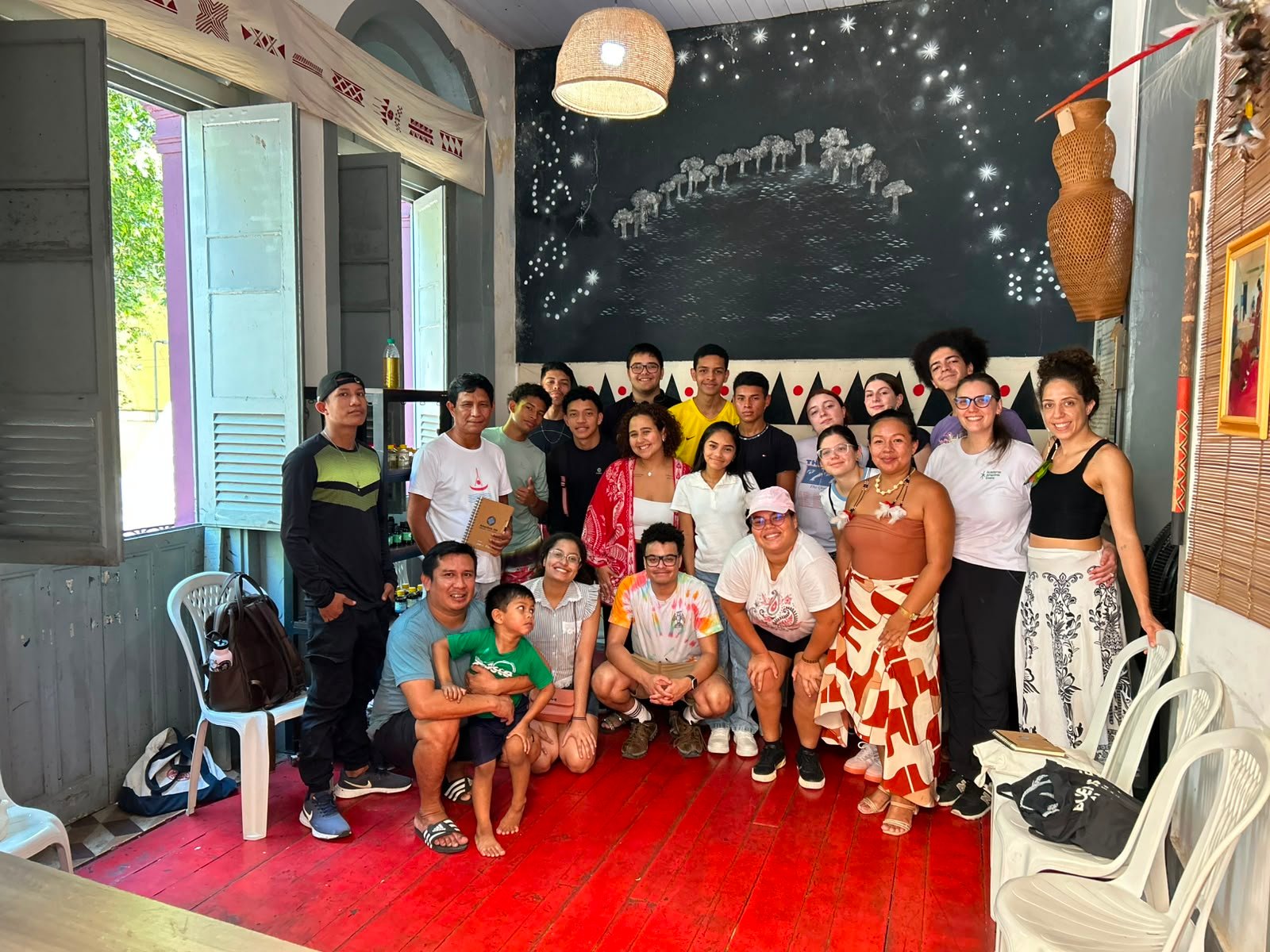
Visit from researchers from UEA and INPA to Bahserikowi.
Moving between Manaus and other regions also remains essential for the continuity of the knowledge practised in Bahserikowi. In August, Carla Wisu visited São Gabriel da Cachoeira, where she was reunited with her father, who is a kumu (an expert in traditional knowledge such as bahsese), and her mother, a leading expert in women’s knowledge and the use of plants.
“Being with them allows us to experience traditions again, listen to their teachings, observe their ways of doing things and continue to learn the knowledge that is passed on through community life and oral tradition”, said Carla.
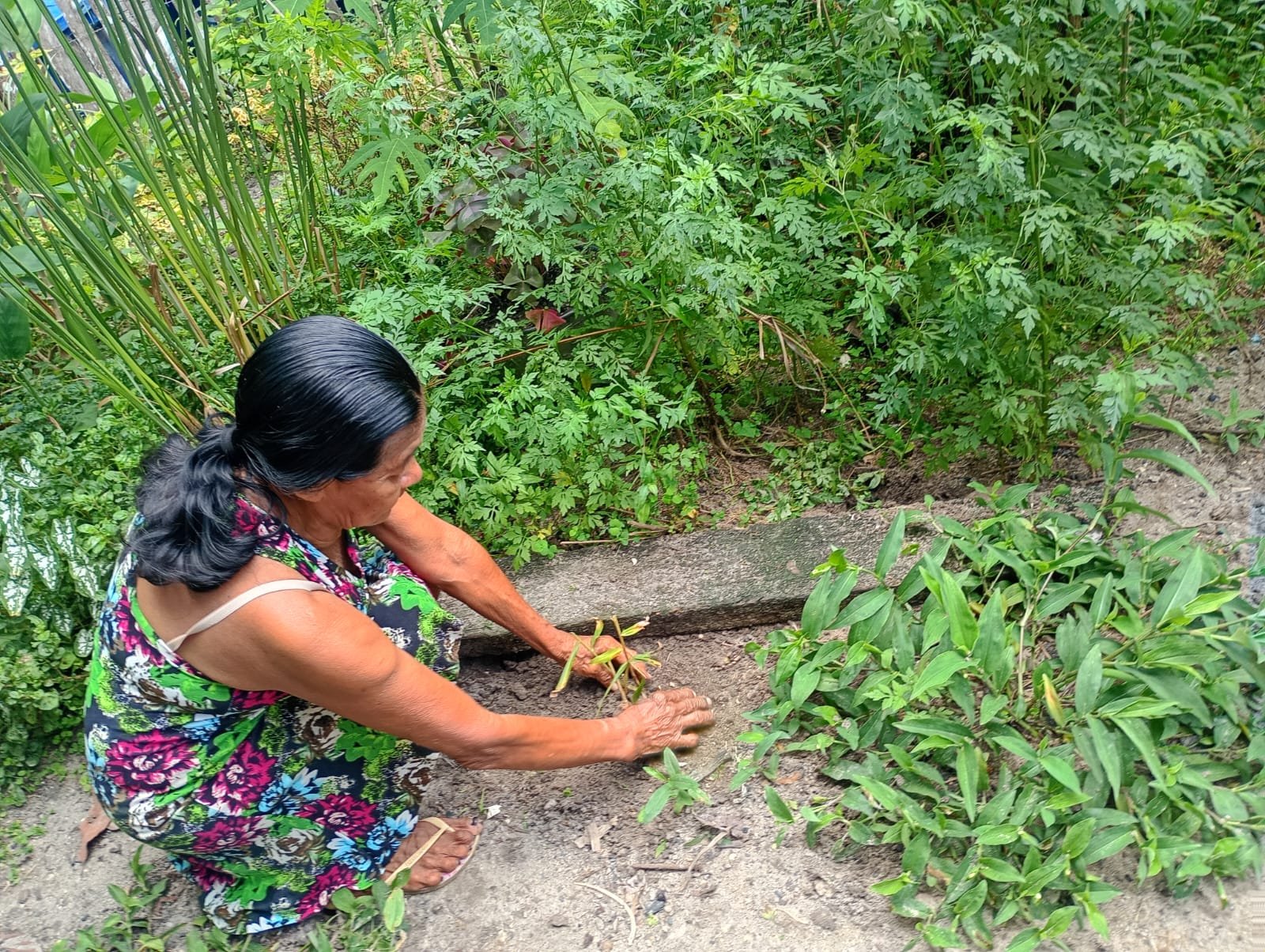
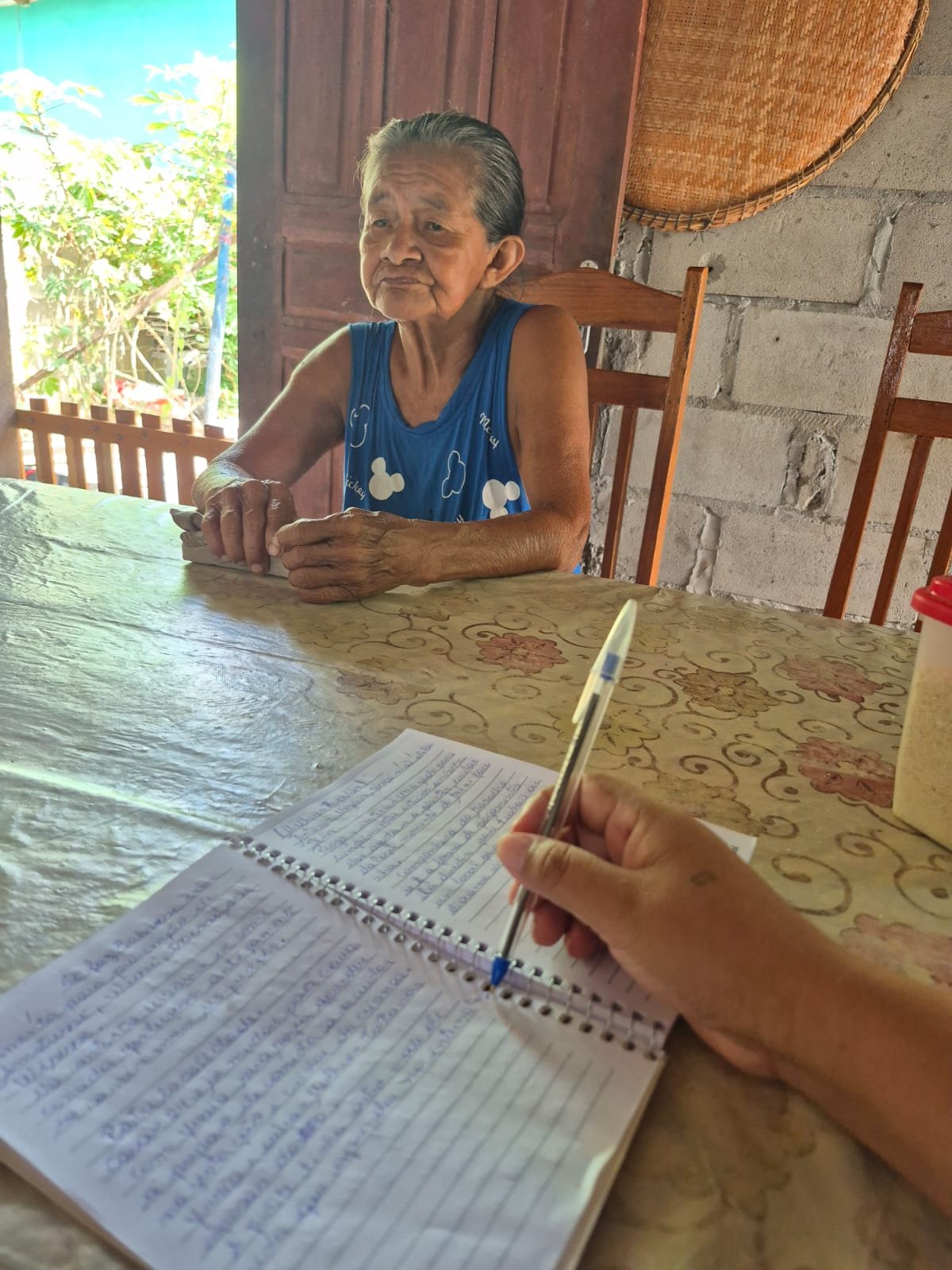
Judite Tukano, Carla Wisu’s mother, teaching about medicinal plants and body care.
In São Gabriel da Cachoeira, Carla also took part in FESTRIBAL, a major cultural event in the municipality, which brings together peoples from the Upper Rio Negro region to perform their dances, share their cultural expressions and their own ways of celebrating and strengthening their identities.
“Taking part in this event also means experiencing the diversity of the peoples from the Upper Rio Negro and recognising that culture, memory and knowledge flow between people and territories. Traveling to São Gabriel da Cachoeira is also a way of returning to the sources of the knowledge that guides the work carried out in Manaus", she said.
In August, the Living School took part, alongside the team from Selvagem Association, in the International Seminar ‘Perspectiva dos Pássaros’, held at the Bahserikowi Centre for Indigenous Medicine and at various locations in Manaus, such as Museum of the Amazon (MUSA) and Juruá Institute. João Paulo Tukano, Ivan Tukano and Carla Wisu, coordinators of the Living School, took part as speakers, presenting the knowledge systems of the peoples of the Upper Rio Negro and their experiences with Bahserikowi, alongside Veronica Pinheiro and Tania Grillo from the Selvagem Association. The seminar is part of a project developed in partnership between the Associação Selvagem and the Goethe-Institut, which aims to produce an educational pack to be distributed to schools and cultural centers.
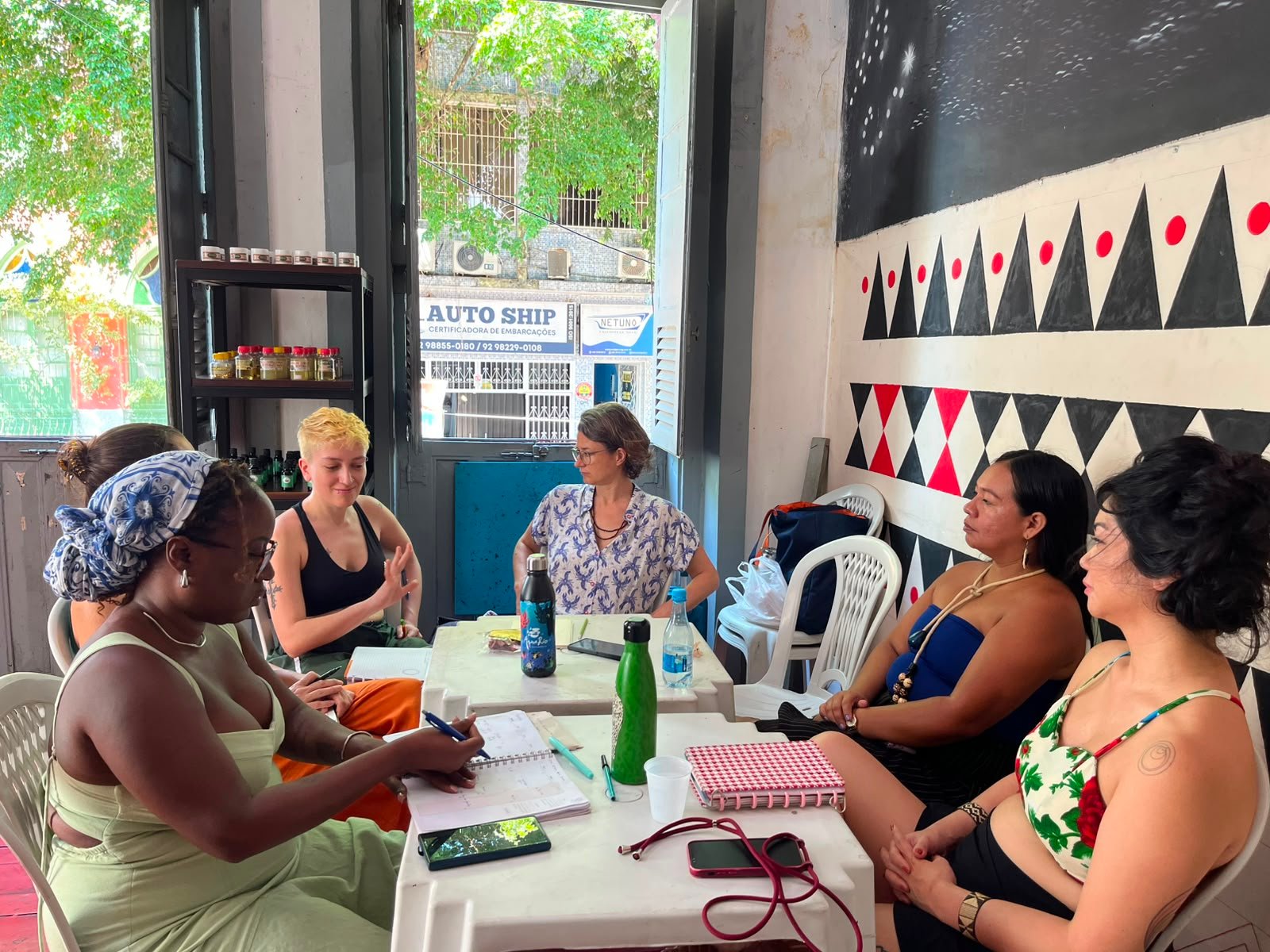
Meeting of the seminar “Perspectiva dos Pássaros” at Bahserikowi.
HUNI KUÏ LIVING SCHOOL
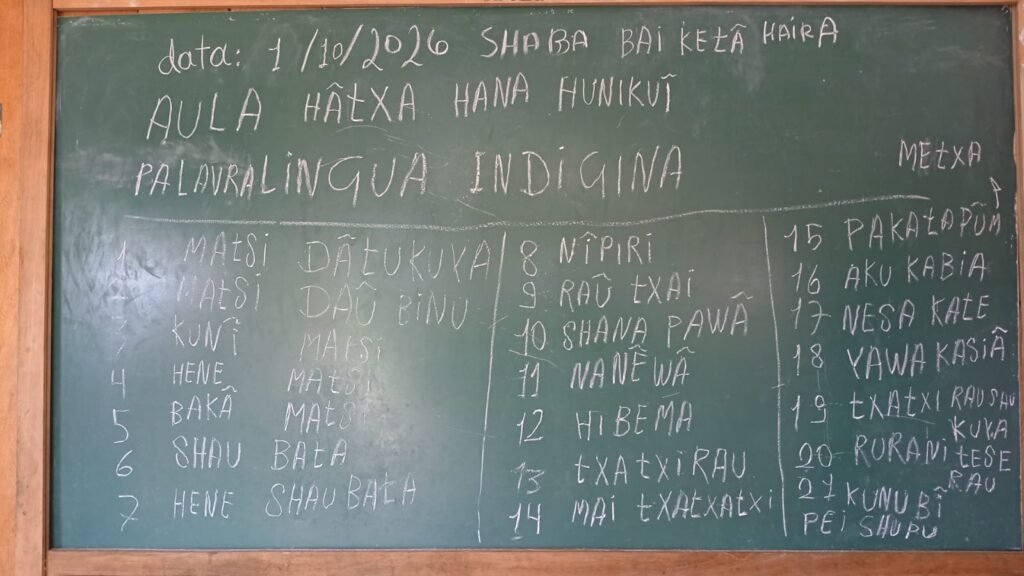
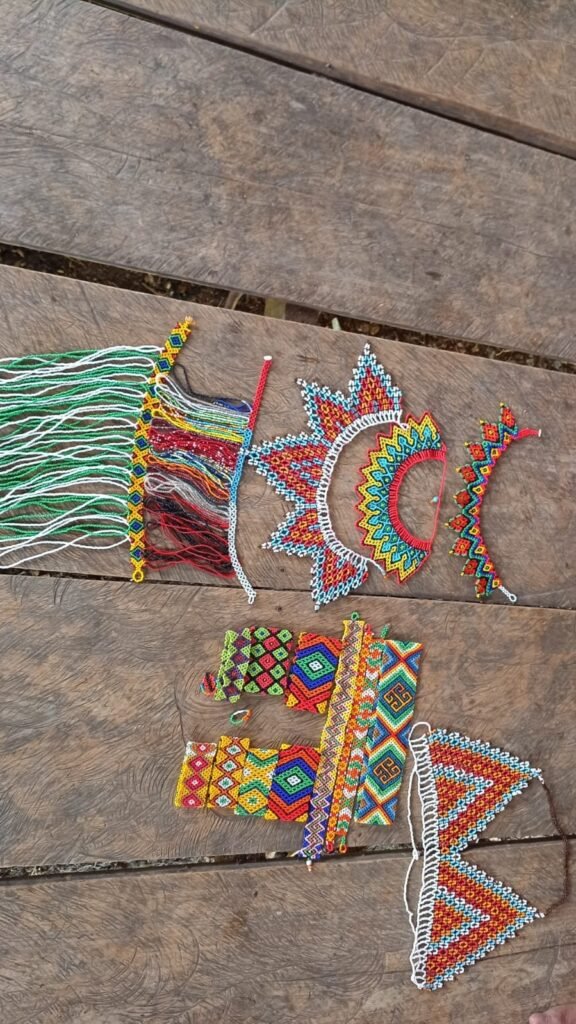
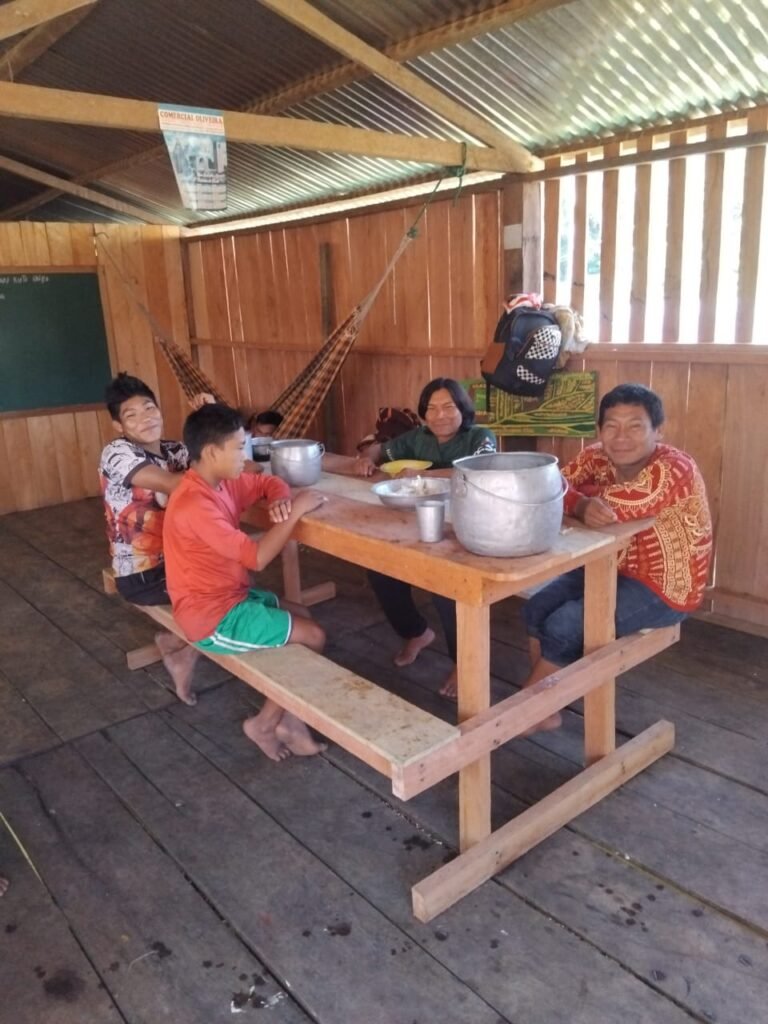
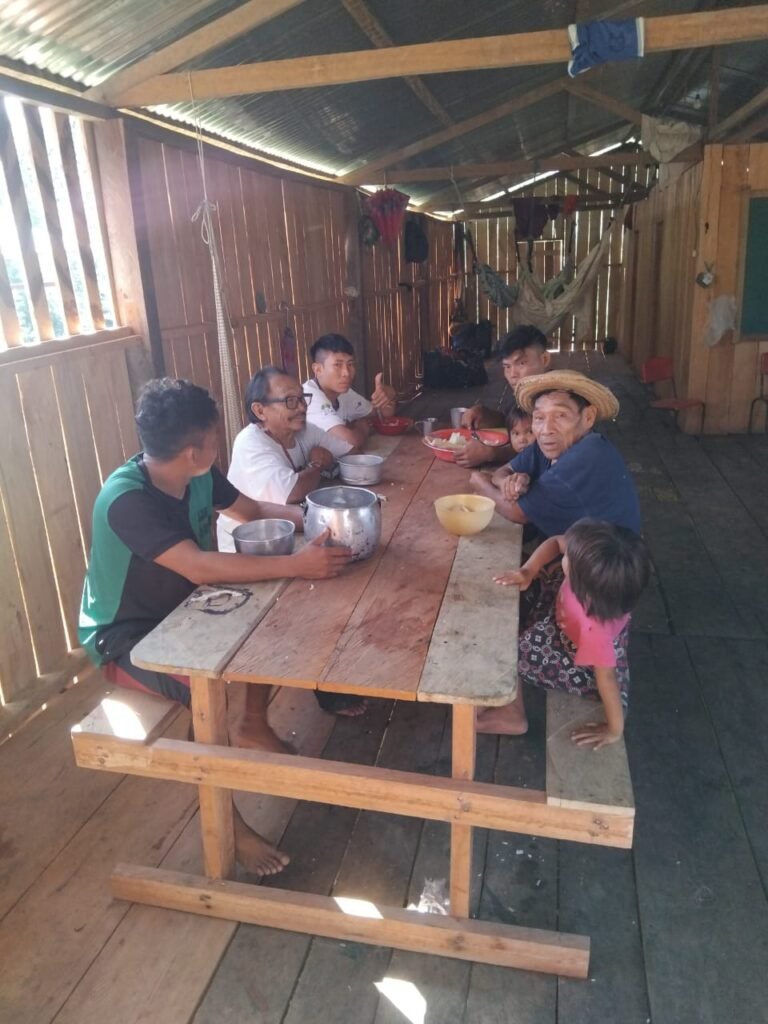
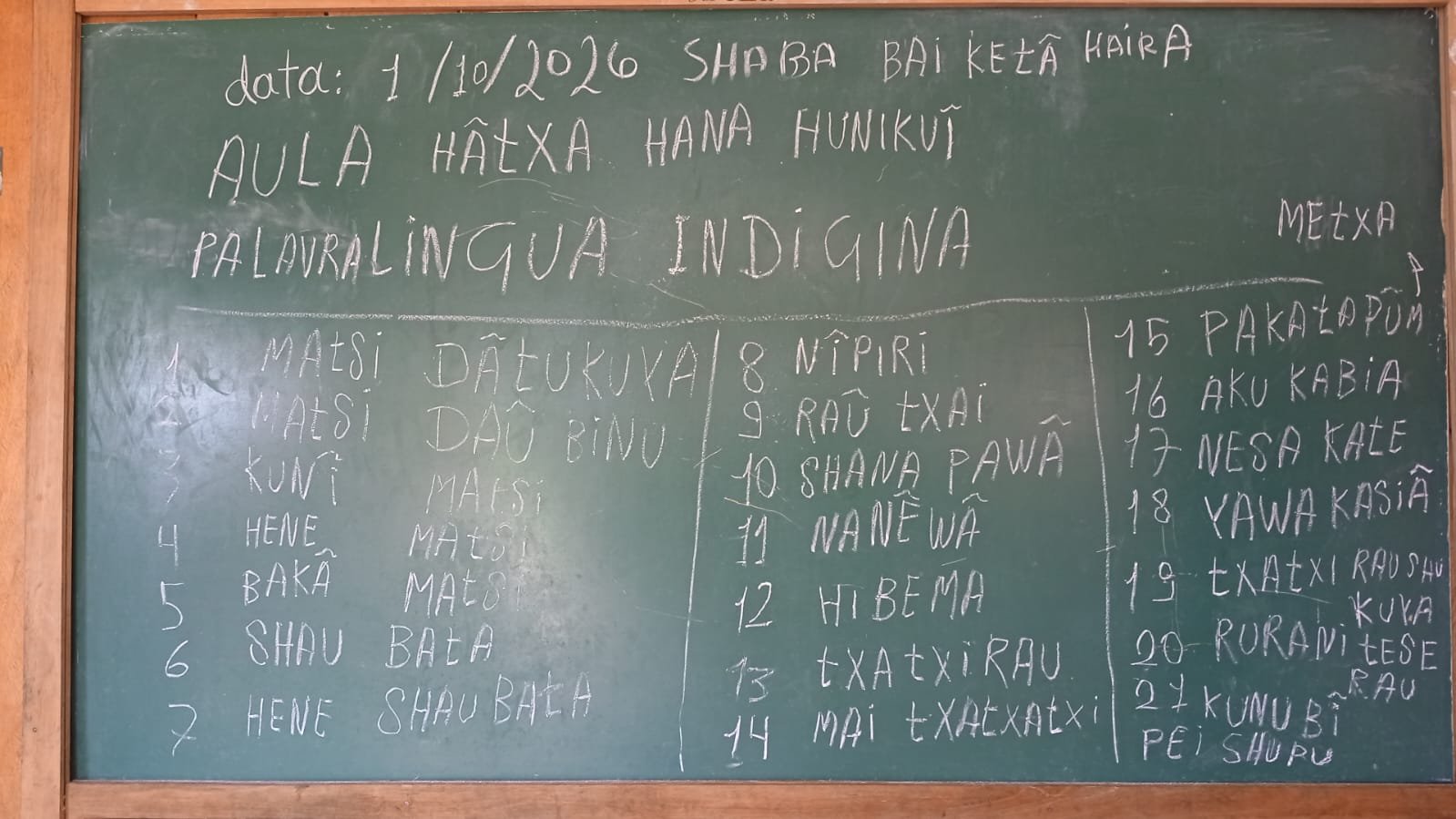
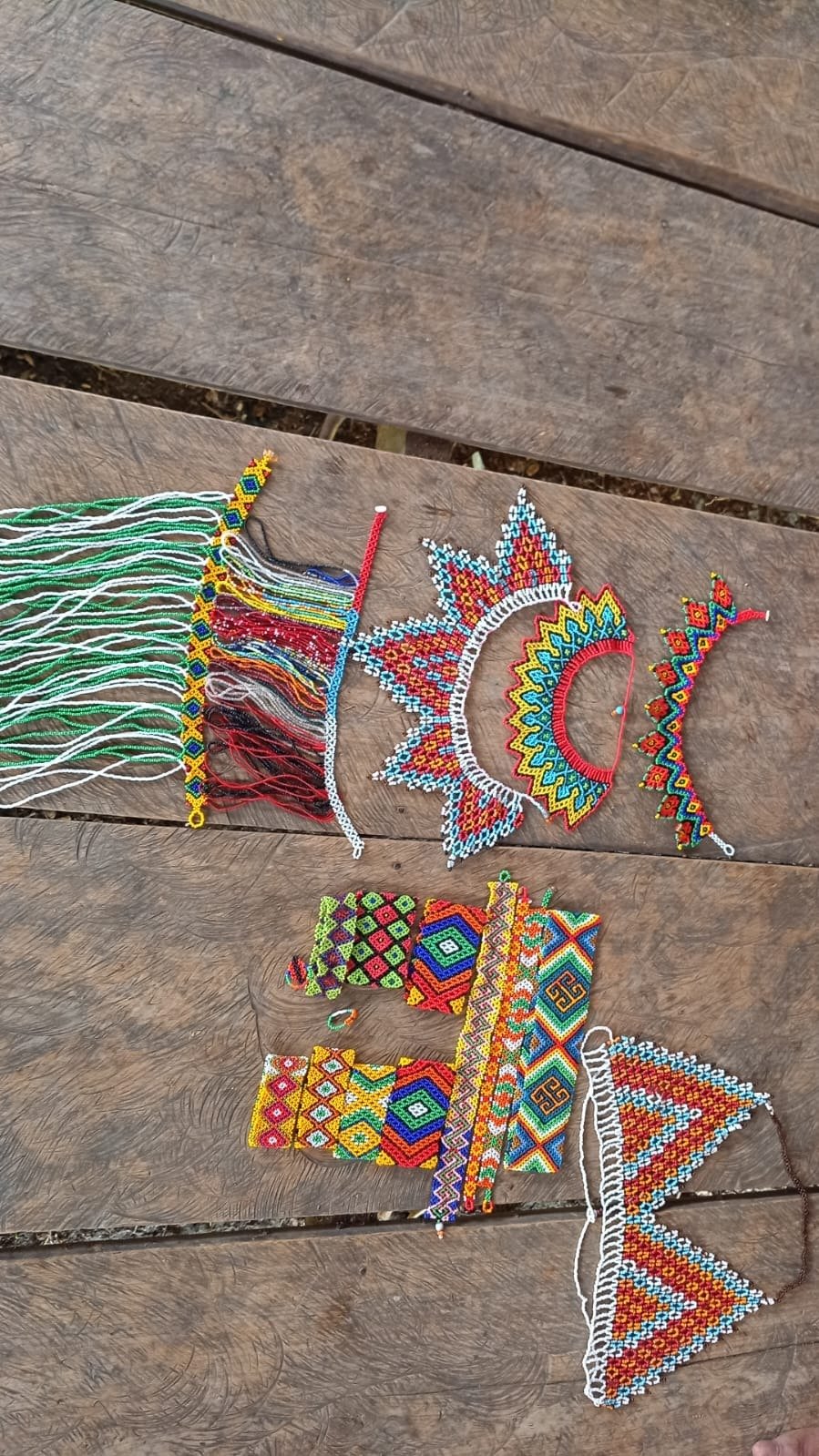
The Escola Viva Huni Kuĩ continues its educational activities, working to build food sovereignty and promote handcrafts such as beadwork, with the women leading the production of beaded necklaces and bracelets. During July, the Amazonian period known as ‘planting the swiddens’, the community was encouraged to create works of art using paints, brushes and canvases brought to the territory by Instituto Flor da Floresta. In August, these activities continued, as did the planting and the lessons on sacred medicines with the pajé and coordinator of the Huni Kuĩ Living School, Dua Buse. Further workshops with the community and the continuation of the transmission of knowledge by the pajé are planned for the coming months.
BANIWA LIVING SCHOOL
At the Baniwa Living SchoolMadzerokai, the dream of the Ways of Knowing House is getting closer and closer. The construction of the new Living School headquarters relies on the involvement of different generations to create this centre for the Baniwa and Koripako peoples to meet and exchange knowledge. Maria Bidoca, a master and leader at the Baniwa Living School, shared a little about the day-to-day reality of this collective endeavour, which is always filled with stories and plenty of xibé:
“On 20 July 2026, at seven o’clock in the morning, my husband Miguel and I set off from the Assunção do Içana community for the Living School to continue our digging work. We spent the whole morning digging until midday. Every now and then we’d stop to rest and have some xibé with chilli. During these breaks, my husband would tell me stories about his childhood by the Uwíwa stream. Most of them were funny, and some were sad. Then we’d continue digging until a certain time. From there, we’d head back home. I didn’t record anything that day; my mobile phone had run out of battery.
The next day, we went back to the Living School. We took a couple of grandchildren (Emanuelly and Matheus) along to help us dig and move the soil. It was great fun; both played and worked until half past eleven. After the work was done, we went down to the Living School’s harbour, and they had a lovely swim, absolutely delighted! From there, we returned to the community.
On the morning of 28 July, my husband Miguel, Mr Hermes, Robertinho and I went to the Living School to continue our work. When we got there, we started digging, piling earth around the bases of the plants, and carried on like that until midday. Whilst we were working, we took short breaks to rest and have some xibé. They would tell jokes, recount stories from parties and so on. I was always laughing at their funny stories. Then we’d carry on digging until a certain time before heading home.
The following day, the 29th, we continued our work at the Living School, carrying out the same tasks of digging and levelling the ground. Only the three of us were present that day: myself, Hermes and Robertinho. My husband Miguel had travelled to São Gabriel. The three of us carried out the digging work; at half past nine we took a short break to have xibé with fried fish and rice. Then we carried on working until half past eleven. Very tired, we returned to our homes.
On the 30th, we carried on with the same work, digging. The days were very tiring, but we achieved a good result. We’re very close to finishing.”
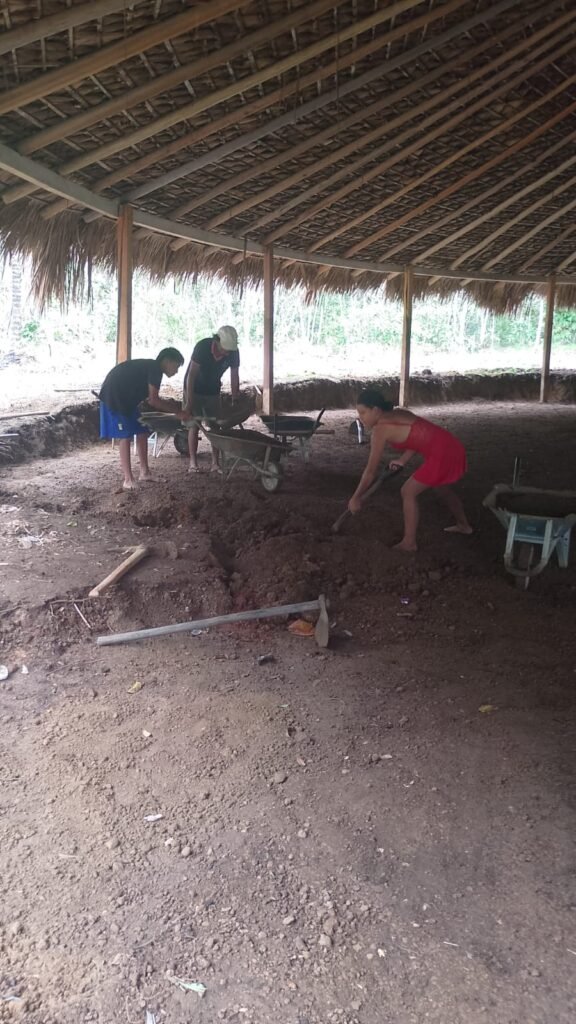
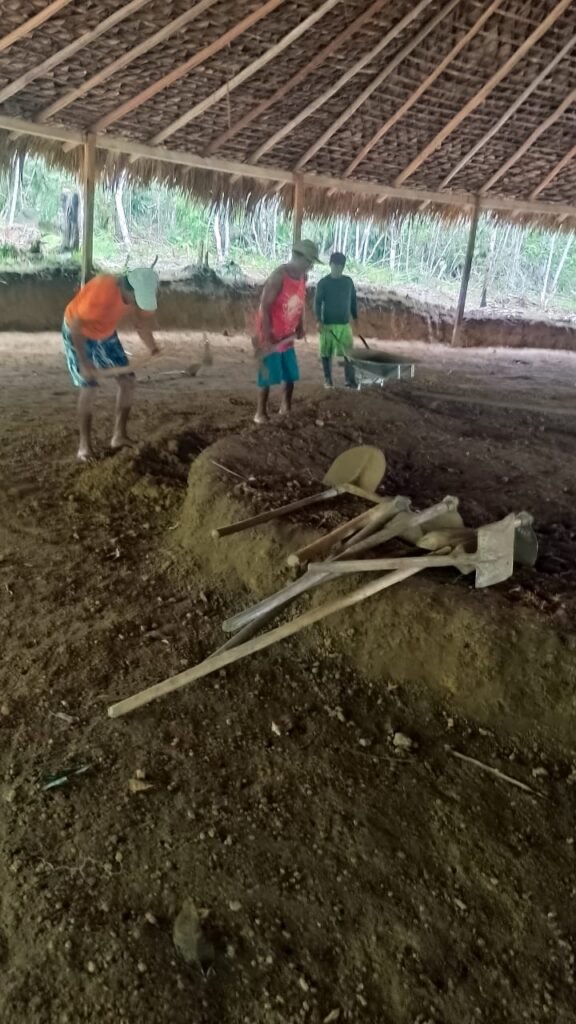
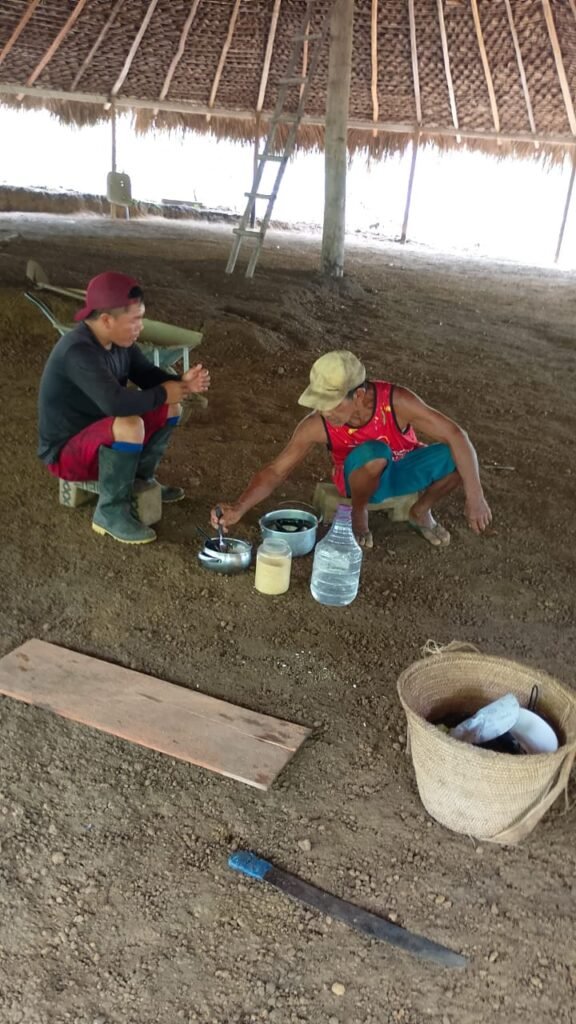
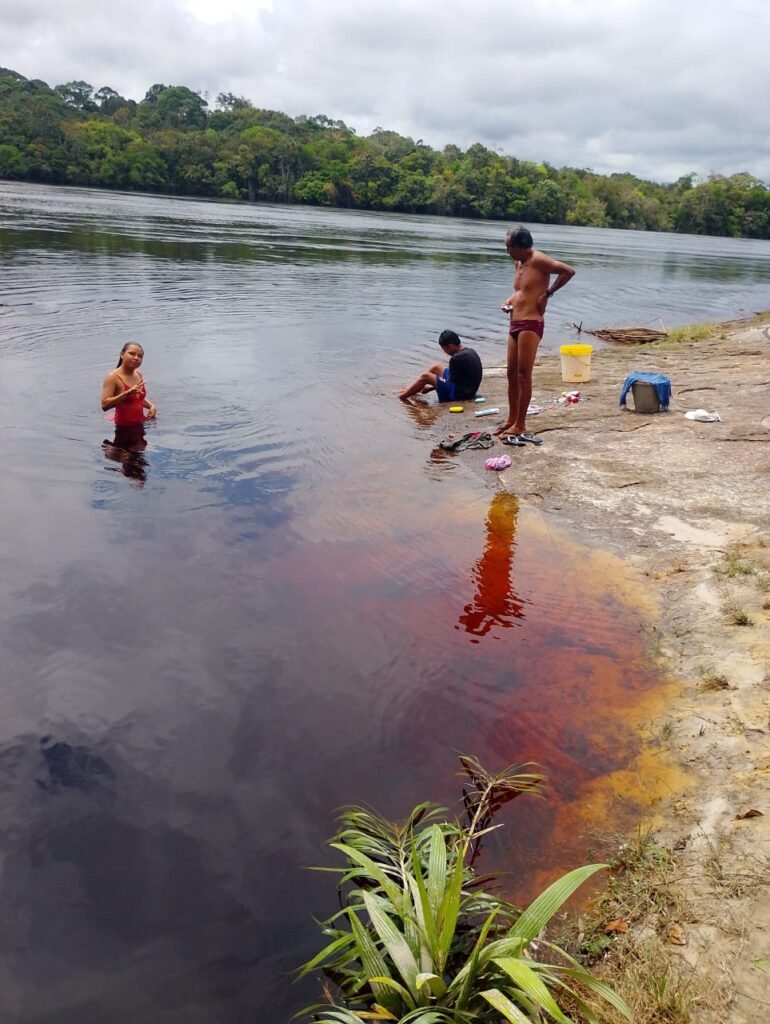
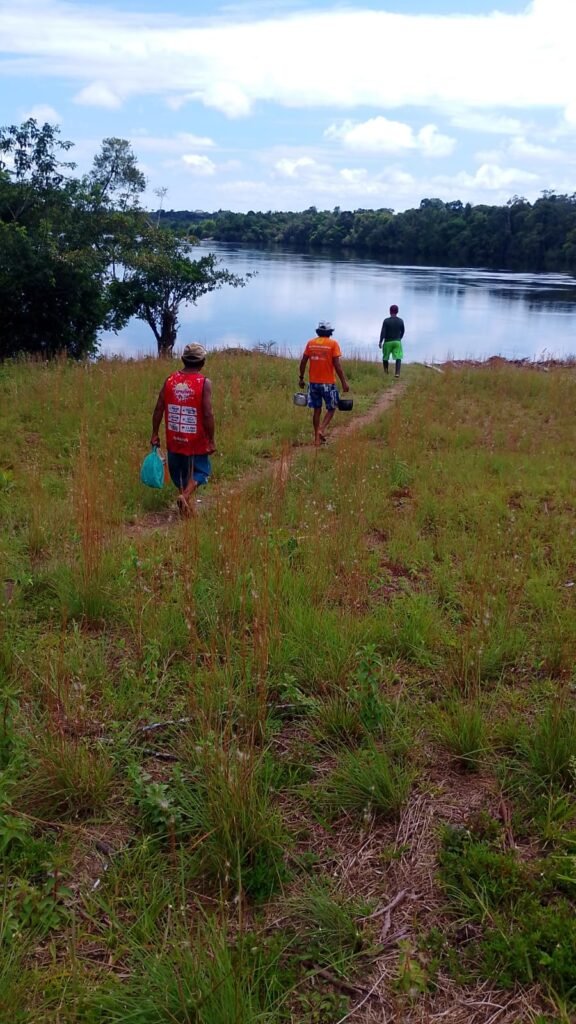
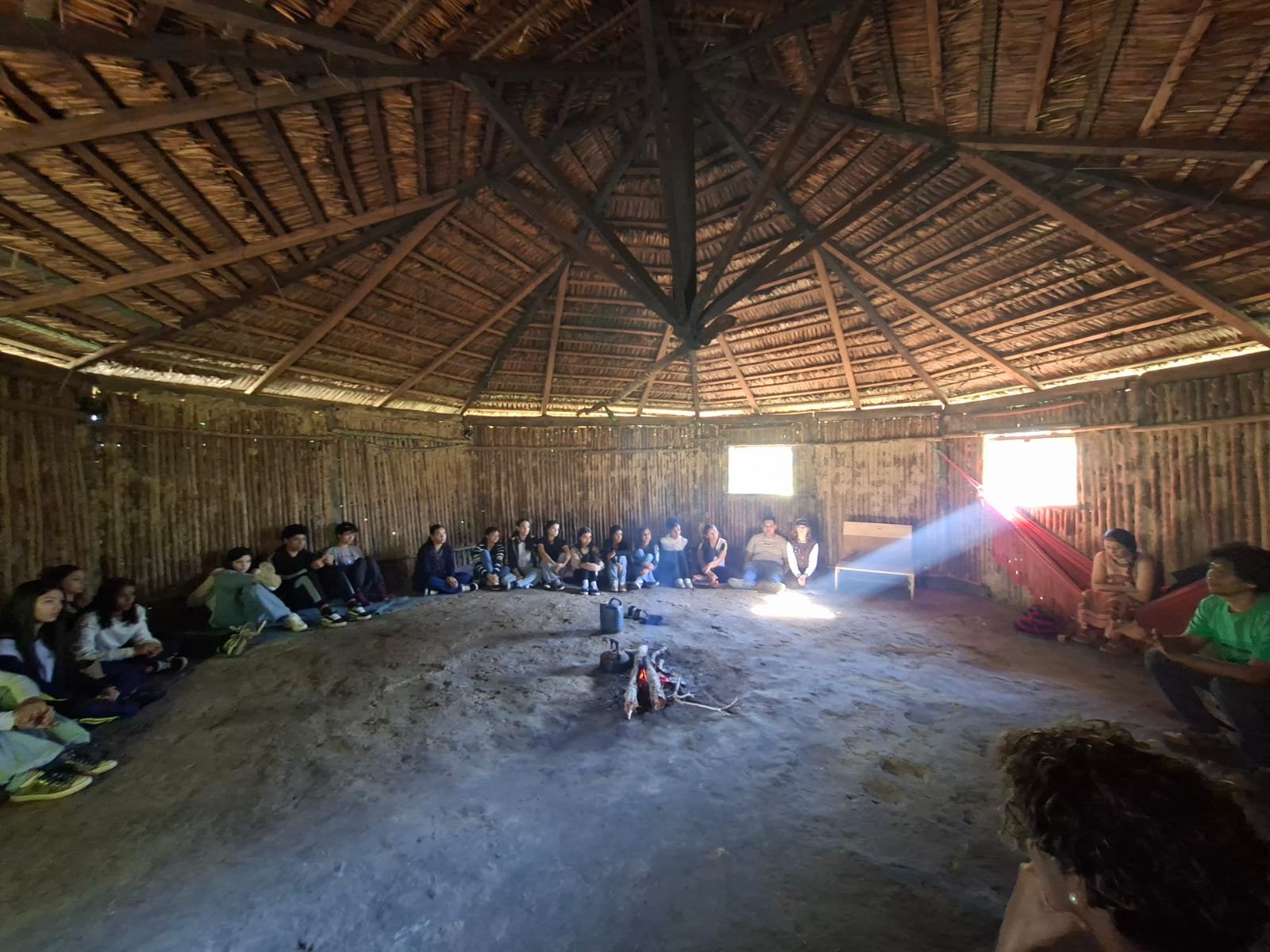
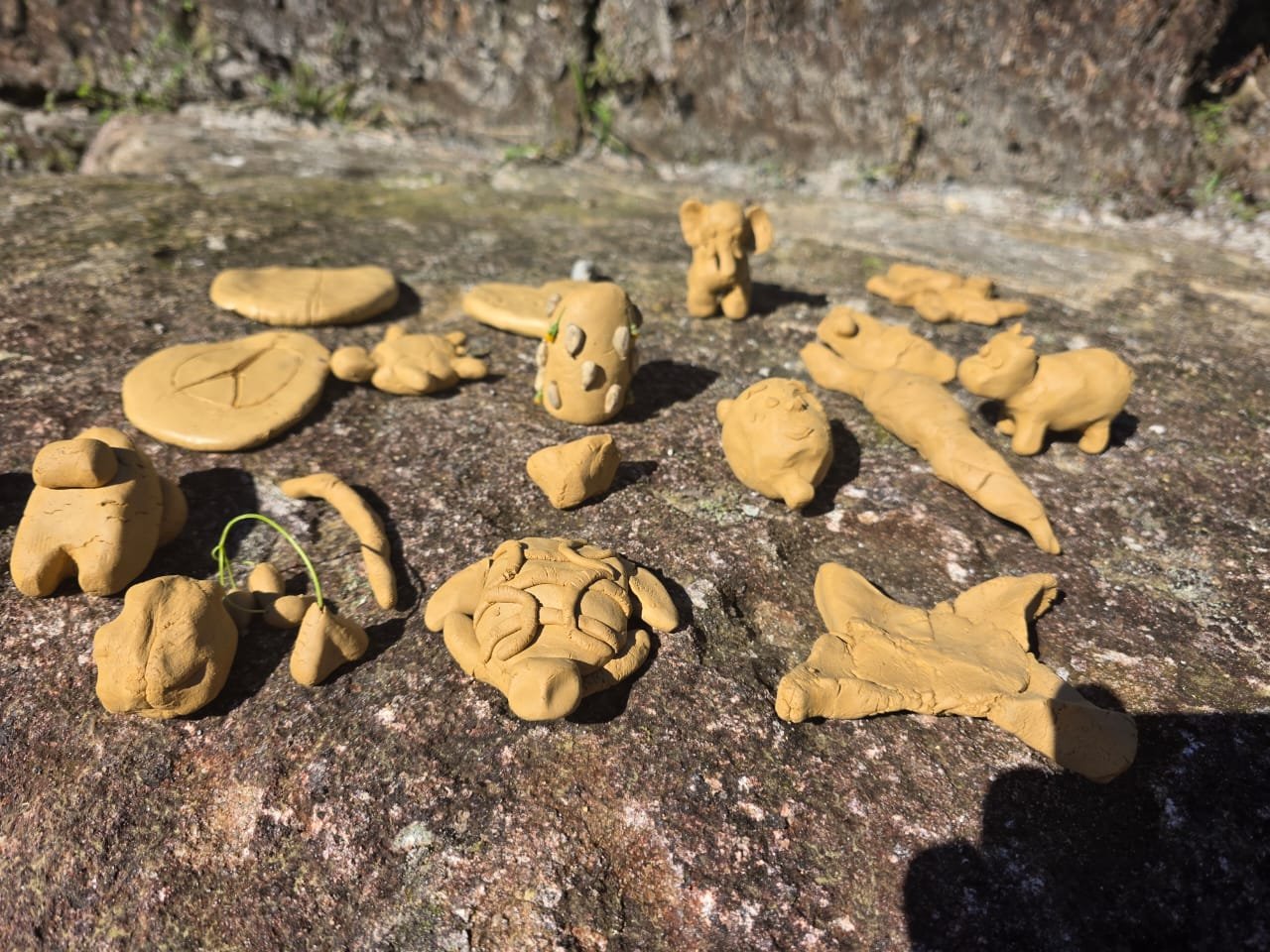
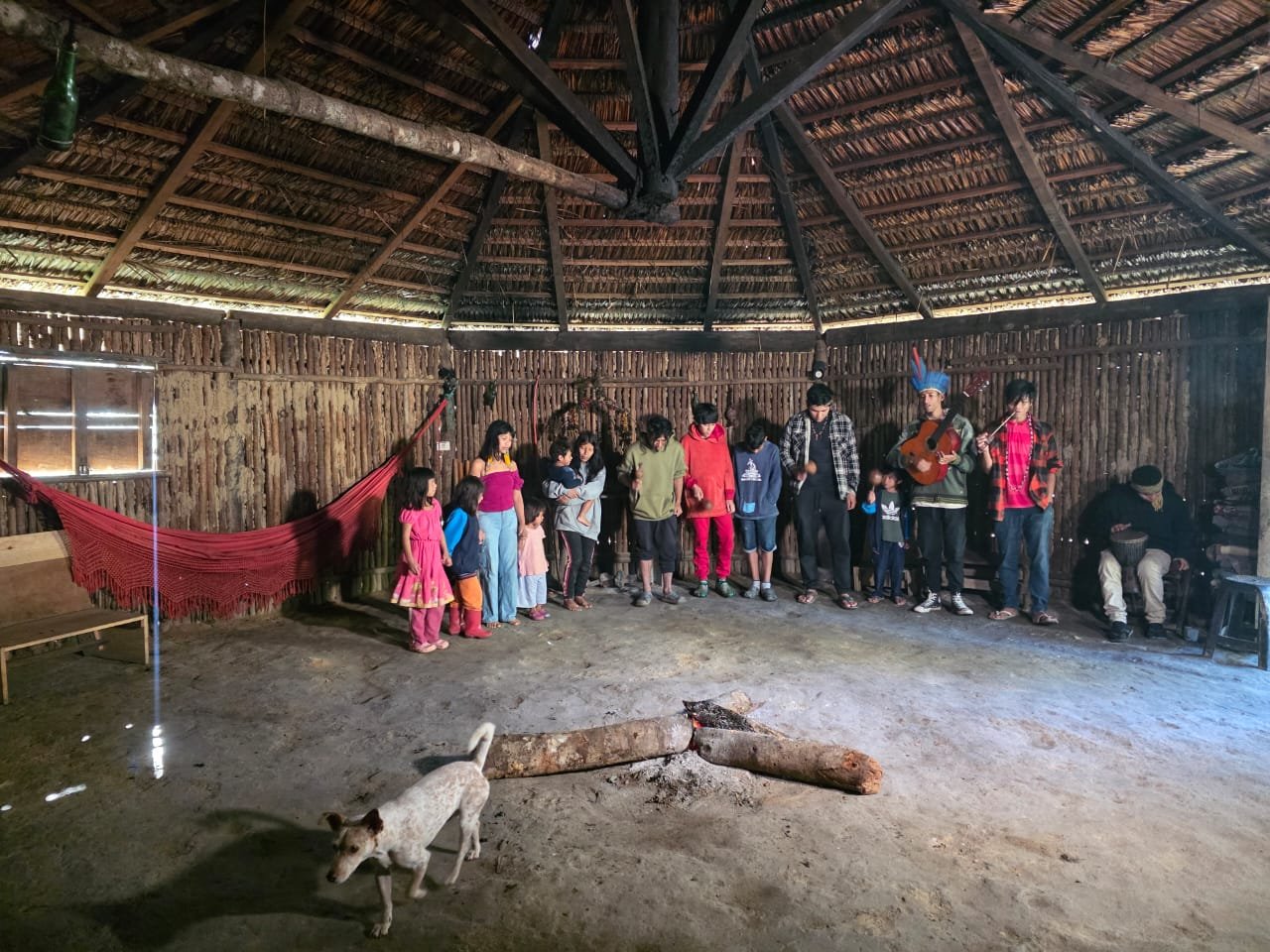
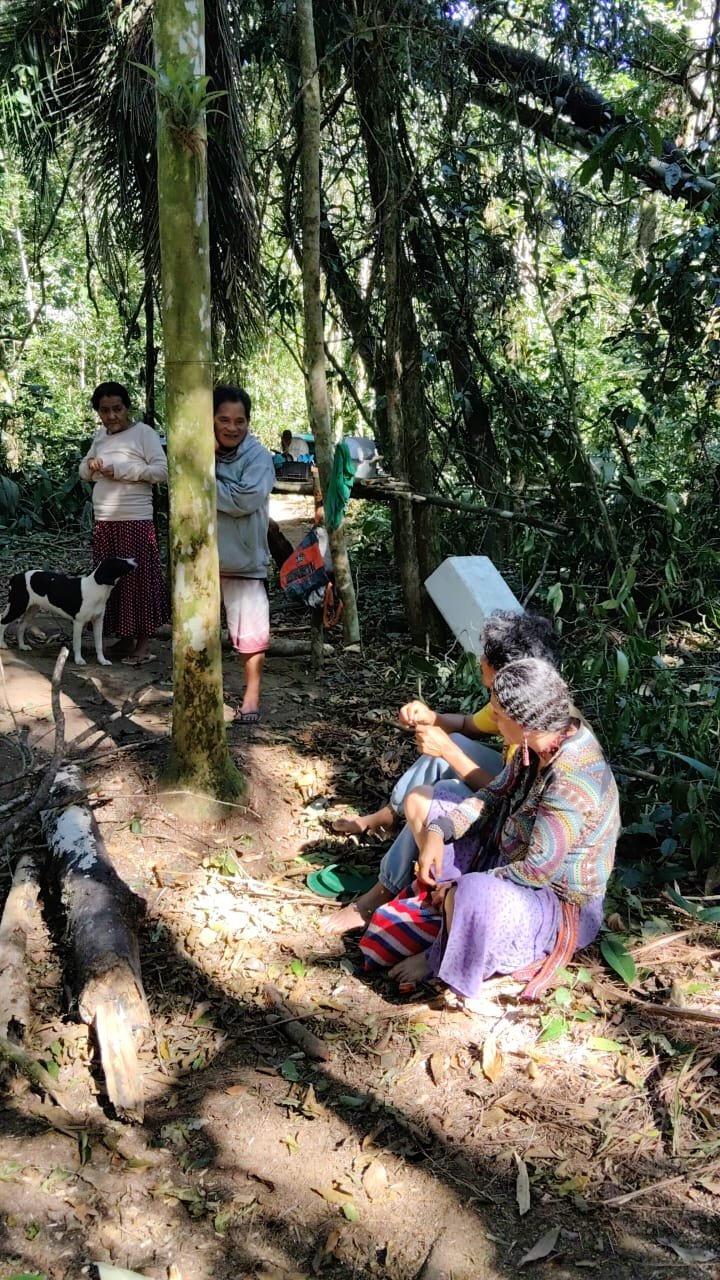
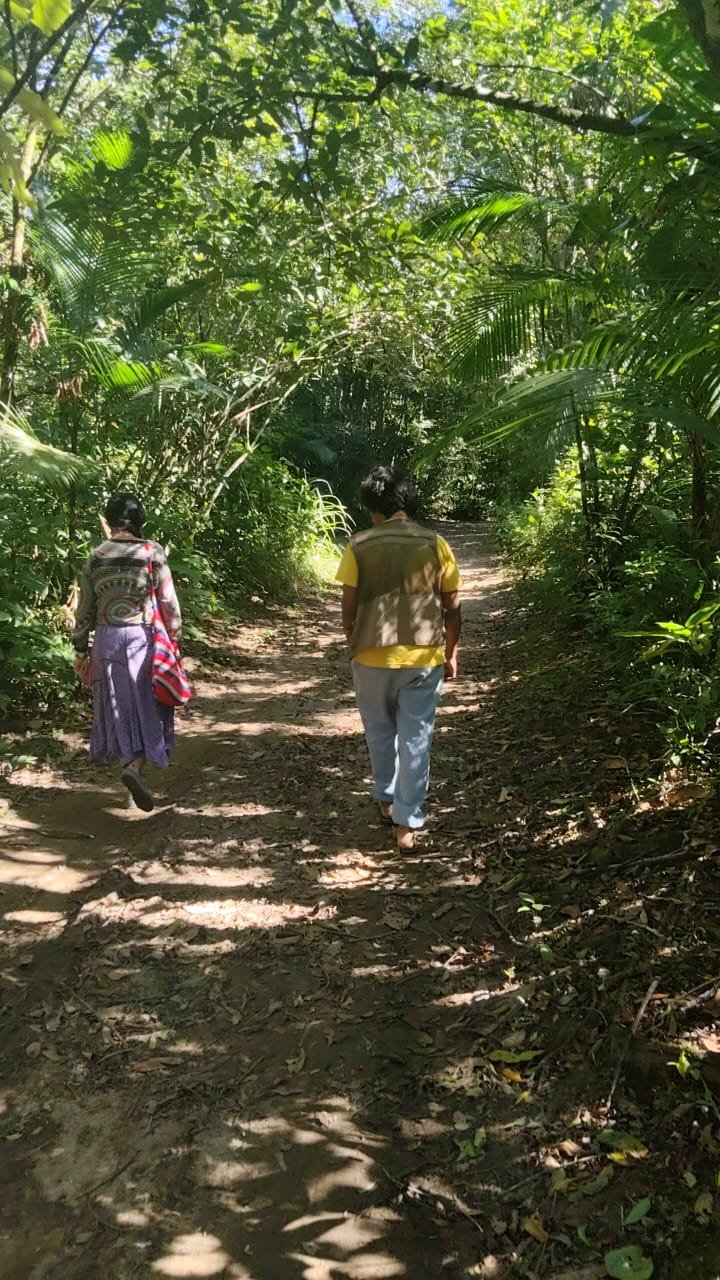
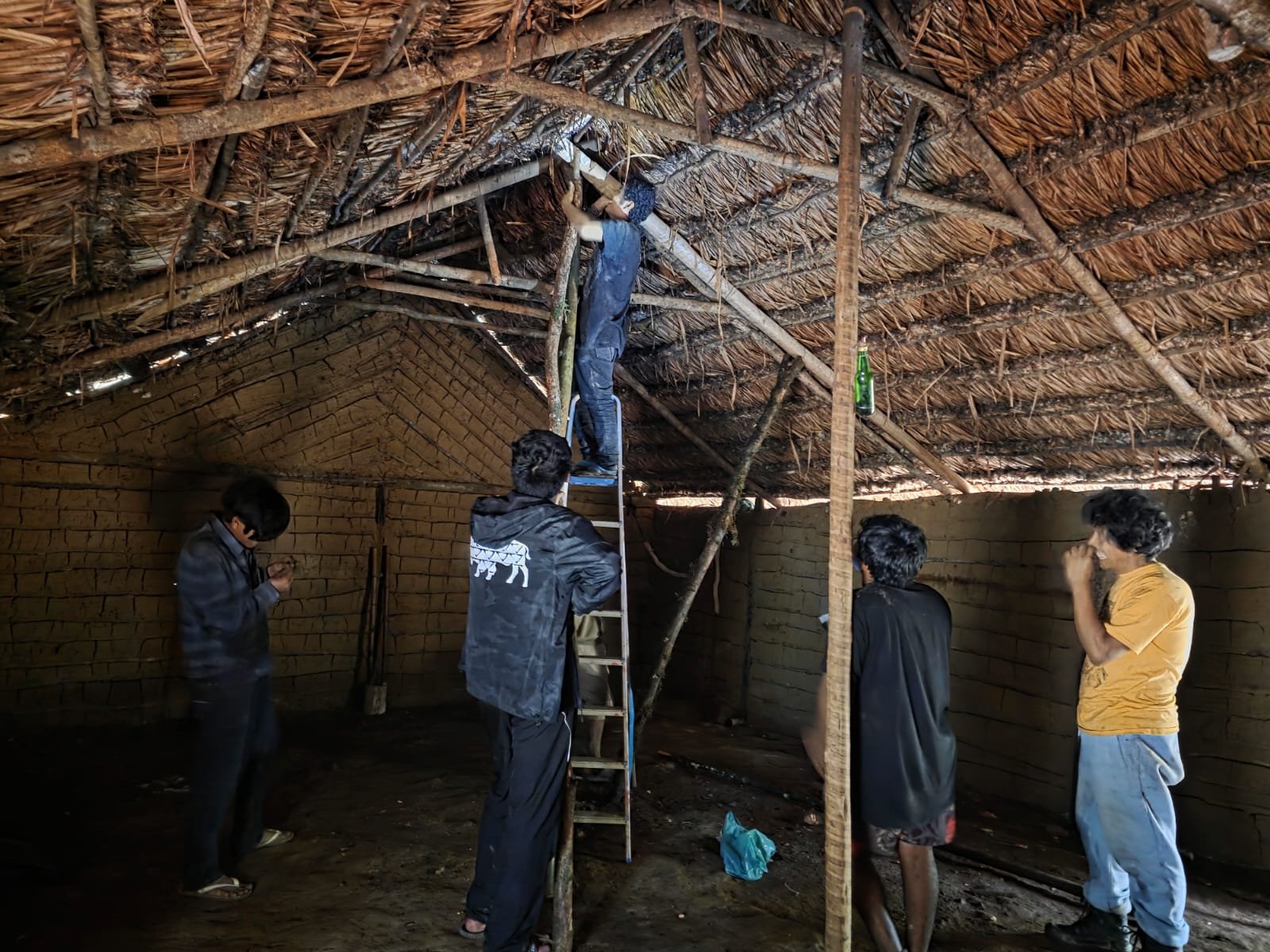
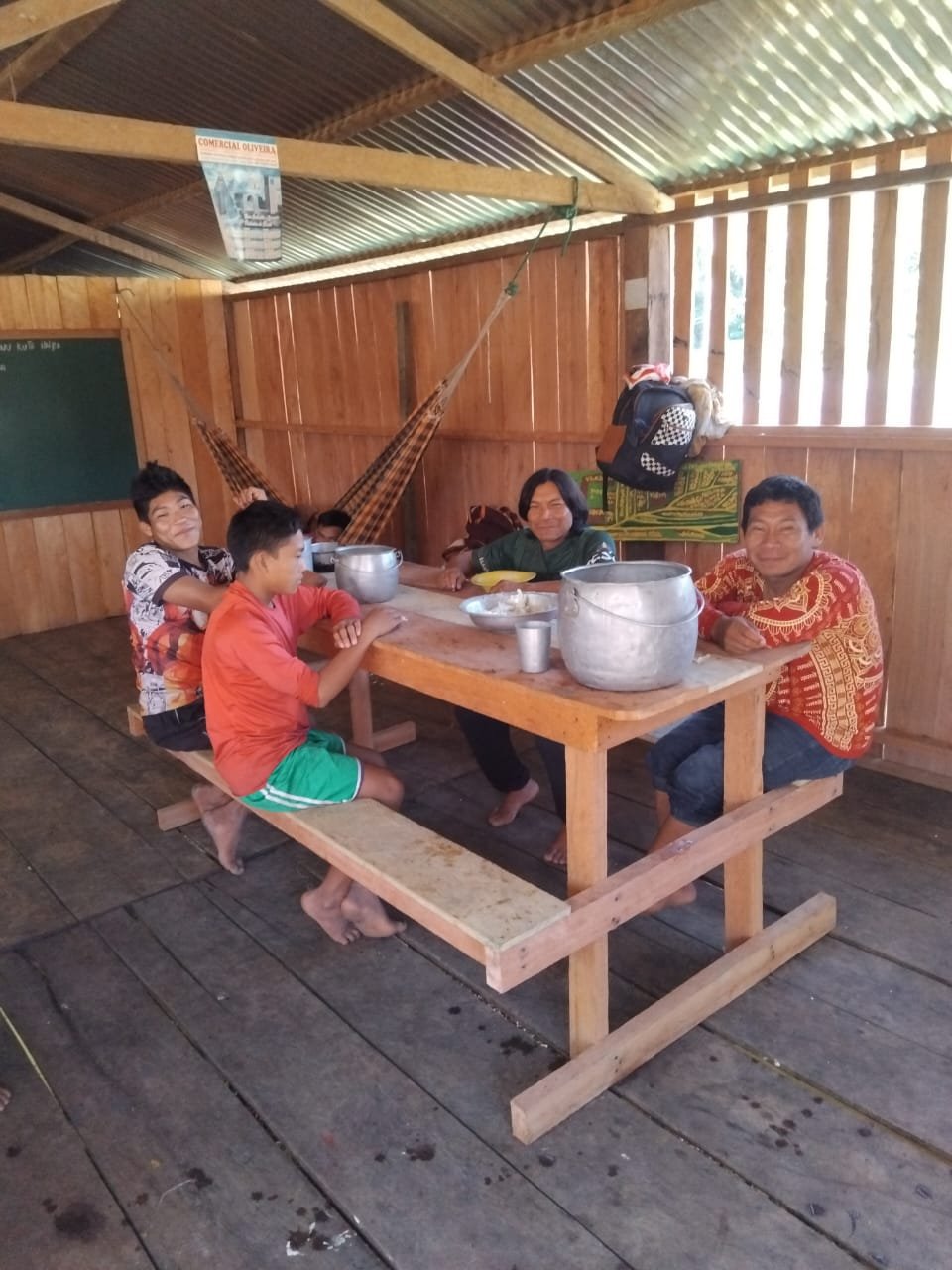
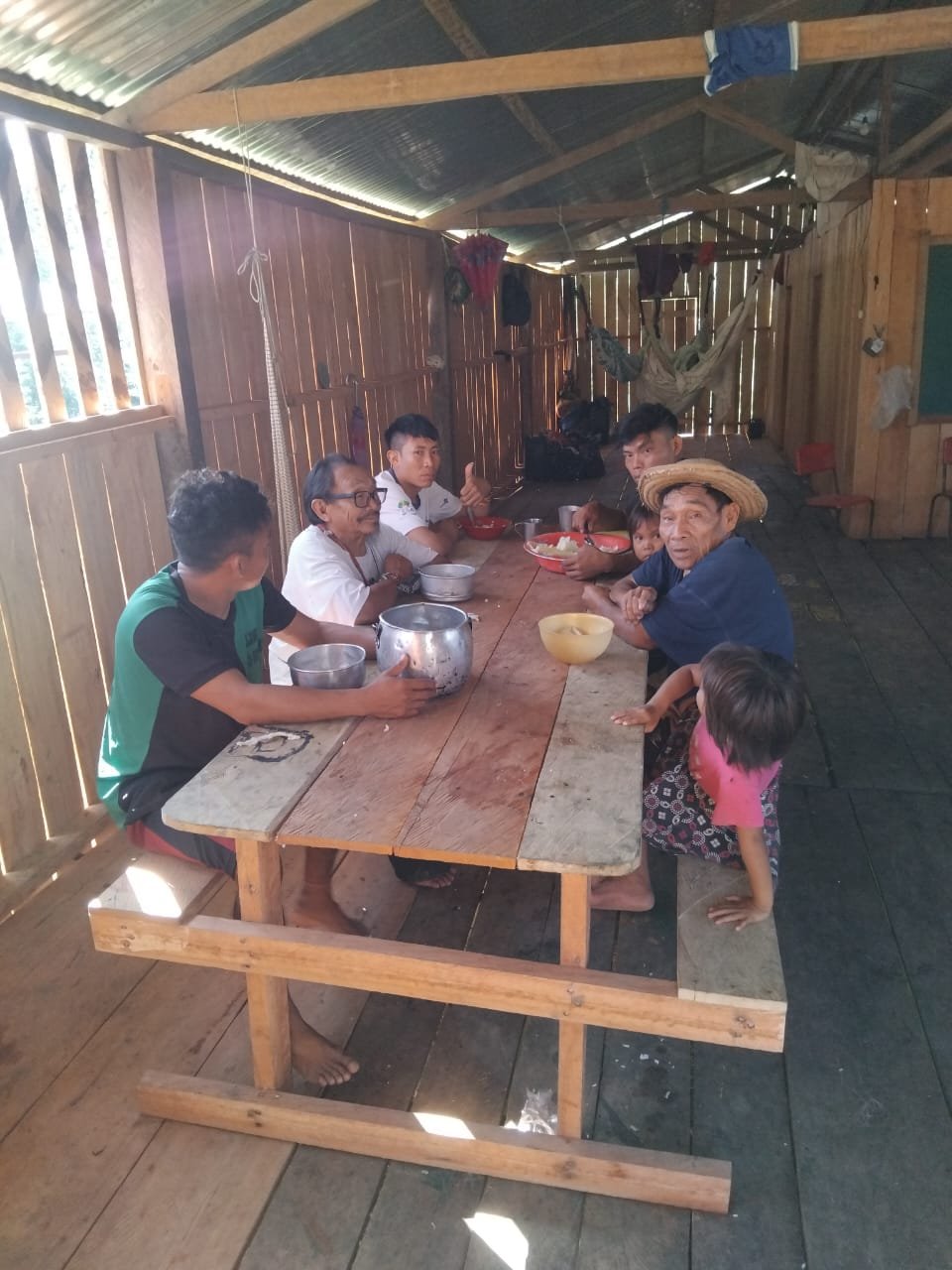
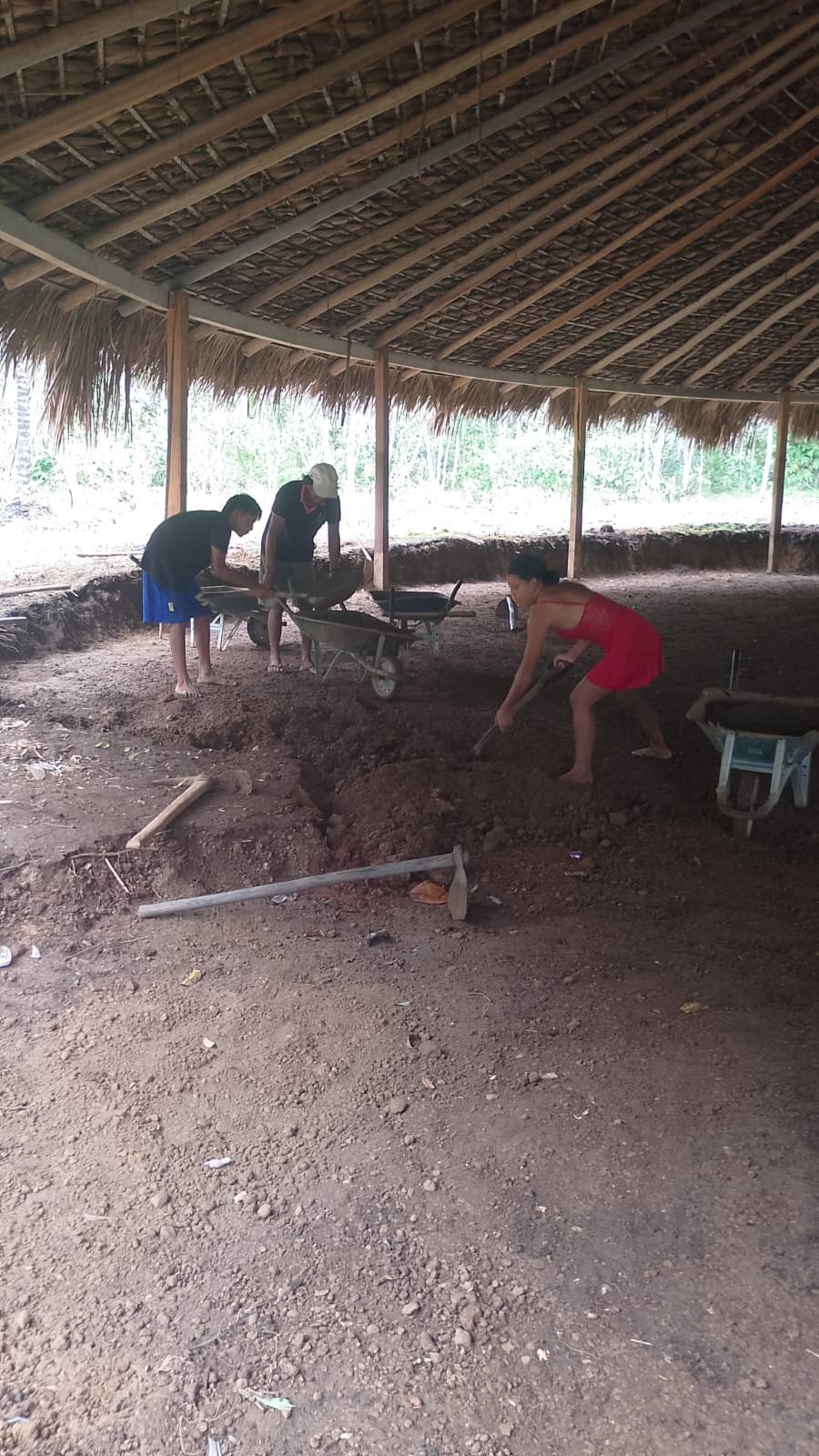
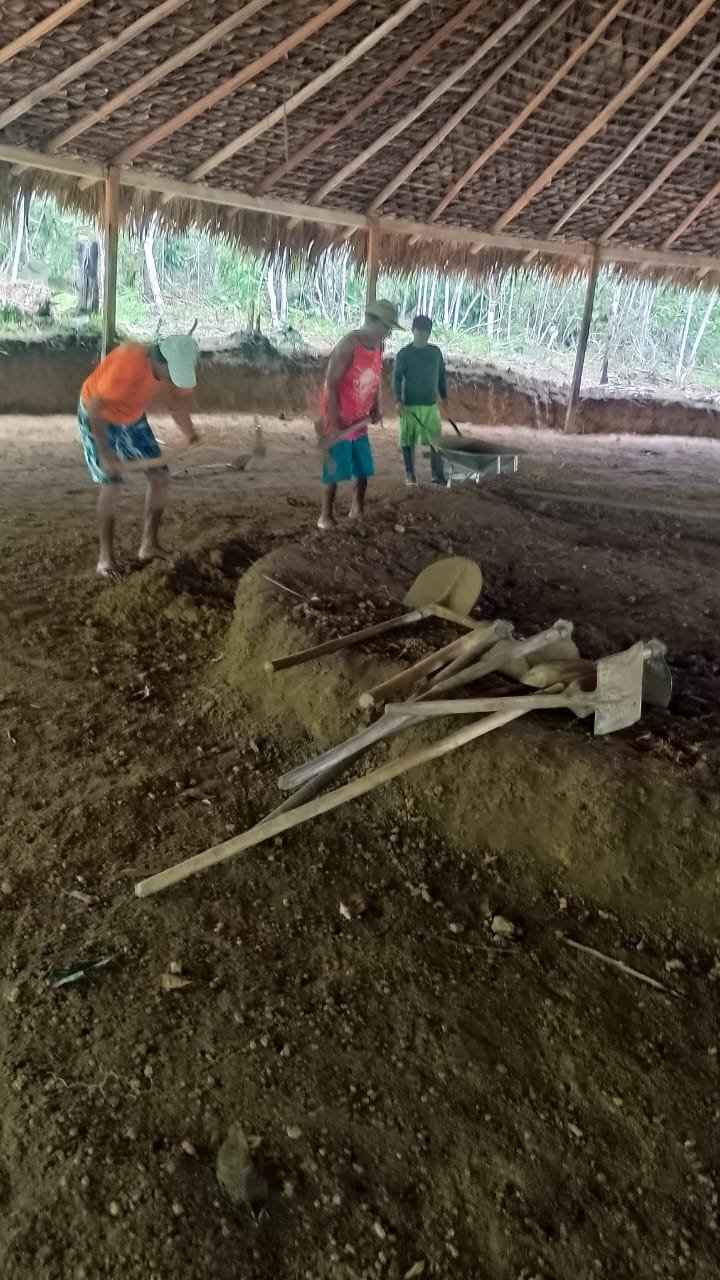
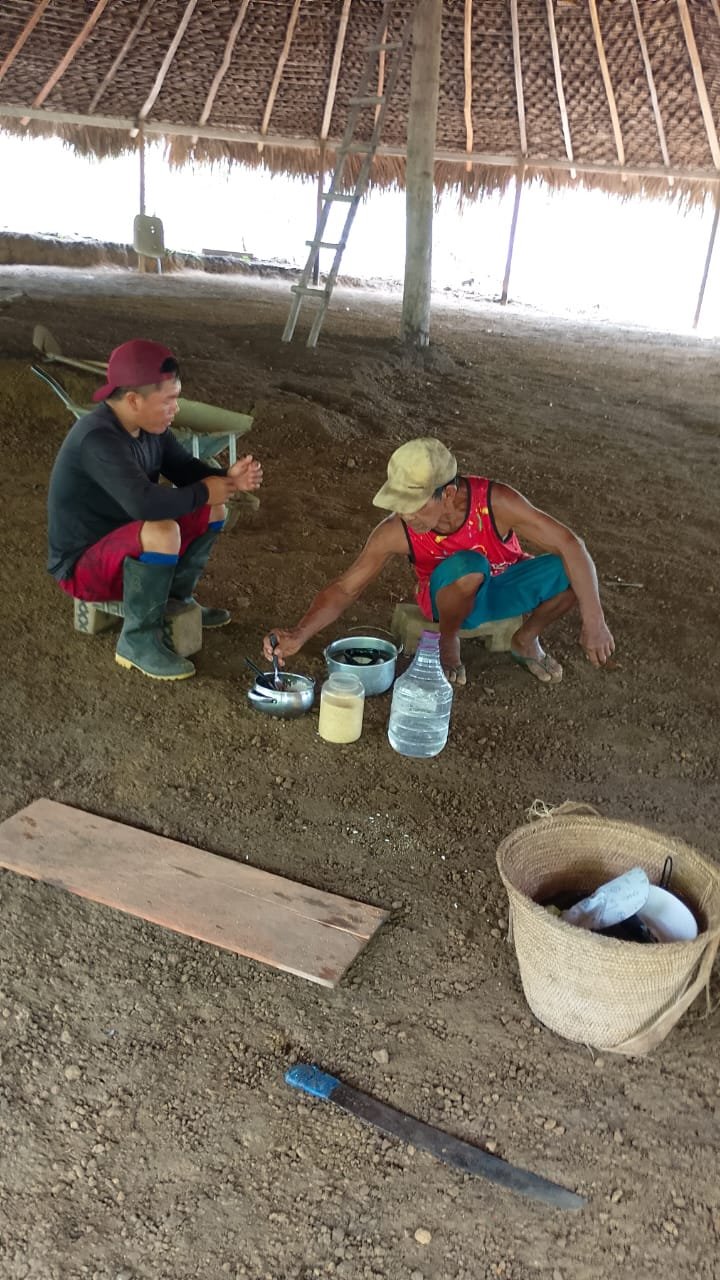
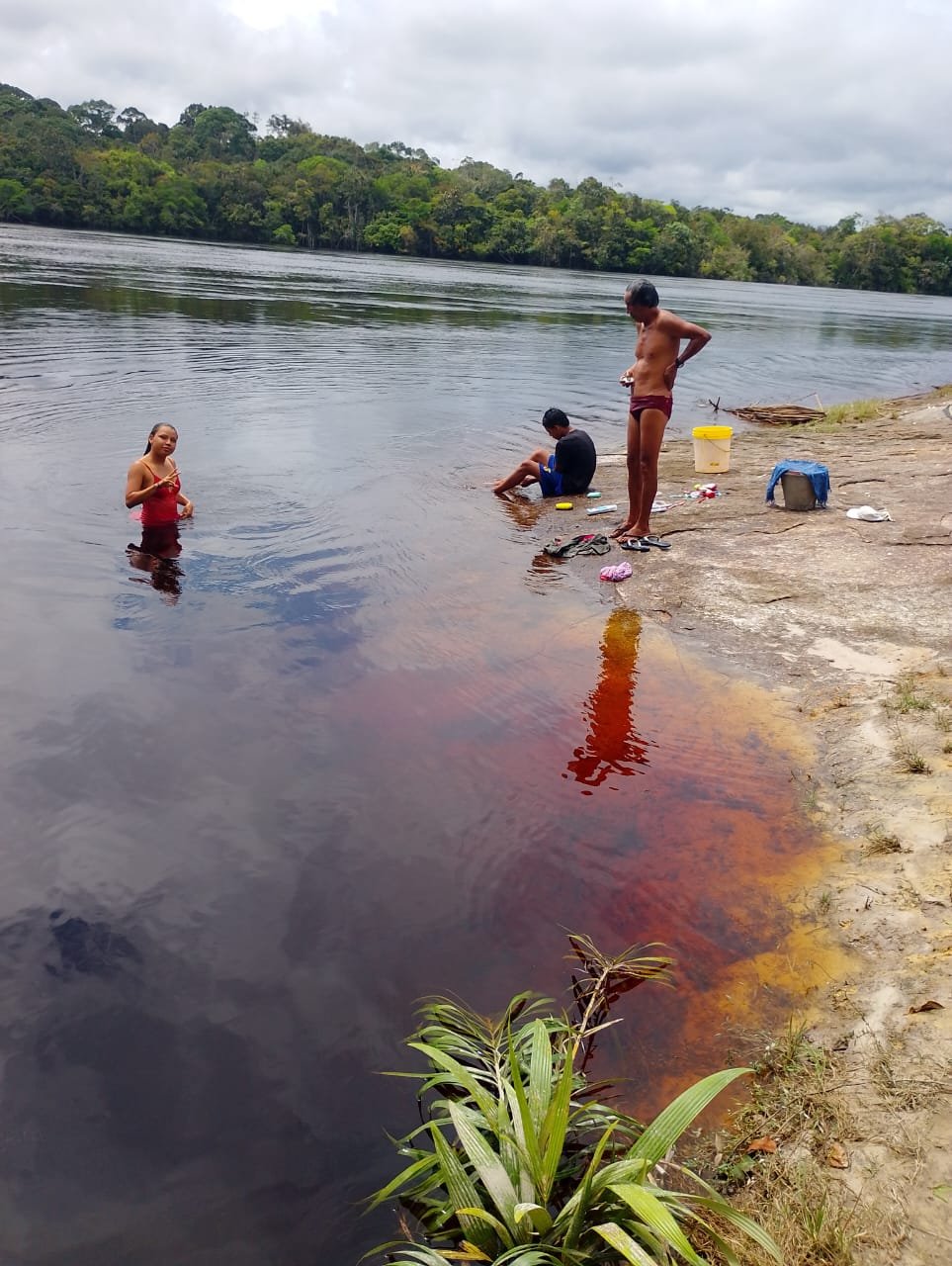
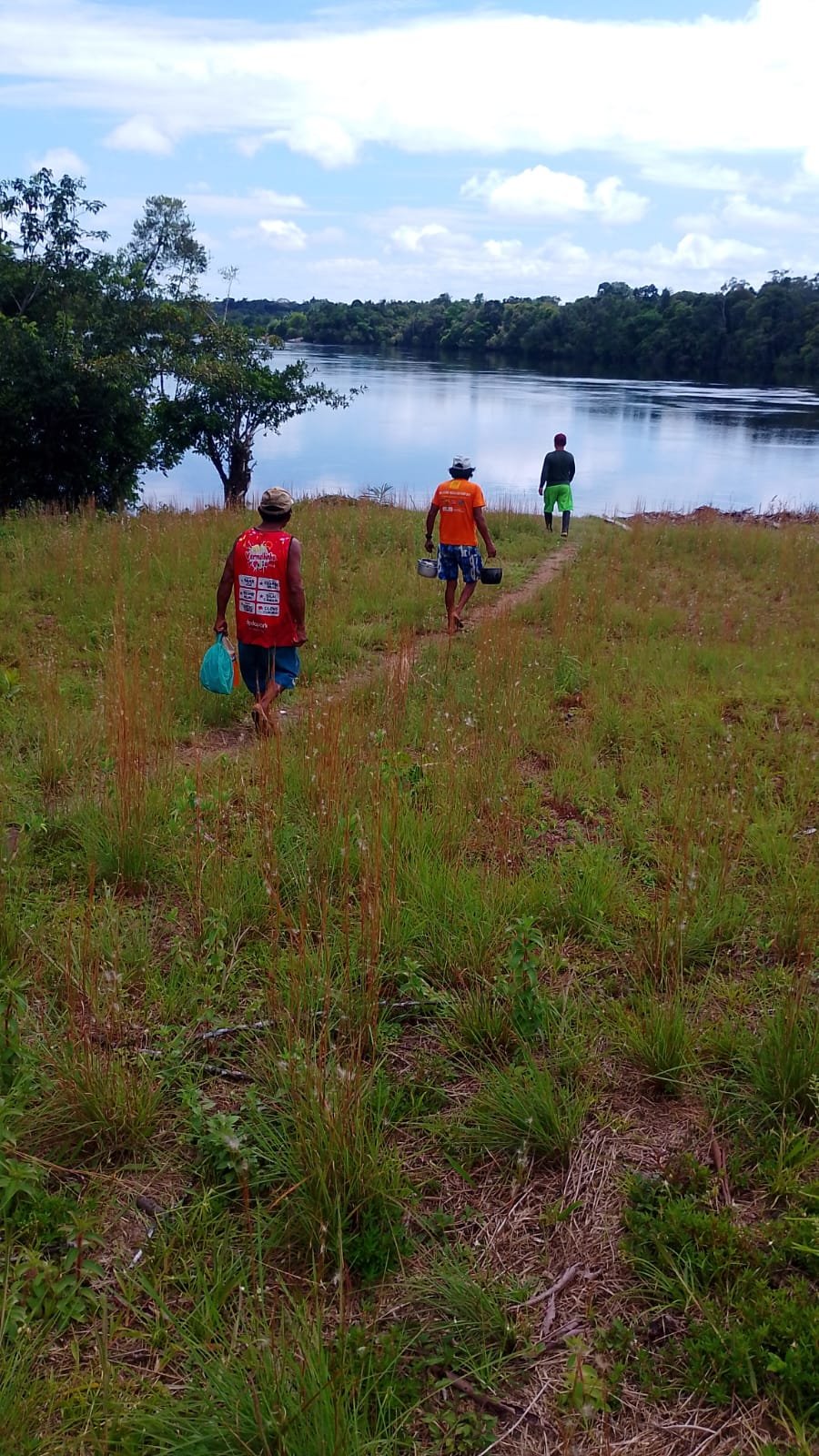
Records of the work carried out to finish the Madzerokai Ways of Knowing House
MAXAKALI LIVING SCHOOL
The Maxakali Living School, Forest School Village, “continues to grow in strength far beyond four walls”,said Sueli Maxakali, coordinator of the Living School. The month of August was marked by a sequence of rituals spanning several nights and days, a time for the passing on of knowledge between the shamans and the young people. During this time, everyone gathered to share stories. Paints and fabrics were also distributed within the community to promote the continuation of traditional Maxakali painting.
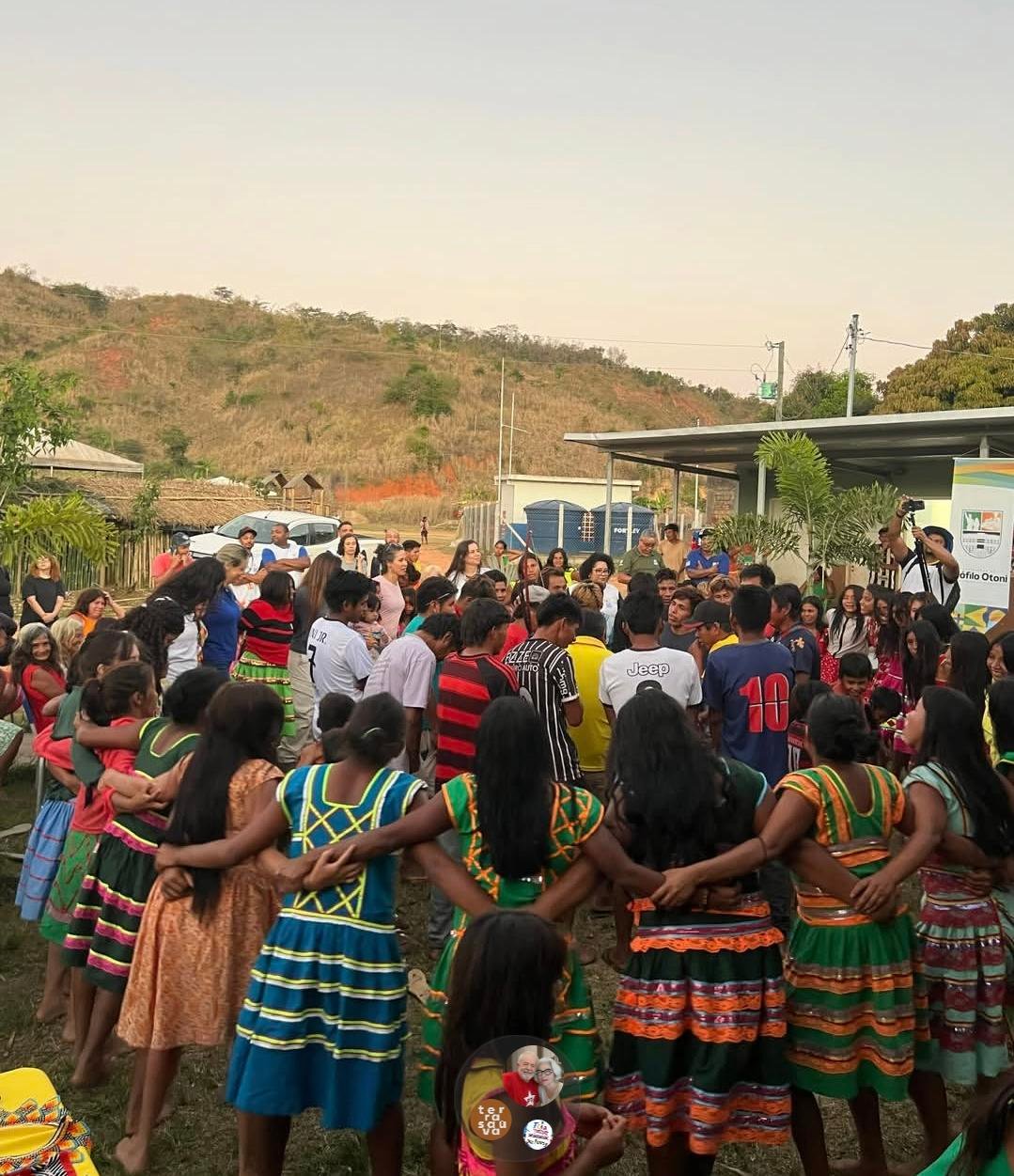
Ritual na Escola Viva Maxakali.
At the end of August, a film screening was held at the Living School to celebrate the trajectory of the Hãmhi Terra Viva Project, which has been developed in partnership with the Tikmű’ün/Maxakali peoples since 2023. The screening is part of the celebrations marking the third anniversary of the Forest School Village, which included a large festival on the territory in September.
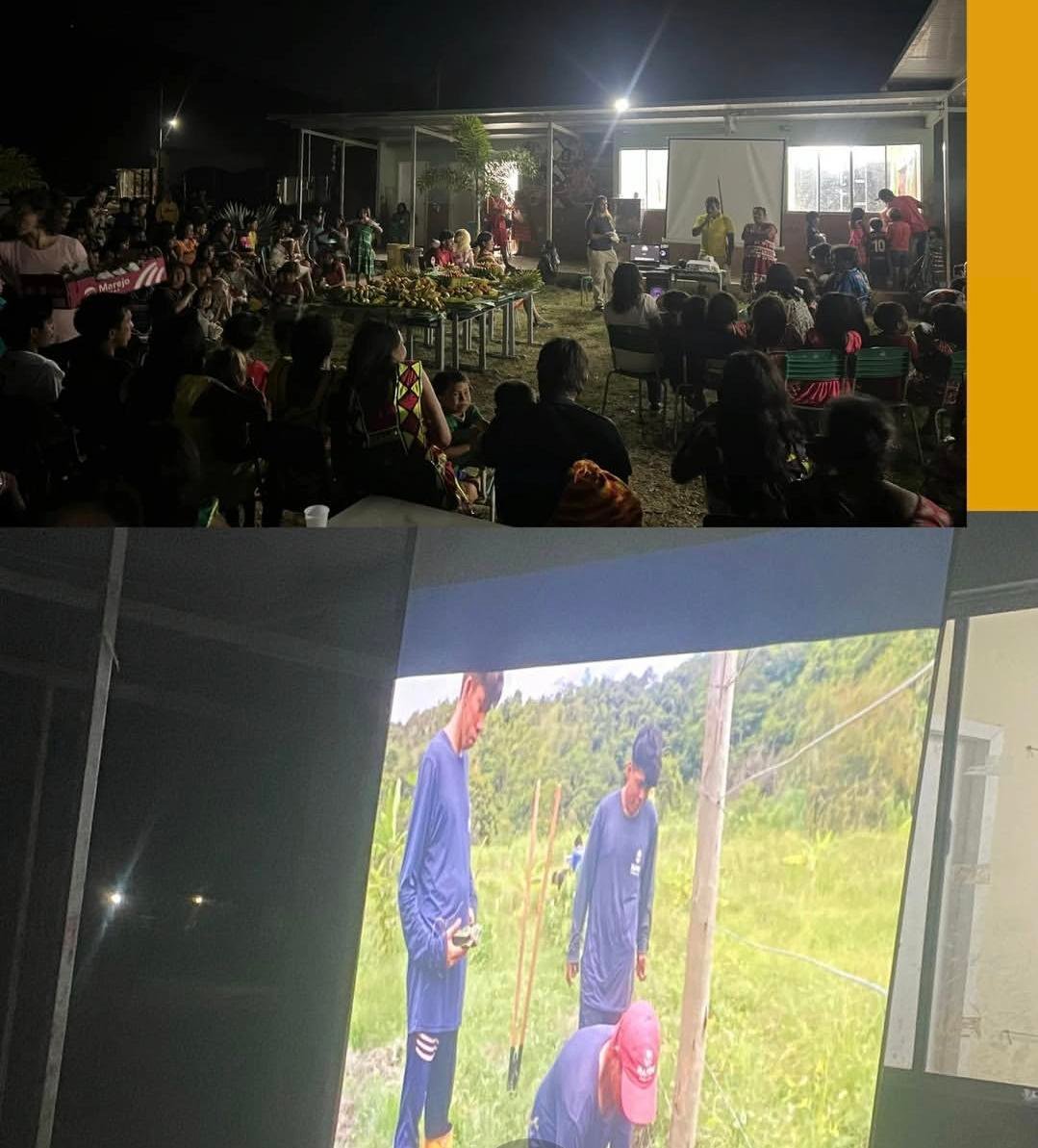
Film screening at the Living School.
Celebration of the third anniversary of the reclaiming movement at the Forest School Village.
Photos: Selvagem Archive / Living Schools
Photo from the ‘Ayvu Porã’ exhibition: MCI Archive – Gabie Pereira