




THE MADZEROKAI WAYS OF KNOWING HOUSE:
the new navel of the world
30 April 2026
Dreams can take many forms, come from many places, and travel through different times. Dreams do not exist alone; they connect people, emotions, and knowledge. Dreams can be images, but also smells, textures, and movements. Dreams build worlds, and they can be built as well.
The Madzerokai Ways of Knowing House began as a dream of the Pitsironai community, also known as Wanaliana in the Baniwa language, but called Assunção do Içana in Portuguese. Now, it is also part of their waking world. The space was designed to be the new headquarters of the Madzerokai, the Baniwa Living School, a centre for community life and the transmission of Baniwa culture not only for the Assunção do Içana, but for the 96 communities within the territory of the Baniwa people—divided into micro-regions along the Içana River—and the Koripako people, who live in the Upper Içana River region, in the Alto Rio Negro Indigenous Land, between Brazil and Colombia.
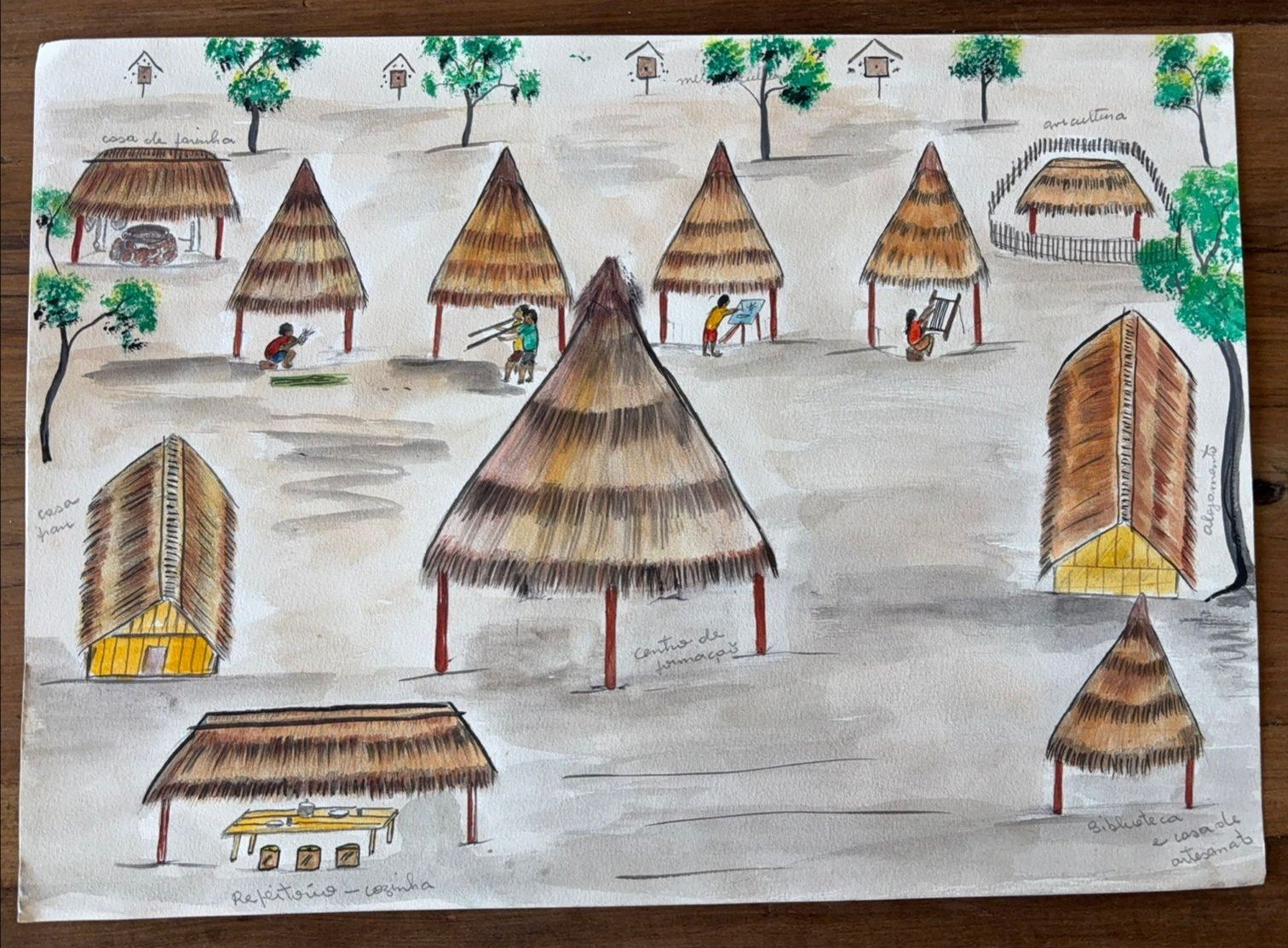
Design of the Madzerokai headquarters (main house), including the smaller houses already built. The drawing was created during Cristine Takuá and Anna Dantes's visit to the Baniwa Living School in 2025.
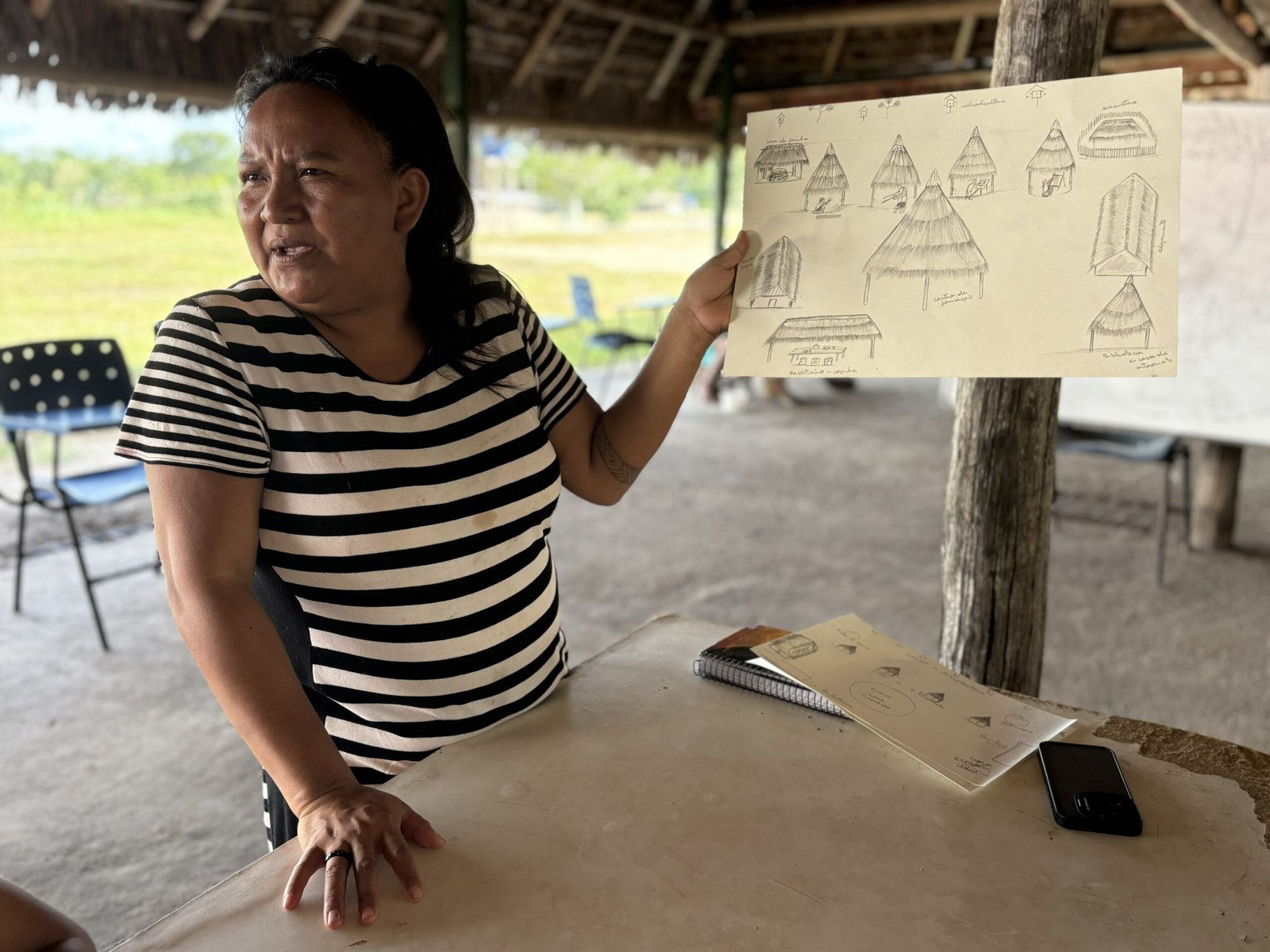
Francy Baniwa, coordinator of the Madzerokai (Baniwa) Living School, with the architectural rendering of the Ways of Knowing House in May 2025.
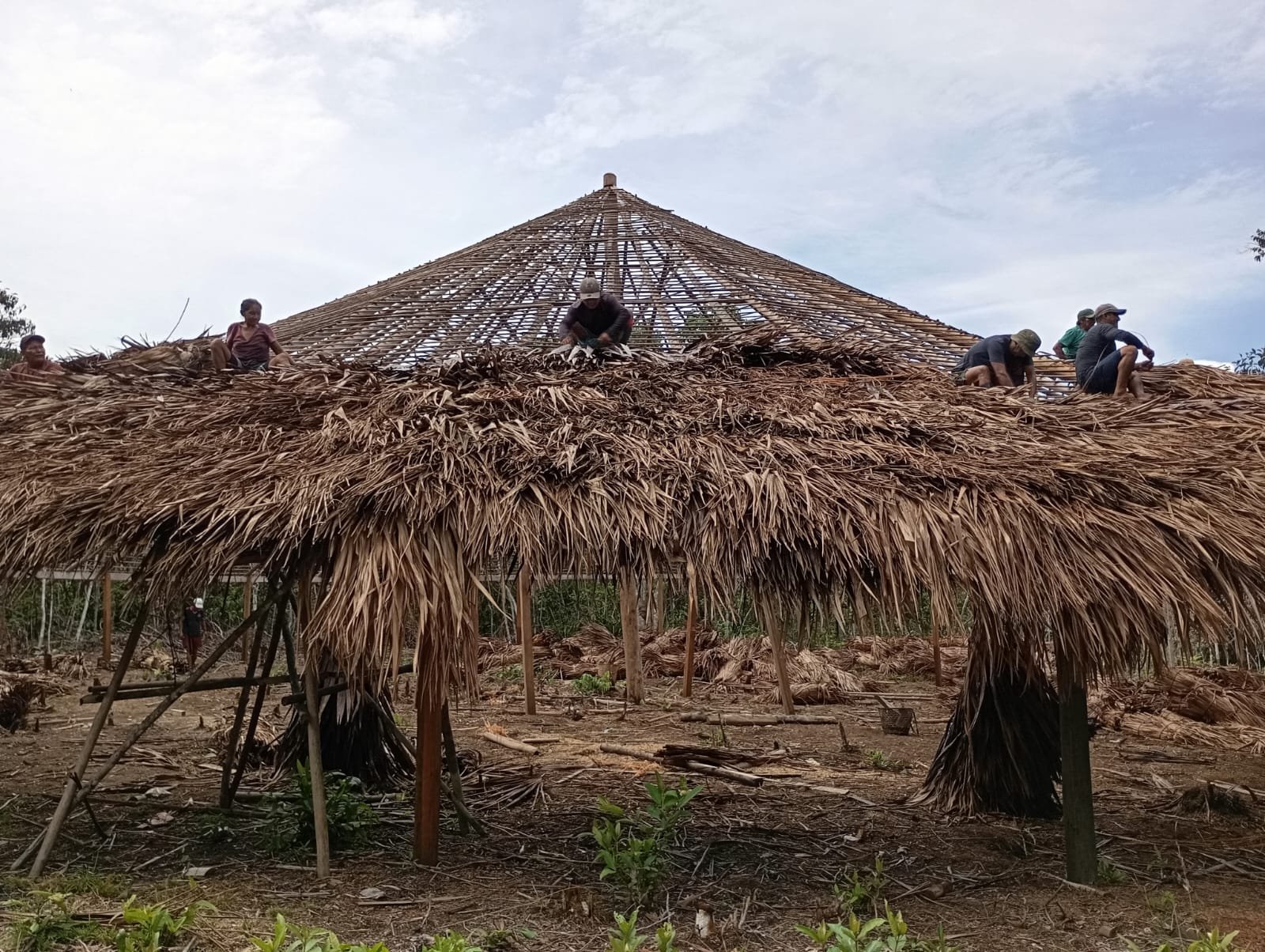
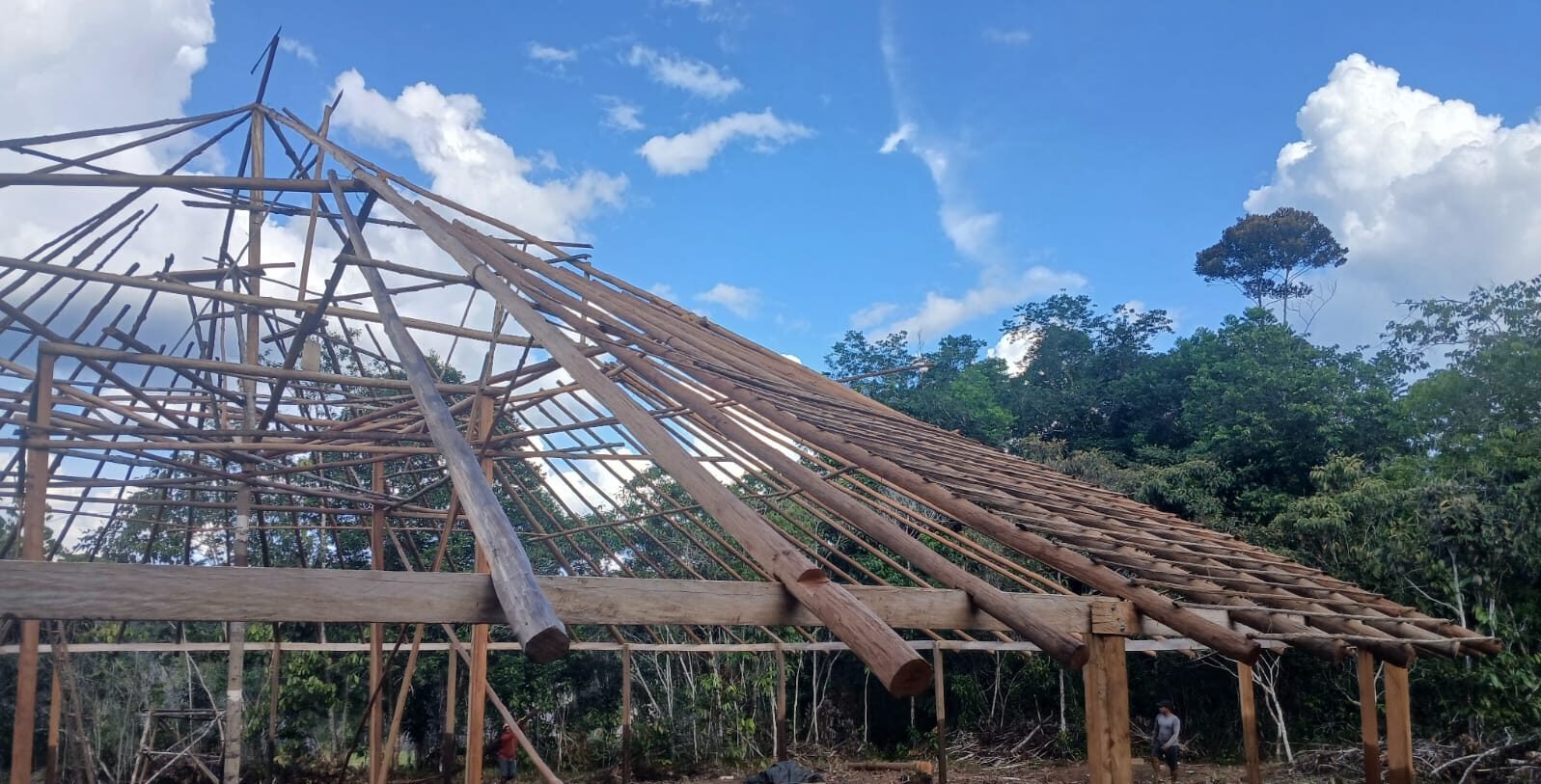
Final stages of the Ways of Knowing House in March 2026.
Built by wisdom keepers, midwives, and other experts in Baniwa knowledge, as well as young people from the community, the Madzerokai Ways of Knowing House was woven collectively even when it was just an idea. The choice of wood, the durability of the materials, the timing, the size, and the location of the construction were all planned and organized together, with each decision carrying its own meaning. The techniques for harvesting and tying the uambé vines to the slats and rafters of the structure, the transport of muruã wood (which, in Baniwa language, means “navel”) to serve as the central support of the hut, the clearing of the area around the construction site, the gathering of arumã for making mats, and even the lunches of xibé and flour with açaí during the work, were living lessons because “this construction is a true Indigenous science, an ancestral architecture,” said Francy Baniwa, coordinator of the Baniwa Living School.
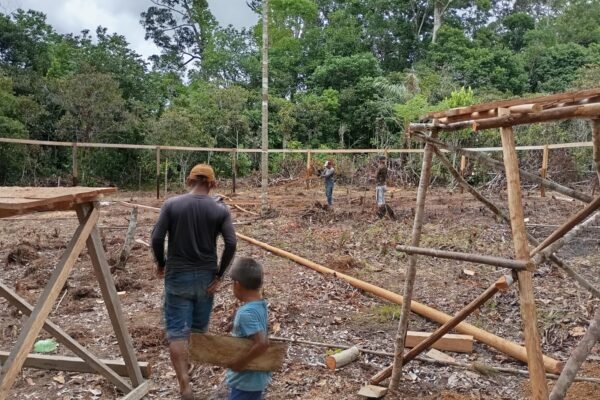
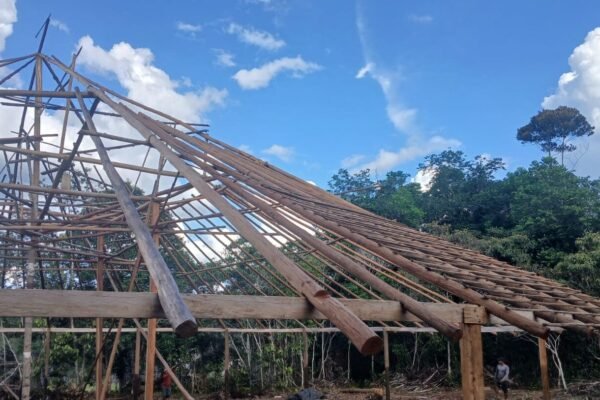
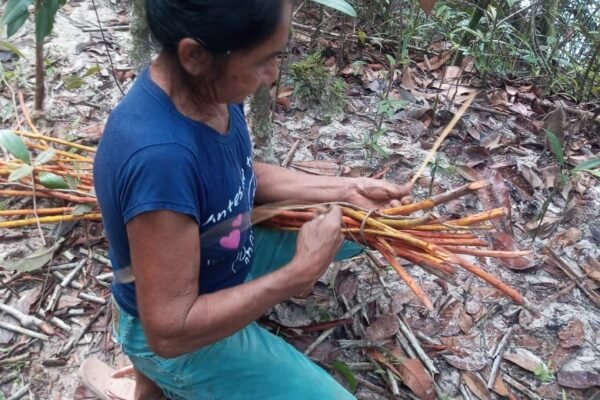
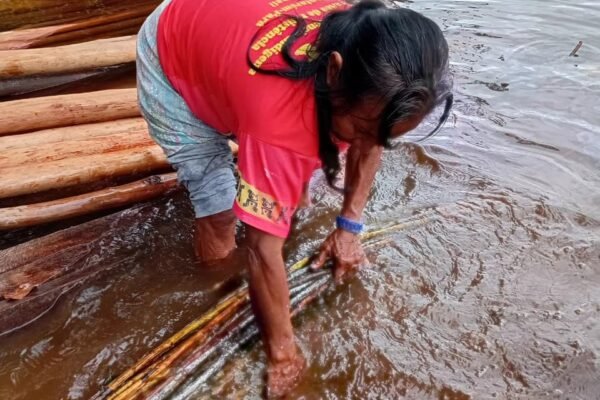
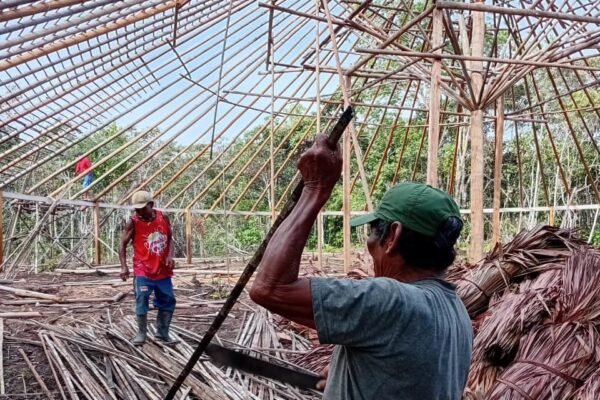
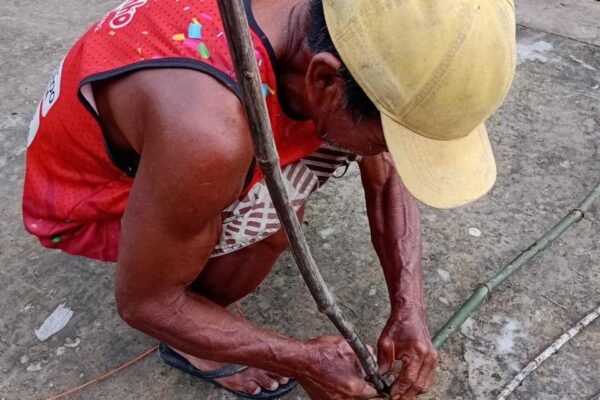
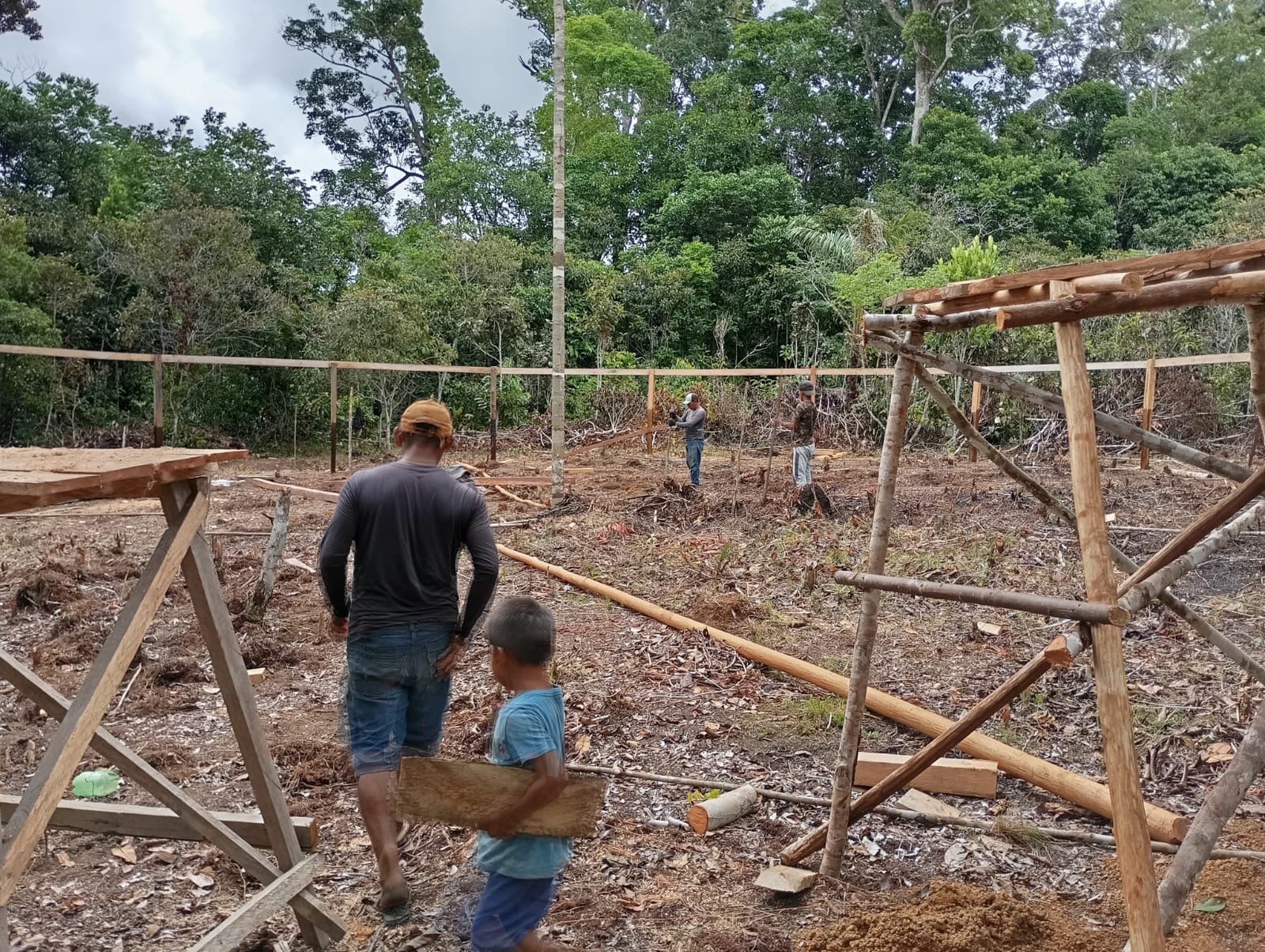
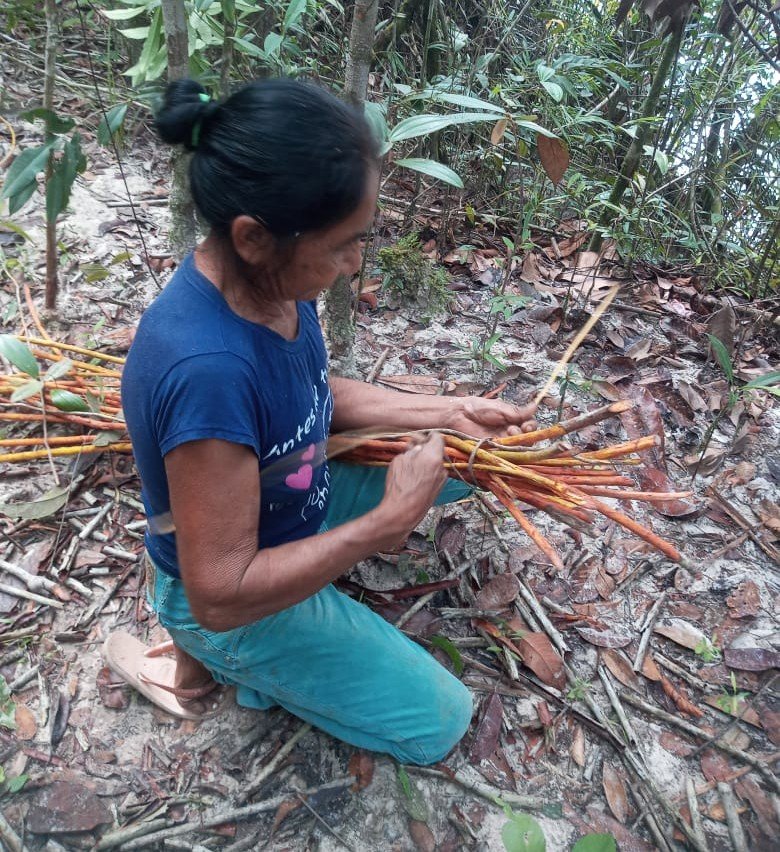
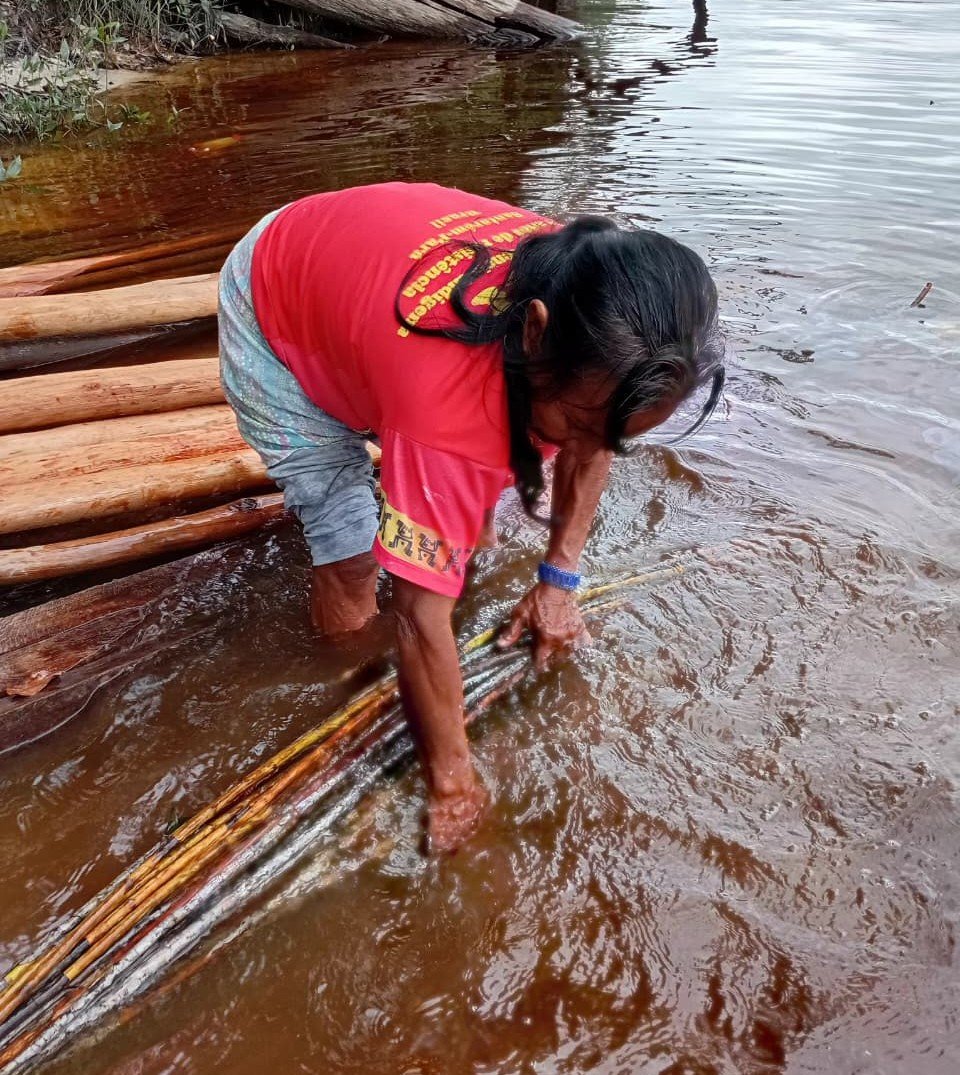
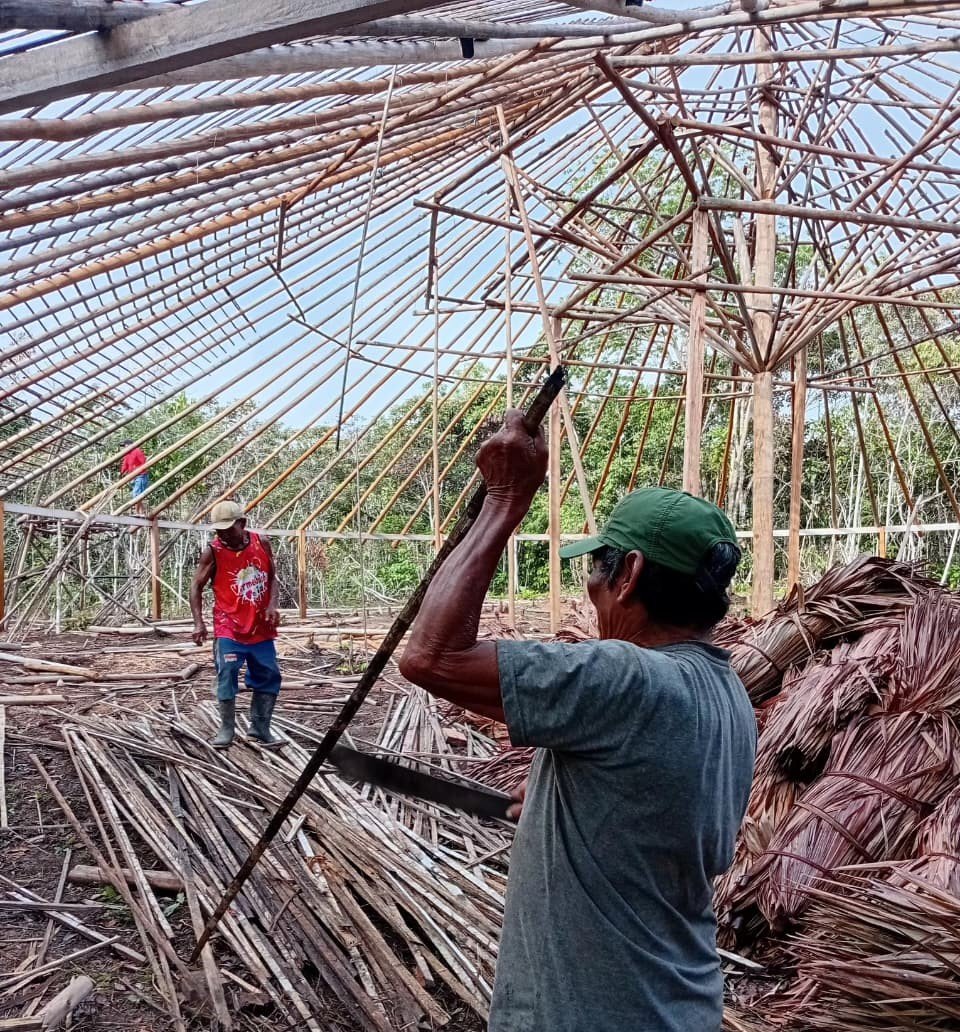
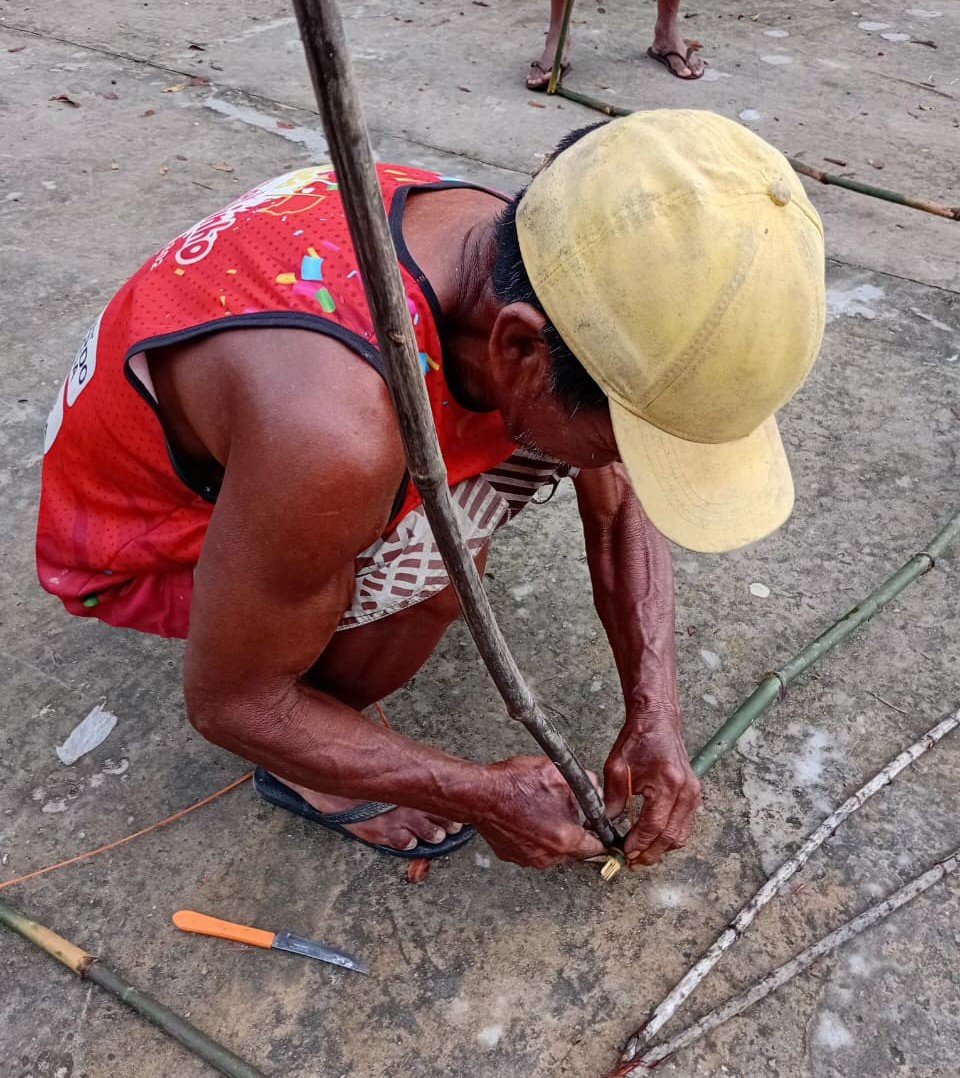
Through the power of collective work, known as “ajuri/wayuri” in Nheengatu language, different generations were united by a shared desire to strengthen their territory, to honor the knowledge of their parents, grandparents, aunts, and uncles, and to cultivate this space as a legacy that brings together the leadership of youth with the wisdom of the elders. “I believe this space is very significant for us and for the new generation, where we can teach, practice, value, and revive the ancient culture of the Baniwa and Koripako peoples,” said Master Maria Bidoca, who was at the forefront of the construction. For Master Miguel, who also followed the entire process, the living center “will be very important to us, because we already know, we’ve already seen, we’ve already envisioned that in this place we will live, practice, and teach our culture, our history, and our traditions to our students, children, and grandchildren. It will serve the Baniwa and Koripako people who live along the Içana River very well.” In Francy’s words, “this space represents everything: the territory, the community, the sacred places, other humans, our cosmology, our narratives, our daily lives, our bodies, our fields, our techniques, our Baniwa world. This space will provide, and is already providing us, this web of knowledge. This web of learning. This network of connections between worlds, between this territory, between techniques, knowledge, processes, and origins.”
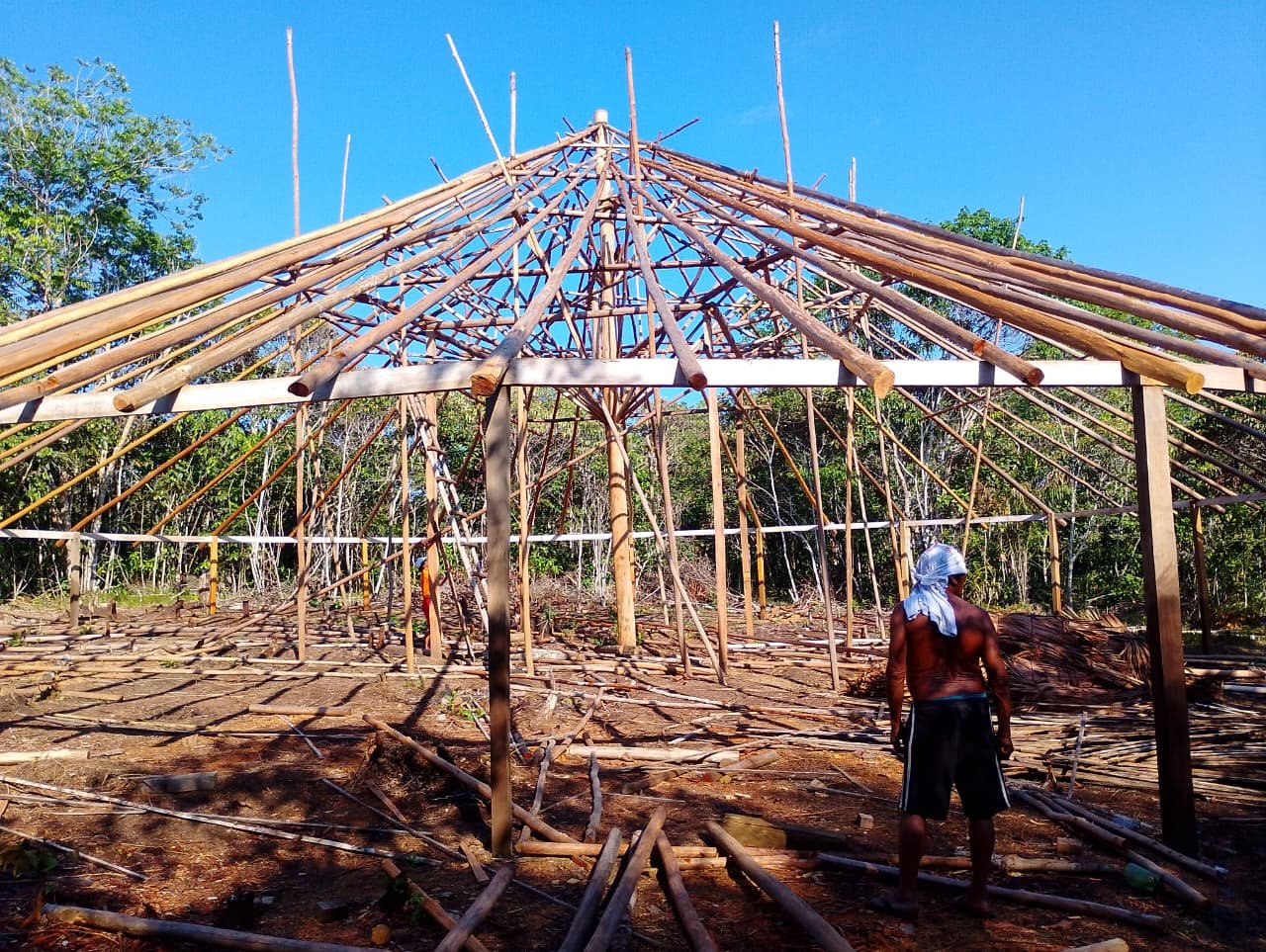
Construction in February 2026
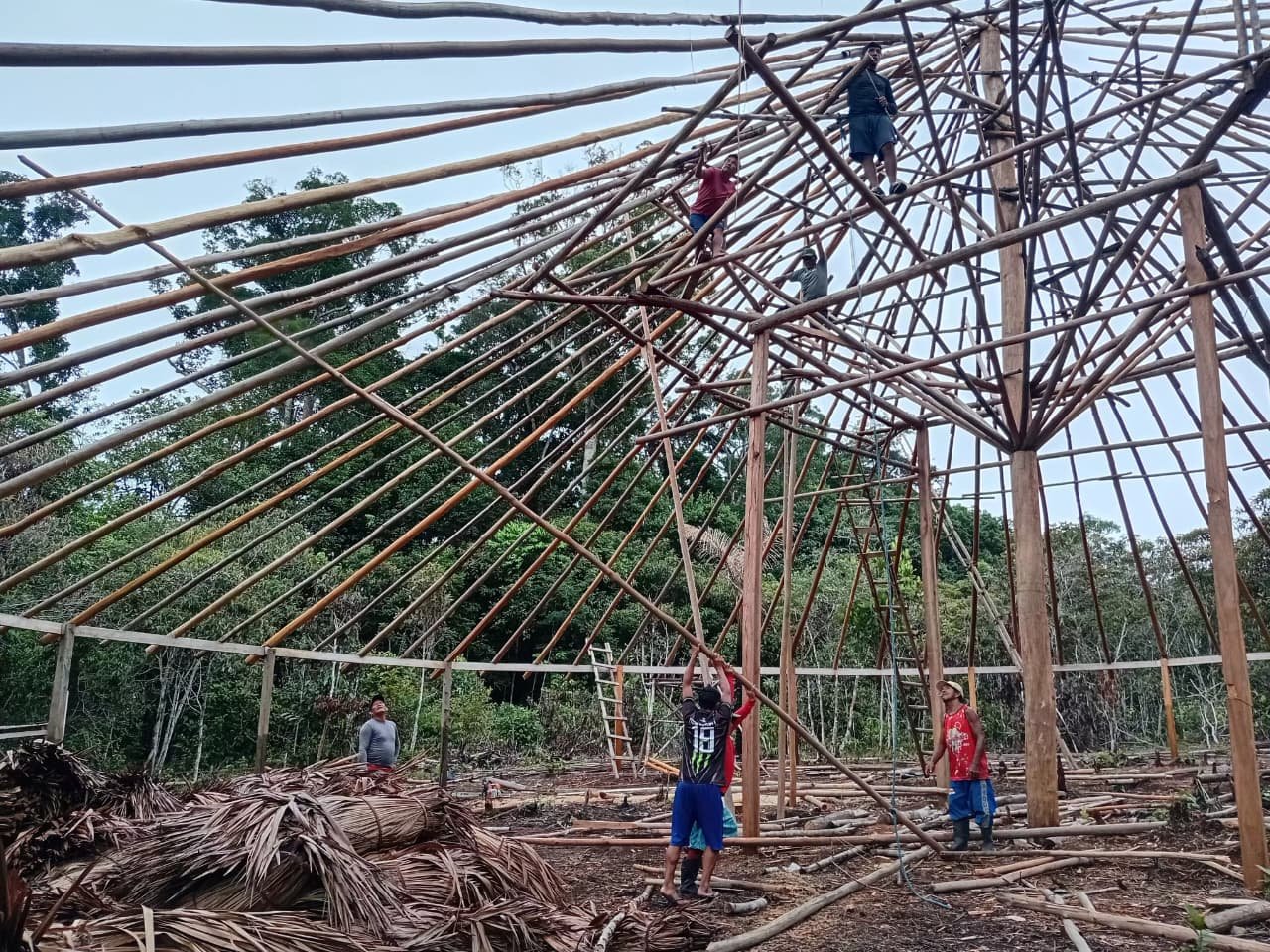
Construction in February 2026
After a long period of violence in the region caused by colonization, which, according to Master Miguel, “prevented the Baniwa people from practicing or living their ancient culture,” having a space for dances, ceremonies, the construction of traditional instruments such as the japurutu flutes, the creation of handicrafts, and the teaching and learning of the knowledge of the Baniwa and Koripako peoples is a cause for great celebration. The Wanaliana/Bitiro Ponta community began a process of reclaiming the Içana River with the construction of the first maloca after 40 years of missionary occupation, a movement that continued with the establishment of the first high school classes and classrooms on the Içana in 2024, making it as “a historic, very significant place,” said Francy.
For her, overseeing and organizing this project alongside community experts was a valuable learning experience during her time as coordinator of the Madzerokai, the Baniwa Living School. Francy is very proud of her father, Francisco Fontes, considered a “maadzero” (wise man in Baniwa language) by the community, who, along with other experts, was at the forefront of the construction, as were the women and master farmers who also contributed with their knowledge. “For me, the teachers at the Living Schools are, in fact, living masters, and this makes me very proud to always be able to learn from my living masters, who are my greatest role models in life, study, and experience. For me, this center of experience, or the Baniwa Madzerokai Ways of Knowing House, is a living home because it was built by the hands of great masters, great architects, great historians, anthropologists, and biologists who are our parents,” she said.
Before it became a dream, the idea of a space to preserve and share the Baniwa knowledge along the Içana River seemed very distant. Mestre Miguel explains that, although several malocas and houses of knowledge had been built to host meetings, events, and workshops, it still wasn’t enough to truly experience Baniwa culture. For him, it was with the arrival of the Baniwa Living School that this changed. According to Francy, it was through the Living Schools movement that this dream was embraced and welcomed, that it began to come closer, and today is a source of such joy for the community. In her words, it was when Cristine Takuá and Anna Dantes “visited the community in April 2025 that we saw this dream come within reach. A dream that became real in the eyes and ears of the community with the certainty of a ‘let’s do it.’”
“I think this space is, in fact, our living museum. It’s where we will live, feel, dream, savor, plan, and create. And we will continue to dream that this space will become a benchmark for Indigenous knowledge, culture, and wisdom. I believe this space is our life, our navel of the world, our heart, our soul, our sacred space,” added Francy. Author of the book “Navel of the World” [“Umbigo do mundo”] (Dantes, 2023) on Baniwa mythology, based on the mythical narratives she heard from her father Francisco Fontes, Francy also borrowed this ancestral expression to speak of the Madzerokai Ways of Knowing House, referring to it as the continuity of the Baniwa life, which began long before the world as we know today and which remains in the present, intertwining generations and worlds, composing a legacy for humanity that strengthens, cultivates, and cares for the memory of her people.
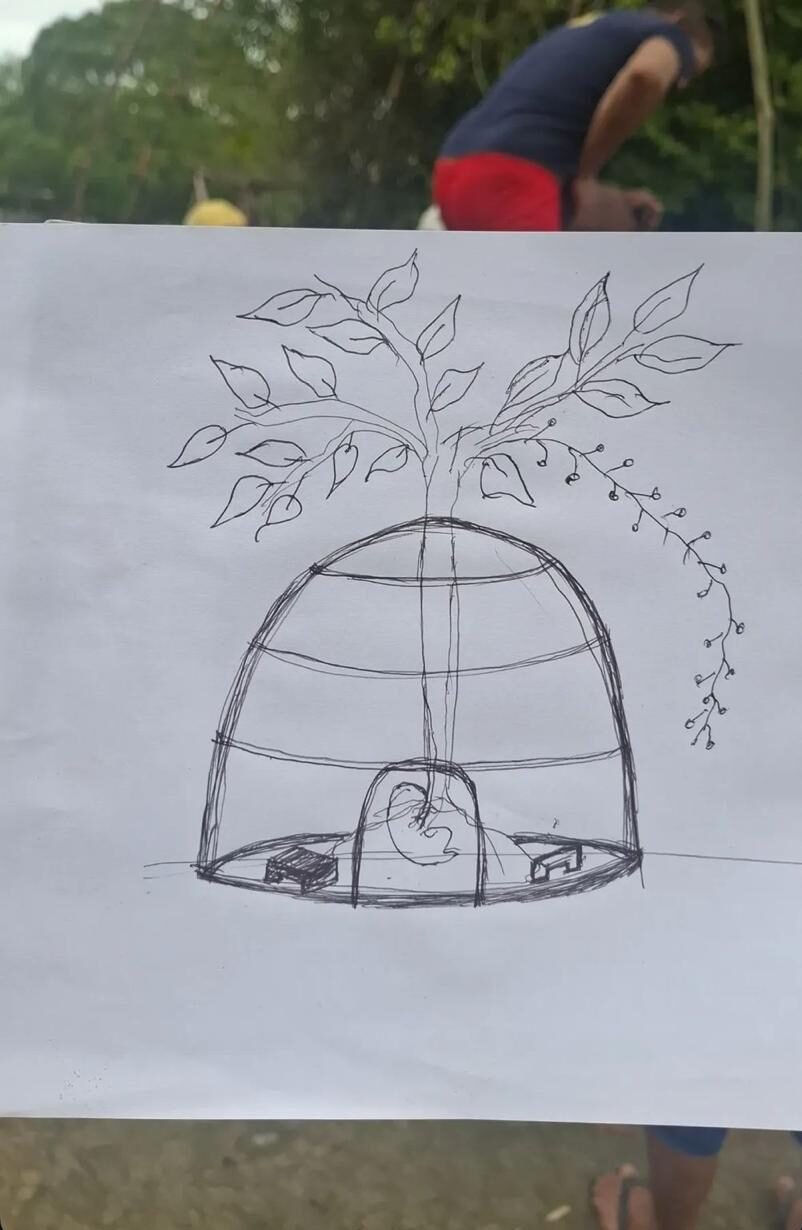
Drawing of the work “Navel of the world,” which will be featured in the new Living Schools exhibition at the Tomie Ohtake Institute in São Paulo.
Baniwa Living School's collection.
Designed in April 2025 and completed in March 2026, the speed with which the Madzerokai Ways of Knowing House was completed reflects all the collective effort, care, and dedication of the community. In less than a year, what was once a dream has become a living space thanks to the commitment of all those who are part of a story that is just beginning. The new house is in its final stages, preparing, more than ever, to fully embrace the activities, knowledge, and gatherings that lie ahead.
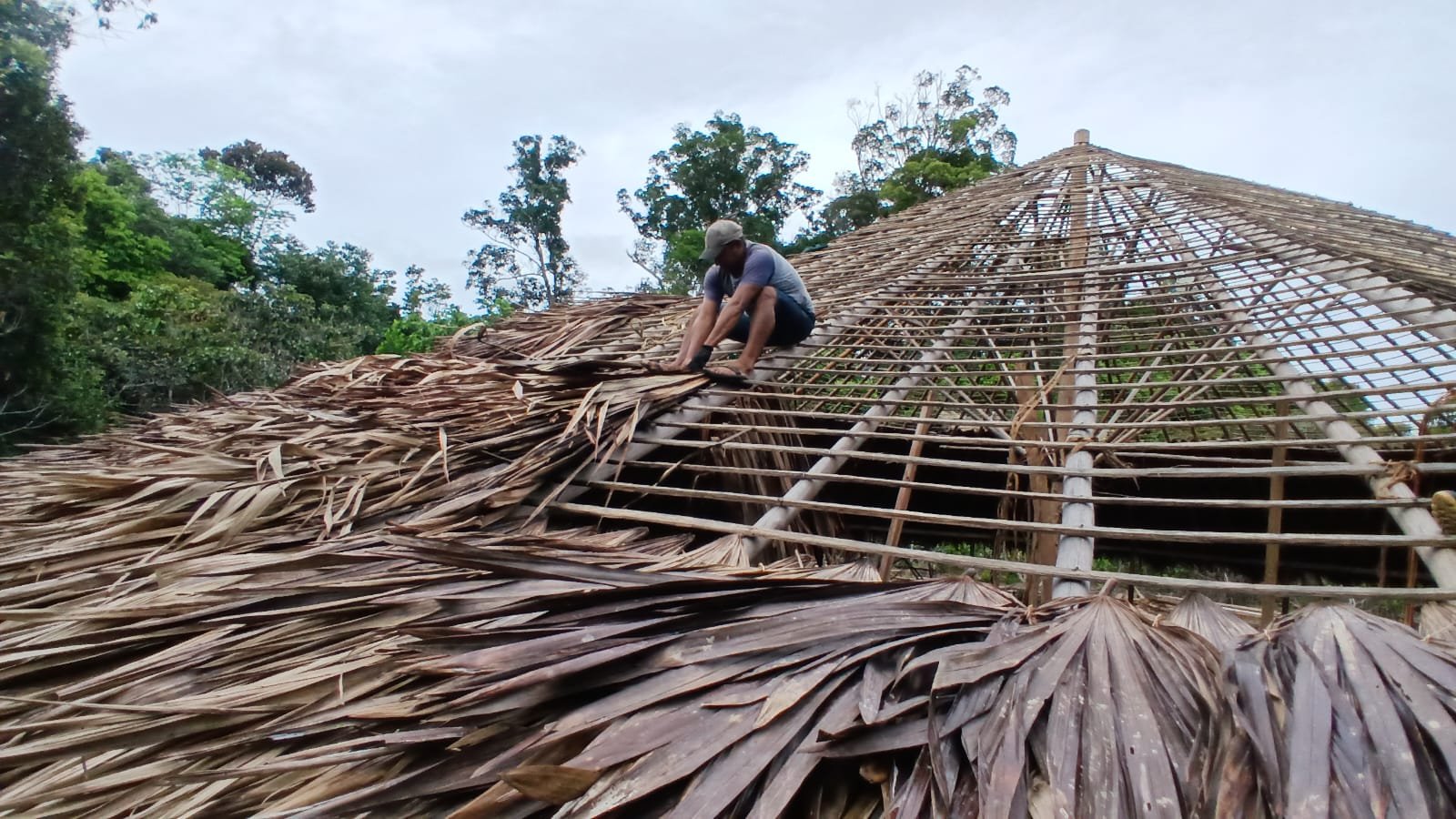
Final stages of the Ways of Knowing House in March 2026.
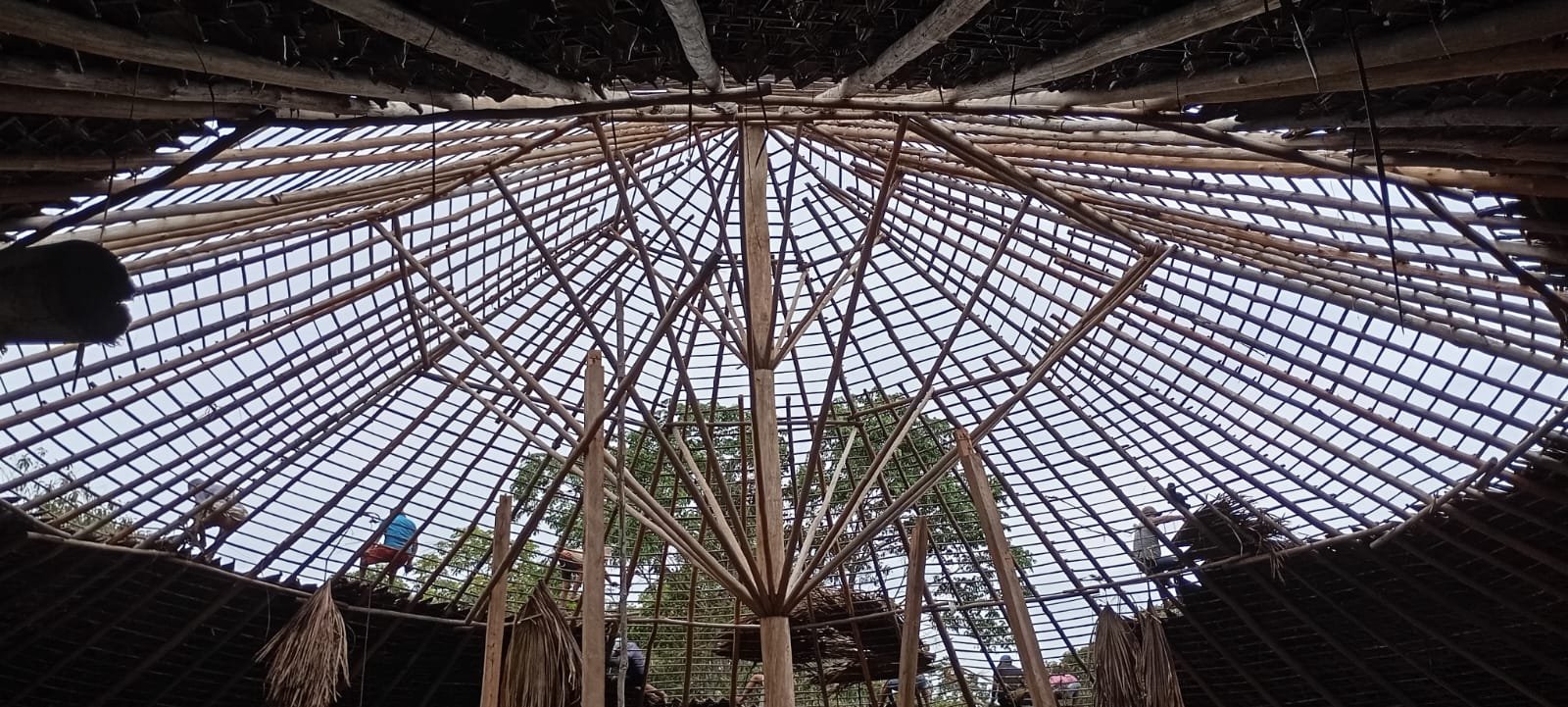
Final stages of the Ways of Knowing House in March 2026.
The inauguration will feature dancing, singing, decorations, incense, and, of course, plenty of food. Francy says there will be a big Podáali (offering ritual) between the local community and those who wish to visit and experience the new navel of the world.