





MESSAGE
There, the physical geography and human geography are expressed via messages.
Messages are not there simply to be completed when they pass from one person to another;
they are there to pass from someone to the next and others and others and yet another..
José Miguel Wisnik, Selvagem Notebook "On the track of the Sun“.
Talks that adhere to the study cycles and the various themes that run through Selvagem.
Selvagem Message is a movement; it is the act of transmitting a message that comes and goes.
On April 24, 2024, José Miguel Wisnik brought a message to the Selvagem Cycle at Teatro Oficina through his talk, which placed João Guimarães Rosa's short story "Recado do Morro" [Message from the Hill] on the track of the Sun.
Like a message, our study materials come from orality– from something someone carries within, but that also belongs to the whole. It is how orality writes itself in time and space. It can also be like the way cosmic rays from the Sun traverse the cosmos and living beings, leaving their mark.
The message is, therefore, a form of communication that relies on a message bearer to be passed along. It is a channeling of information.
They are words from message-bearers who bring a warning, a vision, information, a message.
The playlist with all our messages is available on Selvagem's Youtube channel.
Receive our messages!
- 8 - MOISÉS PIYÃKO
- 7 - KIANA WELTZIEN
- 6 - ALINE MATULJA
- 5 - CRIS TAKUÁ and FRANCY BANIWA
- 4 - ANA SANTOS
- 3 - BÁYÒ AKÓMOLÁFÉ
- 2 - BÁYÒ AKÓMOLÁFÉ
- 1 - GLICÉRIA TUPINAMBÁ
- ALEMBERG QUINDINS
MESSAGE 8 – TRANSBOUNDARY WATERS
“A river is like a people. A river that is dying from pollution is like a people dying amid the destruction being inflicted on nature.” – Moisés Piyãko
In the eighth Selvagem Message, Moisés Piyãko, a shaman and leader of the Ashaninka people, delivers a message of love for the waters and protests against the devastation of the forests and their communities caused by deforestation and illegal extractivism. Viewing nature as an inseparable part of our existence, Moisés speaks of the protection of our waters as a collective responsibility and calls on us to build a future in which rivers and peoples continue to thrive.
This Message is also part of the study materials for the Waters Cycle, published by Selvagem in 2026.
MOISÉS PIYÃKO is a respected shaman, a leader of the Ashaninka people and an expert on his people’s spiritual traditions. Moisés lives in the Apiwtxa village, situated on the banks of the Amônia River, within the Kampa Indigenous Territory of the Amônia River in Acre. Around 800 people live in the village. Moisés and his brothers, Francisco Piyãko, coordinator of the Organisation of Indigenous Peoples of the Juruá River (OPIRJ), Benki Piyãko and Wewito Piyãko, who are also leaders of the Ashaninka people, are recognised worldwide for their work in Apiwtxa to regenerate, restore and protect the ecosystems and peoples of the Amazon Rainforest. They have received numerous awards, including the United Nations Equatorial Prize in 2017 and the Newton Prize in 2018.
Find out more about Moisés’s participation in Selvagem here.
NOTEBOOK

CREDITS
Direction: Anna Dantes
Production: Madeleine Deschamps
Filming: Carla Maldonado
Editing and post-production: Caleidoskópica Produções
Chants: Moisés Piyãko
Acknowledgements: Aldeia Apiwtxa, Carolina Comandulli, Comissão Transfronteiriça Juruá / Yuruá / Alto Tamaya, Letícia Campos and Livia King
Produced by: Selvagem
MESSAGE 7 – THE CALM AND THE TEMPEST
“I learned everything aboard this boat, and to this day I say that I don’t know how to navigate. The boat is the one that navigates me.” – Kiana Weltzien
In the seventh Selvagem Message, Kiana Weltzien shares her experiences over 10 years of making the ocean her home and her teacher. Recorded in Paraty aboard the Mara Noka, a wooden catamaran more than 50 years old, Kiana’s Message brings together her reflections on the non-human forces of rain, wind, and ocean, and how they shape the way she sees the world.
This Message is also part of the study materials for the Waters Cycle, published by Selvagem in 2026.
KIANA WELTZIEN is a captain, sailor, and filmmaker. She has lived at sea for more than ten years, since leaving her career in real estate to sail around the world. In 2018, she acquired Mara Noka, her modern Polynesian double canoe, with which she made her first solo Atlantic crossing in 2019. In 2022, in addition to the voyage that gave rise to the Women & the Wind project, which she created with Laerke, Kiana sailed to Brazil and completed a 43-day solo crossing from Cape Verde to Ilhabela. Now based in Paraty, Rio de Janeiro, Kiana is dedicated to the Women & the Wind Foundation, her nonprofit organisation, and to writing a book about her journeys.
NOTEBOOK

CREDITS
Direction: Anna Dantes
Production: Madeleine Deschamps
Filming: Elisa Mendes
Editing and post-production: Caleidoskópica Produções
Acknowledgements: Thelma Deschamps Prat
Produced by: Selvagem
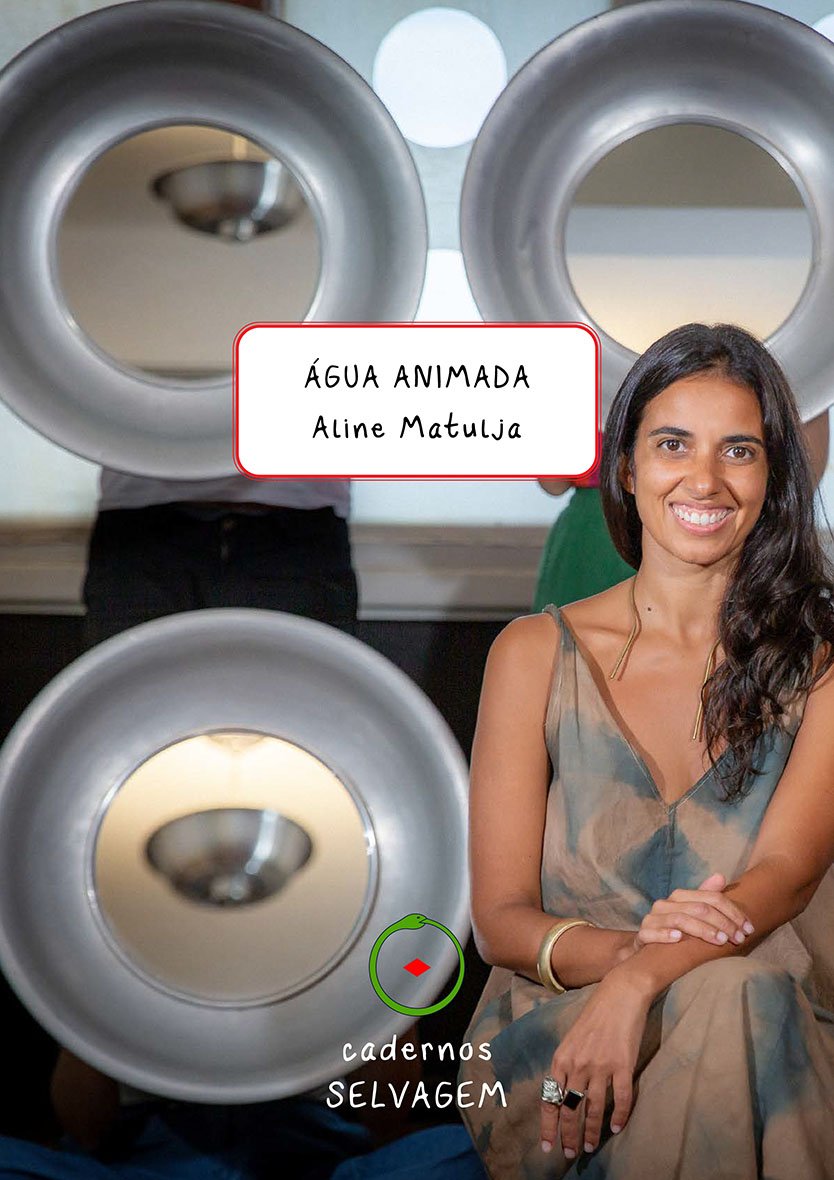
MESSAGE 6 – ANIMATED WATER
“This water here was once a dinosaur, once a forest, was once trapped inside rock, travelling through the soil. It was once human and non-human. And now it is here.” – Aline Matulja
In the sixth Selvagem Message, Aline Matulja takes us on a brief journey through the history of water, this 4-billion-year-old “animated lady” who continues to reinvent herself. Bringing together the thinking of scientists such as Vladimir Vernadsky (author of Biosfera [Biosphere], published by Dantes Editora in 2019), Indigenous peoples, and ants, Aline proposes new ways of thinking about and feeling this ancestral element.
Filmed at Z Foundation, the studio of multidisciplinary artist Zemog in Rio de Janeiro, Aline’s Message is accompanied by the movement of Zemog’s Bacias Retroflexivas [Retroflexive Basins] and is also part of the Waters Cycle, published by Selvagem in 2026.
ALINE MATULJA is is an environmental and sanitation engineer and has worked as a socio-environmental communicator for more than ten years. She is the founder of Roda Ambiental and co-founder of the Instituto para Futuros Locais (Instituto Fulô) and Faz a Feira, initiatives focused on sustainability, local economies, and bringing science, nature, and society closer together. She is also a presenter of the programme Eco Brasil and a spokesperson for Verificados pelo Clima, an initiative of the United Nations, as well as a member of the UN Global Compact Committee in Brazil. Aline is also a writer and a navigator of other forests of knowledge. Learn more: https://linkme.bio/alinematulja
ZEMOG is a Brazilian artist whose practice is based on an extraordinary diversity of materials and the artistic transformation of everyday objects. His works reveal the wide range of media, techniques, and themes that define his artistic interests. In the words of Leonel Kaz, “Zemog is a gatherer of worlds, of things that nature or humans decided to come up with.” Learn more: https://zemog.art/sobre
NOTEBOOK
CREDITS
Director: Anna Dantes
Production: Madeleine Deschamps
Audiovisual: Caleidoskópica Produções
Song sung by Aline: “Mãe d’Água”, by Dudu Godoi
Filmed at Z Foundation Art
Artwork: Bacias Retroflexivas, 2001, by Zemog
Acknowledgements: Digo Fiães, Elea Mercurio, Rita Dias – @lojadeapartamento and Zemog – www.zemog.art
Produced by: Selvagem
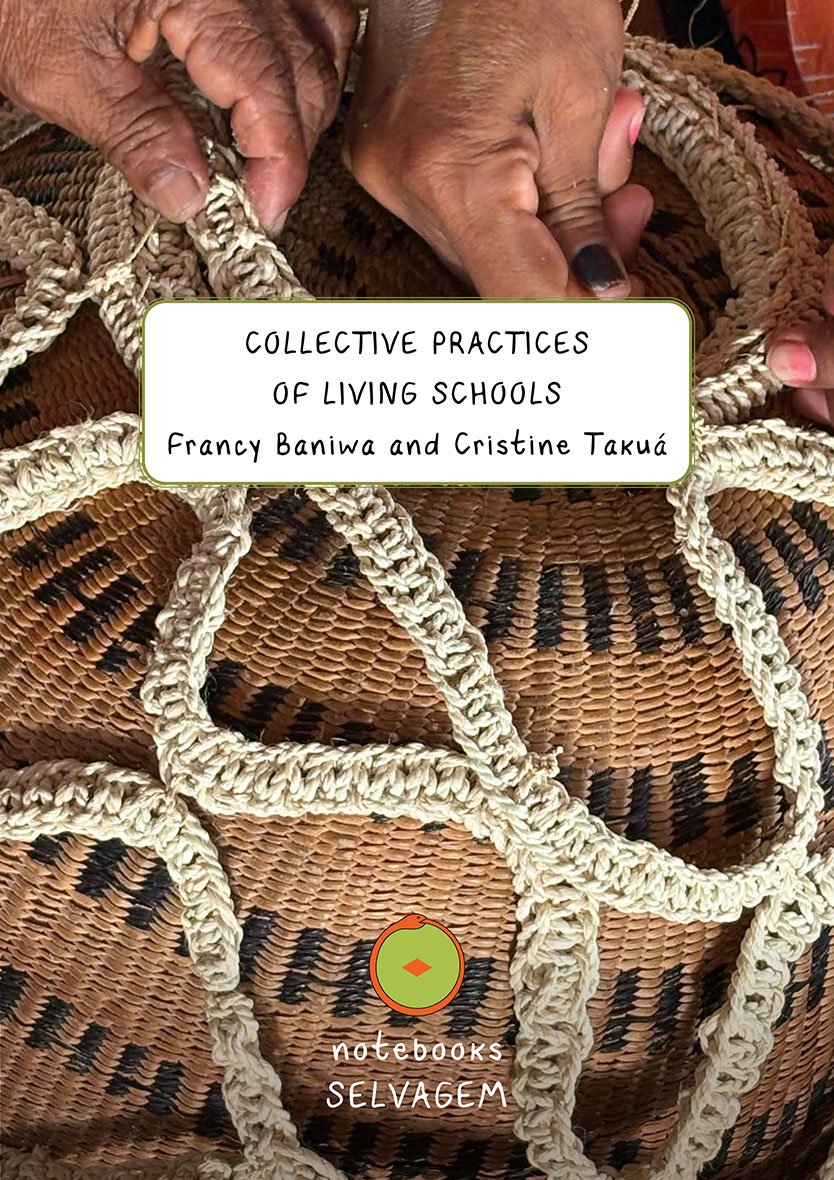
MESSAGE 5 – COLLECTIVE PRACTICES OF THE LIVING SCHOOLS
“There is little room for discouragement. Much more for dreams and hope.” – Francy Baniwa
“I see you walking between worlds, walking back and forth, but entirely here.” – Cristine Takuá about Francy Baniwa
The fifth Selvagem Message was born in the community of Assunção do Içana, in the Upper Rio Negro, in May 2025, during a symbolic inauguration of the Baniwa Living School, MADZEROKAI, coordinated by Francy Baniwa alongside Francisco Baniwa. In this territory, Cristine Takuá, coordinator of the Living Schools movement, was welcomed for a gathering from which this message dawned: COLLECTIVE PRACTICES OF THE LIVING SCHOOLS.
In the conversation, Francy and Cristine share learnings about cultural strengthening and the building of circles of affection, highlighting how the Living Schools weave bridges, cheer up souls, and remind us that the collective exists. Together, they reflect on the role of listening to the elders, the hope that nurtures dreams, and the strength of communal practices as a path of resistance and continuity.
CRISTINE TAKUÁ, from the Maxakali Indigenous people, is a thinker, apprentice midwife, and educator. She holds a degree in Philosophy from São Paulo State University (UNESP) and taught for twelve years at the Txeru Ba’e Kuai’ Indigenous State School. She is currently the coordinator of the Living Schools movement and a board member of the Selvagem Association. Cristine represents the NEI (Indigenous Education Center) within the São Paulo State Department of Education and is a founding member of FAPISP (Forum for the Coordination of Indigenous Teachers of São Paulo State). She is also part of Instituto Maracá, which is involved in the shared management of the Museu das Culturas Indígenas in São Paulo. She lives in the Ribeirão Silveira Indigenous Land, located on the border between the municipalities of Bertioga and São Sebastião, in the state of São Paulo, with her partner Carlos Papá and their sons Djeguaká and Kauê.
FRANCY BANIWA is an Indigenous woman, anthropologist, photographer and researcher of the Baniwa people, of the Waliperedakeenai clan, born in the community of Assunção, on the Lower Içana River, in the Alto Rio Negro Indigenous Land, municipality of São Gabriel da Cachoeira - AM. She has been involved in the Indigenous organisations and movement of the Rio Negro for a decade, working and researching in the areas of Indigenous ethnology, gender, Indigenous organisations, traditional knowledge, memory, narrative, photography and audiovisuals. She has a degree in Sociology (2016) from the Federal University of Amazonas (Ufam). She has a master's degree (2019) and is a PhD candidate in Social Anthropology at the National Museum of the Federal University of Rio de Janeiro (PPGAS-MN/UFRJ). She is the director of the 2020 documentary Kupixá asui peé itá - A roça e seus caminhos [The farmland and its paths]. She is currently coordinating the pioneering ecological project for the production of Amaronai Itá - Kunhaitá Kitiwara cloth sanitary pads, funded by the Rio Negro Indigenous Fund (FIRN/FOIRN), for the empowerment and menstrual dignity of women from the alto-rio-negrino Indigenous territory. She is the author of the book "Umbigo do Mundo" [Navel of the World], written from the stories of her father, Francisco Fontes Baniwa, and illustrated by her brother, Frank Fontes Baniwa - published by Dantes Editora in 2023.
CREDITS
Filming: Digo Fiães
Editing and finishing: Caleidoskópica Productions
Special acknowledgement: Djeguaká, Kauê, Carlos Papá, Carla Wisu, Francisco Pontes Baniwa and all the community of the Baniwa Living School, the elders, the Nadzoeri coordination and the teachers of the Assunção do Rio Içana Indigenous village.
Produced by: Selvagem
MESSAGE 4 – WE NEED TO HANDLE IT AND ALWAYS BE READY
“And isn’t it possible to live and plant? Plant. Live. Plant for the climate, plant for sovereignty, plant for food, plant for hope…”
In this fourth Message, Ana Paula da Cruz Santos shares memories of her childhood and of the strength of the women in her family, intertwining backyards, herbs, and affections with the current struggle and collective creation in Serra da Misericórdia, in Rio de Janeiro, especially in the pursuit of food autonomy.
ANA SANTOS is a Black woman, feminist, activist and insistent, practitioner of agroecological cuisine and co-founder of the Serra da Misericórdia Integration Center (CEM), in the Complexo da Penha, North Zone of Rio de Janeiro. Her work is dedicated to strengthening feminist, anti-racist, and emancipatory food sovereignty, building paths of Buen vivir [good living] in the favela. Granddaughter and daughter of farmers, she was born in Morro do Puri, in Nilópolis, Baixada Fluminense, where she grew up among edible plants and medicinal herbs cultivated by her family. She understands agriculture not only as subsistence, but as work, healing, network creation, and bringing dreams to life.
NOTEBOOK

CREDITS
Direction: Anna Dantes
Production: Madeleine Deschamps
Filming and finishing: Rocca Filmes
Soundtrack: Grupo Uirapuru – Orquestra de Barro [Clay Orchestra]: Tercio Araripe, Bob Pessoa and Macaio Upecor
Acknowledgements: Centro de Integração na Serra da Misericórdia, Rede Carioca de Agricultura Urbana, Coletivo Mulheres em Ação na Serra da Misericórdia, Ana Paula da Cruz Santos, her morther Rosangela Maria da Cruz, and her grandparents Guaraciaba dos Santos and Ivonete Ferreira.
Produced by: Selvagem
MESSAGE 3 – ÌJÀPÁ AND THE SPIDER: WHAT TO DO WHEN WE ARE NO LONGER WELCOME?
“There are things we have to do collectively, as a species, that modernity knows nothing about. We have to lose our way together. The Yoruba people say: 'In order to find your way, you must lose it’.”
In this third Message, Báyò Akómoláfé brings another Yoruba narrative about the Tortoise Ìjàpá. This time, in a time of famine in the animal kingdom, Ìjàpá and the Spider trick each other to avoid having to offer hospitality and food to one another.
From this story, Báyò reflects on the loss of hospitality and of spaces to inhabit in the world. The thinker also shares a lesson he learned from his 7-year-old son, who is autistic, about the importance of acting beyond the conventions of modern society.
BÁYÒ AKÓMOLÁFÉ, guided by Yoruba cosmologies in a more than human world, is the father of Alethea and Kyah and lifepartner of Ije. Báyò (PhD) is a philosopher, writer, activist, professor, post-humanist thinker and celebrated speaker. He is the founder of The Emergence Network, a network of artists and thinkers seeking new openings for old problems. He is also a poet and author of the books These Wilds Beyond our Fences: Letters to My Daughter on Humanity’s Search for Home (North Atlantic Books, 2017) and We Will Tell Our Own Story: The Lions of Africa Speak! (Universal Write Publications LLC, 2017).

CREDITS
Direction: Anna Dantes
Production: Madeleine Deschamps
Filming and finishing: Rocca Filmes
Soundtrack: Grupo Uirapuru – Orquestra de Barro [Clay Orchestra]: Tercio Araripe, Bob Pessoa and Macaio Upecor
Acknowledgements: Ana Clara Cenamo, Eco Universidade, Maria Clara Parente, Projeto Regenerar, Simbiótica Filmes, Spanda Produtora and Thais Pacheco Mantovani
Produced by: Selvagem
MESSAGE 2 – ÌJÀPÁ AND THE CALABASH, THERE IS STILL SOMETHING YET TO DO
“There is still something yet to do. And we can, in times of urgency, in times of emergencies, find new ways of being alive now. Enchantment is not in short supply.”
In the second Selvagem Message, Báyò Akómoláfé tells a story of the Yoruba people about the tortoise Ìjàpá. In a knowledge dispute with the gods, Ìjàpá ventures out into the world, gathering all the wisdom that exists, until he comes across a problem that he cannot solve.
Drawing from this narrative, Báyò reflects on the challenges and stories of modernity and how enchantment can point us toward other ways of relating to the world.
BÁYÒ AKÓMOLÁFÉ, guided by Yoruba cosmologies in a more than human world, is the father of Alethea and Kyah and lifepartner of Ije. Báyò (PhD) is a philosopher, writer, activist, professor, post-humanist thinker and celebrated speaker. He is the founder of The Emergence Network, a network of artists and thinkers seeking new openings for old problems. He is also a poet and author of the books These Wilds Beyond our Fences: Letters to My Daughter on Humanity’s Search for Home (North Atlantic Books, 2017) and We Will Tell Our Own Story: The Lions of Africa Speak! (Universal Write Publications LLC, 2017).
CREDITS
Direction: Anna Dantes
Production: Madeleine Deschamps
Filming and finishing: Rocca Filmes
Soundtrack: Grupo Uirapuru – Orquestra de Barro [Clay Orchestra]: Tercio Araripe, Bob Pessoa and Macaio Upecor
Acknowledgements: Ana Clara Cenamo, Eco Universidade, Maria Clara Parente, Projeto Regenerar, Simbiótica Filmes, Spanda Produtora and Thais Pacheco Mantovani
Produced by: Selvagem
MESSAGE 1 – TIDY UP THE HOUSE, I’M ON MY WAY
“I need to hear what message they left for me.” – Glicéria Tupinambá
The first Selvagem Message, by Glicéria Tupinambá, was filmed on October 23, 2024, alongside the Tupinambá cloak which is currently housed in the storage collection of the National Museum / Federal University of Rio de Janeiro.
Glicéria speaks about the return of the cloak to Brazil and its connection to the Tupinambá people, as well as her own research on the cloaks and the sacred artifacts of her people.
She also shares her process of seeking out references, bringing maps, images, and accounts in which the cloak appears; she recalls people and artifacts that were forcibly taken to Europe during the colonial process; and reflects on the work of memory and the occupation of museum spaces through other cultural and spiritual references.
NOTEBOOK

CREDITS
Direction: Anna Dantes
Production: Madeleine Deschamps
Filming and finishing: Rocca Filmes
Acknowledgements: Emanuele Coccia and Rita Carelli
We thank the entire team of the National Museum / UFRJ for their support in the filming of the Tupinambá Cloak.
Production: Selvagem
GATHERING PIECES OF LEGEND
Years before the Selvagem Message series existed, this statement by Alemberg Quindins already existed as a first message, passing through Selvagem's cycles of studies.
In this film, Alemberg talks about enchantment, ancestral memories, mythology and being a child.
In 1992, Alemberg and his partner Rosiane Limaverde founded Casa Grande – Memorial do Homem Kariri (Kariri Man Memorial). Located in Nova Olinda, Ceará, the building belonged to Alemberg's grandfather and was used for leather production. It was renovated, painted blue and became a very lively museum, animated by children who make it a place to play, learn and dream.
The foundation aims to provide children, young people and their families with social and cultural education. It also seeks to value the memory of the Kariri people, carrying out activities that intertwine arts, archaeology, mythology and communication, among others. A colourful melting pot that houses different expressions and a museum composed of pieces found and also received as gifts by Alemberg and Roseane, leading researchers in ethnomusicology who dedicated their lives to preserving the sources of Kariri myths and legends.
Shards of indigenous pots, stone utensils, ceramics and other objects were found in the fields and on walks through Chapada do Araripe, a mythological site recognised as one of the cradles of life on Earth.
CATAR CACOS DE LENDA was recorded during the in-person Selvagem immersion "Women, Plants and Healing" in Exu-PE, a city neighbouring Nova Olinda-CE, in September 2022. Alemberg had already been invited to participate in the first Selvagem in 2018, but had to decline at the last minute. This speech was his gift to Selvagem four years later.
CREDITS
Direction: Anna Dantes
Filming: Carlos Papá and Elisa Mendes
Editing: Mariana Rotili and Elisa Mendes
Animation: Belle Passos
Production: Selvagem