




A SATURDAY UNDER THE NHE'ËRY SUN:
a Selvagem Ways of Knowing walk with Projeto Maravilha
22 May 2026
Last Saturday, May 16, the 2nd Training Workshop for Teachers took place, a partnership between the Selvagem Ways of Knowing Lab – LAS and Projeto Maravilha. The event brought together 48 participants, including teachers, educators, and artists, for a visit to the Bosque do Pão de Açúcar. Exploring the works of Anna Bella Geiger and Carlos Vergara, as well as the trees, rocks, and landscapes of Guanabara Bay, the event offered a walk focused on observation, conversation, and listening, in dialogue with the Selvagem notebook "Visions of Guanabara" and study materials from the Waters Cycle.
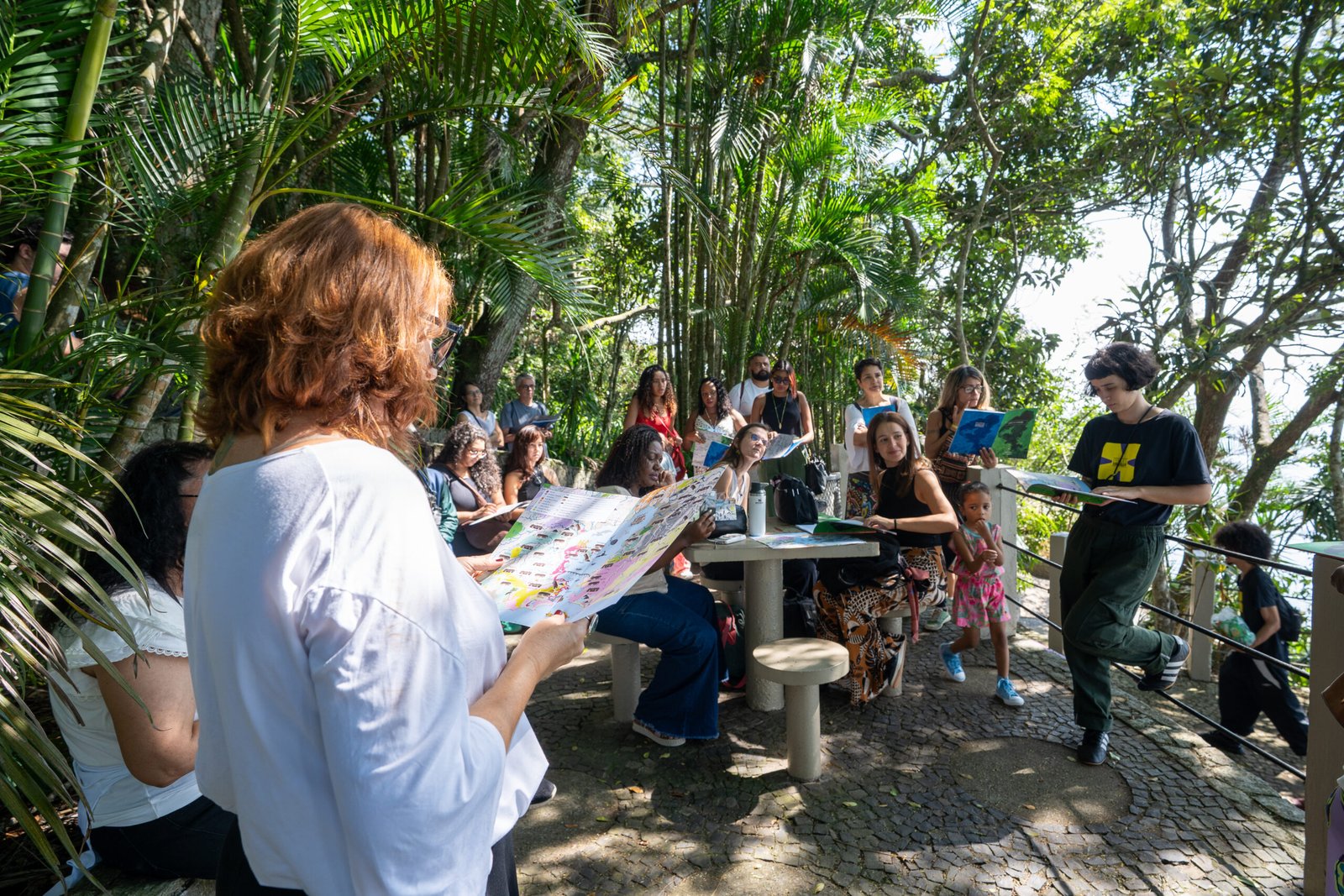
Group gathered atop the Sugarloaf Mountain
Led by Veronica Pinheiro, coordinator of LAS; Beatriz Jabor, educational curator of the Projeto Maravilha; Tania Grillo, from the Selvagem team; and Lana Fonseca, professor at the Federal Rural University of Rio de Janeiro (UFRRJ) and a partner of LAS, the tour began with a stop at the installation “A Idade da Pedra” [“The Stone Age”] by Carlos Vergara. Through a presentation of the work by Veronica and Beatriz, Professor Lana Fonseca offered interpretations grounded in the natural sciences and agroecology, linking Selvagem’s content to the geological formation of Rio de Janeiro’s landscape.
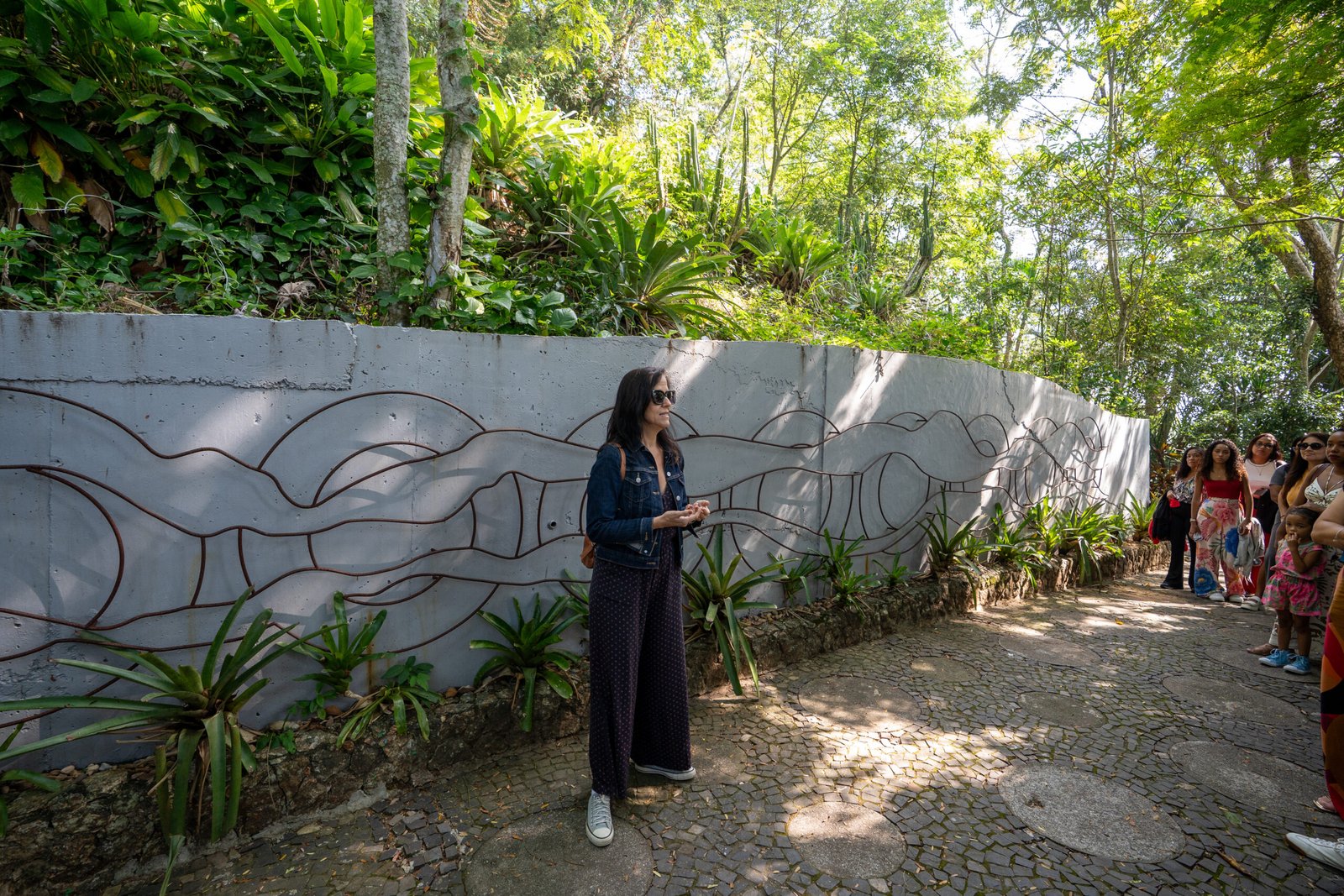
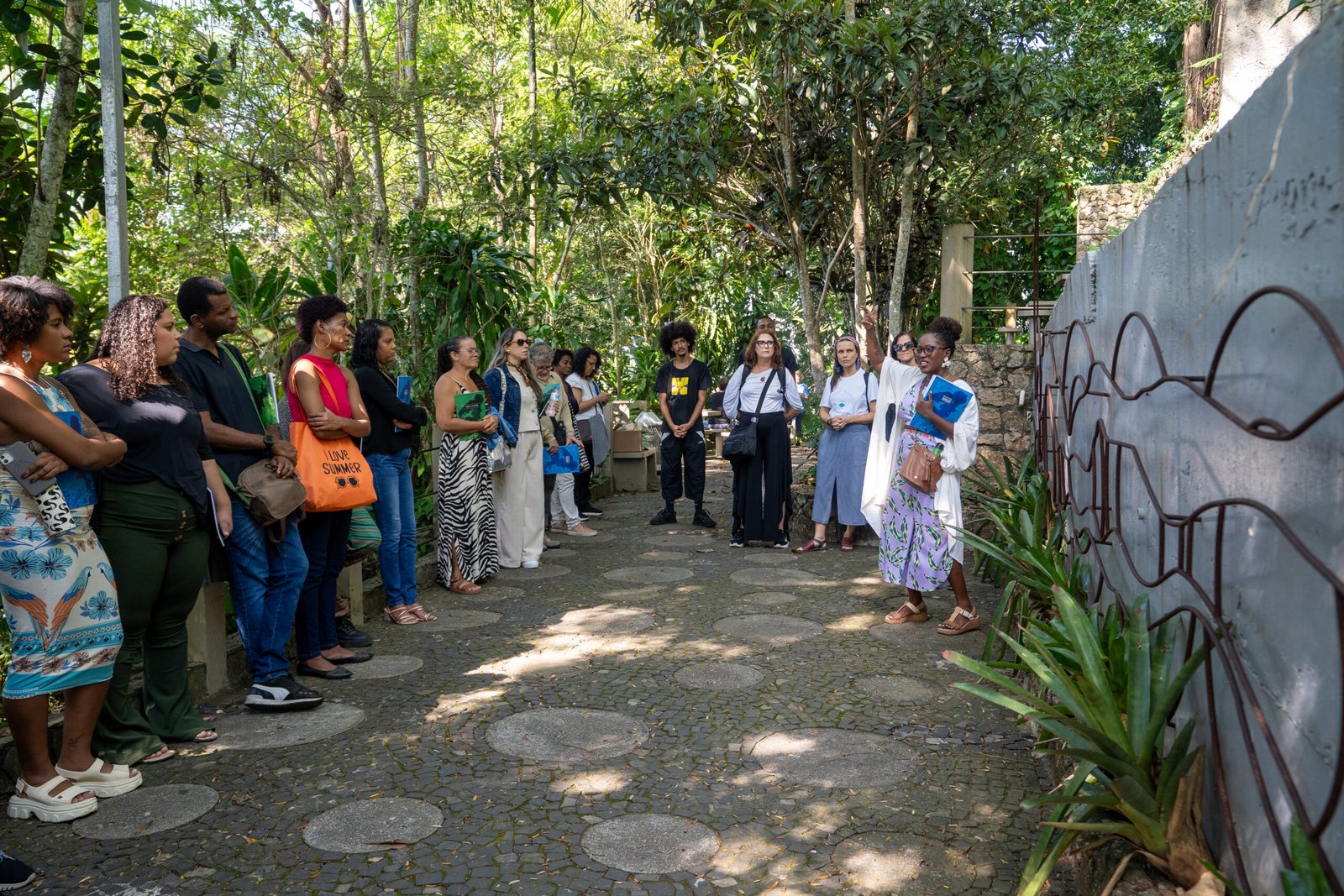
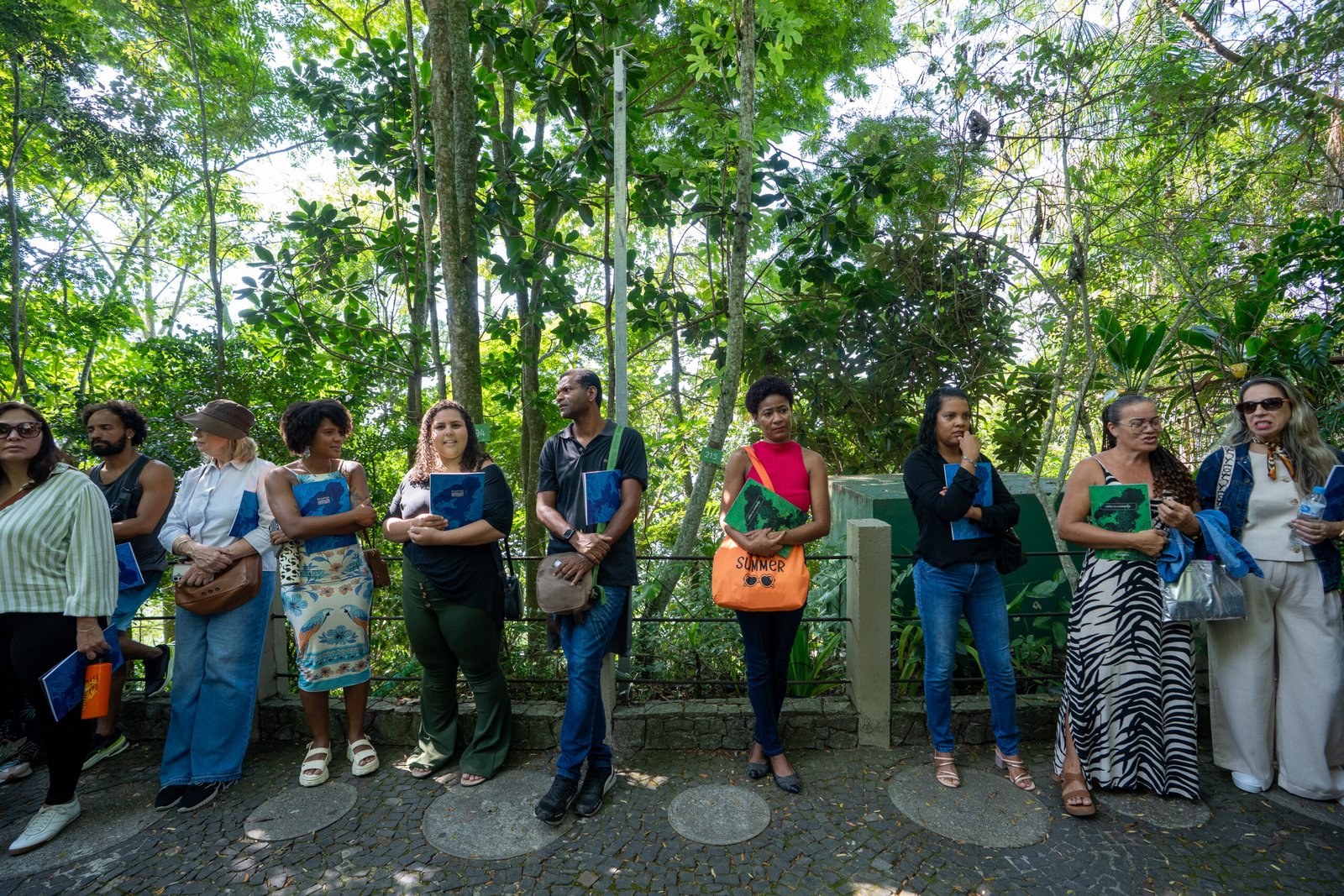
Conversation about "The Stone Age", by Carlos Vergara
The conversation addressed the facoidal gneiss rock formation found in Guanabara Bay and throughout much of the South Zone of the city of Rio de Janeiro, as well as the origin myths and ancestral narratives about the region found in “Before, the world did not exist”—a book by Umusi Pārõkumu and Tõrāmữ Kểhíri published by Dantes Editora, which is part of the Selvagem study cycle with the same name that gave rise to the notebooks “Rio de Janeiro, the Milk Lake”, by Jaime Diakara, “Yepamahsã complementarity and transformation” by João Paulo Lima Barreto, “Before the Këhíripõrã, the drawings of dreams did not exist”, by Denilson Baniwa, and “The world is being birthed all the time”, by Ailton Krenak, Álvaro Tukano, Daiara Tukano, Francy Fontes, and Idjahure Kadiwel.
Among reflections on the region’s geological landscape, which dates back some 600 million years, the conversation also moved on the Anthropocene, discussing how human activity has left a profound mark on the planet. Also in Vergara’s work, discussions arose about Yebá Buró, known as the “Grandmother of the World” by the Desana people; and about the Milk Lake—which is how the peoples of the Upper Rio Negro call Guanabara Bay— and its connection to the cosmic journey of the Snake Canoe, also known as the canoe of transformation or stone canoe—themes that also feature in the Selvagem notebook “Visions of Guanabara”. In the installation, the journey of this ancestral being inspired the artist, who incorporated the serpent’s sinuous movement as a body that continues to traverse the territory.
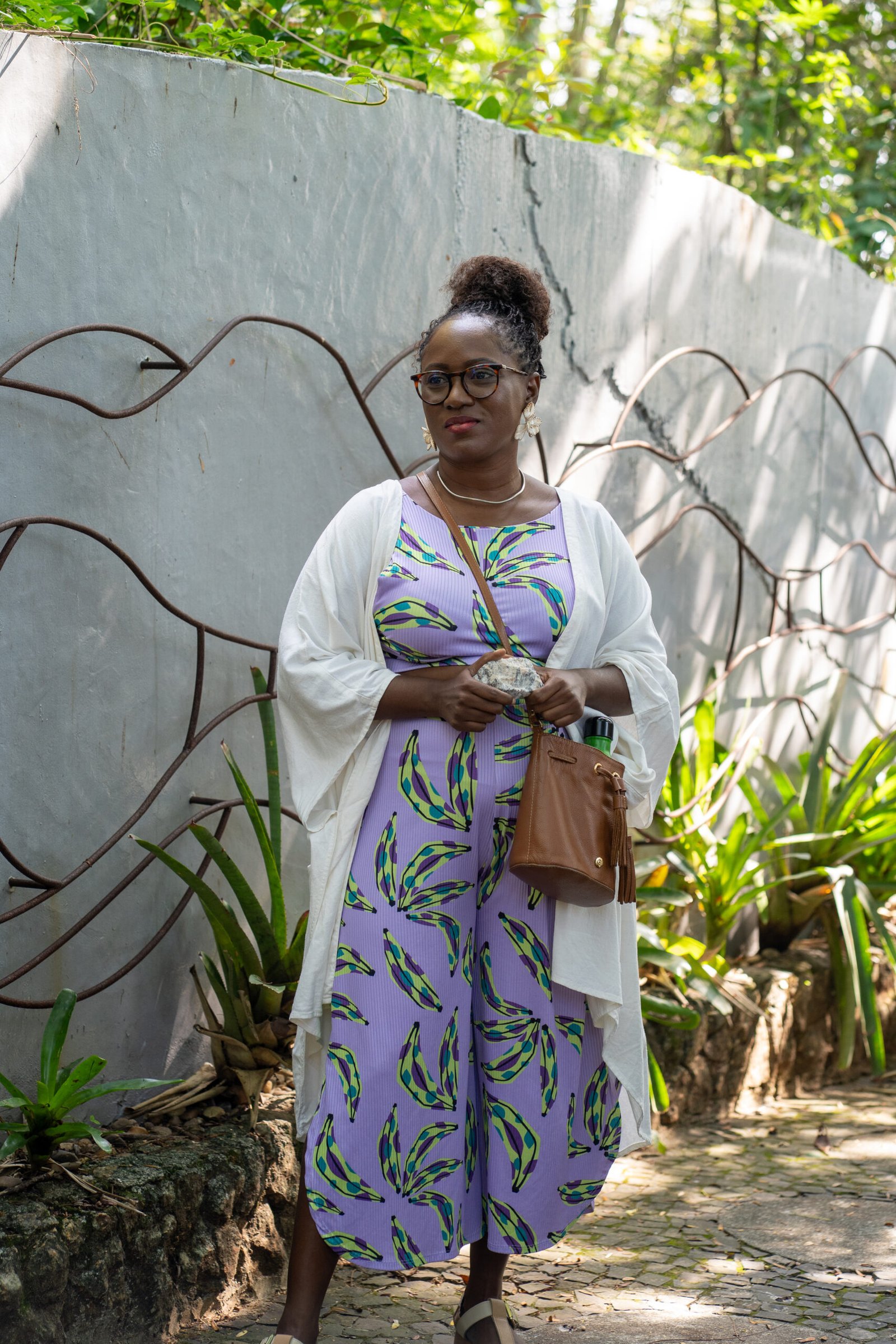
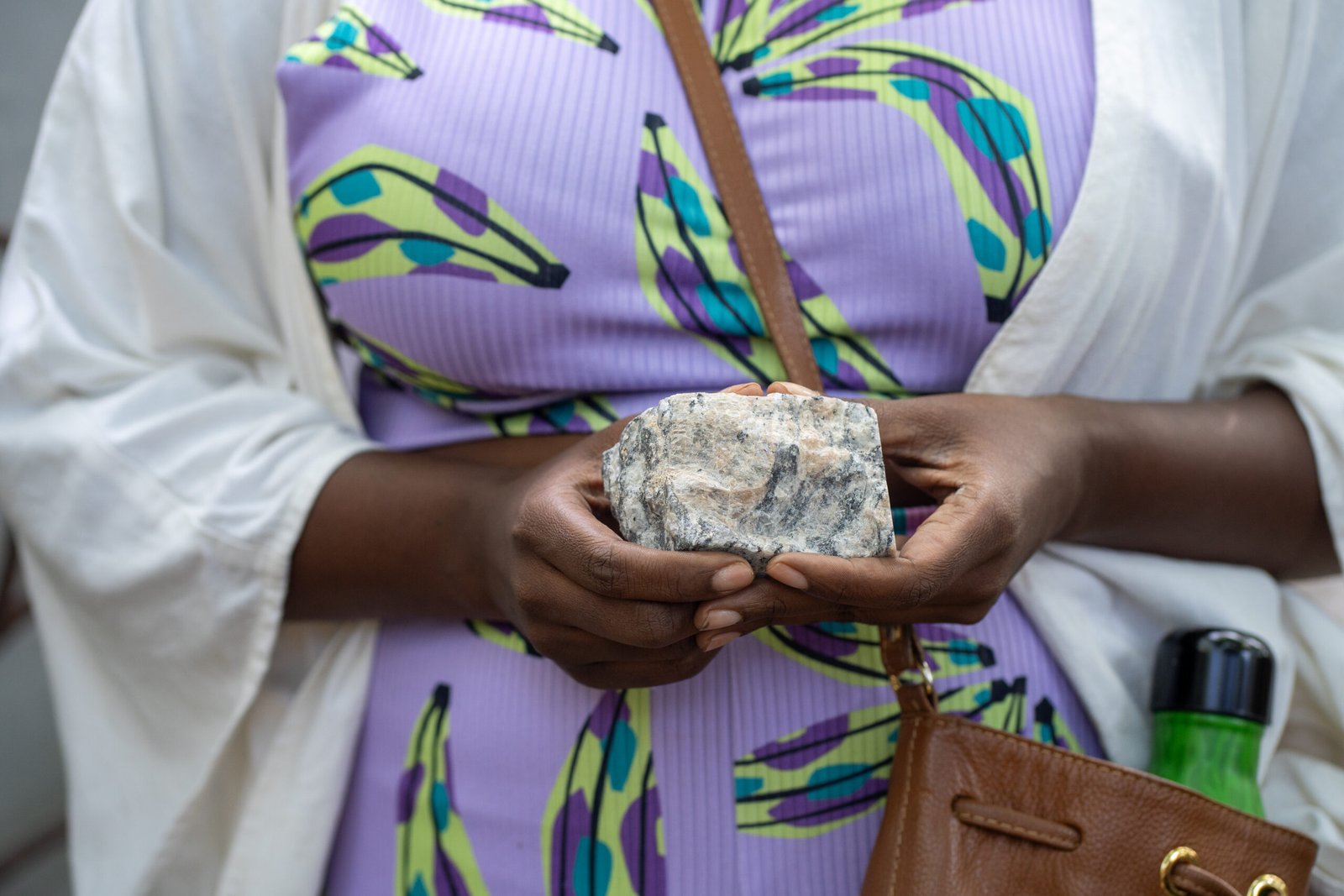
Veronica Pinheiro with the facoidal gneiss
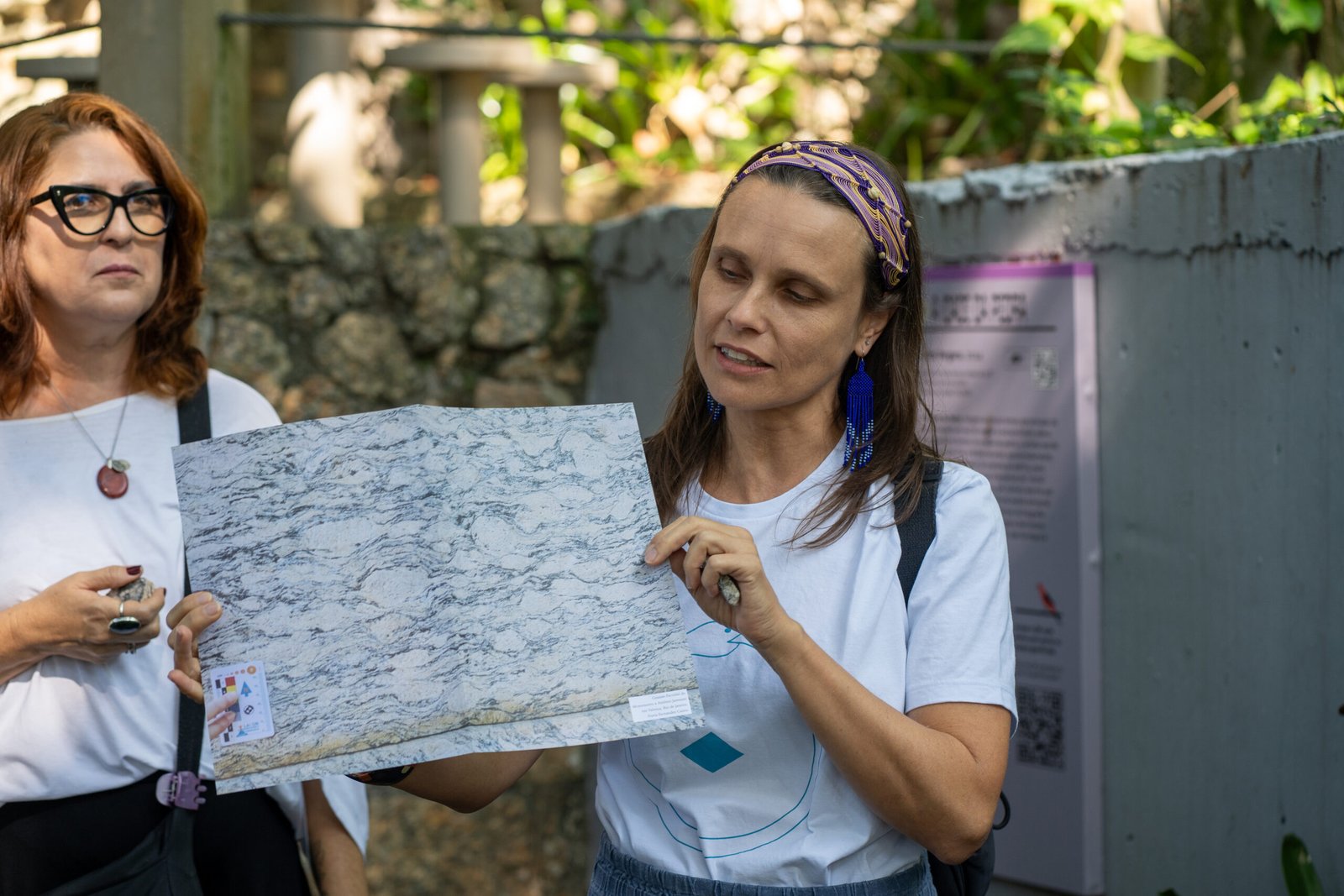
Tania Grillo presenting the facoidal gneiss through the Selvagem notebook “Visions of Guanabara”
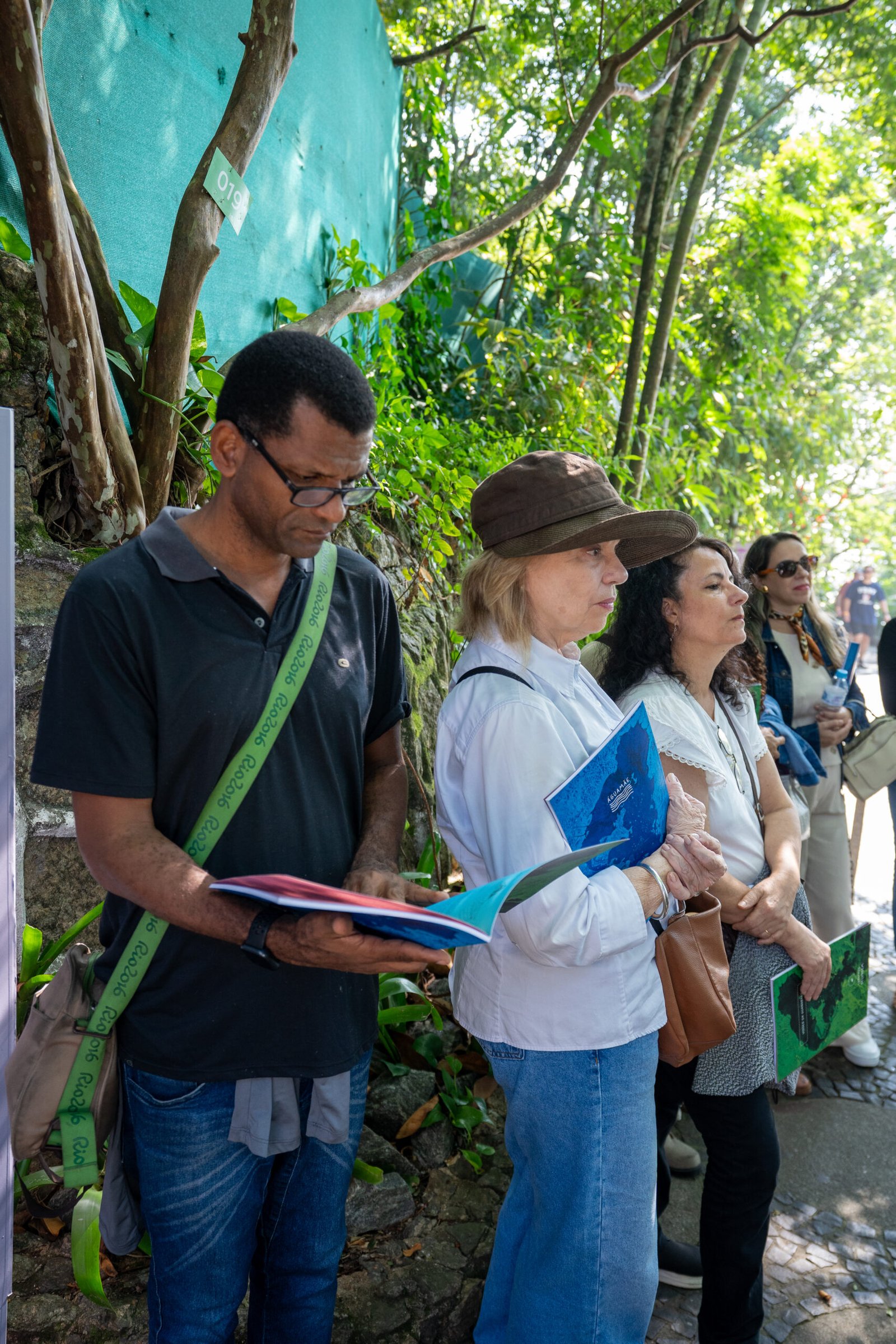
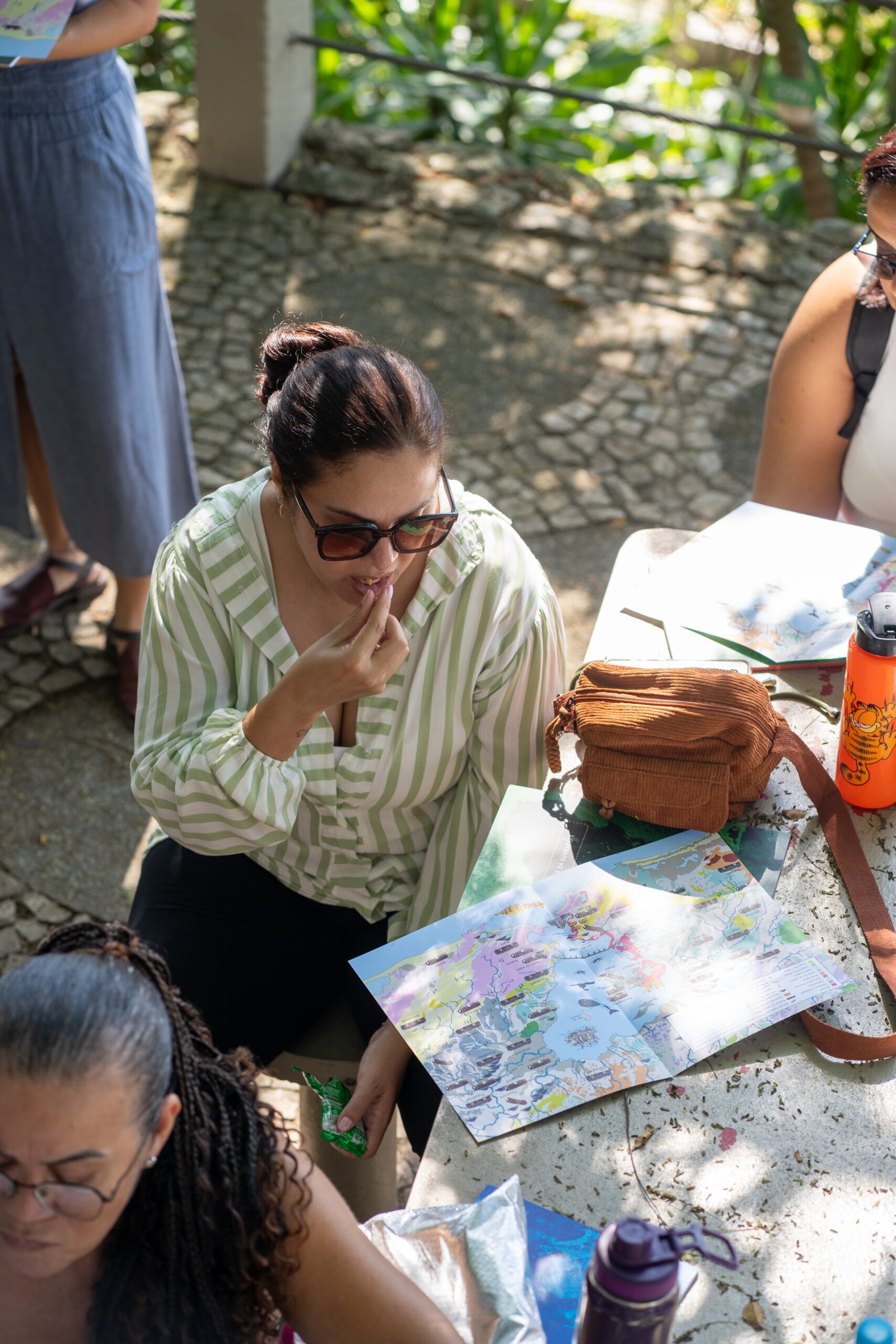
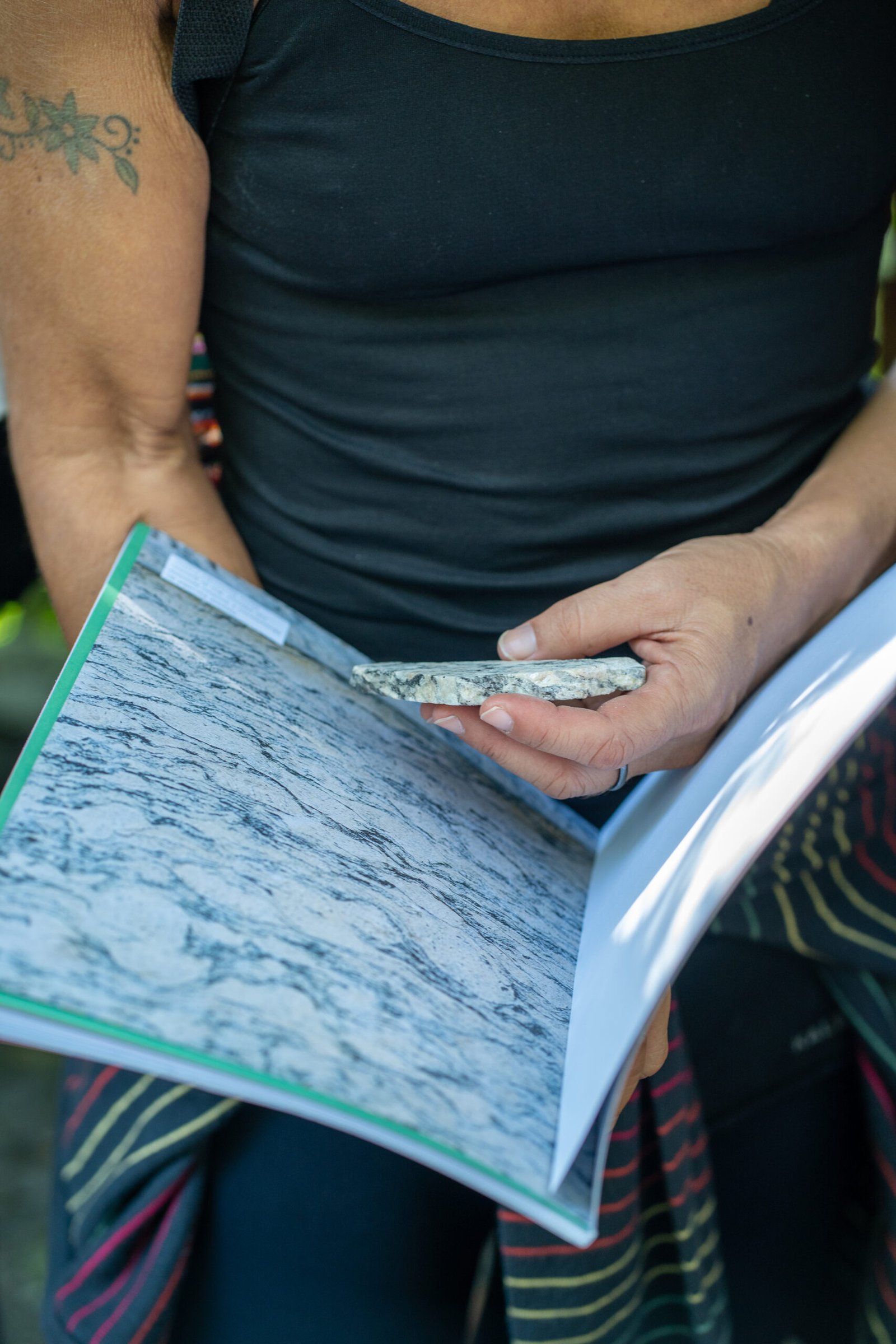
Selvagem notebooks and the facoidal gneiss among the participants.
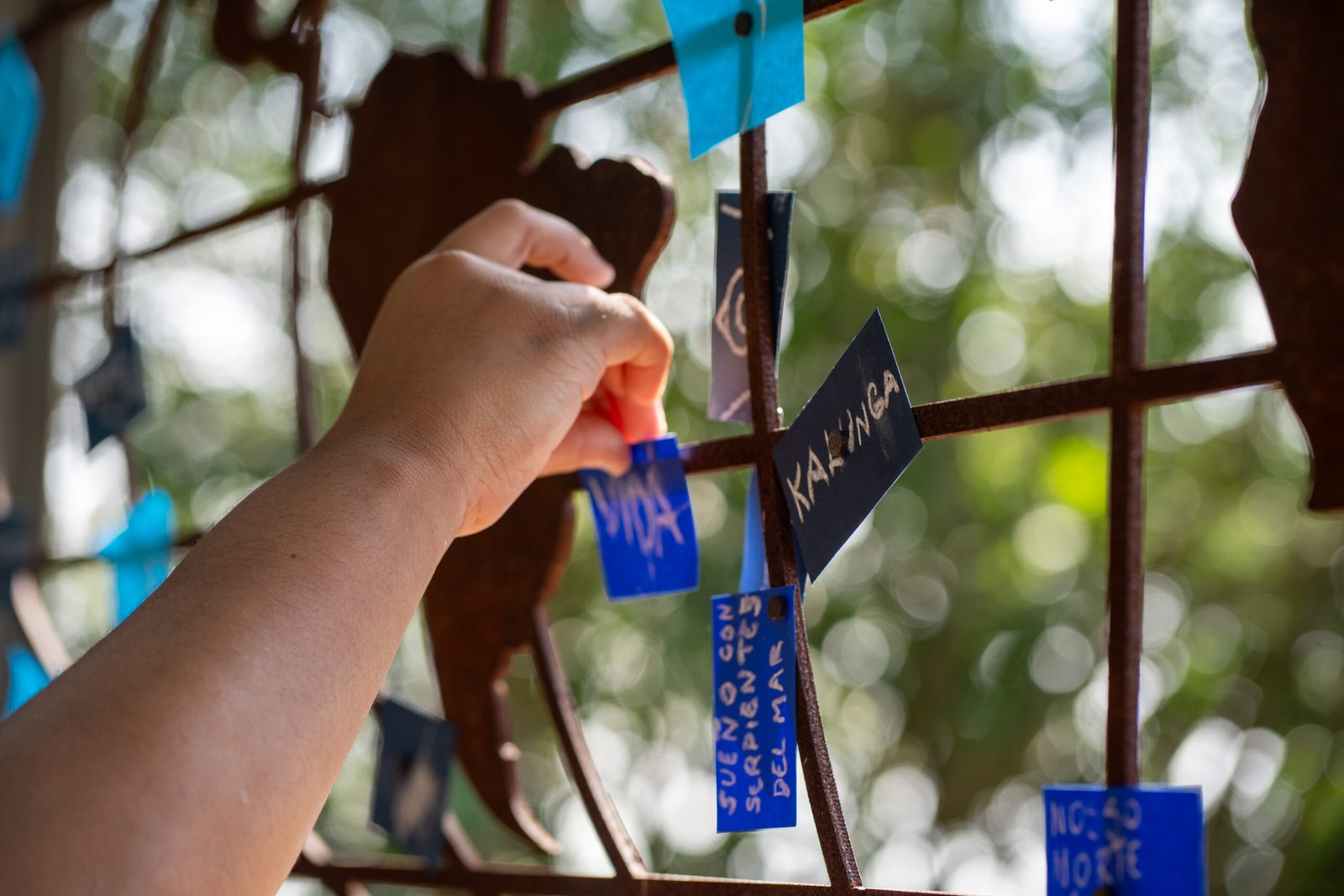
The walk also passed by the installation “Musical Notes,” reflecting on artistic and poetic resources such as song, music, and movement as technologies for preserving information and transmitting memory among indigenous peoples. Participants were invited to reflect on the songs that traverse their own territories and pedagogical practices as they moved toward Anna Bella Geiger’s work “Typus Terra Incognita,” a sculpture commissioned for the Maravilha Project in 2026.
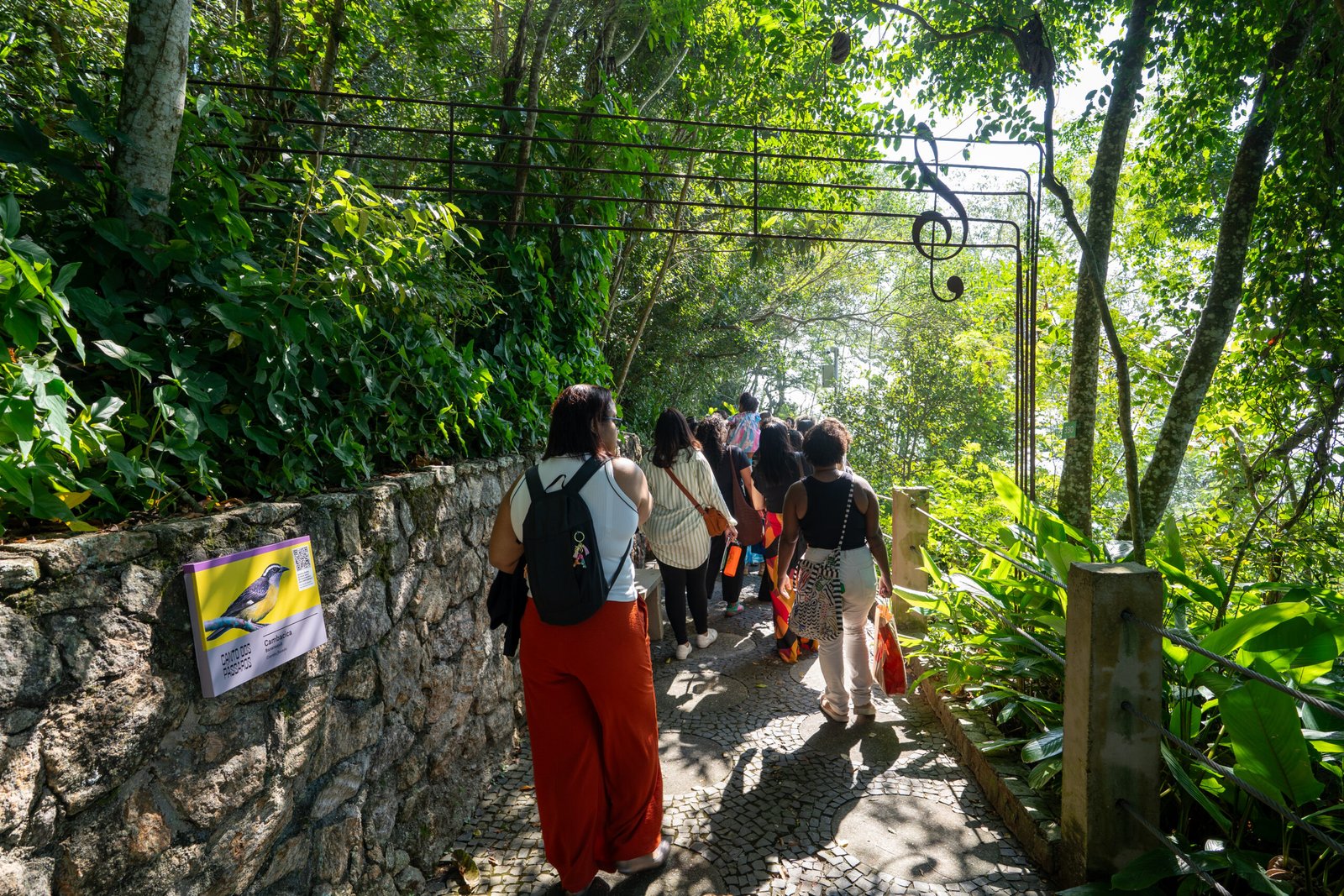
“Musical Notes” installation, by Carlos Vergara.
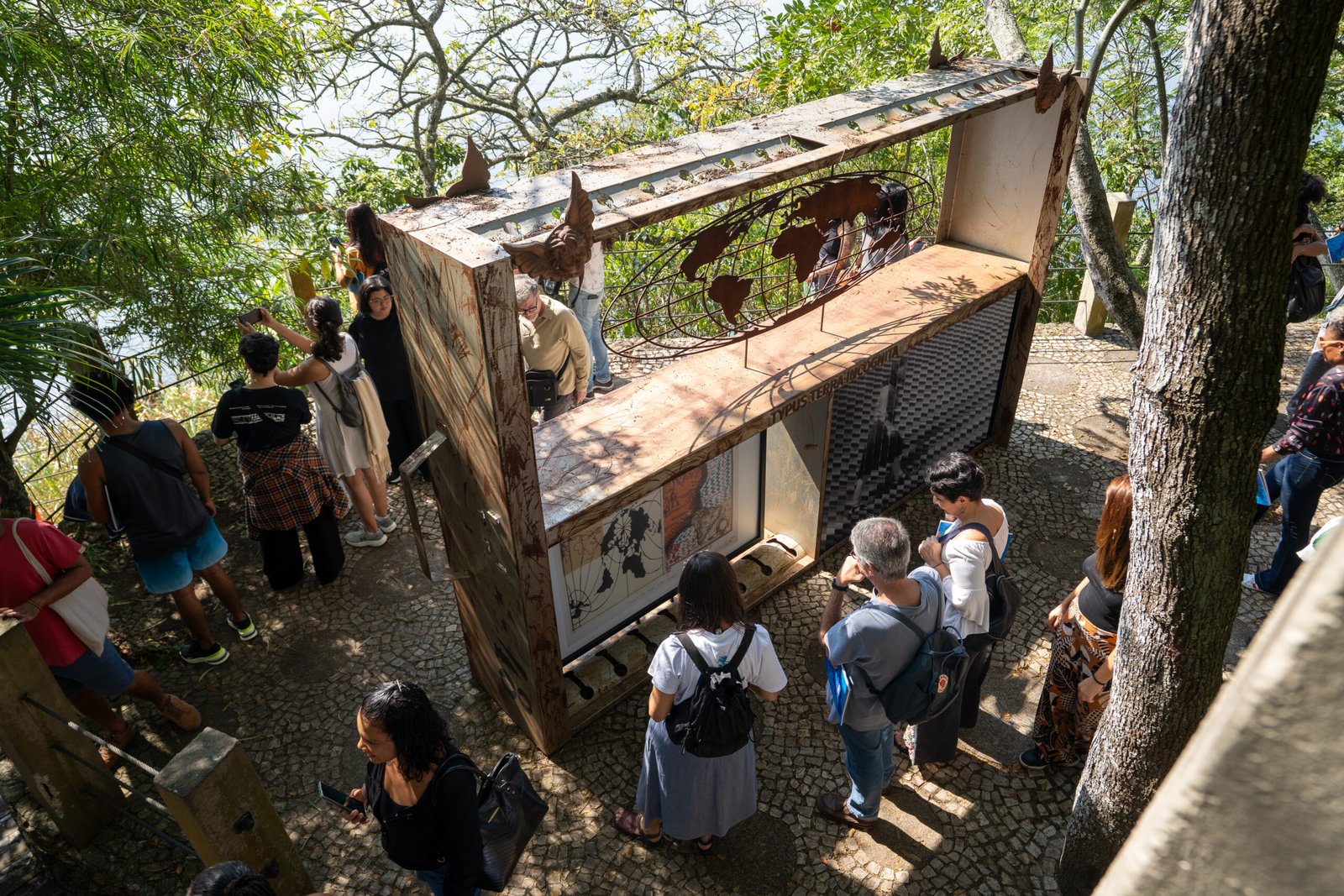
“Typus Terra Incognita”, by Anna Bella Geiger.
Through interwoven discussions, participants collectively reflected on cartography, memory, and territory—themes present in the work of Anna Bella Geiger—a vast and drawer of the world, composed of maps, photographs, and Amazonian rivers—and in the Selvagem map of Guanabara Bay, which is part of "Visões da GuanabaraPresented by Tania Grillo, who participated in the research and production of the material and led various reflections through it, the map and the booklet also served as starting points for discussing displacements, continuities, and multiple presences, understanding the map not as a chronological narrative, but as a circular and spiraling one. On the map, enchanted beings and indigenous villages dating back to before 1500 coexist with airports and submarines, revealing continuous relationships between different ways of life, temporalities, and political forces.
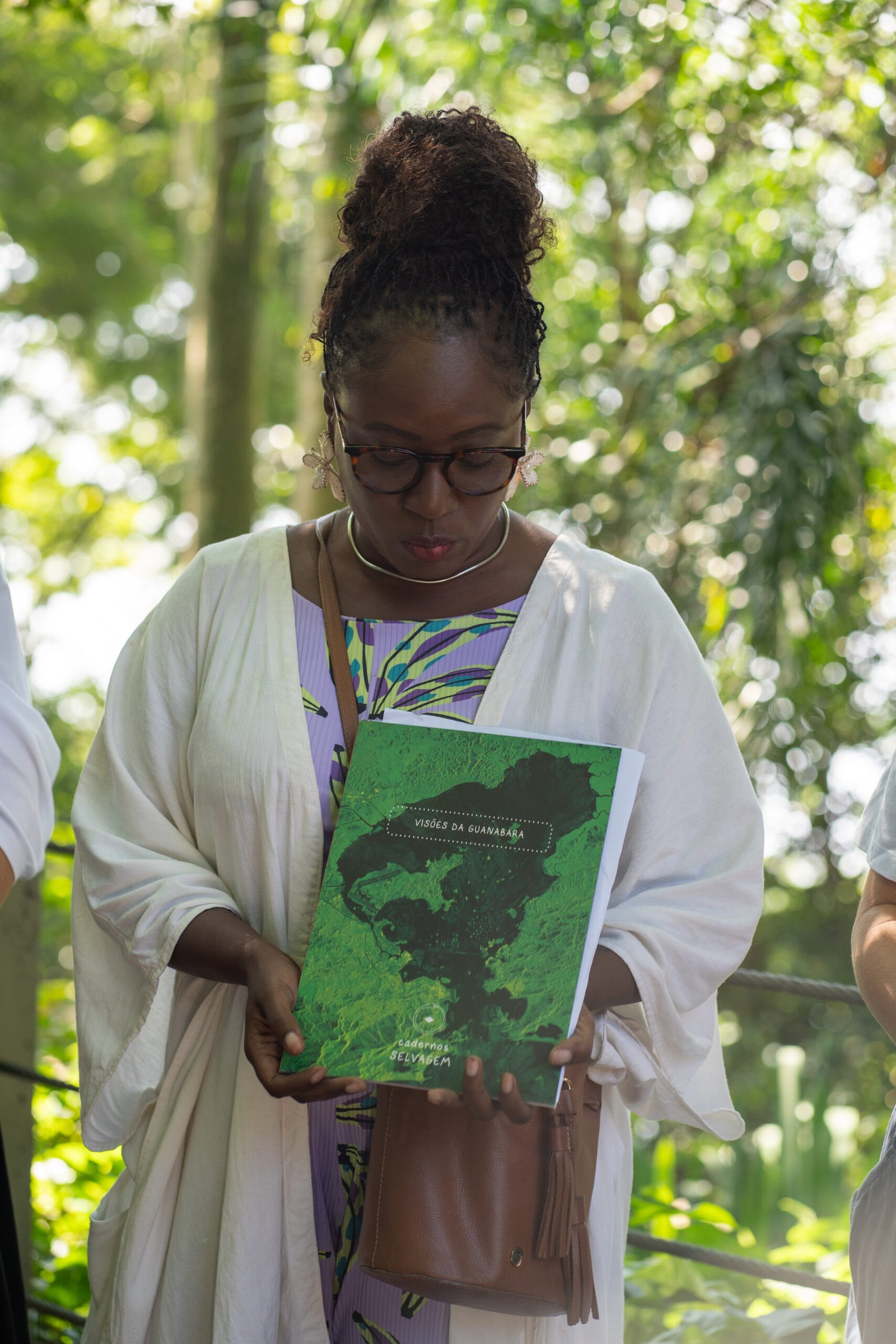
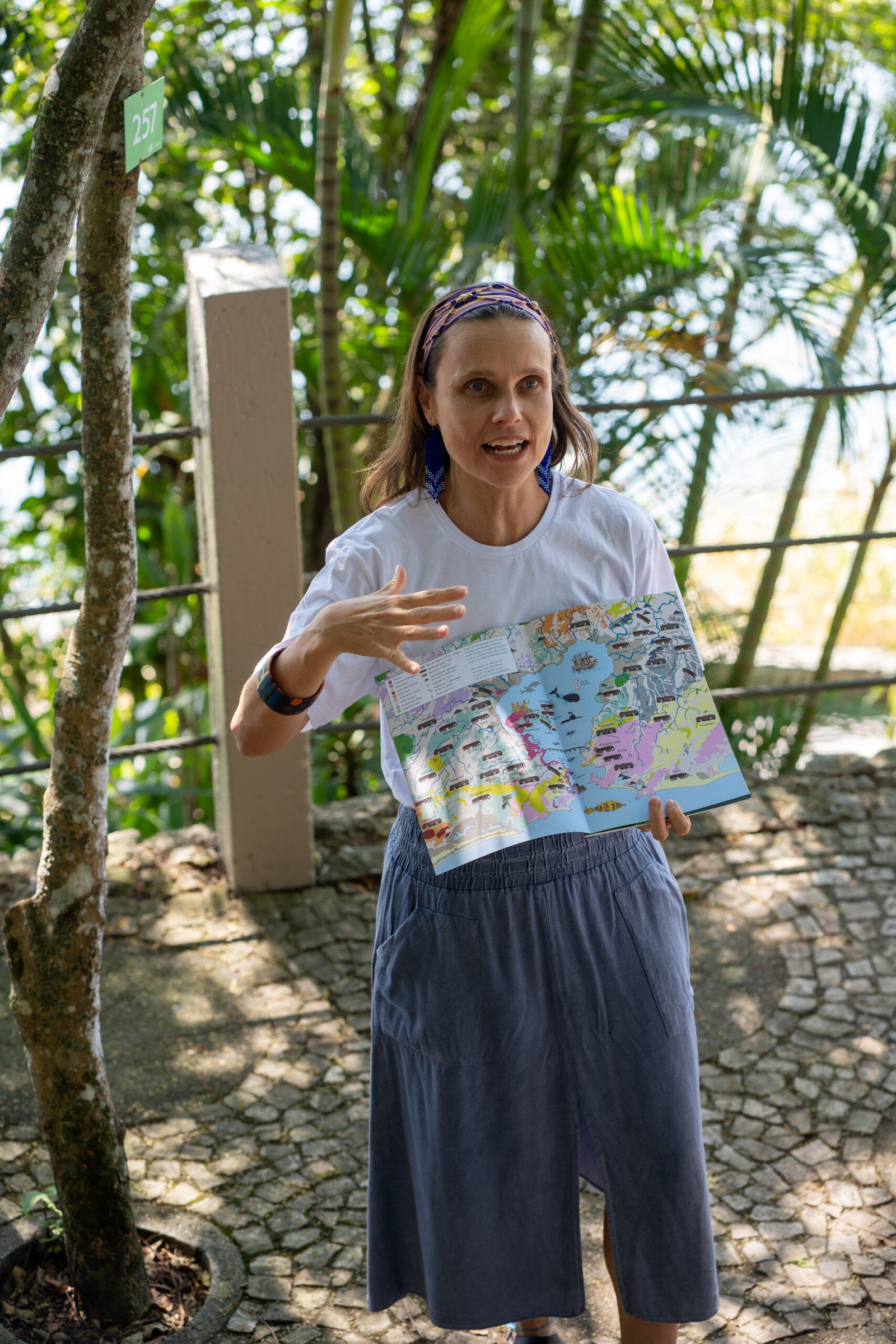
Veronica Pinheiro and Tania Grillo with the “Visions of Guanabara” notebook.
The group also discussed the environmental destruction and the impacts of predatory activities suffered by Guanabara Bay, which are intertwined with historical processes that have tried to erase the presence of Indigenous peoples in the region. What did the angels in Anna Bella’s work breathe into life? What mythological, economic, intercultural, and political stories continue to traverse Guanabara Bay? With these questions, the activity constantly returned to the idea of Guanabara as a source and a possibility for a new beginning.
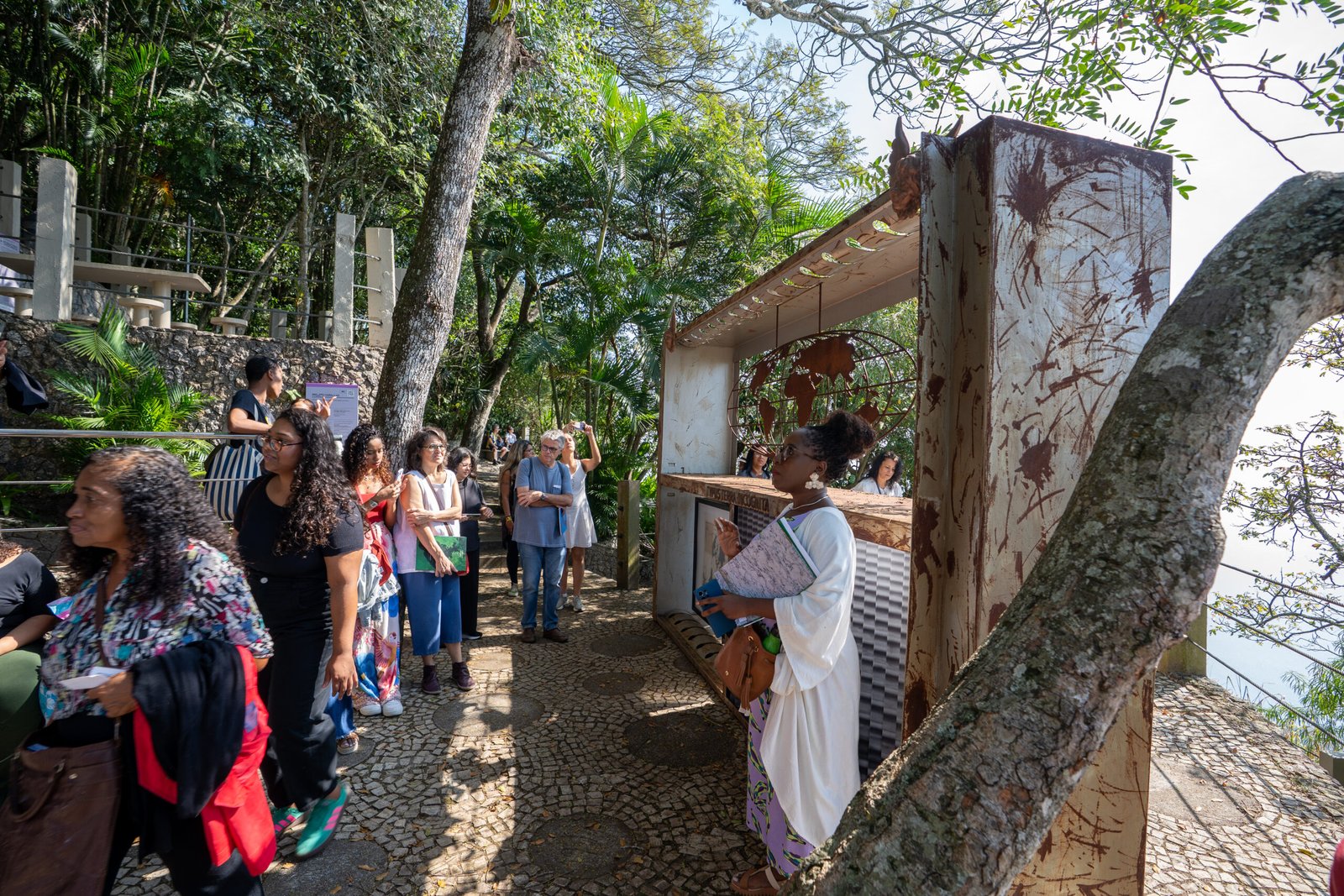
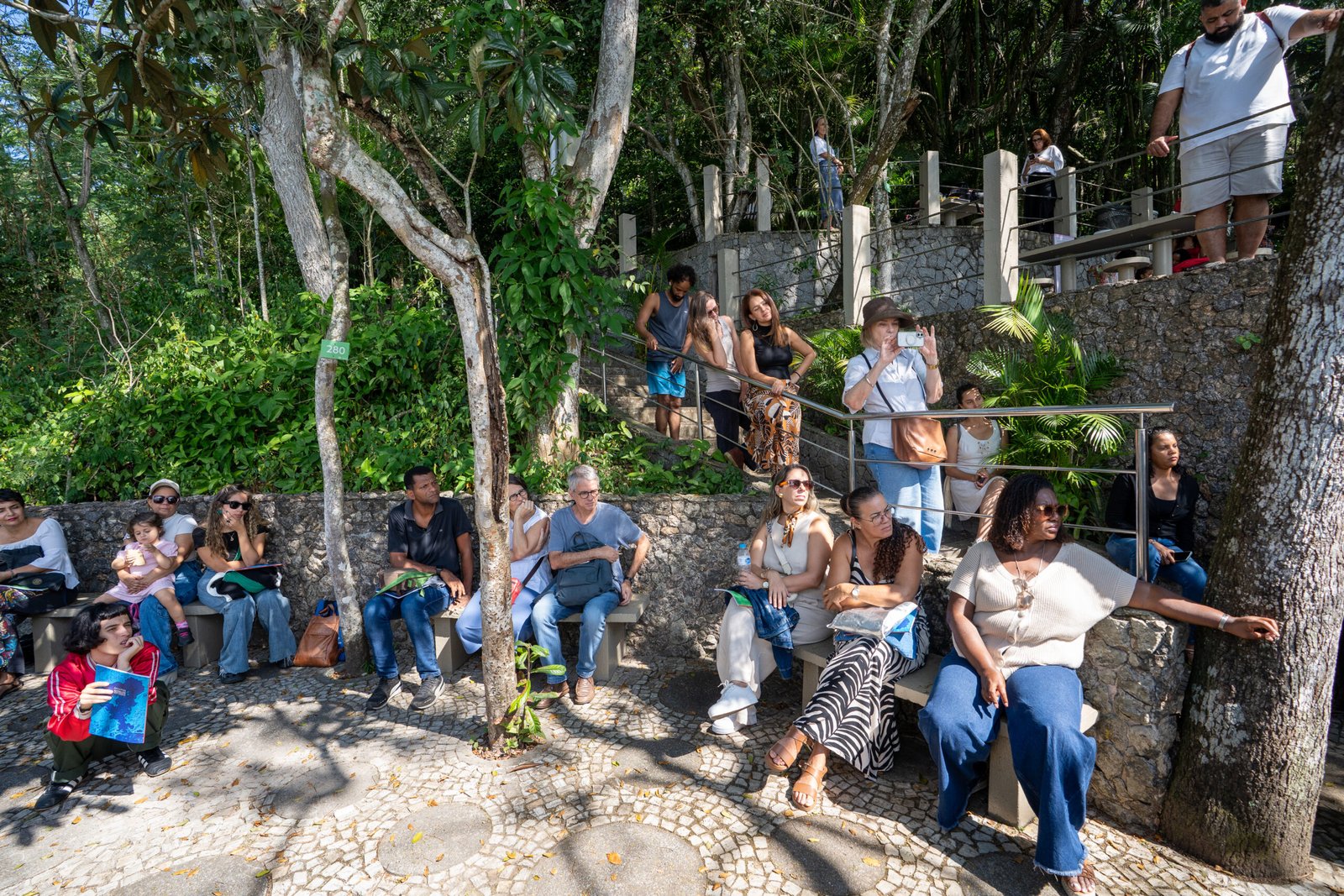
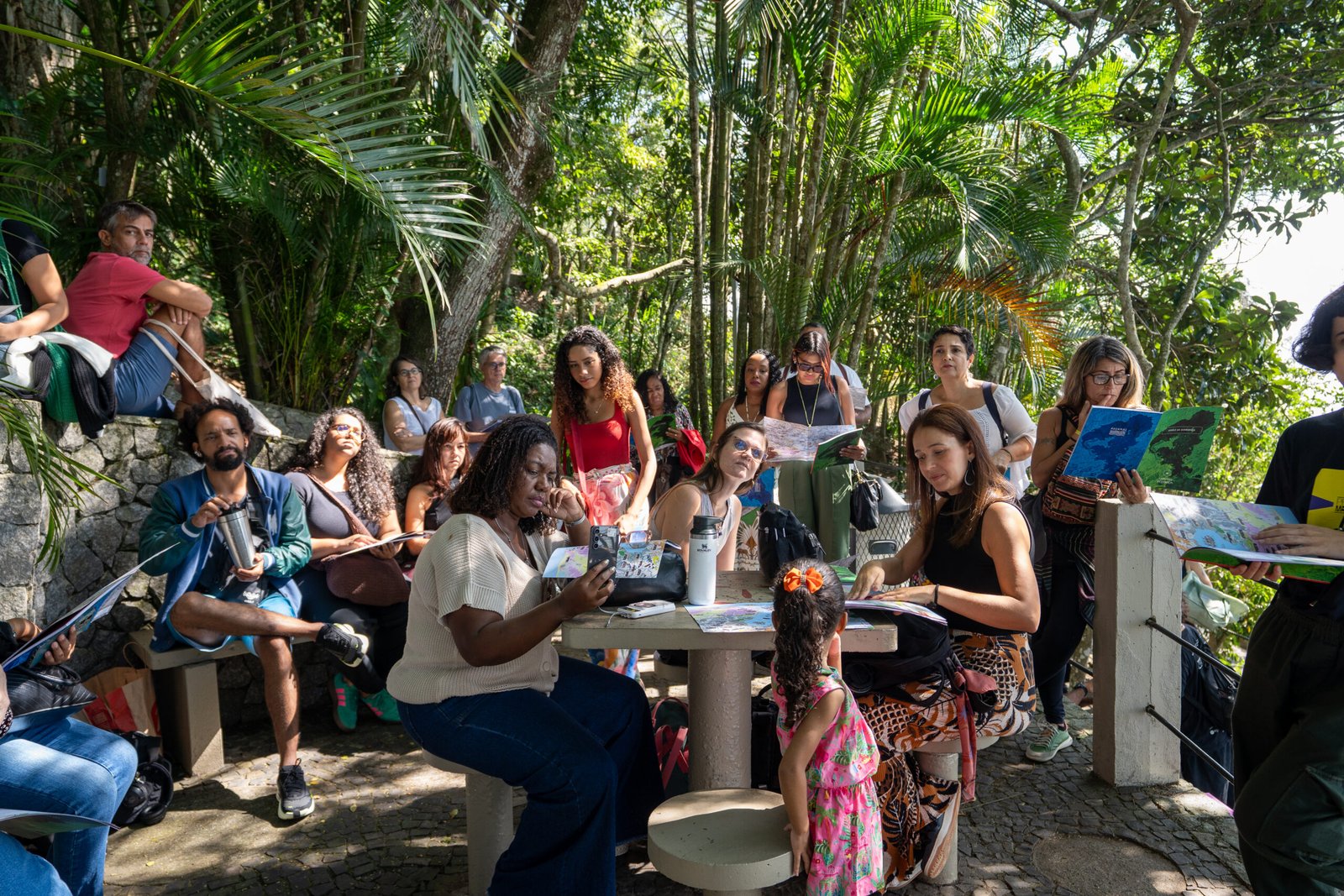
Group reading the "Visions of Guanabara" notebook
Between reflections on the Anthropocene and news about climate tipping points, the need to envision paths of hope also emerged. The collective understanding was that there is still much to discuss, but above all, much to be done in light of the knowledge we have access to and the mark we wish to leave on the world through educational practices that extend beyond the classroom, across territories, and into the ways we inhabit our planet.
Over the course of a Saturday morning under the sun of Nhe’ëry, que é the name the Guarani people give to the region commonly known as the Atlantic Forest, the gathering created a collective space for listening, learning, and shared responsibility toward life, the waters, and future generations, paving the way for a journey that extends far beyond the walk itself: in schools, in educational practices, and in ways of imagining other possible futures for Guanabara Bay.
Photos: Fabio Souza