




SELVAGEM AT LABIC AMAZONAS
4 March 2026
Between 4 and 8 February, no município de São Gabriel da Cachoeira (AM), aconteceu mais uma edição do LABIC Amazonas, um grande encontro com debates e formações sobre cultura digital, comunicação, ancestralidade, tecnologias, arte, educação e ciências.
More than 30 projects and dozens of indigenous communicators and educators from the Upper Rio Negro region, as well as representatives from institutions and bodies such as the Ministry of Culture, came together for four days of workshops and a variety of talks.
Selvagem was represented at LABIC by Cristine Takuá, general coordinator of the Living Schools indigenous movement, and Francy Baniwa, coordinator of the Baniwa Living School and author of the book Umbigo do Mundo [World’s Navel] (Dantes, 2023), from the Selvagem collection.
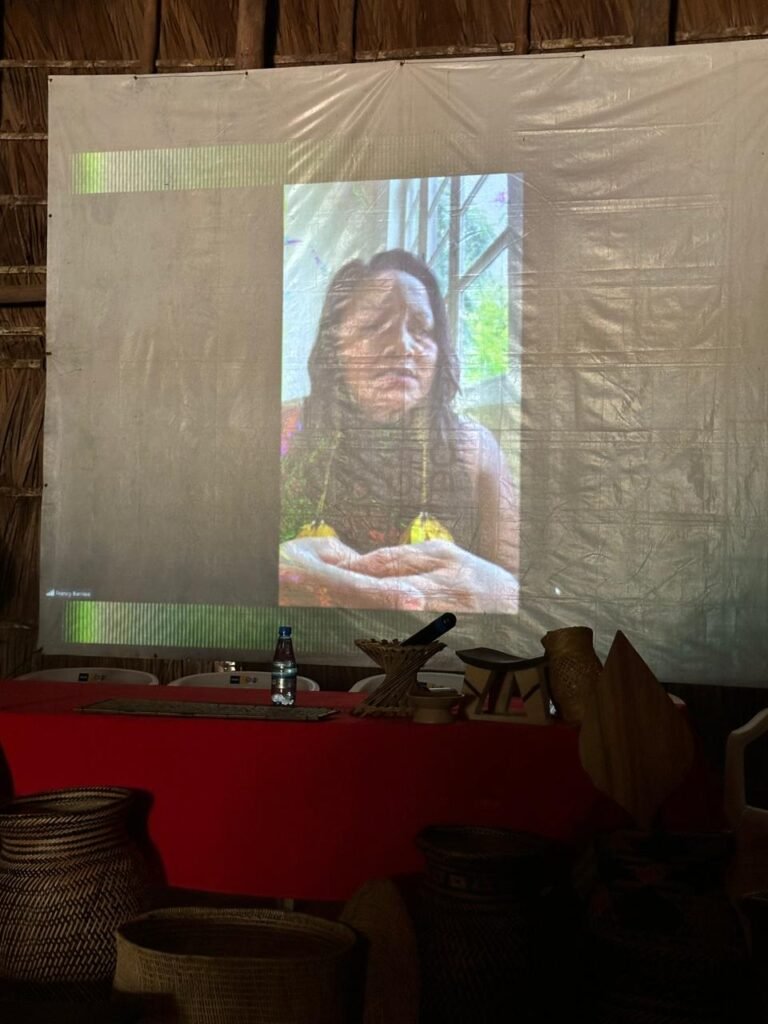
Francy gave an online talk at the LABIC opening conference, on the theme “Indigenous Sciences and the World’s Navel". Francy shared her vision of the Living Schools movement, spoke about her work coordinating the Baniwa Living School, and also discussed the book Umbigo do Mundo [World’s Navel], which she wrote based on conversations with her father, Francisco Fontes Baniwa, about the memory, mythology and traditions of the Baniwa people.
“The first university, which holds such an important place, is our territory, where we live. So I always see the communities, the territory, and the Rio Negro itself as that first university. Why do I say this? Because it is a place that provides you with your first knowledge. I think that, if we are to talk about indigenous sciences, we need to look to our communities and our territory.”
Watch here in full here
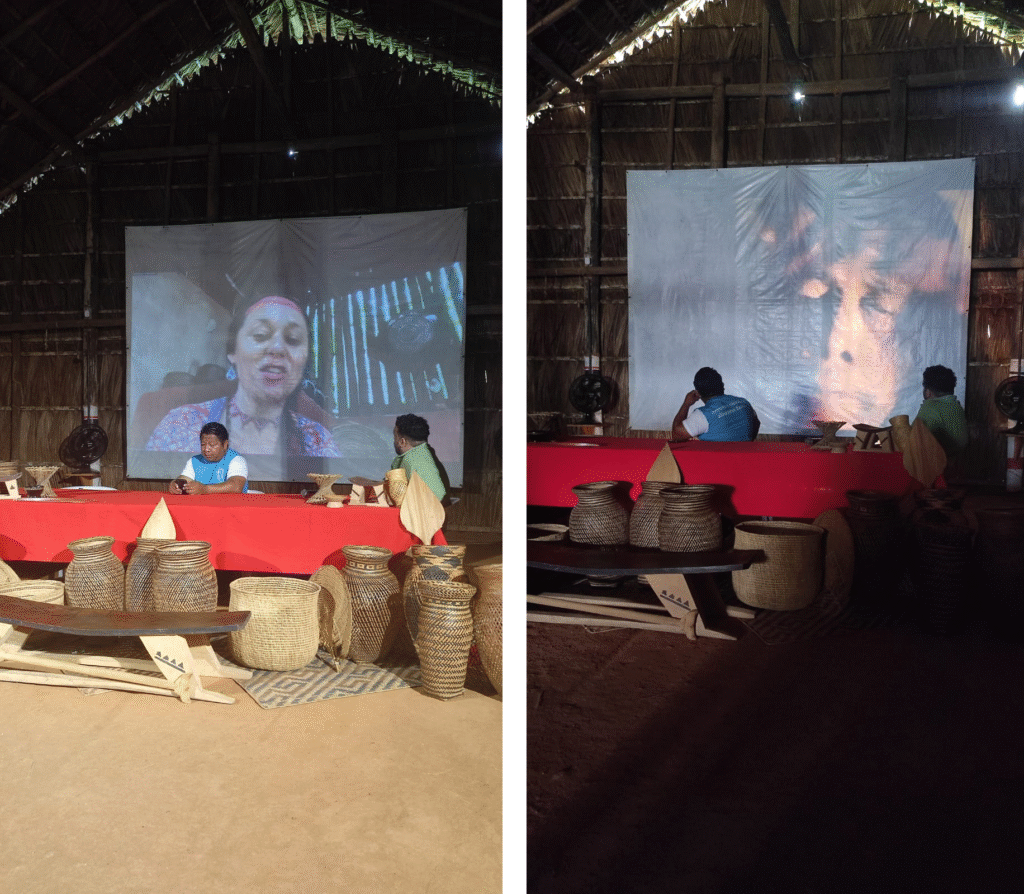
Cris Takuá gave a talk entitled "Living Schools and Indigenous Sciences”, alongside presentations by Dzoodzo Baniwa and Rafael da Silva Maximiniano. Cris shared her work with the Living Schools, introduced Selvagem and screened Arrow 7 – The feral and the sphere for the audience.
Cris’s talk had a very positive impact on the audience. On that occasion, for example, an educator from an urban background, who lives in Manaus, said he did not know that the Bahserikowi Centre for Indigenous Medicine was a Living School, and stated that he now wants to get involved in the activities and become more closely involved with the Centre.
“The Living School is not the school building. For us, the riverbank is a classroom, the shade under a tree is a classroom, when we are dreaming it is a classroom space – because dreams also convey knowledge. All the processes we experience in our territories are classrooms.”
Watch here in full here
LABIC Amazonas was organised by the Ministry of Culture (MinC), through the Secretariat for Artistic and Cultural Education, Books and Reading (Sefli), and the Federal University of Rio de Janeiro (UFRJ), through its Dean’s Office for Continuing Education.
We would like to thank the organisers of LABIC Amazonas for the opportunity, and Francy and Cristine for representing Selvagem and the Living Schools at this very important event.