




“DAUGHTERS OF THE BOA PEOPLE” CROSSES THE ATLANTIC
6 October 2026
Selvagem notebook Yube Nawa Aibu - Daughters of the Boa People, by Rita Huni Kuĩ and Emilia Sanabria, crossed the Atlantic last month to take part in the 2026 World Ayahuasca Forum , held from 11 to 13 September in Girona, Spain. Presented by its authors together with Yaka Huni Kuĩ, Rita’s sister and the creator of the drawings that make up the publication, the notebook was distributed free of charge during the event. It resonated at various moments of the Forum, prompting questions, conversations and discussions about gender and kene, the role of women in the oral transmission of Huni Kuĩ culture, and the relationships between ayahuasca, art and territory. Rita’s participation in the Forum also led to a conversation on Marta Espurna’s podcast Eutopías, in which she talks further about the process of creating the Selvagem Notebook, its meanings and the leadership of women of the forest.
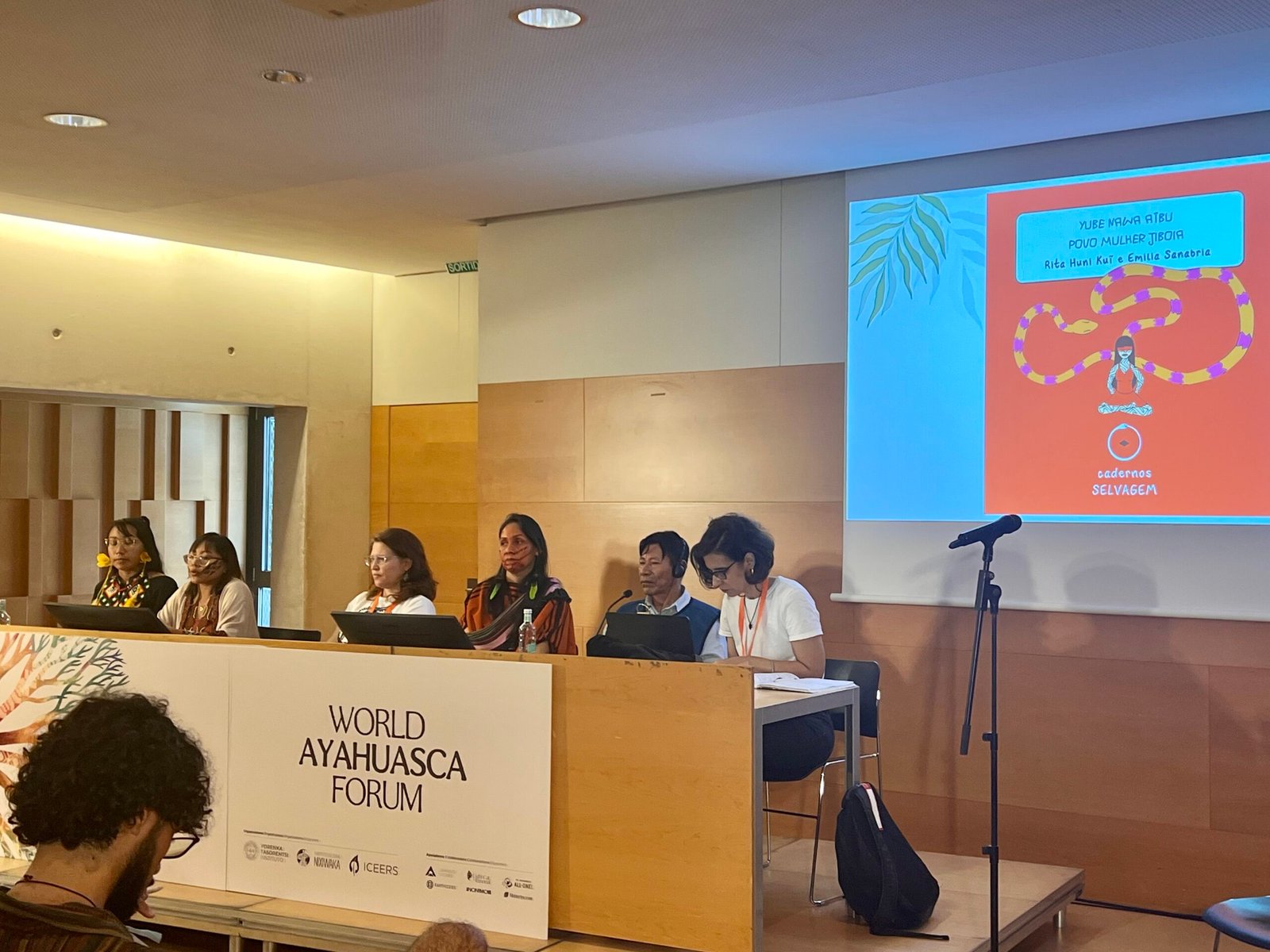
Presentation of the notebook Yube Nawa Aibu - Daughters of the Boa People at the World Ayahuasca Forum.
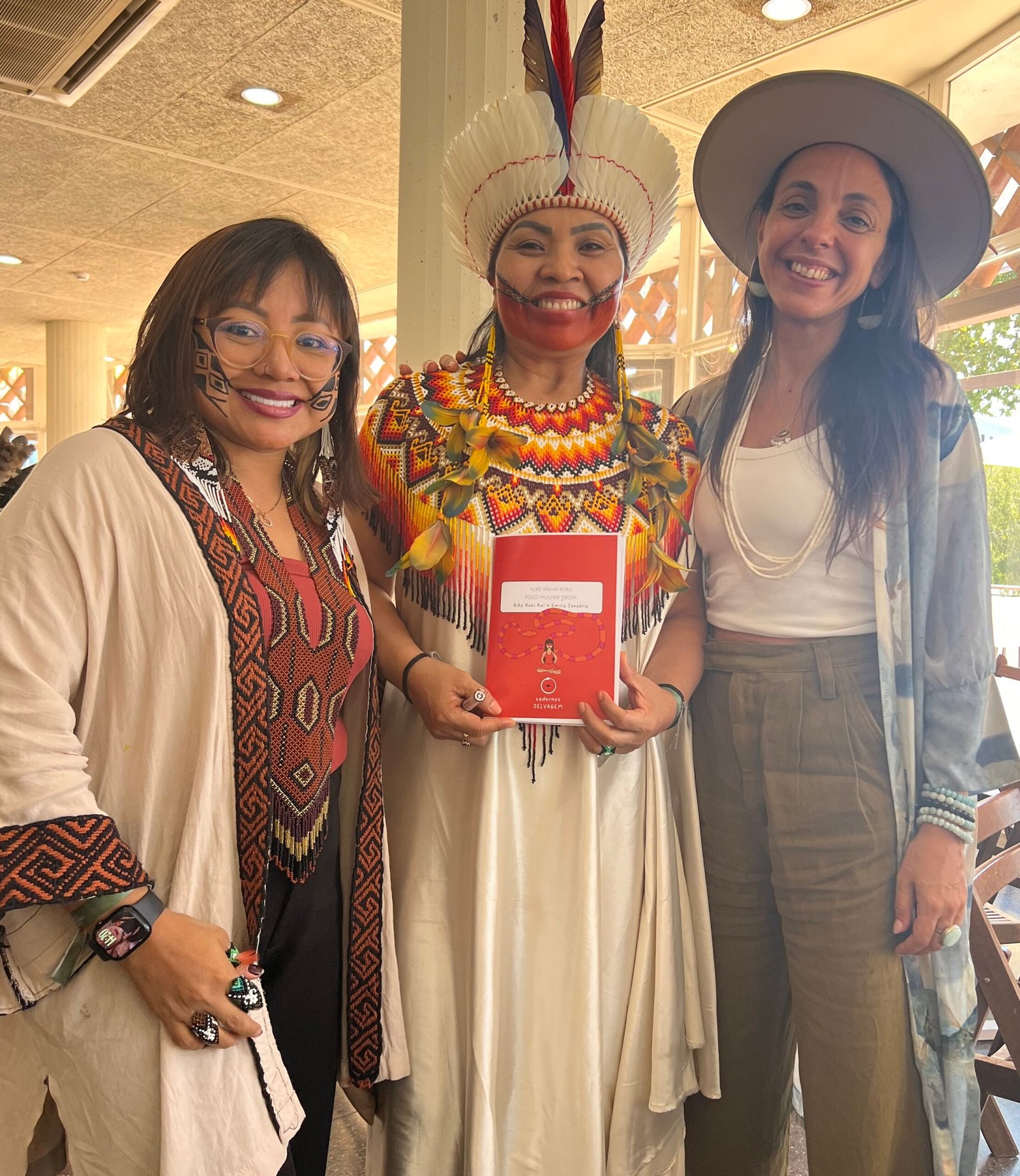
Rita Huni Kuĩ, Nedina Yawanawa and Emilia Sanabria with the notebook Daughters of the Boa People..
A circulação de Yube Nawa Aibu - Daughters of the Boa People also circulated at the Maloca das Artes, a space opened by the artist Daiara Tukano, one of the voices of the Forum, for six invited artists to present their work. Rita and Yaka Huni Kuĩ also took part in this space with the piece “Surgimento da ayahuasca, através de Yubé inu e Yubé Shanu” [The emergence of ayahuasca through Yubé Inu and Yubé Shanu], which sparked a lengthy discussion of many of the themes that run through the notebook. The publication’s arrival in Spain was the result of a careful translation process carried out by the Selvagem Translations Group, which produced translations into english, french and spanish.
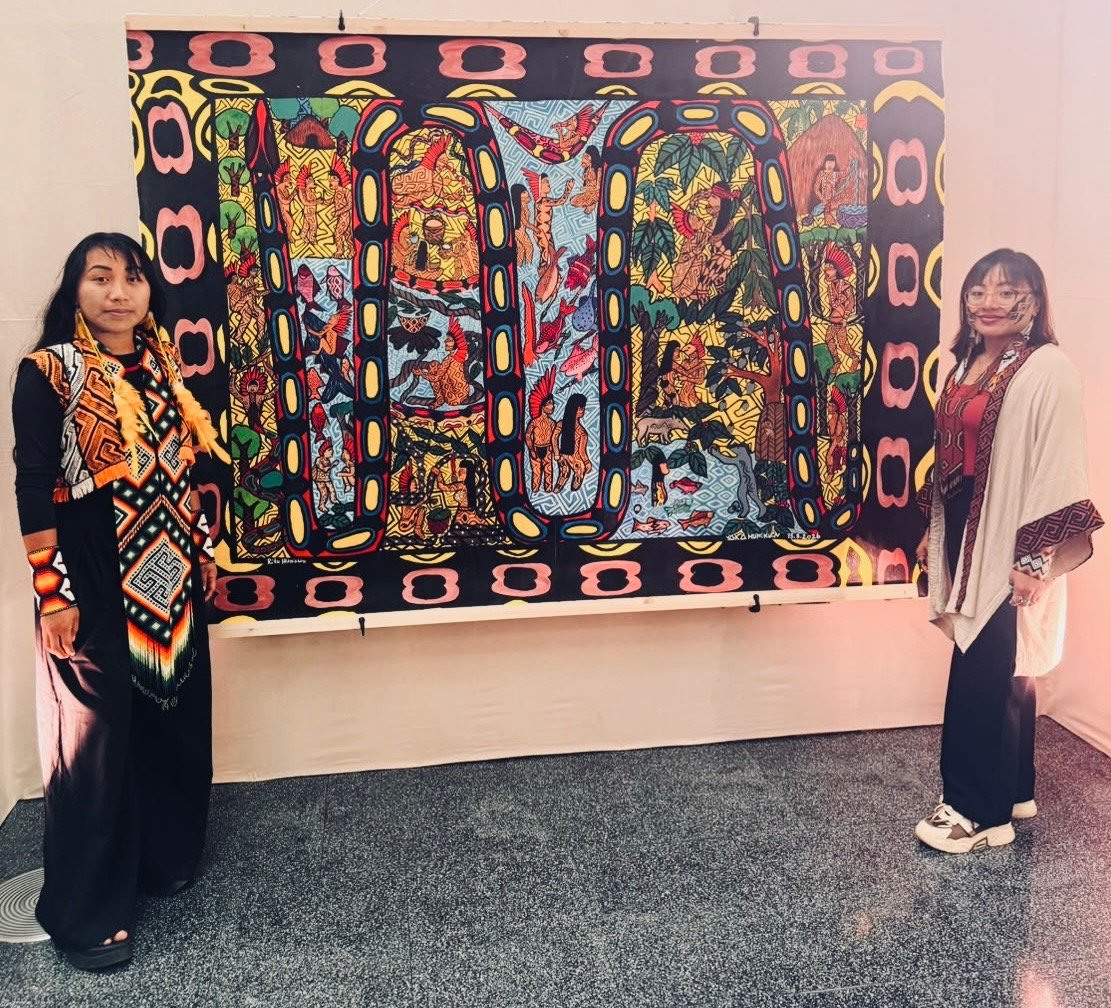
The emergence of ayahuasca through Yubé Inu and Yubé Shanu at the Maloca das Artes.
The World Ayahuasca Forum is a gathering that brings together ancestral voices, communities, researchers, practitioners, artists and allies from different parts of the world to deepen the dialogue on sacred medicines. Among the participants, were shaman Moisés Piyãko, author of the Selvagem notebook Pawa: o criador Ashaninka, and the leader Francisco Piyãko, both of whom will have new Selvagem publications in October as part of the Waters Cycle. The Forum also welcomed the anthropologist Jeremy Narby, a collaborator of the Selvagem Association since 2018 and author of the books The Cosmic Serpent: DNA and the origin of knowledge and Master plants: tobacco and ayahuasca, both part of the Selvagem family of books published by Dantes Editora, as well as of the Selvagem notebooks The first Selvagem Cycle, Invisibility and omnipresence - COVID-19’s case, Plants as brains and Brazil, guardian of the future.
Yube Nawa Aibu: The worlds woven by the voices of Huni Kuĩ women
At the World Ayahuasca Forum, Yaka Sales Huni Kuĩ, Rita Sales Huni Kuĩ and Emilia Sanabria took part in the panel “Memory, Arts and Oral Traditions” with the talk “Yube Nawa Aibu: The worlds woven by the voices of Huni Kuĩ women”, in which they presented the Selvagem notebook "Daughters of the Boa People.”. The notebook shares a series of interviews conducted by Rita Huni Kuĩ with Huni Kuĩ women in different villages along the Jordão River. The project, developed jointly with Emilia Sanabria, is part of the research programme Healing Encounters. The notebook is the result of Rita and Emilia’s long-standing partnership, which Emilia describes in the opening text of Yube Nawa Aibu. It was published by the Selvagem Association in 2025. “When we dreamed of publishing the research, we thought of Selvagem as our first choice,” said Emilia.
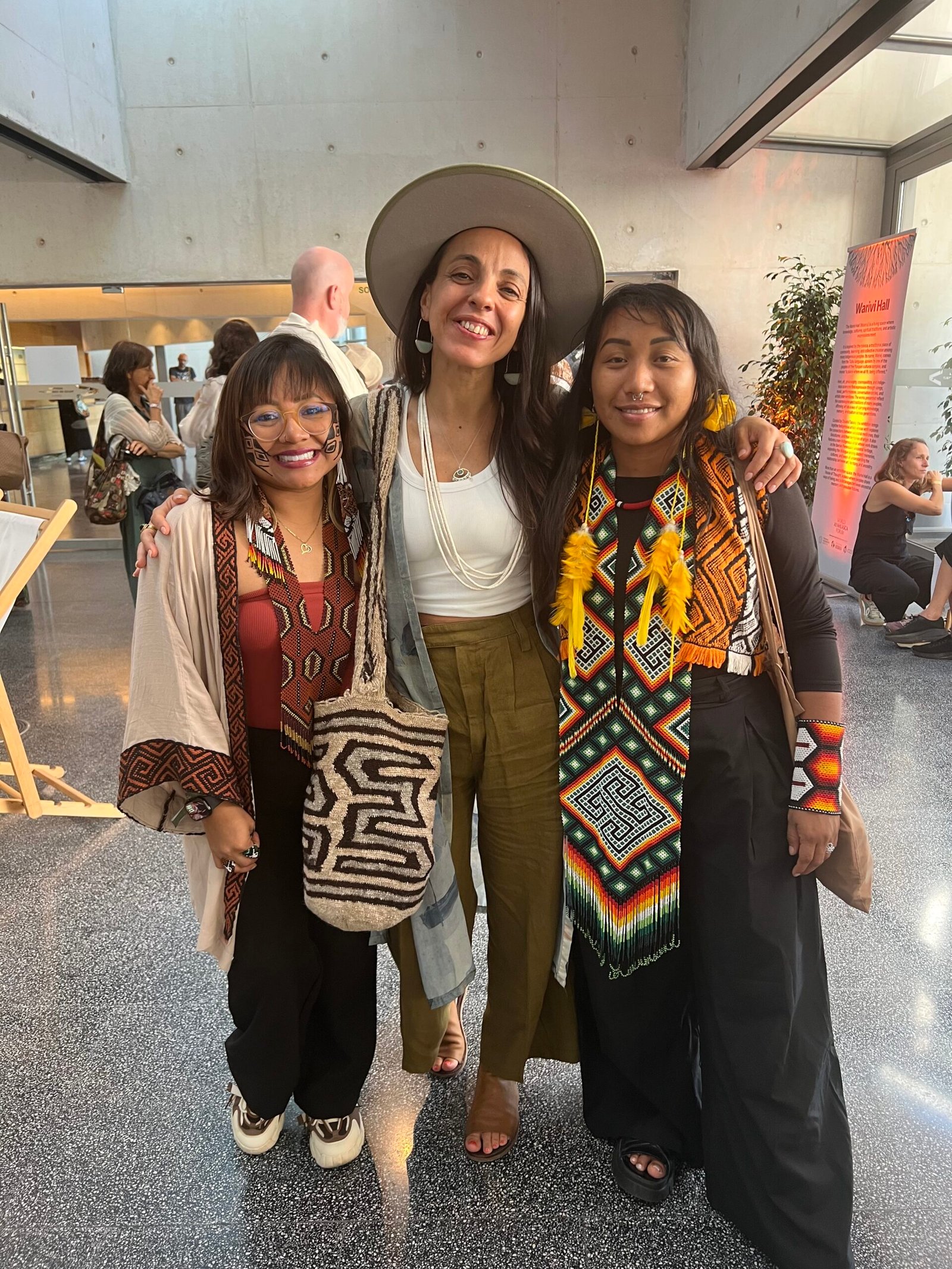
Rita Huni Kuĩ, Emilia Sanabria and Yaka Huni Kuĩ.
Emilia met Rita in 2018, when she visited the village of Chico Curumim, in Acre. In 2019, when Rita and her father, the leader Ibã Sales Huni Kuĩ, came to Spain for the first edition of the Forum, Emilia had the chance to see her again. Now, in 2026, Rita, Emilia and Yaka were together for the first time to present how the research was carried out and how it came to be published as a Selvagem notebook, and they also took part in a panel on women and ayahuasca. According to Emilia, the presentation drew a large audience and prompted many exchanges among participants, a good number of them about the Notebook, of which more than 50 printed copies in English and Portuguese were handed out during the panel. Rita returned to Brazil with a good many of the Portuguese copies for her family and other villages, while the English copies circulated around the Forum.
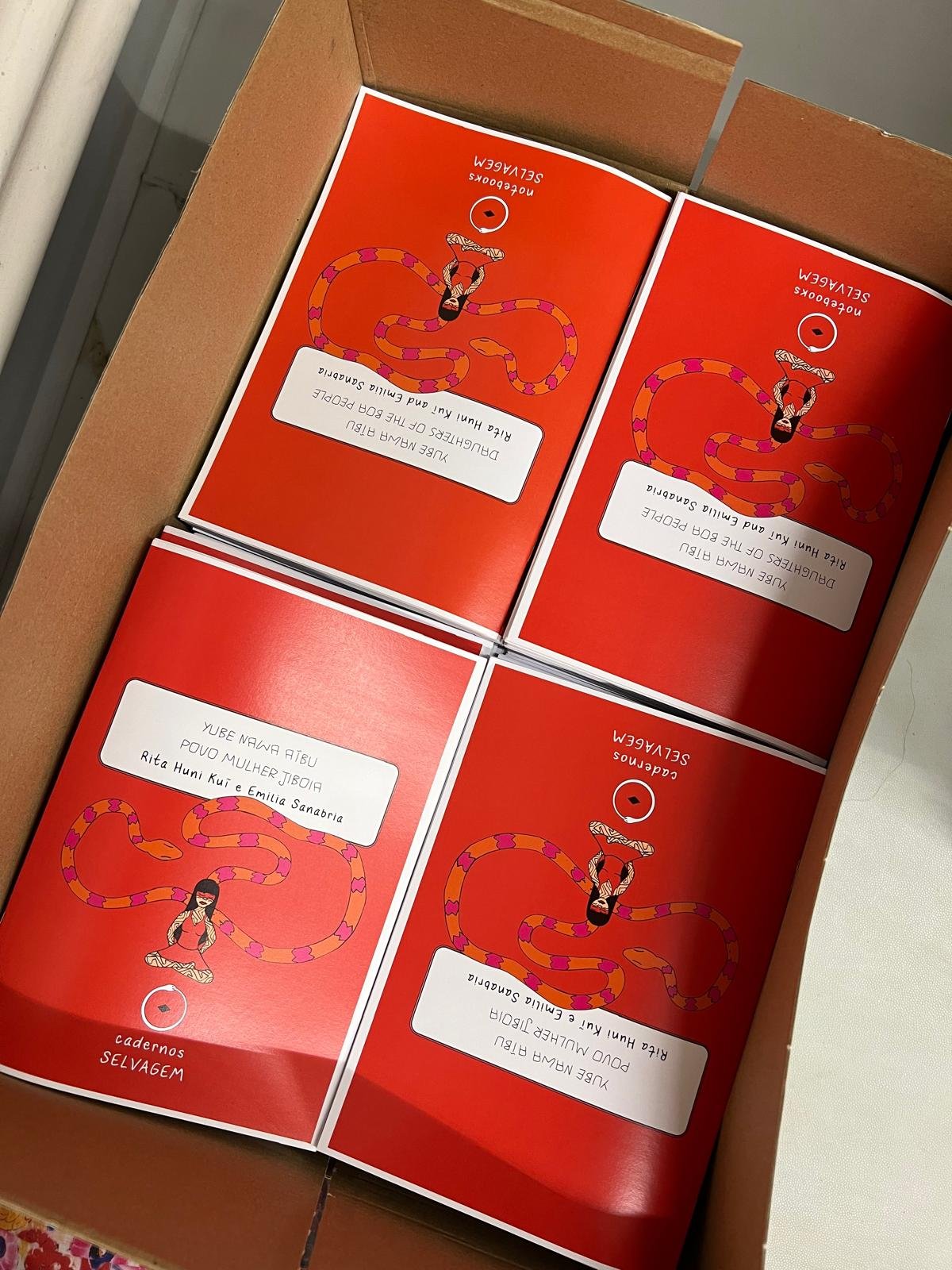
Notebooks Daughters of the Boa People. notebooks.
The Notebook was translated by the Selvagem Translations Group into three languages simultaneously, with funding secured by Emilia through her research chair. Three teams of three translators worked on the material, which Emilia then carefully reviewed. Alice Faria, coordinator of the Translations Group, explained that one of the concerns that cut across all three translations was the decision to keep many of the words in Portuguese, adding numerous footnotes to make the translators’ choices transparent. As the translation was carried out in parallel in the three languages, the translation teams met several times during the work to discuss the questions that arose, and the solutions found for each language ended up influencing the process in the others.
A meeting of different voices
For the researcher Emilia Sanabria, who has a long history with events such as the World Ayahuasca Forum, the Indigenous presence at this 2026 edition was significant. More than 200 Indigenous participants from different parts of the world, including Colombia, Brazil and Peru, came together at the gathering, bringing knowledge of biocultures, of relationships with sacred plants and the defence of those plants.
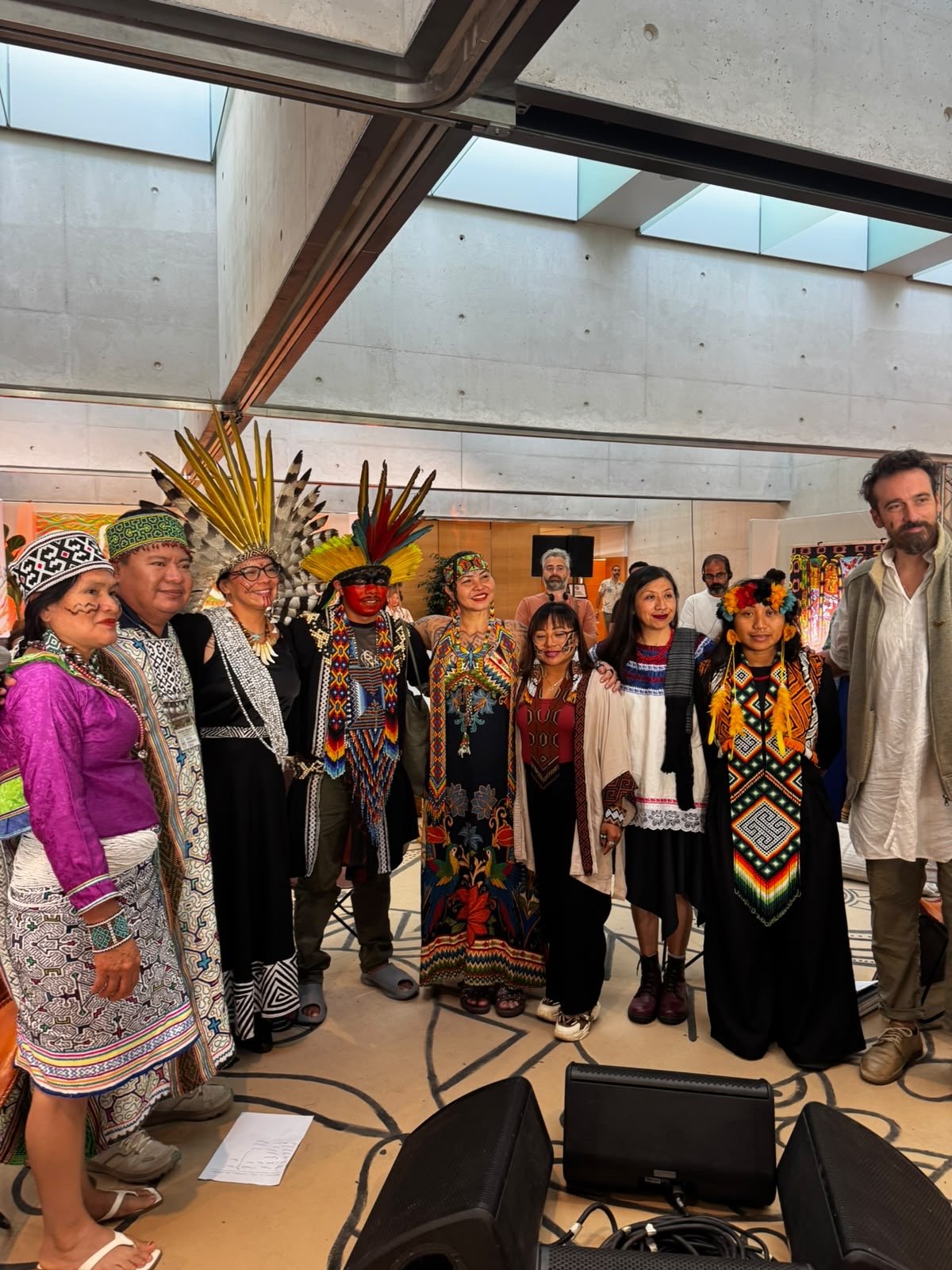
Artists at the Maloca das Artes.
“This edition was a landmark because many ayahuasca events outside Brazil, and sometimes even within Brazil, have been organised and framed from a very psychiatrised perspective, one of mental health, and less around questions of territory, rights and other ontologies,” said Emilia. In her view, Indigenous participation in international gatherings such as the World Ayahuasca Forum has repercussions that reach beyond the event itself: it raises the visibility of the grievances and issues faced by Indigenous peoples and strengthens efforts at international alliance.
About the participants
EMILIA GABRIELLA SANABRIA is a Franco-Colombian anthropologist, graduated in the United Kingdom and currently based at the Centre National de la Recherche Scientifique (CNRS) in Paris, where she is Research Director. Her first book, “Plastic bodies: sex hormones and menstrual suppression in Brazil”, published in 2016, offered an ethnography of menstruation and the use of hormonal contraceptives in Salvador, Bahia. The book explored the stratified mechanisms of control to which cyclical female bodies are subject under biopolitical regimes of medicalisation, and proposed reading the body as eminently plastic. Emilia is currently experimenting with speculative research design methods in a series of participatory research collectives committed to promoting healing justice, radical care and alternative futures.
RITA HUNI KUĨ is an artist, activist and mother whose work supports the empowerment of women. Through art, painting and the power of words, she brings to life the rich heritage of the Huni Kuĩ people and shares their spirituality with the world. Through lectures, she breaks down stubborn stereotypes about Indigenous peoples. Her work is inspired by the mythology and songs of her people, which she transforms into artistic creations with the aim of preserving and sharing the cultural wealth of the Huni Kuĩ. Rita is a co-founder of the Kayatibu artists’ collective, which brings together young Indigenous artists living in the town of Jordão to deepen their study of culture as a form of empowerment and living memory. She is also a member of the Mahku collective, founded by her father, Ibã Sales Huni Kuĩ. Her work has been shown in exhibitions in Brazil and abroad.
YAKA HUNI KUĨ was born in the village of Chico Curumim, in the Kaxinawa do Rio Jordão Indigenous Territory, in the state of Acre. She is a visual artist and an apprentice of the forest. Her art draws on the cosmovision, traditional songs and mirações [visions] experienced with Nixi Pae (ayahuasca), which form part of the knowledge of the Huni Kuĩ people. She is a co-founder of the Centro de Cultura Kayatibu [Kayatibu Culture Centre] and has contributed works to the exhibitions “Moquém_Surarî: arte indígena contemporânea” [Moquém_Surarî: contemporary Indigenous art] at the Museu de Arte Moderna de São Paulo (MAM); “Les Vivants” [The Living] at the Fondation Cartier, France; and the 35th São Paulo Biennial, “Coreografias do Impossível” [Choreographies of the Impossible].