




QUEM TEM O PODER DE REPRESENTAR TEM O PODER DE DEFINIR E DETERMINAR A IDENTIDADE
Veronica Pinheiro
20 de agosto de 2024
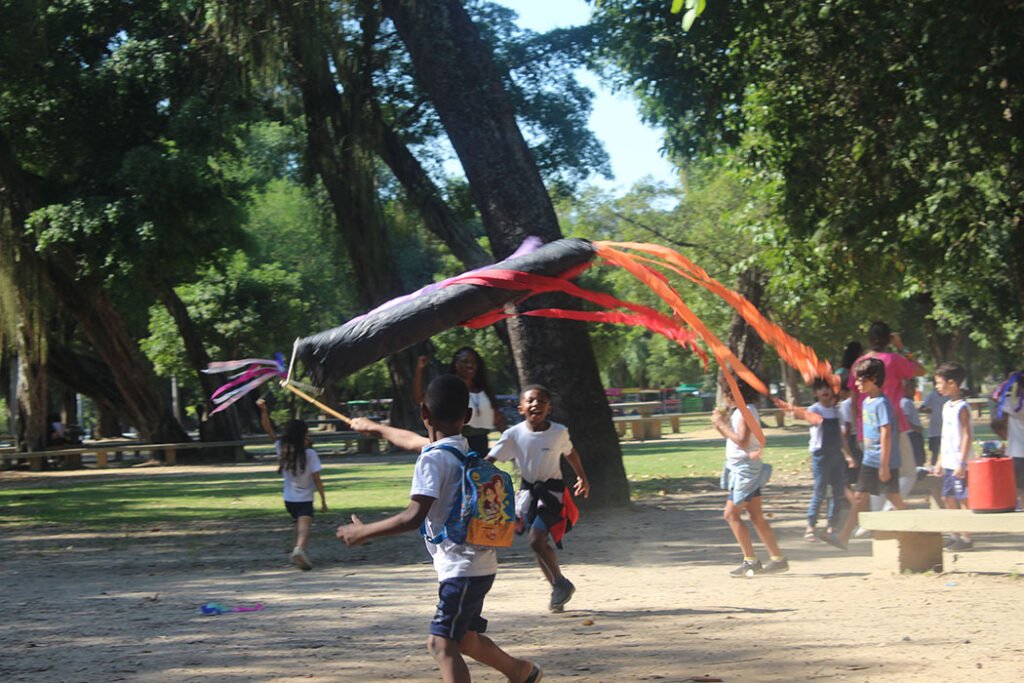
– I did magic! – said a seven-year-old boy, after he managed to photograph his friend with a professional camera.
He looked at the camera's viewfinder, stopped and almost didn't breathe. I saw his body in absolute silence. I saw silence for the first time. In fact, he did magic. A shaman knows when he's healing, a teacher knows when he's teaching. And a magician knows when he's performing magic. This boy chose how to represent his friend. He carefully chose the angle and the moment. He saw himself in his friend and represented his friend as he would like to be represented. He may not know it, but the ones who have the power to represent are able to determine identity. Even without knowing it, my little companion realised the power of that act.
As escolas de ensino regular, em sua maioria, mantêm os alunos o tempo todo em uma sala de aula apertada, com janelas fechadas e com iluminação artificial. Sentados em cadeiras desconfortáveis, passam horas sem olhar seus amigos nos olhos. Em silêncio. O silenciamento imposto, recorrente e institucional é violento, subjuga e aprisiona os sujeitos. Quais são as consequências de passar horas com alguém sem poder olhar nos olhos, sem olhar pra fora? Temos muitas críticas a esse modelo de educação, no entanto não podemos ignorar que, no Brasil, crianças e adolescentes urbanizados, principalmente nas periferias, estão tão vulnerabilizados que a escola pode se tornar um espaço de construções interessantes. Então… se a escola é um lugar de homogeneização e docilização de populações, ela também pode vir a ser um lugar de ruptura e insurgências.
So many rights are denied: the right to know that you are nature; the right to play; the right to the city; to have access to the manifestations of the natural world...

In this movement of ours to awaken memories and strengthen territories, we share playing, walking and welcome children into spaces that are special to Selvagem. Until our trip to Quinta da Boa Vista in Rio de Janeiro, the activities were photographed by professionals who are part of the Selvagem Community. Erika Hoch is one of these professionals; generous and loving, she shares her vision of the meetings with us through photographic records. Erika would not be in Rio on the day of the visit to the Quinta. At that moment, Carol Delgado also joined our group. Carol, like Erika, brings happiness in her eyes and gestures. The look in their eyes is very familiar to me, a look of curiosity, a look of hope. When I look into their eyes, I see the children who share this journey with me. Photography, as well as a record, can be a manifestation of the gaze. And the gaze can be constructed. In Eduardo Galeano's ‘The Function of Art’, the boy Diego, overwhelmed by the wonder of seeing the sea for the first time, asks: "Help me look." Erika and Carol teach me how to look.
At Quinta da Boa Vista, Carol chose to let the children tell what their eyes saw. She hands the camera to the little ones. She teaches them how to operate the camera. She suggests agreements and accompanies the process. The next child to take a picture would not be taught by Carol, but by the colleague who preceded them in the activity. I follow Carol's movements and the children's movements. I don't give the volunteers much information about the children beforehand. I just tell them that they are sunny and energetic. The class that experienced this particular outing is a class known at school for its restlessness. The Quinta was the least advisable place for this group, a very wide place with no ‘attractions’. I decided to arrive there two hours before the children to find a special place among the trees. There was a specific organisation among the school's teachers to contain possible fights between the children.
In the face of the vastness and the many trees, the more restless children entered a state of contemplation and deep self-reflection.
– Have you noticed that I'm not even making a mess today? – said the 7-year-old girl – I haven't hit anyone and I'm not going to. How do you get back here?
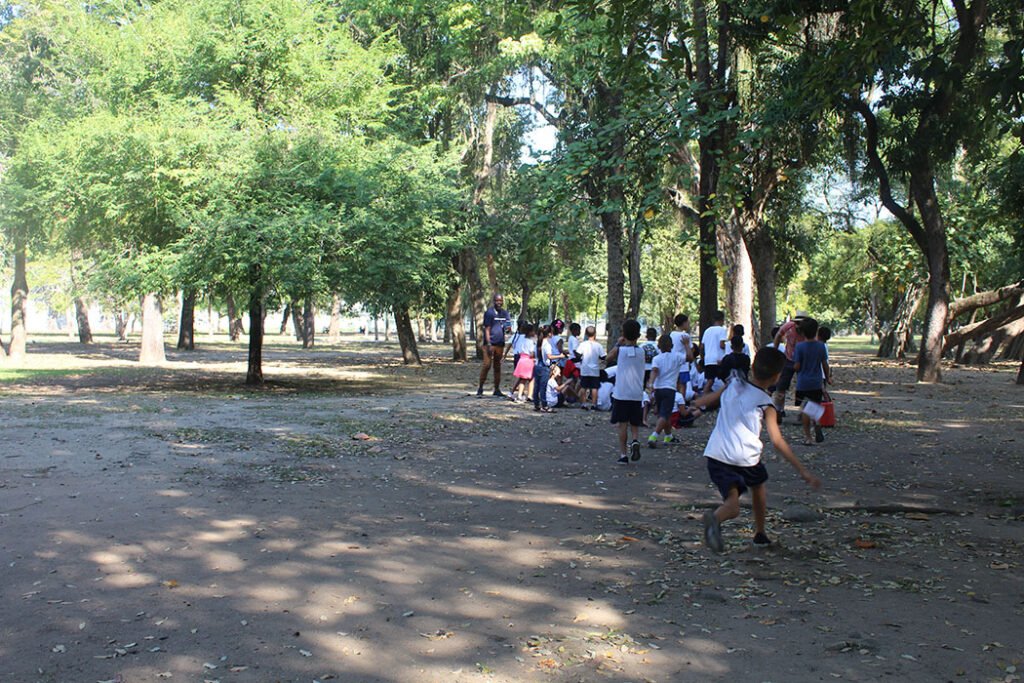
It was a day for gazing and constructing gazes. The registering process is a delicate one. The ones who have the power to represent have the power to define and determine identity. The right to look and be looked at is something denied to dissident bodies. When I write about the children of the Pedreira favela, I am representing and constructing a vision of what Pedreira's children are. The colonialist heritage says that some humans can determine the identity of others, and there are those who feel comfortable in this role.
“Quem tem o poder de representar tem o poder de definir e de determinar a identidade. […] A pedagogia e o currículo deveriam ser capazes de oferecer oportunidades para que as crianças e os/as jovens desenvolvessem capacidades de crítica e questionamentos dos sistemas das formas dominantes de representação da identidade e da diferença” Tomaz Tadeu da Silva

We have around three hundred photographs taken by the children. I confess I don't have the resources to understand the complexity of the narrative they've constructed about the walks they've photographed. I know very little and feel a lot these days. Most of the photographs are of smiles and hugs. When I was a child, do you know how children from the outskirts of town were represented in photographs? The textbooks I studied only put pictures of black and brown people in vulnerable situations. In science books, for example, there was always a racialised child in the chapters that talked about worms. In history books, black people always appeared in chains or working in socially despicable jobs. Just like a written text, a photograph is a text full of intentionality. There is no neutrality in images, and the children understood this.
They chose how they would like to be represented and seen: smiling, playing and running. Smiling, playing and running are acts of insubordination for children in a context of extreme violence. The records made by the children are unsubmissive to the pain and oppression imposed on the children of Complexo da Pedreira.
They determine how I should look at them. They are life unfolding into life.
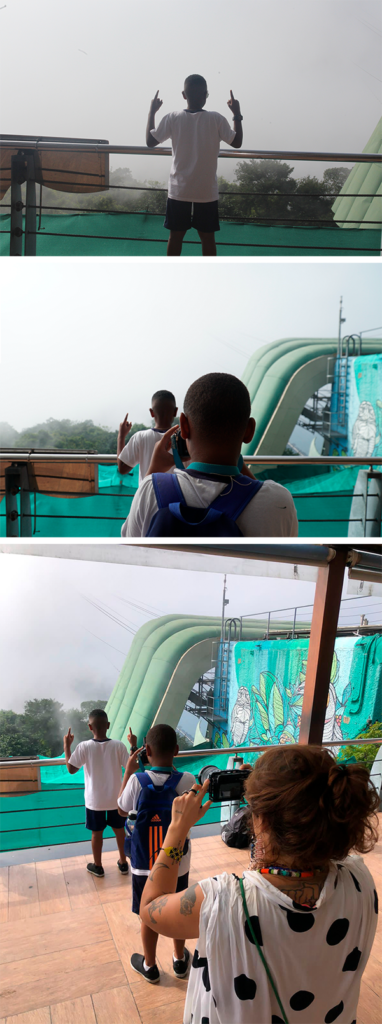 The practice of photography in the hands of the little ones
also took place on a trip to Sugarloaf Mountain
on 3 July 2024.