




QUAIS CÓDIGOS DECIFRAMOS?
Cristine Takuá
29 de setembro de 2024
 Photo: Cris Takuá
Nature gives meaning to life and, in nature, everything has its balance. It's like an immense web where everything is interconnected, a living organism. Nature's power lies in directing us, showing us the path of light to follow in search of wisdom. Every sign we receive has a meaning for our lives. The song of a bird can indicate something, the thunder that passes by is a sign that something is about to happen, the ants in the middle of the path, the shapes of the clouds, the direction of the wind, in short, many omens are transmitted to us by the signs of nature, who, with delicacy and wisdom, guides us and teaches us how to live well, which in Guarani is called: Teko Porã. It's a philosophical, political, social and spiritual concept that precisely expresses this great web, where we live in harmony and with respect.
 Photo: Carlos Papá
Carlos Papá says that, from an early age, the Guarani learn the codes for walking and living in the forest.
“Eu andava pelas florestas para poder decifrar os códigos, porque, a cada dia, quando se passa na mesma floresta, mesmo que seja um lugar por onde você já passou, ele já mudou. Neste lugar onde você passou não tinha formiga, aí, no outro dia, você passa por lá e têm formigas ou um besouro. Então, você tem que analisar… As paisagens mudam, né?
For example: you make a painting, you paint a tree, then you think like this: ‘I think there's a caterpillar missing on the leaf. I think I'll make a caterpillar on the leaf. But I'm only going to do it tomorrow, today it won't work because I'm tired or sleepy, so I'm going to paint the caterpillar tomorrow. Or a butterfly flying'. But you leave everything for the next day.
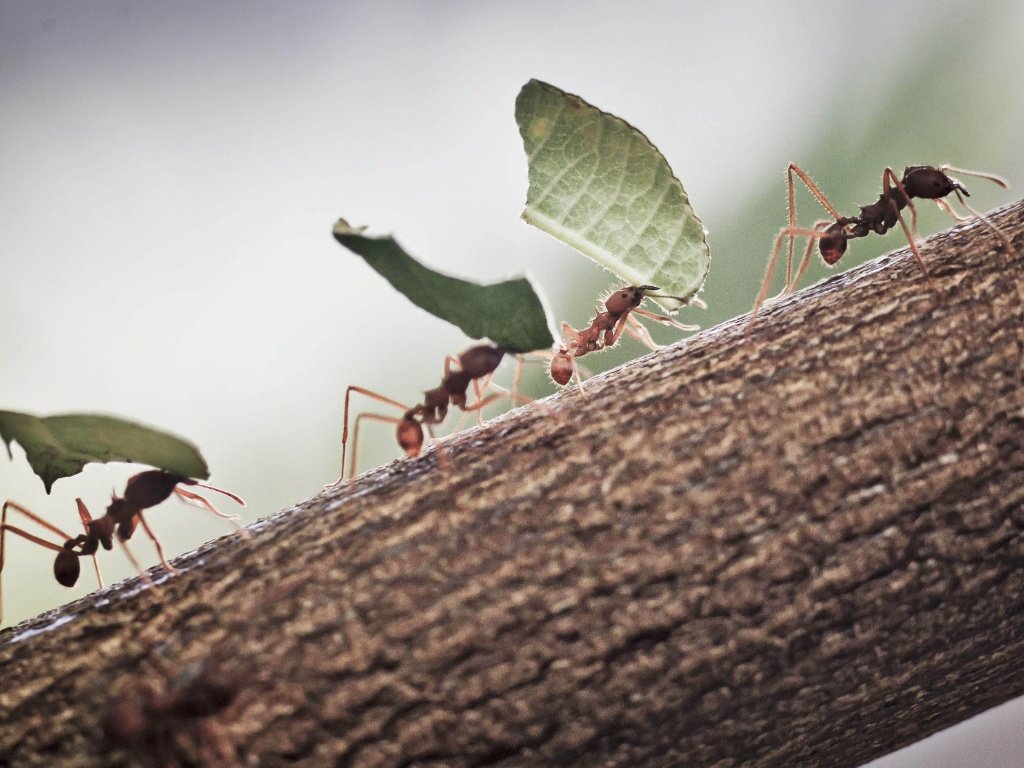 Photo: Carlos Papá
It's the same with nature. When you're in a place, you remain silent. Perhaps there are no birds or water flowing. Then you look at it, take a good look, memorise exactly how it was. Then you go home and the next day, or three or four days later, you go back to the same place again and analyse everything. It's different, because maybe it rained or now there's a bird, a toucan or a cricket. Or maybe there's a butterfly flying, or a butterfly missing. So the landscape has changed, it's not the same.
I used to make this reading: why has it changed? And the sunlight that hit it on the day I was looking at it. The light that hit it was bright. After three days, the light wasn't the same, because the sun was a little hidden, the clouds were low. So things change. And then you see the cricket over there on a date, or there. You look at the cricket and memorise that time in that way. Then, the next day, you go back there again: the cricket is no longer there and the weather is marvellous, there's good weather. But the cricket is no longer there.
Então, eu comecei a perceber os códigos das coisas que estão ali. Quer dizer, se você vê um tempo ruim, o grilo está ali de forma ao contrário, oposta, assim ou assim, na sua direção. Esses são os códigos que você tem para perceber que o tempo amanhã vai mudar, vai continuar igual, se vai fazer frio ou vai chover. Então, o grilo parece uma bússola que tem uma indicação… Então, você vai guardar isso na memória: quando o grilo está assim, é porque no dia seguinte vai dar tempo bom. Então, o grilo está se preparando pra ir pra cima, porque amanhã haverá um tempo bom e é o jeito dele comer uma folha nova. Então, ele está indo. Agora, se está assim, é porque no dia seguinte vai fazer muito frio e ele está indo para um lugar que nem é no chão e nem pra cima, está no lugar que tem menos corrente de ar frio. Então, ele está procurando lugar para se esconder, para ter menos corrente de ar, porque em cima é muita corrente de ar frio e embaixo também, porque embaixo o chão é muito frio. E aí, fica meio que no meio, para que não tenha uma corrente de ar frio.
So we have to be aware of all this, deciphering the codes to know how to walk and live well.’
 Photo: Cris Takuá
Little by little we grow up and learn the codes that reveal the paths we will follow. However, at school we are instructed to learn signs and codes that are disconnected from life. A bunch of theories about letters and numbers that end up distancing us from the real and natural meaning of this coexistence, which is ancestral to us within the memory that lives inside us.
Which codes are we able to decipher today? Who is able to understand the messages brought by the Tupã, gods of thunder? Who understands the signals of the Jataí, the sensitive stingless little bees native to the Nhe'ëry? Who dialogues with the ants when they are on a long line carrying leaves, often larger than themselves, towards a safe place? Who feels and observes the movement of the clouds? The blowing of the winds? The waves of the sea that come and go in their very unique balance?
I feel that it is necessary to reconnect with these signs of wildlife, which show us the exact meaning of our existence. Centuries and centuries of human reason have ignored the wisdom of the forest codes.
I invite everyone to become savage, to allow themselves to feel, listen and see these signs that pulsate around us every day.
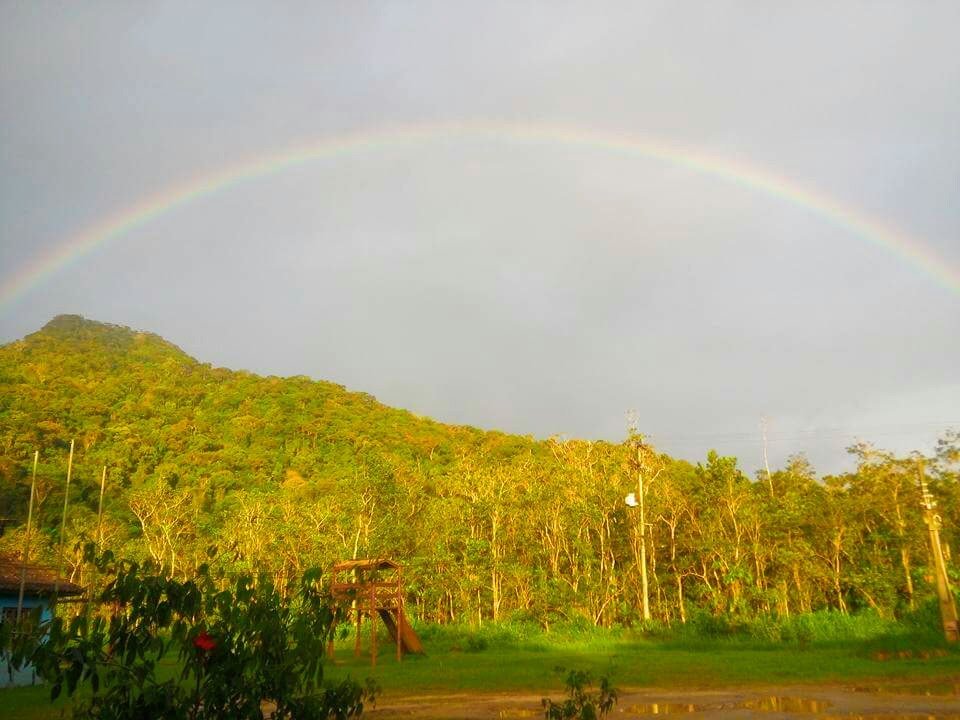 Photo: Carlos Papá