




AVAXI ETE, THE TRUE MAIZE
and the ways of knowing and healing
Cristine Takuá
19 March 2026
“Há’e kova’e jaxy Ara Pyau nhandereupitya re ma temitỹ reko rupiavi hendondeve ojejapo’i aguã, avakue, kunhague okopi aguã, jaxy nhepytũ jave onhoty aguã mba’emo’ĩ.
Kova’e jaxy re avi nhande’i va’e kuery, Opy’i re jogueroike’i riaeve’i ju rã okuapy. Nhanderu Tupã, Nhanderu Karai, Nhanderu Jakaira, Nhanderu Nhamandu, Nhanderuete há’e Nhanderxyete pe ngoete’i oguerojapyxaka’i aguã, mboraei’i rupi, jeroky rupi, petyngua rataxĩ reve ojapyxaka’i aguã, há’e kova’e jaxy re ma mba’emo ra’y-ra’y re nhande’i va’e kuery nopenavei ma, há’e rami vy ma kova’e Ara Pyau oguata rã 7 jaxy re, agosto gui ijypy vy oo rã jaxy fevereiro peve.” (Ara Pyau, CTI – 2023)
“At the beginning of Ara Pyau, men and women prepare the fields for planting when the moon is waning.
During this time, the practices in the opy intensify. The Guarani bring their imperfect bodies to dance, sing, smoke the pipe and be covered in smoke; this is how they pray to Nhanderu Tupã, Nhanderu Karai, Nhanderu Jakaira, Nhanderu Nhamandu, Nhanderuete and Nhandexyete. This month also marks the season when the offspring of various species are born. For this reason, the Guarani cease hunting. The Ara Pyau lasts for seven months, beginning in August and continuing until February.” (Ara Pyau, CTI – 2023)
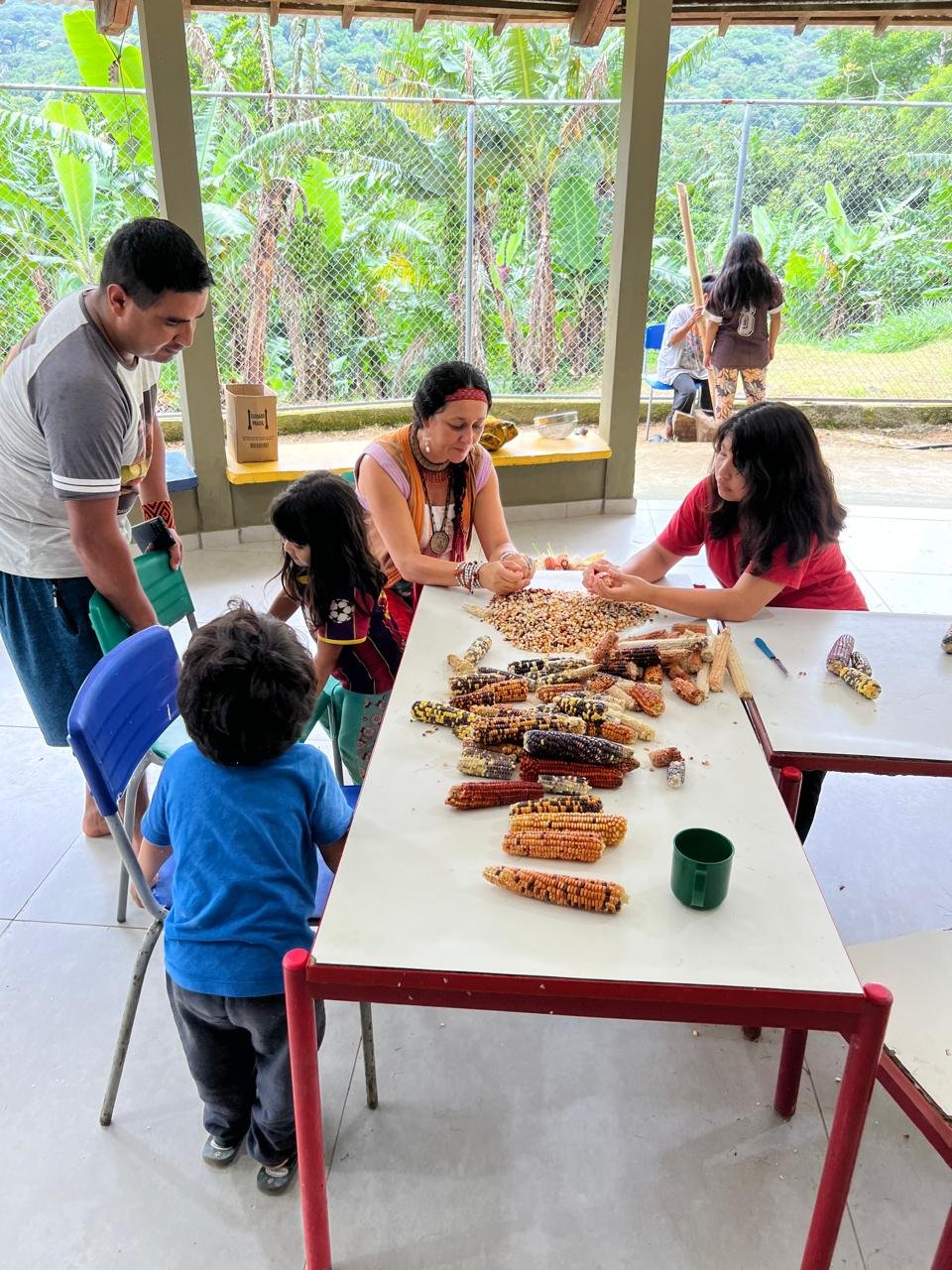
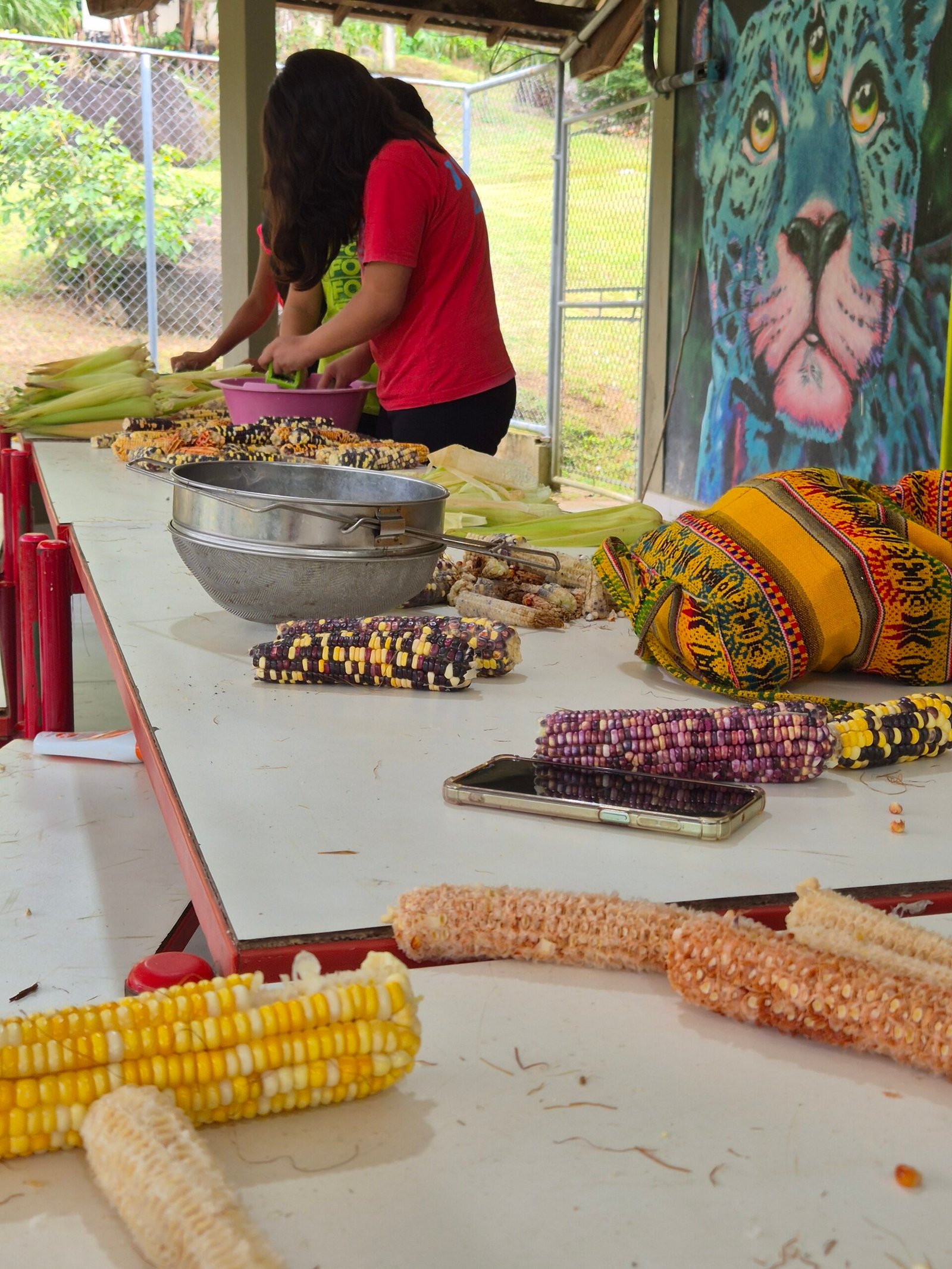
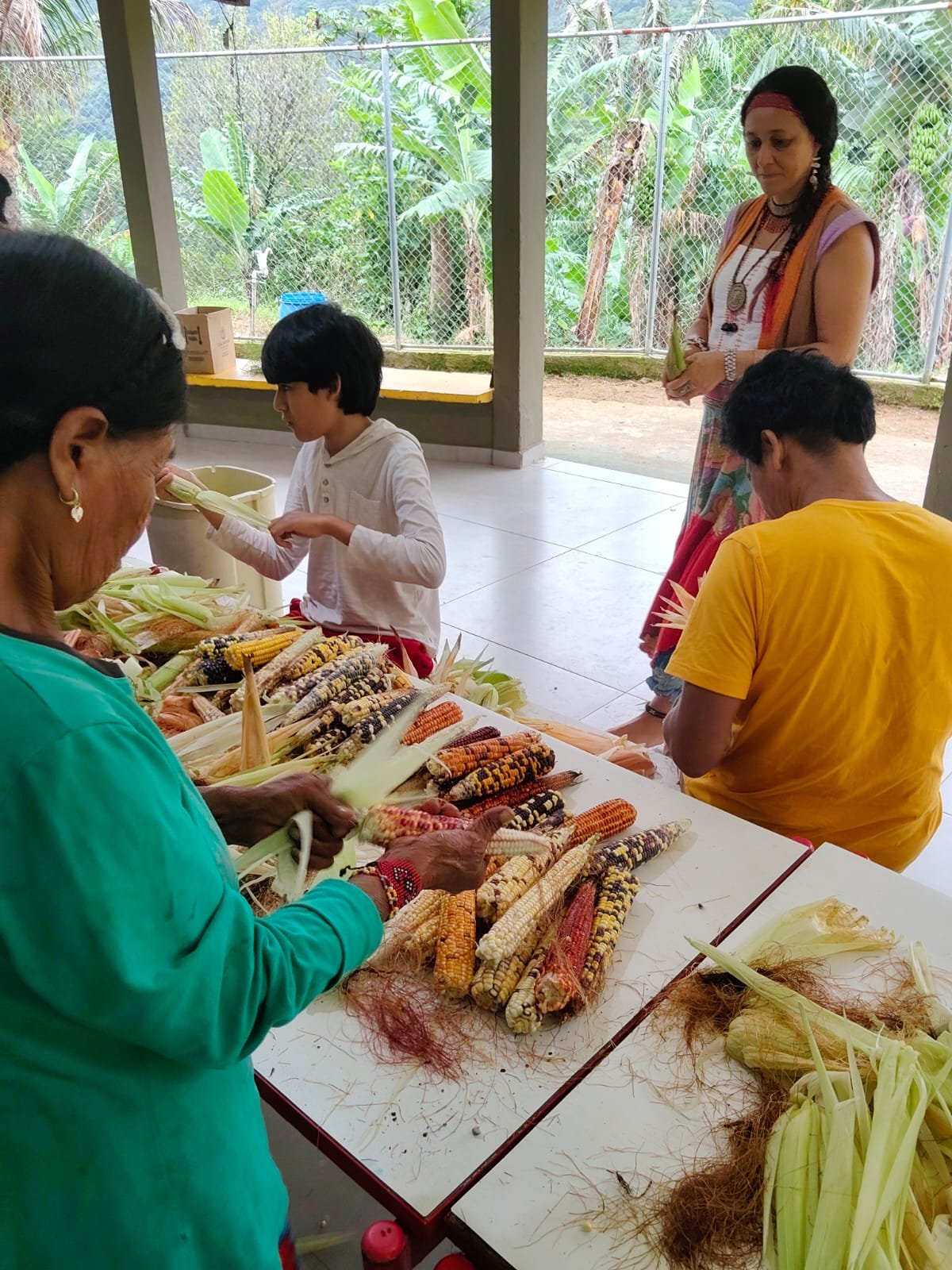
“Mbya kuery reko py ma, Nhanderu ombojera nhe’ẽ, há’e rire ma ayvu okanhy va’erã he’ỹ va’e, rire ma nhanderete ju, nhe’ẽ omoĩ agua. Avaxi ete’i ma Nhanderu kuery pe omombe’u, nhe’ẽ porãgue ou agua yvy vai re ikuai agua kyringue’i rete re.” (Nhemongarai há’egui avaxi, Kerexu Mirim and Maria Kerexu, 2025)
“In Guarani culture, Nhanderu created the soul; then, words that shall never be forgotten; and, finally, a body to place these elements within. The sacred avaxi is offered to a celestial society, so that the spirits may come to live on Earth, in the bodies of newborn children.” (Nhemongarai há’egui avaxi, Kerexu Mirim and Maria Kerexu, 2025)
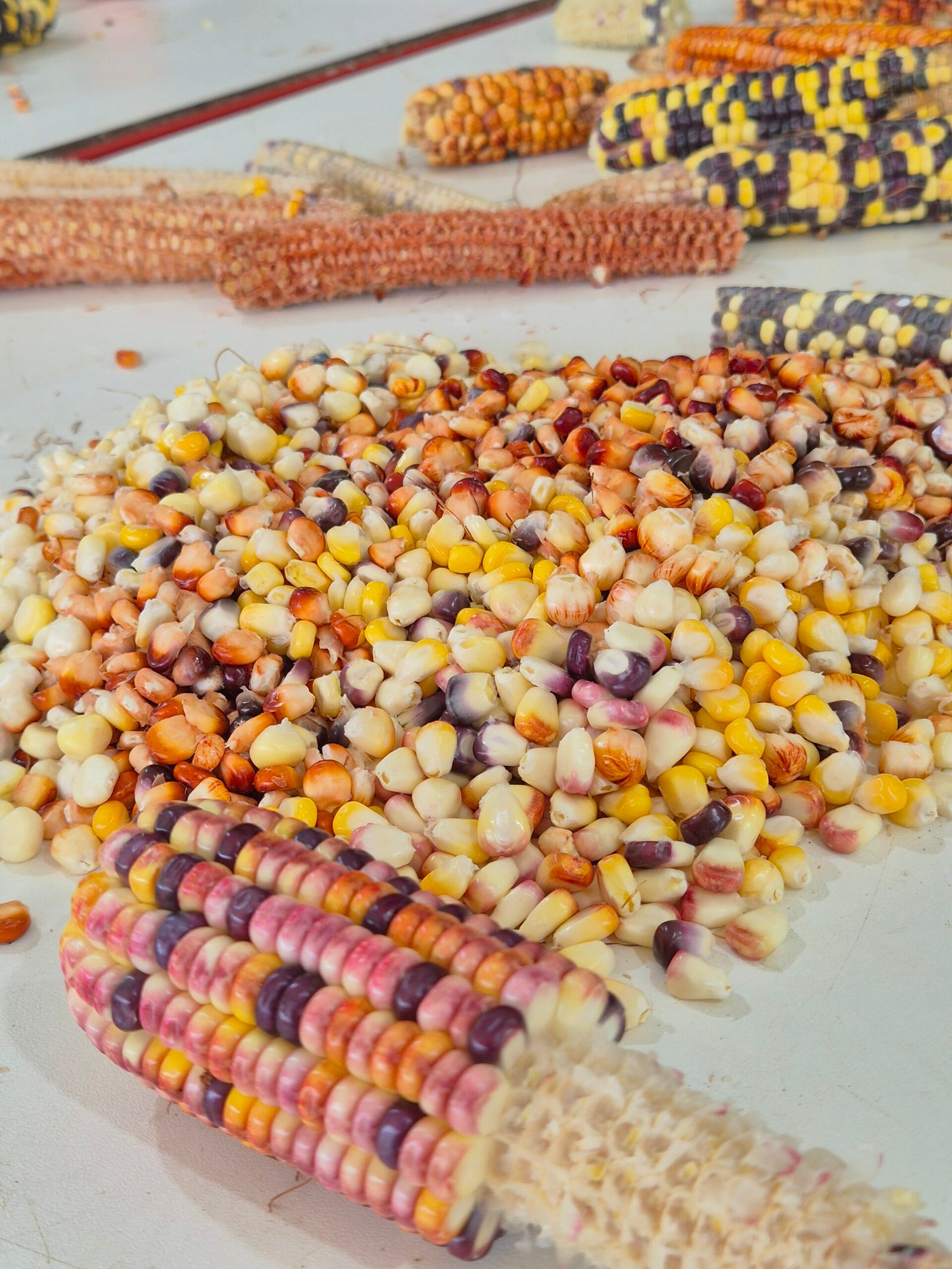
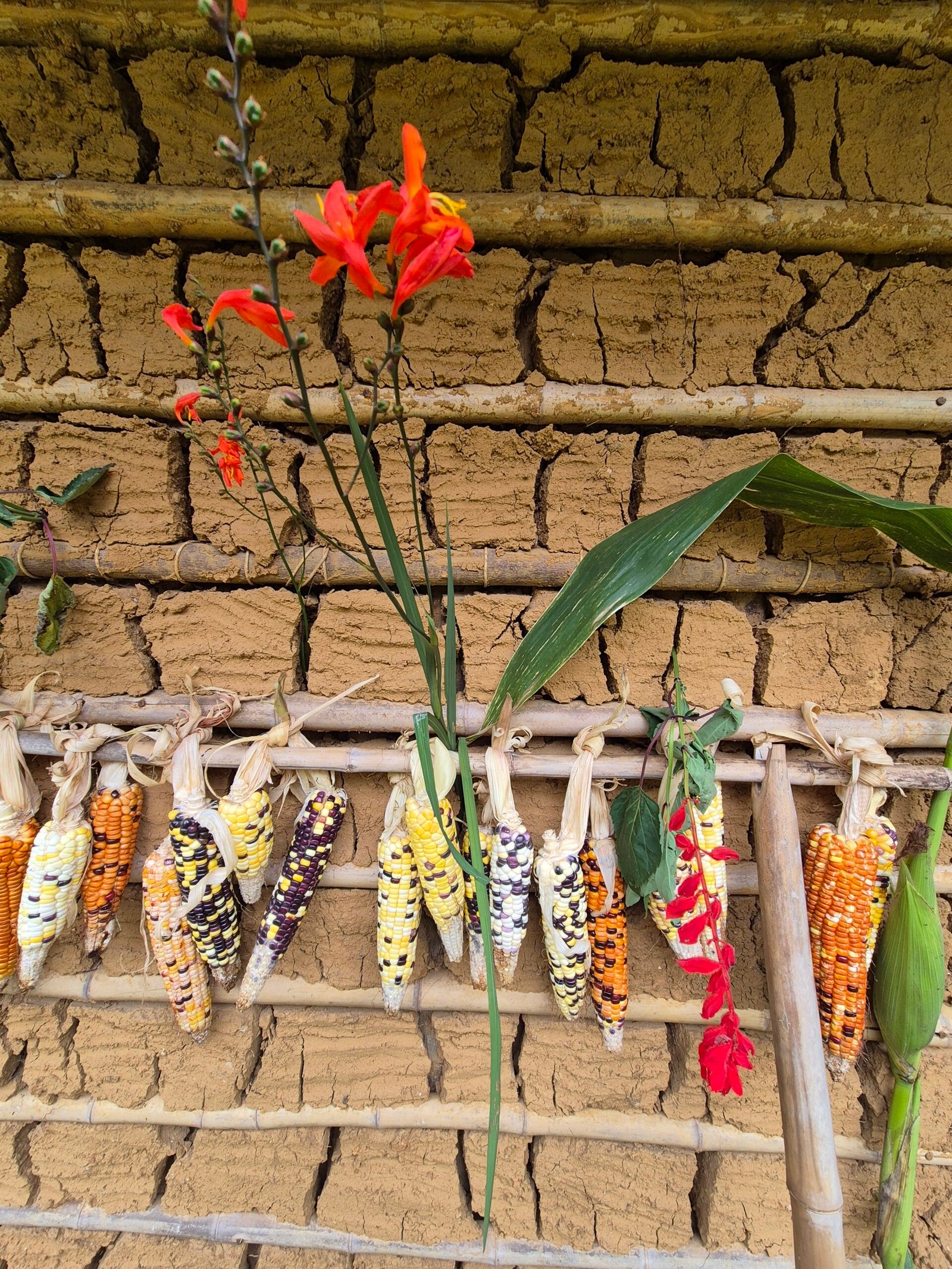
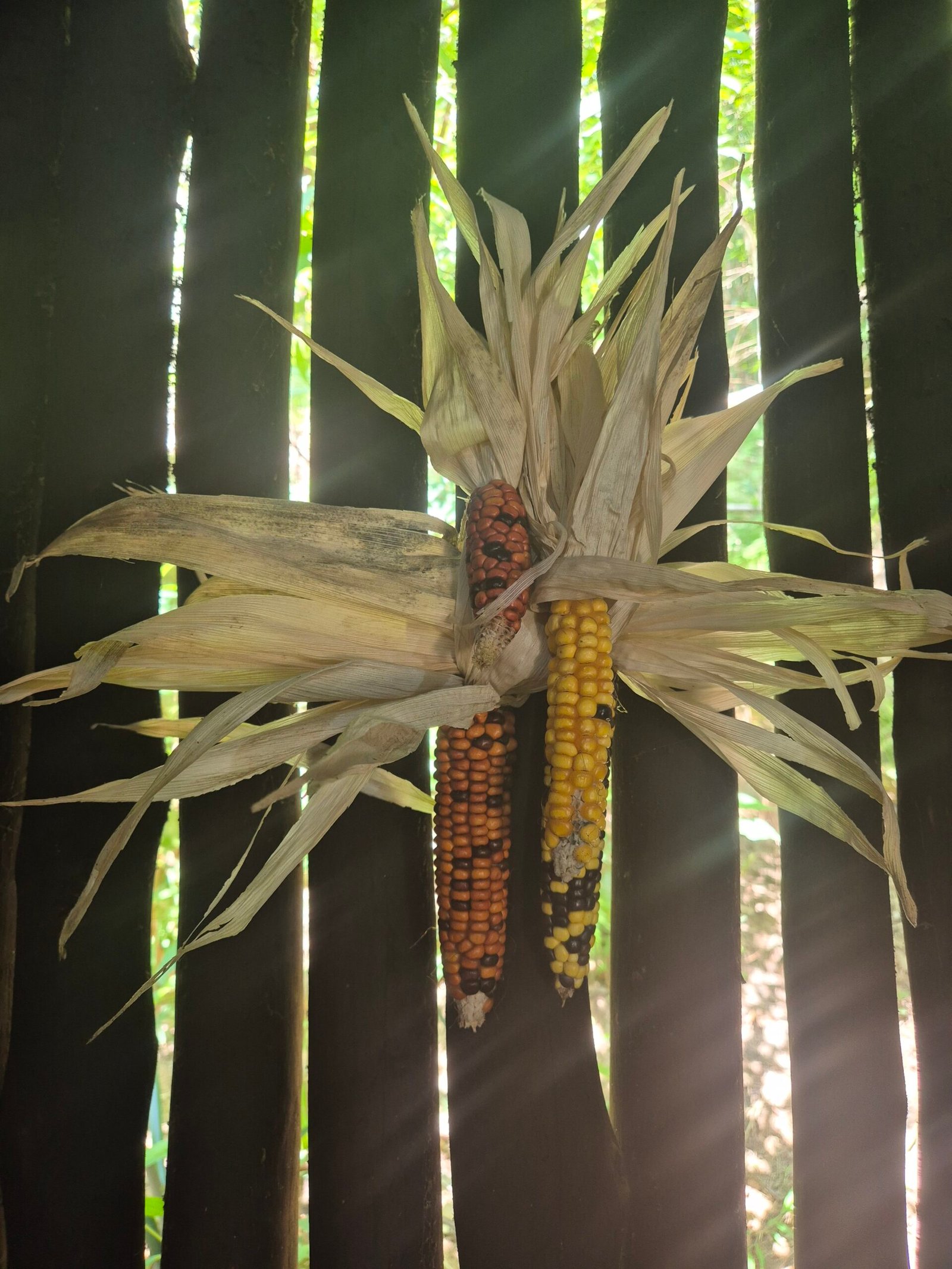
Earlier this year, me and my family were invited by xeramoi Tupã Dario to take part in the Avaxi Nhemongarai, at the Arandu tekoa in Itariri. xeramoi It was a very special occasion, as I was really looking forward to encountering this colourful and sacred being, the Guarani true maize.
For many, many generations, the Guarani have walked throughout yvyrupa and acted as guardians of the multicoloured seeds of this food for body and spirit. Before every field is planted, they are blessed with prayers and songs, and prepared with great care and respect.
When we arrived at the Arandu tekoa the prayer leader walked with us, showing us his entire crop, telling stories and instructing us on the importance of continuing this delicate process of passing on the knowledge and practices of the nhandereko, the Guarani way of being.
As we walked through the fields, girls and women were harvesting maize for the ceremony, whilst the men and boys wandered through the woods in search of honey, to be consecrated with mbojapé, a small bread baked in the ashes with embers, made from maize that had been grated and pounded.
We spent the day taking care of the maize, threshing it, pounding it, grating it and preparing the little buns to bake over the fire. The children helped a little and played a little. But everyone was always captivated by that beautiful display of colours and shapes.
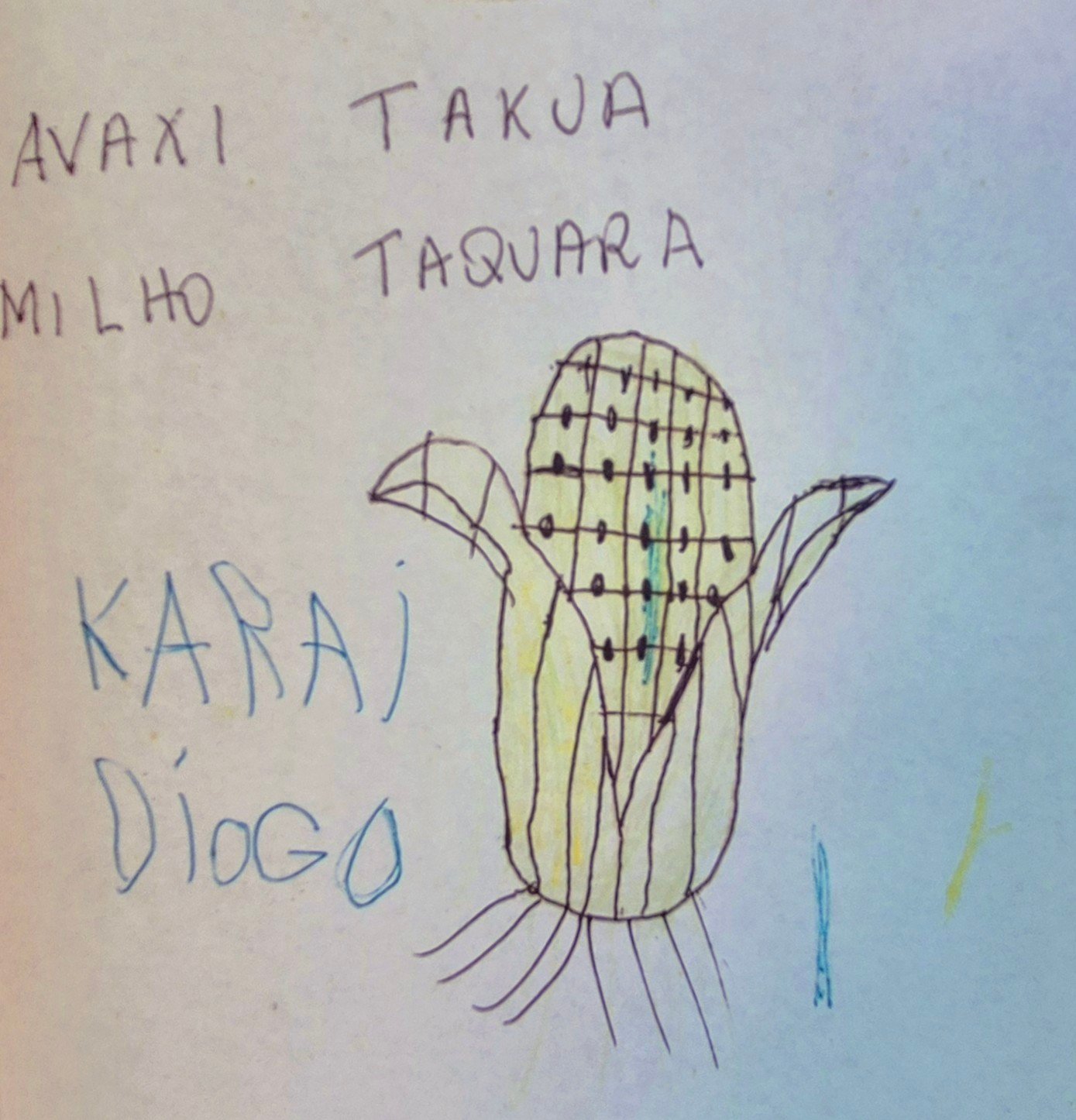
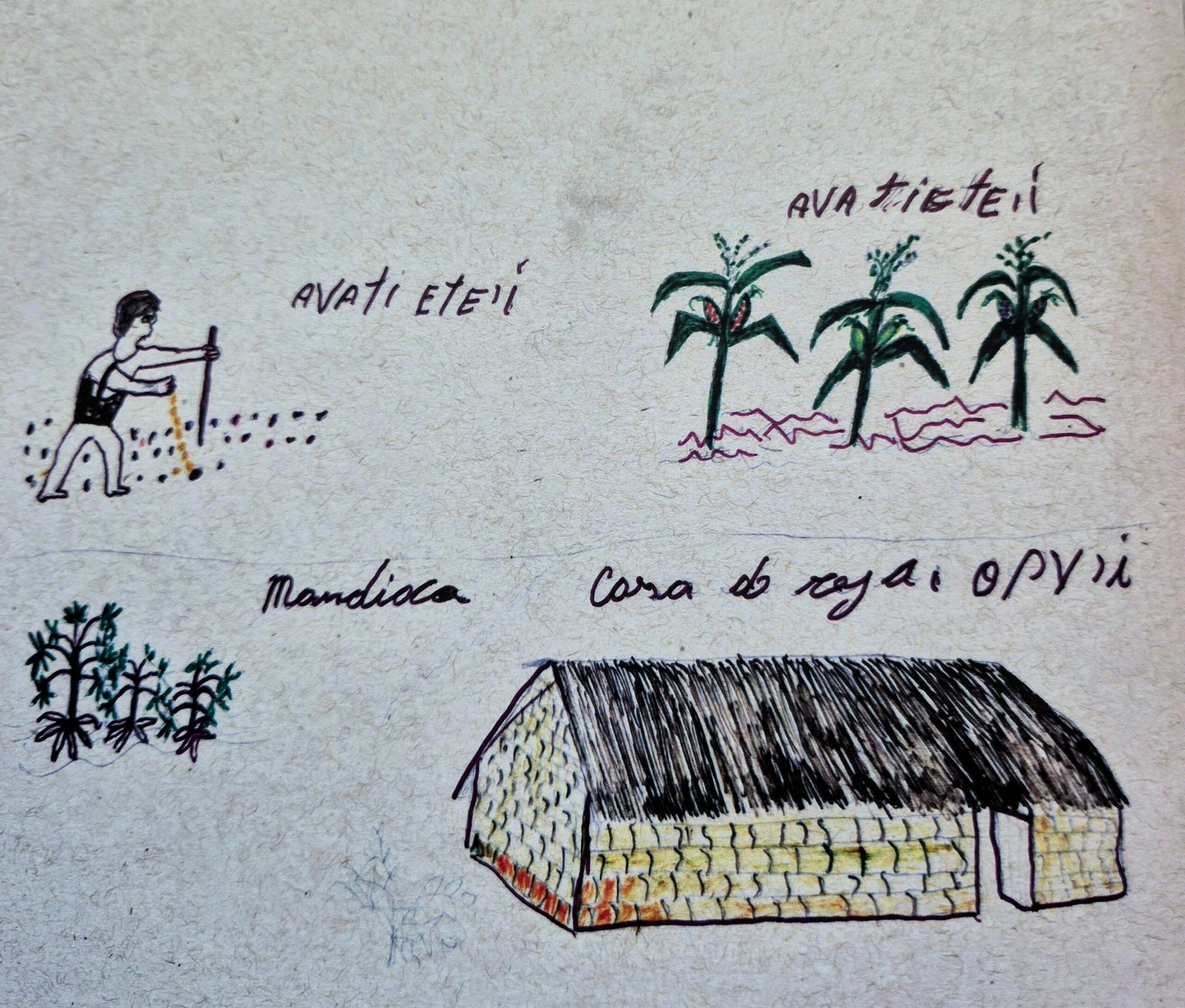
“Mbya kuery arandu py ma, temitỹ nhande kuery pe iporã ete, nhanderu kuery oikuaa va’ekue’i rupi ae ma oguerojeapo. Yvy iporã ramo, kunhague imembya rami ae. Kunha rei ma, kyringue ombojera, ijypy guive oma’etỹ’i raka’e, avaxi onhotÿ’i raka’e, omoatyrõ’i tuvixa peve. Onhotỹ, omono’õ, onhemongaru, há’e rire onhotŷ jevy, opa mba’e Yvy rupa re oiko’i va’e rami.” (Nhemongarai há’egui avaxi, Kerexu Mirim and Maria Kerexu, 2025)
“According to Mbyá wisdom, sowing connects the spiritual and material worlds, and the fertility of the soil is linked to human fertility. Women, as the ones who give life, were the first to cultivate foods such as avaxi and to be familiar with the necessary care required for their production. The cycle of planting, germination, harvesting, feeding and replanting corresponds to the cycles of renewal of all that exists on Earth.” (Nhemongarai há’egui avaxi, Kerexu Mirim and Maria Kerexu, 2025)
Throughout the day, while everything was being organized for the ceremony, xamoi Tupã sat with his petyngua, watching the young people and children and offering guidance. He also told many stories from times long past, inspiring us to reflect on many aspects of life.
The ceremony went on all night, with singing, healing and the sharing of experiences. According to the elders, consecrating avaxi and honey brings great strength to our bodies and spirits.
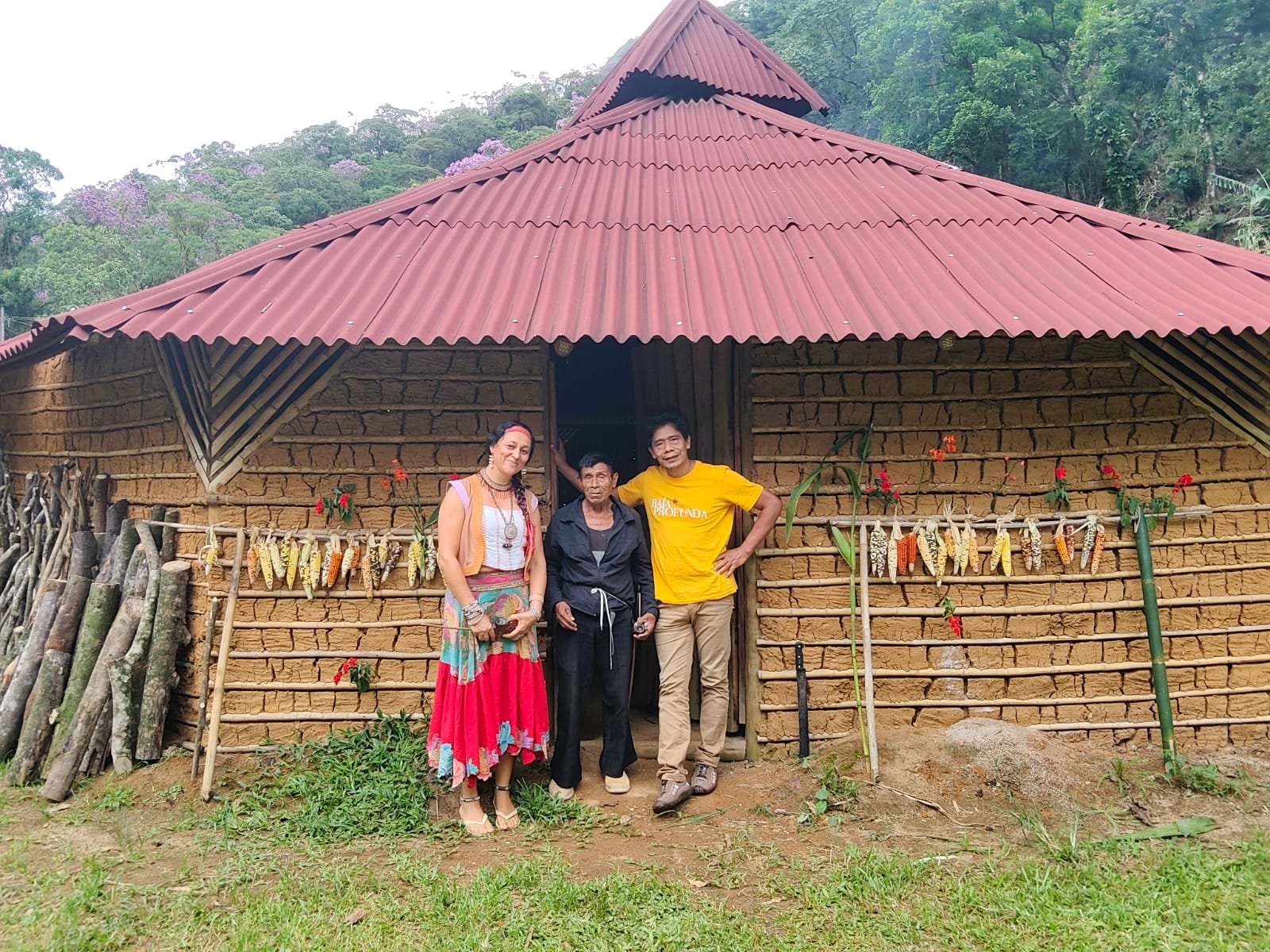
Cristine Takuá, xeramoi Tupã Dario and Carlos Papá
“Mbya kuery oikuaa ramo, avaxi inhe’ë va’e, há’e vy ae ma onhotỹ agua omongarai, omono’õ vy voi omongarai ju, xamoῖ omongarai va’ekue’i ju mbya kuery ho’u, ojapo vai he’ỹ agua – kyringue katuve ma.” (Kerexu Mirim and Maria Kerexu, 2025)
“The Mbyá people believe that avaxi has its own spirit. For this reason, each stage of the plant’s life cycle involves a ritual: at planting time, they sing to the seeds; at harvest time, they celebrate the abundance; afterwards, the maize is blessed by the xamoῖ and, this way, the maize will strengthen, purify, relieve symptoms and heal people’s spirits and bodies, especially those of children.” (Kerexu Mirim and Maria Kerexu, 2025)
With each new season, we renew our energy and our learning so that we may continue our journey on this earth, fulfilling the mission entrusted to us when we were sent here to live in harmony and cooperation with all other beings.
Times are different now, the land is different, the climate has changed, the rainy season and the arrival of Ara Pyau and Ara Ymã are not what they used to be.
We are awaiting the arrival of Tupã Kuery to bring Ara Pyau to a close so we can enter the season of retreat, Ara Ymã. Whenever the seasons change, we consecrate the ka’a, yerba mate, to protect and strengthen us.
This is how we continue to learn from maize, yerba mate and the bees.
Aguyjevete!