




TAKUAPU, ECO DO SOM DO SABER
Cristine Takuá
27 de junho de 2024
 Art: Cris Takuá
“Nhanderu ma ombojera raka’e takua’i, ramo haema kyringue kunhã’i oiko ramo ojapo huka’i tuu pe Takuapu’i há’e yn vy ma Ajaka’i, Nhanderu oikuaa huka’i raka’e kunhangue’i pe guãrã, nhandevy oeja nhande rete oapresenta haguã, há’evy há’epy nda’evei avakue pó rupi rive ju jaxevavai haguã, nhandere reko porã’ in haguã py nhanembou. Any ramo takua’i ipiru pa’i harami havi nhanderete nhaendu jaiko axy vy.”
“O Deus gerou a takuarinha, por isso, quando nasce a bebê menina, o pai faz um Takuapu’i (taquara sonora) ou Ajaka’i (cestinha). Nhanderu gerou takuarinha, para ser o símbolo das mulheres Guarani, por isso nós, mulheres, temos que ser bem cuidadas pelos homens. Não foi em vão que Nhanderu mandou nós pra Terra. Nosso corpo é sagrado, se não for bem cuidado, a takuarinha seca. É desse modo, que nos sentimos quando ficamos feridas por fora e na alma.”
Mariza de Oliveira, Itanhaém village, Biguaçu/SC
Na concentração da noite enluarada se manifestam os cantos das mulheres que, em suas rezas, se conectam com os espíritos guardiões de tudo o que habita a floresta. No compasso desse entoar de vozes e pensamentos, ecoa no chão de terra batida o Takuapu, instrumento musical feito de takuara, que faz conexões entre o Céu e a Terra e entre o visível e o invisível. Em minhas sensíveis meditações alcancei o entendimento sobre o Eco do Som do Saber. Esse significado tão profundo desse instrumento me remete à força e à coragem de seguir em busca do equilíbrio, da serenidade e saúde do corpo, da mente e do espírito.
The Takuá is very useful in Guarani life, as well as being a sacred being with a lot of wisdom. With it, women weave straw to make baskets and also to make the roofs of their houses. It is also used to make pari, to catch fish. All the uses and coexistence with the takuara are very important in Guarani life. The Takuapu, the musical staff that the women play during their prayers, tarova and also mborai, is made from the takuara trunk. The women also know how to use takuara jelly to soften their hair and skin. From takuaras also comes takuaraxó, a larva that sprouts in the centre of the trunk and serves as food. And from the Takuaruçu, a specific takuara full of thorns, comes a takuaraxó that serves as a medicine to guide and give visions to both the Guarani and Maxakali people. The larvae form the takuara are only born every 30 years and serve as a way of telling a person's age. If you're 30, you're one takuara, if you're 60, you're two takuara. Some people live for three or even four takuaras.
 Photo: Carlos Papá
The takuara's life cycle is related to the knowledge of Guarani life. The takuara dies at the age of 30, by drying out, and then the takuara flowers and produces larvae. The takuara has a juice when ripened, and the larvae eat this juice. Then the takuara dries up and the seeds fall out and fly around. Mice and birds eat the seeds, but some sprout. And the sprout spreads, creating clumps.
We're noticing that the number of takuara in the forest is decreasing a lot, possibly due to the warming of the Earth's climate, but also because the young are no longer knowing how to respect its life cycle or are no longer caring about it in this way. The takuara isn't managing to mature and spread as usual. Everything in life has a cycle and a time to transform and be reborn. Respecting each thing's time is knowing how to walk slowly over the territory.
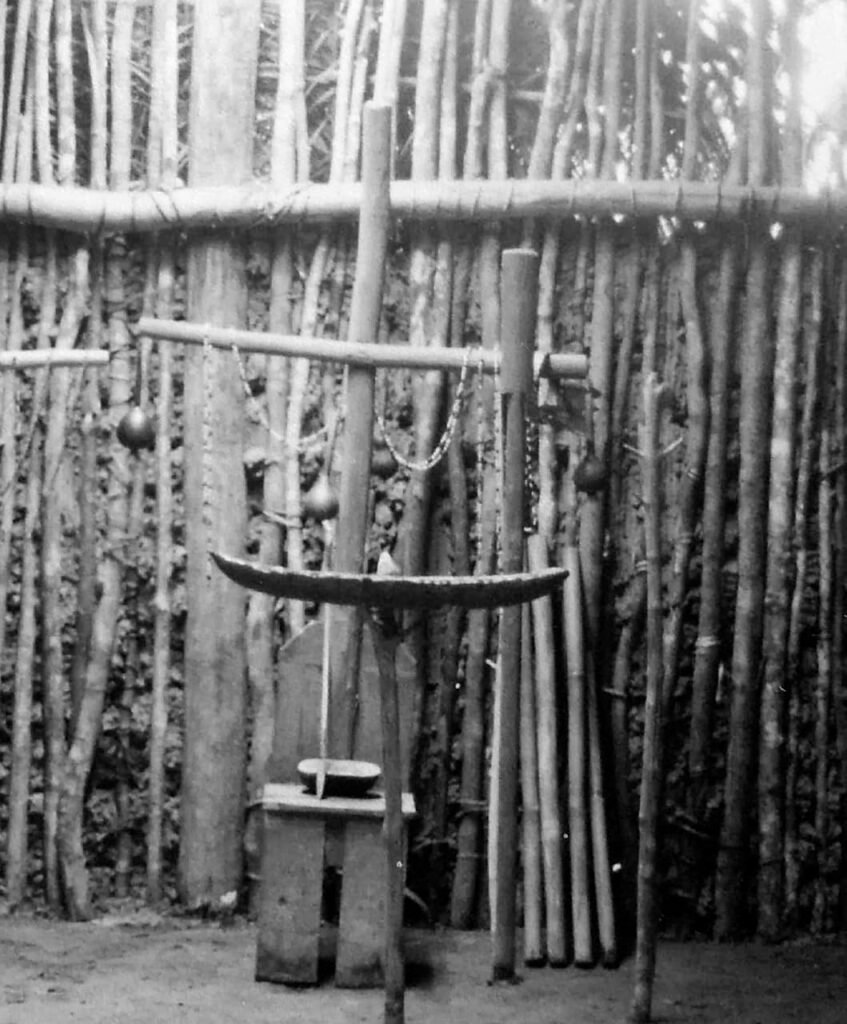 Photo: Carlos Papá
Carlos Papá tells us: "Ever since takuaras appeared in the world, people have done things that shouldn't be done to them. The takuara, which we call Takuá, is one of the daughters of Nhanderu Papá, our celestial father. They say that Anhã, Nhanderu's brother, wanted a companion and took an interest in one of Nhanderu's daughters, the beautiful Takuá. Anhã asked his brother if his niece could accompany him around the world. Nhanderu approved, but said she could never go into the water. She could even get wet, but never dive in. Anhã was very happy, and Takuá accompanied him everywhere. One day they went to a waterfall. Anhã dived into the water while she watched. Then he invited her in, but she didn't want to because of her father's recommendation. However, Anhã didn't think there would be a problem and pulled her by the arm. He said that his brother picked on everything that was pleasant, which was why he had forbidden it. Takuá then asked Anhã not to let her go. She was really enjoying it! But he ended up letting go of her arm so that she could try diving into the river. Not seeing the girl anymore, Anhã tried to pull her by the arm again and pulled a basket out of the water. He started shouting for her, but there was only the basket, which began to fall apart. Then Anhã went to his brother with the broken basket in his hands. He said that Takuá had disappeared and all that was left was the straw. Nhanderu asked for the straw and rewove the basket. He made a very pretty little basket again and put it aside. He told Anhã that now Takuá would no longer go with him, because she would no longer be his companion. Anhã said he didn't want that woman any more because she was made of straw and very complicated. Then Nhanderu told Takuá that she would teach women how to be beautiful and do beautiful things. To this day, Takuá lives in a place called Nhanderu amba, the celestial abode. Women who have the Nhe'e, the spirit of this place are called Takuá. They are very careful and true, Takuakypy'y, the younger sisters of Takuá."
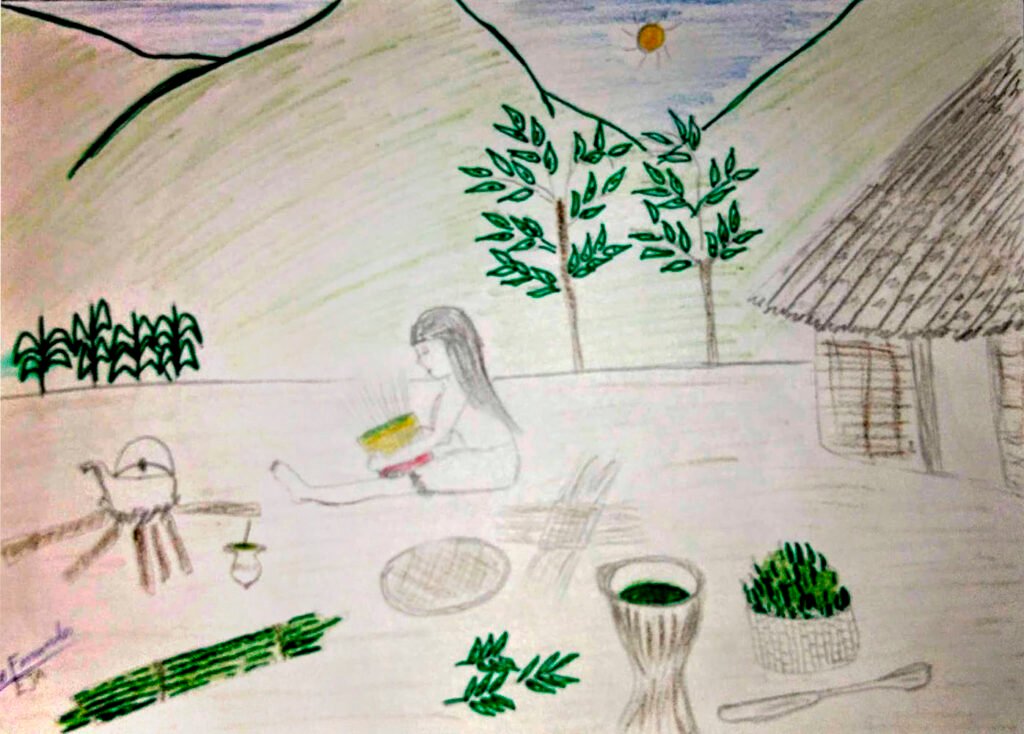 Art: Wera Mirim