




SOWING WORDS
Veronica Pinheiro
09 de setembro de 2024
Seed paper workshop, poetry and seed planting
Talk about dreams and mouths that devour the world
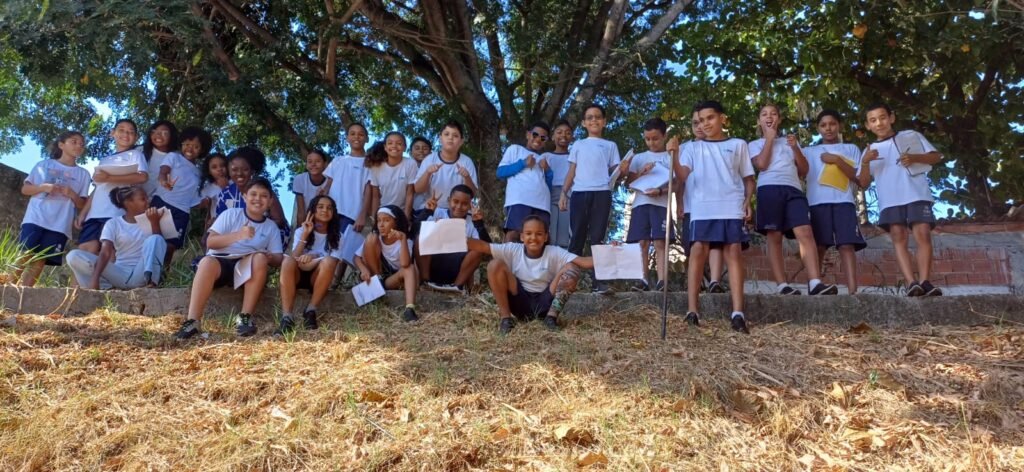 Photo: Wagner Lúcio
"Miss V., is arugula a plant or a tree?"
"Arugula is an edible plant. Do you want to plant arugula seeds?"
"Yes, I do. Arugula is a beautiful name. It has a woman's name. Like Ursula. But it starts with an ‘A’ for ‘ Amanda’ and for ‘Adele’."
"Indeed! Arugula is a beautiful name. Do you want to plant the arugula seed because you want to plant the word ‘Arugula’?"
"No. I want to plant the word 'Saudade' [Longing] with an 's' for 'Sofia'. But I don't want a tree. I want the word ‘saudade’ to be just a little plant."
Alice and I have this feeling of saudade, of longing. She cries every day at the end of class because she's afraid of being forgotten at school. She arrives smiling. She eats lunch. She plays. Studies. Chats. But when the carers start arriving at 5pm and the children are called by their names to leave the school, Alice cries. Every day, the girl justifies herself as if she's bothering us. Alice's crying doesn't bother anyone. The other children at school, teachers, staff and headmistresses embrace Alice and her tears. She cries with saudade. Alice's mum enchanted herself last year. The girl is afraid of being lonely.
Alice and I have a secret: she can pick any of my toys and take them home whenever she wants to distract herself and laugh out loud with her eyes closed. Alice has small eyes and when she laughs it's almost impossible to see her eyes. Alice's eyes speak more than her mouth. However, on seed planting day she decided to talk. And talk a lot.
A oficina Semear Palavras teve 4 encontros. Passamos um mês juntando numa caixa na sala de leitura todas as folhas de papel descartadas na escola. No primeiro encontro, compartilhamos com as crianças as histórias das árvores que são mastigadas por bocas comedoras de árvores para virar papel. No Brasil, as árvores mais utilizadas para produção de papel são o eucalipto e o pinus. Essas árvores são de crescimento rápido. Por que precisam de árvores que crescem rápido? As crianças respondem:
"Because we use too much paper and the factory is in a hurry." Arthur, 8 years old.
All trees have a substance called cellulose in their cells – paper is produced from cellulose pulp. Monoculture plantations of these two trees have been taking over the Brazilian countryside. Pinus and eucalyptus are considered exotic trees because they are not native to Brazil, that is, they are not part of the biome in which they are planted. Those who represent companies call monoculture a ‘planted forest’. This is the information that generally and officially reaches schools. On the other hand, environmentalists and organisations fighting for land prefer to call the plantations a ‘green desert’ and reaffirm that monocultures cannot be considered ‘forests’ due to the small biodiversity within them. In addition, traditional communities and small farmers, based on their direct relationship with the land, defend the perspective that plantations of these species on an industrial scale can generate drastic hydrological impacts. Monocultures of eucalyptus and pinus contribute to reducing the flow of rivers and streams.
This conversation began with a piece of paper taken out of the rubbish bin. The paper went back to the notebook, the shop, the factory, the planted tree. We ended the first meeting wondering if we needed that much paper.
The school we know is a Western invention that defends specific interests. The school model practised is inconsistent with the discourse of preservation and care for nature that we superficially try to apply. Would a paperless school be possible? If the schools made their own paper, would they waste so many sheets? As a child, I used to leave the glass of milk almost half full. My mum used to say that I only did that because I didn't realise how much work it was to put milk in the glass.
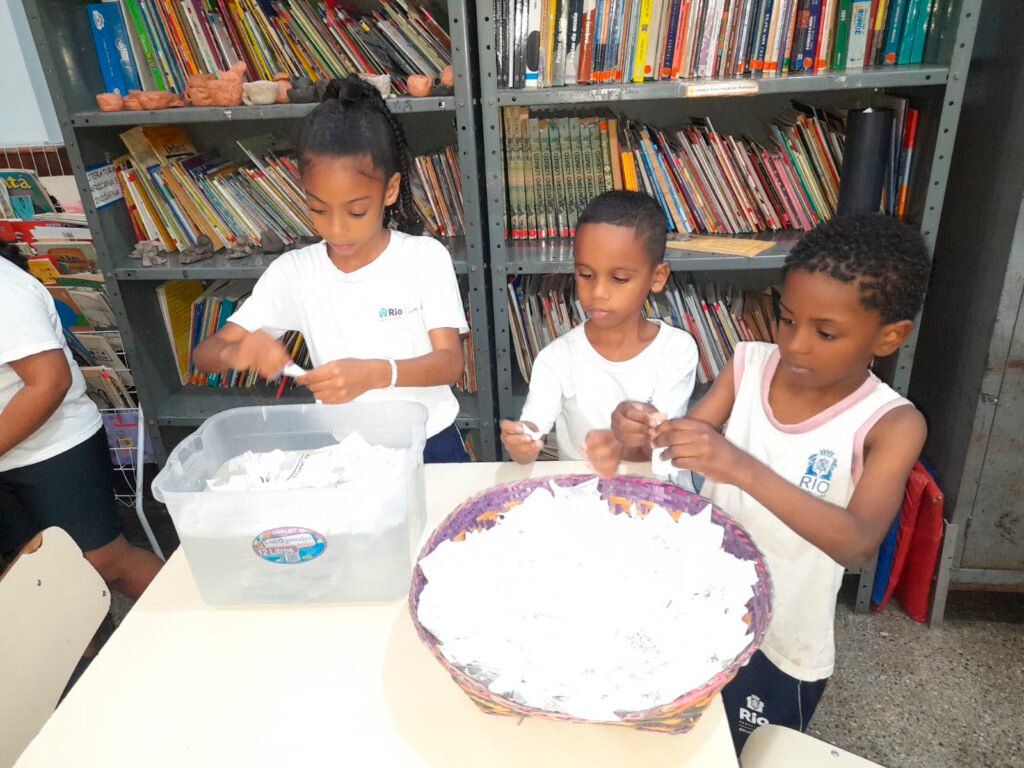 Photo: Sabrina Amarante
No segundo encontro, começamos a preparar o papel descartado para ser liquidificado. O papel foi picado pelas crianças e colocado de molho em água por 24 horas. “Ué, tia, a gente não vai plantar hoje?” Passei o dia respondendo a essa pergunta. De maneira geral, falamos como uma coisa é feita e partimos para uma atividade conclusiva. Pular etapas dá às crianças a impressão de que nós, humanos, não precisamos esperar. Para liquidificar o papel precisamos esperar o próximo encontro. Entre um encontro e outro e outro, Alice se mostrava mais interessada na ideia de plantar papel-semente.
Seguimos as etapas de preparação do papel. Liquidificar, enformar, adicionar sementes, secar. A escola de ensino regular se tornou o lugar em que se aprende com olhos e ouvidos. O restante do corpo quase sempre está fora do processo. O corpo produz pensamento e memórias complexas. Deixar o corpo construir respostas aos desafios sem dizer o tempo inteiro o que uma criança precisa fazer é permitir que ela confie em si própria. Algumas folhas ficaram muito grossas e não secaram bem. Um grupo de crianças não dividiram bem a quantidade de semente, o que resultou em papéis-semente sem sementes. Ao fazer esse papel, você pode escolher a semente das plantas que quiser; nós tínhamos sementes de goiaba, rúcula, agrião, margaridas, cenoura, tomate e salsa.
After it's done, you can use the seed paper for invitations, stationery, gifts, biodegradable confetti, business cards... At school, with the children, we wrote poetry, dreams and beautiful words with earth inks on the paper. The soil from the school yard and the Costa Barros ravines is the same as the paint used in our drawings. We distributed the seed paper among the children. Most of them wrote ‘PEACE for pedreira’. I read the words forest, love and money over and over again. I understand why the word money appears so often. Having something to eat and living with dignity is still the dream of many children. Among many painted words and written drawings, Alice worries about the size of the plant she's going to sow.
The words, texts and drawings were planted in pots and in backyards, at school and at their homes. Those who have a yard at home took seeds that turn into trees. Those who like flowers took daisy seeds. Carrot and tomato seeds were also chosen very often. Alice was the only one who chose a seed by the name. She thought ‘arugula' was a nice name. The paper that had once been a tree now held seeds that would return to the earth through the children's hands. Recycling, drawing and painting were just the path. What I really wanted was to talk about sowing, sowing dreams with words and gestures. I really wanted to say that we need to look after our imagination ( of what we dream and desire) the way we look after a seed. Look after the seeds until they germinate, grow and become trees. Then look after the trees so that nobody overthrows them. Sowing words is serious business. Where I come from, a word is the blossoming of the voice of ancient speech. Since it is the strength of ancient speech, it is the dynamic foundation of life.
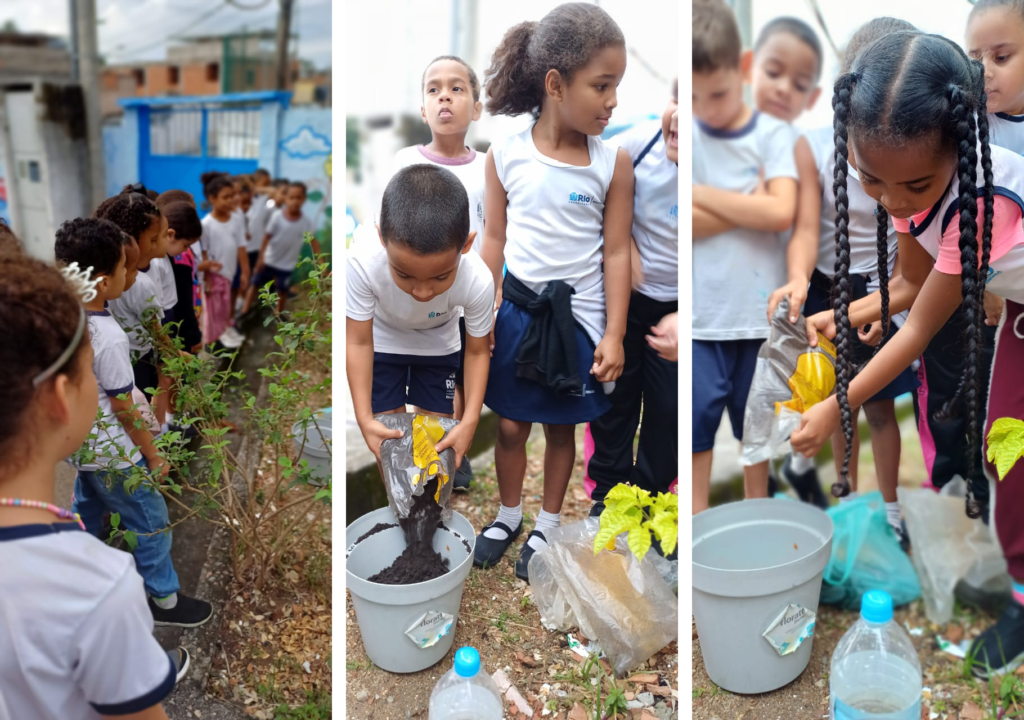 Photo: Teacher Míriam Ribeiro
The Selvagem Ways of Knowing pathway is a route of involvement. It's impossible to get involved with a place without getting involved with the stories of that place and the people who live there. Involvement is not about telling the other person what to do, but about making yourself available to rework on possibilities and paths, together. When we make ourselves available to listen, the other person will talk about the things that are taking up a lot of space in their chest. And it's precisely those things, which take up a lot of space, that give meaning to life, because life is made up of what abounds.
May we be, then, abundant and sowers of good and beautiful words.