




THE BEAUTY OF CHILDREN’S ANSWERS
Veronica Pinheiro
16 de setembro de 2024
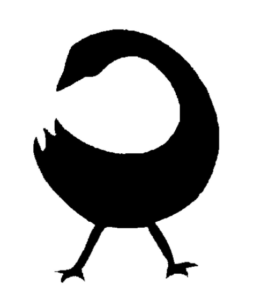
Ọkàn ríran ju ojú lọ
The heart can see much deeper than the eyes
Education happens in everyday relationships, beyond the walls of the school. In the classroom, gestures, attitudes, tone of voice and gaze are just as important, if not more so, than curriculum content. The information contained in gestures educates, welcomes and gives hope. The curriculum educates for a hypothetical, future life, it prepares for tests that perhaps one day a student will take. Gestures educate for the present, dilating the complexity of the record that seeks to understand everything that happens in the environment and in the body itself, through relationships. Lydia Hortélio says, and I agree:
‘No-one was born to take entrance exams. We were born to be people, to express ourselves fully, freely, with all the talents that human beings have.’
In times of emergency, I think about how to align gestures and content. In times of emergency, how can we make regular schools a place where children and teachers can be people, expressing themselves fully and freely? My dear master Nego Bispo used to say that, in this war of denominations, we need to learn the game of countering colonial words as a way of weakening them. Weaken what they have said about us and look for the understanding and the depth of who we are in our ancestry. The school as a place where denominations are taught separates those who teach from those who learn, as if a 'discente' (student) could only be a pupil and a 'docente' (teacher) could only be a tutor.
O termo “discente” tem sua origem no latim, deriva do termo “discens”, que é o particípio presente do verbo “discere”, que significa “aprender”. E “docente” tem origem no latim “docens”, que é o particípio presente do verbo “docere”, que significa “ensinar”. Na dinâmica da vida cotidiana, somos compartilhantes. Ensino e aprendizagem é relação de vida. Compartilhar é muito mais do que representar papéis sociais: não há imobilidade nas relações de compartilhamento. Ensinamos e aprendemos mutuamente, continuamente. À medida que os meses passam, a relação com as crianças na favela da Pedreira me mostra que a beleza da resposta das crianças está reestruturando a forma como eu me relaciono com elas e com a vida. As crianças me acolhem em seus braços curtos com cartinhas, desenhos e palavras faladas. Elas me ensinam a respirar em meio à fumaça capitalista que sufoca a vida.
‘Miss V., your earrings are cool’.
‘Some people think my earrings are weird.’
‘Grown-ups, right? We think they're beautiful. They have messages, right?’
'All her earrings have a message. The nature ones, the village ones, the shell ones.’
‘Are you seriously looking at my earrings? And how do you know they have a message?’
‘Because we felt it.’
‘I didn't feel anything,’ said Alessandro. ‘It's just a leaf.’
‘Yes. It's aya.’

Because of my earrings, this week we talked about Adinkras. Adinkras, graphic symbols originating from the Akan culture in Ghana, are an example of how forms of communication and recording don't have to be subject to conventional written language. These symbols hold philosophies, memories and stories, functioning as a type of visual writing full of knowledge and cultural identity. Our imagination, built by colonialist education, has conditioned us to think that orality was the only pillar of record for the transmission of knowledge in Africa, but it wasn't. There are many different types of African and Amerindian writing.
Os Adinkras são escritas para serem lidas com o coração e não com os olhos. O sufixo “kra” é traduzido como alma. Esses símbolos estão relacionados à comunicação com antepassados. Adinkra é como um adeus à alma. O termo “dinkra” significa “se despedir” ou “dar adeus”. Nele, quem fica diz a quem foi que pode ir em paz, porque aprendeu os ensinamentos com o coração e sabe o que fazer para continuar seguindo. “Aya” é um símbolo Adinkra que representa uma folha de samambaia. A palavra também significa “Eu não tenho medo de você”. Simboliza resistência, força física. Ele é associado à ideia de superar dificuldades e se adaptar às adversidades.
‘Miss V., to whom are you saying you're not afraid?'
‘I didn't get it.'
‘Aya means I'm not afraid of you. Who's “you”? Who are you not afraid of? And do you have to wear the earring to say you're not afraid?’
I didn't dare answer at first. After a pause, Ester continued:
‘Miss V., everyone is afraid, but when you grow up, it'll pass!’