




THE PATHS AND WAYS OF KNOWING
Cristine Takuá
14 May 2026
“From where do the chants sprout?
Chants don't arise from the mouths,
Nor are they invented by thoughts,
Or learned as if we're learning words.
Chants sprout from places we cannot domain.
They sprout from tobacco and nixi paë, taking pleas
And bringing back ancient memories
That were held safe way before us,
Becoming a passage for what lives unseen.
They sprout from enchanted beings,
From the guardians of woods, waters, rocks,
From elders who live in the sacred forest.
Chants arise when they want to.
It's not the singer who calls the chant,
The chant is the one who chooses by whom to be held.
That's why the chant has strength.
Because it's not ours – it comes from our territory, from the breath of spirits, from the silence of night,
From the heart that learns to listen.
And when the chant comes,
We only lend our voices…”
(Leo Wera, Guarani Living School)
Amidst seas, forests and mountains, the Living Schools continue to sow seeds and invite everyone to rethink the processes, paths and ways of learning, as well as the means of transmitting knowledge. Wisdom and knowledge are highly complex realms when we think of ancient technologies, of the codes of knowledge rooted in ancestral cultures, and of the profound language of the beings that inhabit the forest. Wherever I walk by, I usually say that every indigenous territory is a living school, but many have been leaving aside the natural and living practice of knowledge transmission. However, some teachers continue to enchant their territories, such as Liça Pataxoop, a knowledgeable master from the Minas Gerais State.
“I’ll start by explaining what a tehêy is. It’s a fishing tool, a Pataxoop trap, woven from tucum rope and vines, and used for ‘teheying’—fishing in the river. We have various types of fishing traps, and the tehêy is mostly used by women and children for fishing in the rivers. It’s a tool for selecting fish, which we use to eat. When you ‘tehey’, the water recedes and the fish are left for us. Then small fish and big fish come. In the tehêy, which is a sort of net, they get trapped, and from there we catch the big fish. We release the ones we can, so they can keep growing. The tehêy I use at school is a tool for fishing knowledge. It fishes the culture of our people; I put in it things from our religion, our way of life, our life stories, our work, the plants, the animals, our ancestry. The tehêy holds loads of knowledge; it’s a form of ‘writing’ that nourishes the children; it’s different from the other writing. It came from my dreams, after I arrived in Muã Mimatxi.”
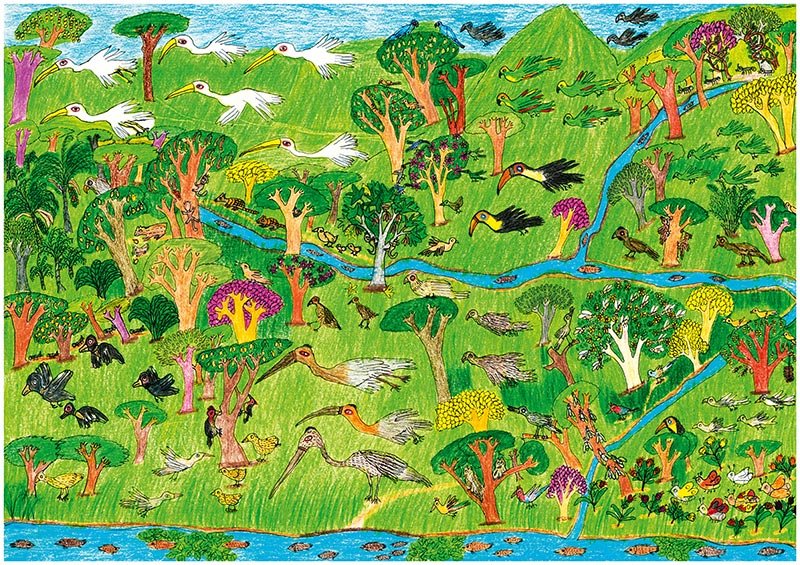
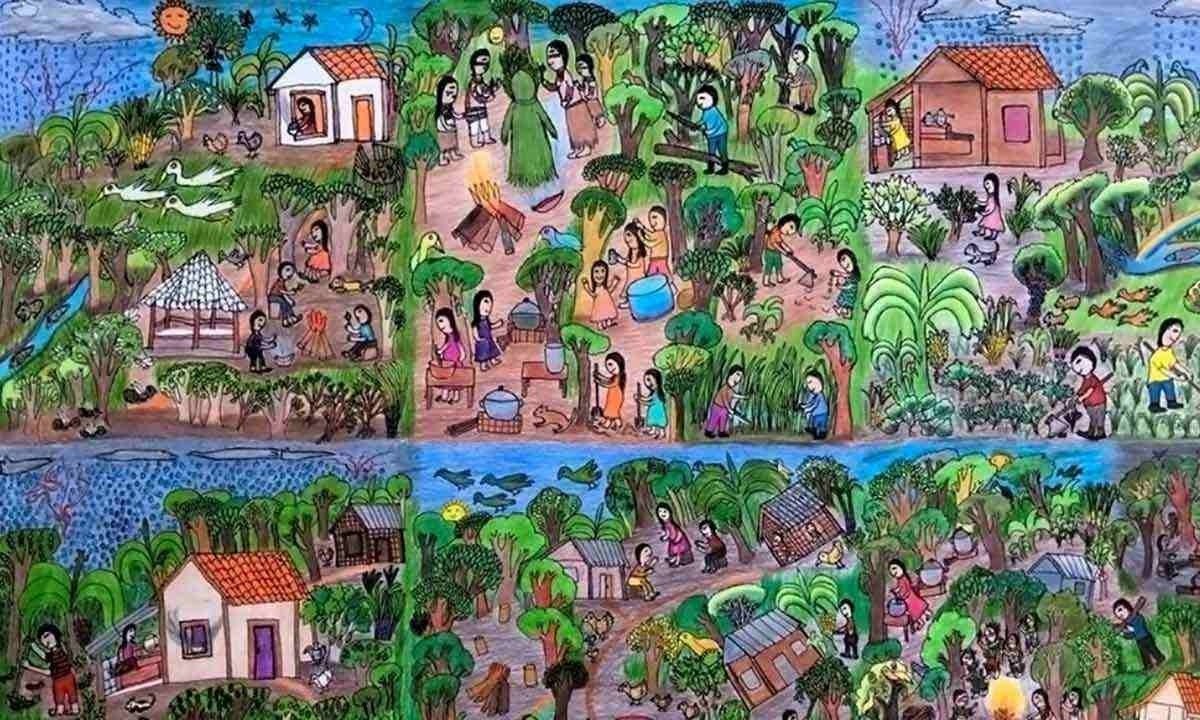
Tehêys by Liça Pataxoop
Using drawings as narratives, Mrs. Liça Pataxoop employs a teaching method that nurtures love for Mother Earth and reinforces the culture and legacy of her people. “My writing is the tehêy, the resistance and the memory of our history.”
Just like Liça, masters have been resisting and seeking their own ways of introducing children and young people to the ancient knowledge that gives meaning to life and guides them like arrows towards the path of good living.
Francy Baniwa, coordinator of the Baniwa Living School, always says that her dream is to show young people that wealth lies in the forest. ““Being able to fish and grow crops is the greatest wealth we have. We’re succeeding in opening young people’s eyes to see that their world is the most important thing there is, so they can be proud of being artisans, proud of being artisans and students, proud of owning sweedens, but also of being doctors, anthropologists, biologists… To have these two worlds firmly in place, because we need both of them…”
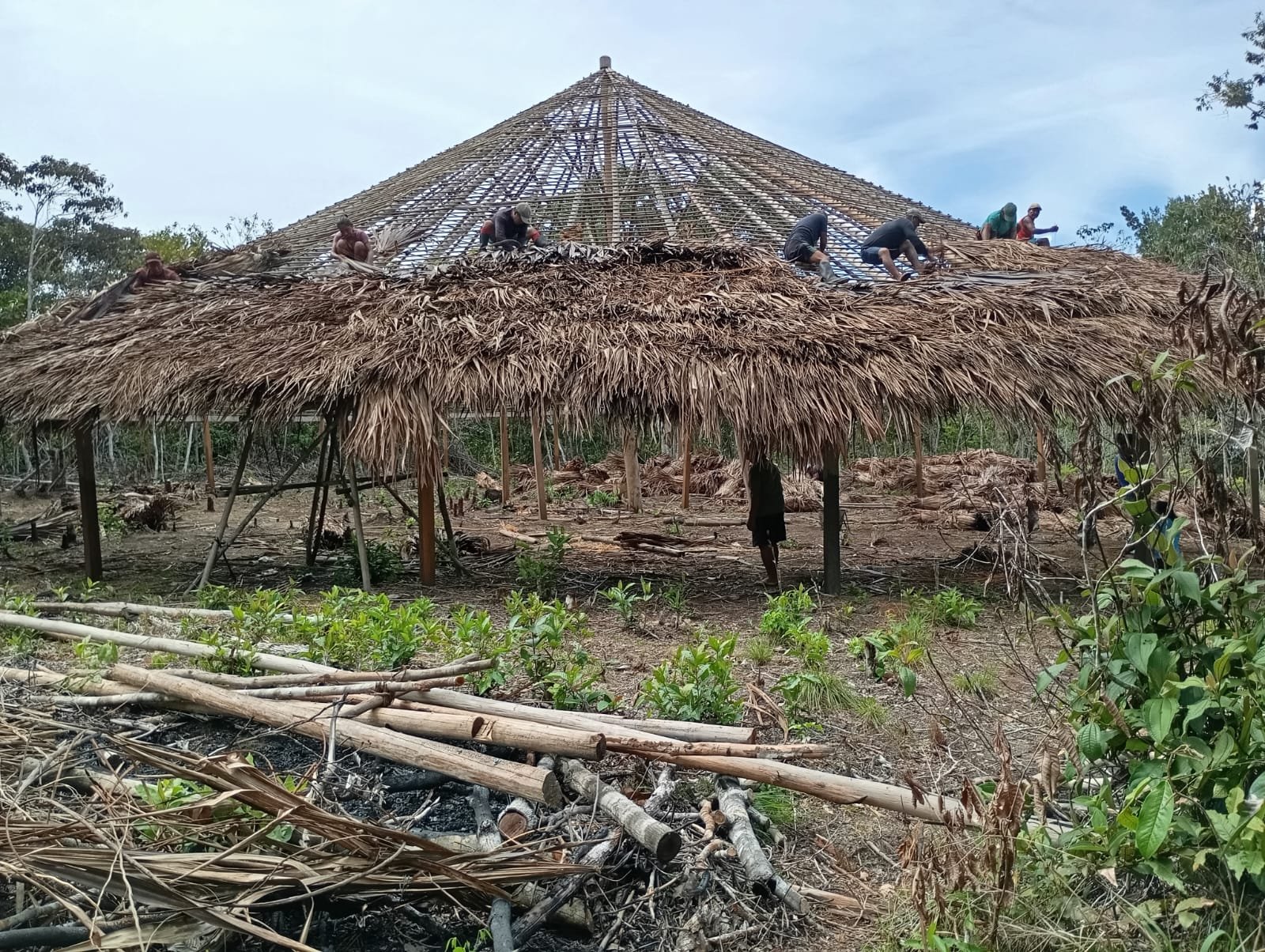
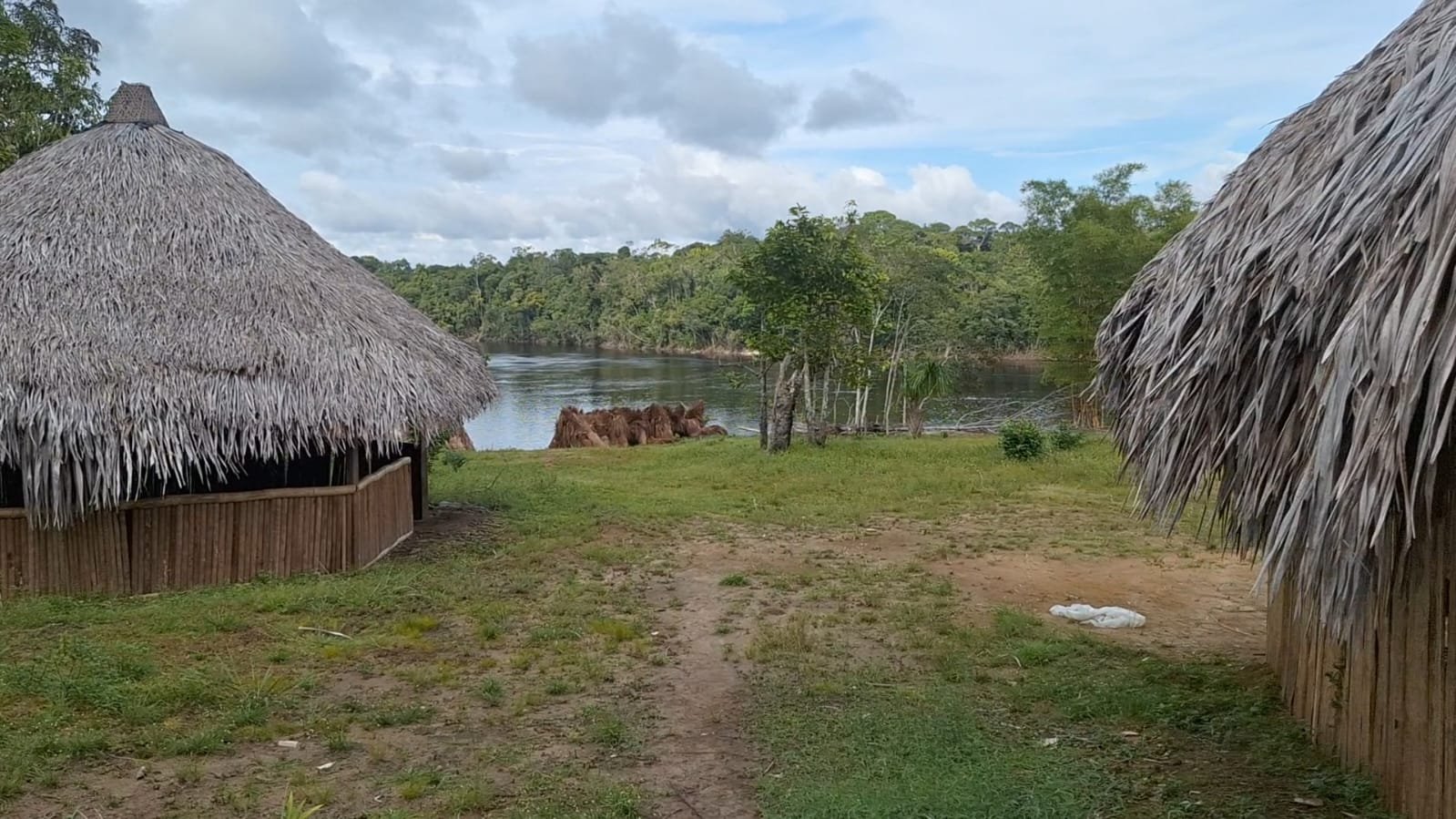
Madzerokai Education House
Photo: Collection of the Baniwa Living School
For Francy Baniwa, recognising this richness means valuing those who embody the wisdom of the territory:
“They are our role models, people who are still alive, with whom we can speak in our language, listen, learn, write, take the opportunity to ask questions, and learn to sing and dance. The greatest university is the land itself, it is the communities, because the teachers are them, who are alive and willing to share […] This is the aim of a Living School. This appreciation of knowledge that is alive. The Living School is us; it has always been us, from the moment we wake up until we go to sleep. This contact with the river is a living school; this contact with the crops is a living school; building a house is a living school. Everything we do is a living school.”
All this connection that knowledgeable masters seek to strengthen is a common thread that they have been practising for many centuries through the science of the forest, natural technologies and the ancestral intelligences that spring from the earth and pulse in the hands, shine in the eyes and radiate from the hearts of the Living Schools.
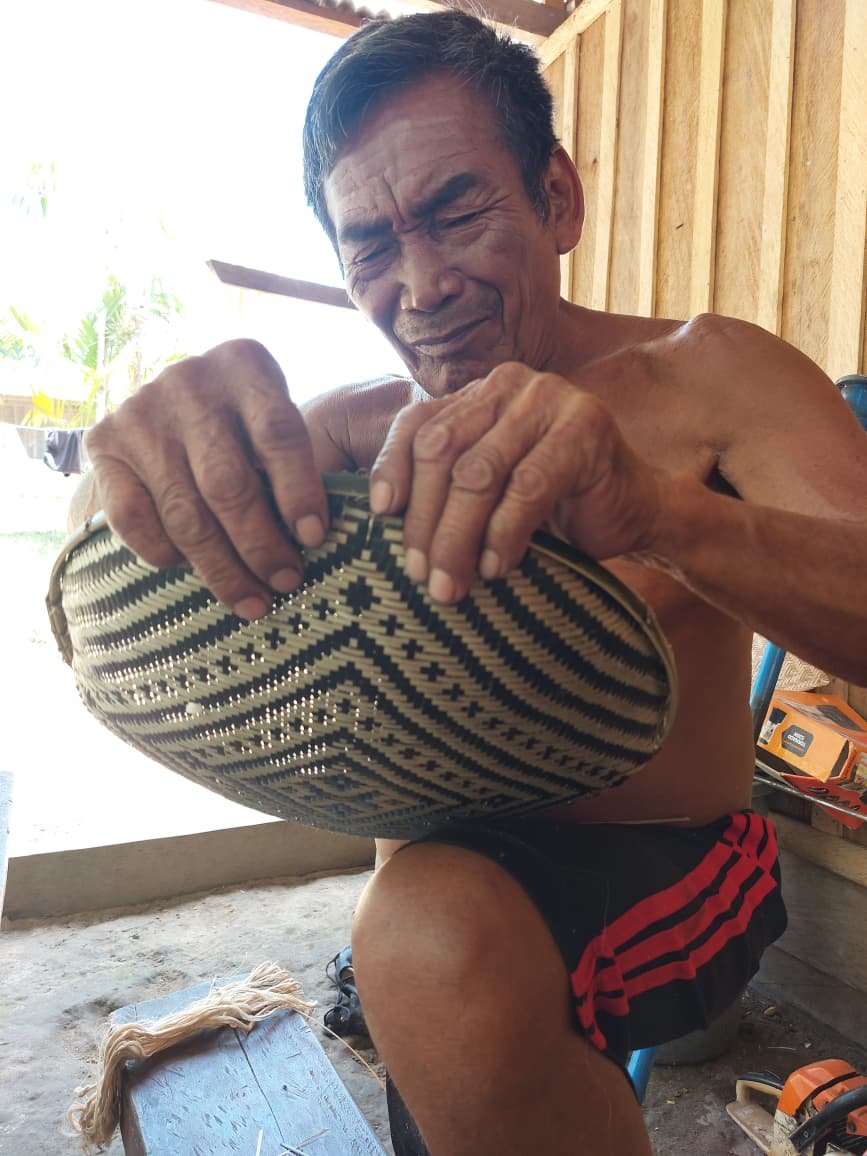
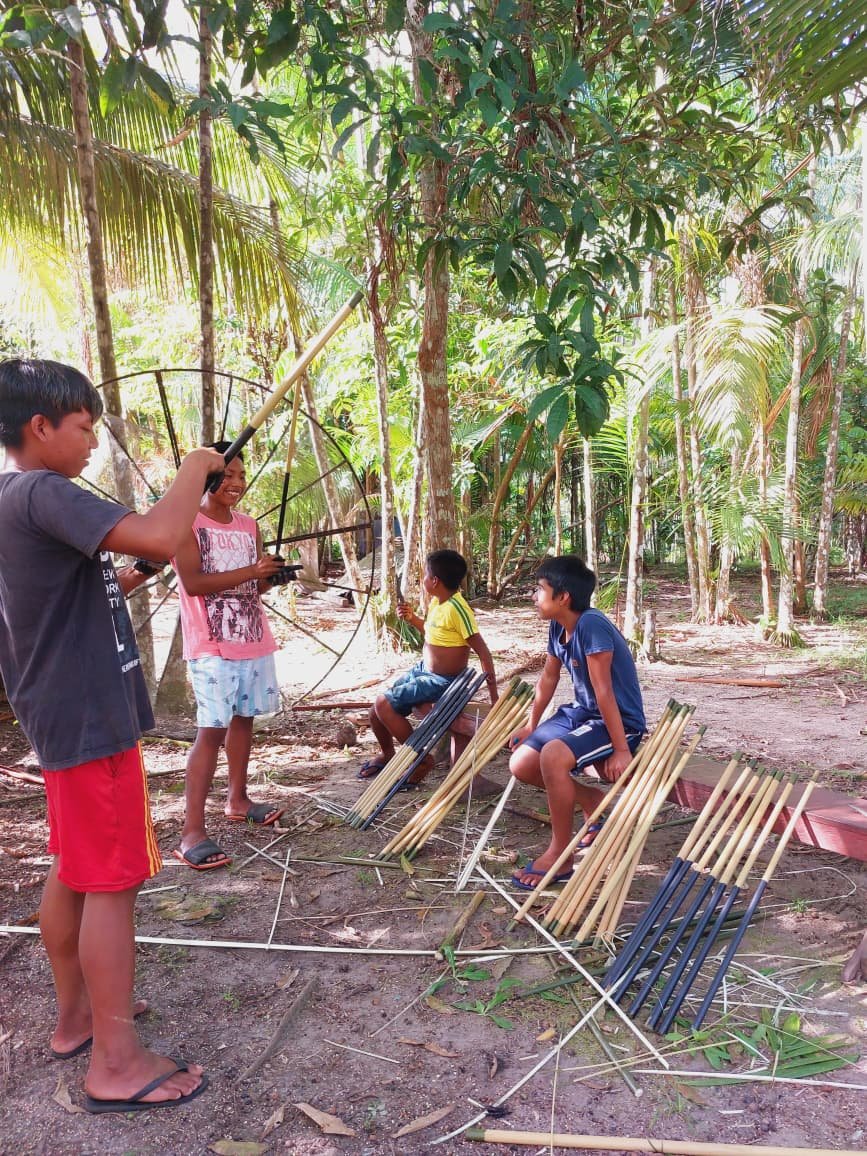
Francisco Fontes Baniwa and Baniwa youngsters
Photo: Collection of the Baniwa Living School
We continue seeking to achieve lightness, as expressed in the words of Grandma Laura, from the Tekoa Jasy Porã community in Puerto Iguaçu, in the heart of Yvyrupa:
““I have time to count the stars, time to catch up on my dreams, to dance with the birds as I breathe in the fresh morning air, and to talk silently with the animals, the plants, and the spirits.”
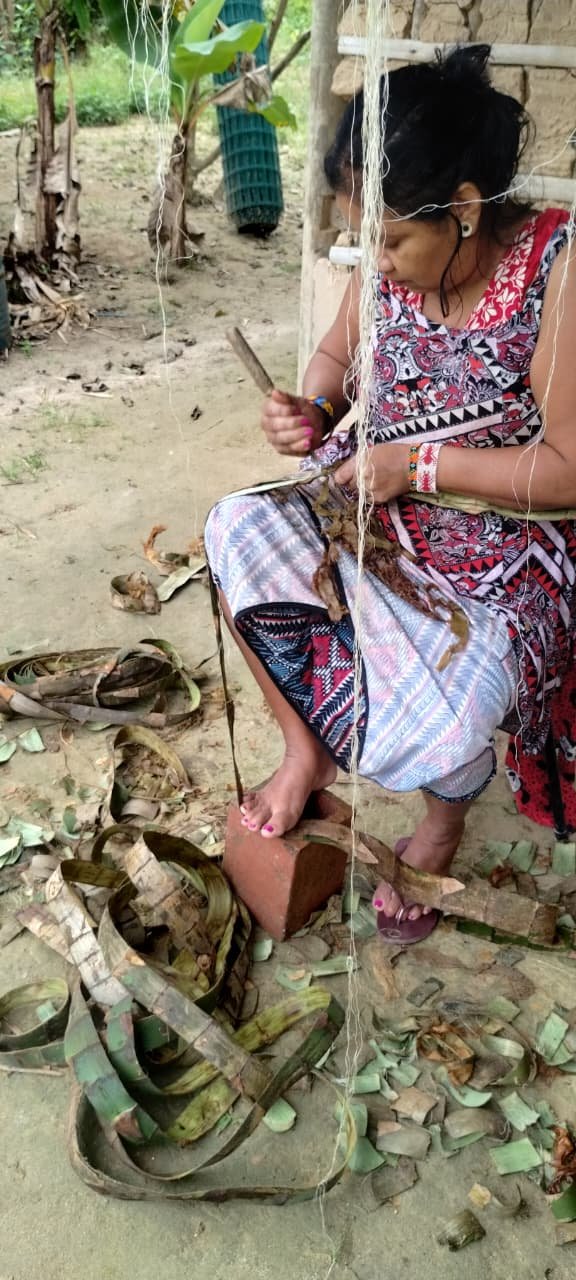


Sueli Maxakali weaving with fibres from the embaúba tree
Photos: Cristine Takuá and Clara Machado