




THE PULSE OF RESISTANCE: ENCOUNTER WITH PEOPLES OF SOWING AND DREAMING
Cristine Takuá
21 August 2025
Through the Jequitinhonha Valleys
The dream of Living Schools travelled
Passing through quilombos,
swiddens and flowery yards.
Meeting women who plant,
harvest colourful cotton
Weaving lives and dreams like
Corim* to welcome the little ones
who arrive in this deep Cerrado
of struggle and enchantment.
Long live the Cerrado! The people, the colours,
the aromas and flavours.
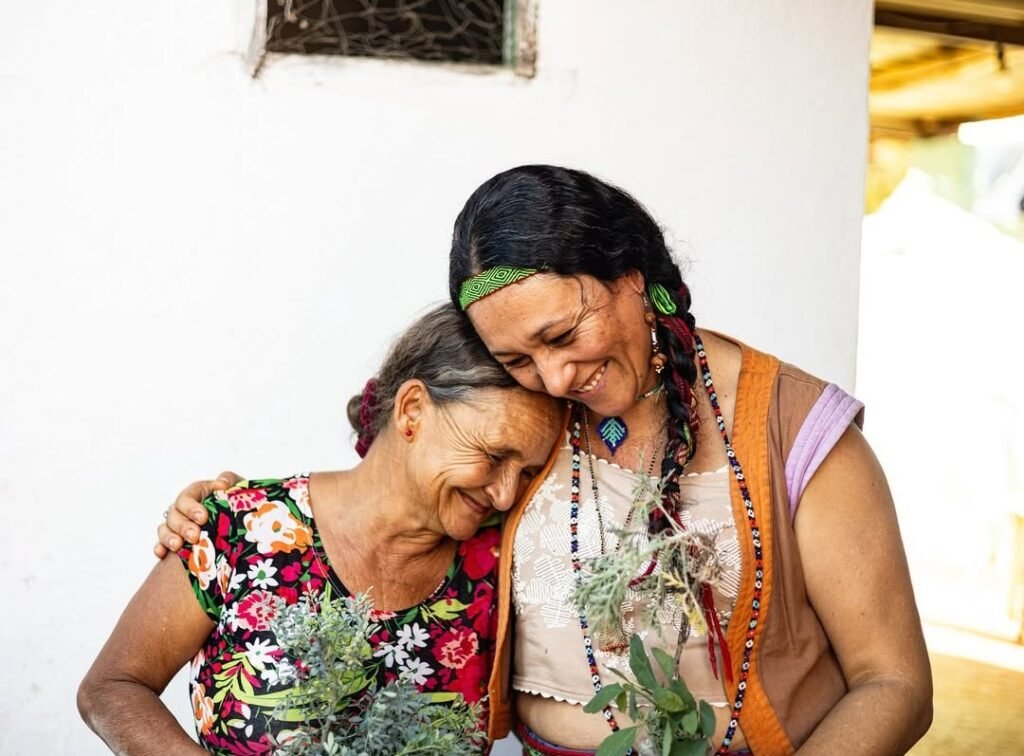
Photo: Paula Comini
Between the waning moon and the new moon in June, I went with Carlos Papá and Veronica Pinheiro to visit some communities in the Jequitinhonha Valley, a dream come true after many years. The Tingui Association, at the invitation of Pedro, Paulinha, and Viviane, was the driving force behind this gathering. This collective has sought to strengthen the work, knowledge, and arts of local communities, fostering women's empowerment, family organisation, and the strengthening of ancestral practices and knowledge.
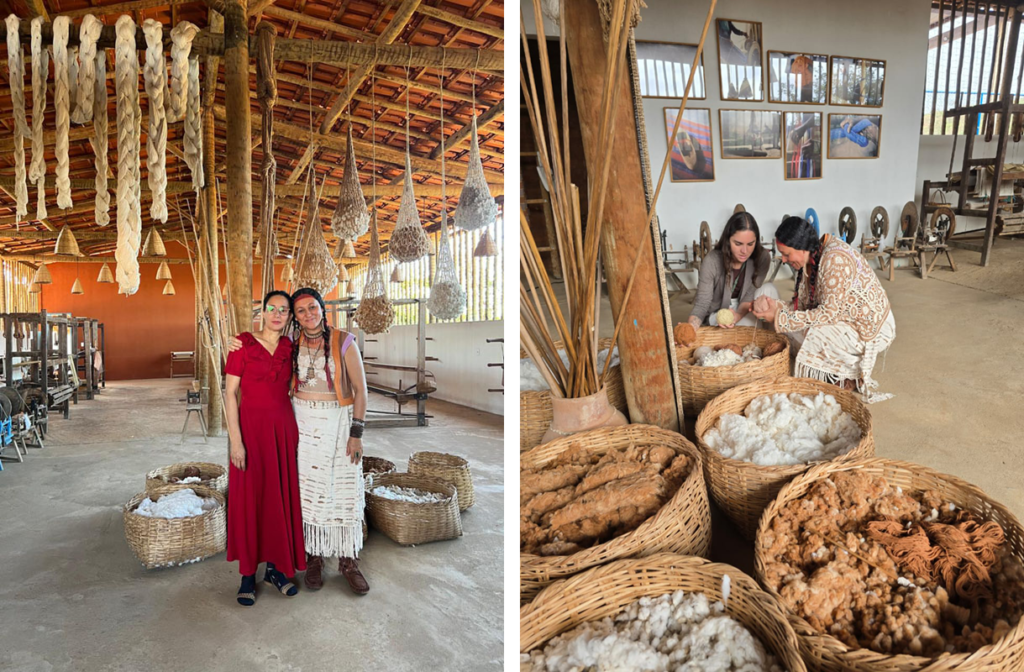
We began our journey by arriving in Francisco Badaró, where we visited the Tecelãs (Weavers) space in the community of Tocoiós, made up of a group of women who seek to deeply practise this ancient art of planting, harvesting, spinning, dyeing and weaving in indescribably beautiful ways, through the teachings of cotton. At this first meeting, many women and a few men gathered, and we talked about life, health, plants, education, and the challenges that many families are facing due to the expansion of full-time schools in local communities. This initiative of the local education department has affected the process of transmitting knowledge and skills that mothers, aunts, and grandmothers have always shared with their children, who accompanied them in their work in the fields, in the production of their crafts, in singing songs, and in all the processes of preparing cotton. We talked a lot about the essence of the Living Schools and how our sowing can encourage, support, and enliven this very challenging moment they are experiencing.
Photos: Veronica Pinheiro
The next day, we visited Dona Rita, who lives in the village of Campo Buriti in Turmalina. It was a very special encounter with the ceramics produced by her and her family. She told us about her art, her inspirations and challenges. While visiting her studio and a space where she keeps her finished ceramics, she told us about the delicate situation the village has been facing with the advance of eucalyptus monoculture and also with entire families moving to the city in search of education and work. She reported the absence of children in the village, a fact that led to the closure of a local school.
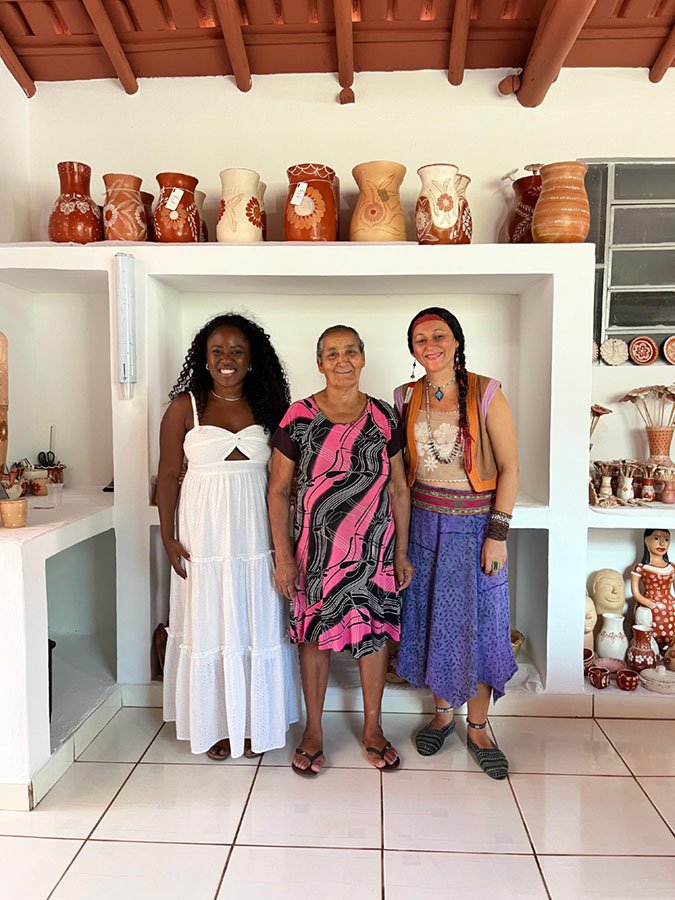
Photo: Carlos Papá
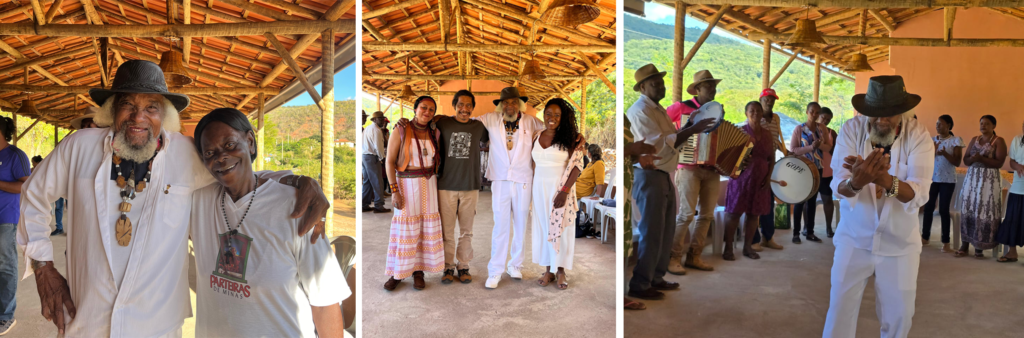
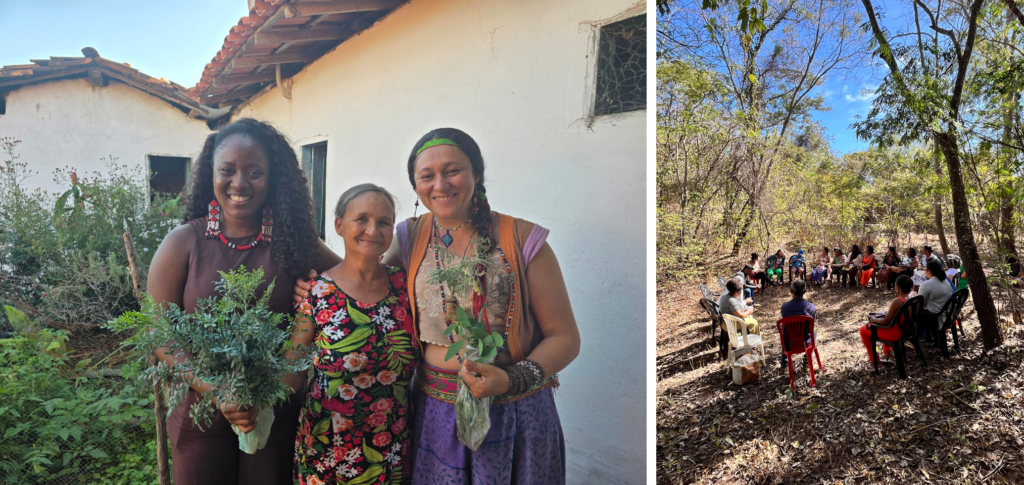
Walking through Chapada do Norte, in the church square, we met Mrs Cotinha, an elderly midwife and keeper of many mysteries. It was very moving to talk to her and learn from her. We agreed to visit the Quilombola community of Poções, in Chapada do Norte, together. At this meeting in Poções, we had the honour and joy of meeting Master Antônio, a great connoisseur of the stories and secrets of the Cerrado. Many masters gathered in this circle where we sang, danced and exchanged many thoughts. Pataxó women from an indigenous community in Araçuaí participated in the activity. They are engaged in a great struggle against lithium mining in the region.
Fotos: Paula Comini e Veronica Pinheiro
On the third and final day of activities, in partnership with Escola Quilombo, the Federal University of Jequitinhonha and Mucuri Valleys, and the Chapada do Norte Department of Education, we met with educators from the region at the home of Andrezinho, the beloved Master Passarinho, in the Quilombola community of Vai Lavando, in Berilo. It was a very powerful moment of deep exchange with the educators and the teachings of Andrezinho, a wood sculptor who portrays the spirit beings of the forest, and his wife Maria Lúcia, who makes cloth dolls portraying the women of Jequitinhonha.
Fotos: Carlos Papá e Paula Comini
During those days, we were all able to immerse ourselves in the dream of a lively and free educational process, one that cares for and values the relationship between human beings and nature.
Pedro, from the Tingui Association, shared:
““Together, we reinforce the importance of valuing local knowledge, wisdom, and practices. We remember that the riverbank is a classroom, just like the shade of a tree. That educating and being educated also comes from community life, governed by ancestrality. That memory does not die, it only falls asleep. That we need only awaken it for precious knowledge and ways of life to spring forth. And that we must remain steadfast, valuing and passing on to children everything we have learned from our ancestors.”
Inspired by Veronica, we made little notebooks to awaken memories. Each person decorated their own and took it home. In it, they are recording, with drawings or words, what they would like children to know when they grow up. Later, these notebooks will be delivered to schools so that educators can become more familiar with the realities of each family and community.
In an enchanting way, we were able to dream together, weave true and deep relationships, and inspire each other with all the words, tears, songs, and prayers we shared.
Long live the power of remembering and, through memory, opening up possible paths so that our existence may be as colourful as possible. May we increasingly spread the seeds of Living Schools throughout the territories of resistance.
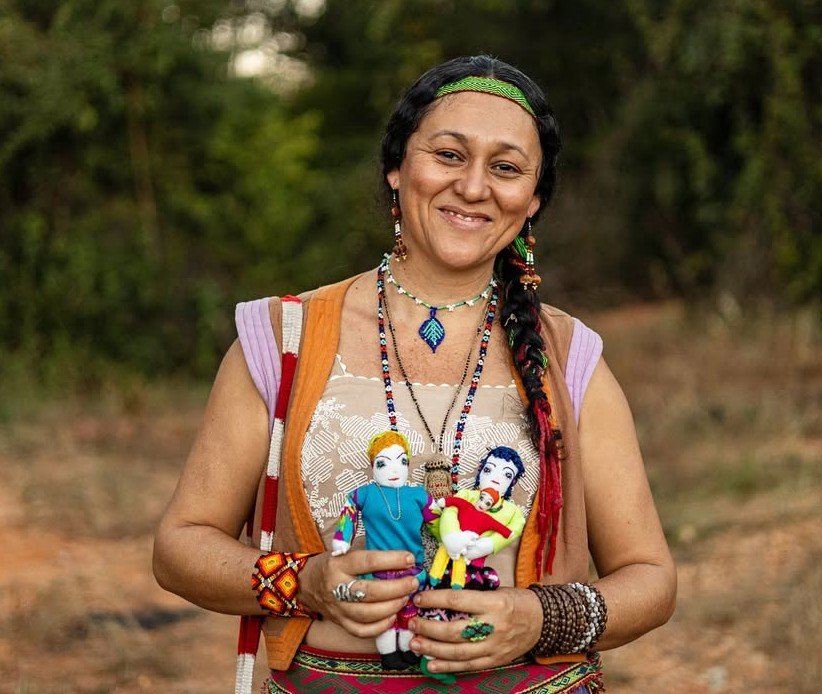
Photo: Veronica Pinheiro
*Corim is a small blanket that women began to weave to wrap their babies in when they are born.