




THE RETURN OF THE IDJA
Veronica Pinheiro
25 September 2025
Drawing and Painting Workshop with earth paint
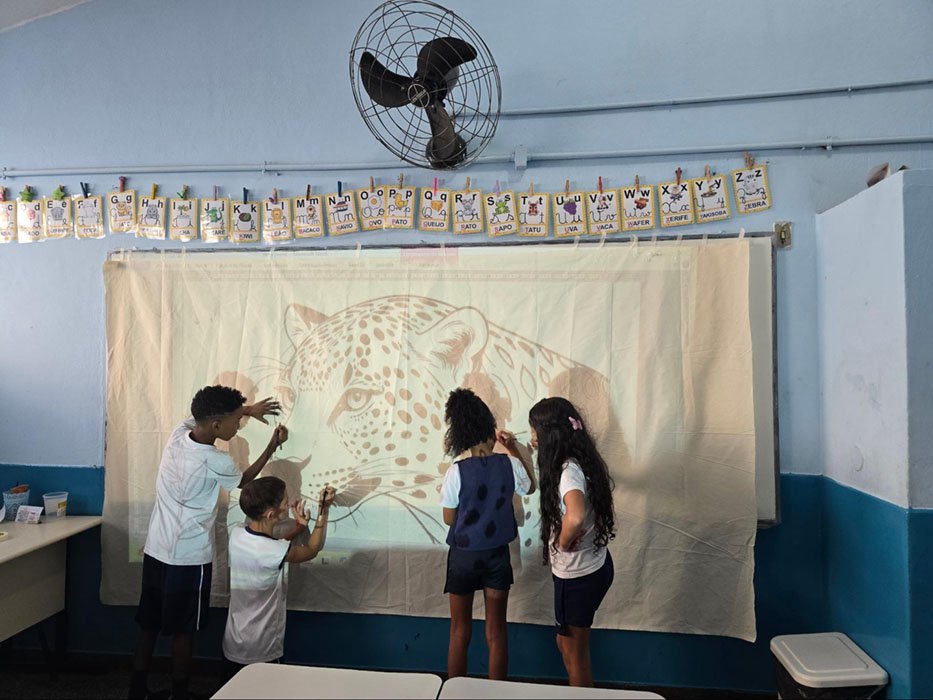
The children of Complexo da Pedreira are not individuals, but ‘collective people' who manage, amid the chaos, to pulse with life and love. They know how to hold up the sky when it is falling. They know how to dance in such harmonious rhythm that even life stops to watch them move. To observe them is to be cared for by the tomorrow in the very present. There is so much strength and beauty in that piece of childhood that the dialogues about the processes of this Ways of Knowing experienced at the Professor Escragnolle Dória Municipal School have reached many places. Lucky are those who have seen the children of Pedreira smile, even luckier are those who have seen them dance. Despite the effort to describe and narrate, words limit the understanding of this Ways of Knowing experience. To minimally understand the learning processes at Pedreira, it takes the whole body combined with the dream of bringing the ‘normality of beauty’ into everyday life. With the eye to see small things, as Kayque says, and the eye to see beauty, they transform space and, even confined to classrooms without being able to go to the bathroom because of the shooting around the school, they set up colourful parachutes every day and plunge down, trusting in the deep memories of life they carry in their bodies.
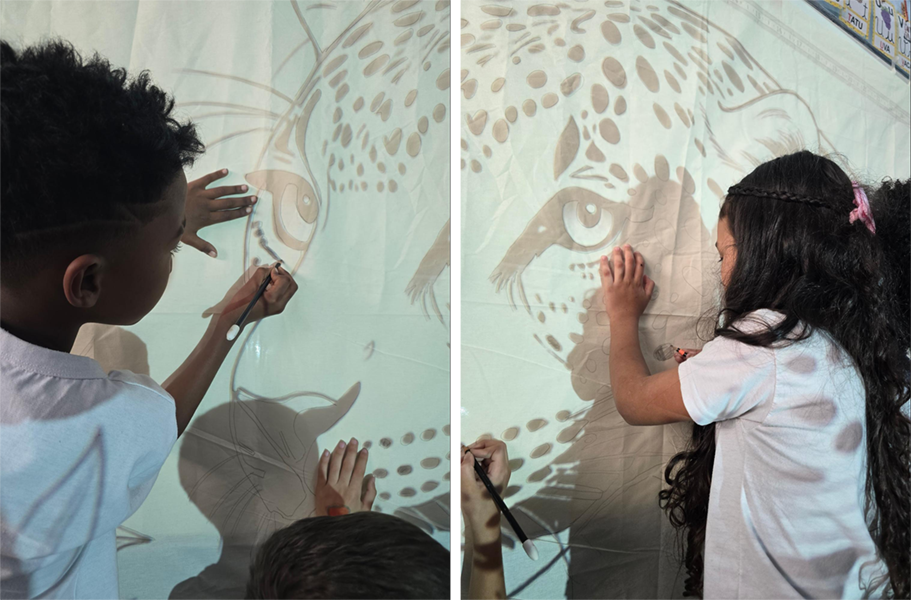
While Brazilian television news programmes reported the pain of Pedreira live, revealing to the world something that only those who live there know, the children found strength in pencil strokes and earth paints. Gunshots and disconnected voices beyond the school walls said, ‘these are the end times’. The children, however, with fabric, pencils and paint, drew ‘times of beginning.’ Only 27 children went to school that day. The reasons that lead a family to send their children to school on a day of conflict are as diverse as possible, from food insecurity to fleeing areas of greater vulnerability. However, whatever the reason, this reveals that children are not having their rights guaranteed. As subjects of rights, the children of Pedreira, like all children in the world, have the right to a life with dignity.
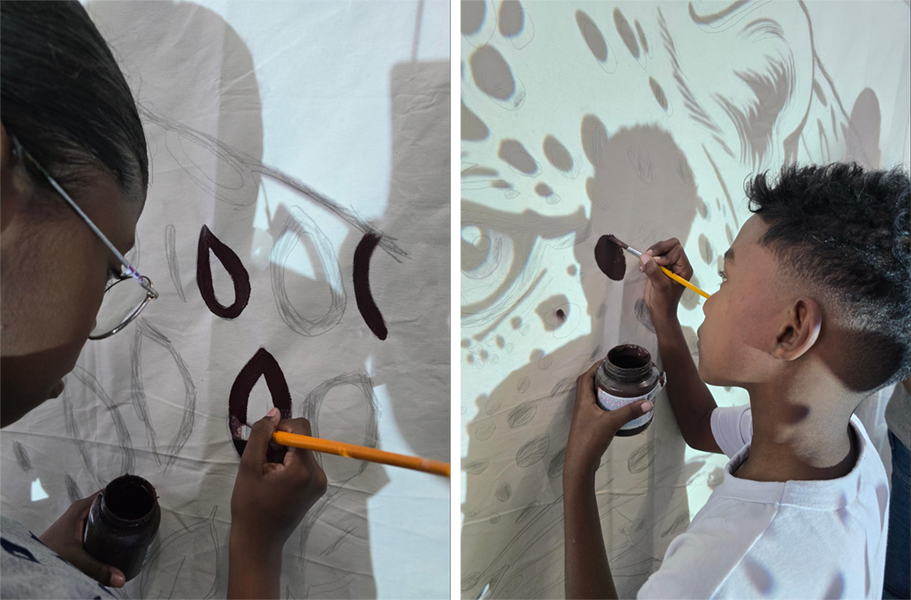
The children of Escragnolle Dória Municipal School are capable of cheating death, just as the Ibejis were able to stop Ikú. Among the various itans of Ifá — a collection of stories present in Yoruba cosmogony — there is one that tells of the time when Death set traps to kill the people of a village before their time. When the men consulted the great Orumilá, they heard that only the Ibejis, ‘child orixás,’ would be able to stop Ikú, Death. And how did the Ibejis, the twin children of Oxum, stop death? With music, dance, and games. Playing is a technology for maintaining sensitive life in a practical way. By playing at being, we become and recreate worlds.

July's Ways of Knowing workshop only took place because the school children were willing to dance, play and build a beautiful story together to give new meaning to a day full of pain. ‘The Return of Idja’ was a three-day collective activity with a group of children to build a fabric panel celebrating the return of the jaguar to the forests of Rio de Janeiro. After 50 years, the State Environmental Institute (Inea) of Rio de Janeiro identified a jaguar (Panthera onca) in the Serra da Concórdia State Park, in Valença, in the south of the state. The jaguar has returned to our land. For the Guarani, it is an Idja, guardian of life. And to celebrate the return of the Idja, the children built a 3-metre panel and coloured the jaguar with yellow earth taken from the schoolyard. This activity required the patience of the little ones and many hours of conversation about NHE'ERY, the Atlantic Rainforest.
The return of the Idja, the jaguar, to Rio de Janeiro was perceived by the children as an omen of better days ahead. Pedro, aged 9, while drawing on the fabric with a pencil, exclaimed joyfully that ‘it is possible for what was once gone to return’. We all felt that Pedro’s exclamation was not just about jaguars.
‘The jaguar wasn't over, but hidden away in some very secret place.’ That was the observation made by Gabriel, also aged 9, which made a lot of sense to the children.
With the raw cotton fabric attached to the whiteboard, we used the projection on the fabric as a starting point. The children drew lines on the fabric with pencils. Then they covered the lines with brown paint. The activity was extremely challenging for Gabriel, a boy who has a breathtaking rush in his chest, and after finishing the first day of activity, it was necessary to wait for the next day. To wait is an unconjugated verb, an infinitive, but without neutrality. Waiting is a verb that names an action, and at Pedreira, waiting is always accompanied by an adverb of manner. The next day is awaited with faith and watered with prayers. For Gabriel, waiting is a long task, and he wanted to see The Painted Guardian on the fabric. We talked about the need for rest to maintain concentration and joy throughout the process of constructing the panel.
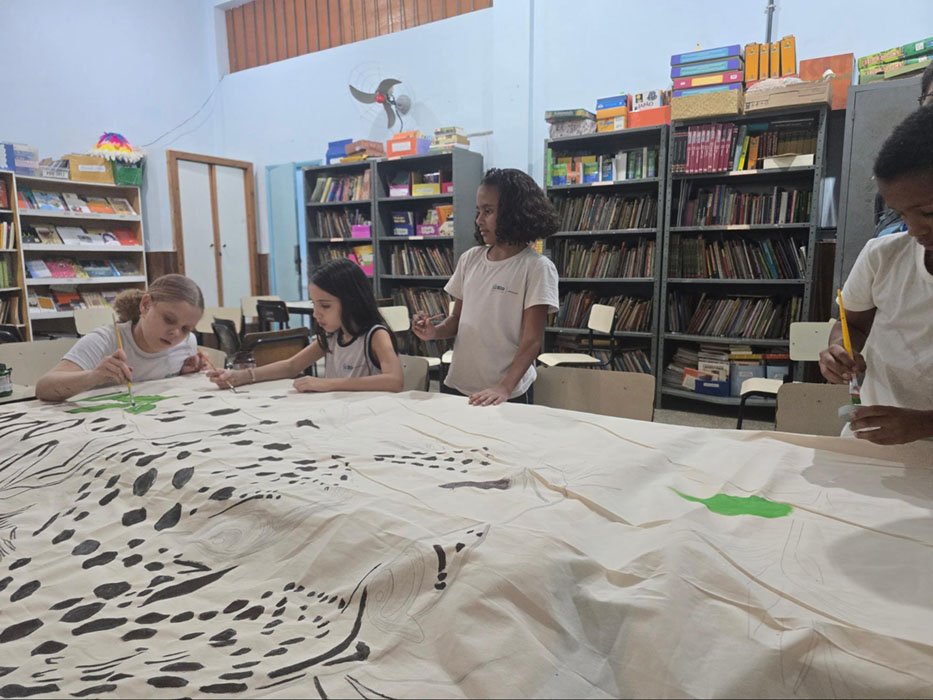
On the second day of activity, calmly, stroke by stroke, the panel gained colour. Seeing that the lines were beginning to reveal the Idja, Gabriel repeated, proud of himself and his companions: ‘I didn't know we were capable of doing something so beautiful.’ He was in a hurry, but at the same time he knew we had steps to follow. Considering the weekend, it took five days in total. Seeing Gabriel have conversations with his anxiety and trust his colleagues to finish the panel was a shared learning experience without words, read in the eyes and gestures...
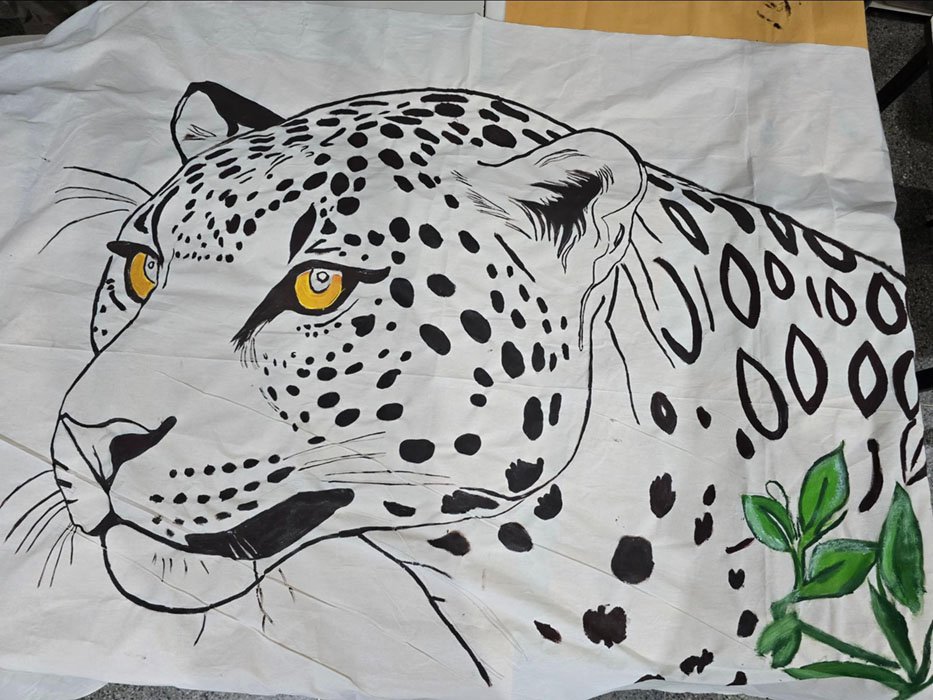
The children finished the painting without me.
After harvesting and sifting soil from the schoolyard, they mixed water and white glue with the soil dust. My absence gave the group the certainty that we were so aligned that they could continue without me, as our agreements were strengthened in the deepest layers that make up each of us. I sent a message: ‘I know you know what to do!’
I received a video from them saying, ‘Miss V., thank you for trusting us. We know what to do.’
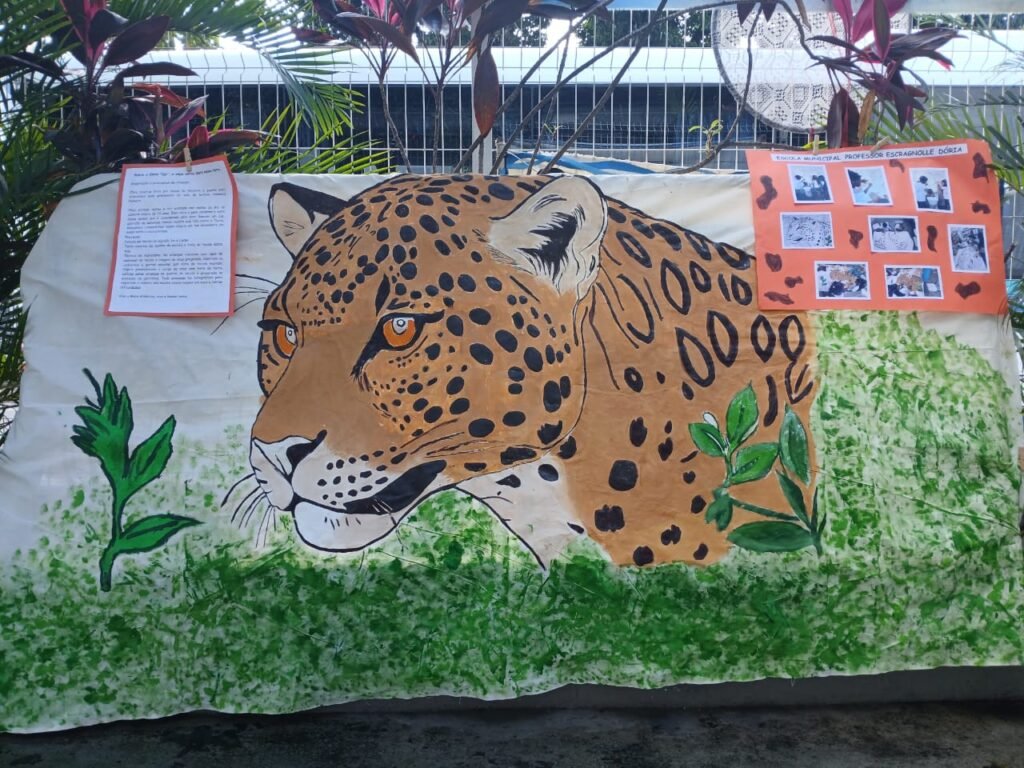
I never doubted that they could finish the job on their own. Children postpone the end of the world. Enchanted drums and children playing are capable of deceiving death. I am sure that even today the Ibejis share with children the wisdom that dispels the traps along the way.
O painel esteve exposto na etapa regional da 5ª Mostra de Multilinguagens da Secretaria de Educação do Rio de Janeiro no mês de agosto. E, enquanto escrevemos esta página de Diário, recebemos a notícia de que o painel A volta do Idja foi selecionado para a Mostra Municipal de Artes Visuais. É o segundo ano que as crianças vão para a segunda etapa da Mostra. Em 2024, elas voltaram para a escola premiadas na categoria “Lentes do Olhar”.
In the meantime... we keep on building paths so that the school can stay alive!
Long Live the Living School
_____________
Workshop Description
Painting on cotton fabric, 3m x 1.60m
Yellow earth from the schoolyard and fabric paint on canvas.
Mural technique: The children traced the projected image of the jaguar onto the fabric with pencils. They covered the outlines and dark areas with brown fabric paint. Then they filled in the jaguar's body with earth paint, geopaint, prepared by the children.
To prepare the paint, we passed the earth through a fine sieve. Then the children added 2 cups of water to 2 cups of earth and 1 cup of white glue.
Materials: projector, computer, cotton fabric, yellowish earth, brown and green fabric paint.
_____________
References
Ideas to postpone the end of the world, by Ailton Krenak
Idjas – NHE’ERY • AYVU PARÁ CYCLE https://selvagemciclo.org.br/en/ciclo-nheery-ayvu-para/