




A SABEDORIA DOS SÍMBOLOS AFRICANOS
Veronica Pinheiro
23 de setembro de 2024
Adinkras: painting workshop and creation of co-operation games
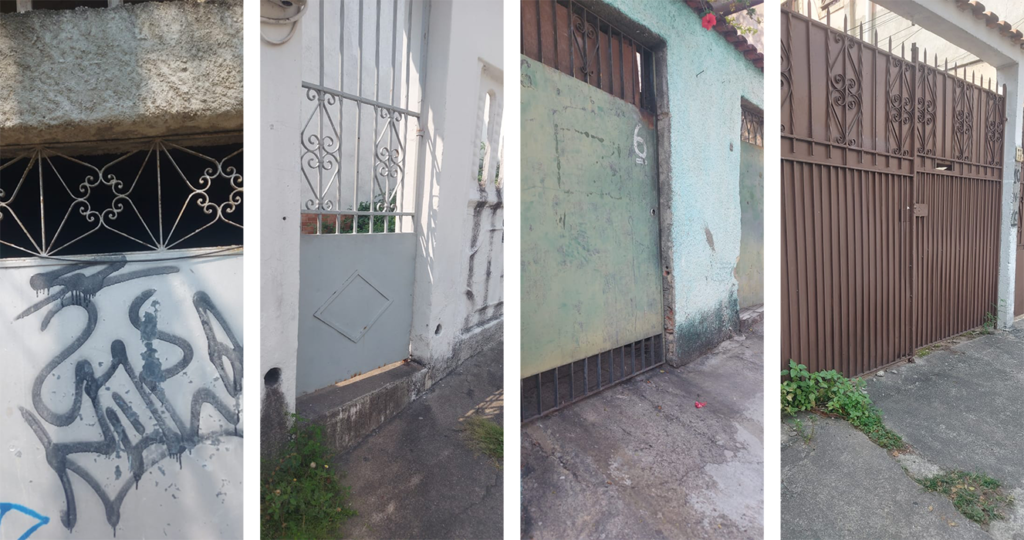
‘Those who know where they came from don't get lost on the way’. Every time my father took me out, he repeated this proverb. He trained me to pay attention to the paths. ‘Don't get distracted on the way.’ When we arrived at the place we wanted to go, I would be asked what I had seen and if I knew how to get back. When I mentioned the colour of a wall or that I'd seen a popcorn seller, my father would tell me that I should pay attention to permanent things, like a big tree or a grocery store. I should also pay attention to the shape of the wall, the design of the grilles and not just the colours, because the colours could change and the popcorn man might not be there when I got back.
 Photos: Veronica Pinheiro
My grandmother was born free, in 1910. But my grandmother's mother was born at a time when people were sold as goods in Brazil. Our stories were an incomplete jigsaw puzzle. Every piece of information was precious: prayers, rites, circles, recipes. My father knew that it was important to look at the grilles, and he and I thought that the reason was that hardly anyone changed the façades because the ironwork on the façades was too expensive. My father and I missed some important information when looking at the grilles: they could contain African symbols with important messages. Many Africans who came to Brazil were expert blacksmiths. The enslaved Africans brought knowledge and technologies with them. Among this knowledge was the expertise of West African iron metallurgy, which had a significant influence on the social and economic relations of this population during the diaspora. Nobody tells that to the children!
The technologies carried on the body were articulated with sacred memories of the relationship with life. Iron, for example, was not a natural resource, but a resource guarded by Gu, a very ancient ancestor. Gu, the blacksmith god, taught men how to forge iron. Gu's teachings expanded the ways in which the Fon people, from the kingdom of Dahomey in Benin, related to the earth and to life. In Brazil, Gu appears as Ogum - representative of courage, technology, hard work, hunting, agriculture, iron and, if necessary, war. The knowledge and the relationship with metallurgy were organic, sacred and structuring of a cosmology. However, Euro-colonialism, which has never respected the life and existence of beings, in addition to kidnapping and enslaving African people, saw this relationship as another way of enriching and hurting the Earth with the extraction of gold.
Go around… Go around… Go around, my Saint Anthony.

I am running around to get to talk about the wisdom of the symbols contained in the Adinkras, a graphic communication brought from Ghana. While I write, I realise how much I go around when talking about a subject. I don't know how it works for children. But I haven't learnt to be any different yet.
The territory we know today as Ghana was a region known as the Gold Coast (Togo, Nigeria, Benin and Ghana). The enslaved Africans brought from this region belonged to the Fanti, Ashanti, Ewe, Fon, Egbe, Youruba and Igbo peoples. They became known in Brazil as ‘negros de mina’, black people from the mines. They were men of such great wisdom and knowledge that they communicated with their relatives through the symbols on the façades of their houses and on pieces made from iron. To this day we find Adinkra symbols on door and window grilles in Rio de Janeiro. Besides being an aesthetic choice made by the blacksmiths, the symbols communicated that no one was alone on the path. ‘Pay attention to the path.’
 Photos: Veronica Pinheiro
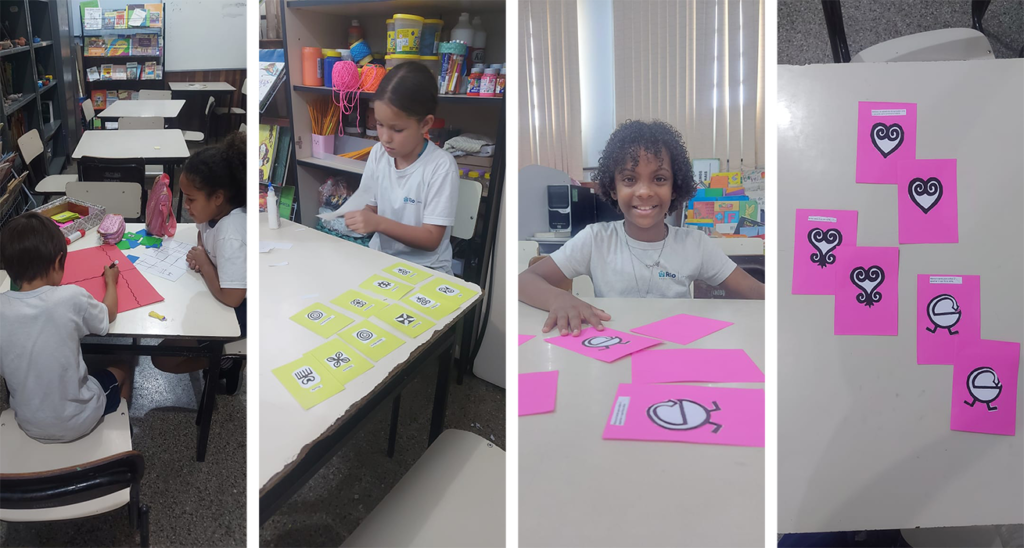
In the workshop on painting and creating collaborative games, I invited the children to pay attention to the grilles. They are not allowed to photograph the territory, for security reasons. But I photographed some gates from the street where I live, showed them and they told me that they saw these symbols on the way. I told them that the symbols communicate memories of an ancient people who gave rise to our people. We read the book Quanto de África tem no dia de Alguém. We re-read Os tesouros de Monifa. And I invited them to notice the many messages of life that surround us. Life communicates all the time, it's just that we have lost the ability to understand. But if we have lost it, we can learn again.


 Photos: Veronica Pinheiro
Curiously, the Adinkra that the children identified with the most is Sankofa. Curiously, Sankofa is the most present symbol on the grilles of doors and windows. The bird looking back is also graphically represented by shapes that resemble the representation of the heart. Sankofa summarises the idea of the ancestral future. The proverb that accompanies it says: ‘It's never too late to go back and pick what was left behind’. Sankofa symbolises the wisdom of learning from the past in order to build the future. And this message has been on the path ever since the blacksmith brothers arrived in Brazil.
‘Pay attention to the path. You need to know how to get back,’ my father used to say.
Regular school teaches us to look ahead, to the future. But the so-called future of humanity has scared the children. So I invite my little companions to look to the past. Not the past of slavery. But the cosmological past, which insists on communicating with us. The past of the technology of engagement with life.
I remembered Cris Takuá, my teacher, and her teachings. I think we're awakening memories here.