




SONHO DA TERRA VIVA
Cristine Takuá
22 de agosto de 2024
 Photo: Cristine Takuá
This land is ours.
Nũhũ yãgmũ yõg hãm.
Why is this land ours?
Without the land there is no different school. Without the land there is no different health care. Because we fought to conquer the land. We fulfilled our dream and today we're going to create many projects on the land. Our land. Why do we call it Forest-School-Village? Because everything is a ‘classroom’ where there's a village. Where there are trees and shadow, there's a ‘classroom’. The children will sing our ritual. They imitate it. By the river, they play, sing and write in the sand. In the village, everything is a ‘classroom’. All the men go into the woods and sing in the woods. They chop wood and sing. That's why we called it Forest-School-Village, because the whole village is a school. Where there is shadow, the women get together and make handicrafts. The children come along, sit beside them, listen and learn too. The whole village is a school. Where there's a ritual house, there's a real school, a very important one. There will be singing, history, culture, traditional food. We, the Forest-School-Village community, want land for Yãmĩyxop, for children, for the future. Because we were all born together with the forest, we were all born together with the game. This land is our mother because it feeds us all. Our songs record all the game. Our songs record some of the animals we've lost. And the drawings also represent the animals. There are big animals that we've lost, but we record their names. Our song speaks their names. We Maxakali suffer, but our Yãmĩy accompany us. Every day the Yãmĩy go out with me, with all the Maxakali.
 Photos: Carlos Papá
Why do I say Forest-School-Village?
If I leave here, if I go into the woods, my Yãmĩy will accompany me, I'll sing in the woods. If I play in the river, another Yãmĩy will accompany me. I'll imitate any animal: fish, caiman, swallow, I'll make their songs. That's why we call it Forest-School-Village. Here, my house is a school, because we're passing on our knowledge to the young people who are learning now.
We are teachers. We're talking. They're listening to the speech. We take the good words in order to wait for our memory, so that it doesn't fall. It has to grow. We have to have different knowledge, take on other knowledge in order to grow the Forest-School-Village.
Our dream is to take the land and rehabilitate it. Because the land needs healing, needs treatment. Because the earth is alive. The land speaks, the land looks at us and the land cries out. But the farmer doesn't listen to the land crying out and asking for help. That's why we want to reforest land and create the Forest-School-Village.
Dream-words of Isael Maxakali
 Arts: Marcos Maxakali
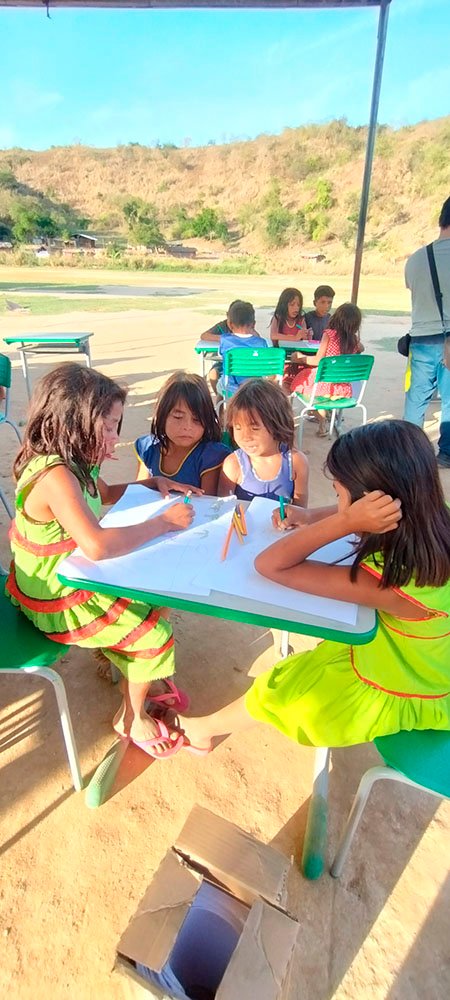 Photo: Cristine Takuá
At the beginning of August, we went to visit the Maxakali Living School in the Forest-School-Village. It was a very emotional meeting, where we were able to dialogue, listen to the songs of the spirits, draw with the children, the young people, the shamans and the elderly women.
Art is a very powerful portal for the Maxakali, as they transform the memory of chants into drawings with great skill and a very fascinating concentration.
With the support of Selvagem and the Tomie Ohtake Institute, we held a three-day workshop and had a dialogue about the territory, about the spirit animals of each ritual, about traditional foods and all the beings that inhabit the territory.
 From left to right, artwork by Marineide Maxakali, Juan Maxakali and Jurema Maxakali.
Even though the forest has been almost completely devastated, the Maxakali keep the memory of all the animals and plants in their songs, dozens of species of bees and plants.
I've been sowing a dream in my heart and thoughts about connecting Hãmhī - Living Earth, a marvellous project for reforestation and the implementation of agroforestry backyards in the Maxakali villages, with the actions of the Living School and the healing of the body and spirit. There are many challenges that the communities face today, such as waste, the sadness of losing the forest, the lack of game, prejudice from non-indigenous people who live around the villages and in the city. All these challenges end up leading them to alcoholism and sadness. There are many problems that require a strength of resistance and a broadening of consciousness for transformation of action in the micro-politics of everyday life, in the yards that surround us.
 Photo: Carlos Maxakali
Isael Maxakali's dream-words are profound intentions that are breathed into words by many Maxakali men and women who long to see the forest alive, the children happy and the peaceful sigh of Good Living in their territories.
On our walk to the Forest-School-Village, we had the delicate opportunity to perceive women's resistance in its strength and beauty. With their colour and laughter, they transform challenges into poetry at every new dawn.
Resist to Exist
To dream so as not to stop believing
That it's possible to metamorphose relationships
And make a more enchanting reality sprout
Long live the Living Schools!
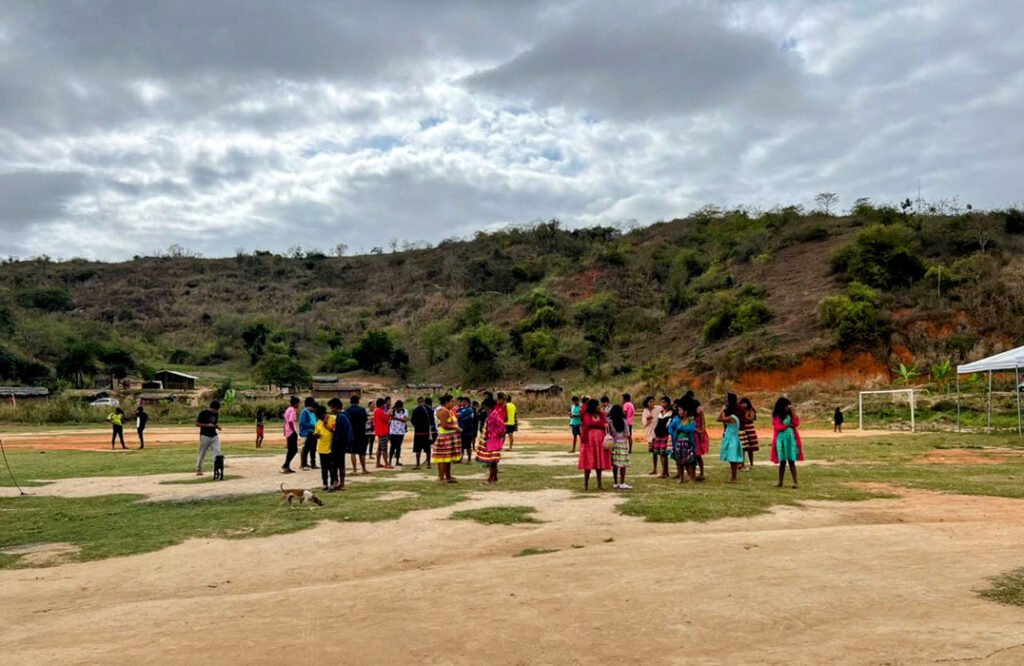 Photo: Cristine Takuá
 Photo: Carlos Papá