




A ESCOLA VIVE EM MIM
Cristine Takuá
20 de setembro de 2024
 Photo: Cris Takuá
In the last week, some very strong and deeply reflective events have happened on my journey.
Two and a half years ago, I left the state school in my community because I felt like a foreign body in the midst of order, obedience, discipline, curriculum and so many prisons that were disturbing my dreams. When I left, the Living Schools blossomed, this powerful and encouraging seed that I have been coordinating together with Carlos Papá, Sueli and Isael Maxakali, Dua Busë and Netë Huni Kuin, Francy and Francisco Baniwa and João Paulo Tukano and Carla Wisu.
Paddling this little canoe of awakening of memories with affection and care, I have come to realise how much ‘school’, this complex being full of possibilities, continues to go through me and inspire my steps in life.
By stimulating dialogue and the exchange of experiences, a few days ago at the Guarani Living School I experienced a visit from the fifth grade class of my community's nursery school, Kauê's class.
Why do kids ask so many questions?
 Photo: Cris Takuá
We welcomed the children and their teacher who, with great curiosity, came to find out more about healing plants. Papa and I took them for a walk and to collect some of the plants used in traditional Guarani medicine. Then we talked about each one. Papá, joking but being serious, asked them the names of the plants. Some knew the name in Guarani, others the name in Portuguese. And so Papa went on to explain the plants one by one, their names and their qualities, how and for what they are used.
It was a very interesting activity and the children kept asking questions about the plants, their uses and also about our bodies and times of seclusion, diet and mourning.
One girl asked: ‘Why do we have to cut our hair when we get our first period?’. From this question, a whole conversation arose about the time of seclusion and the importance of this moment of retreat for the girl who is becoming a woman. These teachings are very sacred and precious for life.
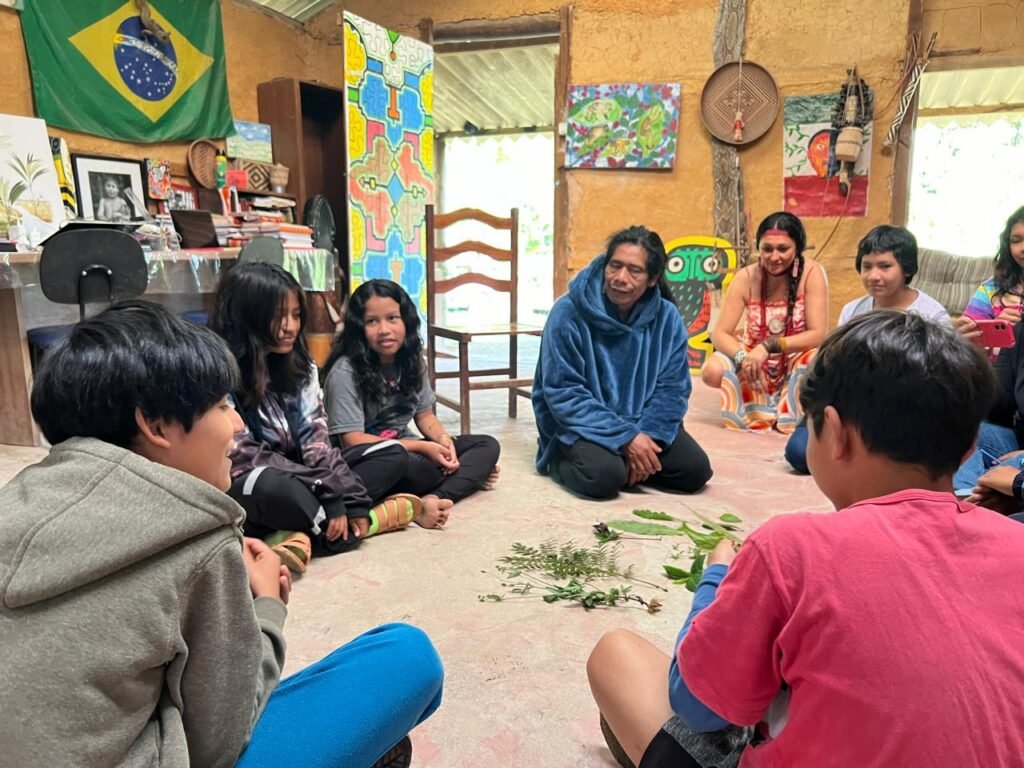 Photo: Djeguaka
It was very beautiful and touching to see the children asking questions, so excited and attentive, listening to this sensitive and necessary knowledge.
Then we went to visit the little bees and talked about the importance of beeswax for the rituals of naming the little children, which happen at the beginning of every year.

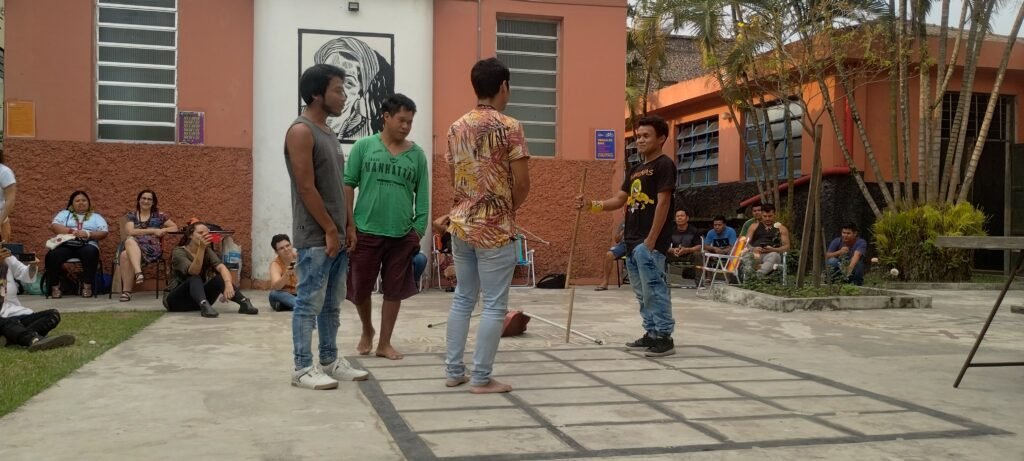
The day after this meeting, we had an appointment in Santos to attend a class at the Intercultural Indigenous Degree programme, which is training indigenous teachers from São Paulo State. That day we worked on activities related to indigenous action and knowledge at school. The theme was educational games. Each group presented their research and the possibilities of bringing these games to the children in the classroom. The meeting with the 40 teachers, Unifesp undergraduate students, was beautiful and joyful.
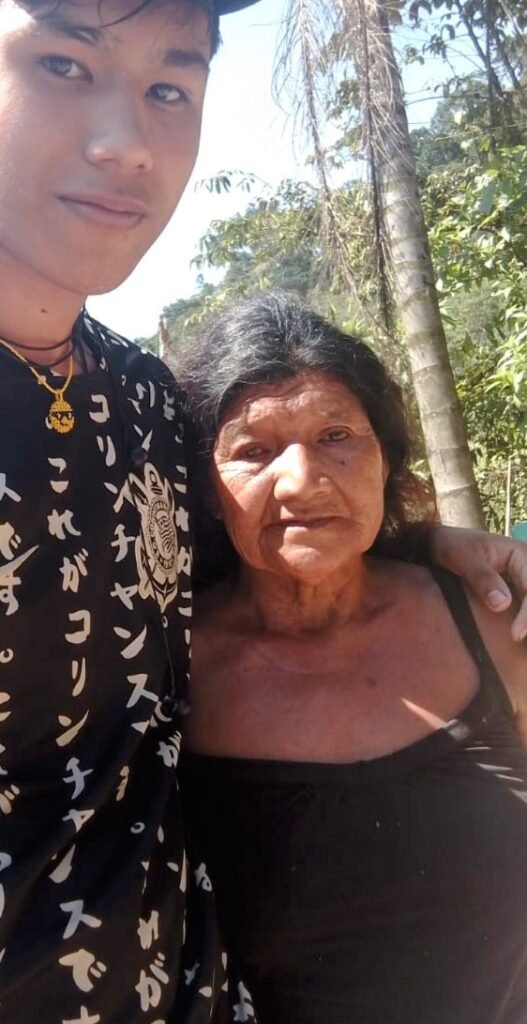 Photo: Carlos Papá
But that day, before leaving for Santos, Papa felt inspired to go and visit his godmother Rete, who gave birth to him 54 years ago. So there we went, to another community three and a half hours from our house. It was a beautiful meeting, full of memories. She said she had been waiting for him, she had a feeling he was coming. She told us many stories about childbirth, about her life and her journeys as a woman, a praying healer and a midwife.
 Photo: Djeguaka
The following day, after these learning walks, we hosted a meeting for teachers who work at the school here in our community. There were ten teachers: three from the initial years and seven from the final years of high school. This meeting was to discuss the resumption of the ‘Indigenous Knowledge at School Action’, for the production of bilingual teaching materials. Ten years ago, I had coordinated this action when I was at the state school, but few teachers took part; Carlos Papá was the master of knowledge, who gave guidance on narratives, Guarani language and traditional knowledge.
This meeting was a moment of profound reflection for me, because I realised that I left school, but the school didn't leave me and it continues to motivate me to encourage others not to give up dreaming and fighting for their ideals.
That same day we received news of the passing of a great master and teacher, who got enchanted. Xamoi Alcindo Wherá Tupã was a guardian of fire, a praying man and a connoisseur of words and profound knowledge. We spoke about him to the group of teachers.
We ended the day at the Opy, the real school, praying, singing and meditating until dawn.
Assim seguimos animando e remando essa canoinha da transformação, as Escolas Vivas…..
 Foto tirada do documentário: “Whera Tupã e o Fogo Sagrado”