




ON BEING AN ELDER: Catarina Tupi-Guarani
23 June 2026
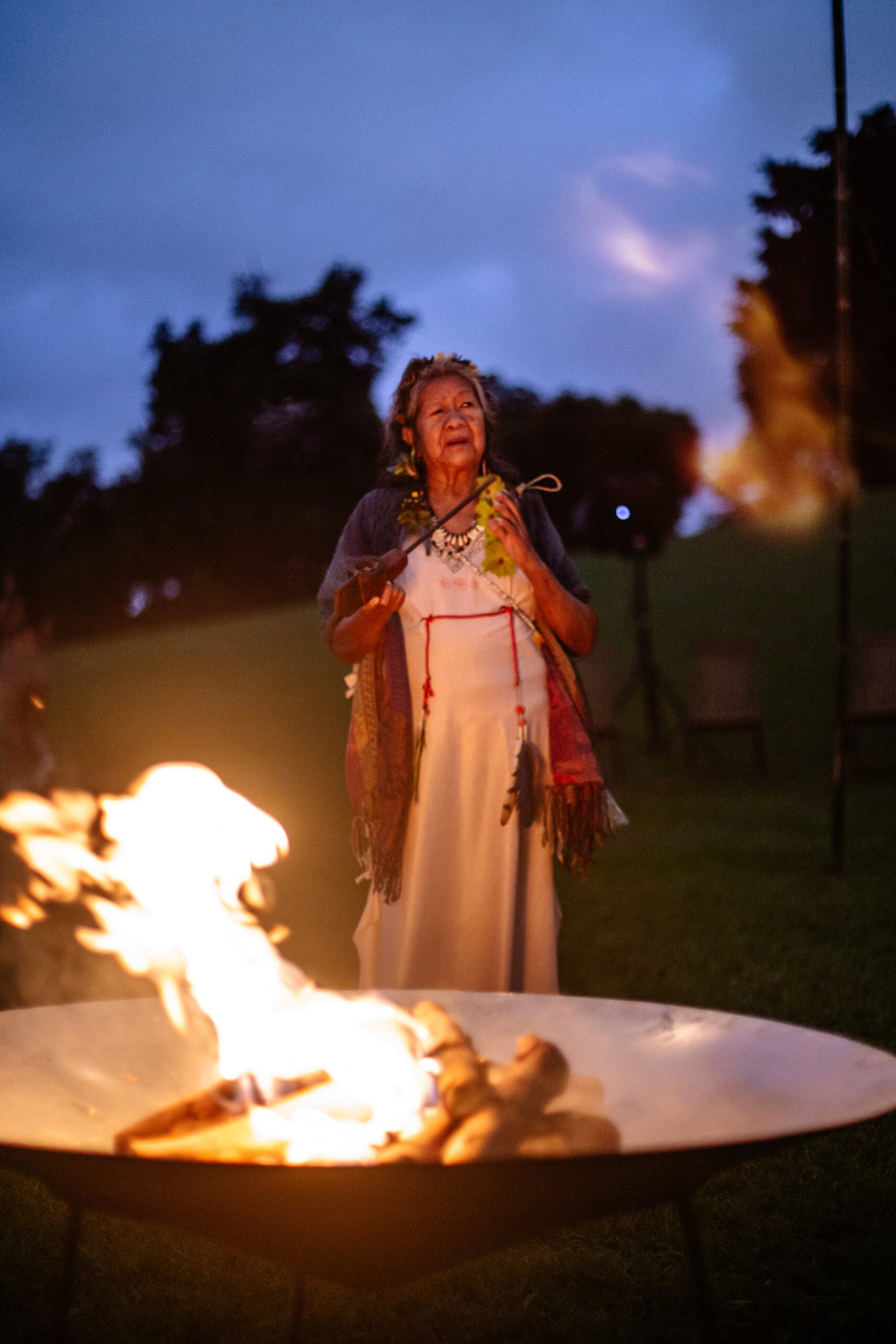
Photo: Ju Chalita, 2023
A midwife, herbalist, elder, leader, teacher, craftswoman, grandmother to many and guardian of her people’s spirituality, Catarina Tupi-Guarani played a pivotal role in the history of indigenous struggles, the reclaiming of land and the preservation of ancestral knowledge. In 2023, Catarina took part in the Selvagem vigil that gave rise to the study cycle named Ancestral Memories, in Rio de Janeiro. In the same year, Catarina took part alongside Carlos Papá in the study cycle Ayvu Pará – Nhe’ery, sharing insights into elements of nature, daily life and the meanings of Guarani words in the territory of Nhe’ëry – the name given to what we commonly call the Atlantic Forest. Always guided by her dreams, by listening to her elders and by her commitment to the continuity of her culture, Catarina Tupi-Guarani left behind many seeds.
Born in the village of Bananal, in Peruíbe, on the coast of São Paulo, Catarina grew up in the village until the age of seven, when she moved to the city. Even so, she never strayed far from the house of prayer and the rituals of her people, which accompanied her throughout her life, just as her Tupi-Guarani name, Nimbopyrua, did. In her talk ‘On being an elder’, delivered during the vigil that gave rise to the Ancestral Memories cycle, Catarina said: ‘Spirituality—when we come to be called elders within a community—is not something we learn; no one teaches it to you. You must already possess the gift of being an elder, and through ancestral memories, we gradually learn how to be an elder.’
The power of dreams was also one of the central themes of her life. “Everything that has happened in my life to date has come about through dreams. It’s just that we have to know how to define our dreams,” she said. Guided by them, she faced misunderstandings and disputes along the way, including in school and university. One of the most memorable dreams occurred when she was around 20 years old, when she saw her great-grandfather come to collect her in a carriage and take her out over the sea, whilst he prayed and showed her the culture of her ancestors. During that journey, he taught her a chant, telling her that whenever she needed him, she should sing it so that he would be with her. Years later, Catarina sang that chant at the vigil at Quinta da Boa Vista.
Her relationship with spirituality was also deeply influenced by her father, who was a shaman. When he passed away in 2000, she was holding him in her lap and he left her his pipe, so that she might look after the family’s spiritual traditions, which are intrinsically linked to respect for the forest, for nature, for the sacred and for community life. Shortly afterwards, Catarina led the reclaiming of the Piaçaguera Indigenous Territory, where she went to live in the village of Tapirema. The area, which had been in the hands of a mining company and was suffering from exploitation and the devastation of nature, was reclaimed by around 60 families, eventually becoming a model territory for other Indigenous communities that went on to settle in the region. Recognised by various communities, Catarina was appointed chief of Piaçaguera and took on the leadership role amidst many challenges, where once again spirituality served as her guide.
A descendant of various indigenous lineages — with Tupinambá ancestry on her paternal grandmother’s side, Guarani Kaiowá on her maternal grandmother’s side, and Tupi-Guarani and Guarani Mbya on her maternal grandfather’s side — Catarina embodied the convergence of many memories and lineages. She used to say that she had learnt from her mother that, regardless of a person’s religion, one must respect the way in which each individual connects with the sacred.
Her story and teachings have been recorded, amongst other places, in the chapter dedicated to her in Ancestral Memories, in which she recounts how spirituality manifested itself in her family, the role she played in passing on this knowledge, and the power of the sacred in her parents’ passing.
In 2023, her presence also left its mark on the study cycle Ayvu Pará, alongside Carlos Papá, in film-based lessons dedicated to indigenous languages, the place-names of Nhe’ëry and the Guarani worldview. In these discussions, the two analyse the names of towns, rivers, hills and territories, as well as words relating to elements of nature and everyday life in the Nhe’ëry territory, sharing their meanings in the Guarani language and contextualising aspects of the culture through the lens of language.
A great connoisseur of medicinal plants, a committed educator and a key figure in the struggle for land, Catarina spent her life upholding a way of life centred on the house of prayer, dreams, education, reclaiming land and the passing on of knowledge. Above all, her legacy leaves a path towards the future.
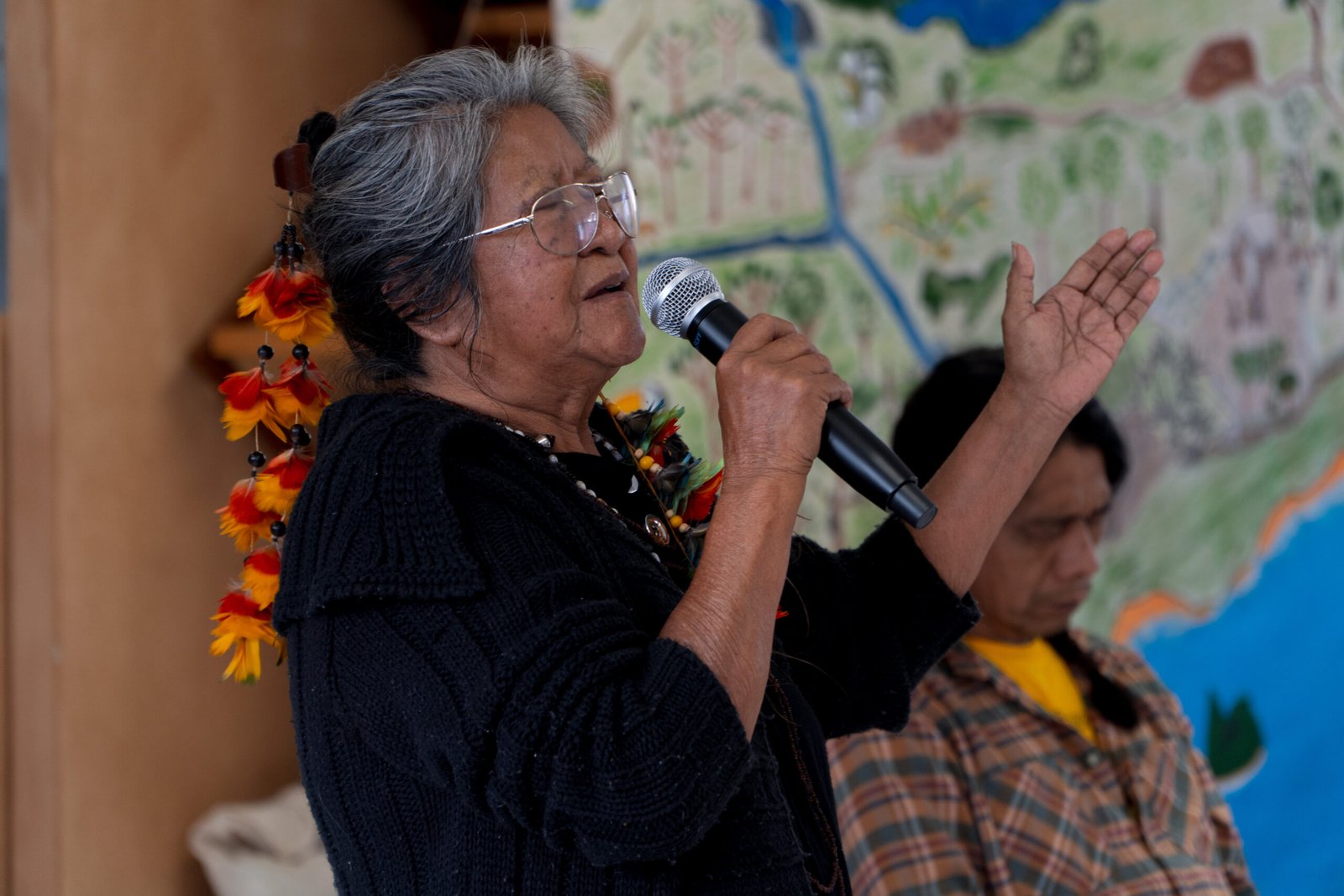
Photo: Mariana Rotili, 2023